Understanding Naloxone Safety and Side Effects While Pregnant
Naloxone Side Effects During Pregnancy: What Matters Most
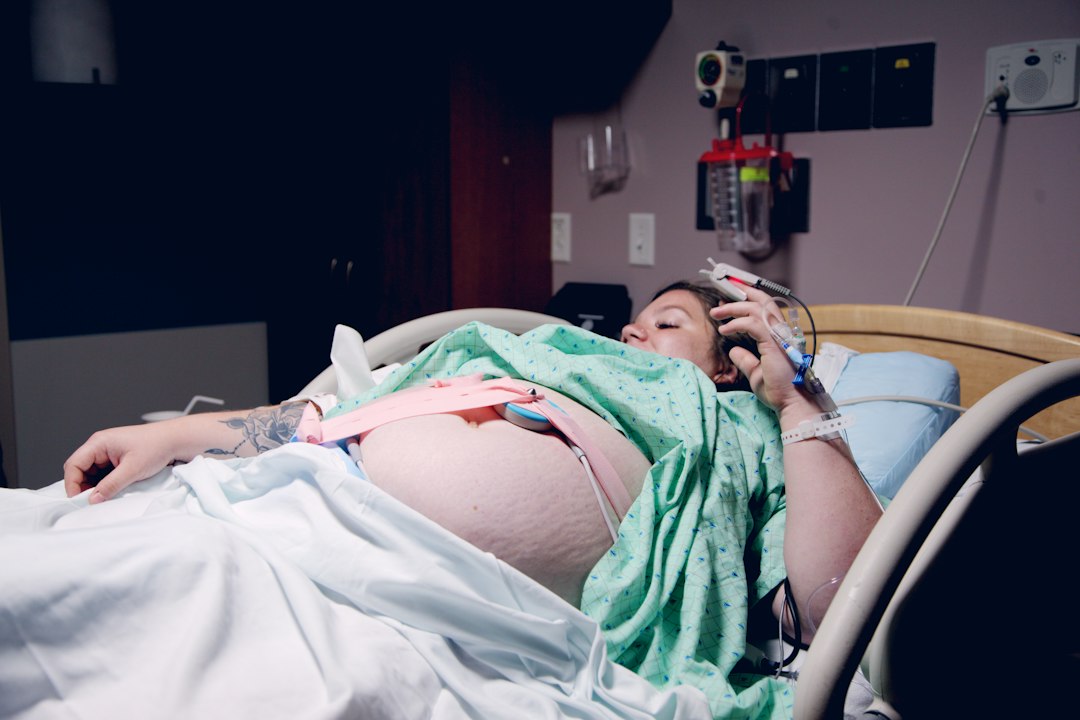
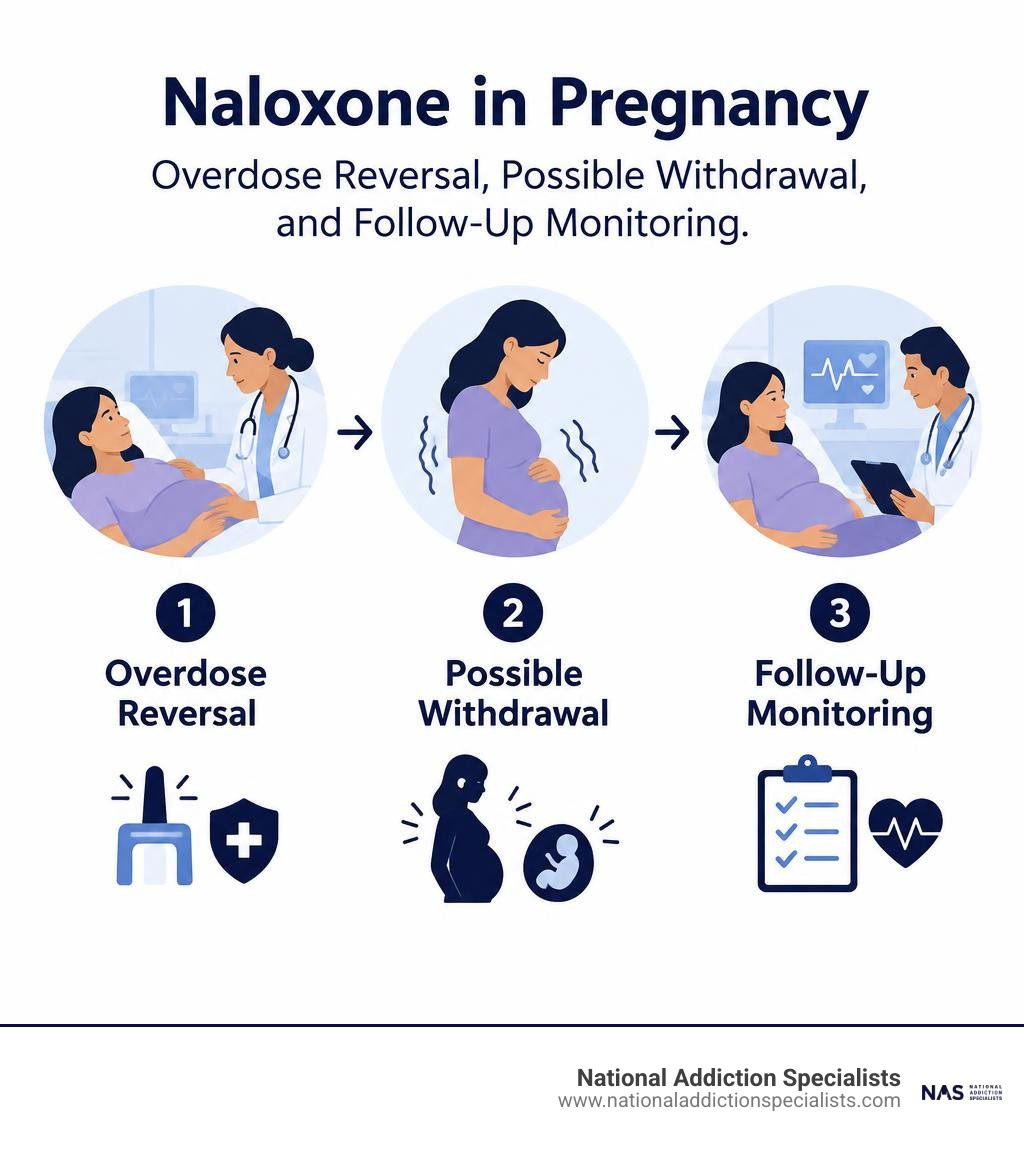
If a pregnant person has a suspected opioid overdose, give naloxone and call 911. Reversing an overdose can save both the pregnant person and the baby. Naloxone can cross the placenta and may trigger sudden withdrawal in both if they are opioid-dependent. Emergency clinicians should check the pregnant patient’s breathing and heart health and assess the baby for signs of distress. The risk of withdrawal is real, but it is not a reason to delay naloxone during an overdose.
I’m Chad Elkin, MD, founder and medical director of National Addiction Specialists and board-certified in addiction medicine and internal medicine. My work treating opioid use disorder informs this guide to understanding naloxone pregnancy side effects and what to expect after emergency care.
Helpful resources on medication safety during pregnancy:
How Naloxone Works and Placental Transfer During Pregnancy
Naloxone is an opioid antagonist. It binds tightly to mu-opioid receptors in the central nervous system, displacing active opioids like fentanyl, heroin, or oxycodone. By knocking those opioids off the receptors, it reverses life-threatening respiratory depression.
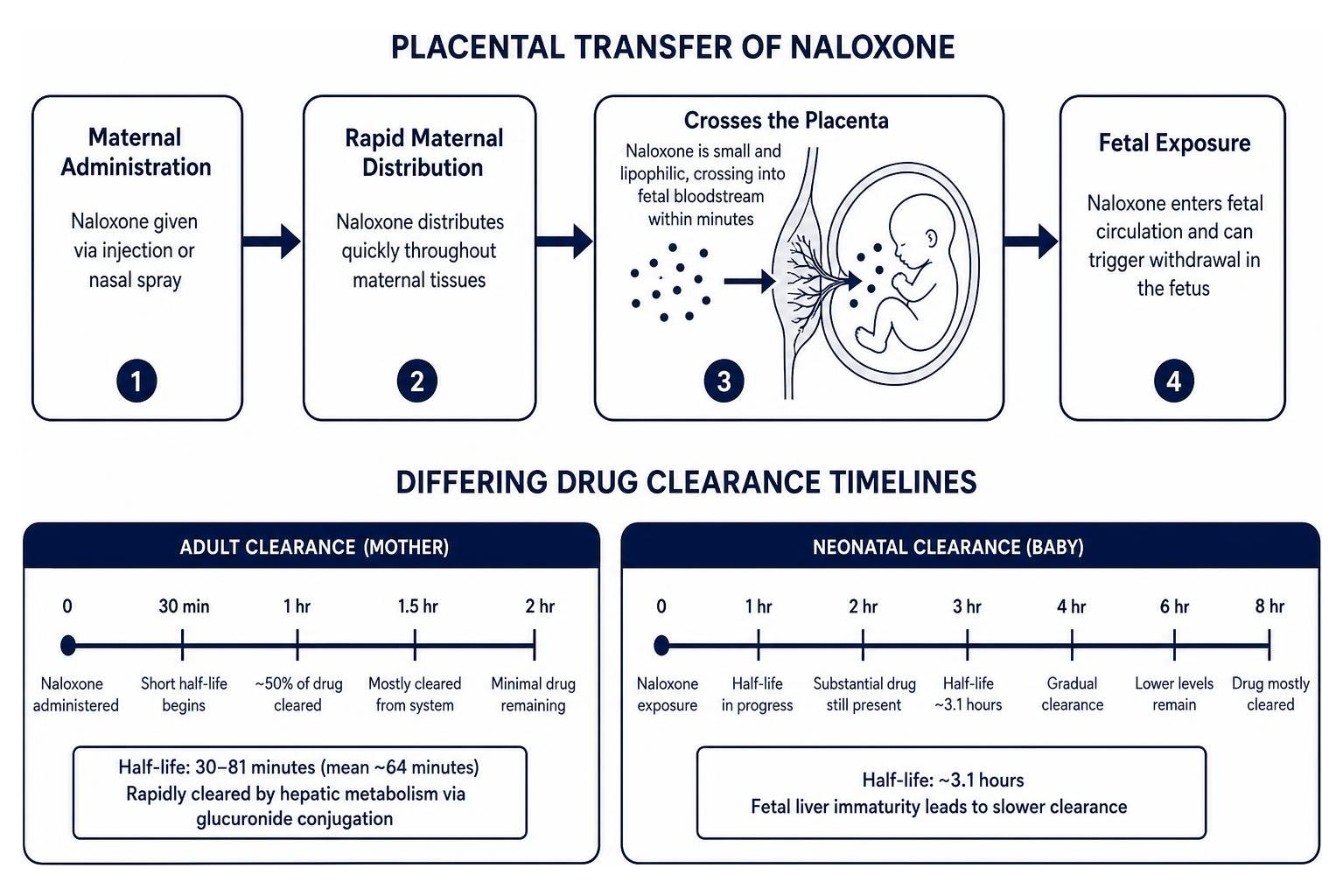
Because naloxone is a small, lipophilic molecule, it readily crosses the placenta into the fetal bloodstream. When administered parenterally (via injection) or intranasally to an expectant mother, the drug distributes rapidly throughout maternal tissues and enters fetal circulation within minutes, as detailed in the FDA prescribing information on naloxone injection.
The pharmacology differs between mother and child in several critical ways:
- Adult Clearance: In adults, naloxone has a short serum half-life ranging from 30 to 81 minutes (mean of roughly 64 minutes). It is rapidly cleared by hepatic metabolism via glucuronide conjugation into naloxone-3-glucuronide.
- Fetal and Neonatal Clearance: The fetal liver has immature metabolic enzymes. When a baby is exposed right before birth, the neonatal elimination half-life is significantly longer—averaging 3.1 hours.
- Receptor Dynamics: Understanding buprenorphine and naloxone pharmacodynamics helps illustrate why route of administration matters: naloxone has minimal bioavailability when swallowed or absorbed sublingually, but near-total systemic availability when given intravenously, intramuscularly, or via nasal spray during an emergency.
Teratogenic Risk Assessment and Animal Toxicology Data
One of the most pressing questions expectant parents ask is whether naloxone causes structural birth defects. Rigorous reproductive toxicology studies in pregnant mice and rats during organogenesis revealed no embryotoxic or teratogenic effects at doses 4 to 12 times the human equivalent dose.
Historically, naloxone was classified as Pregnancy Category C by the FDA. This classification reflects a standard regulatory status indicating that while animal reproduction studies did not show teratogenic harm, adequate and well-controlled human clinical trials are lacking due to the ethical impossibility of running experimental trials on pregnant women in overdose states.
As summarized in MotherToBaby research on naloxone safety, available observational human data show no evidence that naloxone increases the baseline risk of major congenital malformations (which stands at 2% to 4% in the general population) or baseline miscarriage rates (15% to 20%) (NBK582868).
Primary Naloxone Pregnancy Side Effects and Fetal Withdrawal Risks
When evaluating potential naloxone pregnancy side effects, clinicians distinguish between pure toxicological side effects (which are rare) and precipitated withdrawal effects (which are the primary clinical concern).
If a pregnant patient is physically dependent on opioids, naloxone will immediately strip those opioids from both maternal and fetal receptors. This sudden shift triggers acute precipitated withdrawal. For the developing baby, severe withdrawal can cause significant physiological stress, uterine hypertonicity (excessive uterine cramping), compromised placental oxygenation, and potential preterm labor.
Understanding these dynamics is vital for anyone navigating medication safety while expecting. While the potential for fetal distress is real, untreated maternal hypoxia from an overdose is far more lethal to both mother and baby.
Maternal and Fetal Naloxone Pregnancy Side Effects
When an opioid-dependent mother receives an emergency antagonist dose, the resulting sympathetic nervous system surge causes specific cardiovascular and hemodynamic shifts:
- Acute Maternal Hypertension: The sudden release of catecholamines (adrenaline) can spike blood pressure rapidly. In patients with pre-existing or pregnancy-induced hypertension (such as preeclampsia), this surge requires careful monitoring.
- Cardiac Arrhythmias and Tachycardia: Rapid heart rate, palpitations, and rare ventricular arrhythmias can occur during acute reversal.
- Pulmonary Stress: In severe cases of acute withdrawal, fluid accumulation in the lungs (pulmonary edema) has been reported.
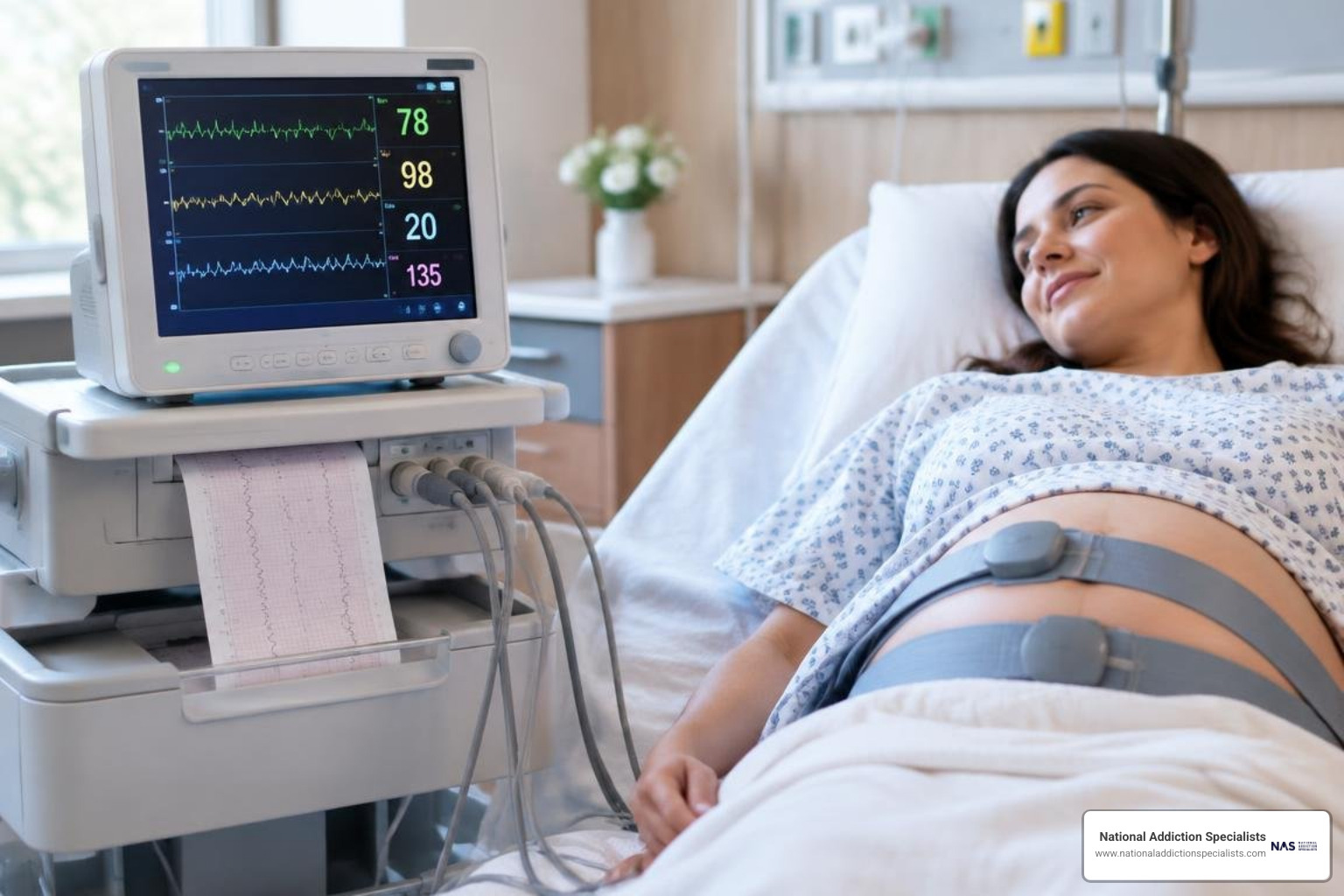
- Fetal Hypoxemia and Decelerations: As maternal blood vessels constrict and uterine tone increases during withdrawal, placental blood flow temporarily drops. This can cause fetal hypoxemia, visible on continuous cardiotocography as reactive fetal heart rate decelerations or loss of baseline variability.
Managing Naloxone Pregnancy Side Effects in Neonates
If an infant is born shortly after maternal naloxone exposure or receives naloxone directly after birth, medical providers must be prepared to manage acute neonatal withdrawal. Giving naloxone directly to an opioid-exposed newborn can precipitate severe, rapid-onset Neonatal Opioid Withdrawal Syndrome (NOWS).
Signs of acute neonatal withdrawal include:
- Neuromuscular Excitability: High-pitched, excessive crying, an exaggerated Moro (startle) reflex, body tremors, and muscle rigidity (hypertonia).
- Autonomic Dysregulation: Sweating, temperature instability, nasal flaring, and tachypnea (rapid breathing).
- Gastrointestinal Distress: Poor feeding coordination, projectile vomiting, and uncoordinated sucking reflexes.
- Severe Complications: In severe cases of precipitated withdrawal, neonatal seizures can occur, necessitating immediate pediatric supportive care in a neonatal intensive care setting.
Long-term studies evaluate the developmental outlook for babies exposed to medications in utero, emphasizing that stable maternal recovery is the single best predictor of healthy childhood milestones.
If you or a loved one is pregnant and navigating opioid dependence in Tennessee or Virginia, our compassionate medical team provides private, confidential, evidence-based care from home. Make an Appointment to Treat Addiction Please don’t hesitate. Make an appointment today.
Naloxone in Opioid Use Disorder Maintenance vs. Overdose Reversal
It is essential to distinguish between receiving high-dose naloxone to reverse an acute overdose and taking combination maintenance medications like buprenorphine/naloxone daily for opioid use disorder (OUD).
In an emergency overdose, saving the mother’s life is the absolute priority—without oxygen, neither mother nor baby can survive. In outpatient recovery, the goal shifts to maintaining continuous maternal stability and preventing withdrawal cycles.
| Clinical Parameter | Emergency Overdose Reversal (e.g., Narcan, Kloxxado) | Combination Maintenance Therapy (e.g., Suboxone) |
|---|---|---|
| Primary Goal | Restore breathing and prevent maternal/fetal brain hypoxia | Prevent cravings, maintain stability, prevent illicit opioid relapse |
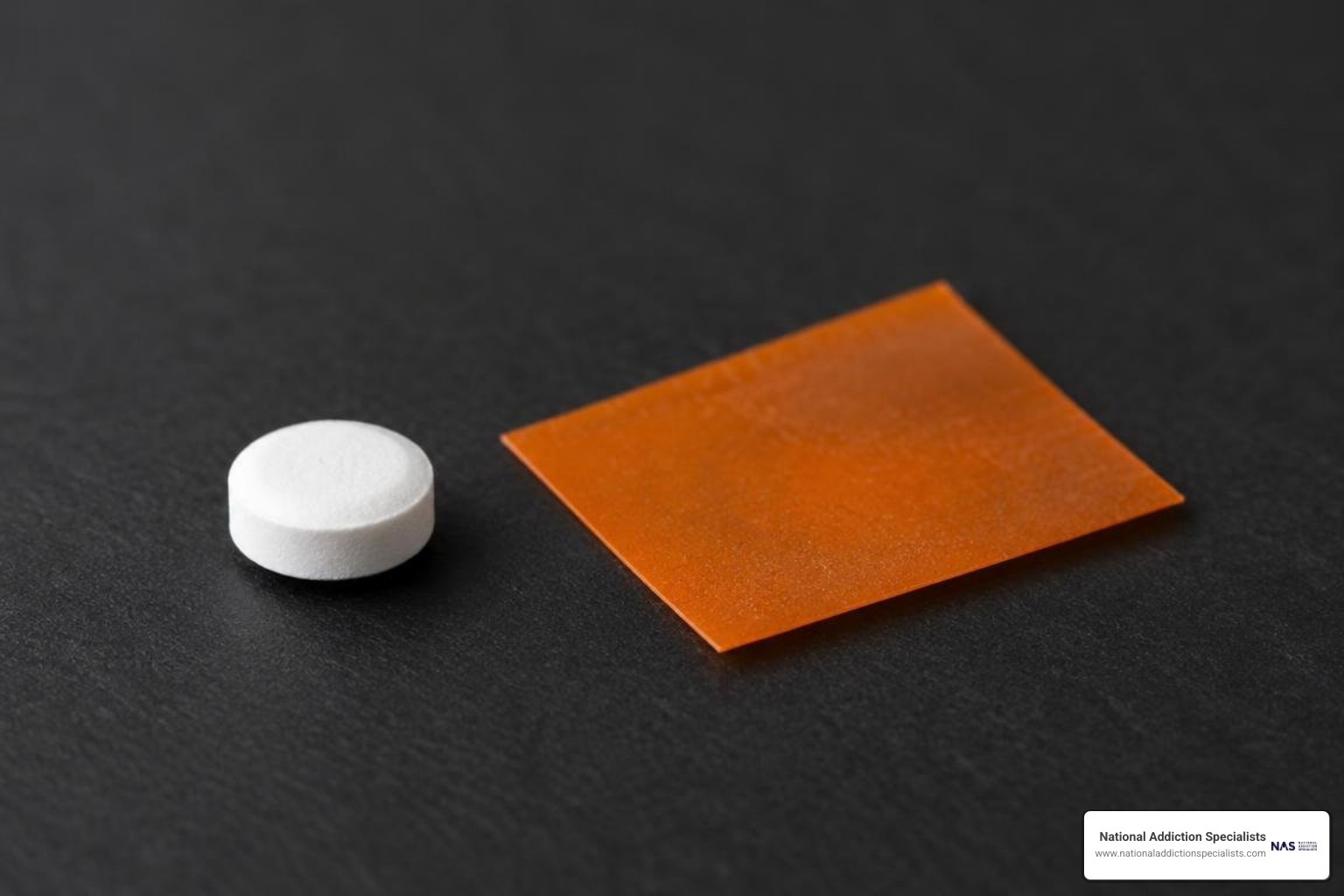
| Route & Delivery | Intranasal spray or parenteral injection (IV/IM/SC) | Sublingual film or tablet absorbed under the tongue |
| Naloxone Bioavailability | High systemic absorption (~40% to 100%) across mucosal/vascular tissue | Negligible systemic absorption (<5%) due to hepatic first-pass metabolism |
| Receptor Action | Actively displaces opioids across all maternal and fetal receptors | Acts as an inactive abuse deterrent; buprenorphine dominates receptors |
| Withdrawal Trigger Risk | High risk of precipitated withdrawal in opioid-dependent individuals | Zero precipitated withdrawal when taken as prescribed under the tongue |
| Placental Impact | High acute fetal transfer causing temporary physiological stress | Negligible fetal naloxone exposure during daily treatment |
Many patients ask, is Suboxone safe across every trimester? Extensive observational registries over the last decade show that combination buprenorphine/naloxone maintains maternal recovery with outcomes comparable to buprenorphine alone.
Naloxone in Emergency Reversal and Combination Maintenance Treatment
Historically, clinicians preferred single-ingredient buprenorphine (Subutex) during pregnancy to eliminate any theoretical fetal naloxone exposure. However, modern clinical guidelines from major obstetrical and addiction medicine societies support continuing combination buprenorphine/naloxone if a patient is already stable on it when conception occurs.
Switching medications unnecessarily can introduce instability, cravings, or treatment discontinuation. When adjusting therapy throughout pregnancy, our providers follow established clinical guidelines for buprenorphine dosing for expectant mothers, ensuring maternal comfort and steady blood levels across the changing trimesters.
Post-Administration Monitoring and Breastfeeding Safety

When an expectant mother receives naloxone for an overdose, emergency medical transport is essential. Care does not stop once she wakes up. Because many modern synthetic opioids (like illicit fentanyl analogs) have longer half-lives than naloxone, the antagonist can wear off while toxic opioid levels remain in the body, creating a risk for recurrent respiratory depression.
Post-administration clinical protocols include:
- Continuous Fetal Heart Tracing: Monitoring for signs of fetal distress, variable decelerations, and uterine irritability for several hours post-event.
- Maternal Vital Sign Telemetry: Tracking maternal blood pressure, respiratory rate, and cardiac rhythm.
- 24-Hour Clinical Surveillance: A mandatory observation window in a healthcare facility to verify that recurrent sedation does not occur as naloxone clears the body.
Breastfeeding Considerations
For new mothers who received naloxone or are taking maintenance medications, questions about breastfeeding are common:
- Transfer into Breast Milk: Pharmacokinetic studies indicate that naloxone transfers into human milk in minimal concentrations.
- Oral Bioavailability in the Infant: Even if trace amounts of naloxone are present in breast milk, the infant’s digestive system breaks down the drug via first-pass hepatic metabolism. It is poorly absorbed orally, meaning it does not block the infant’s receptors or cause withdrawal symptoms.
- Clinical Guidance: Major medical organizations strongly encourage breastfeeding for mothers stabilized on medication-assisted treatment. Breastfeeding provides skin-to-skin soothing, supports infant bonding, and has been proven to significantly reduce the severity and duration of neonatal abstinence syndrome.
Frequently Asked Questions About Naloxone in Pregnancy
Can naloxone cause a miscarriage or induce early labor?
Naloxone itself does not exhibit toxic teratogenicity or directly damage the embryo. However, in an opioid-dependent woman, a large dose of naloxone precipitates sudden, acute withdrawal. The intense catecholamine surge and uterine cramping associated with severe withdrawal can trigger uterine contractions, potentially leading to preterm labor in the third trimester. Despite this risk, emergency naloxone must always be administered during an overdose, as maternal death from oxygen deprivation guarantees fetal death.
Is naloxone safe if you are breastfeeding?
Yes. Naloxone has extremely low oral bioavailability. When consumed in trace quantities through breast milk, the infant’s digestive tract and liver process the medication before it reaches systemic circulation. Mothers taking combination maintenance therapy or those who received naloxone during delivery can safely breastfeed under the guidance of their pediatric care team.
Should an opioid-dependent pregnant woman still receive Narcan during an overdose?
Yes, without hesitation. When a pregnant woman stops breathing due to an opioid overdose, both her brain and the baby’s brain are starved of oxygen within minutes. Irreversible fetal hypoxia occurs rapidly. Administering Narcan immediately restores maternal ventilation and oxygen delivery. Once breathing is restored, calling 911 ensures the mother and fetus receive obstetrical monitoring for any precipitated withdrawal symptoms.
Conclusion
Understanding the safety profile, pharmacology, and side effects of naloxone empowers families and clinicians to make life-saving decisions without hesitation. In an emergency, naloxone is an essential antidote that preserves maternal and fetal life. In long-term recovery, evidence-based medication-assisted treatment provides the stability and care that mothers and babies need to thrive.
At National Addiction Specialists, we specialize in providing compassionate, telemedicine-based addiction medicine tailored to expectant mothers across Tennessee and Virginia. We accept Medicare and Medicaid to ensure that high-quality, stigma-free care is always accessible. Learn how personalized Suboxone treatment works and let our expert team walk with you every step of the way.
References
Suboxone® and Subutex® are a registered trademark of Indivior UK Limited. Any mention and reference of Suboxone® and Subutex® in this website is for informational purposes only and is not an endorsement or sponsorship by Indivior UK Limited.
This article was medically reviewed by: Chad Elkin, MD, DFASAM is a board-certified addiction medicine physician, founder, and Chief Medical Officer of National Addiction Specialists, dedicated to treating substance use disorders. A Distinguished Fellow of the American Society of Addiction Medicine (ASAM), Dr Elkin currently serves as President of the Tennessee Society of Addiction Medicine (TNSAM) and has held various leadership roles within the organization. Dr Elkin chairs ASAM’s Health Technology Subcommittee and is an active member of its Practice Management and Regulatory Affairs Committee, State Advocacy and Legislative Affairs Committee, and other committees. He also serves on the planning committee for the Vanderbilt Mid-South Addiction Conference. Committed to advancing evidence-based policy, Dr Elkin is Chairman of the Tennessee Association of Alcohol, Drug, & Other Addiction Services (TAADAS) Addiction Medicine Council, which collaborates with the TN Department of Mental Health & Substance Abuse Services (TDMHSAS). He has contributed to numerous local, state, and national task forces, helping develop professional guidelines, policies, and laws that align with best practices in addiction medicine. His work focuses on reducing addiction-related harm, combating stigma, and ensuring access to effective treatment.Passionate about the field of addiction medicine, he remains dedicated to shaping policy and enhancing patient care.