
Pregnancy Risk Categories Explained for Expectant Mothers on Suboxone
What the Suboxone Pregnancy Category Means Today
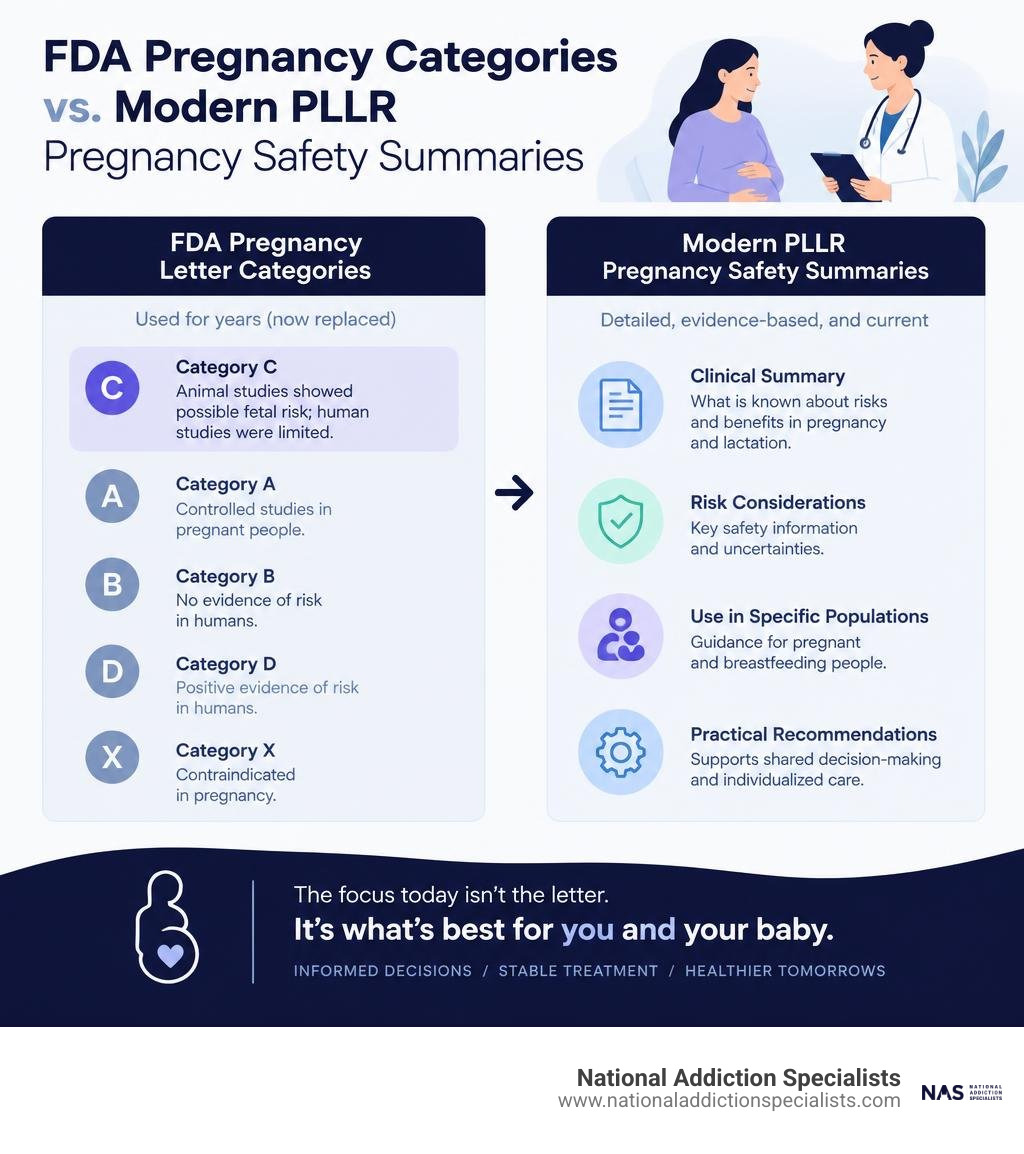
Suboxone was formerly labeled FDA Pregnancy Category C. That old label meant animal studies found possible fetal risk, while well-controlled studies in pregnant people were limited. It did not mean Suboxone should automatically be stopped during pregnancy.
The FDA has replaced letter categories with detailed Pregnancy and Lactation Labeling Rule (PLLR) summaries. Today, the key question is whether the benefits of stable treatment outweigh the risks of untreated opioid use disorder. For many pregnant patients, continuing effective medication for opioid use disorder can reduce relapse, overdose, withdrawal, and unsafe opioid exposure. Any treatment decision should be made with an obstetric and addiction-care team, not by stopping medication suddenly.
I am Chad Elkin, a board-certified Addiction Medicine and Internal Medicine physician and Medical Director of National Addiction Specialists. My work includes helping patients understand the Suboxone pregnancy category and make practical, individualized treatment plans that protect both maternal stability and newborn health.
Learn more about suboxone pregnancy category:
Understanding the FDA Suboxone Pregnancy Category and PLLR Standards

Navigating prescription medications during pregnancy can feel overwhelming, especially when reading older drug packaging. To make sense of medication safety, it is helpful to look at how the Food and Drug Administration (FDA) evaluates developmental risks. The historical five-letter framework (Categories A, B, C, D, and X) often oversimplified complex clinical decisions into rigid boxes.
Under the modern Pregnancy and Lactation Labeling Rule (PLLR), the FDA replaced these single-letter ratings with descriptive, evidence-based narratives. As outlined in the official FDA Prescribing Information on Suboxone, drug labeling now provides comprehensive clinical summaries. These summaries cover real-world human data, animal reproductive toxicity studies, and practical risk-benefit assessments for clinical decision-making.
Historical Suboxone Pregnancy Category C vs. Modern Labeling
Under the legacy rating system, Suboxone (a combination of buprenorphine and naloxone) received a Category C classification. By definition, Category C meant that animal reproduction studies showed adverse effects on the fetus, but adequate, well-controlled studies in pregnant humans were lacking at the time of initial approval. Consequently, clinicians were directed to weigh whether potential therapeutic benefits justified potential risks before prescribing.
Today, rather than relying on an oversimplified letter grade, healthcare teams look at observational registries, clinical trials, and pharmacology data. The modern PLLR narrative clearly separates the risks of the medication from the significant maternal and fetal risks of untreated opioid dependence. We focus on understanding the real risks of Suboxone use while expecting so families can make informed choices rather than acting out of unnecessary fear.
Animal Reproductive Toxicity and Human Risk Communication
When reviewing the preclinical data behind historical categorization, animal toxicology studies evaluate drug exposures at varying doses:
- Embryofetal Mortality: In rat and rabbit reproduction studies, embryofetal death was documented at doses approximately 6 times and 0.3 times, respectively, the standard human sublingual dose of 16 mg/day of buprenorphine.
- Developmental Outcomes: Pre- and postnatal studies in rats identified increased neonatal mortality at doses 0.3 times and above the human equivalent, as well as dystocia (difficult labor) at approximately 3 times the human sublingual dose.
- Skeletal Variations: Daily administration of buprenorphine during organogenesis led to increases in skeletal abnormalities in rats and rabbits at doses approximately 0.6 times and equal to the human 16 mg daily dose.
When communicating these findings to patients, translational pharmacology provides necessary context. Animal studies involve high systemic drug exposures that do not mirror standard human dosing or sublingual bioavailability. Extensive human clinical evaluations, such as those compiled in research on the Safety and Efficacy of Buprenorphine-Naloxone in Pregnancy, demonstrate that buprenorphine combination therapy does not elevate the risk of major structural birth defects compared to general population baseline rates.
Maternal-Fetal Safety: Medication-Assisted Treatment vs. Untreated Opioid Use Disorder

When evaluating pregnancy safety, medication exposure cannot be viewed in isolation. It must be compared directly against the physical realities of untreated opioid use disorder (OUD).
Untreated opioid dependence creates repeated cycles of intoxication and withdrawal. During maternal withdrawal, placental perfusion drops, restricting oxygen and nutrient delivery to the developing fetus. This instability carries severe risks, including:
- Spontaneous miscarriage and fetal demise
- Placental abruption
- Severe intrauterine growth restriction (IUGR)
- Preterm labor and premature delivery
- Maternal overdose, infection, and mortality
Stabilizing a patient on buprenorphine eliminates these volatile cycles, providing a steady physiological environment that supports normal fetal growth. We encourage mothers to focus on navigating Suboxone use during pregnancy without the stress that often accompanies navigating medical care.
How the Suboxone Pregnancy Category Informs Treatment Decisions
Historically, clinicians preferred buprenorphine monotherapy (without naloxone) during pregnancy due to theoretical concerns that naloxone might cross the placenta or cause fetal withdrawal. However, growing real-world evidence has established that the combination film is safe and effective.
When taken as directed under the tongue, naloxone has minimal systemic bioavailability and does not compromise fetal development. At the same time, it helps prevent parenteral misuse. Authoritative clinical resources, including State Guidelines on Perinatal Substance Use Treatment, recognize buprenorphine-naloxone formulations as appropriate first-line options for pregnant individuals. Stable Suboxone use during pregnancy keeps expectant mothers engaged in prenatal care, reduces cravings, and prevents illicit exposures.
Reproductive Health, Fertility, and First-Trimester Exposure
Chronic, illicit opioid use frequently disrupts the hypothalamic-pituitary-gonadal axis, leading to irregular menstrual cycles, amenorrhea, and suppressed fertility in females, as well as hypogonadism in males. Transitioning to stable buprenorphine therapy often normalizes endocrine function and restores regular ovulation. Consequently, many patients conceive unexpectedly once their health stabilizes.
For mothers who discover they are pregnant while already taking maintenance medication, maintaining continuity is critical. The first trimester is the key window for organogenesis (organ formation). Halting treatment abruptly triggers intense withdrawal and elevates the risk of relapse. Evidence confirms medication safety during the first trimester and beyond, showing that maintaining steady dosing protects the pregnancy without increasing the risk of structural malformations.
Clinical Management: Neonatal Outcomes, Dosing, and Hepatic Monitoring

Throughout gestation, a mother’s body undergoes dramatic physiological transformations. Maternal plasma volume expands, renal filtration accelerates, and liver enzymes such as CYP3A4 increase their metabolic activity. As a result, buprenorphine is cleared more rapidly, particularly during the second and third trimesters.
To prevent maternal withdrawal symptoms and drug cravings, providers often make buprenorphine dosing adjustments for expectant mothers. Splitting the daily dose into twice- or thrice-daily regimens maintains stable blood concentrations without raising the total daily intake unnecessarily.
Neonatal Opioid Withdrawal Syndrome (NOWS) Management
Neonatal Opioid Withdrawal Syndrome (NOWS) is an expected, temporary, and treatable response to sustained in utero opioid exposure. It is not an addiction; rather, it represents the newborn’s natural neuroadaptation to buprenorphine crossing the placenta.
Groundbreaking data from the landmark Maternal Opioid Treatment: Human Experimental Research (MOTHER) trial evaluated pregnant women receiving buprenorphine maintenance:
- Treatment Retention: Research demonstrates consistent maternal engagement and stabilization across gestation for patients maintained on buprenorphine.
- Medication Needs: Among infants requiring pharmacotherapy for withdrawal, buprenorphine-exposed neonates required minimal total morphine intervention (mean dose: 1.1 mg).
- Hospitalization: Buprenorphine-exposed infants experienced shorter overall hospital stays (mean: 10.0 days) and shorter treatment durations for NOWS (mean: 4.1 days).
Modern hospitals manage NOWS using evidence-based approaches like the Eat, Sleep, Console (ESC) model, which prioritizes non-pharmacological care, including skin-to-skin contact, quiet environments, and rooming-in. Clinical research on the long-term outlook for babies exposed in utero shows that children exposed to buprenorphine achieve typical developmental and cognitive milestones.
Hepatic Impairment and Metabolic Considerations During Gestation
Buprenorphine and naloxone are both cleared through hepatic metabolism. Because naloxone undergoes significant first-pass hepatic extraction, healthy liver function prevents it from entering the general bloodstream in meaningful amounts.
For pregnant patients, baseline liver function tests (AST, ALT, bilirubin) should be evaluated. In individuals with mild hepatic impairment, buprenorphine/naloxone can generally be used safely without dose reduction. However, in cases of severe hepatic impairment, naloxone clearance declines more steeply than buprenorphine clearance, potentially leading to increased systemic naloxone levels. In these clinical scenarios, careful monitoring and individualized clinical adjustments are essential.
Postpartum Care, Lactation Safety, and Overdose Prevention
Following delivery, pregnancy-related metabolic changes resolve rapidly. Blood volumes return to baseline, and CYP3A4 clearance normalizes. Clinicians monitor postpartum mothers closely to reduce split doses back to once-daily maintenance schedules if mild sedation occurs. Patients should avoid safely stopping or modifying treatment without expert supervision, as the early postpartum window carries a higher risk for OUD recurrence.
State clinical resources, such as the Clinical Guidance on Tennessee Buprenorphine Treatment Protocols, strongly support breastfeeding for mothers maintained on buprenorphine. Human lactation studies show minimal transfer into breast milk:
- In a study of six lactating women taking a median sublingual buprenorphine dose of 0.29 mg/kg/day at 5 to 8 days postpartum, breast milk delivered a median infant dose of 0.42 mcg/kg/day of buprenorphine and 0.33 mcg/kg/day of norbuprenorphine. This corresponded to a relative infant dose (RID) of just 0.2% and 0.12% of the maternal weight-adjusted dose.
- A second study of seven lactating mothers taking a median dose of 7 mg/day at 1.12 months postpartum found an estimated mean absolute infant dose of 0.55 mcg/kg/day of buprenorphine and 0.29 mcg/kg/day of norbuprenorphine (mean RID of 0.38% and 0.18%, respectively).
Because buprenorphine has low oral bioavailability in infants, the amount absorbed via breast milk is minimal.
- Encourage Breastfeeding: Breast milk transfer can ease mild neonatal withdrawal symptoms and support maternal-infant bonding.
- Pediatric Monitoring: Caregivers should observe the newborn for excessive sleepiness, poor weight gain, or breathing difficulties, though adverse events at therapeutic maternal doses are rare.
- Co-Prescribe Opioid Overdose Reversal Agents: Prescribing naloxone or nalmefene at initiation and refills is standard practice. Having reversal agents in the home provides essential safety for families.
- Safe Medication Storage: Store sublingual films securely out of sight and reach of children to prevent accidental pediatric ingestion.
Frequently Asked Questions About Suboxone in Pregnancy
What was the original FDA pregnancy category for Suboxone?
Suboxone was classified as Pregnancy Category C under the FDA’s legacy letter system. This meant animal studies showed adverse fetal effects at elevated doses, but well-controlled human studies were limited at the time. The FDA has since retired letter categories in favor of narrative PLLR labels that emphasize clinical risk-benefit assessments.
How is Suboxone managed during pregnancy?
Suboxone is managed through coordinated care between addiction medicine specialists and obstetricians. Clinicians monitor maternal symptoms, split daily doses if accelerated third-trimester metabolism causes withdrawal, track liver enzymes, and plan for supportive newborn care using protocols like Eat, Sleep, Console.
Can I safely breastfeed while taking Suboxone?
Yes. Clinical studies show that buprenorphine and its metabolite norbuprenorphine pass into breast milk in very small amounts (relative infant doses well below 1%). Because infant oral absorption is low, major medical organizations encourage breastfeeding for mothers stabilized on buprenorphine maintenance therapy.
Conclusion
Understanding medication safety in pregnancy means looking past outdated letter grades and focusing on real-world clinical outcomes. The medical consensus is clear: maintaining stable buprenorphine treatment protects both maternal health and fetal development far better than facing the risks of untreated opioid use disorder.
At National Addiction Specialists, we provide accessible, compassionate care. Our team delivers confidential, telemedicine-based addiction treatment tailored to your life. We offer comprehensive support across Tennessee and Virginia, accepting Medicaid and Medicare to ensure quality care remains within reach. You can learn more about how outpatient Suboxone treatment works for lasting maternal recovery and take the next step toward a healthy, supported pregnancy.
Suboxone® and Subutex® are a registered trademark of Indivior UK Limited. Any mention and reference of Suboxone® and Subutex® in this website is for informational purposes only and is not an endorsement or sponsorship by Indivior UK Limited.
This article was medically reviewed by: Chad Elkin, MD, DFASAM is a board-certified addiction medicine physician, founder, and Chief Medical Officer of National Addiction Specialists, dedicated to treating substance use disorders. A Distinguished Fellow of the American Society of Addiction Medicine (ASAM), Dr Elkin currently serves as President of the Tennessee Society of Addiction Medicine (TNSAM) and has held various leadership roles within the organization. Dr Elkin chairs ASAM’s Health Technology Subcommittee and is an active member of its Practice Management and Regulatory Affairs Committee, State Advocacy and Legislative Affairs Committee, and other committees. He also serves on the planning committee for the Vanderbilt Mid-South Addiction Conference. Committed to advancing evidence-based policy, Dr Elkin is Chairman of the Tennessee Association of Alcohol, Drug, & Other Addiction Services (TAADAS) Addiction Medicine Council, which collaborates with the TN Department of Mental Health & Substance Abuse Services (TDMHSAS). He has contributed to numerous local, state, and national task forces, helping develop professional guidelines, policies, and laws that align with best practices in addiction medicine. His work focuses on reducing addiction-related harm, combating stigma, and ensuring access to effective treatment.Passionate about the field of addiction medicine, he remains dedicated to shaping policy and enhancing patient care.