Is Suboxone Safe for Your First Trimester and Beyond
Is Suboxone During Pregnancy Safe? Here’s What the Evidence Says
Can taking suboxone while pregnant cause birth defects is one of the most common — and most important — questions asked by pregnant women managing opioid use disorder (OUD). Here’s the short answer:
Based on current evidence, Suboxone does not appear to significantly increase the risk of birth defects.
Key facts at a glance:
- About 3 out of 100 babies (3%) are born with a birth defect each year in the general population
- Limited studies on buprenorphine (the active ingredient in Suboxone) have not found a higher rate of birth defects compared to this baseline
- A review of seven studies found no increased risk of low birth weight, preterm delivery, or birth defects with Suboxone use during pregnancy
- Major medical organizations — including ACOG, ASAM, and SAMHSA — recommend buprenorphine-based treatment as a first-line option for pregnant women with OUD
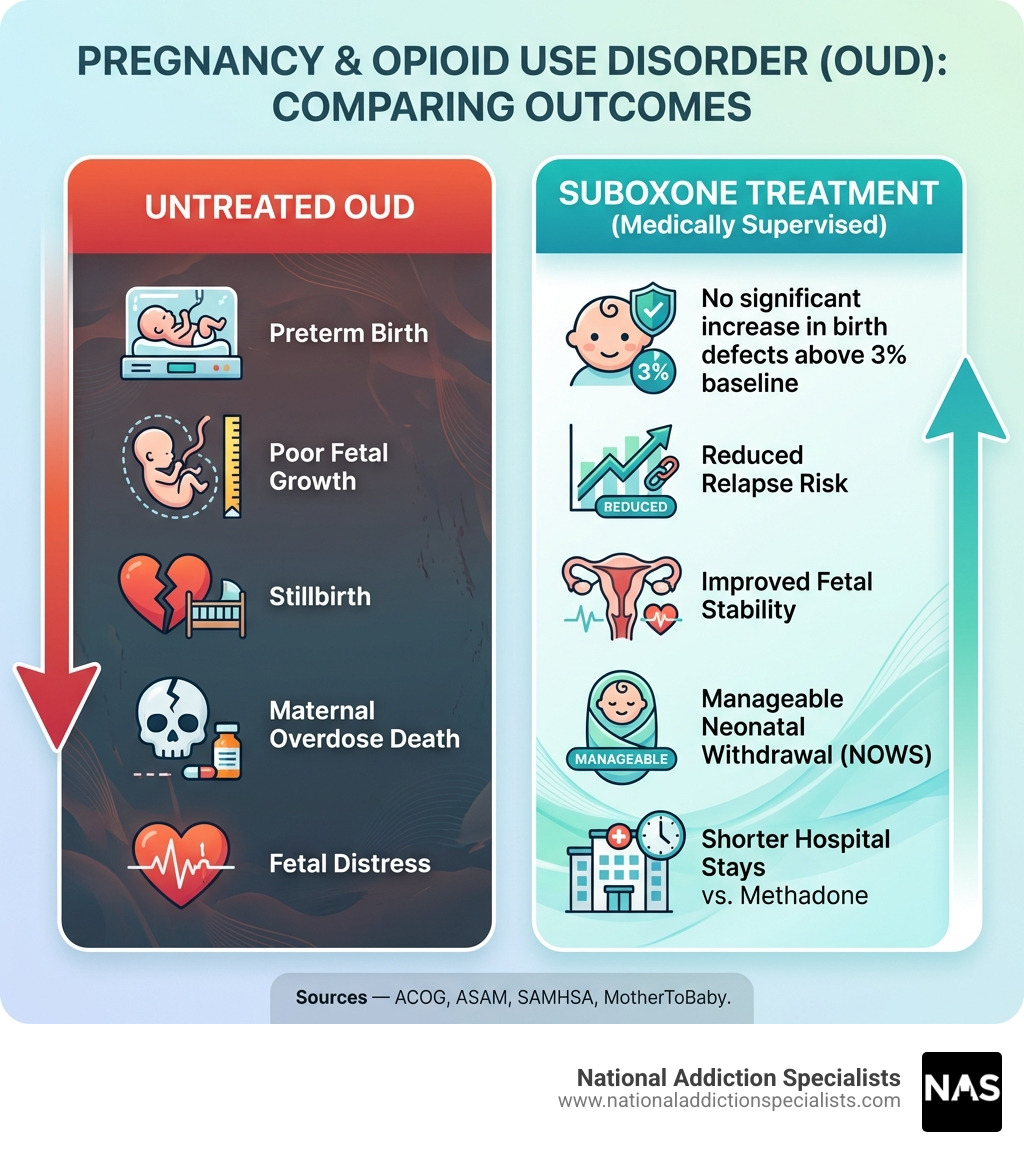
- Untreated OUD carries serious risks of its own: preterm birth, poor fetal growth, stillbirth, and maternal death
The risks of leaving opioid addiction untreated during pregnancy are well-documented and significant. Managed treatment with Suboxone, under medical supervision, is widely considered the safer path.
That said, there are real things to know — like neonatal opioid withdrawal syndrome (NOWS), how Suboxone compares to alternatives like methadone, and what breastfeeding looks like on this medication. This guide covers all of it.
I’m Chad Elkin, MD — board-certified in Addiction Medicine and founder of National Addiction Specialists — and I’ve spent my career helping patients navigate exactly these questions, including the complex intersection of opioid use disorder and pregnancy. As a fellow of ASAM and an active contributor to national and state-level clinical guidelines on topics like can taking suboxone while pregnant cause birth defects, I’m committed to giving you clear, evidence-based answers you can trust.
Can Taking Suboxone While Pregnant Cause Birth Defects?

When we talk about whether can taking suboxone while pregnant cause birth defects, we have to look at the data through the lens of “teratology”—the scientific study of congenital malformations. Every pregnancy carries a baseline risk. In the United States, about 3% of all babies are born with some type of birth defect, regardless of medication use.
Research specifically looking at buprenorphine (the primary component of Suboxone) has been reassuring. According to MotherToBaby, limited studies have not reported an increased chance of birth defects above that 3% baseline. While some older or broader studies on opioids as a general class suggested potential links to heart or gastrointestinal issues, these often didn’t account for the specific dose of buprenorphine or other lifestyle factors like tobacco use or lack of prenatal care.
During organogenesis—the critical period in the first trimester when the baby’s organs are forming—stability is key. Untreated OUD often leads to “cycles” of withdrawal and intoxication, which can be incredibly stressful for a developing fetus. By providing a steady level of medication, Suboxone helps maintain a stable intrauterine environment. For more detailed insights, you can explore our guide on Suboxone use during pregnancy.
Risk Comparison Table: Untreated OUD vs. Suboxone Treatment
| Outcome | Untreated Opioid Use Disorder | Suboxone (Buprenorphine) Treatment |
|---|---|---|
| Birth Defects | Potential risk due to instability/contaminants | No significant increase above 3% baseline |
| Fetal Growth | High risk of growth restriction | Improved; higher birth weights than methadone |
| Preterm Birth | Significantly higher risk | Lower risk; more likely to reach full term |
| Stillbirth | Increased risk due to withdrawal/overdose | Significantly reduced risk |
| Neonatal Withdrawal | Severe (Heroin/Fentanyl) | Expected but manageable (NOWS) |
Understanding Neonatal Abstinence Syndrome (NAS) and NOWS
It is important to be honest: if you take Suboxone during pregnancy, your baby may experience withdrawal after birth. This is known as Neonatal Abstinence Syndrome (NAS) or Neonatal Opioid Withdrawal Syndrome (NOWS).
This is not the same as “addiction.” Addiction is a behavioral disorder; NAS is a physical dependence that occurs because the baby was exposed to a steady supply of medication in the womb and that supply stops at birth. Symptoms typically appear within 48 to 72 hours and may include:
- Tremors or jitteriness
- High-pitched crying and irritability
- Difficulty sleeping or feeding
- Tight muscle tone
Medical teams use tools like the Finnegan scoring system to monitor these symptoms. The good news? NAS from buprenorphine is often less severe and requires shorter hospital stays than NAS from methadone or illicit opioids. Clinical guidance on NAS emphasizes supportive care, such as “rooming-in” (keeping the baby with the mother) and skin-to-skin contact, which can significantly reduce the need for further medication for the infant. If you have more questions about what to expect, check out our Suboxone treatment FAQ.
Understanding Buprenorphine-based Treatments: Suboxone and Subutex
Suboxone is a combination medication containing buprenorphine and naloxone. Buprenorphine is a partial opioid agonist, meaning it satisfies the brain’s opioid receptors enough to stop cravings and withdrawal without producing a “high.” Naloxone is added to prevent misuse (like injection).
Historically, doctors preferred Subutex (buprenorphine alone) for pregnant women because they were worried about the baby being exposed to naloxone. However, recent research has shown that the amount of naloxone absorbed when Suboxone is taken as directed is extremely low and does not appear to harm the fetus. Today, many major medical organizations consider both Suboxone and Subutex to be equally safe and effective options.
Why Suboxone is often preferred for OUD in pregnancy
We often recommend buprenorphine-based treatments because they offer several advantages for the mother-baby dyad:
- Office-Based Treatment: Unlike methadone, which often requires daily visits to a clinic, Suboxone can be prescribed in a regular office setting or via telemedicine, which is much more convenient for a busy expectant mother.
- Better Neonatal Outcomes: Research has shown that infants exposed to buprenorphine tend to have higher birth weights and larger head circumferences compared to those exposed to methadone.
- Fewer Drug Interactions: Buprenorphine generally has fewer interactions with other medications you might need during pregnancy.
To learn more about how this medication works, see our page on What is Suboxone.
Long-term effects of can taking suboxone while pregnant cause birth defects
A common worry for parents is whether the medication will affect the child’s brain or behavior years down the road. While we need more long-term studies, current meta-analyses on pediatric outcomes are encouraging.
Research hasn’t shown a clear link between prenatal buprenorphine exposure and long-term developmental problems or “lowered IQ.” Some studies have noted minor differences in visual-motor skills or attention, but it is very difficult to tell if these are caused by the medication or by other factors like genetics, environment, or tobacco use. For most families, the benefit of having a stable, healthy mother far outweighs these theoretical risks. You can read more about the role of Suboxone for opioid addiction here.
Maternal Health and Breastfeeding Guidelines
Maternal stabilization is the foundation of a healthy baby. If a mother relapses because she isn’t on enough medication, the risk to the baby (from overdose, infection, or lack of prenatal care) is much higher than the risk of the medication itself.
When it comes to breastfeeding, the message from the medical community is a resounding “Yes!” in most cases. Buprenorphine passes into breast milk in very small amounts—so small that it is unlikely to affect the baby. In fact, breastfeeding guidelines suggest that breastfeeding can actually help ease the baby’s withdrawal symptoms and promote better bonding.
However, breastfeeding is only recommended if the mother is stable on her medication and not using illicit substances (like alcohol or street drugs). To understand why this is so important, see our article on alcohol addiction during pregnancy risks and consequences.
Frequently Asked Questions
Can taking suboxone while pregnant cause birth defects in the first trimester?
As mentioned, the first trimester is when organogenesis (organ formation) occurs. While no medication is 100% risk-free, the clinical recommendations for OUD in pregnancy state that buprenorphine is a first-line treatment. The risk of birth defects does not appear to be significantly higher than the general population’s 3% risk. Stopping your medication during the first trimester can actually be more dangerous due to the risk of relapse or withdrawal-induced miscarriage.
Is it safe to stop Suboxone suddenly during pregnancy?
No. You should never stop Suboxone “cold turkey” while pregnant. Sudden withdrawal can cause the uterus to contract, leading to fetal distress, preterm labor, or even miscarriage. If a woman wishes to taper off, it must be done very slowly and under strict medical supervision. Most experts recommend staying on a stable dose until after the baby is born.
What do major medical organizations recommend?
The American College of Obstetricians and Gynecologists (ACOG), the American Society of Addiction Medicine (ASAM), and SAMHSA all agree: Medication-Assisted Treatment (MAT) with either methadone or buprenorphine is the “standard of care” for pregnant women with OUD. They discourage medically supervised withdrawal (detox) because the relapse rate is high, and relapse during pregnancy is often fatal for both mother and child.
Conclusion
At National Addiction Specialists, we understand that being pregnant while managing an addiction is overwhelming. You want what is best for your baby, and so do we. We provide telemedicine-based Suboxone treatment throughout Tennessee and Virginia, allowing you to receive expert, confidential care from the comfort and safety of your own home.
Our personalized recovery plans are designed to support you through every trimester and into motherhood. We accept Medicaid and Medicare to ensure that high-quality care is accessible to everyone in our community, from Brentwood to Virginia Beach.
Make an Appointment to Treat Addiction Please don’t hesitate. Make an appointment today.
This article was medically reviewed by: Chad Elkin, MD, DFASAM is a board-certified addiction medicine physician, founder, and Chief Medical Officer of National Addiction Specialists, dedicated to treating substance use disorders. A Distinguished Fellow of the American Society of Addiction Medicine (ASAM), Dr Elkin currently serves as President of the Tennessee Society of Addiction Medicine (TNSAM) and has held various leadership roles within the organization. Dr Elkin chairs ASAM’s Health Technology Subcommittee and is an active member of its Practice Management and Regulatory Affairs Committee, State Advocacy and Legislative Affairs Committee, and other committees. He also serves on the planning committee for the Vanderbilt Mid-South Addiction Conference. Committed to advancing evidence-based policy, Dr Elkin is Chairman of the Tennessee Association of Alcohol, Drug, & Other Addiction Services (TAADAS) Addiction Medicine Council, which collaborates with the TN Department of Mental Health & Substance Abuse Services (TDMHSAS). He has contributed to numerous local, state, and national task forces, helping develop professional guidelines, policies, and laws that align with best practices in addiction medicine. His work focuses on reducing addiction-related harm, combating stigma, and ensuring access to effective treatment. Passionate about the field of addiction medicine, he remains dedicated to shaping policy and enhancing patient care.
Suboxone® and Subutex® are a registered trademark of Indivior UK Limited. Any mention and reference of Suboxone® and Subutex® in this website is for informational purposes only and is not an endorsement or sponsorship by Indivior UK Limited.