
Understanding Clinical Alcohol Withdrawal Risk Assessment Scales
How to Assess Alcohol Withdrawal Risk Before Symptoms Escalate
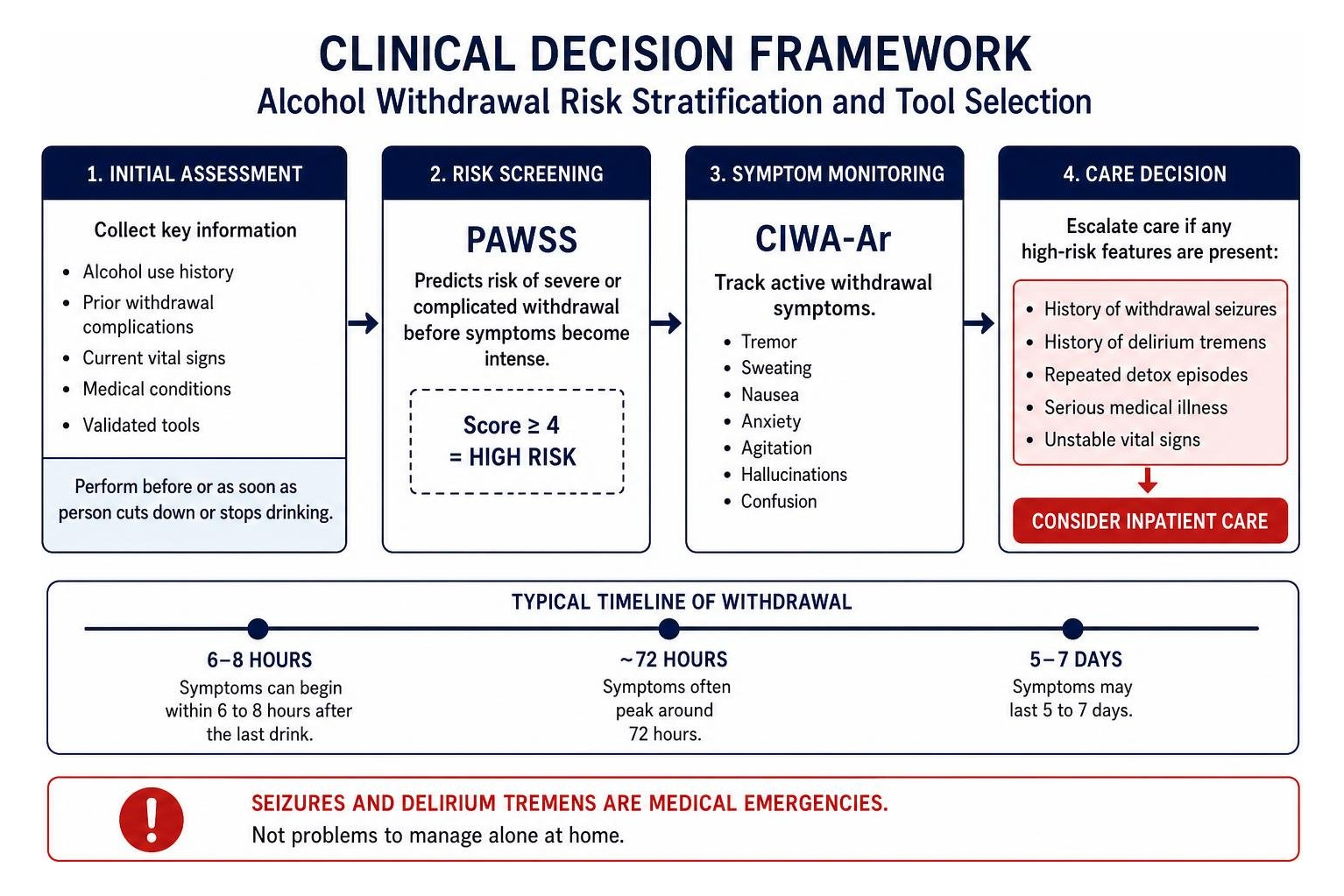
An alcohol withdrawal risk assessment should happen before or as soon as a person cuts down or stops drinking. A clinician combines alcohol-use history, prior withdrawal complications, current vital signs, medical conditions, and validated tools to decide how closely the person needs to be monitored.
- Use PAWSS to predict the risk of severe or complicated withdrawal before symptoms become intense. A score of 4 or higher signals high risk.
- Use CIWA-Ar to track active symptoms, such as tremor, sweating, nausea, anxiety, agitation, hallucinations, and confusion.
- Treat a history of withdrawal seizures, delirium tremens, repeated detox episodes, serious medical illness, or unstable vital signs as warning signs that may require inpatient care.
Withdrawal symptoms can begin within 6 to 8 hours after the last drink, often peak around 72 hours, and may last 5 to 7 days. Seizures and delirium tremens are medical emergencies, not problems to manage alone at home.
I’m Chad Elkin, a board-certified physician in Addiction Medicine and Internal Medicine and the Founder and Medical Director of National Addiction Specialists. My work in alcohol withdrawal risk assessment focuses on helping people receive safe, evidence-based care that matches their medical risks, daily responsibilities, and recovery goals.
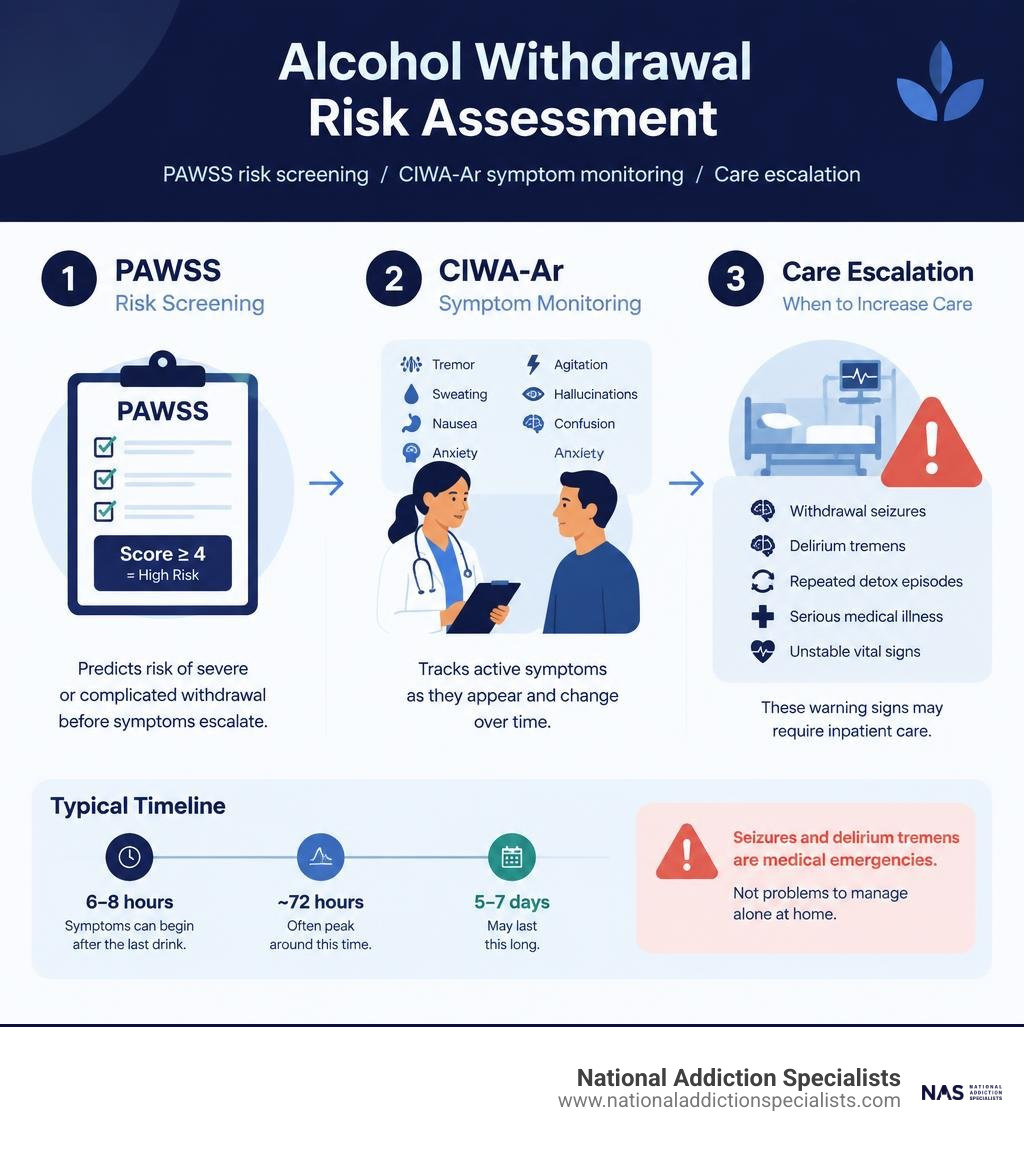
Simple guide to alcohol withdrawal risk assessment:
Evidence-Based Protocols for Alcohol Withdrawal Risk Assessment
When chronic alcohol intake drops abruptly, the central nervous system undergoes a profound neurochemical shift. Prolonged alcohol exposure down-regulates inhibitory gamma-aminobutyric acid (GABA-A) receptors while up-regulating excitatory N-methyl-D-aspartate (NMDA) glutamate receptors. Removing ethanol suddenly leaves the central nervous system in an unchecked state of hyperexcitability, driving the physiological cascade known as alcohol withdrawal syndrome (AWS).
Up to 50% of individuals with alcohol use disorder experience withdrawal symptoms upon cessation, ranging from mild tremors to life-threatening autonomic collapse. To prevent progression to severe complications, clinical teams rely on validated risk assessment tools that distinguish between predicting baseline risk and monitoring active symptoms.
| Clinical Assessment Tool | Primary Purpose | Scoring Mechanism | Target Population | Clinical Setting |
|---|---|---|---|---|
| PAWSS | Predicts risk of severe/complicated AWS before symptoms emerge | 10-point scale (Interview + Clinical/Lab data) | Adults admitted with recent drinking history or positive blood alcohol | Emergency Departments, General Hospital Floors |
| CIWA-Ar | Measures active severity of withdrawal symptoms | 10 symptom domains (0–67 total points) | Communicative patients in active, confirmed withdrawal | Detoxification Units, Inpatient Wards, Emergency Rooms |
| GMAWS | Triage and symptom-triggered medication protocol | Multi-domain observational scale | Inpatients with significant medical comorbidities | Medical/Surgical Floors, Critical Care Escalation |
| AWTT | Rapid, multivariable electronic triage model | 8 objective electronic health record variables | Emergency department arrivals requiring admission decisions | Acute Emergency Departments |
Integrating PAWSS into Alcohol Withdrawal Risk Assessment
The Prediction of Alcohol Withdrawal Severity Scale (PAWSS) is a validated 10-item instrument designed to identify patients at risk of complicated withdrawal (delirium tremens, withdrawal seizures, or severe autonomic instability) before overt neurotoxic symptoms peak.
Unlike reactive severity scales, PAWSS is administered upon clinical encounter. It combines threshold screening criteria (such as alcohol consumption within the past 30 days or a detectable blood alcohol concentration) with eight targeted interview questions and two objective clinical indicators:
- History of alcohol withdrawal seizures
- History of delirium tremens (DTs)
- History of prior medically supervised detoxifications
- Concurrent abuse of other GABAergic sedatives
- Recent binge drinking combined with sustained heavy intake
- Blood alcohol level $\ge 200\text{ mg/dL}$ on presentation
- Autonomic hyperactivity (systolic $\text{BP} \ge 140\text{ mmHg}$, heart rate $\ge 120\text{ bpm}$, or coarse tremor)
A PAWSS score of 4 or higher indicates a high risk for complicated AWS. Meta-analytic data published in systematic reviews, including the Predictors of Severe Alcohol Withdrawal Study, reveal that a PAWSS score $\ge 4$ carries a positive likelihood ratio of 174 with a specificity of 0.93 (PMCID PMC6905615). Conversely, scores of 3 or fewer demonstrate a negative likelihood ratio of 0.07 with a sensitivity of 0.99, making PAWSS a powerful rule-out tool for severe complications.
CIWA-Ar Scoring and Real-Time Severity Monitoring
While PAWSS predicts baseline risk, the Clinical Institute Withdrawal Assessment for Alcohol-Revised (CIWA-Ar) evaluates the real-time severity of active withdrawal. CIWA-Ar is a 10-item instrument requiring less than two minutes to administer:
- Nausea and vomiting (0–7)
- Tremor (0–7, evaluated with arms extended)
- Paroxysmal sweats (0–7, rated by visual inspection)
- Anxiety (0–7, self-reported and observed)
- Agitation (0–7, ranging from normal activity to pacing)
- Tactile disturbances (0–7, itching, burning, pins-and-needles, formication)
- Auditory disturbances (0–7, hyperacusis to frank auditory hallucinations)
- Visual disturbances (0–7, photosensitivity to vivid hallucinations)
- Headache / fullness in head (0–7)
- Orientation and clouding of sensorium (0–4)
CIWA-Ar scores guide clinical staging and medication administration across the stages of alcohol withdrawal:
- Mild Withdrawal (Score < 8–10): Minimal physical distress; non-pharmacological supportive care is typically adequate.
- Moderate Withdrawal (Score 8–15): Autonomic hyperactivity begins; symptom-triggered pharmacotherapy is indicated.
- Severe Withdrawal (Score $\ge 15$ to 20): Marked neuroexcitation with high risk for seizures and delirium tremens. A CIWA-Ar score above 15 carries a relative risk of 3.72 (95% CI 2.85–4.85) for developing severe clinical complications.
Because seven of the ten CIWA-Ar items rely entirely on patient self-report, scores can be skewed by communication barriers, severe cognitive impairment, psychiatric illness, or secondary gain. Objective physical signs—such as tremor amplitude and paroxysmal sweating—must be weighed alongside the subjective score.
Alternative Stratification Tools: GMAWS, AWTT, and BAWS
For clinical environments where CIWA-Ar is impractical, alternative validated tools offer streamlined risk stratification:
- Glasgow Modified Alcohol Withdrawal Scale (GMAWS): As outlined in the Glasgow Assessment and Management of Alcohol Guideline, GMAWS condenses scoring into direct observational domains. It integrates rapid Fast Alcohol Screening Test (FAST) scores and tailored dosing schedules, making it ideal for medical-surgical wards managing patients with co-occurring liver disease or respiratory compromise.
- Alcohol Withdrawal Triage Tool (AWTT): Developed for emergency departments, AWTT uses eight objective variables derived from electronic health records (including baseline pulse, laboratory biomarkers, and prior admission data). At a cutoff score of 3, AWTT demonstrates 90.5% sensitivity for identifying severe AWS without requiring an extensive clinical interview.
- Brief Alcohol Withdrawal Scale (BAWS) & Short Alcohol Withdrawal Scale (SAWS): Brief, validated questionnaires that simplify outpatient symptom monitoring, allowing community and ambulatory programs to track progression efficiently.
High-Risk Predictors for Complicated Withdrawal and Delirium Tremens

Delirium tremens (DTs) occurs in up to 5% of hospitalized patients experiencing alcohol withdrawal syndrome and carries significant mortality if untreated. Identifying clinical red flags early prevents acute decompensation.
Clinical Red Flags and Kindling Pathophysiology
Patients who undergo repeated, unmanaged withdrawal episodes experience progressive neuronal sensitization—a neurobiological mechanism termed the kindling phenomenon. Each consecutive withdrawal cycle amplifies glutamate neurotoxicity and blunts GABAergic inhibition. Over time, subsequent withdrawals occur faster, manifest with greater autonomic volatility, and substantially lower the seizure threshold.
Clinicians must monitor for key high-risk indicators:
- Prior Delirium Tremens or Withdrawal Seizures: A history of DTs carries a positive likelihood ratio of 2.9 (95% CI 1.7–5.2) for recurrence (PMCID PMC6905615). Approximately one-third of patients with withdrawal seizures progress to delirium tremens if untreated.
- Baseline Systolic Blood Pressure $\ge 140\text{ mmHg}$ or Pulse $\ge 120\text{ bpm}$: Severe autonomic rebound signals profound sympathetic activation.
- Advanced Age (> 65 years): Decreased metabolic clearance and reduced physiological reserve increase susceptibility to severe delirium and encephalopathy.
- Multiple Prior Detoxifications: Demonstrates advanced kindling progression and high neurochemical volatility.
Reviewing a patient’s delirium tremens timeline reveals that while seizures typically strike 12 to 48 hours following the final drink, delirium tremens peaks between 48 and 96 hours. For complex cases, our comprehensive severe alcohol withdrawal guide details inpatient medical escalation protocols.
Differential Diagnosis and Medical Mimics
Alcohol withdrawal is a diagnosis of exclusion. Because sympathetic excess and altered mental status occur in numerous acute conditions, clinicians must systematically rule out medical mimics:
- Central Nervous System Emergencies: Intracranial hemorrhage (subdural or epidural hematomas secondary to unwitnessed falls), acute bacterial or viral meningitis, and non-convulsive status epilepticus.
- Systemic Infections: Sepsis, severe aspiration pneumonia, and spontaneous bacterial peritonitis.
- Metabolic and Endocrine Derangements: Hepatic encephalopathy, severe hypoglycemia, ketoacidosis, and profound electrolyte imbalances (hypomagnesemia, hypokalemia, hyponatremia).
- Toxicological Exposures: Sympathomimetic toxicity (cocaine, amphetamines), anticholinergic poisoning, or sedative-hypnotic withdrawal.
- Acute Gastrointestinal Bleeding: Esophageal variceal hemorrhage or peptic ulcer perforation, which can precipitate secondary encephalopathy.
Diagnostic workups should consistently include a complete metabolic panel (CMP), complete blood count (CBC), baseline liver function tests, coagulation studies, serum magnesium, and neuroimaging when focal neurological deficits or head trauma are suspected.
Clinical Management and Pharmacotherapy Pathways

Stabilizing the central nervous system requires targeted pharmacotherapy to restore GABAergic tone, suppress glutamate-mediated neurotoxicity, and correct nutritional deficiencies.
First-Line Benzodiazepine and Phenobarbital Regimens
Benzodiazepines remain the historical gold standard for acute alcohol withdrawal management. By acting as positive allosteric modulators at the GABA-A receptor, they reduce psychomotor agitation, lower seizure risk, and mitigate progression to delirium tremens, as outlined in the ASAM Clinical Practice Guideline on Alcohol Withdrawal.
- Symptom-Triggered Dosing: Medication is administered only when CIWA-Ar scores reach 8 to 10 (e.g., Diazepam 10–20 mg PO or Lorazepam 2–4 mg PO/IV every 1–2 hours until CIWA-Ar < 8). This strategy reduces cumulative sedative exposure and shortens treatment duration compared to fixed-schedule tapers.
- Agent Selection: Long-acting agents (diazepam, chlordiazepoxide) provide smoother withdrawal transitions due to self-tapering active metabolites. In patients with advanced liver cirrhosis, severe hepatic failure, or elderly demographics, short-to-intermediate acting agents that bypass hepatic oxidation (Lorazepam, Oxazepam) prevent drug accumulation and excessive sedation.
- Phenobarbital Regimens: In patients refractory to high-dose benzodiazepines (requiring > 50–100 mg of diazepam equivalent in the first few hours) or those with advanced GABA tolerance, phenobarbital protocols provide direct GABA-A channel activation and NMDA glutamate inhibition. Phenobarbital loading (10–15 mg/kg IV in divided doses) achieves rapid seizure suppression and reduces intensive care unit (ICU) admissions.
For a detailed clinical overview of pharmacologic stabilization, review our guide to medically supervised withdrawal protocols.
Role of Adjunctive Therapies and Nutritional Support
Non-sedative medications serve as valuable adjuncts to reduce withdrawal distress, though they should not replace primary GABAergic agents for seizure prophylaxis:
- Anticonvulsants (Gabapentin, Carbamazepine): Gabapentin (300–600 mg TID) modulates voltage-gated calcium channels, effectively dampening mild-to-moderate withdrawal symptoms, reducing post-acute anxiety, and helping prevent early relapse without hepatic clearance.
- Alpha-2 Adrenergic Agonists (Clonidine, Dexmedetomidine): Mitigate autonomic hyperactivity (tachycardia, hypertension, diaphoresis) and reduce psychomotor restlessness. Dexmedetomidine infusions are utilized in critical care settings as steroid-sparing or benzodiazepine-sparing sedatives that do not depress respiratory drive.
- Aggressive Thiamine and Micronutrient Repletion: Chronic alcohol consumption impairs intestinal thiamine absorption and depletes hepatic stores. Parenteral thiamine (200–500 mg IV/IM daily for 3–5 days, followed by oral maintenance) must be administered prior to glucose infusions to prevent precipitating acute Wernicke-Korsakoff encephalopathy. Magnesium and potassium repletion are equally essential to stabilize cardiac conduction and maintain seizure thresholds.
Clinicians can track symptom resolution using our step-by-step alcohol detox roadmap.
Determining Levels of Care: Inpatient vs. Ambulatory Detoxification
Matching patient risk to the appropriate level of care is critical for both patient safety and healthcare system efficiency. The American Society of Addiction Medicine (ASAM) Criteria framework stratifies withdrawal management into clear care levels based on acute intoxication, withdrawal risk, biomedical conditions, and recovery environment.
Clinical Challenges in Alcohol Withdrawal Risk Assessment
Accurate risk assessment becomes challenging when patients cannot communicate effectively or present with severe medical comorbidities:
- Non-Verbal, Intubated, or Delirious Patients: Subjective scales like CIWA-Ar cannot be completed. Clinicians must shift to objective behavioral and sedation scales, such as the Richmond Agitation-Sedation Scale (RASS) or the Minnesota Detoxification Scale (MINDS), titrating sedatives against autonomic parameters (heart rate, blood pressure, diaphoresis, pupil size).
- Severe Hepatic Encephalopathy vs. Withdrawal Delirium: Hyperammonemia, asterixis, and lethargy suggest hepatic failure, where overzealous benzodiazepine administration can precipitate coma.
- Pregnancy Considerations: Withdrawal induces severe uteroplacental vasoconstriction and fetal hypoxia. Pregnant patients require immediate inpatient monitoring with fetal non-stress testing and careful cross-specialty coordination.
In complex scenarios, understanding how alcohol use disorder and mental health intersect helps clinicians distinguish underlying psychiatric disorders from acute, withdrawal-induced psychosis.
If you or a loved one is struggling with substance use and ready to take the next step in recovery, please reach out to our compassionate medical team. Make an Appointment to Treat Addiction Please don’t hesitate. Make an appointment today.
Outpatient Management Protocols and Safety Criteria
Ambulatory detoxification is safe, cost-effective, and empowering for appropriately screened patients. According to international protocols outlined in the Outpatient Alcohol Withdrawal Management Guide, candidates for outpatient care must meet strict safety criteria:
- Low baseline risk (PAWSS < 4, no history of DTs or withdrawal seizures)
- Mild-to-moderate active symptoms (baseline CIWA-Ar < 10)
- Absence of unstable psychiatric conditions (active suicidality, severe psychosis)
- Absence of decompensated medical illness (acute cardiovascular, hepatic, or renal failure)
- Presence of a reliable, sober support person who can monitor the patient continuously for the first 72 hours
- Ability to reliably attend daily clinic check-ins or telehealth appointments and tolerate oral medications
Before considering home-based recovery, review what to know before trying detox at home and explore our validated outpatient detoxification options.
Frequently Asked Questions About Alcohol Withdrawal Risk Assessment
What is the primary clinical difference between PAWSS and CIWA-Ar?
PAWSS is a predictive risk-stratification tool applied at baseline to assess a patient’s statistical probability of developing complicated or life-threatening withdrawal (seizures, DTs). In contrast, CIWA-Ar is a severity-monitoring instrument used to evaluate active, real-time withdrawal symptoms and guide symptom-triggered medication dosing.
What CIWA-Ar score threshold indicates the need for inpatient or ICU admission?
A CIWA-Ar score of 15 or higher indicates severe alcohol withdrawal requiring structured inpatient medical stabilization. Scores consistently exceeding 20, rapid escalation despite high-dose benzodiazepines, or the emergence of delirium, recurrent seizures, and severe hemodynamic instability warrant immediate transfer to an intensive care unit (ICU) for continuous telemetry and parenteral therapy.
Can mild alcohol withdrawal be safely managed in an outpatient setting?
Yes. Patients stratified as low-risk (PAWSS < 4, baseline CIWA-Ar < 10, no history of seizures/DTs, and no acute unstable comorbidities) can be safely managed in an outpatient or telemedicine-supported setting. Treatment typically involves scheduled non-benzodiazepine anticonvulsants (such as gabapentin), oral thiamine supplementation, daily clinical reassessments, and a dedicated, sober home caregiver.
Conclusion
Standardized clinical assessment is the cornerstone of safe alcohol withdrawal management. By integrating predictive tools like PAWSS with real-time severity monitoring using CIWA-Ar, healthcare providers can prevent life-threatening complications, optimize sedative exposure, and direct patients to the safest level of care.
Detoxification is only the initial stabilization phase of a broader continuum of care. Long-term recovery requires transitioning from acute medical management into evidence-based addiction treatment that addresses the biological, behavioral, and psychological foundations of substance use disorders.
At National Addiction Specialists, we provide comprehensive, telemedicine-based recovery solutions across Tennessee and Virginia, offering confidential medication-assisted treatment, personalized counseling, and individualized care plans from the comfort of home. Discover how our evidence-based outpatient addiction treatment helps individuals achieve lasting, long-term recovery.
References
Suboxone® and Subutex® are a registered trademark of Indivior UK Limited. Any mention and reference of Suboxone® and Subutex® in this website is for informational purposes only and is not an endorsement or sponsorship by Indivior UK Limited.
This article was medically reviewed by: Chad Elkin, MD, DFASAM is a board-certified addiction medicine physician, founder, and Chief Medical Officer of National Addiction Specialists, dedicated to treating substance use disorders. A Distinguished Fellow of the American Society of Addiction Medicine (ASAM), Dr Elkin currently serves as President of the Tennessee Society of Addiction Medicine (TNSAM) and has held various leadership roles within the organization. Dr Elkin chairs ASAM’s Health Technology Subcommittee and is an active member of its Practice Management and Regulatory Affairs Committee, State Advocacy and Legislative Affairs Committee, and other committees. He also serves on the planning committee for the Vanderbilt Mid-South Addiction Conference. Committed to advancing evidence-based policy, Dr Elkin is Chairman of the Tennessee Association of Alcohol, Drug, & Other Addiction Services (TAADAS) Addiction Medicine Council, which collaborates with the TN Department of Mental Health & Substance Abuse Services (TDMHSAS). He has contributed to numerous local, state, and national task forces, helping develop professional guidelines, policies, and laws that align with best practices in addiction medicine. His work focuses on reducing addiction-related harm, combating stigma, and ensuring access to effective treatment.Passionate about the field of addiction medicine, he remains dedicated to shaping policy and enhancing patient care.