Smart Strategies to Navigate the Stages of Alcohol Withdrawal
Managing Alcohol Withdrawal Symptoms Safely Starts With a Plan
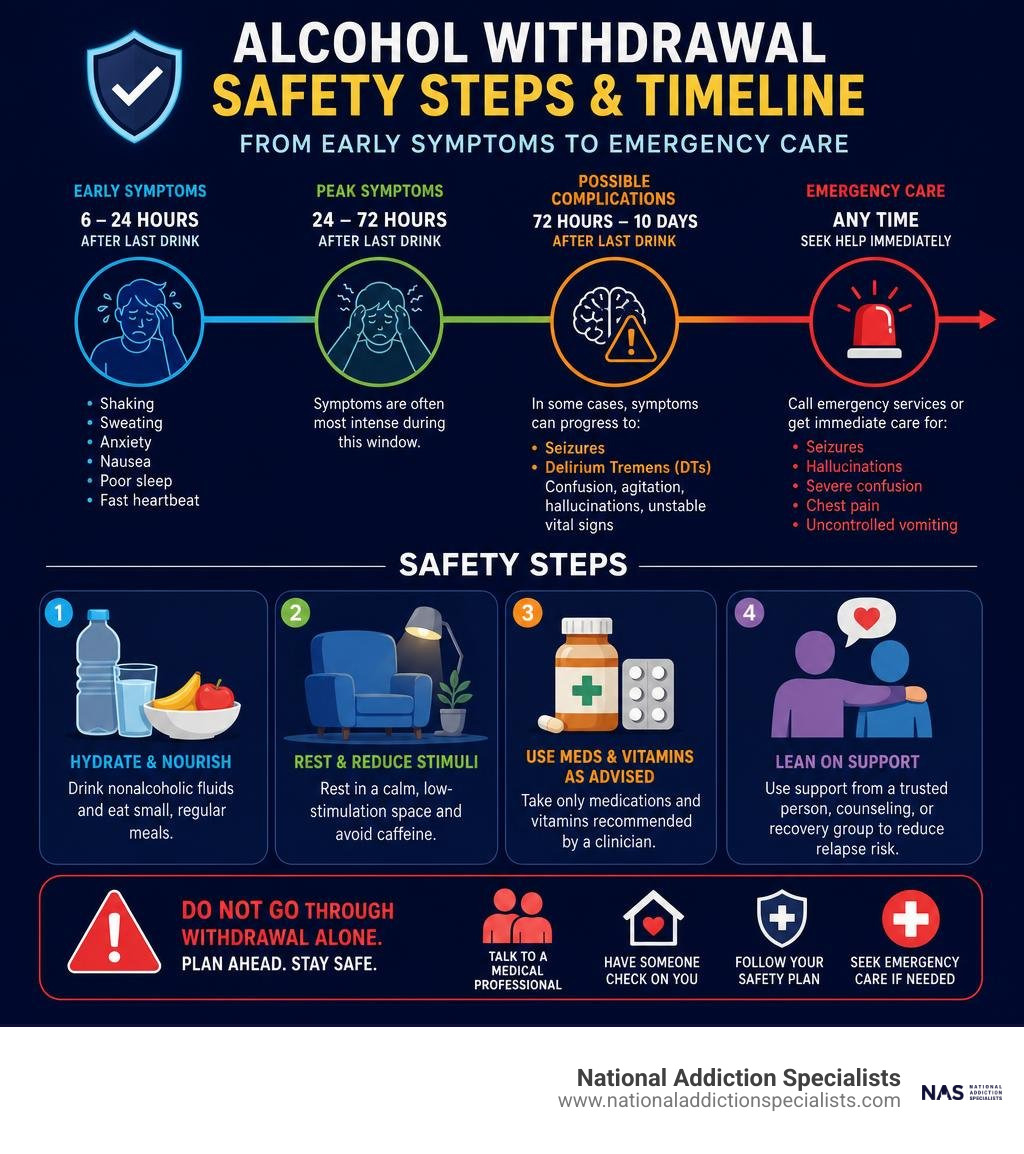
Do not try to push through alcohol withdrawal alone if you drink heavily or have had withdrawal before. The safest approach is to speak with a medical professional before stopping, arrange for someone to check on you, and use emergency care right away for seizures, hallucinations, severe confusion, chest pain, or uncontrolled vomiting.
For mild symptoms under clinician guidance, focus on:
- Drinking nonalcoholic fluids and eating small, regular meals.
- Resting in a calm, low-stimulation space and avoiding caffeine.
- Taking only medications and vitamins recommended by a clinician.
- Using support from a trusted person, counseling, or recovery group to reduce relapse risk.
Alcohol withdrawal can begin within 6 to 24 hours after the last drink and is often most intense between 24 and 72 hours. Shaking, sweating, anxiety, nausea, poor sleep, and a fast heartbeat can feel overwhelming. In some cases, symptoms progress to seizures or delirium tremens, a life-threatening state of confusion, agitation, and unstable vital signs.
I am Chad Elkin, MD, a board-certified Addiction Medicine and Internal Medicine physician and the Founder and Medical Director of National Addiction Specialists. My work in telehealth addiction care includes helping patients access private, practical medical support for managing alcohol withdrawal symptoms and building a safer path into long-term recovery.
Managing alcohol withdrawal symptoms terms simplified:
- Suboxone for alcohol withdrawal
- severe alcohol withdrawal treatment
- alcohol withdrawal duration of symptoms
The Biological Mechanism: Why Withdrawal Occurs
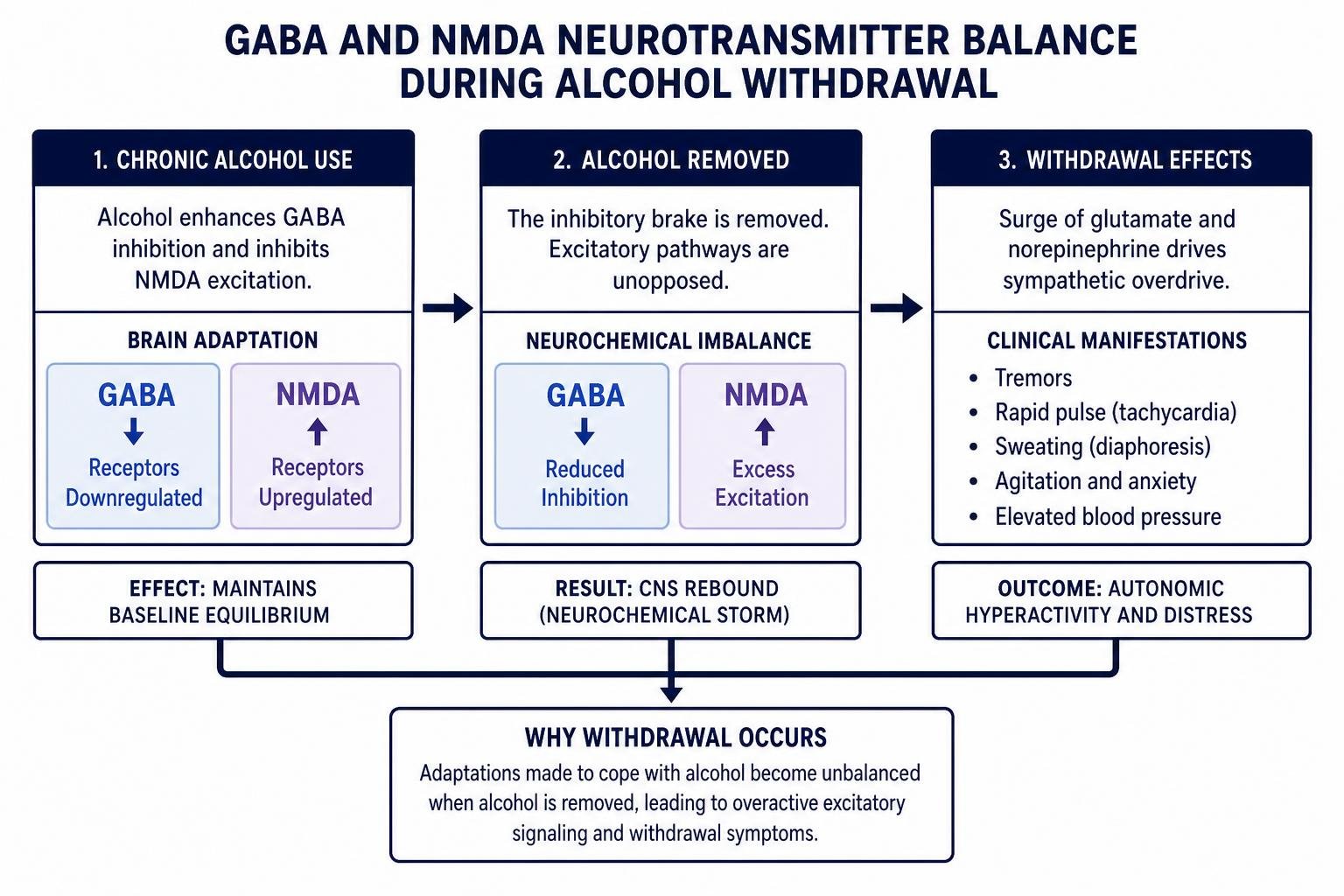
When someone consumes alcohol regularly over an extended period, the central nervous system adapts to its constant presence. Alcohol acts as a central nervous system depressant. It enhances the inhibitory effects of gamma-aminobutyric acid (GABA) at the GABA-A receptor sites and inhibits the excitatory effects of glutamate at N-methyl-D-aspartate (NMDA) receptors.
To maintain baseline equilibrium, the brain downregulates its GABA receptors and upregulates its NMDA receptors. When alcohol is abruptly removed, this suppressive brake disappears, leaving the excitatory pathways completely unopposed. This sudden imbalance explains why your body throws a tantrum when you quit drinking. The resulting neurochemical storm drives autonomic hyperactivity, causing tremors, rapid pulse, agitation, and elevated blood pressure.
Central Nervous System Rebound and Neurochemistry
The sudden drop in blood alcohol concentration triggers a surge of excitatory neurotransmitters, primarily glutamate and norepinephrine. This surge shifts the sympathetic nervous system into severe overdrive. Norepinephrine elevation produces the classic physical manifestations of withdrawal: tachycardia (heart rate over 100 beats per minute), profuse diaphoresis (sweating), pupillary dilation, and fine tremors in the hands.
Understanding this neurochemistry makes it easier to spot the initial warning signs. Knowing how to recognize the signs of alcohol withdrawal early allows individuals and their loved ones to intervene before autonomic instability escalates into dangerous clinical territory.
The Kindling Effect and Long-Term Neurological Risks
Repeated episodes of alcohol withdrawal cause cumulative changes in central nervous system excitability—a phenomenon known as kindling. Each subsequent detoxification episode alters neuronal pathways, lowering the threshold for severe complications.
Patients who have undergone multiple unmedicated or abrupt cessations are at substantially higher risk for:
- Earlier onset of severe autonomic symptoms during future attempts.
- Increased vulnerability to generalized tonic-clonic withdrawal seizures.
- Greater likelihood of developing alcohol withdrawal delirium.
- Heightened long-term alcohol cravings and reduced responsiveness to standard sedative protocols.
Alcohol Withdrawal Timeline: Tracking Symptom Progression
The course of alcohol withdrawal varies based on the volume and frequency of consumption, individual metabolism, overall health, and past withdrawal history. Having a clear roadmap helps anticipate changes and ensure timely medical support.

A comprehensive guide like from hour 1 to day 10 your alcohol detox roadmap offers an overview of the recovery trajectory. The stages generally break down into predictable clinical windows:
| Withdrawal Stage | Typical Onset | Common Symptoms | Clinical Severity Risk |
|---|---|---|---|
| Stage 1: Early | 6–24 hours | Tremors, insomnia, nausea, mild anxiety, elevated heart rate | Mild to Moderate |
| Stage 2: Peak / High-Risk | 24–72 hours | Diaphoresis, vomiting, visual/auditory disturbances, seizures | Moderate to Severe |
| Stage 3: Late / Complicated | 48–96+ hours | Delirium tremens, severe disorientation, autonomic instability, fever | Critical Medical Emergency |
Early Symptoms (6 to 24 Hours)
Milder symptoms usually start within 8 to 24 hours from the last alcoholic drink, though onset can occur as early as 6 hours while detectable alcohol remains in the bloodstream. Initial signs include fine tremors of the hands, sleep disruption, generalized fatigue, headache, loss of appetite, and gastrointestinal upset. Psychological symptoms like irritability, restlessness, and acute rebound anxiety commonly surface during this window.
Peak Discomfort and High-Risk Phase (24 to 72 Hours)
Symptoms are often at their worst between 24 and 72 hours after you stop drinking. During this peak phase, autonomic instability intensifies. Body temperature rises, blood pressure spikes, and tremors become pronounced.
Approximately 10% of individuals with alcohol withdrawal syndrome experience generalized tonic-clonic seizures, usually occurring between 12 and 48 hours following cessation. Left untreated, up to one in three of these patients go on to experience delirium tremens. Transient perceptual disturbances—such as tactile sensations of itching, pins-and-needles, or auditory hallucinations—may also manifest during this interval without full cognitive disorientation.
Late Complications and Delirium Tremens (48 to 96+ Hours)
Only about 1% to 1.5% of people with alcohol withdrawal develop delirium tremens (DTs), but it remains a life-threatening medical emergency. DTs typically emerge between 48 and 96 hours post-cessation, characterized by severe global confusion, marked disorientation, vivid hallucinations, dangerous tachycardia, extreme hypertension, and hyperthermia.
Without aggressive inpatient medical intervention, historical mortality rates approached 15%, though modern protocols keep mortality under 1%. Understanding the clock on delirium tremens and what to expect is critical for early identification and hospitalization.
Clinical Protocols for Managing Alcohol Withdrawal Symptoms
Evidence-based clinical guidelines, such as the ASAM clinical practice guidelines, outline standardized procedures for evaluating risk, managing symptoms, and initiating recovery. Medically managed withdrawal focuses on suppressing central nervous system hyperexcitability, preventing progression to seizures and delirium, and correcting nutritional deficiencies. For a deeper look at clinical oversight, review everything you need to know about medically supervised withdrawal.
Medical Assessment and the CIWA-Ar Scale
Clinicians assess withdrawal severity and monitor progression using validated scoring tools. The Clinical Institute Withdrawal Assessment for Alcohol, revised (CIWA-Ar) evaluates 10 specific categories: nausea/vomiting, tremor, paroxysmal sweats, anxiety, agitation, tactile disturbances, auditory disturbances, visual disturbances, headache, and orientation.
CIWA-Ar scoring categories include:
- Mild: Score < 10
- Moderate: Score 10–18
- Severe / High Risk: Score ≥ 19
Hospital and clinical teams also rely on comprehensive protocols for hospitalized alcohol withdrawal management protocols and predictive risk tools like the Prediction of Alcohol Withdrawal Severity Scale (PAWSS) to identify patients who need specialized pharmacological management.
First-Line Pharmacotherapy and Nutritional Support
Benzodiazepines—such as diazepam, chlordiazepoxide, and lorazepam—remain the gold standard for acute alcohol withdrawal management. They cross-react with GABA-A receptors, safely substituting for alcohol’s depressant effect and preventing seizures and autonomic collapse. In monitored clinical environments, symptom-triggered dosing regimens (administering medication only when assessment scores exceed predefined thresholds) are preferred over rigid fixed-schedule dosing because they reduce total medication exposure and shorten treatment duration.
Chronic heavy drinking severely depletes micronutrients. Clinicians prioritize:
- Thiamine (Vitamin B1): Administered parenterally or orally (100–500 mg daily) prior to any carbohydrate or intravenous glucose intake to prevent acute Wernicke-Korsakoff syndrome, a debilitating neurological condition.
- Folate and Multivitamins: Repleted daily to address systemic nutritional anemia and support cellular repair.
- Magnesium and Potassium: Monitored and replaced to prevent cardiac arrhythmias and neuromuscular irritability.
Outpatient vs. Inpatient Levels of Care
Determining the appropriate setting for withdrawal management is essential for patient safety. Clinicians evaluate drinking history, previous withdrawal complications, psychiatric stability, medical comorbidities, and available social support.

Managing Alcohol Withdrawal Symptoms in Ambulatory and Outpatient Settings
Ambulatory and outpatient withdrawal management is suitable for individuals presenting with mild to moderate symptoms (CIWA-Ar < 10) who have no history of seizures or DTs and possess a stable home environment. Outpatient detoxification offers flexibility, privacy, and lower overall costs. The average cost of rehab across standard inpatient settings is $13,475 according to the National Center for Drug Abuse Statistics, making outpatient models an accessible alternative when clinically indicated.
Outpatient care requires structured clinical oversight, daily check-ins, caregiver monitoring, and clear instructions for emergency escalation.
If you or a family member are ready to build a comprehensive recovery plan, make an appointment to treat addiction. Please don’t hesitate. Make an appointment today to explore personalized, evidence-based care options.
Critical Red Flags Requiring Immediate Hospitalization
Inpatient hospitalization is necessary when high-risk clinical indicators are present. Do not attempt home management if you or your loved one experiences:
- A history of withdrawal seizures, delirium tremens, or previous complicated detoxifications.
- Active visual, tactile, or auditory hallucinations.
- Sustained heart rate over 120 bpm, systolic blood pressure over 180 mmHg, or high fever.
- Severe vomiting preventing oral fluid and medication intake.
- Co-occurring acute medical conditions, such as decompensated liver disease, acute pancreatitis, or cardiovascular disease.
- Active pregnancy or concurrent physical dependence on other sedatives or opioids.
Supportive Care and Relapse Prevention
Managing acute physical withdrawal is only the initial phase of long-term healing. As physical symptoms subside, individuals often encounter post acute withdrawal syndrome (PAWS), which involves protracted mood swings, sleep disturbances, and cravings lasting weeks or months.
Managing Alcohol Withdrawal Symptoms Through Lifestyle and Nutrition
Somatic comfort measures provide meaningful relief during and immediately following the acute withdrawal phase:
- Electrolyte Hydration: Replenish fluids with oral electrolyte solutions containing sodium, potassium, calcium, and magnesium. Avoid caffeinated beverages, which exacerbate tremors and elevate anxiety.
- Nutritional Balance: Emphasize the importance of nutrition in addiction recovery by eating small, frequent meals rich in complex carbohydrates, lean proteins, and leafy greens. High-carbohydrate snacks help stabilize blood sugar swings that mimic cravings.
- Restorative Sleep Support: Sleep patterns are often severely disrupted. Implementing structured bedtime routines and exploring restoring your zzzs sleep strategies for a sober life helps restore normal circadian rhythms without reliance on sedatives.
Behavioral Coping Mechanisms and Sustained Recovery
Stabilizing lifestyle factors and learning concrete behavioral tools significantly reduces relapse vulnerability. Practical strategies include:
- Urge Surfing: Visualizing a craving as an ocean wave that swells, crests, and naturally subsides over 15 to 30 minutes, rather than fighting it directly.
- Controlled Breathing: Engaging in 4-second box breathing (inhale 4 seconds, hold 4 seconds, exhale 4 seconds, pause 4 seconds) to activate the parasympathetic nervous system and re-engage the prefrontal cortex.
- Trigger Management: Clearing all alcohol and alcohol-containing household items (cooking wines, vanilla extract, alcohol-based mouthwashes) from the home and avoiding social settings associated with drinking.
- Peer and Professional Support: Engaging in mutual aid support groups (such as SMART Recovery or 12-Step programs) and using proven tips to prevent addiction relapse under the guidance of licensed addiction specialists.
Frequently Asked Questions About Alcohol Withdrawal
How long do alcohol withdrawal symptoms typically last?
Acute physical withdrawal symptoms typically begin within 6 to 24 hours after the last drink, peak between 24 and 72 hours, and substantially ease within 5 to 7 days. Lingering psychological symptoms—such as insomnia, mood lability, and mild anxiety—can persist for several weeks as the brain restores baseline neurochemical function.
Can you manage alcohol withdrawal at home safely?
At-home withdrawal management is only safe for individuals with mild dependence who have been cleared by a healthcare provider, have no prior history of complicated withdrawal or seizures, and have a dedicated, sober support person present. Severe dependence requires professional medical supervision due to the risks of seizures and delirium tremens.
What are the earliest warning signs of delirium tremens?
Early warning signs of delirium tremens include escalating autonomic instability (fever, rapid pulse, profuse sweating), coarse hand tremors, profound cognitive disorientation, agitation, and perceptual disturbances such as seeing or feeling things that are not there. DTs is a medical emergency requiring immediate 911 contact and hospital treatment.
Conclusion
Overcoming alcohol dependence begins with safely navigating the challenges of acute withdrawal. Because withdrawal affects delicate neurochemical systems, having a structured, medically backed plan is essential for protecting your physical health and laying the groundwork for lasting recovery.
At National Addiction Specialists, our clinical team provides compassionate, evidence-based care delivered directly to patients across Tennessee and Virginia via our confidential telemedicine platform. Whether you need outpatient support, comprehensive medication-assisted treatment, or ongoing recovery planning, experienced help is accessible from the comfort and privacy of your home.
Medical Review
This article was medically reviewed by: Chad Elkin, MD, DFASAM is a board-certified addiction medicine physician, founder, and Chief Medical Officer of National Addiction Specialists, dedicated to treating substance use disorders. A Distinguished Fellow of the American Society of Addiction Medicine (ASAM), Dr Elkin currently serves as President of the Tennessee Society of Addiction Medicine (TNSAM) and has held various leadership roles within the organization. Dr Elkin chairs ASAM’s Health Technology Subcommittee and is an active member of its Practice Management and Regulatory Affairs Committee, State Advocacy and Legislative Affairs Committee, and other committees. He has contributed to numerous local, state, and national task forces, helping develop professional guidelines, policies, and laws that align with best practices in addiction medicine. Committed to advancing evidence-based policy, Dr Elkin is Chairman of the Tennessee Association of Alcohol, Drug, & Other Addiction Services (TAADAS) Addiction Medicine Council, which collaborates with the TN Department of Mental Health & Substance Abuse Services (TDMHSAS). He also serves on the planning committee for the Vanderbilt Mid-South Addiction Conference. His work focuses on reducing addiction-related harm, combating stigma, and ensuring access to effective treatment. Passionate about the field of addiction medicine, he remains dedicated to shaping policy and enhancing patient care.
Suboxone® and Subutex® are a registered trademark of Indivior UK Limited. Any mention and reference of Suboxone® and Subutex® in this website is for informational purposes only and is not an endorsement or sponsorship by Indivior UK Limited.