
The Lingering Shadow: What is Post-Acute Withdrawal Syndrome?
Introduction: Beyond the Initial Detox
The journey through addiction recovery doesn’t end with detox. For many, a new challenge begins: Post-acute withdrawal syndrome (PAWS). This refers to lingering psychological and emotional symptoms that appear after the initial physical withdrawal has passed. These symptoms, which can come and go for months or even years, are a natural part of the brain’s healing and rebalancing process.
Recovery is about healing your body and mind. While acute withdrawal is the immediate physical shock, PAWS is a “lingering shadow” as your brain slowly finds its way back to normal. Understanding PAWS brings hope, showing that these tough feelings are a sign of healing, not failure. Knowing what to expect can help you steer this period with more confidence.
As Dr. Chad Elkin, a board-certified addiction medicine physician, I’ve dedicated my career to understanding and treating complex challenges like Post-acute withdrawal syndrome. My work at National Addiction Specialists focuses on making addiction care accessible and effective, guiding patients through every step of their recovery journey.
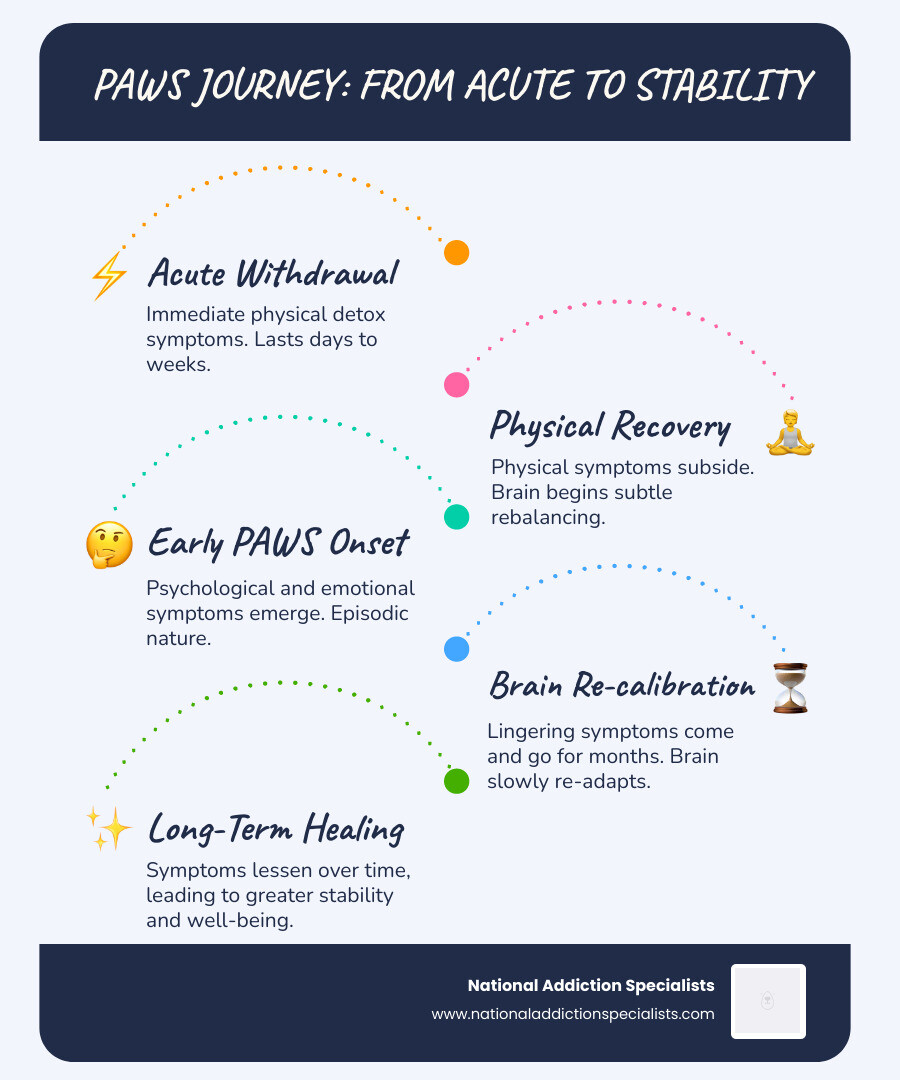
Understanding PAWS: Symptoms, Timeline, and Affected Substances
Acute withdrawal involves intense physical symptoms in the first few days or weeks after stopping a substance. But once those fade, Post-acute withdrawal syndrome (PAWS) can begin. PAWS is primarily psychological and emotional, representing the brain’s slow journey back to balance.

PAWS is unpredictable, with symptoms appearing in “waves.” You might feel great one day and overwhelmed by anxiety or fatigue the next. These ups and downs are a normal sign of healing, not failure. Stress is a common trigger, which is why coping skills and a strong support system are crucial.
Common Symptoms of Post-Acute Withdrawal Syndrome
PAWS affects everyone differently, but common symptoms reflect the brain’s effort to recalibrate.
- Anxiety: Can range from general worry to panic attacks.
- Dysphoria and Anhedonia: A deep sense of unease or sadness (dysphoria) and the inability to feel pleasure (anhedonia) are common.
- Sleep Problems: Difficulty falling or staying asleep and vivid dreams can last for months.
- Brain Fog: Trouble with concentration, memory, or decision-making, which usually improves over weeks or months.
- Cravings: Intense, unexpected urges to use, often triggered by stress.
- Irritability and Mood Swings: Feeling emotionally volatile, numb, or overly sensitive.
- Stress Sensitivity: Small problems can feel overwhelming.
These symptoms can disappear for a while and then suddenly return, making PAWS a challenging part of recovery.
How Long Does PAWS Last?
The duration of PAWS varies, lasting from a few months to two years or more. Symptoms typically come in waves, gradually becoming less frequent and intense over time. The length depends on several factors:
- The substance used and the duration and intensity of use.
- Individual brain chemistry and genetics.
- Co-occurring mental health conditions like anxiety or depression.
- Lifestyle factors such as nutrition, exercise, and stress management.
With continued sobriety and healthy habits, the brain does heal. For a deeper scientific look, a scientific review on PAWS neurobiology and symptomatology is available.
Substances Commonly Associated with PAWS
While any psychoactive substance can cause PAWS, some are known for more severe symptoms.
- Alcohol: Can cause persistent anxiety, depression, and sleep problems that may last for years.
- Opioids: Often lead to insomnia, depression, anxiety, and intense cravings, which are major relapse risks. If you’re struggling, make an appointment to treat addiction with us to discuss medication-assisted treatment.
- Benzodiazepines: Can cause severe and long-lasting PAWS, including intense anxiety, panic attacks, and sleep issues lasting from six months to over two years. The Ashton Manual on benzodiazepine withdrawal offers detailed information.
- Marijuana: PAWS is often less severe but can include insomnia, anxiety, and irritability.
- Stimulants: Can cause profound anhedonia, fatigue, depression, and cognitive problems.
Each substance creates a unique PAWS profile, highlighting the need for personalized treatment.
The Science Behind the Struggle: What Happens in the Brain?
Your brain is remarkable at maintaining balance. Chronic substance use disrupts this balance, rewiring neural circuits. This is why addiction is a brain disease, not a moral failing. When you stop using, your brain struggles to find its footing again. Post-acute withdrawal syndrome is the sign of this clumsy but determined healing process.
This healing involves changes in brain chemistry. Neurotransmitters—chemical messengers controlling mood, pleasure, and sleep—are thrown into chaos.
- The dopamine (reward) system is disrupted, causing anhedonia (inability to feel pleasure).
- Imbalanced serotonin can lead to anxiety, depression, and sleep issues.
- The GABA (calming) and glutamate (excitatory) systems become dysregulated, especially after alcohol or benzodiazepine use, leading to feelings of anxiety and being overwhelmed.
- The body’s stress response system (HPA axis) becomes hypersensitive, making minor stressors feel like major crises.
- The prefrontal cortex, responsible for decision-making, needs time to heal, making impulse control difficult.
The National Institute on Drug Abuse confirms these brain changes are real. Your brain isn’t broken—it’s healing. This process takes time, patience, and often professional support.
Acute Withdrawal vs. Post-Acute Withdrawal Syndrome
Understanding the difference between these two phases is key. Acute withdrawal is a short, intense physical storm, while PAWS is a longer, fluctuating psychological climate change.
| Feature | Acute Withdrawal | Post-Acute Withdrawal Syndrome (PAWS) |
|---|---|---|
| Onset | Within hours to a few days after last use | Weeks or months after acute withdrawal subsides |
| Duration | Days to a few weeks | Months to years |
| Symptom Type | Primarily physical (e.g., tremors, nausea, sweating) | Primarily psychological and emotional (e.g., anxiety, mood swings) |
| Intensity | Often severe, can be life-threatening | Milder than acute, but persistent and fluctuating (“waves”) |
| Treatment Focus | Medical stabilization, detox | Psychological support, coping skills, relapse prevention |
The wave-like pattern of PAWS isn’t a sign of failure; it’s evidence of your brain actively rebuilding itself.
Who Is at Risk for Developing PAWS?
While anyone can experience PAWS, certain factors increase the risk and severity.
- Type of substance: Alcohol, opioids, and benzodiazepines are notorious for causing intense PAWS.
- Duration and intensity of use: Longer, heavier use requires more healing time.
- Co-occurring mental health conditions: Pre-existing anxiety or depression can complicate and prolong PAWS symptoms.
- Support system: Isolation can amplify symptoms, while a strong support network is protective.
- Physical health: Good nutrition and exercise can aid the brain’s healing process.
Having risk factors doesn’t mean a difficult recovery is inevitable, but it does suggest that extra support may be beneficial. If you’re struggling with PAWS from opioid use, professional help is vital. Make an appointment to treat addiction to explore options that can support your long-term recovery.
Navigating Recovery: Coping Strategies and Treatment for Post-Acute Withdrawal Syndrome
Living with Post-acute withdrawal syndrome is challenging, but you are not alone. PAWS is a sign that your brain is healing. The most important tool you have is patience with yourself. The goal is not to eliminate every uncomfortable feeling, but to develop healthy ways to manage them.

Healthy Coping Mechanisms
Building a toolkit of healthy coping strategies is essential for navigating PAWS.
- Mindfulness and Meditation: Even five minutes of deep breathing can calm an anxious nervous system.
- Regular Exercise: A simple walk can boost mood-lifting endorphins and improve sleep.
- Balanced Nutrition: Fuel your healing brain with whole foods, lean proteins, and vegetables.
- Sleep Hygiene: A consistent bedtime routine, without screens, helps regulate sleep patterns over time.
- Support Groups: Connecting with others in programs like 12-step or SMART Recovery provides comfort and validation.
- Journaling: Tracking your symptoms and triggers helps you recognize patterns and progress.
- Hobbies: Creative outlets provide a positive focus and help rebuild your identity outside of addiction.
Above all, practice self-compassion. Recovery is not a straight line. Treat difficult days with the same kindness you would offer a friend.
Professional Treatment for Post-Acute Withdrawal Syndrome
While self-care is vital, professional support provides structure and expertise. At National Addiction Specialists, we offer specialized care for PAWS.
- Cognitive Behavioral Therapy (CBT): This therapy is highly effective for PAWS, providing tools to challenge negative thought patterns and manage cravings.
- Medication-Assisted Treatment (MAT): For opioid use disorder, medications like Suboxone can be a game-changer. They stabilize brain chemistry, reducing cravings and PAWS symptoms. Our telemedicine-based Suboxone treatment in Tennessee and Virginia makes care convenient and accessible.
- Individual Counseling: A therapist provides a safe space to develop personalized coping strategies and address underlying mental health issues.
Reaching out for help can be hard, especially when dealing with PAWS symptoms. We accept Medicaid and Medicare and offer telemedicine to remove barriers to care. Seeking professional help is a sign of strength and commitment to your recovery.
Make an Appointment to Treat Addiction
Please don’t hesitate. Make an appointment today.
Make an Appointment to Treat Addiction
PAWS and Relapse Prevention: Staying the Course
A common pitfall in recovery is mistaking Post-acute withdrawal syndrome symptoms for personal failure, which can lead to relapse. The truth is, PAWS is a sign of healing. Understanding this is your strongest defense when recovery feels tough.
A solid relapse prevention plan starts with understanding your triggers. PAWS symptoms are often sparked by stress, specific emotions, or environmental cues. By identifying these triggers, you can prepare for them instead of being caught off guard.
When you recognize a PAWS wave—a sudden rush of anxiety, irritability, or emptiness—you can reframe it. Tell yourself, “This is a temporary wave, and it means my brain is healing.” This shift in perspective can prevent a moment of discomfort from turning into a crisis. Knowing the wave will pass provides the strength to ride it out.
Your personalized relapse prevention plan should be a roadmap for these moments. It should include specific coping strategies for your most challenging symptoms and a list of emergency contacts—your therapist, sponsor, or a trusted friend.
Celebrating small victories is crucial for reinforcing new, healthy brain patterns. Acknowledge every day you stay sober and every time you use a coping skill instead of a substance. These moments are the building blocks of lasting recovery.
A strong support network is your safety net. Recovery can be lonely, and having people who understand—family, friends, or support groups—is invaluable.
Finally, learning emotional regulation skills is key, as PAWS can make emotions feel chaotic. Techniques from therapies like CBT can help you identify, understand, and cope with difficult feelings without needing to use substances. The goal is to feel your emotions and move through them healthily.
Post-acute withdrawal syndrome is a predictable part of the recovery journey. By understanding and preparing for it, you set yourself up for long-term success.
Frequently Asked Questions about PAWS
Facing Post-acute withdrawal syndrome brings up many valid questions. Here are answers to some of the most common ones.
Is Post-Acute Withdrawal Syndrome a recognized medical diagnosis?
While Post-acute withdrawal syndrome is not a formal diagnosis in the DSM-5, the addiction medicine community widely recognizes the phenomenon as “protracted withdrawal.” The American Society of Addiction Medicine (ASAM) acknowledges that symptoms like irritability, anxiety, and sleep disturbance can persist long after acute withdrawal ends. The absence of a formal diagnostic code does not make the experience any less real. Ongoing research aims to better classify these symptoms, showing that the medical community takes them seriously. Your experience is valid, and effective treatment is available.
Can PAWS be cured?
It’s more helpful to think of healing and management rather than a “cure.” PAWS is your brain’s natural healing process. We can’t instantly eliminate it, but we can support the brain’s recovery and manage the symptoms. With sustained abstinence and healthy coping strategies, PAWS symptoms become less severe and frequent over time as your brain re-establishes its chemical balance. The brain’s ability to heal (neuroplasticity) is remarkable, and most people experience significant improvement, leading to a stable and fulfilling life in recovery.
How can I support a loved one experiencing PAWS?
Supporting someone through PAWS requires patience, empathy, and education.
- Educate yourself: Understanding that their mood swings or irritability are symptoms of brain healing, not personal attacks, is crucial.
- Be patient and empathetic: Offer a listening ear without judgment. Avoid saying “just snap out of it.”
- Encourage professional help: Gently suggest therapy or support groups. Offer to help them find resources. Our team at National Addiction Specialists can provide guidance for families as well.
- Celebrate small victories: Acknowledge their daily efforts. This recognition can be incredibly motivating.
- Set healthy boundaries: It’s essential to protect your own well-being. You can be supportive while also taking care of yourself. Consider a support group for families affected by addiction.
Your informed support can make a profound difference in your loved one’s ability to steer PAWS and achieve lasting recovery.
Conclusion: Finding Stability in the Shadow of Addiction
Post-acute withdrawal syndrome is a significant but manageable hurdle in addiction recovery. It represents the brain’s long path back to balance, marked by waves of psychological and emotional symptoms. The presence of PAWS is not a sign of failure but an indicator that profound healing is underway. Understanding this empowers you to steer this challenge with resilience and hope.
At National Addiction Specialists, we are committed to guiding you through every step of this journey. Our telemedicine-based Suboxone treatment and counseling services in Tennessee and Virginia provide personalized, convenient, and expert care. We understand the unique challenges of PAWS and are here to help you build a stable, fulfilling life in recovery.
Don’t let the lingering shadow of PAWS deter you from the bright future that awaits.
Make an Appointment to Treat Addiction Please don’t hesitate. Make an appointment today. Make an Appointment to Treat Addiction