Navigating Buprenorphine-Naloxone: Uses, Benefits, and Potential Side Effects
Understanding Naloxone and Buprenorphine for Opioid Use Disorder
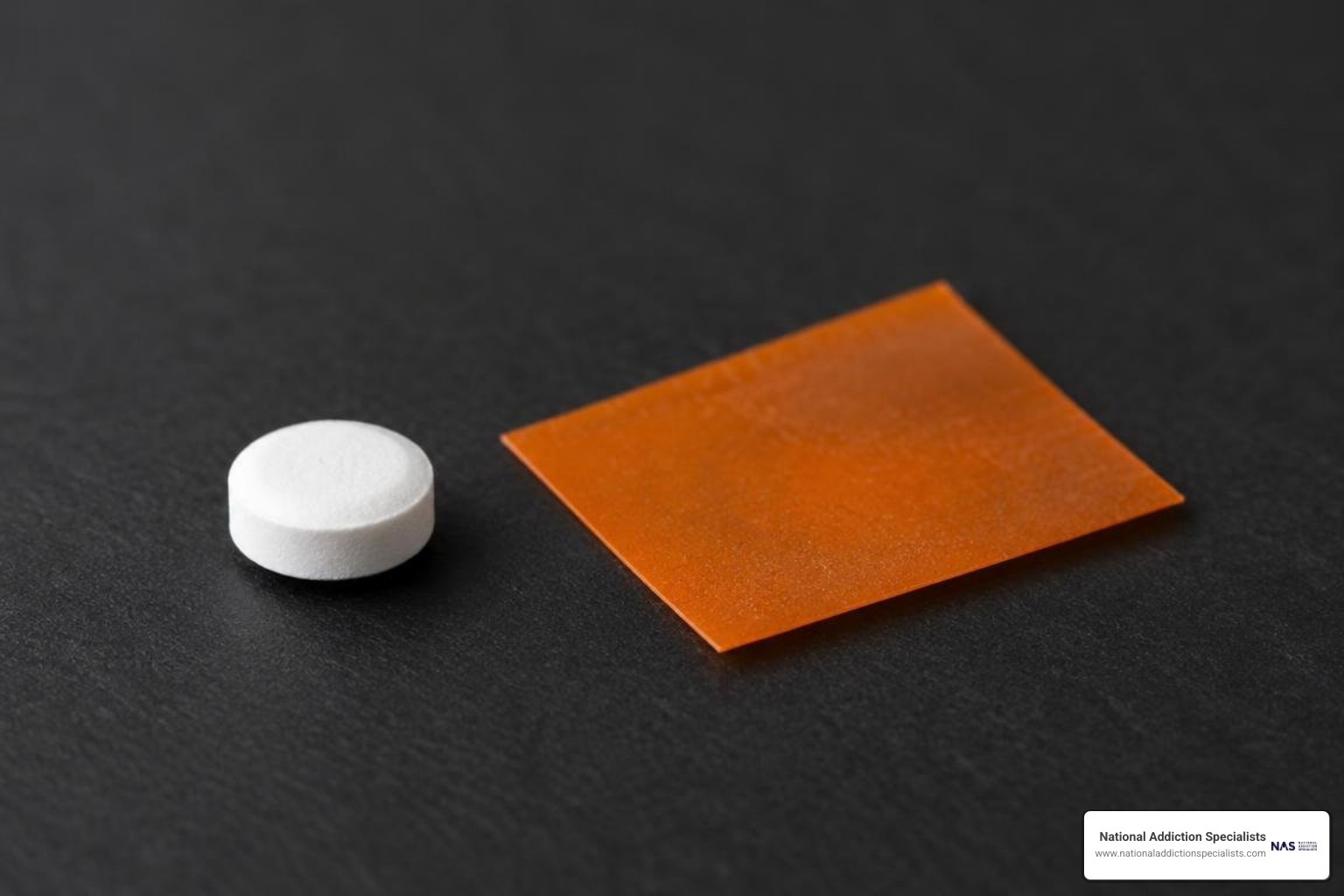
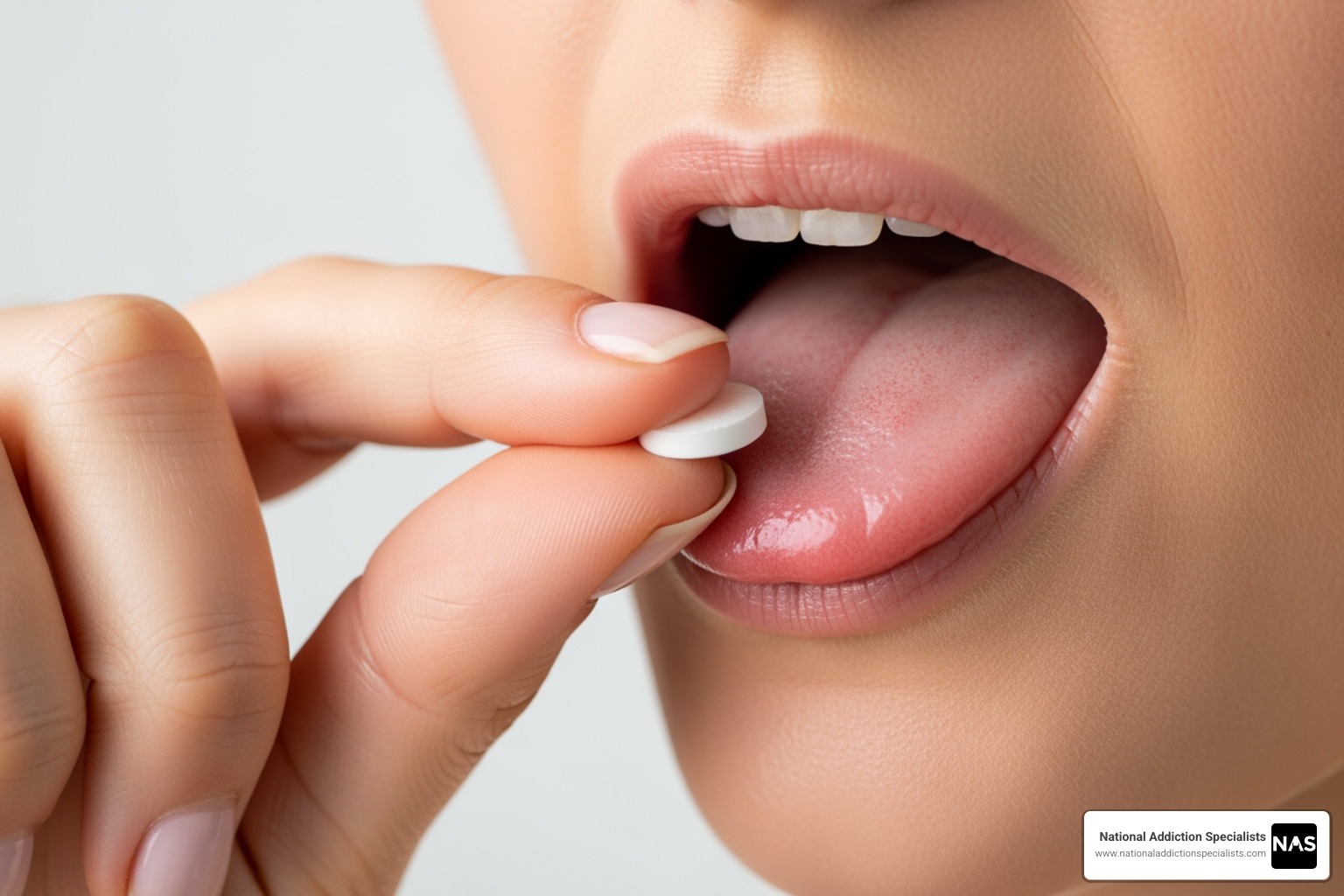
Naloxone and buprenorphine are combined in medications like Suboxone to treat opioid use disorder (OUD). Buprenorphine, a partial opioid agonist, reduces cravings and withdrawal, while naloxone, an opioid blocker, is added to deter misuse. When taken sublingually (under the tongue), buprenorphine is absorbed to provide therapeutic effects, while naloxone has minimal impact. This combination is a first-line treatment that works best with counseling and significantly reduces overdose risk.
The opioid crisis continues to affect millions. In 2021, over 107,000 people died from drug overdoses, with opioids being a factor in most of these deaths.
The good news is that medication-assisted treatment (MAT) with naloxone and buprenorphine is highly effective. It helps patients stop illicit opioid use, remain in treatment, and lowers the risk of a fatal overdose. This guide will explain how these medications work, their side effects, and who can benefit from them.
I’m Dr. Chad Elkin, founder and Medical Director of National Addiction Specialists. As a board-certified Addiction Medicine physician, I’ve seen how naloxone and buprenorphine can transform lives when integrated into a comprehensive recovery plan.
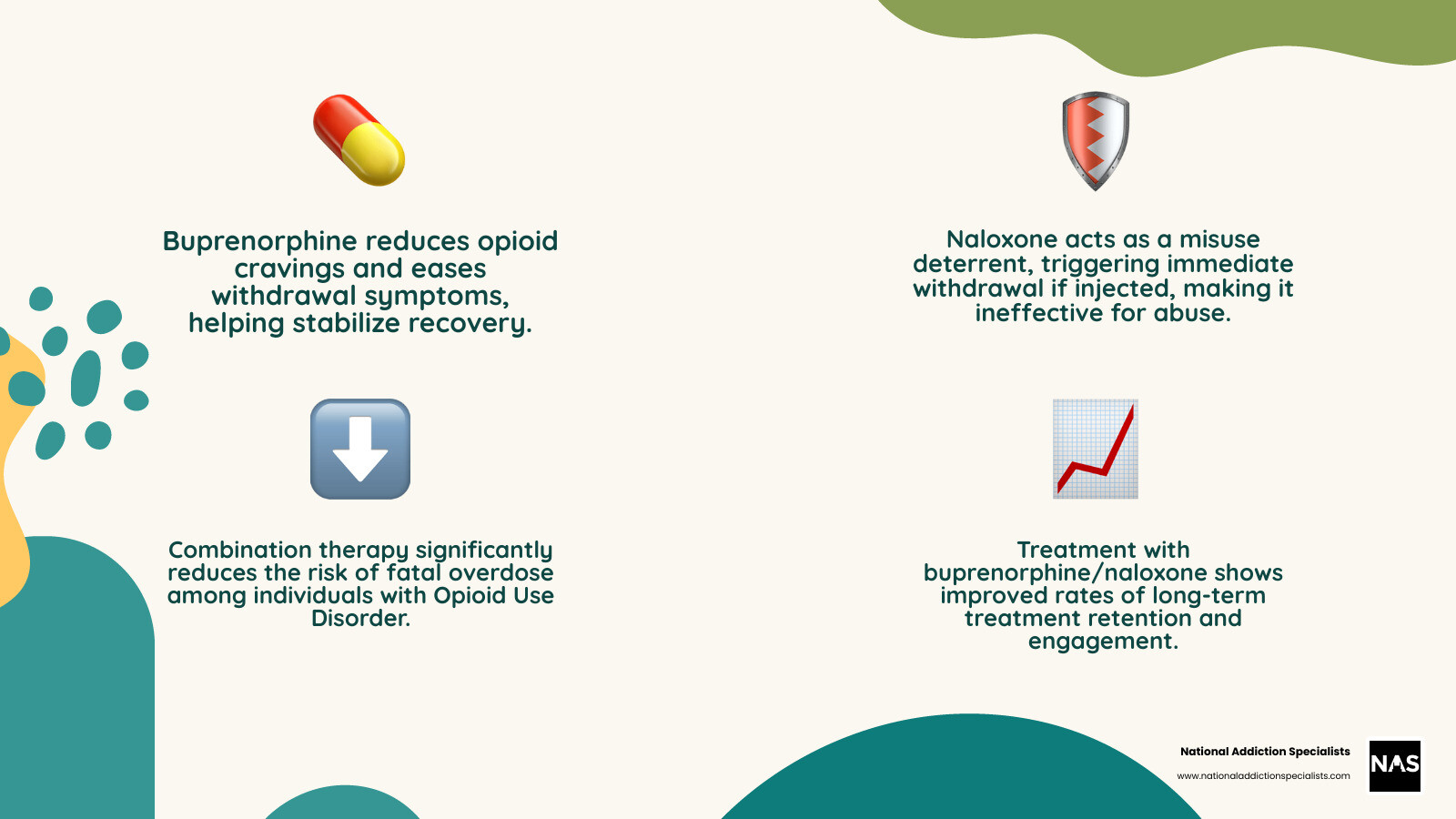
Quick look at Naloxone and buprenorphine:
Understanding the Mechanism: How Buprenorphine and Naloxone Work Together
Understanding how naloxone and buprenorphine work empowers you in your recovery. The two medications are precisely formulated, typically in a 4:1 ratio (e.g., 8 mg buprenorphine to 2 mg naloxone), to maximize effectiveness and minimize risk when taken sublingually.
The Role of Buprenorphine
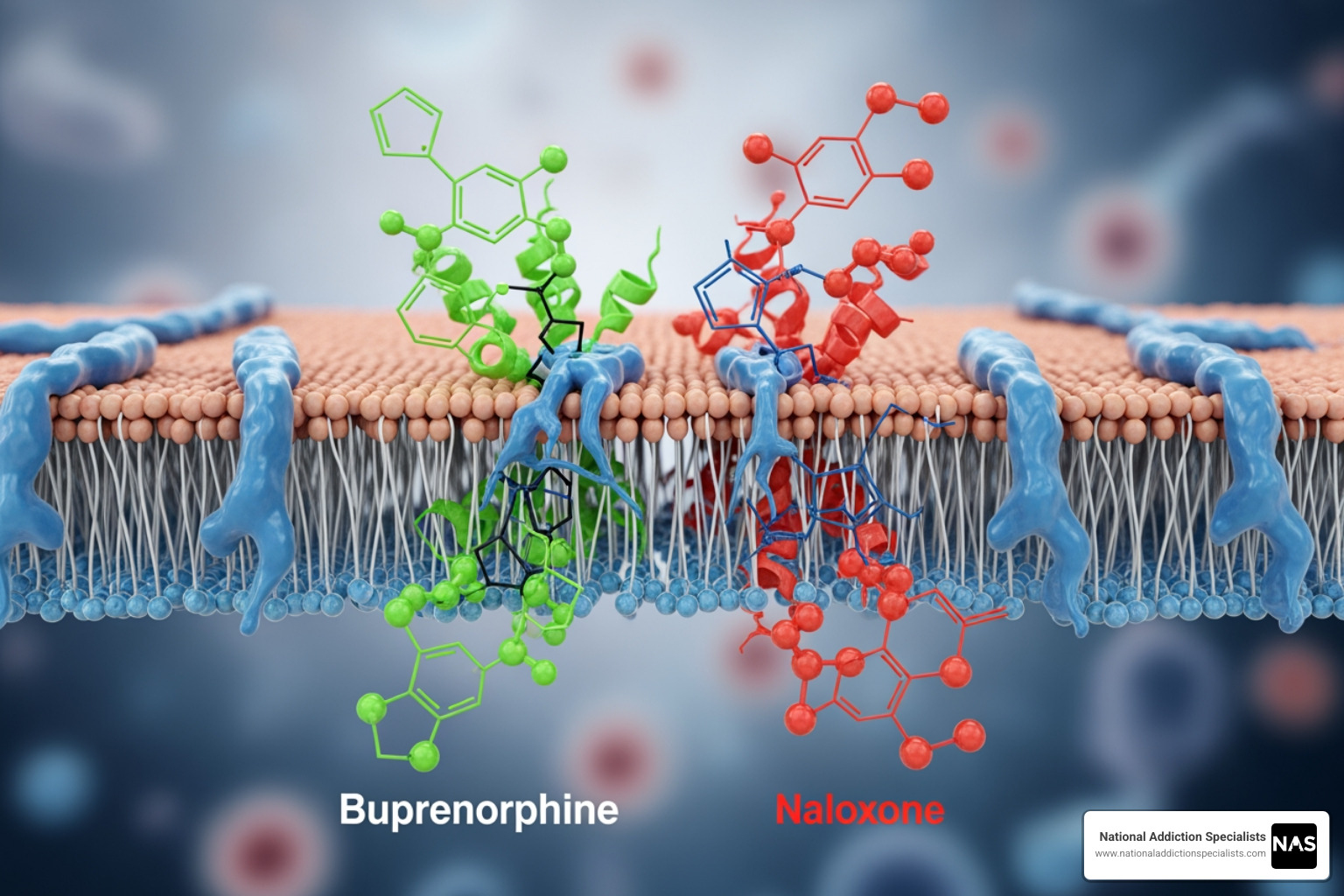
Buprenorphine is a partial µ-opioid receptor agonist. Unlike full opioids (heroin, oxycodone) that fully activate opioid receptors, buprenorphine activates them only partially. This partial activation is enough to reduce cravings and ease withdrawal symptoms without producing an intense high, allowing you to function clearly.
Buprenorphine has a high receptor affinity, meaning it binds tightly to opioid receptors and blocks other opioids from attaching. This reduces the effects of other opioids if they are used.
Crucially, buprenorphine has a ceiling effect on respiratory depression. While higher doses of full opioids increasingly slow breathing, buprenorphine’s effect on respiration plateaus after a certain dose, which lowers overdose risk significantly. Its long half-life allows for once-daily dosing, making it easier to adhere to treatment. Research confirms that buprenorphine significantly reduces mortality among patients with OUD. You can learn more about this life-saving medication on our Buprenorphine page.
The Role of Naloxone
Naloxone is an opioid antagonist that blocks opioid receptors. When you take naloxone and buprenorphine sublingually as prescribed, the naloxone is poorly absorbed, with a bioavailability of less than 10%. In contrast, buprenorphine’s sublingual absorption is 30-55%, allowing it to perform its therapeutic function.
Naloxone is included as a misuse deterrent. If someone attempts to inject the medication, the naloxone becomes highly bioavailable and rapidly blocks opioid receptors. In an opioid-dependent person, this triggers immediate and severe withdrawal symptoms, known as precipitated withdrawal. This unpleasant effect discourages misuse. When taken correctly, you should not feel the effects of the naloxone component.
Approved Uses and Bioavailability of Naloxone and Buprenorphine
Understanding the approved uses and bioavailability of naloxone and buprenorphine helps you feel more confident in your treatment.
Medical Uses for Combination Products
Combination products containing naloxone and buprenorphine are FDA-approved for treating opioid use disorder (OUD), from the initial induction phase through long-term maintenance. The buprenorphine component prevents withdrawal symptoms, making it possible to focus on recovery. For a detailed overview, see our page on How Suboxone Treatment Works.
This medication is most effective as part of a complete treatment plan that includes counseling and behavioral therapy. At National Addiction Specialists, we integrate medication management with virtual addiction counseling for our patients in Tennessee and Virginia. Research shows this approach significantly reduces the risk of overdose death and transmission of diseases like hepatitis C and HIV.
Warning: Naloxone and buprenorphine is not for pain relief. It can be fatal for opioid-naive individuals (people who have not used opioids before) who take it for pain. For more medical details, review the scientific research on buprenorphine and naloxone.
The Significance of Bioavailability for Naloxone and Buprenorphine
Bioavailability refers to how much of a drug enters your bloodstream. The effectiveness of naloxone and buprenorphine relies on the different bioavailabilities of its two components when taken sublingually.
- Buprenorphine: About 30-55% is absorbed under the tongue, reaching the brain to prevent withdrawal and cravings.
- Naloxone: Less than 10% is absorbed this way. Most of it is inactivated by the liver (first-pass metabolism).
This design ensures that when taken as prescribed, buprenorphine provides its therapeutic benefit while the naloxone remains largely inactive. Though naloxone can be detected in urine tests, the levels are too low to cause any blocking effects and simply confirm you are taking your medication.
The Role of Naloxone in Deterring Misuse
The inclusion of naloxone in combination products is a strategy to protect against misuse. The naloxone and buprenorphine formulation addresses diversion concerns through a mechanism that changes based on how the medication is administered.
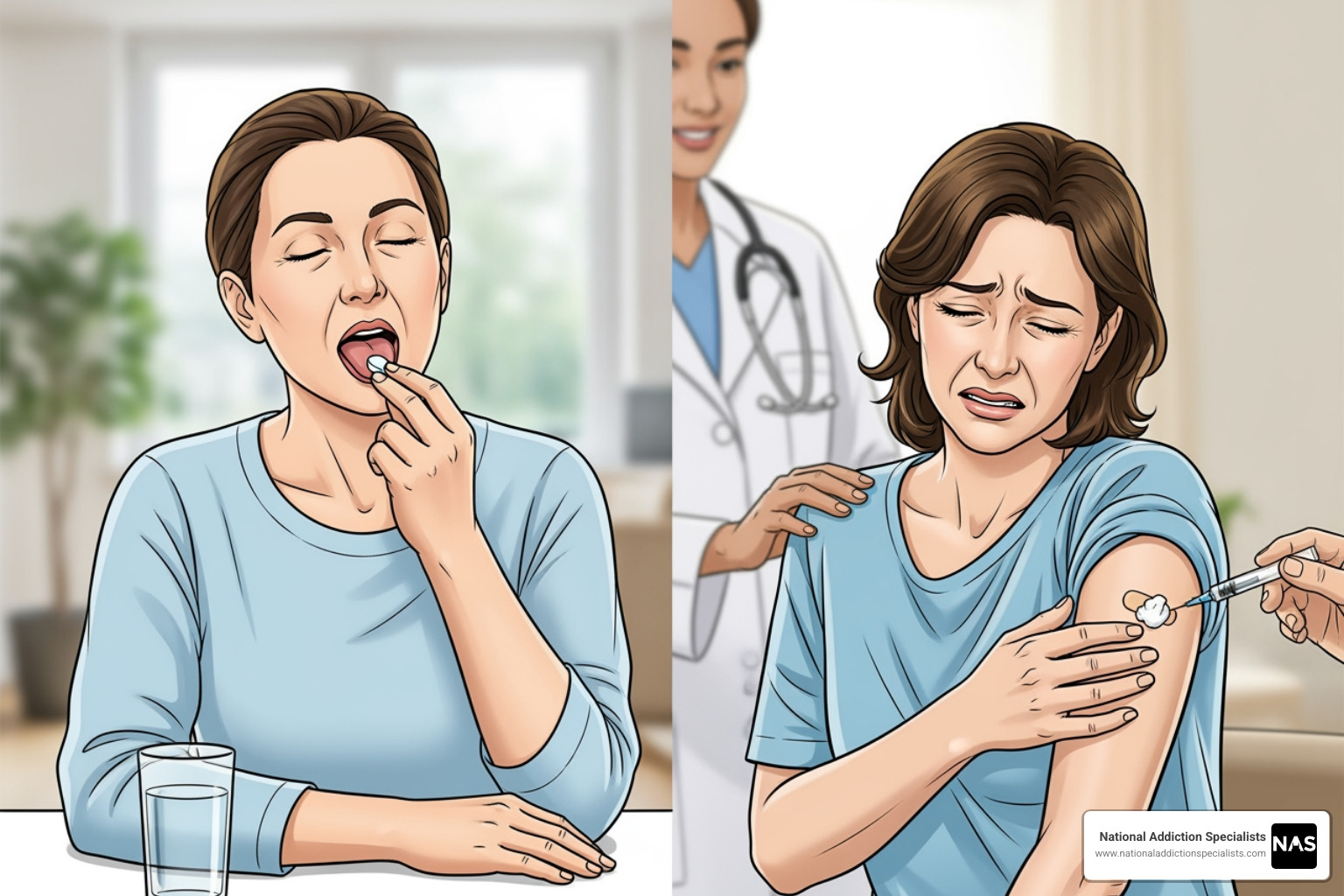
How Naloxone Aims to Prevent Misuse
The naloxone component is an abuse-deterrent. If someone attempts to crush and inject the medication, the naloxone becomes highly bioavailable. It rapidly enters the bloodstream, blocks opioid receptors, and prevents the buprenorphine from working.
For an opioid-dependent person, this triggers immediate and severe withdrawal symptoms (precipitated withdrawal). This unpleasant experience serves as a strong deterrent against injecting the medication, discouraging parenteral abuse and diversion.
Risks of Injecting Buprenorphine/Naloxone
Attempting to inject naloxone and buprenorphine is extremely dangerous and ineffective for achieving a high. The risks include:
- Precipitated Withdrawal: Sudden and severe symptoms like nausea, vomiting, muscle aches, and anxiety.
- Vein Damage and Infections: Injecting pills or films can cause collapsed veins, abscesses, and life-threatening systemic infections like endocarditis.
- Blood-Borne Diseases: Increased risk of contracting HIV and hepatitis C from unsterile injection practices.
- Overdose and Death: The risk of respiratory depression multiplies when the medication is injected, especially if combined with other depressants like benzodiazepines or alcohol.
At National Addiction Specialists, we are here to help you use this medication safely. Recovery is possible with the right support.
Make an Appointment to Treat Addiction Please don’t hesitate. Make an appointment today. https://www.nationaladdictionspecialists.com/new-patient-packet/
Buprenorphine/Naloxone vs. Buprenorphine Monoproducts
While most people receive a combination of naloxone and buprenorphine, a buprenorphine-only (monoproduct) formulation is also available. Understanding both options helps you make informed decisions about your recovery.
Risks and Benefits of Combination vs. Monotherapy
Combination Product (Buprenorphine/Naloxone):
- Benefit: The naloxone acts as a misuse deterrent, making it less attractive for injection or diversion. This is why 93.1% of commercial formularies covered generic films without prior authorization in 2021.
- Risk: A small number of patients experience side effects like headaches or nausea from the naloxone component.
Monoproduct (Buprenorphine alone):
- Benefit: Eliminates naloxone-related side effects, making treatment more tolerable for some. The therapeutic effect of buprenorphine is identical.
- Risk: Higher potential for misuse if injected, which can lead to diversion concerns and trickier insurance coverage (only 75.8% of formularies covered generic buprenorphine tablets without prior authorization in 2021).
It’s critical to remember that untreated OUD is far riskier than either formulation. All forms of buprenorphine treatment are associated with major reductions in overdose deaths. Both sublingual forms can contribute to dental problems, so good oral hygiene is essential. At National Addiction Specialists, we prioritize what is clinically best for your recovery, whether that is the combination or monoproduct.
When is a Buprenorphine Monoproduct Preferred?
While the combination product is standard, buprenorphine alone is preferred in specific situations:
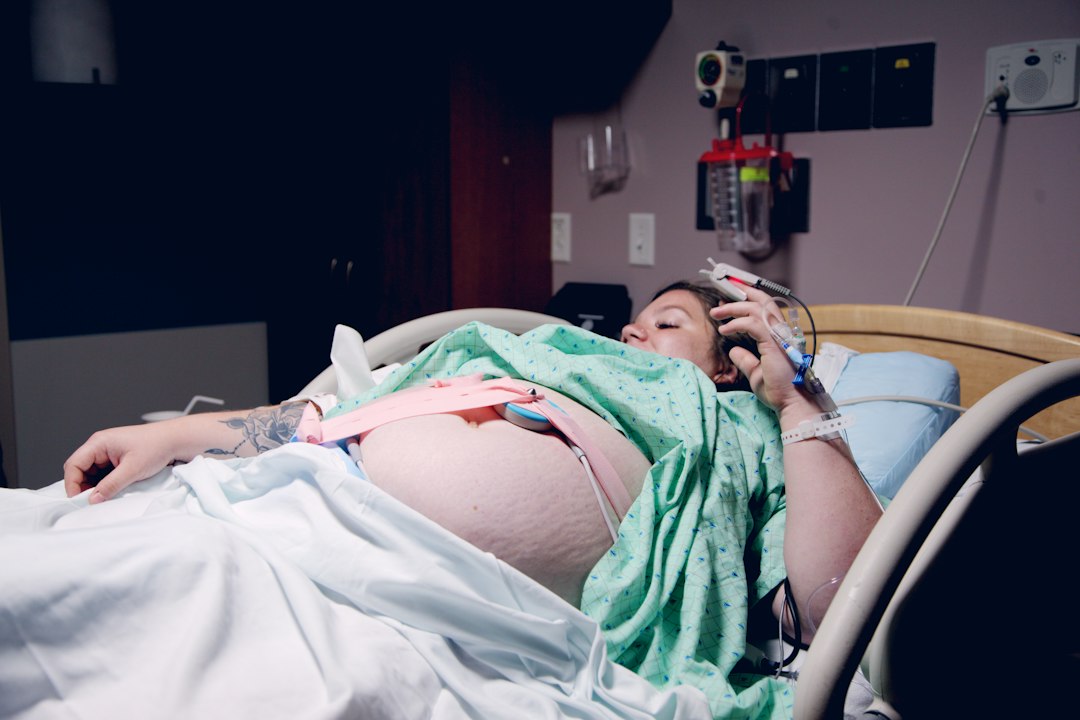
- Pregnancy: Buprenorphine monotherapy is often preferred during pregnancy. It is considered safer than continued illicit opioid use and may be associated with less severe neonatal abstinence syndrome than methadone. Learn more on our Suboxone Use During Pregnancy page.
- Breastfeeding: To eliminate any potential concerns about naloxone’s effect on an infant, some providers opt for the monoproduct.
- Known Hypersensitivity: If you have a documented allergy to naloxone, the monoproduct is the only choice.
- Intolerable Side Effects: If you experience persistent headaches, nausea, or anxiety from the combination product, switching to the monoproduct often resolves these issues.
Clinical Considerations and Side Effects
Starting treatment with naloxone and buprenorphine is a major step. Our team at National Addiction Specialists in Tennessee and Virginia is here to help you understand what to expect and manage your treatment safely.

Potential Side Effects of Naloxone and Buprenorphine
Most side effects are mild and improve over time. Common ones include headache, nausea, vomiting, constipation, insomnia, and sweating.
Starting the medication too soon after using other opioids can cause precipitated withdrawal.
Though rare, serious side effects require immediate medical attention:
- Respiratory Depression: Dangerously slowed breathing, especially when mixed with benzodiazepines or alcohol. Buprenorphine has a ceiling effect, but this risk increases significantly when combined with other depressants.
- Liver Injury: Watch for yellowing skin or eyes, dark urine, or severe stomach pain.
- Dental Problems: The medication’s acidity can cause cavities and tooth decay. Rinse your mouth with water after each dose and maintain regular dental visits.
- Other Risks: Adrenal insufficiency, severe allergic reactions, and heart rhythm issues (QTc prolongation) are other rare but serious risks.
Death from respiratory depression can occur even when taken as prescribed, though this is very rare. The risk is much higher if injected or mixed with other depressants.
Important Considerations for Patients and Providers
- Drug Interactions: Combining naloxone and buprenorphine with benzodiazepines (like Xanax), alcohol, or other CNS depressants dramatically increases the risk of sedation, coma, and death. Always inform your provider of all medications and substances you use.
- Urine Drug Testing: We use testing to confirm you are taking your medication and to monitor for other substances. Detectable naloxone in urine is normal and expected, confirming adherence.
- Counseling: Medication works best with counseling and behavioral therapies. While not always mandatory, this combination significantly improves outcomes. Our Addiction Counseling Services are designed to integrate with your treatment.
- Safe Storage: Keep medication in a secure, locked location away from children and pets. Accidental exposure can be fatal.
- Insurance Coverage: Most insurance plans, including Medicaid and Medicare, cover naloxone and buprenorphine. We can help you steer coverage options. Visit our Insurance and Pricing page for more.
- Pregnancy and Breastfeeding: Treatment for OUD should continue during pregnancy. Buprenorphine is a first-line therapy and is considered safe, though the monoproduct is often preferred. Small amounts pass into breast milk, with little expected impact on the infant.
Make an Appointment to Treat Addiction Please don’t hesitate. Make an appointment today. https://www.nationaladdictionspecialists.com/new-patient-packet/
The Role of Buprenorphine/Naloxone in Comprehensive OUD Treatment
At National Addiction Specialists, we view naloxone and buprenorphine as a foundation for rebuilding your life. It is a powerful tool that provides the stability needed to focus on long-term healing.
The medication works by stabilizing physical dependence. The buprenorphine component manages the overwhelming cravings and debilitating withdrawal symptoms, freeing you from the constant physical distress of OUD. This allows you to re-engage with your family, work, and community. The life-saving potential is immense; buprenorphine treatment is associated with profound reductions in mortality.
Once stabilized, you can fully engage in behavioral therapies and counseling. It is difficult to address trauma or learn new coping skills while in physical distress. Our online addiction counseling services are designed to work alongside your medication, providing integrated support for our patients in Tennessee and Virginia.
Treatment with naloxone and buprenorphine supports long-term recovery. There is no set timeline; some people benefit from it for months, while others may need it for years or indefinitely. Continuing treatment reduces the risk of relapse and provides the best chance for sustained recovery. It also contributes to community-wide harm reduction by decreasing illicit opioid use and overdose deaths.
Our telemedicine platform makes this life-changing care accessible, overcoming barriers of geography and stigma. Recovery is possible, and we are here to support you with a personalized plan.
Conclusion
Recovery from opioid use disorder is achievable, and naloxone and buprenorphine is a key tool in making that a reality. This combination works by having buprenorphine manage cravings and withdrawal while naloxone deters misuse. The data confirms it saves lives by dramatically reducing overdose deaths.
However, medication is most effective when combined with counseling and behavioral support. This integrated approach, which addresses the whole person, is the cornerstone of our philosophy at National Addiction Specialists. Understanding your options, from different formulations to potential side effects, is crucial for a successful, personalized treatment plan.
We are proud to serve patients throughout Tennessee and Virginia with convenient and confidential telemedicine treatment. Our team is here to support you without judgment, for as long as you need.
If you are ready to take the next step, we are here to help.
Make an Appointment to Treat Addiction
Please don’t hesitate. Make an appointment today.
https://www.nationaladdictionspecialists.com/new-patient-packet/
This article was medically reviewed by:
Chad Elkin, MD, DFASAM is a board-certified addiction medicine physician, founder, and Chief Medical Officer of National Addiction Specialists, dedicated to treating substance use disorders. A Distinguished Fellow of the American Society of Addiction Medicine (ASAM), Dr Elkin currently serves as President of the Tennessee Society of Addiction Medicine (TNSAM) and has held various leadership roles within the organization. Dr Elkin chairs ASAM’s Health Technology Subcommittee and is an active member of its Practice Management and Regulatory Affairs Committee, State Advocacy and Legislative Affairs Committee, and other committees. He also serves on the planning committee for the Vanderbilt Mid-South Addiction Conference. Committed to advancing evidence-based policy, Dr Elkin is Chairman of the Tennessee Association of Alcohol, Drug, & Other Addiction Services (TAADAS) Addiction Medicine Council, which collaborates with the TN Department of Mental Health & Substance Abuse Services (TDMHSAS). He has contributed to numerous local, state, and national task forces, helping develop professional guidelines, policies, and laws that align with best practices in addiction medicine. His work focuses on reducing addiction-related harm, combating stigma, and ensuring access to effective treatment. Passionate about the field of addiction medicine, he remains dedicated to shaping policy and enhancing patient care.
Suboxone® and Subutex® are a registered trademark of Indivior UK Limited. Any mention and reference of Suboxone® and Subutex® in this website is for informational purposes only and is not an endorsement or sponsorship by Indivior UK Limited.