


Introduction
When it comes to stepping away from full-agonist opioids like oxycodone, hydrocodone, heroin, or fentanyl, the fear of acute withdrawal can feel paralyzing. Opioid withdrawal brings intense physical agitation, gastrointestinal distress, insomnia, and profound psychological distress. A structured suboxone taper for opiate withdrawal bridges the gap between physical dependence and stability.
To manage acute opioid withdrawal safely, clinical protocols begin with proper stabilization. Taking Suboxone (buprenorphine/naloxone) replaces full agonists at the brain’s mu-opioid receptors, eliminating the immediate physical crisis. Once a person achieves clinical baseline stability, the conversation shifts toward taper pacing, withdrawal mitigation, and sustainable recovery planning.
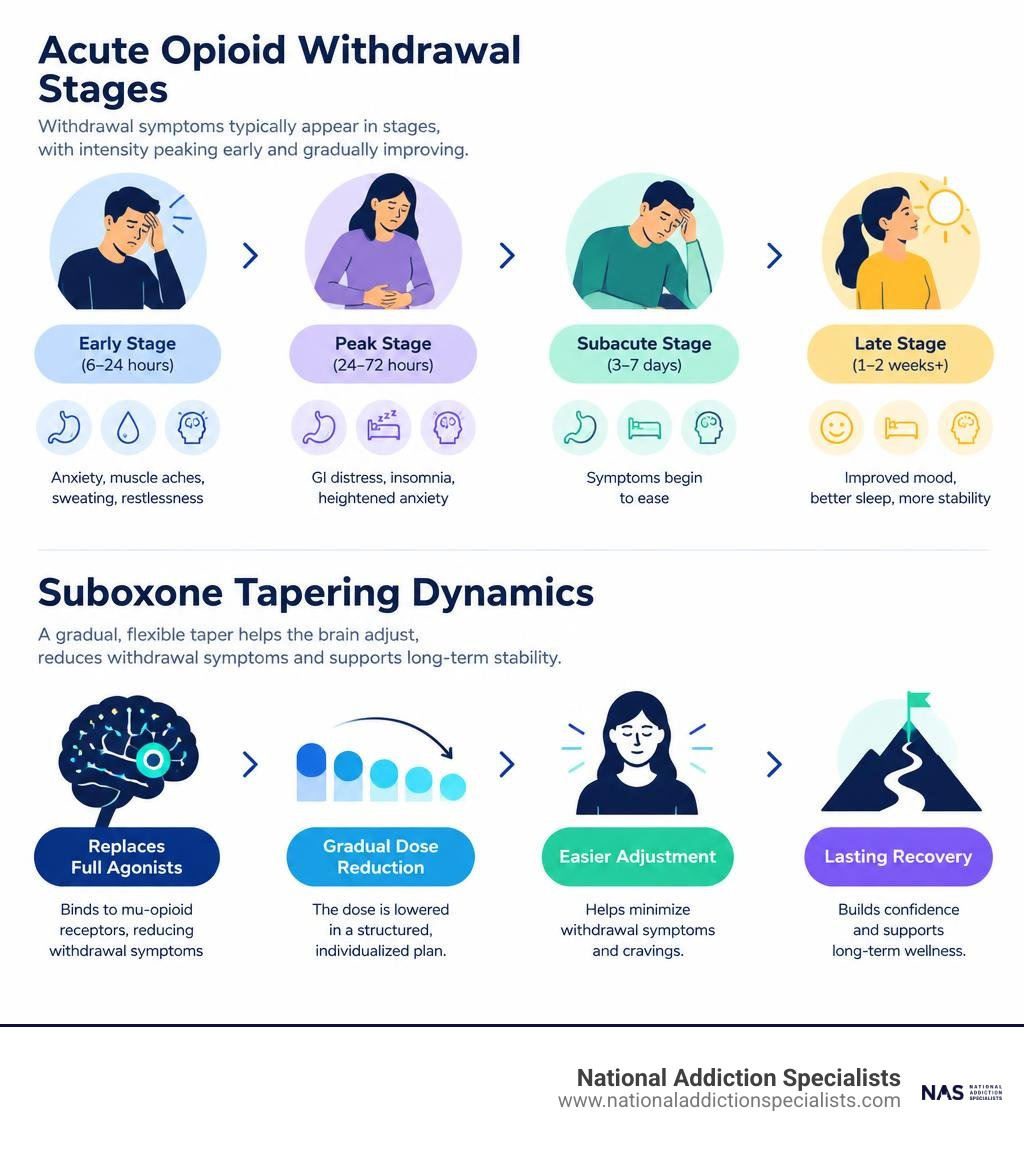
Designing an Effective Suboxone Taper for Opiate Withdrawal
Designing a buprenorphine taper requires an understanding of how the medication interacts with the central nervous system. Rather than treating a taper as a rigid countdown, effective clinicians treat it as a flexible, biological adjustment. Understanding how buprenorphine works provides the foundation for setting realistic expectations during dose reductions.

A successful taper plan rests on three distinct pillars:
- Clinical Stabilization: Eliminating illicit opioid use and confirming that withdrawal symptoms and cravings have ceased before attempting any downward dose adjustment.
- Predictable Step-Downs: Structuring dose reductions in proportion to remaining receptor occupancy rather than arbitrary milligram increments.
- Symptom Monitoring: Pausing dosage drops whenever destabilizing autonomic or emotional symptoms arise.
Choosing a Short vs Long Suboxone Taper for Opiate Withdrawal
One of the most debated topics in addiction medicine is whether a short detox taper or a protracted taper delivers superior long-term abstinence.
A landmark multi-site randomized clinical trial conducted by the National Institute on Drug Abuse (NIDA) Clinical Trials Network (CTN) evaluated these approaches by comparing a 7-day buprenorphine taper against a 28-day taper in stabilized individuals (Ling et al., 2009). The findings challenged the common assumption that extending an acute detox taper automatically protects against relapse.
| Taper Schedule Evaluation Point | 7-Day Taper Group (% Opioid-Free Urine) | 28-Day Taper Group (% Opioid-Free Urine) | Statistical Significance |
|---|---|---|---|
| End of Taper Phase | 44% (n=255) | 30% (n=261) | P = 0.0007 |
| 1-Month Post-Taper Follow-Up | 18% | 18% | Not Significant |
| 3-Month Post-Taper Follow-Up | 12% | 13% | Not Significant |
At the conclusion of the active medication taper, 44% of participants in the 7-day taper group provided opioid-free urine samples, compared to just 30% in the 28-day group (P = 0.0007). However, by month one (18% for both groups) and month three (12% vs. 13%), abstinence rates converged at low levels.
These data illustrate a critical reality: while a short taper offers effective short-term detox relief, terminating buprenorphine pharmacotherapy entirely without long-term behavioral support, structured aftercare, or maintenance often leads to high rates of return to use. For individuals discontinuing buprenorphine pharmacotherapy, prolonging an acute detox taper does not necessarily confer an advantage for long-term abstinence unless paired with ongoing medication assisted treatment or sustained psychosocial recovery structures.
For more information on short-term detox protocols, see How to Use Suboxone for Opioid Detox with Addiction Withdrawals.
Hyperbolic Tapering vs Standard Linear Reductions
For patients engaged in longer-term therapy seeking a complete discontinuation, standard linear reductions often lead to failure near the end. In a traditional linear taper, a patient might drop their dose by 2 mg every two weeks (e.g., 16 mg to 14 mg to 12 mg… to 2 mg to 0 mg).
While dropping from 16 mg to 14 mg represents an easy-to-tolerate 12.5% decrease, dropping from 2 mg to 0 mg represents a catastrophic 100% reduction in medication.
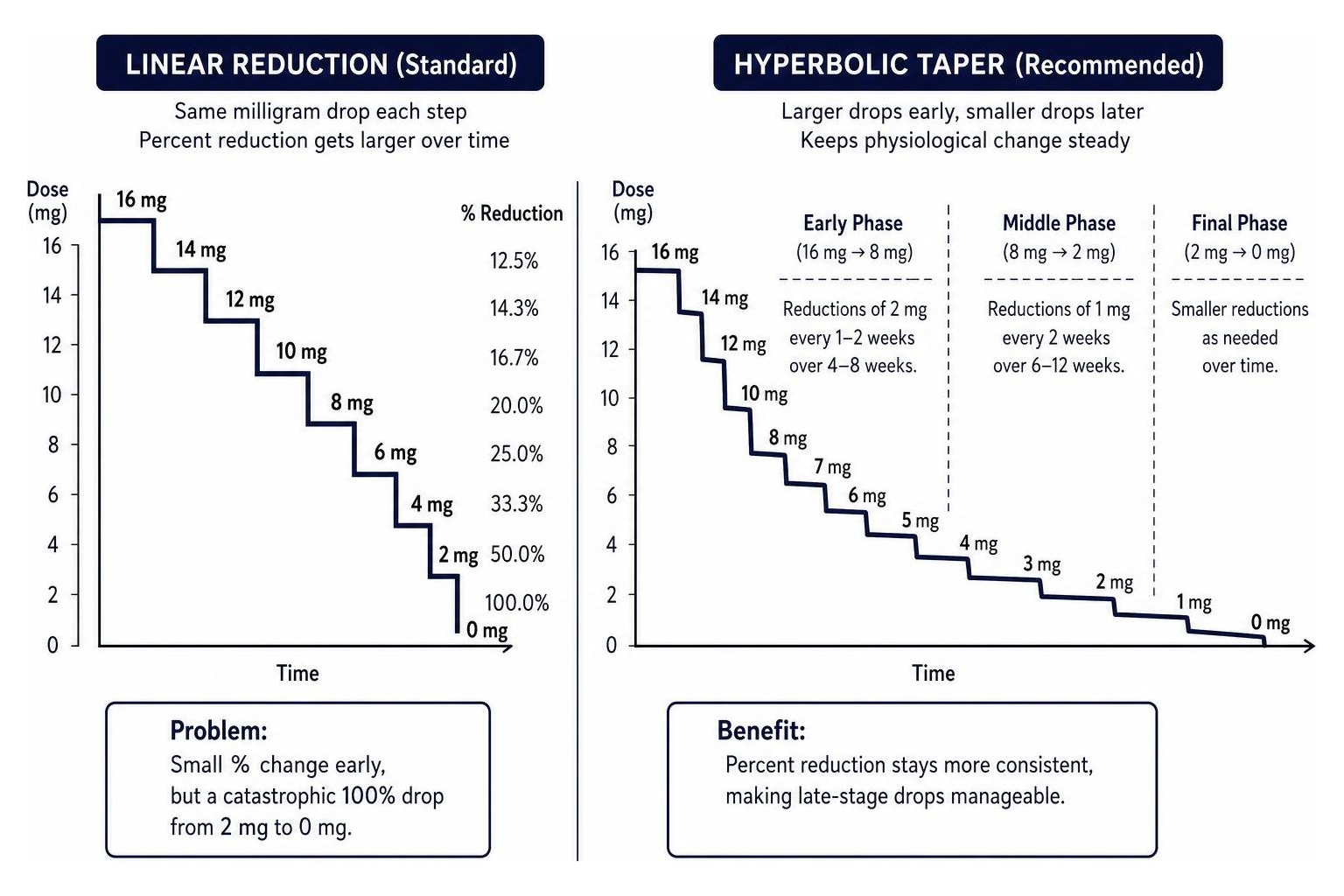
Understanding how Suboxone treatment works requires recognizing that the brain responds to the percentage of neuroreceptors cleared, not the raw milligram count on the prescription label. Hyperbolic tapering adjusts the milligram drop at each phase so that the physiological change in the brain remains steady and manageable.
A standard hyperbolic taper schedule from an initial 16 mg baseline breaks down into three distinct phases:
- Early Phase (16 mg down to 8 mg): Reductions of 2 mg every 1 to 2 weeks over 4 to 8 weeks.
- Middle Phase (8 mg down to 2 mg): Reductions of 1 mg every 2 weeks over 6 to 12 weeks.
- Final Phase (2 mg down to 0 mg): Reductions of 0.5 mg, 0.25 mg, or 0.125 mg every 2 to 4 weeks over 8 to 16+ weeks.
A complete hyperbolic taper from a moderate dose (8 to 16 mg) to zero typically takes 4 to 12 months. The final 2 mg alone should take longer and involve smaller incremental steps than the first 14 mg combined.
Understanding Buprenorphine Pharmacology and the Final Milligrams
Buprenorphine exhibits unique pharmacological properties: it is a partial mu-opioid receptor agonist with exceptionally high receptor affinity and a slow dissociation rate.

Because buprenorphine binds so tightly to mu-opioid receptors, it exerts a ceiling effect on respiratory depression and euphoria. However, this same high binding affinity creates a distinct hyperbolic receptor occupancy curve. To safely navigate your dosage step-downs, consult our buprenorphine dosage complete guide.
Why the Last 2 mg Feel Disproportionately Harder
Patients frequently report smooth sailing when reducing their dose from 16 mg to 8 mg, only to experience intense withdrawal, emotional fragility, and insomnia when trying to step below 2 mg. This is not psychological weakness; it is receptor pharmacology.
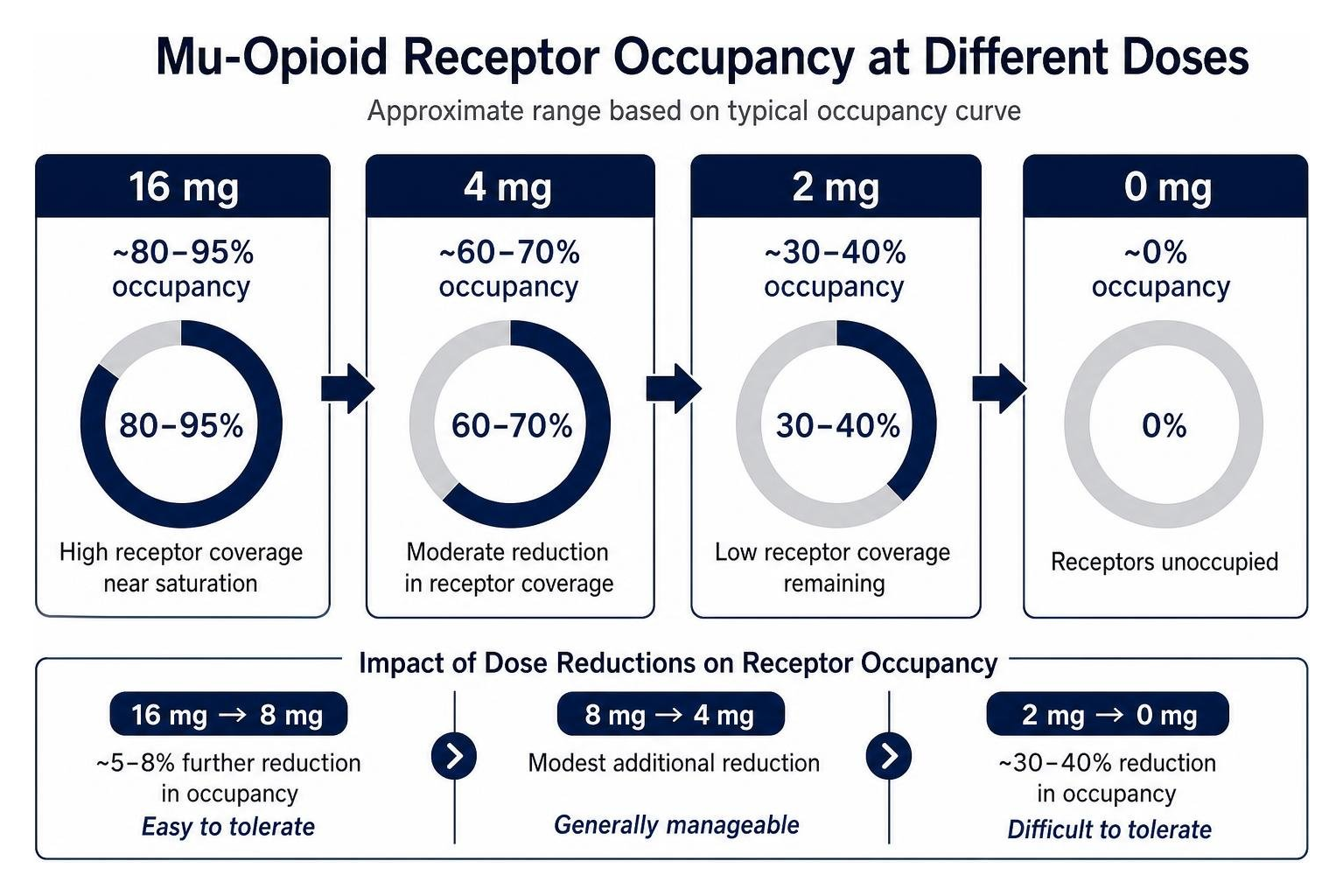
At 16 mg to 32 mg, buprenorphine saturates roughly 80% to 95% of the brain’s mu-opioid receptors.
- A drop from 16 mg to 8 mg reduces receptor occupancy by only about 5% to 8%. The brain barely registers the deficit.
- A drop from 8 mg to 4 mg reduces occupancy by another modest margin.
- A drop from 2 mg to 0 mg, however, strips away the remaining 30% to 40% of receptor coverage in one fell swoop.
Because the relationship between dose and receptor occupancy is hyperbolic rather than linear, small numeric cuts near zero produce massive physiological shifts. For an in-depth breakdown of these pharmacological dynamics, review Suboxone (Buprenorphine/Naloxone) Tapering: Why the Last Milligrams Are the Hardest — TaperCommunity.
The Role of Naloxone in Sublingual Formulations
Suboxone contains buprenorphine and naloxone in a 4:1 ratio. Patients often worry that as they taper, the naloxone in the film or tablet might build up, block buprenorphine, or trigger withdrawal.
This is a clinical misconception. When taken sublingually as prescribed:
- Naloxone Bioavailability: Sublingual absorption of naloxone is less than 3% to 10%, meaning virtually none enters systemic circulation to exert an opioid-blocking effect.
- Abuse Deterrent: Naloxone is included solely to prevent intravenous misuse. If injected, naloxone reaches high bioavailability and triggers immediate withdrawal.
- Withdrawal Kinetics: Naloxone has a short half-life of 2 to 12 hours, while buprenorphine maintains an elimination half-life of 24 to 42 hours. Naloxone does not contribute to withdrawal symptoms during a sublingual taper.
Managing Withdrawal Symptoms and Micro-Dosing Strategies
As dosage decreases, mild withdrawal symptoms can emerge. Recognizing phase-specific symptoms allows patients and clinicians to address them proactively rather than abandoning the taper.
Does the medication keep you comfortable when dosed properly? Learn more about how Suboxone helps with withdrawal symptoms throughout each phase of care.
Managing Symptoms During a Suboxone Taper for Opiate Withdrawal
Withdrawal symptoms during a taper tend to present across three distinct phases:
- Early Phase (16 mg down to 8 mg): Minimal to no physical withdrawal. Occasional mild fatigue or sleep disruption for 24 to 48 hours following a drop.
- Middle Phase (8 mg down to 2 mg): Mild autonomic nervous system activation, including mild sweating, restless legs at night, yawning, loose stools, and brief spikes in irritability.
- Final Phase (Below 2 mg to Zero): Pronounced rebound anxiety, pronounced insomnia, hot and cold temperature dysregulation, body aches, and persistent cravings.
Non-opioid comfort medications provide significant relief when targeted to specific symptoms:
- Clonidine: An alpha-2 adrenergic agonist that calms sympathetic nervous system hyperactivity, easing sweats, rapid heart rate, and internal agitation.
- Gabapentin: Helpful for short-term management of restless legs and sleep disturbances under medical supervision.
- Loperamide: Treats peripheral gastrointestinal distress and cramping without central nervous system opioid activity when taken at recommended doses.
- Acetaminophen / NSAIDs: Manage baseline musculoskeletal aches.
Safe Micro-Dosing and Compounded Liquid Titration
Standard commercial Suboxone sublingual films and tablets generally come in minimum strengths of 2 mg/0.5 mg. Jumping directly from 2 mg to zero causes acute discomfort. Successfully navigating the sub-2 mg zone requires micro-reductions down to 0.5 mg, 0.25 mg, and 0.125 mg.
Methods for achieving micro-doses include:
- Film Precision Cutting: Using medical shears and a grid template to cut a 2 mg film into halves (1 mg), quarters (0.5 mg), and eighths (0.25 mg). While manufacturers caution against uneven medication distribution across films, this is a widespread harm-reduction practice.
- Compounded Buprenorphine: Working with specialized compounding pharmacies to produce accurately measured sublingual liquid solutions or micro-dose sublingual troches.
- Volumetric Liquid Titration: Dissolving a known quantity of buprenorphine in measured volumes of sterile water/alcohol under medical direction to titrate tiny fractional doses with an oral syringe.
Navigating Post-Acute Withdrawal Syndrome (PAWS)
After the final dose of buprenorphine clears the body, acute physical symptoms gradually fade, but the nervous system needs time to recalibrate endogenous dopamine and endorphin production. This phase is known as Post-Acute Withdrawal Syndrome (PAWS).
Common PAWS symptoms include:
- Anhedonia (inability to experience pleasure from daily activities)
- Low energy and chronic fatigue
- Heightened emotional sensitivity and low stress tolerance
- Periodic sleep architecture disruptions
Navigating PAWS requires behavioral and lifestyle interventions: structured aerobic exercise to promote neuroplastic recovery, consistent sleep routines, balanced nutrition, and active participation in peer support groups or therapy.
If you are ready to take the next step in your recovery journey, Make an Appointment to Treat Addiction Please don’t hesitate. Make an appointment today.
When to Maintain Low-Dose Therapy and How to Work with Prescribers
Discontinuing Suboxone is not a mandatory requirement for recovery. Long-term maintenance therapy is safe, evidence-based, and associated with dramatic reductions in mortality, overdose, and illicit opioid use.
Weighing Low-Dose Maintenance Against Tapering to Zero
Remaining on a low, stable maintenance dose (such as 1 mg to 2 mg daily) provides continuous protection against accidental overdose while minimizing side effects.
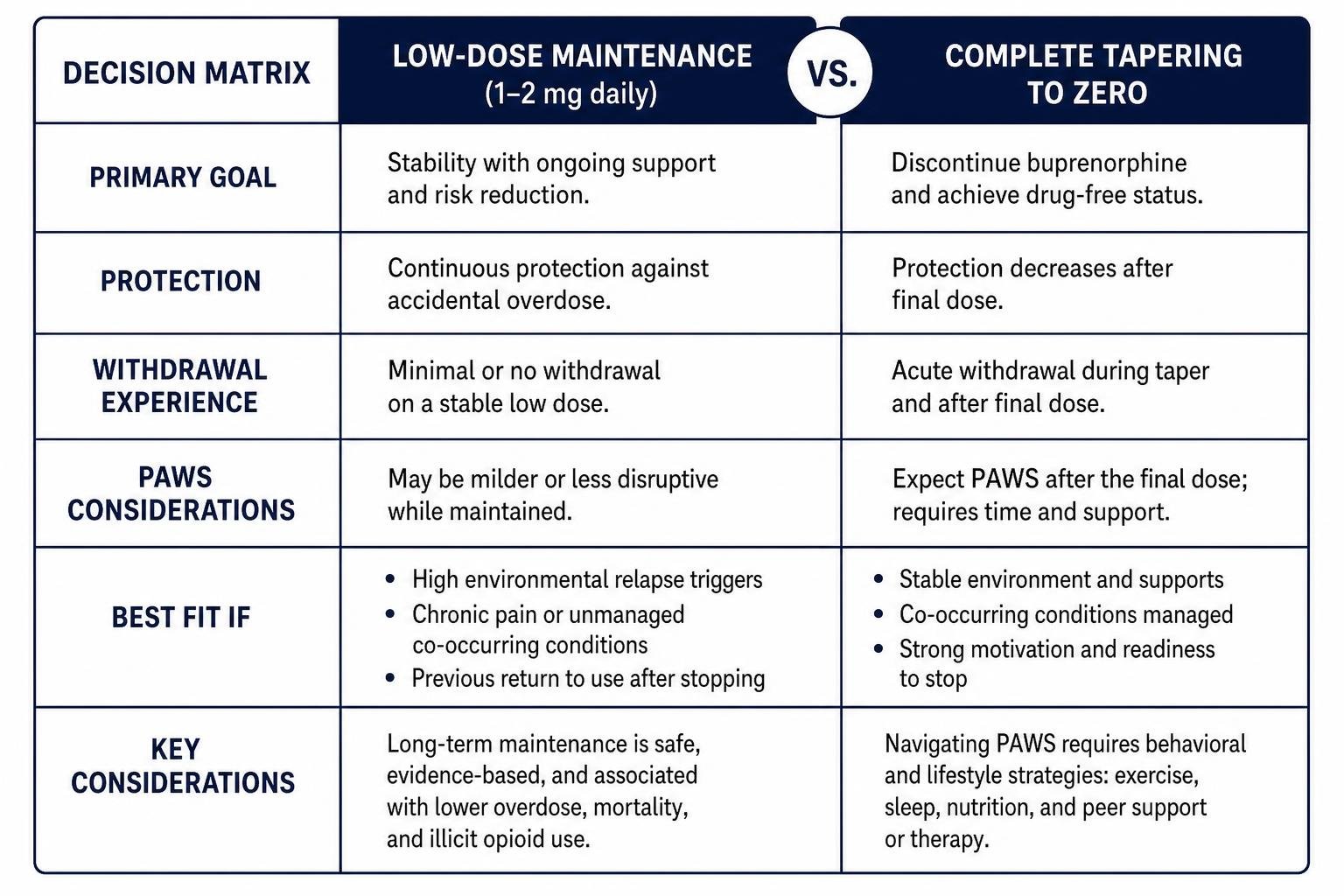
Consider maintaining low-dose therapy if:
- You face high environmental relapse triggers, chronic pain, or unmanaged co-occurring psychiatric conditions.
- Previous attempts to stop Suboxone led to rapid return to illicit opioid use.
- You feel stable, productive, and comfortable on your current low dose.
Achieving a dose of zero is only one valid outcome. Remaining on a low maintenance dose long-term is a successful recovery strategy supported by SAMHSA and major medical organizations.
Collaborating with Healthcare Providers and Telehealth Services
Navigating a taper requires close communication between patient and provider. If your prescriber suggests rapid dose drops that cause significant distress, advocate for yourself by requesting smaller percentage cuts and longer hold times between adjustments.
If an unexpected life stressor occurs or withdrawal symptoms become destabilizing, “up-dosing” back to the previous stable dose is a normal clinical adjustment, not a setback. At National Addiction Specialists, we provide personalized telehealth Suboxone treatment across Tennessee and Virginia, ensuring you have access to experienced addiction medicine physicians who support patient-centered tapering protocols.
Frequently Asked Questions About Suboxone Tapering
What is the ideal timeline to taper off Suboxone completely?
A safe, hyperbolic taper from a moderate dose (8 mg to 16 mg) typically spans 4 to 12 months. The process should remain symptom-driven rather than tied to an arbitrary calendar date. Pausing the taper for several weeks to stabilize is standard clinical practice.
Can I switch to a liquid compounded dose for the final phase?
Yes. When standard 2 mg films or tablets cannot provide the small fractional cuts needed below 1 mg (such as 0.25 mg or 0.125 mg), your addiction specialist can prescribe compounded sublingual solutions or micro-dose formulations through a specialized compounding pharmacy.
What should I do if severe withdrawal symptoms return during a reduction?
Contact your healthcare provider immediately. The safest protocol is to step back up to your last comfortable dose (up-dosing) until symptoms subside. Once restabilized, you can resume tapering at smaller increments with longer intervals between reductions.
Conclusion
A successful taper requires stabilization, structured percentage-based reductions, symptom management, and long-term support. Whether you choose a short clinical taper, a gradual hyperbolic step-down over several months, or long-term low-dose maintenance, your recovery plan must be customized to your body, lifestyle, and goals.
At National Addiction Specialists, we provide accessible, compassionate, and confidential addiction medicine through telehealth across Tennessee and Virginia. We accept Medicaid and Medicare, helping you receive expert medical guidance from the comfort and privacy of home. If you or a loved one is ready to build a safe, sustainable recovery roadmap, start your structured Suboxone taper plan with our dedicated clinical team today.
References
Ling W, Hillhouse M, Domier C, Doraimani G, Hunter J, Thomas C, Jenkins J, Hasson A, Annon J, Saxon A, Selzer J, Boverman J, Bilangi R. “Buprenorphine tapering schedule and illicit opioid use..” Addiction (Abingdon, England), 2009. PMCID PMC3150159.
Suboxone® and Subutex® are a registered trademark of Indivior UK Limited. Any mention and reference of Suboxone® and Subutex® in this website is for informational purposes only and is not an endorsement or sponsorship by Indivior UK Limited.
This article was medically reviewed by: Chad Elkin, MD, DFASAM is a board-certified addiction medicine physician, founder, and Chief Medical Officer of National Addiction Specialists, dedicated to treating substance use disorders. A Distinguished Fellow of the American Society of Addiction Medicine (ASAM), Dr Elkin currently serves as President of the Tennessee Society of Addiction Medicine (TNSAM) and has held various leadership roles within the organization. Dr Elkin chairs ASAM’s Health Technology Subcommittee and is an active member of its Practice Management and Regulatory Affairs Committee, State Advocacy and Legislative Affairs Committee, and other committees. He also serves on the planning committee for the Vanderbilt Mid-South Addiction Conference. Committed to advancing evidence-based policy, Dr Elkin is Chairman of the Tennessee Association of Alcohol, Drug, & Other Addiction Services (TAADAS) Addiction Medicine Council, which collaborates with the TN Department of Mental Health & Substance Abuse Services (TDMHSAS). He has contributed to numerous local, state, and national task forces, helping develop professional guidelines, policies, and laws that align with best practices in addiction medicine. His work focuses on reducing addiction-related harm, combating stigma, and ensuring access to effective treatment.Passionate about the field of addiction medicine, he remains dedicated to shaping policy and enhancing patient care.