Understanding Drug Withdrawal Symptoms and Timelines Explained
Drug Withdrawal Symptoms: The Quick Answer

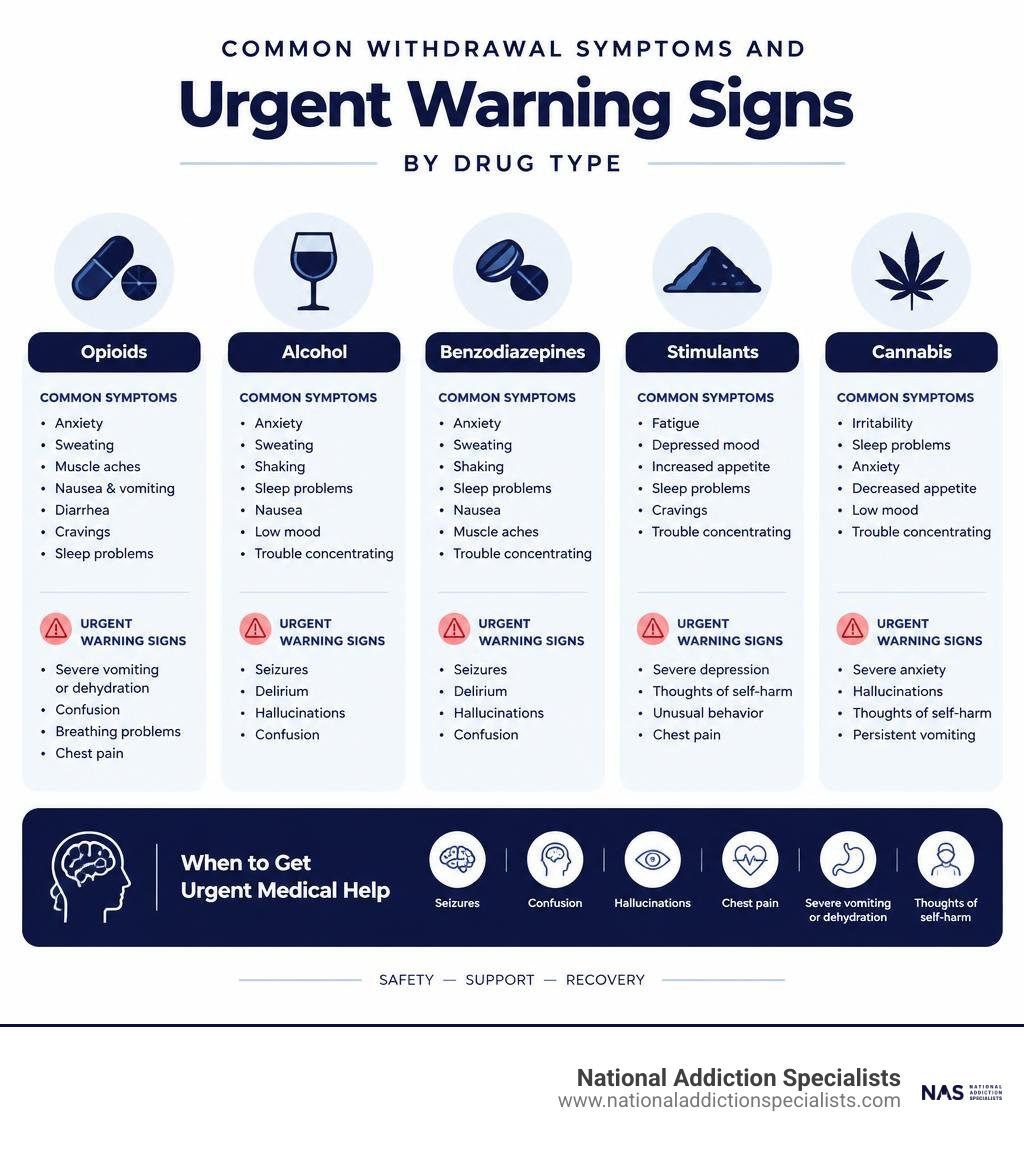
Drug withdrawal symptoms are physical and mental changes that can happen when a person suddenly stops or sharply cuts back on a substance their body has adapted to. What are withdrawal symptoms of drugs? They can include anxiety, sweating, shaking, sleep problems, nausea, vomiting, diarrhea, muscle aches, cravings, low mood, and trouble concentrating.
Symptoms depend on the drug, how long it was used, the dose, and whether it is short- or long-acting. Opioid withdrawal is often uncomfortable but is usually not life-threatening. In contrast, suddenly stopping alcohol, benzodiazepines, or barbiturates can cause seizures, delirium, and other medical emergencies.
Do not try to push through severe symptoms alone. Get urgent medical help for seizures, confusion, hallucinations, chest pain, severe vomiting or dehydration, or thoughts of self-harm.
Withdrawal happens because the brain and body adjust to regular substance use. When the substance is removed, the nervous system can rebound before it has time to regain balance. Safe, medical support can reduce discomfort and create a clearer path into ongoing treatment.
I am Chad Elkin, MD, an addiction medicine and internal medicine physician and the Founder and Medical Director of National Addiction Specialists. I help patients understand what are withdrawal symptoms of drugs and access evidence-based, private treatment that fits real life.
What are withdrawal symptoms of drugs terms you need:
The Science of Withdrawal: Why the Body Reacts
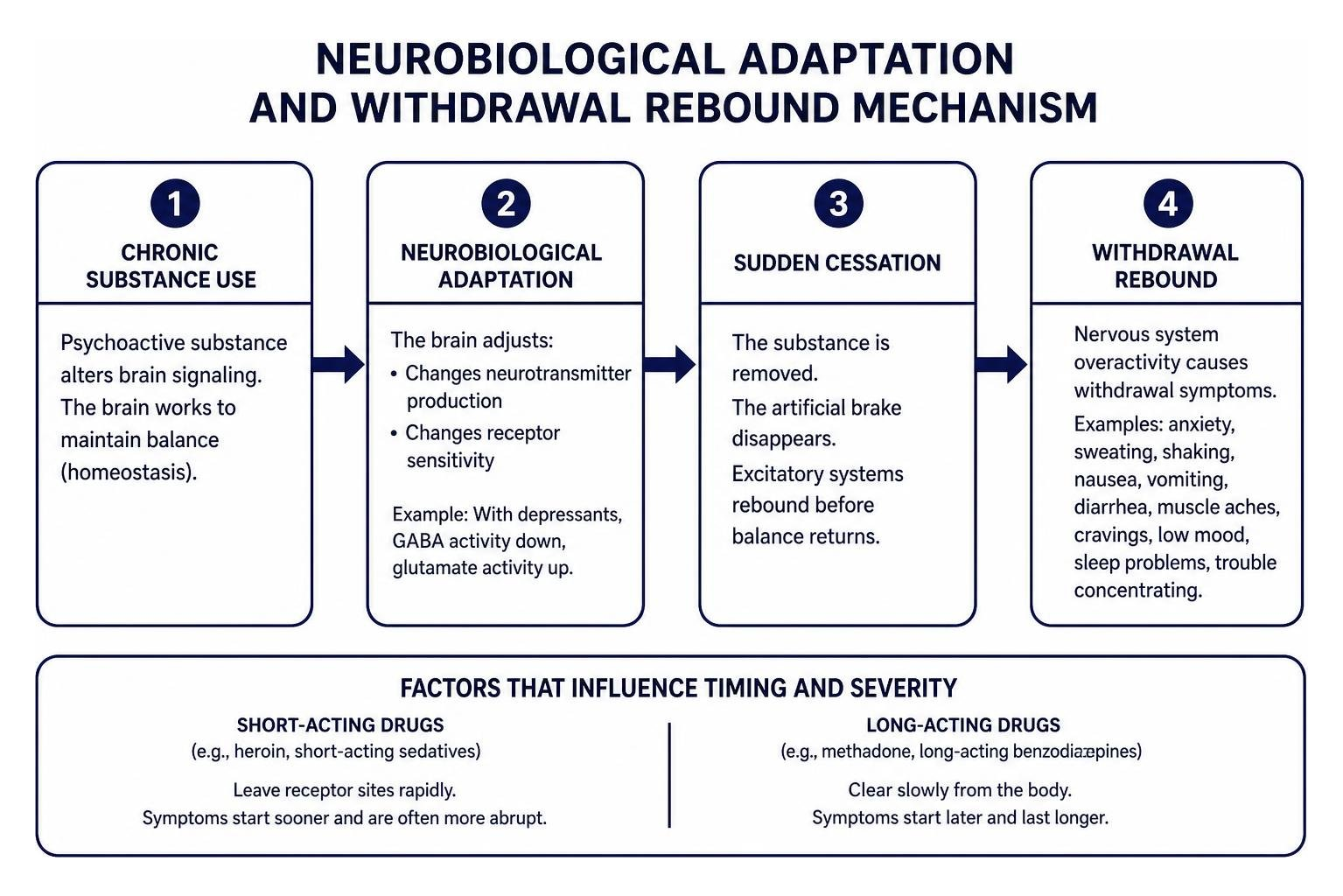
To truly understand what happens during detox, we have to look at the brain’s remarkable ability to adapt. When you consume a psychoactive substance regularly, your brain works hard to maintain balance (homeostasis). It does this through neurobiological adaptation: adjusting its own production of neurotransmitters and changing the sensitivity of its receptors.
For example, when a central nervous system depressant constantly slows brain activity, the brain responds by turning down inhibitory pathways (like gamma-aminobutyric acid, or GABA) and turning up excitatory pathways (like glutamate). When the drug is suddenly removed, this artificial brake disappears. The excitatory system goes into overdrive, resulting in an intense physiological rebound. As outlined in a scientific review of substance withdrawal syndromes (Regina et al., 2024), this sudden disruption of chemical equilibrium is the core driver of acute withdrawal symptoms across substance classes.
In the case of opioids, chronic exposure suppresses the locus coeruleus—an area of the brainstem responsible for producing norepinephrine, which regulates alertness, blood pressure, and heart rate. To compensate, the brain increases baseline norepinephrine production. When opioids abruptly leave those receptors, the locus coeruleus surges with unrestrained adrenergic activity. This neurochemical storm triggers classic symptoms: a racing heart, cold sweats, dilated pupils, and gastrointestinal turmoil.
The timing and severity of these symptoms depend heavily on the drug’s half-life and duration of use:
- Short-acting drugs (such as heroin or short-acting sedatives) leave receptor sites rapidly, causing an abrupt and severe onset of symptoms.
- Long-acting drugs (such as methadone or long-acting benzodiazepines) clear slowly, leading to a delayed onset with a more prolonged, drawn-out course.
- The Kindling Effect: With substances like alcohol and sedatives, repeated cycles of intoxication followed by abrupt cessation cause cumulative neurochemical sensitization. Each subsequent withdrawal episode becomes progressively more severe, dramatically increasing the risk of complications such as seizures and delirium.
While the most intense physical symptoms typically resolve within days or weeks, some individuals experience lingering cognitive, emotional, and sleep disturbances known as post-acute withdrawal syndrome (PAWS), which can persist for several months as brain chemistry slowly recalibrates.
What Are Withdrawal Symptoms of Drugs Across Different Substance Classes?
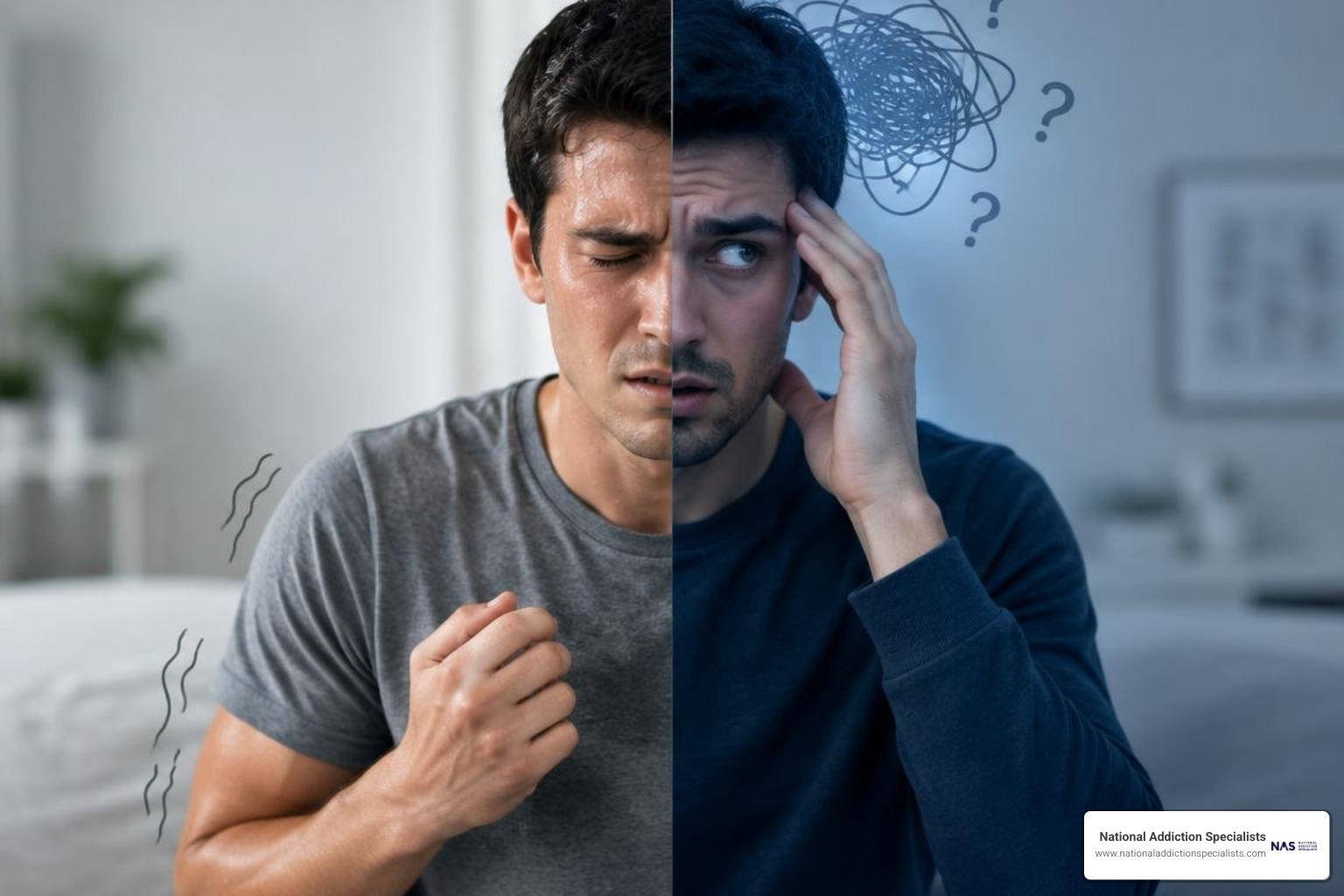
Withdrawal is not a one-size-fits-all experience. Different drug classes target distinct neural circuits and neurotransmitter systems, producing unique clinical presentations. While some substances cause severe physical flu-like distress, others primarily impact cardiovascular stability or mental health.
What Are Withdrawal Symptoms of Drugs in the Opioid Family?
Opioids—including prescription painkillers (like oxycodone, hydrocodone, and morphine), illicit heroin, and potent synthetic opioids like fentanyl—interact with mu-opioid receptors throughout the central nervous system and digestive tract. Globally, an estimated 15.6 million people use illicit opioids, and opioid withdrawal symptoms occur in approximately 85% of regular users.
According to a scientific analysis of opioid withdrawal features (Shah & Huecker, 2023), clinicians look for four specific hallmark signs of opioid withdrawal:
- Mydriasis (widely dilated pupils)
- Piloerection (gooseflesh or goosebumps)
- Lacrimation and Rhinorrhea (excessive tearing and runny nose)
- Yawning (frequent, involuntary yawning)
Beyond these hallmark signs, individuals typically experience:
- Severe gastrointestinal distress (intense stomach cramps, nausea, vomiting, and watery diarrhea)
- Autonomic hyperactivity (tachycardia, elevated blood pressure, and profuse diaphoresis/sweating)
- Diffuse muscle aches (myalgias), bone pain, and profound restlessness
- Insomnia, severe anxiety, and overwhelming drug cravings
It is also important to distinguish between spontaneous withdrawal (which develops naturally when drug levels fall over hours) and precipitated withdrawal. Precipitated withdrawal occurs when an opioid antagonist (like naloxone) or a high-affinity partial agonist (like buprenorphine) is administered while full-agonist opioids are still actively bound to receptors, instantly throwing the patient into peak, severe distress within minutes. You can learn more about recognizing these patterns in our guide on identifying opioid withdrawal symptoms.
Alcohol and Depressant Withdrawal: Recognizing Critical Risks
Unlike opioid withdrawal, which is uncomfortable but rarely fatal on its own, acute withdrawal from central nervous system depressants like alcohol carries life-threatening risks. Heavy, chronic alcohol consumption continuously suppresses NMDA glutamate receptors while enhancing inhibitory GABA receptors. When alcohol intake stops abruptly, the central nervous system experiences uncontrolled rebound excitation.
Initial symptoms often begin within 6 to 12 hours after the last drink:
- Coarse hand tremors (“the shakes”)
- Sweating, tachycardia, and elevated blood pressure
- Nausea, insomnia, and intense internal agitation
In moderate to severe cases, significant medical complications can develop rapidly. Generalized tonic-clonic (grand mal) seizures can occur within 12 to 48 hours of cessation. Alcoholic hallucinosis—characterized by vivid auditory, visual, or tactile hallucinations—may also manifest while the patient remains otherwise oriented.
The most dangerous complication is delirium tremens (DTs), which typically develops 48 to 96 hours after the last drink. DTs is characterized by profound global confusion, disorientation, severe autonomic instability (dangerously high blood pressure, fever, rapid heart rate), and terrifying hallucinations. Untreated delirium tremens carries a high mortality rate, making it essential to understand how to recognize the signs of alcohol withdrawal and seek immediate medical supervision.
What Are Withdrawal Symptoms of Drugs Like Sedatives and Stimulants?
Sedatives and stimulants present distinct clinical challenges ranging from severe neurological hyperarousal to deep psychiatric exhaustion:
- Benzodiazepines and Barbiturates: Medications such as alprazolam, diazepam, clonazepam, and lorazepam enhance GABA activity. Approximately 40% of individuals taking benzodiazepines for longer than six months experience moderate to severe withdrawal upon stopping. Symptoms include intense rebound anxiety, sensory hypersensitivity (photophobia, hyperacusis), depersonalization, muscle twitching, and life-threatening grand mal seizures. Barbiturate withdrawal presents similar severe hazards and requires careful, gradual tapering.
- Stimulants (Cocaine, Amphetamines, Methamphetamine): Because stimulants flood the brain with dopamine and norepinephrine, ceasing use depletes these neurotransmitters. Stimulant withdrawal produces a pronounced “crash” characterized by severe fatigue, hypersomnia (excessive sleeping), increased appetite, vivid unpleasant dreams, psychomotor retardation, and profound anhedonia (the inability to feel pleasure). While physically less dangerous than sedative withdrawal, the resulting severe dysphoria and depression can lead to acute suicidal ideation.
- Nicotine and Caffeine: Even widely used legal substances produce clear physiological dependence. Nicotine withdrawal causes severe irritability, anxiety, difficulty concentrating, sleep disruption, increased appetite, and intense cravings. Caffeine withdrawal—affecting daily coffee and energy drink consumers—causes throbbing headaches (due to cerebral vasodilation), marked fatigue, drowsiness, depressed mood, and flu-like malaise.
For a comprehensive breakdown of how these timelines compare across all substance categories, explore our detailed drug withdrawal symptoms timeline.
Make an Appointment to Treat Addiction Please don’t hesitate. Make an appointment today.
Clinical Assessment and Severity Timelines
To ensure patient safety and tailor medication protocols, healthcare providers utilize validated clinical assessment tools rather than relying solely on subjective self-reports.
The two primary clinical scales used in modern addiction medicine are:
- Clinical Opiate Withdrawal Scale (COWS): An 11-item clinician-administered assessment that measures observable signs of opioid withdrawal, including resting pulse rate, gastrointestinal upset, sweating, tremor, pupil size, bone/joint aches, rhinorrhea/lacrimation, gooseflesh, and restlessness. Scores range from 0 to 47 (5–12 = mild; 13–24 = moderate; 25–36 = moderately severe; >36 = severe). A COWS score of at least 11 to 13 is generally required before initiating partial-agonist medications like buprenorphine to avoid precipitating withdrawal.
- Clinical Institute Withdrawal Assessment for Alcohol, Revised (CIWA-Ar): A 10-item scale assessing nausea/vomiting, tremor, paroxysmal sweats, anxiety, agitation, tactile disturbances, auditory disturbances, visual disturbances, headache, and orientation. Scores guide symptom-triggered benzodiazepine administration in clinical settings.
The following table summarizes the typical timelines, primary symptoms, and assessment approaches for major drug classes:
| Substance Class | Typical Onset | Peak Severity | Acute Duration | Hallmark Symptoms | Primary Clinical Tool |
|---|---|---|---|---|---|
| Short-Acting Opioids (Heroin, Oxycodone) | 6–12 hours | 48–72 hours | 5–7 days | Dilated pupils, piloerection, diarrhea, sweating, severe aches | COWS |
| Long-Acting Opioids (Methadone, Buprenorphine) | 24–48 hours | 4–6 days | 14–21+ days | Insomnia, muscle aches, flu-like symptoms, autonomic arousal | COWS |
| Alcohol | 6–12 hours | 48–72 hours | 5–7 days | Tremors, sweating, agitation, seizures, delirium tremens | CIWA-Ar |
| Benzodiazepines (Short- vs. Long-Acting) | 1–4 days | 5–14 days | 2–4+ weeks | Rebound anxiety, insomnia, sensory overload, muscle spasms, seizures | CIWA-B |
| Stimulants (Cocaine, Methamphetamine) | 12–24 hours | 2–4 days | 1–2 weeks | Crash, severe fatigue, vivid dreams, anhedonia, depression | Clinical Evaluation |
Accurately evaluating drug withdrawal symptoms allows medical teams to intervene before complications escalate, ensuring a safe transition into long-term recovery.
Medical Management and Safe Detoxification Protocols
Attempting to stop substances abruptly “cold turkey” without medical guidance is not only unnecessarily painful—it significantly increases the likelihood of rapid relapse and can be medically hazardous. Modern addiction medicine offers evidence-based pharmacological treatments that eliminate or dramatically reduce withdrawal distress.

For opioid use disorder, Medication-Assisted Treatment (MAT) represents the gold standard of care:
- Buprenorphine / Suboxone (buprenorphine/naloxone): Buprenorphine is a high-affinity, partial mu-opioid agonist. It binds tightly to opioid receptors, satisfying physical dependence and preventing withdrawal symptoms and intense cravings without producing the full euphoric high of full agonists. Because of its partial agonist profile, it has a built-in “ceiling effect” on respiratory depression, making it remarkably safe for outpatient and telehealth administration.
- Alpha-2 Adrenergic Agonists (Clonidine, Lofexidine): These non-opioid medications suppress the adrenergic surge originating from the locus coeruleus. They effectively lower heart rate, reduce sweating, relieve hot/cold flashes, and calm autonomic hyperarousal.
- Supportive Adjuncts: Target-specific medications such as ondansetron (for nausea), loperamide (for diarrhea), and NSAIDs/acetaminophen (for muscle and bone pain) provide vital comfort during early stabilization.
For alcohol and sedative withdrawal, symptom-triggered or fixed-taper regimens using long-acting benzodiazepines (such as diazepam or chlordiazepoxide), alongside fluid rehydration and high-dose thiamine supplementation, prevent neurological complications like Wernicke-Korsakoff syndrome and seizures.
Understanding the benefits of medically supervised withdrawal empowers patients to seek professional care rather than enduring unnecessary physical trauma. When managed properly, medical interventions show how to manage opioid withdrawal symptoms safely and lay a stable foundation for long-term sobriety.
Frequently Asked Questions About Drug Withdrawal
How long do drug withdrawal symptoms typically last?
The acute phase of withdrawal generally lasts between 5 to 10 days for short-acting substances like alcohol, heroin, and immediate-release prescription opioids. Long-acting substances, such as methadone or long-acting benzodiazepines, can produce acute symptoms lasting 2 to 4 weeks or more. Following the acute phase, psychological symptoms such as mild anxiety, sleep disruption, and cravings may linger during post-acute withdrawal (PAWS) for several months.
Can drug withdrawal symptoms be fatal?
Yes, certain withdrawal syndromes can be fatal without proper medical management. Unsupervised withdrawal from alcohol, benzodiazepines, and barbiturates carries a serious risk of fatal grand mal seizures, severe hyperthermia, and delirium tremens. While uncomplicated opioid withdrawal is rarely directly fatal in healthy individuals, severe untreated vomiting and diarrhea can cause lethal dehydration, electrolyte disturbances, and cardiovascular collapse if fluid loss is not managed. Furthermore, the loss of opioid tolerance during a brief, unassisted withdrawal attempt dramatically elevates the risk of fatal overdose if a relapse occurs.
What is the safest way to detox from drugs at home?
The safest approach to home-based recovery is medically supervised outpatient detox via telemedicine. Through secure virtual appointments, licensed addiction medicine physicians evaluate your clinical history, monitor your withdrawal progression using validated scales, and prescribe evidence-based medications (such as Suboxone, clonidine, and supportive comfort medicines) directly to your local pharmacy. This approach provides clinical oversight, safety protocols, and privacy from the comfort of your own home.
Conclusion: Taking the Next Step Toward Safe Recovery
Withdrawing from drugs or alcohol can feel like an insurmountable hurdle, but you never have to navigate it alone or in agonizing discomfort. Understanding the physiological mechanisms behind withdrawal confirms that these symptoms are not a personal failing—they are the predictable, biological results of neurochemical adaptation that modern medicine can treat effectively.
At National Addiction Specialists, we provide accessible, compassionate, and 100% confidential telemedicine-based care across Tennessee and Virginia (including our centers in Brentwood, TN, and Virginia Beach, VA). Our experienced medical team specializes in outpatient medication-assisted treatment (MAT) utilizing Suboxone to eliminate opioid withdrawal symptoms and cravings, allowing you to regain control of your life without leaving your home. We proudly accept Medicare, Medicaid, and major commercial insurance plans.
If you or a loved one is ready to break free from substance dependence, explore our options for comprehensive opioid withdrawal treatment and connect with our clinical team today.
References
Angela C. Regina, Srinivasa B. Gokarakonda, Fibi N. Attia. “Withdrawal Syndromes.” StatPearls Publishing, 2024. NBK459239. Mansi Shah, Martin R. Huecker. “Opioid Withdrawal.” StatPearls Publishing, 2023. NBK526012.
Suboxone® and Subutex® are a registered trademark of Indivior UK Limited. Any mention and reference of Suboxone® and Subutex® in this website is for informational purposes only and is not an endorsement or sponsorship by Indivior UK Limited.
This article was medically reviewed by: Chad Elkin, MD, DFASAM is a board-certified addiction medicine physician, founder, and Chief Medical Officer of National Addiction Specialists, dedicated to treating substance use disorders. A Distinguished Fellow of the American Society of Addiction Medicine (ASAM), Dr Elkin currently serves as President of the Tennessee Society of Addiction Medicine (TNSAM) and has held various leadership roles within the organization. Dr Elkin chairs ASAM’s Health Technology Subcommittee and is an active member of its Practice Management and Regulatory Affairs Committee, State Advocacy and Legislative Affairs Committee, and other committees. He also serves on the planning committee for the Vanderbilt Mid-South Addiction Conference. Committed to advancing evidence-based policy, Dr Elkin is Chairman of the Tennessee Association of Alcohol, Drug, & Other Addiction Services (TAADAS) Addiction Medicine Council, which collaborates with the TN Department of Mental Health & Substance Abuse Services (TDMHSAS). He has contributed to numerous local, state, and national task forces, helping develop professional guidelines, policies, and laws that align with best practices in addiction medicine. His work focuses on reducing addiction-related harm, combating stigma, and ensuring access to effective treatment.Passionate about the field of addiction medicine, he remains dedicated to shaping policy and enhancing patient care.