The Complete Guide to Common Drug Withdrawal Symptoms and Timelines
What You Need to Know About Common Drug Withdrawal Symptoms
Common drug withdrawal symptoms affect millions of Americans every year — and knowing what to expect can make the difference between a safe recovery and a dangerous one.
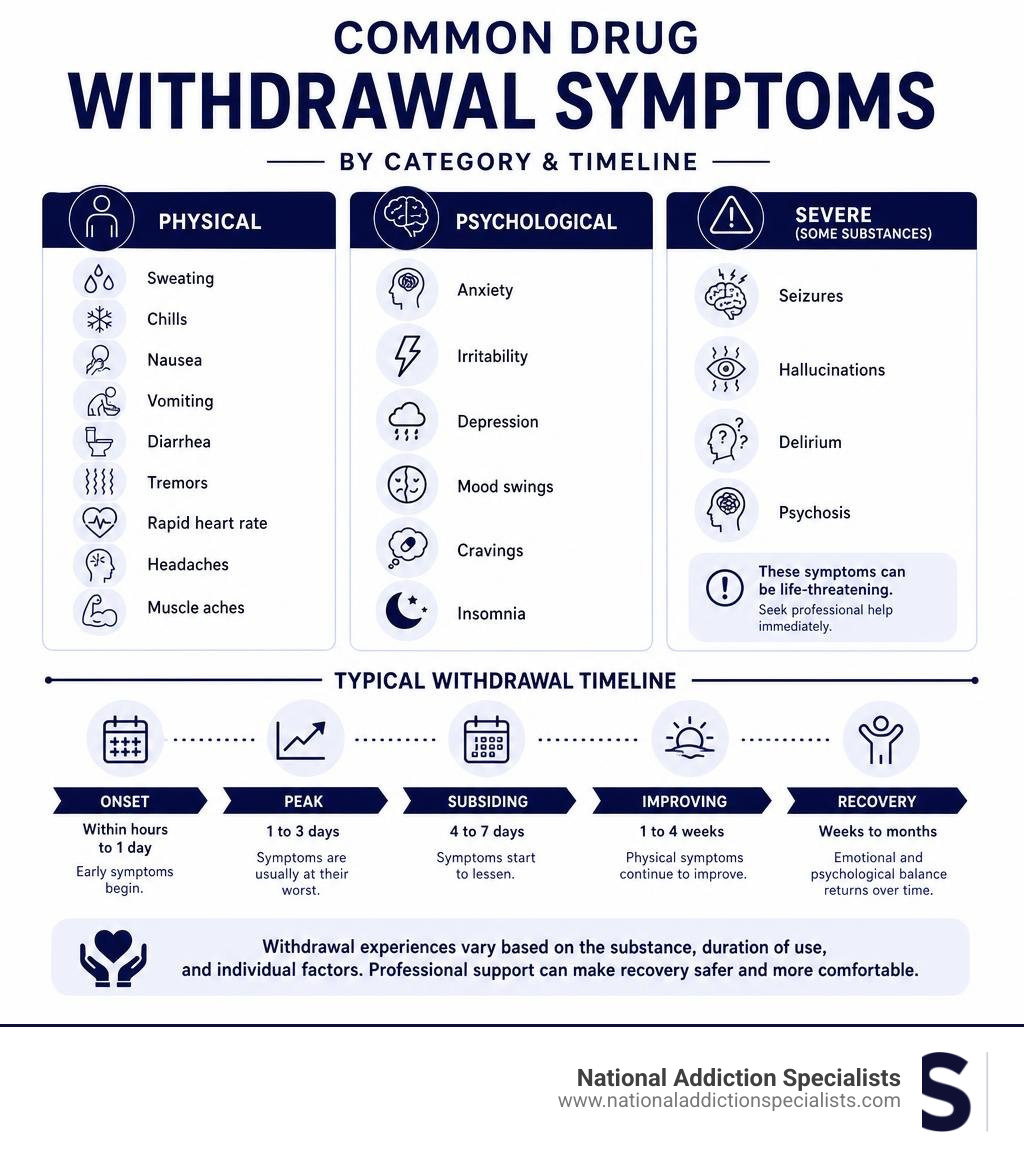
Here is a quick overview of the most common withdrawal symptoms by category:
| Category | Common Symptoms |
|---|---|
| Physical | Sweating, chills, nausea, vomiting, diarrhea, tremors, rapid heart rate, headaches, muscle aches |
| Psychological | Anxiety, irritability, depression, mood swings, cravings, insomnia |
| Severe (some substances) | Seizures, hallucinations, delirium, psychosis |
Withdrawal happens when your body has become physically dependent on a substance — and then that substance is suddenly reduced or stopped. The brain and nervous system, which had adapted to the drug’s presence, now have to rebalance without it. That rebalancing process is what causes withdrawal symptoms.
According to the Centers for Disease Control and Prevention, more than 11% of Americans ages 12 and older used illicit substances within the month before being surveyed in 2018 — and approximately 20.3 million Americans aged 12 or older struggled with a substance use disorder that same year. Behind many of those numbers is someone facing the reality of withdrawal.
The type of drug, how long it was used, and how much was taken all shape how intense and how long withdrawal symptoms will be. Some substances — like alcohol and benzodiazepines — can cause life-threatening withdrawal. Others, like cannabis or stimulants, tend to produce more manageable but still very real symptoms.
I’m Dr. Chad Elkin, Founder and Medical Director of National Addiction Specialists, and I am board-certified in both Addiction Medicine and Internal Medicine. In my clinical work treating substance use disorders, I’ve helped hundreds of patients navigate common drug withdrawal symptoms safely — and the most important thing I can tell you is that you don’t have to go through this alone.
Common drug withdrawal symptoms glossary:
What is Drug Withdrawal and Why Does It Occur?
To understand why common drug withdrawal symptoms occur, we have to look at how the human body maintains balance, a state known as homeostasis. The human brain is incredibly adaptive. When a person introduces an external chemical—whether it is a central nervous system depressant like alcohol or an opioid painkiller—the brain adjusts its own internal chemistry to compensate for the drug’s presence.
Think of it as a physiological “rubber band effect.” If you pull a rubber band in one direction (by depressing the central nervous system with a substance), the body has to pull back with equal force in the opposite direction to keep you upright and functioning. When you suddenly cut the rubber band by stopping the drug, that compensatory counter-force is left completely unopposed. The body snaps back violently, causing the turbulent experience we call withdrawal.
At a cellular level, this involves neurotransmitters and receptor site changes:
- Receptor Downregulation: When a drug chronically floods the brain with a specific chemical (like dopamine or GABA), the brain protects itself by reducing the number of active receptors for that chemical. When the drug is removed, the remaining receptors are left starved, leading to severe deficiency symptoms.
- The Locus Coeruleus: This tiny area of the brainstem is the primary site of noradrenaline production, which controls alertness, blood pressure, and heart rate. Opioids suppress noradrenaline activity. When opioids are suddenly removed, the locus coeruleus goes into overdrive, flooding the body with excess noradrenaline. This triggers the classic hyperarousal, sweating, anxiety, and rapid heart rate associated with opioid withdrawal.
To dive deeper into the clinical mechanisms behind these physical shifts, you can read the Scientific overview of withdrawal syndromes provided by the NCBI Bookshelf, or explore our detailed breakdown of Understanding drug withdrawal symptoms.
Understanding Common Drug Withdrawal Symptoms
Withdrawal is not just a single symptom; it is a systemic syndrome that impacts almost every major organ system in the body. When a substance is removed, the autonomic nervous system—which manages involuntary functions like heart rate, digestion, and temperature control—shifts into a state of hyperarousal.

This hyperarousal can lead to profound gastrointestinal distress, cardiovascular strain, and cognitive impairment. Because the brain is struggling to re-establish baseline chemical levels, physical discomfort is almost always accompanied by psychological distress.
Physical Manifestations of Common Drug Withdrawal Symptoms
The physical symptoms of withdrawal are often the most immediate and visible signs that the body is struggling to adapt. Depending on the substance, these symptoms can range from mildly uncomfortable to medically dangerous.
Some of the most common physical withdrawal symptoms include:
- Autonomic Overdrive: Profuse sweating, hot and cold flashes, goosebumps (piloerection), and frequent yawning.
- Gastrointestinal Distress: Severe nausea, persistent vomiting, abdominal cramping, and watery diarrhea.
- Flu-Like Symptoms: Muscle aches, joint pain, runny nose (rhinorrhea), and watery eyes (lacrimation).
- Neurological Disturbances: Fine tremors in the hands, dilated pupils (mydriasis), severe tension headaches, and in extreme cases, grand mal seizures.
For a comprehensive guide on identifying these physical signs in yourself or a loved one, read our resource on Recognizing physical withdrawal symptoms.
Psychological and Cognitive Common Drug Withdrawal Symptoms
While physical symptoms are incredibly difficult to endure, the psychological symptoms of withdrawal are often what drive individuals back to substance use. When the brain’s reward pathways are suddenly deprived of a substance, it triggers an immediate emotional and cognitive deficit.
Key psychological and cognitive symptoms include:
- Severe Anxiety and Irritability: A persistent feeling of dread, restlessness, and a very short temper.
- Dysphoria and Anhedonia: A profound state of unease or dissatisfaction with life, combined with a total inability to feel pleasure from normal activities.
- Sleep Disturbances: Intense insomnia, vivid nightmares, and highly disrupted sleep patterns.
- Cognitive Impairment: Brain fog, confusion, poor concentration, and memory difficulties.
- Sensory Distortions and Hallucinations: Auditory, visual, or tactile sensations that are not real (most common in severe alcohol and benzodiazepine withdrawal).
- Intense Cravings: An overwhelming, obsessive psychological urge to use the substance to find relief.
To learn more about how these mental challenges manifest across different drug classes, you can consult the systematic Evidence review on withdrawal experiences.
Withdrawal Timelines and Severity Across Major Drug Classes
The onset, peak, and duration of withdrawal symptoms vary dramatically depending on the specific substance used. Factors such as the drug’s half-life (how long it stays in your system) play a massive role in shaping this timeline.
| Drug Class | Onset of Symptoms | Peak Intensity | Duration of Acute Phase | Common Protracted Symptoms (PAWS) |
|---|---|---|---|---|
| Alcohol | 6 to 24 hours | 24 to 72 hours | 2 to 10 days | Anxiety, insomnia, mood swings |
| Benzodiazepines | 1 to 4 days (short-acting) | 1 to 2 weeks | 2 to 8 weeks | Brain fog, chronic anxiety, sensory issues |
| Short-Acting Opioids | 8 to 24 hours | 48 to 72 hours | 4 to 10 days | Depression, sleep issues, cravings |
| Long-Acting Opioids | 12 to 48 hours | 3 to 6 days | 10 to 20 days | Cravings, fatigue, anhedonia |
| Stimulants | 24 hours | 2 to 4 days | 3 to 5 days | Deep depression, apathy, hypersomnia |
| Cannabis | 24 to 72 hours | 3 to 5 days | 1 to 2 weeks | Irritability, vivid dreams, mild anxiety |
While the acute phase represents the most intense physical symptoms, many individuals also experience Post-Acute Withdrawal Syndrome (PAWS). PAWS refers to protracted, primarily psychological symptoms that can persist for weeks, months, or even up to a year as the brain slowly rebuilds its neural pathways.
Alcohol and Benzodiazepines (CNS Depressants)
Alcohol and benzodiazepines both work by enhancing the activity of GABA receptors, the brain’s primary inhibitory neurotransmitter. When these central nervous system depressants are used chronically, the brain reduces its natural GABA production.
If you stop using them abruptly, the brain is left with almost no inhibitory control, leading to dangerous over-excitation of the nervous system. This over-excitation can cause:
- Seizures: Typically occurring within the first 48 hours of cessation.
- Delirium Tremens (DTs): A severe, life-threatening state characterized by extreme confusion, rapid heart rate, high blood pressure, fever, and terrifying hallucinations. Without proper medical treatment, DTs can be fatal in up to 15% of cases.
- The Kindling Effect: Each subsequent withdrawal attempt from alcohol or benzodiazepines tends to be progressively more severe and dangerous than the last.
Because of these extreme risks, professional medical supervision is always recommended. Read our guide on How to Recognize the Signs of Alcohol Withdrawal to learn more about keeping yourself or a loved one safe.
Opioids (Pain Relievers)
Opioids bind directly to mu-opioid receptors in the brain and gut. While opioid withdrawal is incredibly painful and uncomfortable—often described as the worst, most intense flu you could ever imagine—it is rarely life-threatening on its own. However, the severe vomiting and diarrhea can lead to dangerous dehydration if left unmanaged.
The timeline varies based on the type of opioid:
- Short-acting (e.g., heroin, oxycodone): Onset occurs within 8 to 24 hours, peaking in 2 to 3 days, and mostly resolving within a week.
- Long-acting (e.g., methadone): Onset is delayed to 12 to 48 hours, peaking after several days, and can last for up to three weeks.
Clinicians use the Clinical Opioid Withdrawal Scale (COWS) to measure the severity of these symptoms and determine the appropriate medical intervention. For a deeper look at what to expect, read our article on Opioid Withdrawal Symptoms or check out the professional Clinical guidelines on opioid toxicity and withdrawal.
Stimulants and Cannabis
Withdrawal from stimulants (like cocaine or amphetamines) and cannabis looks very different from depressants or opioids. These substances primarily produce psychological rather than physical withdrawal symptoms.
- Stimulants: Stimulant withdrawal triggers a massive dopamine depletion. This leads to a “crash” characterized by extreme fatigue, hypersomnia (sleeping for days), increased appetite, vivid dreams, and a heavy, dark depression. While physical symptoms are minimal, the psychological depression can carry a high risk of suicidal ideation.
- Cannabis: Cannabis withdrawal is generally mild but can still be highly disruptive. Symptoms include irritability, mild physical shakiness, sweating, decreased appetite, and incredibly vivid, sometimes disturbing dreams as the brain adjusts to normal REM sleep cycles. Supportive care, hydration, and counseling are highly effective for managing these symptoms.
Medical Detox and Safe Management Strategies
Trying to quit drugs or alcohol “cold turkey” is not only incredibly painful, but for certain substances, it can be fatal. Sudden withdrawal from alcohol or benzodiazepines carries a high risk of life-threatening seizures.
Furthermore, going cold turkey from opioids often leads to such severe physical suffering that it triggers an immediate relapse. Because your tolerance drops rapidly during detox, a relapse at this stage carries an incredibly high risk of accidental overdose.

Fortunately, we have modern, highly effective medical management strategies to help you through this process safely and comfortably:
- Gradual Tapering: Slowly reducing the dose of a medication (especially benzodiazepines) over weeks or months to allow the brain to adjust gradually.
- Medication-Assisted Treatment (MAT): Utilizing FDA-approved medications like buprenorphine or Suboxone to stabilize brain chemistry. These medications bind to the same receptors as opioids, completely eliminating cravings and physical withdrawal symptoms without producing a high.
- Supportive Medications: Using non-opioid medications like clonidine (to lower blood pressure and reduce sweating/anxiety), ondansetron (for nausea), and ibuprofen (for muscle pain).
If you are curious about what Suboxone treatment feels like or how to manage its transition, read our guide on Suboxone Withdrawal Symptoms and How to Handle the Heat. You can also review the official Clinical guidelines for withdrawal management to see how medical professionals structure safe detox protocols.
Make an Appointment to Treat Addiction
Please don’t hesitate. Make an appointment today. Click here to access our New Patient Packet and start your journey
Frequently Asked Questions About Drug Withdrawal
How long do acute and protracted withdrawal symptoms last?
The acute phase of withdrawal—where physical symptoms are at their peak—typically lasts anywhere from 3 to 10 days for most substances, though it can extend to 2 weeks for long-acting drugs.
Protracted withdrawal, or Post-Acute Withdrawal Syndrome (PAWS), consists of lingering psychological symptoms like anxiety, depression, sleep disturbances, and cravings. PAWS can last for several weeks to several months as your brain chemistry slowly normalizes.
Can you safely detox from drugs at home?
Detoxing at home without medical supervision is highly discouraged, especially for alcohol, benzodiazepines, or severe opioid use. The physical risks of seizures, severe dehydration, and the psychological pressure of intense cravings make unsupervised home detox dangerous and highly prone to relapse.
To understand why professional oversight is so critical, read our article Everything You Need to Know About Medically Supervised Withdrawal.
What medications are most commonly used during medical detox?
Medical detox utilizes several highly effective medications depending on the substance:
- For Opioids: Buprenorphine (and Suboxone) to manage cravings and physical symptoms, and clonidine to control adrenaline-related symptoms like sweating and rapid heart rate.
- For Alcohol/Benzodiazepines: Longer-acting benzodiazepines like diazepam or chlordiazepoxide are used in a controlled taper to prevent seizures and delirium tremens.
- Supportive Medications: Anti-nausea medications (like ondansetron), muscle relaxants, and over-the-counter pain relievers.
Conclusion and Next Steps in Recovery
Navigating common drug withdrawal symptoms is the very first step on the road to long-term recovery. While the physical and psychological challenges of detox can feel overwhelming, you do not have to walk this path alone.
At National Addiction Specialists, we provide convenient, confidential, and highly personalized telemedicine-based Suboxone treatment for opioid addiction. You can receive expert medical care, customized recovery plans, and continuous support right from the comfort and privacy of your own home.
We proudly serve individuals throughout Tennessee and Virginia—including our physical locations in Brentwood, TN, and Virginia Beach, VA—and we accept both Medicaid and Medicare to ensure that life-saving treatment is accessible to everyone who needs it.
If you or a loved one is ready to take that courageous first step toward a healthier, happier life, please reach out to us. Begin your recovery journey today and let us help you reclaim your future.
This article was medically reviewed by: Chad Elkin, MD, DFASAM is a board-certified addiction medicine physician, founder, and Chief Medical Officer of National Addiction Specialists, dedicated to treating substance use disorders. A Distinguished Fellow of the American Society of Addiction Medicine (ASAM), Dr Elkin currently serves as President of the Tennessee Society of Addiction Medicine (TNSAM) and has held various leadership roles within the organization. Dr Elkin chairs ASAM’s Health Technology Subcommittee and is an active member of its Practice Management and Regulatory Affairs Committee, State Advocacy and Legislative Affairs Committee, and other committees. He also serves on the planning committee for the Vanderbilt Mid-South Addiction Conference. Committed to advancing evidence-based policy, Dr Elkin is Chairman of the Tennessee Association of Alcohol, Drug, & Other Addiction Services (TAADAS) Addiction Medicine Council, which collaborates with the TN Department of Mental Health & Substance Abuse Services (TDMHSAS). He has contributed to numerous local, state, and national task forces, helping develop professional guidelines, policies, and laws that align with best practices in addiction medicine. His work focuses on reducing addiction-related harm, combating stigma, and ensuring access to effective treatment. Passionate about the field of addiction medicine, he remains dedicated to shaping policy and enhancing patient care.
Suboxone® and Subutex® are a registered trademark of Indivior UK Limited. Any mention and reference of Suboxone® and Subutex® in this website is for informational purposes only and is not an endorsement or sponsorship by Indivior UK Limited.