Kratom for Withdrawal from Suboxone: Safe Remedy or Dangerous Trap?
Does Kratom Help with Suboxone Withdrawal? Here’s What You Need to Know
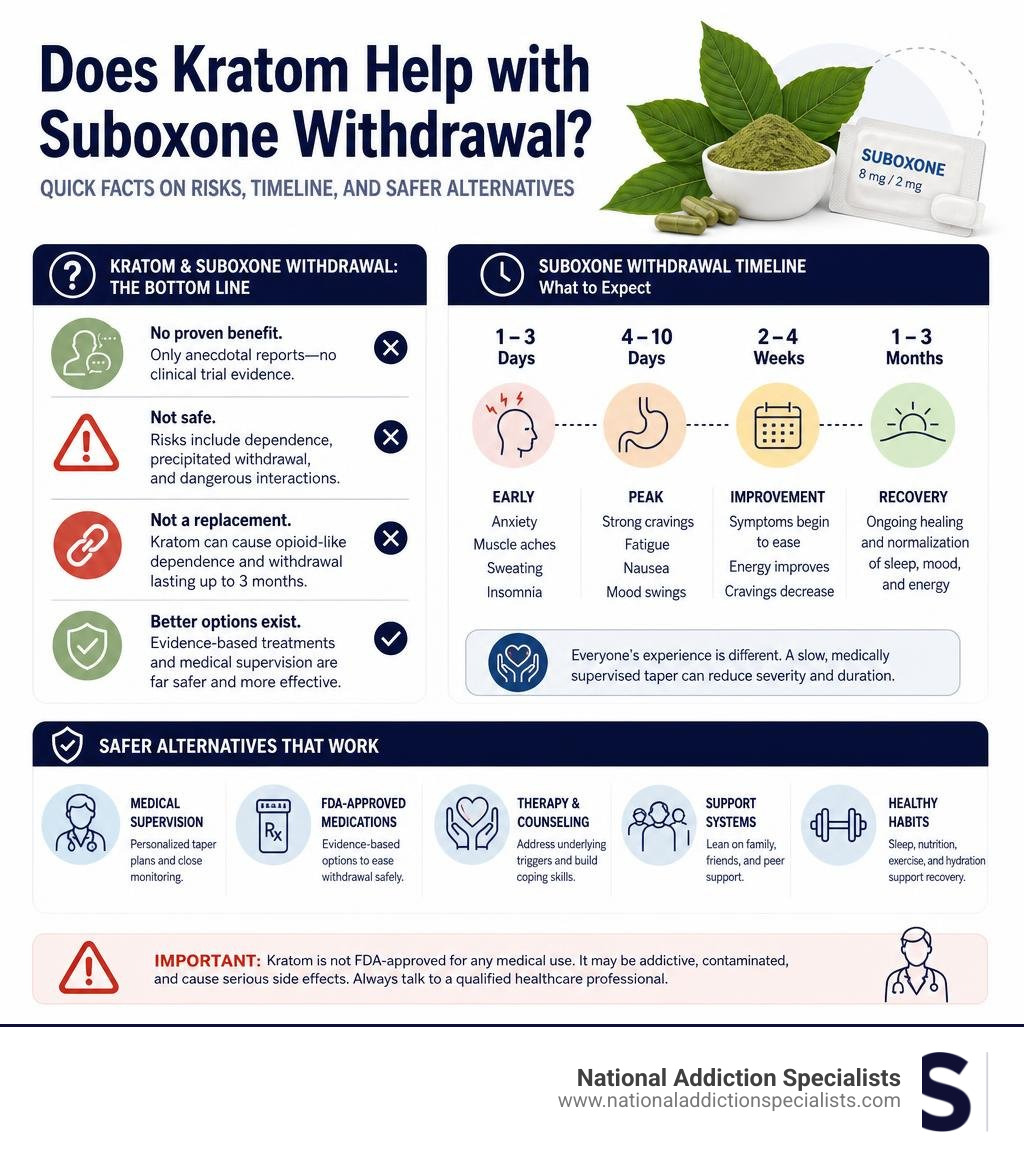
Does kratom help with Suboxone withdrawal? The short answer is: probably not safely, and not in any clinically proven way.
Here’s a quick summary before we go deeper:
| Question | Answer |
|---|---|
| Does kratom relieve Suboxone withdrawal symptoms? | Anecdotally, some people report short-term relief — but there is no clinical trial evidence supporting this |
| Is kratom safe to use during a Suboxone taper? | No — it carries serious risks including new dependence, precipitated withdrawal, and dangerous drug interactions |
| Can kratom replace Suboxone during withdrawal? | No — kratom itself can cause opioid-like dependence and withdrawal lasting up to 3 months |
| Is there a better option? | Yes — evidence-based medications and medical supervision are far safer and more effective |
Tapering off Suboxone is hard. Withdrawal symptoms like anxiety, muscle aches, insomnia, and cravings can feel overwhelming — and it makes sense that people look for anything that might ease the process. Kratom, an herbal supplement from Southeast Asia, is often promoted online as a natural solution. But what looks like a shortcut can quickly become a second problem.
The FDA has not approved kratom for any medical use. It warns about its risks of addiction, dependence, and contamination with heavy metals and bacteria. And ironically, the research shows that people who do become dependent on kratom often need Suboxone to get off kratom — not the other way around.
I’m Dr. Chad Elkin, board-certified in Addiction Medicine and founder of National Addiction Specialists. In my clinical work treating opioid use disorder across Tennessee and Virginia, I’ve seen how questions about does kratom help with Suboxone withdrawal come up — and why the answer matters deeply for patient safety. Understanding the real risks here is the first step toward a recovery plan that actually works.
Quick does kratom help with suboxone withdrawal terms:
- how long does suboxone withdrawal last
- opioid withdrawal management
- what helps with suboxone withdrawal
What is Kratom and How Does It Interact with Opioid Receptors?
To understand why people ask does kratom help with suboxone withdrawal, we first have to look at what kratom actually is and how it behaves inside the human brain.
Kratom (Mitragyna speciosa) is a tropical evergreen tree native to Southeast Asia, particularly Thailand, Malaysia, and Indonesia. For centuries, traditional communities used its leaves as a mild stimulant to combat fatigue during long workdays, or in larger quantities to manage pain and treat opium addiction.
The secret to kratom’s dual nature lies in its active alkaloids, primarily mitragynine and 7-hydroxymitragynine (7-OH). These compounds are highly unique because they interact directly with your brain’s mu-opioid receptors.

When you consume kratom, it acts as a partial agonist at these receptors, much like buprenorphine (one of the active ingredients in Suboxone). However, its effects are highly dose-dependent:
- Low doses (under 5 grams): Kratom acts primarily as a stimulant. It interacts with post-synaptic alpha-2 adrenergic receptors and serotonin receptors, leaving users feeling energized, focused, and alert.
- High doses (5 to 15 grams): The opioid-like effects take over. The alkaloids bind heavily to mu-opioid receptors, producing sedative properties, pain relief, and a sense of quiet euphoria.
Because high doses of kratom can mimic the pain-relieving and calming effects of traditional opioids, it has gained a massive following online as a self-treatment option for opioid withdrawal. You can read more about the pharmacology in this scientific research on kratom pharmacology.
But here is the catch: because it binds to the exact same receptors, your brain cannot tell the difference between “natural” kratom and a pharmaceutical opioid. Over time, regular use of kratom builds tolerance and physical dependence, eventually leading to its own severe withdrawal syndrome.
Does Kratom Help with Suboxone Withdrawal?
When someone is trying to step down from Suboxone (a combination of buprenorphine and naloxone), they are often looking for a bridge to cross the finish line. The physical and psychological symptoms of clearing buprenorphine from the body can be highly uncomfortable. Naturally, the idea of a “natural, herbal tea” that relieves those symptoms sounds incredibly appealing.
But does it actually help, or is it just shifting the burden?
When someone uses kratom as a self-treatment for Suboxone withdrawal, they are essentially feeding their starving mu-opioid receptors a different partial agonist. Yes, it might temporarily mask the chills, muscle aches, and anxiety. But it does so by keeping those receptors activated.
Rather than allowing your brain to heal and reset its natural chemistry, you are simply substituting one substance for another.
Can Kratom Ease Suboxone Withdrawal Symptoms Safely?
Anecdotal reports on internet forums are filled with people claiming that kratom made their Suboxone taper “painless.” However, these stories rarely highlight the aftermath.
Using kratom to ease withdrawal is a classic example of symptom masking. Because kratom is completely unregulated, its potency varies wildly from batch to batch. What starts as a quick way to get through a rough week of Suboxone withdrawal can quickly spiral into a severe, daily kratom addiction.
According to the Mayo Clinic perspective on kratom for opioid withdrawal, kratom has not proven to be a safe or effective treatment for opioid withdrawal. In fact, it often leads to a secondary physical dependence that requires professional medical intervention to resolve.
The Science: Does Kratom Help with Suboxone Withdrawal Long-Term?
From a clinical standpoint, there is virtually zero scientific evidence supporting the long-term use of kratom for Suboxone withdrawal. There are no randomized controlled trials showing that kratom helps people successfully achieve long-term, drug-free recovery.
Instead, the clinical evidence points in the opposite direction. Because kratom lacks standardized dosing, users must constantly guess how much they are taking. This makes a structured, safe taper almost impossible.
Rather than risking an unregulated herbal supplement, individuals looking to complete their recovery journey should explore a professional guide to Suboxone withdrawal relief built on proven, medical protocols.
The Risks of Using Kratom While Tapering Off Suboxone
If you are currently tapering off Suboxone under medical supervision, or even on your own, introducing kratom into the mix is highly dangerous.

The human body is a delicate chemical ecosystem. When you combine a powerful pharmaceutical like buprenorphine with an unregulated herbal cocktail like kratom, you run the risk of severe, unpredictable drug interactions.
- Central Nervous System (CNS) Depression: Both buprenorphine and kratom act on the central nervous system. Combining them can lead to profound drowsiness, confusion, and coordination issues.
- Serotonin Syndrome: Because kratom also interacts with serotonin and adrenergic receptors, combining it with other medications can trigger a life-threatening accumulation of serotonin in the body.
- Unregulated Contaminants: Commercial kratom is notorious for containing heavy metals (like lead and nickel) and dangerous bacteria like Salmonella.
To understand how these substances conflict, you can read more about balancing Suboxone and kratom risks.
Precipitated Withdrawal and Receptor Competition
One of the most miserable experiences in addiction recovery is precipitated withdrawal. This occurs when an opioid blocker or a partial agonist with a higher receptor affinity suddenly kicks a full agonist off the brain’s receptors, plunging the individual into immediate, severe withdrawal.
Buprenorphine (the active ingredient in Suboxone) has an incredibly high binding affinity for the mu-opioid receptors. It grips those receptors tightly, blocking other substances from attaching.
If you have kratom active in your system and you take Suboxone, the buprenorphine will violently displace the kratom alkaloids. This sudden receptor clearance can trigger instant, agonizing withdrawal symptoms, including severe vomiting, intense muscle cramps, extreme anxiety, and sweating.
Conversely, trying to transition back and forth between these two substances creates a chaotic “tug-of-war” in your brain, making it impossible to stabilize. If your goal is to step down safely, a structured Suboxone withdrawal taper guide is a far more reliable path.
Does Kratom Help with Suboxone Withdrawal Without Causing a New Addiction?
The short answer is no. Because kratom’s active alkaloids are highly addictive, substituting Suboxone with kratom is essentially swapping one dependency for another — but with far fewer safety rails.
In fact, the withdrawal timeline for kratom can be surprisingly brutal. While typical pharmaceutical opioid withdrawal peaks and resolves within a week or two, kratom withdrawal can persist for up to 3 months after discontinuation. This prolonged withdrawal syndrome includes long-lasting anxiety, severe insomnia, depression, and physical discomfort.
In our clinical practice, we frequently see the reverse of this trend: patients who started using kratom to self-treat pain or anxiety, became severely dependent on it, and now require Suboxone to break their kratom addiction. If you find yourself in this cycle, we recommend reading our guide to Suboxone for kratom dependence.
Evidence-Based Alternatives for Managing Suboxone Withdrawal
You do not have to resort to unregulated, risky herbal remedies to find relief from Suboxone withdrawal. Modern addiction medicine has a robust toolkit of evidence-based medications that can ease your discomfort safely, without the risk of starting a new addiction.
Here is how standard, clinically supervised medical treatments compare to using kratom:
| Treatment / Medication | How It Works | Addiction Risk | Medical Approval |
|---|---|---|---|
| Kratom | Unregulated partial opioid agonist; masks symptoms by keeping opioid receptors active. | High (Can lead to severe, long-term dependence) | None (FDA warnings issued) |
| Clonidine | Alpha-2 adrenergic agonist; reduces high blood pressure, sweating, chills, and anxiety. | None | Widely used off-label for opioid withdrawal |
| Lofexidine (Lucemyra) | FDA-approved non-opioid medication designed specifically to reduce opioid withdrawal symptoms. | None | FDA-approved |
| Gabapentin | Nerve pain medication; highly effective for restless legs, muscle aches, and sleep issues. | Low (Should be used under strict supervision) | Widely used off-label |
| Symptomatic Medications | Over-the-counter or prescription remedies for nausea, diarrhea, and muscle pain. | None | Standard clinical practice |
By working with a licensed provider, you can receive a personalized “comfort med” protocol tailored to your specific symptoms. This allows your brain’s opioid receptors to naturally heal and down-regulate, while non-addictive medications keep you comfortable, safe, and functional.
To explore these options further, check out our comprehensive guide on medications for Suboxone withdrawal.
Frequently Asked Questions about Kratom and Suboxone
Can you take Suboxone and kratom at the same time?
No, combining them is highly discouraged. Because both substances act on the same opioid receptors and affect the central nervous system, taking them together increases the risk of unpredictable side effects, profound sedation, and respiratory depression. Furthermore, because buprenorphine has a higher receptor affinity, mixing them can trigger precipitated withdrawal or render the kratom completely ineffective, while unnecessarily straining your liver and kidneys.
What are the FDA warnings regarding kratom use?
The FDA has issued strong, repeated warnings against the use of kratom. Currently, kratom is not approved for any medical use in the United States. The FDA’s primary concerns include:
- The high potential for abuse, addiction, and dependence.
- Severe safety risks, including liver damage, seizures, and respiratory depression.
- Widespread contamination of commercial kratom products with heavy metals (such as lead and nickel) and Salmonella bacteria.
- In the current 2026 regulatory landscape, several states (including Tennessee) have implemented strict age restrictions or outright bans on certain synthetic or highly concentrated kratom derivatives, such as 7-hydroxymitragynine (7-OH) extracts.
How long does Suboxone withdrawal last compared to kratom withdrawal?
The withdrawal timelines for these two substances differ significantly:
- Suboxone Withdrawal: Because buprenorphine has a very long half-life, acute withdrawal symptoms typically begin 2 to 4 days after the last dose, peak around day 5 to 7, and gradually subside over 2 to 3 weeks. Some individuals may experience milder Post-Acute Withdrawal Syndrome (PAWS), such as mood swings or fatigue, for a few months.
- Kratom Withdrawal: Acute physical symptoms usually begin 24 to 36 hours after the last dose and last about a week. However, due to kratom’s complex pharmacology (affecting serotonin and adrenergic receptors), the psychological withdrawal symptoms — including severe anxiety, depression, and intense cravings — can persist for up to 3 months.
Conclusion
When you are facing the challenges of Suboxone withdrawal, the promise of a quick, natural fix like kratom can be incredibly tempting. But the clinical reality is clear: using kratom to treat Suboxone withdrawal is a dangerous trap that often leads to a new cycle of addiction, unpredictable drug interactions, and prolonged physical discomfort.
True recovery isn’t about finding a different substance to rely on; it’s about giving your body and mind the safe, structured support they need to heal.
At National Addiction Specialists, we provide convenient, confidential, telemedicine-based Suboxone treatment and personalized recovery plans from the comfort of your home. Serving patients across Tennessee (including Brentwood) and Virginia (including Virginia Beach), our expert providers specialize in safe, evidence-based medication-assisted treatment and counseling. We accept both Medicaid and Medicare, making high-quality, compassionate care accessible when you need it most.
If you are ready to take the next step on your recovery journey, we are here to walk with you every step of the way.
Make an Appointment to Treat Addiction
Please don’t hesitate. Make an appointment today. Make an Appointment
This article was medically reviewed by: Chad Elkin, MD, DFASAM is a board-certified addiction medicine physician, founder, and Chief Medical Officer of National Addiction Specialists, dedicated to treating substance use disorders. A Distinguished Fellow of the American Society of Addiction Medicine (ASAM), Dr Elkin currently serves as President of the Tennessee Society of Addiction Medicine (TNSAM) and has held various leadership roles within the organization. Dr Elkin chairs ASAM’s Health Technology Subcommittee and is an active member of its Practice Management and Regulatory Affairs Committee, State Advocacy and Legislative Affairs Committee, and other committees. He also serves on the planning committee for the Vanderbilt Mid-South Addiction Conference. Committed to advancing evidence-based policy, Dr Elkin is Chairman of the Tennessee Association of Alcohol, Drug, & Other Addiction Services (TAADAS) Addiction Medicine Council, which collaborates with the TN Department of Mental Health & Substance Abuse Services (TDMHSAS). He has contributed to numerous local, state, and national task forces, helping develop professional guidelines, policies, and laws that align with best practices in addiction medicine. His work focuses on reducing addiction-related harm, combating stigma, and ensuring access to effective treatment. Passionate about the field of addiction medicine, he remains dedicated to shaping policy and enhancing patient care.
Suboxone® and Subutex® are a registered trademark of Indivior UK Limited. Any mention and reference of Suboxone® and Subutex® in this website is for informational purposes only and is not an endorsement or sponsorship by Indivior UK Limited.