Drug Withdrawal Symptoms Timeline: A Clear Breakdown by Substance
Drug Withdrawal Symptoms Timeline: What to Expect by Substance
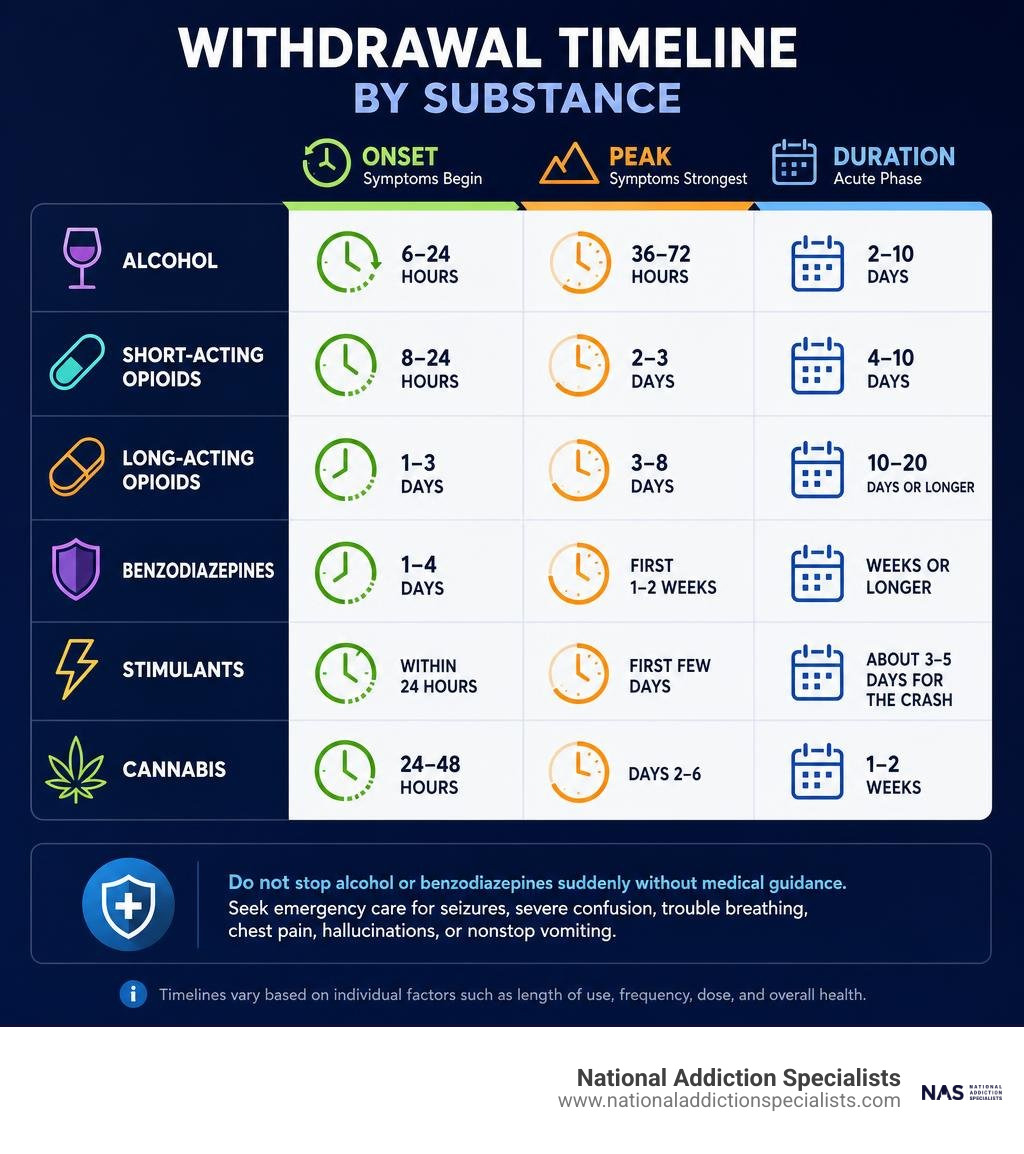
A drug withdrawal symptoms timeline depends on the substance, how long and how often it was used, and a person’s health. Symptoms may begin within hours or take several days. Acute withdrawal often improves within days to two weeks, but benzodiazepine symptoms and some mood, sleep, and craving symptoms can last longer.
| Substance | Typical symptom onset | Usual acute peak | Typical acute duration |
|---|---|---|---|
| Alcohol | 6-24 hours | 36-72 hours | 2-10 days |
| Short-acting opioids | 8-24 hours | 2-3 days | 4-10 days |
| Long-acting opioids | 1-3 days | 3-8 days | 10-20 days or longer |
| Benzodiazepines | 1-4 days | First 1-2 weeks | Weeks or longer |
| Stimulants | Within 24 hours | First few days | About 3-5 days for the crash |
| Cannabis | 24-48 hours | Days 2-6 | 1-2 weeks |
Withdrawal happens because the brain and body adapt to regular substance use. When the substance is reduced or stopped, that adjustment is suddenly disrupted. The result can include anxiety, sweating, nausea, poor sleep, body aches, low mood, cravings, and changes in heart rate or blood pressure.
Do not try to quit alcohol or benzodiazepines suddenly without medical guidance. These withdrawals can cause seizures, severe confusion, hallucinations, or delirium tremens. Opioid withdrawal is usually not directly fatal, but vomiting, diarrhea, dehydration, and relapse after tolerance drops can be dangerous. Emergency care is needed for seizures, severe confusion, chest pain, trouble breathing, hallucinations, or nonstop vomiting.
I am Chad Elkin, a board-certified physician in Addiction Medicine and Internal Medicine and the founder and medical director of National Addiction Specialists. My work includes helping patients understand the drug withdrawal symptoms timeline and access practical, private treatment options, including telehealth-based care when appropriate.
Handy drug withdrawal symptoms timeline terms:
What Is Withdrawal and Why Does the Body Experience It?
When someone uses a substance regularly over time, the body adapts to operate with that chemical present. This biological adjustment is known as neuroadaptation, and it is the foundation of physical dependence. The body strives for homeostasis—a stable internal environment. When a depressant, opioid, or stimulant is consistently introduced, the central nervous system alters its baseline neurotransmitter production and receptor sensitivity to balance out the drug’s effects.
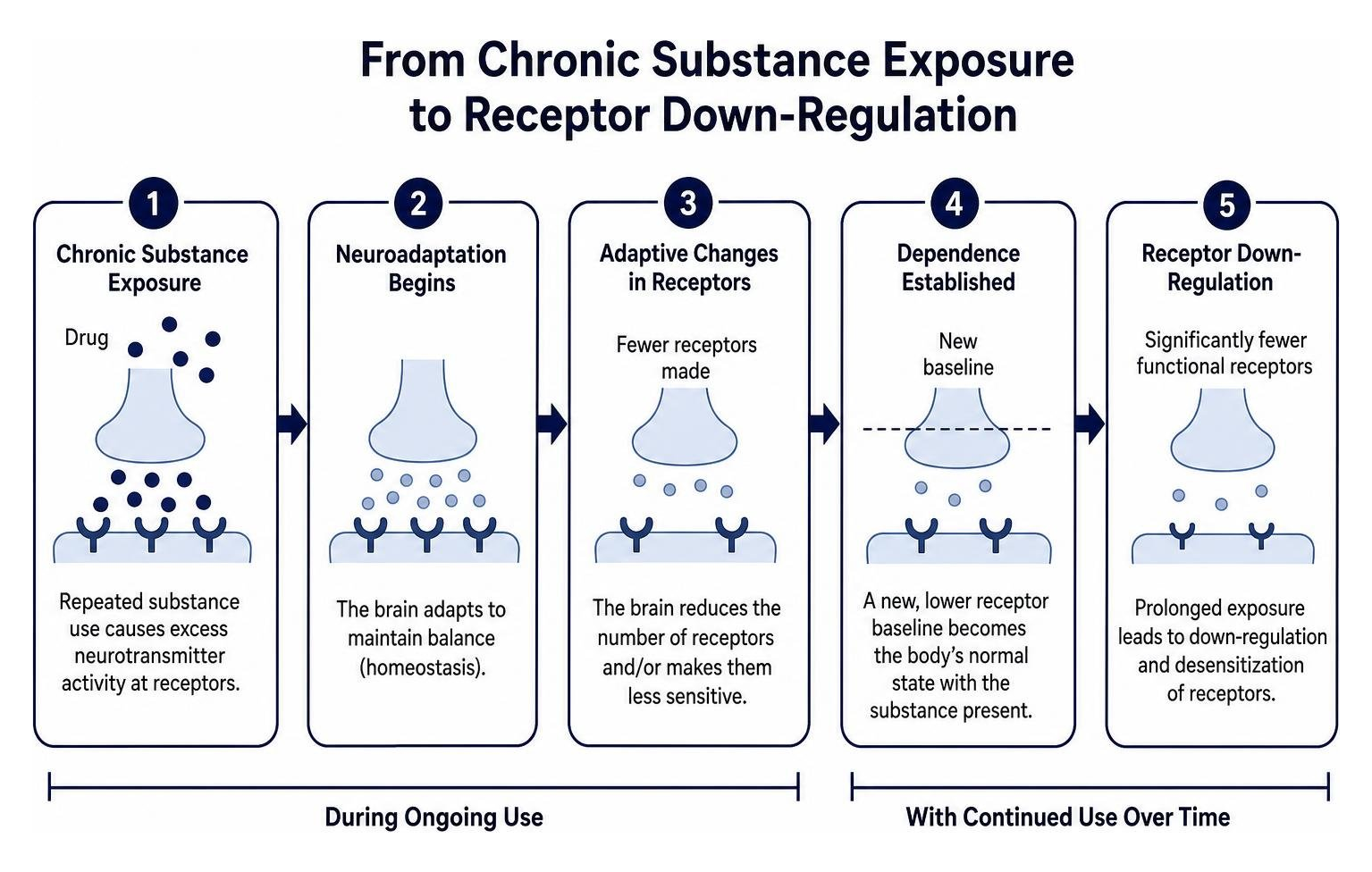
When the substance is suddenly removed or reduced, that carefully engineered balance is disrupted. The body cannot recalibrate instantly, triggering an intense rebound effect. If the drug was a central nervous system depressant, the brain experiences sudden, unfiltered hyperactivity. If the drug was an opioid, pain pathways flare and gastrointestinal function accelerates rapidly. These resulting physiological and psychological reactions make up the classic withdrawal symptoms that occur during early recovery.
The Physiology of Dependence and Receptor Adaptation
At the cellular level, dependence involves the downregulation and desensitization of specific neuroreceptors. For example:
- GABA-A Receptors: Sedatives like benzodiazepines and alcohol boost gamma-aminobutyric acid (GABA), the primary inhibitory neurotransmitter that calms nerve activity. In response, the brain reduces GABA receptor sensitivity and ramps up excitatory pathways (such as glutamate). Sudden cessation leaves the brain in an overstimulated, hyper-excitable state.
- Mu-Opioid Receptors: Chronic opioid use causes mu-opioid receptors to downregulate, while suppressing the body’s natural production of endorphins and boosting noradrenaline release from the locus coeruleus. When opioids are stopped, excess noradrenaline floods the system, causing autonomic rebound—chills, sweating, tremors, rapid heart rate, and severe gastrointestinal distress.
- Dopamine Pathways: Stimulants artificially elevate dopamine within the brain’s reward circuits. When use stops, dopamine levels plummet below normal baseline, resulting in acute dysphoria, fatigue, and severe cravings.
Universal Withdrawal Symptoms Across Substance Classes
While every drug class operates on distinct chemical pathways, certain universal symptoms emerge across almost all substance discontinuations due to central nervous system destabilization:
- Autonomic Hyperarousal: Rapid heart rate, fluctuating blood pressure, profuse sweating, and elevated body temperature.
- Sleep Disturbance: Severe insomnia, fragmented sleep architecture, and intense, vivid dreams.
- Gastrointestinal Distress: Nausea, abdominal cramping, vomiting, and diarrhea.
- Psychological Rebound: Intense anxiety, irritability, restlessness, depressive episodes, and strong cravings.
- Motor and Sensory Changes: Tremors, muscle twitches, hyperalgesia (heightened sensitivity to physical pain), and internal agitation.
Comprehensive Drug Withdrawal Symptoms Timeline Across Major Substances
The progression of withdrawal is largely dictated by the substance’s pharmacokinetic profile—specifically its metabolic half-life, receptor affinity, and whether it is short-acting or long-acting. Reviewing comparative substance withdrawal data helps clinical teams predict when symptoms will start, peak, and resolve.
| Substance Class | Common Examples | Onset Window | Peak Severity Window | Average Acute Duration | Primary Clinical Risks |
|---|---|---|---|---|---|
| Short-Acting Opioids | Heroin, Oxycodone IR, Hydrocodone, Morphine IR | 8–24 hours | 36–72 hours (Days 2–3) | 4–10 days | Dehydration, electrolyte loss, hypernatremia, post-detox fatal overdose |
| Long-Acting Opioids | Methadone, Buprenorphine, Extended-Release Morphine | 12–48 hours | Days 3–8 | 10–20+ days | Prolonged discomfort, insomnia, severe cravings |
| Alcohol | Beer, Wine, Liquor | 6–24 hours | 36–72 hours | 2–10 days | Delirium tremens, grand mal seizures, Wernicke’s encephalopathy |
| Benzodiazepines | Alprazolam, Diazepam, Clonazepam, Lorazepam | 1–4 days | Week 1 to Week 2 | 2–4+ weeks | Status epilepticus, severe psychosis, rebound panic |
| Stimulants | Cocaine, Methamphetamine, Prescription Amphetamines | Within 24 hours | Days 1–3 (Crash) | 3–5 days (Acute) | Severe depression, suicidal ideation, paranoia |
| Cannabis | THC concentrates, Flower, Edibles | 24–48 hours | Days 2–6 | 1–2 weeks | Insomnia, appetite loss, irritability, vivid dreams |
Opioids: Short-Acting vs. Long-Acting Drug Withdrawal Symptoms Timeline
Opioid withdrawal is often described as feeling like the worst flu imaginable combined with intense restlessness and anxiety. While rarely fatal on its own in healthy individuals, it causes significant physical distress. Understanding the difference between short-acting and long-acting opioids is essential for proper symptom management.
Short-Acting Opioids (Heroin, Fentanyl, Oxycodone IR)
- Early Stage (8–24 Hours): Symptoms begin as the drug clears the bloodstream. Early indicators include watery eyes (lacrimation), runny nose (rhinorrhea), frequent yawning, sweating, dilated pupils, muscle aches, and restlessness.
- Peak Stage (36–72 Hours): Physical distress peaks during days 2 and 3. Individuals experience severe abdominal cramping, explosive diarrhea, nausea, vomiting, piloerection (“goosebumps” or “cold turkey”), muscle spasms (“kicking the habit”), tachycardia, elevated blood pressure, and intense drug cravings.
- Subsiding Stage (Days 4–10): Gastrointestinal distress begins to calm, sweating diminishes, and physical aches ease. Lingering fatigue, sleep disruption, and mild anxiety typically remain.
Long-Acting Opioids (Methadone, Extended-Release Formulations)
Because long-acting formulations release slowly and accumulate in tissues, symptoms emerge more gradually.
- Early Stage (12–48 Hours): Mild flu-like signs and restlessness develop slowly.
- Peak Stage (Days 3–8): Full autonomic and gastrointestinal opioid withdrawal symptoms emerge, remaining elevated for several consecutive days.
- Resolution Stage (10–20+ Days): Physical symptoms fade slowly over several weeks according to clinical research on opioid withdrawal timelines.
For patients undergoing maintenance medications, understanding the Suboxone withdrawal timeline is helpful. Because buprenorphine is a partial opioid agonist with a long elimination half-life, medically supervised tapering allows patients to step down gradually without experiencing severe acute distress.

Alcohol Withdrawal: Delirium Tremens and Emergency Risks
Alcohol is a central nervous system depressant, making its sudden withdrawal medically dangerous. The risk level depends heavily on how much and how long someone has been drinking, making it important to understand how long alcohol withdrawal lasts.
- Stage 1: Minor Withdrawal (6–12 Hours Post-Cessation): Tremors (especially in the hands), mild anxiety, headache, sweating, palpitations, and gastrointestinal upset.
- Stage 2: Moderate Withdrawal & Seizure Risk (12–48 Hours): Increased blood pressure and heart rate, mental clouding, and hyperreflexia. Alcohol-related seizures—typically generalized tonic-clonic—occur in this window, most commonly 6 to 48 hours after the last drink.
- Stage 3: Delirium Tremens (48–72+ Hours): Occurring in roughly 3% to 5% of individuals experiencing severe alcohol withdrawal, Delirium Tremens (DTs) is a medical emergency. Symptoms include profound confusion, severe disorientation, autonomic instability (fever, extreme hypertension, diaphoresis), and visual or tactile hallucinations. Without treatment, DTs carries a mortality rate of up to 15%.
Clinical management requires medical supervision, often using tapering doses of long-acting benzodiazepines to prevent seizures, along with intravenous fluids and at least 100 mg of thiamine (vitamin B1) daily to prevent Wernicke-Korsakoff syndrome.
Benzodiazepines and Sedatives: Drug Withdrawal Symptoms Timeline
Discontinuing benzodiazepines (such as Xanax, Ativan, Klonopin, or Valium) requires careful medical oversight. Like alcohol, benzodiazepines enhance GABA activity. Abrupt cessation can trigger autonomic rebound, extreme psychological distress, and life-threatening seizures.
- Onset (1–4 Days): Short-acting agents (alprazolam, lorazepam) trigger symptoms within 24 to 48 hours; longer-acting agents (diazepam, clonazepam) may take up to a week to manifest clear symptoms.
- Acute Phase (Days 3–14): Rebound insomnia, intense panic attacks, sensory hypersensitivity (sound and light intolerance), tremors, muscle stiffness, gastrointestinal distress, and elevated seizure risk.
- Tapering Protocol: Safe discontinuation requires slowly converting to an equivalent dose of a long-acting benzodiazepine (such as diazepam) and tapering the dosage downward in weekly increments over months.
Stimulants and Cannabis: Crash and Resolution Timelines
Stimulants (Cocaine, Methamphetamine, Prescription Amphetamines)
Stimulant withdrawal is primarily neuropsychiatric rather than physiological:
- The Crash (First 24–72 Hours): Extreme physical exhaustion, hypersomnia (sleeping 12–24 hours at a time), intense hunger, and deep dysphoria.
- Acute Phase (Days 3–7): Severe anhedonia (inability to feel pleasure), vivid and unpleasant dreams, irritability, anxiety, and strong psychological cravings.
- Protracted Phase (Weeks 2–8): Dopamine receptors gradually recover, but mood swings, mild depression, and cravings may persist.
Cannabis
While not physically dangerous, stopping regular cannabis use can trigger a distinct withdrawal syndrome:
- Onset (24–48 Hours): Irritability, nervous restlessness, and decreased appetite.
- Peak (Days 2–6): Insomnia, night sweats, vivid dreams or nightmares, stomach discomfort, and mood swings.
- Resolution (1–2 Weeks): Most physical symptoms clear by day 14, though sleep architecture may take up to three weeks to normalize.
Acute Detox vs. Post-Acute Withdrawal Syndrome (PAWS)
The withdrawal journey typically unfolds in two distinct phases: the acute stabilization phase and the protracted post-acute phase.

While acute detox focuses on short-term physical stabilization (usually 5 to 14 days), many individuals experience post-acute withdrawal syndrome (PAWS). PAWS refers to a cluster of lingering psychological and neurological symptoms that can persist in waves for weeks, months, or up to a year after acute detox.
Common characteristics of PAWS include:
- Unprovoked mood swings and irritability
- Persistent low energy and anhedonia
- Brain fog, short-term memory lapses, and poor concentration
- Chronic insomnia or irregular sleep patterns
- Sudden, intense cravings triggered by stress or environmental cues
PAWS occurs because the brain’s neural pathways, receptor densities, and dopamine systems take extended time to reorganize and heal (neuroplasticity). Understanding that PAWS occurs in non-linear waves—where you may feel balanced for several weeks before experiencing a temporary resurgence of symptoms—helps prevent unexpected relapse.
If you or a loved one is struggling with substance use or navigating difficult withdrawal symptoms, professional care makes all the difference. Make an Appointment to Treat Addiction. Please don’t hesitate. Make an appointment today.
Medical Management, Tapering, and Treatment Protocols
Detoxification without medical support is not only uncomfortable—for certain substances, it is dangerous. The goal of medically supervised withdrawal is to ensure physical safety, ease discomfort, and bridge patients into ongoing treatment.
Clinical protocols focus on three main areas:
- Vital Sign and Severity Monitoring: Using validated assessment tools such as the Clinical Institute Withdrawal Assessment for Alcohol (CIWA-Ar) or the Short Opioid Withdrawal Scale (SOWS) to gauge symptom severity and guide medication timing.
- Targeted Pharmacotherapies:
- For Opioids: Medications for Opioid Use Disorder (MOUD) such as Buprenorphine (Suboxone) or Methadone stabilize mu-opioid receptors, eliminating acute withdrawal and cravings. Supportive non-opioid medications like Clonidine or Lofexidine reduce autonomic hyperactivity, while Ondansetron controls nausea and Loperamide treats diarrhea.
- For Alcohol and Benzodiazepines: Structured benzodiazepine tapers (like diazepam or chlordiazepoxide), anticonvulsants, and daily thiamine supplementation prevent complications.
- Transition to Maintenance and Therapy: Detoxification on its own is an initial stabilization step, not a complete treatment. Lasting recovery relies on transitioning from detox into long-term behavioral therapy and maintenance care.
When Is Supervised Detox Needed?
Seek immediate, professionally supervised medical care or emergency evaluation if any of the following apply:
- A history of alcohol- or sedative-related withdrawal seizures or delirium tremens
- Co-occurring severe medical conditions (such as cardiovascular disease, advanced liver disease, or respiratory illness)
- Pregnancy (acute unmanaged opioid withdrawal can cause premature labor or fetal distress)
- Polysubstance dependence (e.g., combining opioids with benzodiazepines or alcohol)
- Continuous vomiting leading to severe dehydration and inability to retain fluids
For many individuals with opioid dependence, modern outpatient detoxification and telehealth-based buprenorphine induction provide safe, highly effective options from the comfort and privacy of home.
Frequently Asked Questions About Drug Withdrawal Timelines
Which drug withdrawal symptoms timeline carries the highest medical risk?
Central nervous system depressants—specifically alcohol and benzodiazepines—carry the highest acute medical risk. Abruptly discontinuing either substance can lead to status epilepticus (continuous, life-threatening seizures) and Delirium Tremens. These conditions require medically managed detox and tapering protocols.
How long does acute opioid withdrawal typically last?
For short-acting opioids (like heroin or immediate-release oxycodone), acute symptoms typically start within 8 to 24 hours, peak around days 2 to 3 (36 to 72 hours), and resolve within 4 to 10 days. For long-acting opioids (like methadone), symptoms may take 1 to 3 days to appear, peak between days 3 and 8, and last for 10 to 20 days or longer. Using buprenorphine/naloxone under medical supervision can significantly reduce or eliminate these acute symptoms.
Can someone safely complete drug detox at home?
It depends heavily on the substance and the individual’s medical history. You should never attempt at-home, unmonitored detox from alcohol or benzodiazepines due to the risk of seizures. However, for opioid dependence without high-risk medical complications, outpatient treatment and telemedicine-based Medication-Assisted Treatment (MAT) provide a safe, effective, and comfortable way to recover at home under a physician’s care.
Conclusion: Safe Steps Toward Lasting Recovery
Navigating drug withdrawal can feel intimidating, but you do not have to go through it alone or in severe discomfort. Withdrawal is a temporary, manageable medical phase on the path to long-term health. Modern addiction medicine offers evidence-based treatments that safely ease symptoms, stabilize brain chemistry, and significantly lower the risk of relapse.
At National Addiction Specialists, we provide accessible, compassionate, and confidential telemedicine-based opioid withdrawal treatment and Suboxone therapy. Patients across Tennessee and Virginia can consult with experienced addiction medicine specialists from home. We accept Medicaid and Medicare, ensuring high-quality, individualized care remains within reach. Take the first step toward lasting health and recovery today.
Medical Review and Leadership
This article was medically reviewed by: Chad Elkin, MD, DFASAM is a board-certified addiction medicine physician, founder, and Chief Medical Officer of National Addiction Specialists, dedicated to treating substance use disorders. A Distinguished Fellow of the American Society of Addiction Medicine (ASAM), Dr Elkin currently serves as President of the Tennessee Society of Addiction Medicine (TNSAM) and has held various leadership roles within the organization. Dr Elkin chairs ASAM’s Health Technology Subcommittee and is an active member of its Practice Management and Regulatory Affairs Committee, State Advocacy and Legislative Affairs Committee, and other committees. Committed to advancing evidence-based policy, Dr Elkin is Chairman of the Tennessee Association of Alcohol, Drug, & Other Addiction Services (TAADAS) Addiction Medicine Council, which collaborates with the TN Department of Mental Health & Substance Abuse Services (TDMHSAS). He also serves on the planning committee for the Vanderbilt Mid-South Addiction Conference. He has contributed to numerous local, state, and national task forces, helping develop professional guidelines, policies, and laws that align with best practices in addiction medicine. His work focuses on reducing addiction-related harm, combating stigma, and ensuring access to effective treatment. Passionate about the field of addiction medicine, he remains dedicated to shaping policy and enhancing patient care.
Suboxone® and Subutex® are a registered trademark of Indivior UK Limited. Any mention and reference of Suboxone® and Subutex® in this website is for informational purposes only and is not an endorsement or sponsorship by Indivior UK Limited.