Comparing Powerful Opioid Drugs and Their Prescribed Medical Uses
Classification and Pharmacology of Potent Opioid Drugs
Understanding how these medications function requires a closer look at their underlying pharmacology. Clinically, drugs like oxycodone, oxymorphone, and hydromorphone belong to the Schedule II controlled substance category under federal guidelines. They act primarily as agonists at the mu-opioid receptors distributed throughout the central and peripheral nervous systems. When these medications bind to mu receptors, they inhibit ascending pain pathways, alter the perception of discomfort, and increase overall pain tolerance. However, this same receptor activation produces profound central nervous system suppression, slowed gastrointestinal motility, and respiratory depression.
Our comprehensive guide on opioids explores these mechanisms in depth, but it is critical to recognize that while their receptor targets are similar, their chemical configurations create meaningful differences in bioavailability, metabolic half-lives, and overall potency.
| Opioid Medication | Schedule Class | Primary Receptor Target | Oral Bioavailability | Elimination Half-Life | Typical Acute Dosing Range |
|---|---|---|---|---|---|
| Oxycodone HCl | Schedule II | Mu-opioid agonist | ~60% to 87% | 3.5 to 4.0 hours | 5 mg to 15 mg every 4–6 hrs |
| Oxymorphone HCl | Schedule II | Mu-opioid agonist | ~10% | 7.2 to 9.4 hours | 10 mg to 20 mg every 4–6 hrs |
| Hydromorphone HCl | Schedule II | Mu-opioid agonist | ~24% to 62% | 2.3 to 3.0 hours | 2 mg to 4 mg every 4–6 hrs |
Clinical Profiles of Commonly Prescribed Opioid Drugs
Healthcare providers evaluate individual pharmacodynamic profiles when selecting an analgesic:
- Oxycodone Hydrochloride: Approved in the United States in 1950, oxycodone remains one of the most widely utilized medications for moderate-to-severe acute surgical or trauma-related pain. Detailed clinical information is available in the DailyMed prescribing information for oxycodone hydrochloride tablets.
- Oxymorphone Hydrochloride: As a potent semi-synthetic mu-opioid agonist, oral oxymorphone provides intense analgesia for acute severe pain. Because of its distinct metabolic properties, prescribers review the FDA drug label for oxymorphone hydrochloride to ensure careful dose adjustments.
- Hydromorphone Hydrochloride: Originally approved in oral tablet form in 1984, hydromorphone is significantly more potent per milligram than morphine or oxycodone. Clinicians rely on specific prescribing guidelines for hydromorphone hydrochloride to avoid accidental dosing errors.
- Extended-Release Formulations: Extended-release products, such as OxyContin, are strictly reserved for around-the-clock management of severe chronic pain in opioid-tolerant individuals. Reviewing the medication safety guide for OxyContin controlled-release tablets underscores why these tablets must never be chewed, crushed, broken, or dissolved.
Pharmacokinetics and Systemic Bioavailability
The pharmacokinetics of an analgesic dictate how quickly it takes effect and how long it remains active in the body. Oxycodone demonstrates exceptionally high systemic absorption, with roughly 60% to 87% of an oral dose reaching systemic circulation compared to parenteral administration. Its apparent elimination half-life averages between 3.5 and 4 hours.
By contrast, oxymorphone exhibits an oral bioavailability of approximately 10% due to extensive first-pass hepatic metabolism, meaning converting from an intravenous dose to oral tablets requires a substantial ten-fold dose adjustment.
Metabolism occurs primarily in the liver via cytochrome P450 enzymes—specifically CYP3A4 and CYP2D6 pathways—before excretion through the kidneys. Gaining insight into the science behind opioid addiction and receptor tolerance helps explain why repeated administration causes neurochemical adaptations, downregulates receptor sensitivity, and drives physical dependence.
Prescribing Protocols, Clinical Indications, and Special Populations
Prescribing standards dictate that potent analgesics must only be initiated when non-opioid therapies and alternative modalities prove inadequate. Clinical best practices mandate prescribing the lowest effective dosage for the absolute shortest duration necessary. Research demonstrates that a higher baseline dose represents the single strongest and most consistent predictor of an opioid-involved overdose or death.
State regulatory frameworks help maintain these prescribing boundaries. Clinicians must adhere strictly to statutes such as the Virginia prescription monitoring and drug control law and complete necessary coverage verifications via the Virginia Medicaid prior authorization requirements for short- and long-acting opioids.
Dosing Initiation, Titration, and Risk Stratification
For opioid-naive adult patients experiencing acute pain, initial immediate-release oxycodone dosing generally starts between 5 mg and 15 mg administered every 4 to 6 hours as needed. Titration must proceed cautiously, balancing pain relief against central nervous system sedation.
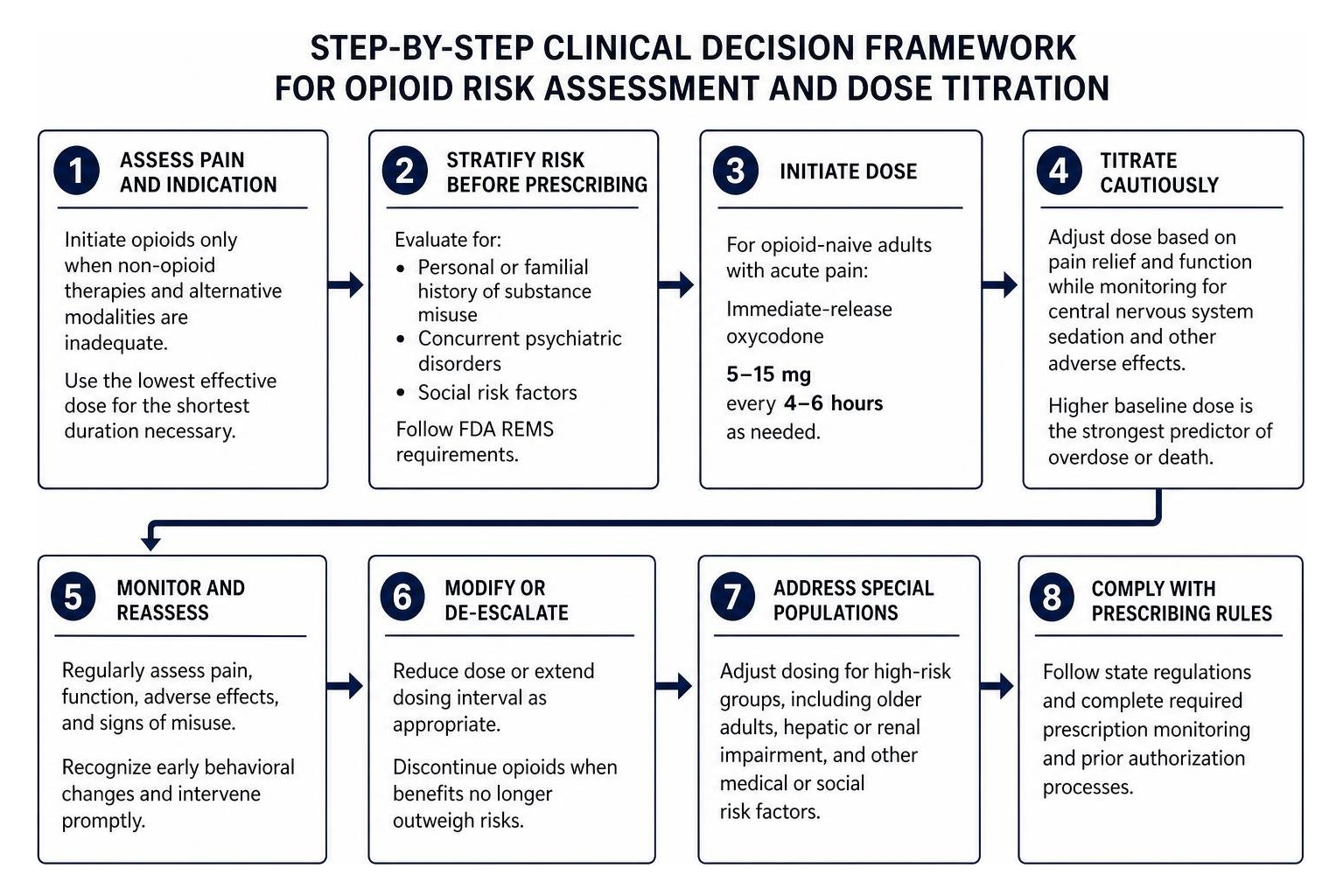
Under the FDA’s Opioid Analgesic Risk Evaluation and Mitigation Strategy (REMS), prescribers must stratify patient risk before writing an initial prescription. Clinicians look for personal or familial histories of substance misuse, concurrent psychiatric disorders, and social risk factors.
Recognizing early changes in behavior by identifying key opioid addiction symptoms allows healthcare teams to intervene before mild behavioral changes progress to severe, chronic disorders meeting formal DSM-5 diagnostic criteria.
Clinical Modifications for High-Risk and Special Populations
Certain patient populations face significantly elevated risks when taking these medications:
- Geriatric and Debilitated Patients: Elderly or cachectic individuals clear active substances more slowly, increasing systemic accumulation. Lower starting doses and extended dosing intervals are critical.
- Hepatic and Renal Impairment: Reduced organ clearance leads to higher peak plasma concentrations and prolonged elimination. Doses of oxycodone, oxymorphone, or hydromorphone must be decreased by 50% or more, accompanied by frequent monitoring.
- Pregnancy and Lactation: Prolonged maternal use during pregnancy can result in life-threatening Neonatal Opioid Withdrawal Syndrome (NOWS). Infants require specialized post-delivery monitoring. Because active opioids pass into breast milk, infants of nursing mothers must be closely watched for somnolence and shallow breathing.
- Pulmonary Compromise: Significant respiratory depression, acute or severe bronchial asthma in unmonitored settings, and known gastrointestinal obstruction (such as paralytic ileus) represent absolute contraindications to therapy.
Serious Safety Risks, Boxed Warnings, and Drug Interactions
All Schedule II prescription opioids carry prominent boxed warnings detailing the risks of addiction, misuse, and fatal respiratory depression. In longitudinal cohort research, approximately 1% to 6% of participants newly met DSM-5 criteria for moderate-to-severe opioid use disorder over 12 months, while 9% and 22% met validated criteria for prescription drug abuse and misuse, respectively. Furthermore, 5-year cumulative incidence estimates for opioid-involved overdose or death ranged from 1.5% to 4% across study sites, with roughly 17% of first-time overdoses proving fatal.
Critical Drug Interactions and Metabolic Pathways
Combining these medications with other central nervous system depressants—most notably benzodiazepines, sleep aids, muscle relaxants, or alcohol—greatly amplifies the risk of profound sedation, coma, and death.
Pharmacokinetic interactions are equally concerning:
- CYP3A4 Inhibitors: Medications like ketoconazole, clarithromycin, or erythromycin block the metabolic clearance of oxycodone, dramatically spiking plasma levels and triggering sudden respiratory arrest.
- CYP3A4 Inducers: Drugs such as carbamazepine, phenytoin, or rifampin speed up clearance, which can cause sudden withdrawal symptoms or prompt patients to escalate doses on their own.
- Serotonergic Agents: Co-administration with SSRIs, SNRIs, triptans, or monoamine oxidase inhibitors (MAOIs) can precipitate life-threatening Serotonin Syndrome, characterized by mental status changes, autonomic instability, and neuromuscular hyperreactivity.
Adverse Reactions and Opioid-Induced Hyperalgesia
In clinical trials, the most common adverse reactions (occurring in 3% or more of patients) include nausea, constipation, vomiting, headache, pruritus, insomnia, dizziness, asthenia, and somnolence.
In some cases, long-term exposure leads to Opioid-Induced Hyperalgesia (OIH). This is a paradoxical phenomenon where an individual becomes more sensitive to pain over time despite escalating medication doses. OIH can manifest as diffuse allodynia (pain from normally non-painful stimuli) and must be carefully distinguished from medication tolerance so that clinicians decrease—rather than increase—the daily dosage.
Make an Appointment to Treat Addiction Please don’t hesitate. Make an appointment today.
Overdose Recognition, Naloxone Reversal, and Safe Storage
Recognizing an acute toxicity event quickly saves lives. The classic opioid overdose triad consists of pinpoint pupils (miosis), respiratory depression (manifesting as shallow, irregular, or completely absent breathing), and profound stupor or coma.
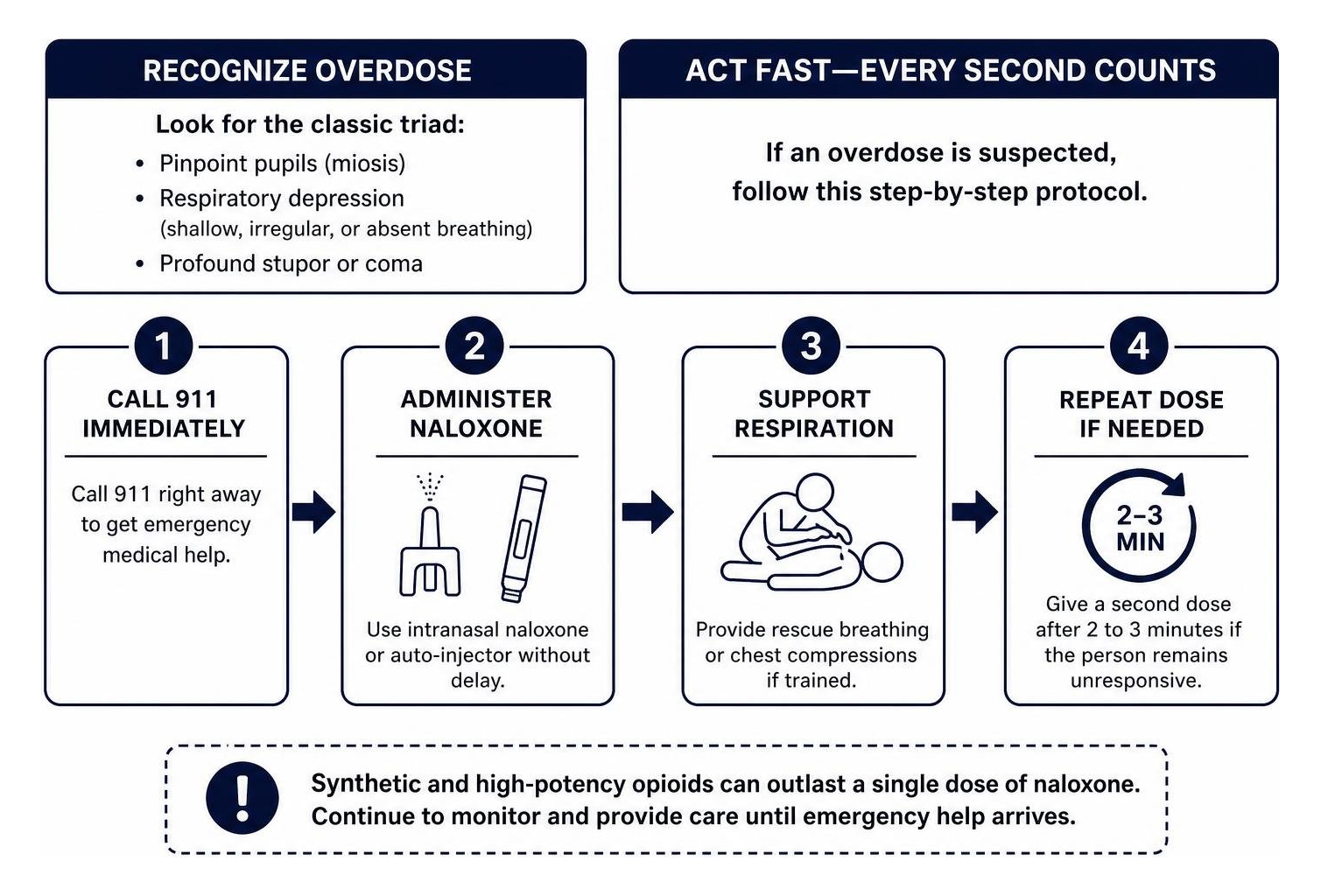
If an overdose is suspected:
- Call 911 immediately for emergency medical services.
- Administer Naloxone (intranasal or auto-injector) without delay.
- Support respiration through rescue breathing or chest compressions if trained.
- Administer a second dose after 2 to 3 minutes if the individual remains unresponsive, as synthetic and high-potency opioids can outlast a single dose of reversal medication.
Access to Overdose Reversal Agents
Healthcare providers regularly co-prescribe naloxone alongside opioid therapies, particularly when a patient takes higher daily doses, has underlying pulmonary disease, or takes concurrent sedating medications. Caregivers and household members should be trained to locate and administer naloxone readily.
Safe Handling, Storage, and Proper Disposal Protocols
Preventing accidental exposure—especially among young children and teenagers—is an essential safety responsibility:
- Store all medications in a secure, locked container or dedicated child-resistant lockbox.
- Never leave bottles on open countertops, bedside tables, or in unlocked medicine cabinets.
- Utilize official take-back programs, such as the Brentwood Police Department permanent drug drop box, to dispose of remaining tablets safely.
- If immediate drop-off options are unavailable, consult the FDA flush list for specific high-potency medications where prompt disposal prevents accidental household poisoning.
- Prescribers in Tennessee align coverage and quantity limits using tools like the TennCare acute opioid prior authorization protocols.
Discontinuation Strategies and Medication-Assisted Recovery
Abruptly stopping these medications after physical dependence has developed triggers intense, distressing symptoms. Individuals can review what to expect by recognizing opioid withdrawal symptoms, which commonly include severe diaphoresis, rhinorrhea, lacrimation, gastrointestinal cramping, tremors, tachycardia, and intense psychological anxiety.
To discontinue therapy safely without precipitating severe autonomic crisis, clinical teams create a structured tapering schedule. Dose reductions usually range from 10% to 25% every 2 to 4 weeks, with adjustments based on the patient’s physical and emotional comfort. Implementing relapse prevention strategies during opioid recovery offers crucial psychological stability throughout this process.
Navigating Dependence and Treatment for Prescribed Opioid Drugs
It is important to distinguish between normal physical tolerance (needing more medication to achieve the same physical effect) and addiction (compulsive use despite ongoing negative life consequences). When dependence or addiction develops, trying to stop through sheer willpower alone can feel overwhelming.
Fortunately, modern medical options provide stable, proven relief. Exploring evidence-based opioid dependence treatment options and connecting with structured opioid addiction treatment pathways forms the cornerstone of lasting recovery.
Medication-Assisted Treatment (MAT) utilizing buprenorphine stabilizes brain chemistry, prevents withdrawal, and curbs intense cravings. Prescribers in our region stay up to date with regional standards like the TennCare provider guidelines on buprenorphine treatment updates to ensure uninterrupted, fully compliant care.
Accessible Outpatient and Virtual Recovery Options
At National Addiction Specialists, we provide comprehensive, telemedicine-based Suboxone treatment tailored for individuals in Tennessee and Virginia. By offering confidential virtual visits, we help patients access professional care directly from home without missing work or traveling to a physical clinic.
Our clinical services include:
- Confidential, expert-led telemedicine opioid treatment at home.
- Dedicated Tennessee regional treatment programs serving communities across the state, including Brentwood.
- Compassionate Virginia regional addiction support resources serving areas across the Commonwealth, including Virginia Beach.
- Acceptance of major insurance plans, including Medicaid and Medicare, to ensure affordable treatment.
Frequently Asked Questions About Prescription Opioid Safety
What are the earliest warning signs of an opioid drug overdose?
Early symptoms include unusually slow, shallow, or irregular breathing; marked limpness in the arms and legs; cool or clammy skin; bluish or ashen discoloration around the lips and fingernails; pinpoint pupils; and an inability to wake up when stimulated. Snoring, gurgling, or choking sounds (sometimes called the “death rattle”) can indicate an obstructed airway caused by respiratory suppression. If you observe any of these signs, administer naloxone immediately and call 911.
How do drug interactions increase the danger of prescription opioids?
Interactions occur through two main mechanisms: additive central nervous system suppression and metabolic enzyme inhibition. Combining an opioid with sedatives or benzodiazepines compounds respiratory suppression, quickly leading to hypoxia, brain injury, or cardiac arrest. Additionally, medications that inhibit the liver’s CYP3A4 enzymes block normal opioid clearance, causing the drug to accumulate to toxic levels even when taken exactly as directed.
What is the safest protocol for stopping high-potency opioid medications?
The safest protocol is a gradual, medically supervised taper. Rather than stopping abruptly, patients work with a healthcare provider to lower their daily dose by 10% to 25% every 2 to 4 weeks. This gradual pace allows neuroreceptors time to adjust, minimizing withdrawal distress and reducing cravings. If a patient finds it difficult to complete a standard taper, transitioning to medication-assisted treatment with buprenorphine provides a smooth, reliable path to long-term stability.
Conclusion
Potent analgesics like oxycodone, oxymorphone, and hydromorphone provide valuable clinical relief for severe acute pain, but their potency demands careful medical oversight, precise dosing, and strict safety protocols. When physical dependence or addiction develops, knowing where to turn makes all the difference.
If you or someone you care about is having difficulty managing a prescription analgesic, supportive and nonjudgmental medical care is within reach. You can begin a private, customized recovery plan today by scheduling a confidential consultation through our online Suboxone clinic.
Suboxone® and Subutex® are a registered trademark of Indivior UK Limited. Any mention and reference of Suboxone® and Subutex® in this website is for informational purposes only and is not an endorsement or sponsorship by Indivior UK Limited.
This article was medically reviewed by: Chad Elkin, MD, DFASAM is a board-certified addiction medicine physician, founder, and Chief Medical Officer of National Addiction Specialists, dedicated to treating substance use disorders. A Distinguished Fellow of the American Society of Addiction Medicine (ASAM), Dr Elkin currently serves as President of the Tennessee Society of Addiction Medicine (TNSAM) and has held various leadership roles within the organization. Dr Elkin chairs ASAM’s Health Technology Subcommittee and is an active member of its Practice Management and Regulatory Affairs Committee, State Advocacy and Legislative Affairs Committee, and other committees. He also serves on the planning committee for the Vanderbilt Mid-South Addiction Conference. Committed to advancing evidence-based policy, Dr Elkin is Chairman of the Tennessee Association of Alcohol, Drug, & Other Addiction Services (TAADAS) Addiction Medicine Council, which collaborates with the TN Department of Mental Health & Substance Abuse Services (TDMHSAS). He has contributed to numerous local, state, and national task forces, helping develop professional guidelines, policies, and laws that align with best practices in addiction medicine. His work focuses on reducing addiction-related harm, combating stigma, and ensuring access to effective treatment.Passionate about the field of addiction medicine, he remains dedicated to shaping policy and enhancing patient care.