Effective Home and Medical Solutions for Withdrawal Nausea
What Helps Nausea During Alcohol Withdrawal?
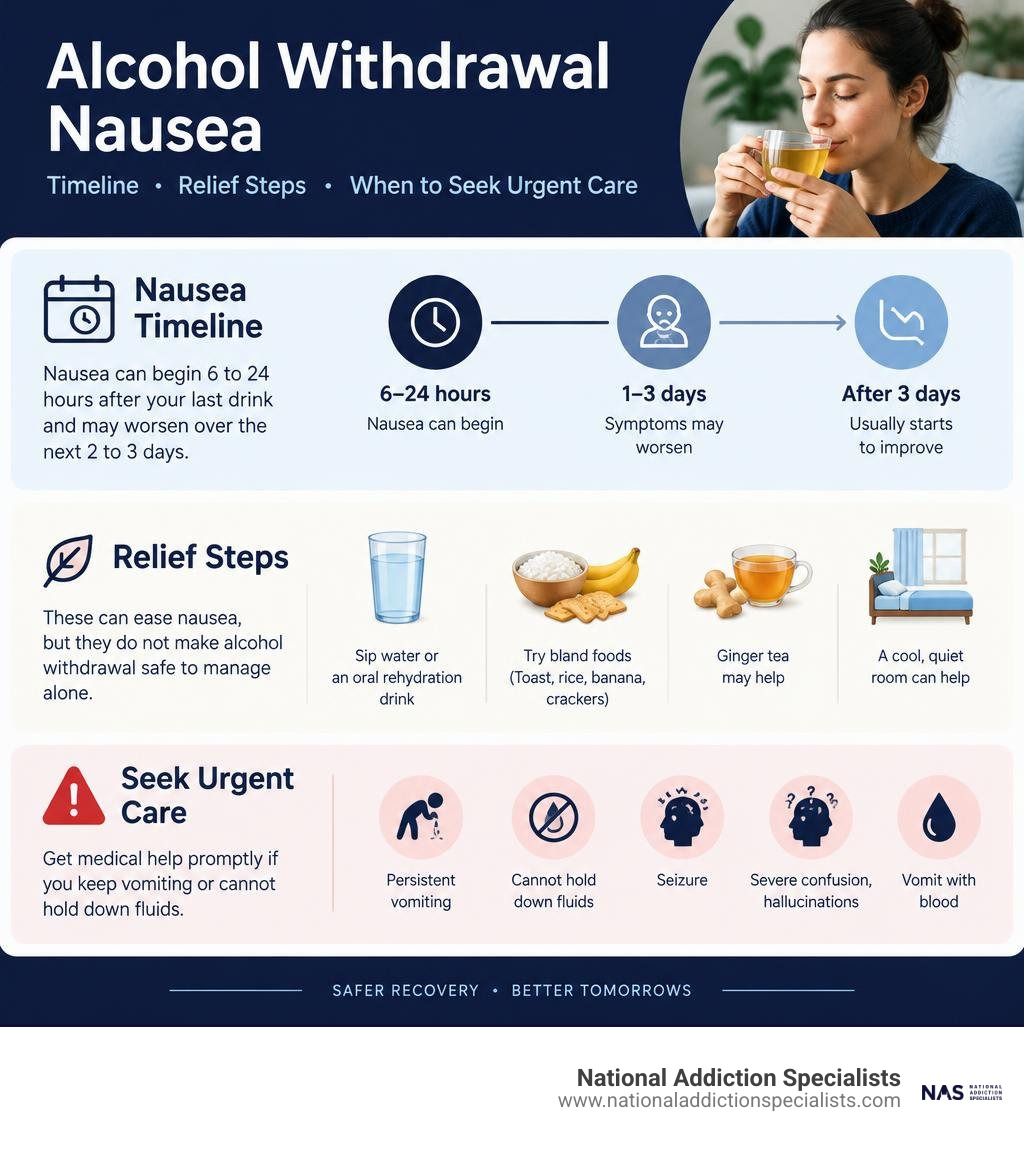
For mild nausea, take small, frequent sips of water or an oral rehydration drink. When you can eat, try a few bites of toast, rice, banana, or crackers. Ginger tea and a cool, quiet room may also help. These steps can ease nausea, but they do not make alcohol withdrawal safe to manage alone.
Nausea can begin 6 to 24 hours after your last drink, and withdrawal may worsen over the next two to three days. Get medical help promptly if you keep vomiting or cannot hold down fluids. Call emergency services for a seizure, severe confusion, hallucinations, or vomit that contains blood.
I’m Dr. Chad Elkin, founder and medical director of National Addiction Specialists, and I’m board-certified in addiction medicine and internal medicine. My work treating substance use disorders informs this guide to alcohol withdrawal nausea remedies and, just as importantly, when to seek medical care.
Alcohol withdrawal nausea remedies vocabulary:
Understanding What Causes Nausea During Alcohol Detox
When someone stops drinking after prolonged or heavy use, the digestive tract and central nervous system undergo a rapid, turbulent readjustment. Chronic alcohol consumption suppresses the brain’s central nervous system by enhancing gamma-aminobutyric acid (GABA), an inhibitory neurotransmitter, and suppressing glutamate, an excitatory neurotransmitter.

When alcohol is removed, this delicate balance collapses into an immediate rebound effect. The sudden surge in glutamate and drop in GABA activity leaves the autonomic nervous system in an overexcited state. This heightened sympathetic tone speeds up gut motility, increases stomach acid secretion, and activates the brain’s vomiting center (the chemoreceptor trigger zone).
At the same time, the liver is processing residual metabolic toxins like acetaldehyde, while fluctuating blood sugar levels further destabilize the stomach. Understanding how long alcohol withdrawal lasts helps contextualize why these symptoms emerge so suddenly.
Physiological Triggers and Stomach Lining Irritation
Alcohol is a direct chemical irritant to the gastrointestinal mucosa. Regular drinking breaks down the protective epithelial barrier of the stomach, leading to acute or chronic gastritis. When you quit drinking, this raw, inflamed mucosal lining remains exposed to normal gastric acid production.
The irritated stomach lining stimulates the vagus nerve, which communicates directly with the vomiting center in the brainstem via the gut-brain axis. This irritation triggers local serotonin release in the digestive tract, signaling persistent distress and creating that classic “sour stomach” sensation. As outlined in clinical discussions on how to stop drunk nausea, this mucosal inflammation combined with rapid electrolyte depletion makes keeping food or liquids down exceptionally challenging.
Alcohol Withdrawal Timeline and Symptom Progression
Alcohol withdrawal affects roughly 50% of individuals with alcohol use disorder when they significantly reduce or stop their intake. Symptoms follow a predictable clinical progression:
- 6 to 12 Hours Post-Drink: Mild autonomic arousal begins. Early nausea, mild tremors, headache, anxiety, and insomnia appear.
- 24 to 48 Hours Post-Drink: Nausea and gastrointestinal distress often peak alongside elevated heart rate, profuse sweating (diaphoresis), and worsening tremulousness.
- 48 to 72 Hours Post-Drink: Peak danger window for severe complications. While gastric symptoms may start stabilizing in uncomplicated cases, high-risk individuals face potential seizures or delirium tremens.
- Days 4 to 7: Acute physical symptoms typically subside, though mild stomach sensitivity and post-drinking anxiety can linger for several weeks.
Knowing how to recognize the signs of alcohol withdrawal ensures that early autonomic changes are never mistaken for a simple stomach flu.
Alcohol Withdrawal Nausea Remedies for Rapid Home Relief

For mild, uncomplicated withdrawal nausea where serious red flags are absent, supportive home care can provide meaningful comfort. The goal of at-home relief is threefold: protect hydration, avoid irritating the mucosal lining, and lower sensory stimulation to quiet an overactive nervous system.
Natural Alcohol Withdrawal Nausea Remedies and Acupressure
Natural interventions provide targeted relief without adding harsh chemical burdens to a struggling liver. When evaluating natural alcohol withdrawal nausea remedies, consider these evidence-based techniques:
- Real Ginger Root: Ginger contains bioactive compounds called gingerols and shogaols, which accelerate gastric emptying and block serotonin receptors in the gut. Sip warm ginger tea brewed from fresh sliced ginger, or suck on natural, low-sugar ginger hard candies.
- Peppermint Aromatherapy: Inhaling food-grade peppermint essential oil or sipping mild, lukewarm peppermint tea helps relax gastric smooth muscle, relieving spasms and cramping.
- P6 (Neiguan) Acupressure: Located three finger-widths below the wrist crease on the inner forearm (between the two central tendons), applying firm, circular pressure to the P6 point for 2 to 3 minutes can substantially diminish nausea signals.
- Controlled Diaphragmatic Breathing: Slow, deep breaths (inhaling for 4 seconds, holding for 2, and exhaling for 6) activate the parasympathetic vagus nerve, directly countering autonomic hyperarousal.
The BRAT Diet and Hydration Protocols
Do not force solid foods if your stomach is actively rejecting them. Begin with digestive rest, then systematically reintroduce bland nutrients using structured hydration:
- Oral Rehydration Salts (ORS): Plain water is not enough when you are losing gastric fluids. Mix 1 level teaspoon of salt and 1 teaspoon of sugar into 2 liters of clean water, or use balanced commercial electrolyte drinks (such as Pedialyte or diluted sports beverages).
- The “Sip Every Five Minutes” Rule: Avoid gulping large glasses of fluid, which stretches an inflamed stomach and triggers the vomiting reflex. Instead, take one small teaspoon or sip every 5 to 10 minutes.
- The BRAT Diet: Once fluids stay down for 4 to 6 consecutive hours, introduce small portions of:
- Bananas (rich in potassium to replenish lost electrolytes)
- Rice (plain white rice is easily digestible starch)
- Applesauce (gentle on stomach acid and provides quick glucose)
- Toast (dry, plain white toast absorbs excess gastric acid)
- Foods to Strictly Avoid: High-fat meals, dairy products, acidic citrus juices, spicy seasonings, and caffeinated beverages that trigger acid secretion or worsen dehydration.
Environmental Modifications and Sensory Rest
An overstimulated central nervous system amplifies sensory inputs, turning mild odors or bright lights into intense nausea triggers. Setting up a supportive recovery space makes a noticeable difference:
- Lighting and Noise: Keep the room dimly lit and quiet. Avoid harsh blue light from screens, which can exacerbate withdrawal-related headaches and nausea.
- Temperature Control: Maintain a cool room temperature (65°F to 68°F) or use a gentle oscillating fan. Cool air against the face stimulates trigeminal nerve pathways that suppress nausea.
- Eliminate Ambient Odors: Remove strong perfumes, cooking smells, and trash from the room.
- Sleeping Position: Rest with your head elevated 30 to 45 degrees, and lie on your left side to prevent acid reflux from irritating the upper esophagus.
Medical and Clinical Alcohol Withdrawal Nausea Remedies

While mild nausea can sometimes be managed with supportive comfort measures, alcohol withdrawal is inherently unpredictable. Clinical interventions target both the underlying neurochemical imbalance and local stomach inflammation.
| Treatment Approach | Target Mechanism | Best Used For | Important Precautions |
|---|---|---|---|
| Oral Rehydration & BRAT Diet | Restores hydration and gentle calories | Mild, early-stage queasiness | Insufficient for persistent vomiting or severe detox |
| Herbal Tea & P6 Acupressure | Calms gastric spasms and vagal stimulation | Mild nausea with anxiety | Does not prevent seizures or delirium tremens |
| OTC Antacids & H2 Blockers | Neutralizes excess gastric acid | Acid-induced burning and gastritis | Avoid NSAIDs (aspirin/ibuprofen), which damage the stomach |
| Prescription Ondansetron (Zofran) | Blocks central and peripheral 5-HT3 receptors | Moderate to severe nausea and vomiting | Requires medical evaluation and prescription |
| Clinical Benzodiazepines | Enhances GABA, suppresses autonomic rebound | Moderate to severe withdrawal syndrome | Must be administered under direct medical supervision |
Over-the-Counter Medications and Anti-Emetics
Certain over-the-counter and prescription options provide rapid relief when home remedies are not enough:
- Bismuth Subsalicylate (Pepto-Bismol): Coats the irritated stomach lining and provides mild antimicrobial and anti-inflammatory relief.
- H2 Blockers (Famotidine) and Antacids: Reduce gastric acid production, alleviating the burning sensation caused by alcohol-induced gastritis.
- Prescription Anti-Emetics: As highlighted in clinical discussions on treatments that relieve nausea in withdrawal, medications like ondansetron (Zofran) or promethazine (Phenergan) specifically target nausea signaling pathways without sedating the patient.
- Thiamine (Vitamin B1) Supplementation: Heavy alcohol use depletes thiamine stores. Medical detox protocols routinely administer high-dose thiamine alongside magnesium and B-complex vitamins to protect brain function and restore baseline metabolic health.
Benzodiazepines and Clinical Withdrawal Protocols
The gold standard for managing moderate-to-severe alcohol withdrawal is medication-assisted stabilization using benzodiazepines (Sachdeva et al., 2015). Because withdrawal nausea is fundamentally driven by central autonomic hyperactivity, calming the brain directly relieves the stomach.
Physicians utilize tools like the Clinical Institute Withdrawal Assessment for Alcohol (CIWA-Ar) scale to evaluate symptom severity. Reviewing how clinicians approach understanding clinical alcohol withdrawal risk assessment scales shows how medications such as diazepam, chlordiazepoxide, or lorazepam are dosed based on real-time symptoms. By replacing alcohol’s inhibitory effect on GABA receptors, benzodiazepines quiet autonomic arousal, prevent seizures, and eliminate withdrawal nausea at its neurological root.
If you or a loved one are facing substance dependency, professional medical care is available. Make an Appointment to Treat Addiction Please don’t hesitate. Make an appointment today.
Safety Considerations: Home Detox Risks and Emergency Red Flags
Attempting to detox from alcohol at home carries substantial medical risks. Approximately 5% to 10% of individuals who develop severe withdrawal complications like delirium tremens die without proper medical intervention. What starts as mild stomach discomfort can quickly escalate into severe neurological instability.
Before considering self-management, review the critical medical facts regarding trying alcohol detox at home. Medical supervision ensures vital signs, hydration status, and neurological stability are constantly monitored.
Identifying Severe Withdrawal and Delirium Tremens
Delirium tremens (DTs) is a severe medical emergency that typically emerges 48 to 96 hours after the last drink. Understanding the clock on delirium tremens is critical for timely intervention.
Key warning signs that signal an immediate medical emergency include:
- Visual, tactile, or auditory hallucinations (seeing, feeling, or hearing things that are not there)
- Profuse sweating accompanied by uncontrollable whole-body shaking
- Severe mental confusion, agitation, or profound disorientation
- Grand mal seizures
- Severe chest pain or cardiovascular distress
For an in-depth clinical overview of these dangers, read our comprehensive guide on surviving and treating severe alcohol withdrawal.
When to Seek Immediate Emergency Medical Attention
Do not wait for symptoms to improve if any of the following red flags appear:
If you observe any of these symptoms, call 911 or proceed immediately to the nearest hospital emergency department.
Frequently Asked Questions About Withdrawal Nausea
How long does nausea from alcohol withdrawal typically last?
Withdrawal-induced nausea typically begins within 6 to 24 hours after the last drink and peaks in intensity between 24 and 72 hours. In uncomplicated cases, acute nausea improves noticeably by days 4 to 7. However, mild digestive sensitivity and gastritis can persist for several weeks as the stomach lining repairs itself.
What foods are easiest to digest during alcohol detox?
The easiest foods to tolerate are bland, low-fat carbohydrates such as white rice, plain crackers, dry toast, bananas, applesauce, and clear broths. Avoid dairy, high-fat foods, acidic fruits, and spicy ingredients, all of which irritate an already inflamed mucosal barrier.
When does nausea during detox become dangerous?
Nausea becomes dangerous when frequent vomiting prevents fluid retention for more than 12 hours, leading to severe dehydration, electrolyte collapse, and kidney strain. It is also dangerous when accompanied by warning signs of delirium tremens, high fever, or blood in the vomit.
Conclusion
Overcoming alcohol dependence is a profound step toward reclaiming your health and well-being. While at-home comfort measures—such as sipping ginger tea, using oral rehydration solutions, and resting in a quiet space—can ease mild stomach distress, they cannot replace professional medical care when withdrawal symptoms intensify.
At National Addiction Specialists, we believe recovery should be safe, respectful, and accessible. Whether navigating early withdrawal or building long-term recovery strategies across Tennessee and Virginia, our team is dedicated to providing confidential, compassionate care every step of the way.
References
Sachdeva A, Choudhary M, Chandra M. “Alcohol Withdrawal Syndrome: Benzodiazepines and Beyond..” Journal of clinical and diagnostic research : JCDR, 2015. PMCID PMC4606320.
Suboxone® and Subutex® are a registered trademark of Indivior UK Limited. Any mention and reference of Suboxone® and Subutex® in this website is for informational purposes only and is not an endorsement or sponsorship by Indivior UK Limited.
This article was medically reviewed by: Chad Elkin, MD, DFASAM is a board-certified addiction medicine physician, founder, and Chief Medical Officer of National Addiction Specialists, dedicated to treating substance use disorders. A Distinguished Fellow of the American Society of Addiction Medicine (ASAM), Dr Elkin currently serves as President of the Tennessee Society of Addiction Medicine (TNSAM) and has held various leadership roles within the organization. Dr Elkin chairs ASAM’s Health Technology Subcommittee and is an active member of its Practice Management and Regulatory Affairs Committee, State Advocacy and Legislative Affairs Committee, and other committees. He also serves on the planning committee for the Vanderbilt Mid-South Addiction Conference. Committed to advancing evidence-based policy, Dr Elkin is Chairman of the Tennessee Association of Alcohol, Drug, & Other Addiction Services (TAADAS) Addiction Medicine Council, which collaborates with the TN Department of Mental Health & Substance Abuse Services (TDMHSAS). He has contributed to numerous local, state, and national task forces, helping develop professional guidelines, policies, and laws that align with best practices in addiction medicine. His work focuses on reducing addiction-related harm, combating stigma, and ensuring access to effective treatment.Passionate about the field of addiction medicine, he remains dedicated to shaping policy and enhancing patient care.