


Suboxone and sleepwalking: What should you know first?
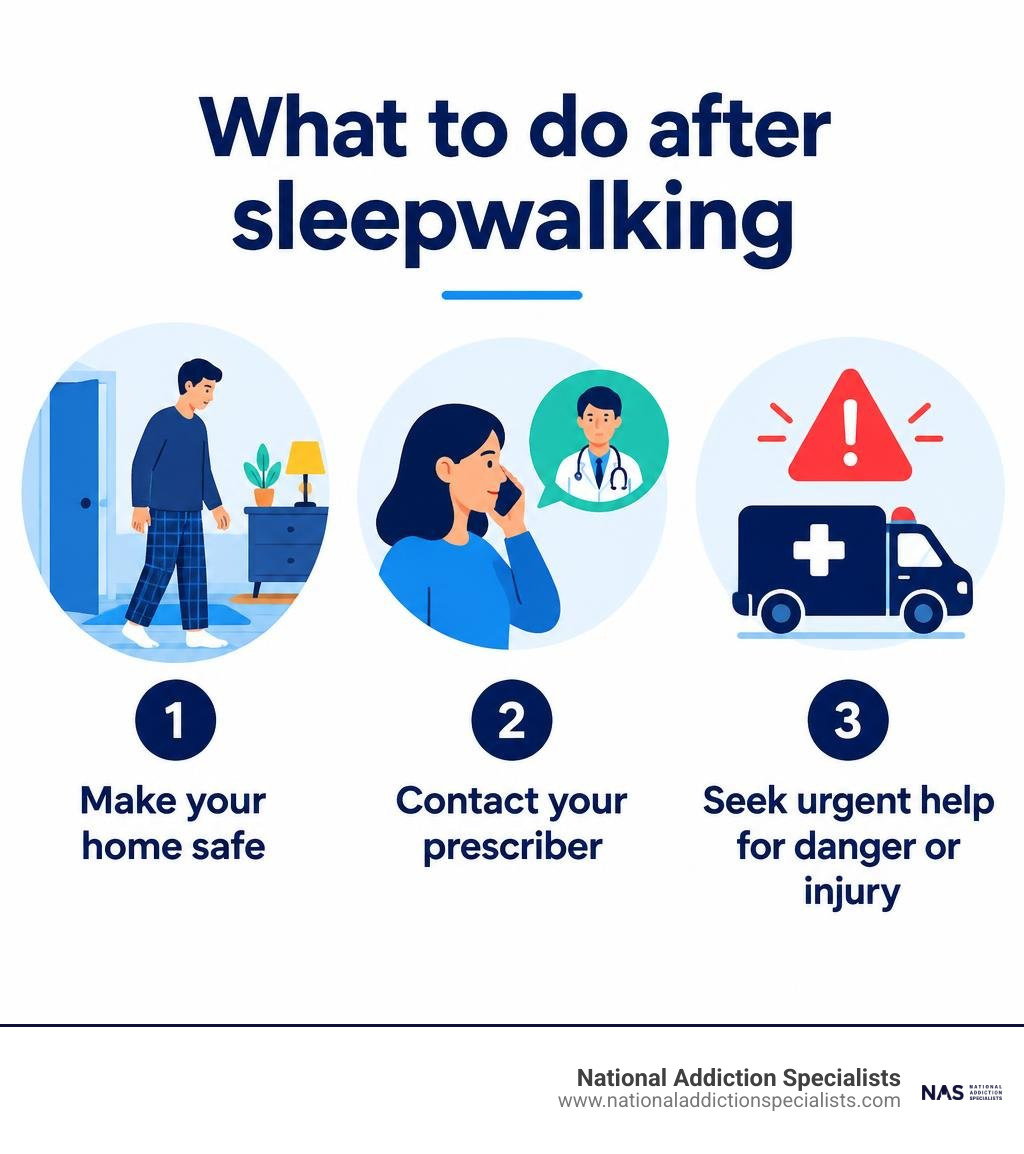
The evidence on suboxone and sleep walking is limited. Some people report sleepwalking while taking it, but research has not shown how often it happens or whether Suboxone is the cause. If it happens to you, clear hazards from your home and contact your prescriber promptly. Do not stop or change your dose on your own. Seek urgent help if you are injured, leave home, or drive while not fully awake.
Other medicines, alcohol, poor sleep, and health conditions can also play a role. Your prescriber can review when the episodes began and help you decide what to do next.
I’m Dr. Chad Elkin, founder and medical director of National Addiction Specialists, and I’m board-certified in addiction medicine and internal medicine. I draw on that experience to explain concerns about suboxone and sleep walking while keeping both recovery and sleep safety in focus.
Key terms for suboxone and sleep walking:
Suboxone and sleep walking: What does the evidence show?
When people ask us about nighttime disturbances during treatment, we look closely at what scientific literature confirms versus what remains anecdotal. Suboxone combines buprenorphine (a partial mu-opioid receptor agonist) and naloxone (an opioid antagonist). While opioids as a broad medication class are well known to alter sleep architecture, clinical literature directly evaluating buprenorphine as a direct cause of somnambulism (sleepwalking) is sparse.
In clinical sleep research, medication-induced parasomnias are evaluated by analyzing how compounds alter deep, non-rapid eye movement (NREM) slow-wave sleep and rapid eye movement (REM) cycles (Stallman et al., 2018). A comprehensive review of medication-induced parasomnias notes that while dozens of central nervous system drugs can induce parasomnias, opioids primarily disrupt sleep continuity and neurotransmitter pathways involving dopamine and serotonin rather than directly triggering classic NREM arousal disorders.
Human electroencephalogram (EEG) studies show that patients taking buprenorphine often experience less slow-wave sleep and more shallow-stage sleep compared to baseline. Interestingly, objective EEG monitoring in people being treated for opioid use disorder frequently reveals more fragmented sleep than patients report in their own daily sleep diaries. This positive sleep misperception means individuals may not realize how broken their nightly rest actually is, setting the stage for nocturnal arousals.
Can Suboxone and sleepwalking be connected?
In the general adult population, the lifetime prevalence of sleepwalking is approximately 3.5%. Because somnambulism is already present in a noticeable fraction of adults, isolated case reports of sleepwalking while taking Suboxone do not automatically prove causation.
Online recovery forums and patient communities contain anecdotes of individuals waking up disoriented, finding misplaced items, or even wandering outside after starting medication-assisted treatment. However, these reports lack controlled verification. Sleepwalking is a disorder of arousal arising primarily from deep N3 non-REM sleep. If a medication, severe fatigue, or an abrupt change in sleep environment disrupts the transition between deep sleep and waking states, an episode of sleepwalking can occur regardless of the specific opioid maintenance therapy being used.
How might buprenorphine affect sleep and adenosine?
To understand how buprenorphine interacts with sleep regulation, researchers look at sleep-promoting neurochemicals in the brain, especially adenosine. Adenosine builds up in our central nervous system throughout the day, creating the natural “sleep pressure” that helps us fall and stay asleep.
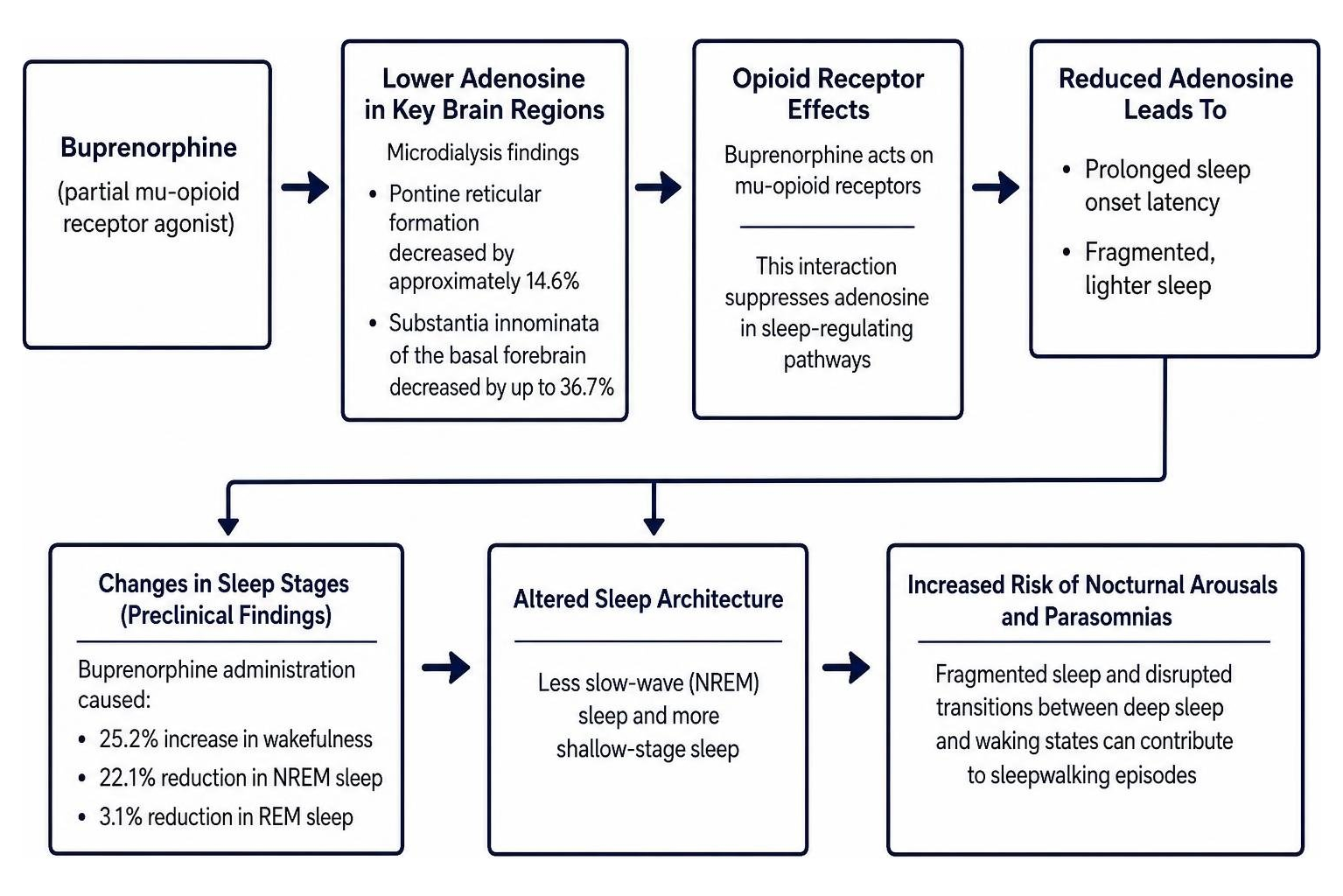
In preclinical laboratory models, scientific research on buprenorphine, sleep, and adenosine demonstrated that buprenorphine administration caused a 25.2% increase in wakefulness alongside a 22.1% reduction in NREM sleep and a 3.1% reduction in REM sleep (Gauthier et al., 2011). Crucially, microdialysis revealed that buprenorphine significantly lowered adenosine levels in key sleep-regulating regions of the brain:
- Pontine reticular formation (decreased by approximately 14.6%)
- Substantia innominata of the basal forebrain (decreased by up to 36.7%)
By suppressing adenosine in these critical areas, buprenorphine can prolong sleep onset latency and cause fragmented, lighter sleep. While these animal findings provide a plausible biological mechanism for broken sleep, they do not prove that buprenorphine directly causes complex motor automatisms like sleepwalking in humans.
What might trigger sleepwalking, and what else could explain it?

When complex sleep behaviors occur during recovery, multiple overlapping triggers are usually at play. Sleepwalking rarely happens in a vacuum. It is often the result of predisposing genetic factors combined with priming stressors and acute precipitating triggers.
According to clinical resources on sleepwalking symptoms, causes, and evaluation, adult-onset somnambulism is strongly tied to severe sleep deprivation, physiological stress, alcohol or sedative use, untreated nocturnal breathing issues, and underlying medical or neurological conditions.
What risk factors should you discuss with your prescriber?
If you experience nighttime confusion or physical wandering, you should review your full daily routine with your medical provider. Key risk factors include:
- Dose Timing and Size: Taking your dose late in the afternoon or evening can cause increased nighttime alertness or Suboxone and sleepiness fluctuations that disrupt sleep cycles.
- Co-occurring Medications: Sedative-hypnotics, atypical antipsychotics (such as quetiapine or olanzapine), certain antidepressants, mood stabilizers, and over-the-counter antihistamines are frequently documented in cases of medication-induced somnambulism (Stallman et al., 2018).
- Chronic Sleep Debt: Severe exhaustion deepens N3 slow-wave sleep pressure. When an arousal occurs from this ultra-deep sleep, the brain can remain partially asleep while the body moves.
- Withdrawal and Pain: Early recovery or undergoing decreasing Suboxone dose and sleep changes without clinical guidance can trigger micro-arousals and nighttime restlessness.
If you are dealing with sleep disruptions during your recovery journey in Tennessee or Virginia, our team at National Addiction Specialists can help you stabilize your regimen. Make an Appointment to Treat Addiction Please don’t hesitate. Make an appointment today.
How can clinicians distinguish a medication effect from another cause?
Differentiating between an adverse drug reaction and another primary sleep disorder requires a methodical clinical evaluation. We assess:
- Onset Timeline: Did the sleepwalking episodes begin immediately after starting or adjusting your Suboxone dose, or have you walked in your sleep since childhood?
- Detailed Witness Descriptions: Bed partners or family members can describe whether the events involve simple ambulation, complex tasks, or rapid vocalizations.
- Medication and Substance Reconciliation: Reviewing all concurrent prescriptions, supplements, and potential alcohol consumption.
- Underlying Sleep Disorders: Screening for obstructive sleep apnea (OSA) or nocturnal seizures, both of which can shatter sleep architecture and trigger confusional arousals.
- Sleep Diaries: Tracking bedtime, wake times, and dose administration over several weeks to spot patterns.
What should you do if sleepwalking starts while taking Suboxone?
Your immediate priority must always be physical environmental safety. Sleepwalkers have impaired judgment, diminished balance, and lack conscious awareness of household dangers.
Take these immediate protective steps at home:
- Clear Walkways: Remove loose rugs, electrical cords, and low furniture that could cause trips and falls.
- Secure Dangerous Areas: Install safety gates at the top of stairwells and ensure exterior doors and low windows are firmly locked or latched.
- Safeguard Hazardous Objects: Keep vehicle keys, sharp kitchen utensils, and medications locked away out of easy reach.
- Avoid Sleep Deprivation: Maintain a rigid sleep schedule to prevent the deep rebound sleep that triggers parasomnias.
What should you do about Suboxone and sleep walking?
If you find yourself wandering at night, contact your healthcare provider right away. Keep an accurate log of when each episode occurred, what time you took your medication, and any injuries sustained.
Never adjust or stop your Suboxone prescription on your own. Abruptly stopping buprenorphine can precipitate acute withdrawal, severe anxiety, and intense rebound insomnia—all of which dramatically increase the risk of both further sleep disturbances and substance relapse. For deeper insights on managing recovery transitions, read our guide on conquering sleep during opioid recovery. Your prescriber can safely evaluate whether adjusting your dosing schedule (such as moving your dose to earlier in the day) or fine-tuning your daily milligrams will resolve the issue.
Are sedative-hypnotics a safe way to manage sleep disruption?
It can be tempting to reach for a sleeping pill when rest feels elusive, but combining sedative-hypnotic medications with buprenorphine requires extreme caution and strict medical supervision.
The FDA has issued an official boxed warning regarding complex sleep behaviors for common prescription “Z-drug” insomnia medications such as zolpidem, eszopiclone, and zaleplon. These medications are strongly associated with sleepwalking, sleep-driving, and other automatisms that have led to severe injuries and fatalities. Furthermore, combining central nervous system depressants with opioid medications increases the risk of dangerous sedation and respiratory depression.
Instead of unmonitored pharmaceutical sleep aids, we recommend addressing Suboxone and insomnia through evidence-based behavioral interventions. Practicing structured sleep strategies during recovery—such as keeping a dark, cool sleeping environment, eliminating late-day caffeine, and avoiding blue light screens before bed—offers restorative rest without added pharmacological risks.
Frequently asked questions about Suboxone and sleepwalking
Is sleepwalking a known or common Suboxone side effect?
No. Sleepwalking is not listed as a common or well-established side effect in official prescribing information for Suboxone. While fragmented sleep, vivid dreams, and insomnia are reported by some patients during opioid use disorder treatment, true NREM somnambulism remains rare and is usually driven by multiple combined factors, including sleep debt and co-prescribed medications.
Should I change my Suboxone dose or stop taking it?
You should never alter or discontinue your Suboxone dose without direct guidance from your addiction medicine provider. Stopping abruptly can trigger severe withdrawal symptoms that destabilize your recovery and worsen sleep fragmentation. Your provider can help you safely adjust your dose timing or total daily amount if clinically appropriate.
When is sleepwalking an emergency?
Sleepwalking becomes an immediate medical emergency if an episode results in physical injury, leaving the home, attempting to drive a vehicle, or handling dangerous objects while asleep. If you experience severe confusion upon waking, breathing difficulties, or suspect a seizure, seek urgent medical evaluation immediately.
Conclusion
Navigating sleep disturbances during recovery can feel overwhelming, but you do not have to figure it out alone. While the link between Suboxone and sleepwalking is not supported by conclusive evidence, fragmented sleep and parasomnias are treatable issues that deserve thorough clinical attention. By securing your sleep environment, practicing healthy sleep habits, and maintaining open communication with your healthcare team, you can protect both your physical safety and your long-term sobriety.
At National Addiction Specialists, we provide confidential, personalized telemedicine Suboxone care across Tennessee and Virginia, ensuring you have expert guidance at every step of your recovery.
Make an Appointment to Treat Addiction Please don’t hesitate. Make an appointment today.
Suboxone® and Subutex® are a registered trademark of Indivior UK Limited. Any mention and reference of Suboxone® and Subutex® in this website is for informational purposes only and is not an endorsement or sponsorship by Indivior UK Limited.
This article was medically reviewed by: Chad Elkin, MD, DFASAM is a board-certified addiction medicine physician, founder, and Chief Medical Officer of National Addiction Specialists, dedicated to treating substance use disorders. A Distinguished Fellow of the American Society of Addiction Medicine (ASAM), Dr Elkin currently serves as President of the Tennessee Society of Addiction Medicine (TNSAM) and has held various leadership roles within the organization. Dr Elkin chairs ASAM’s Health Technology Subcommittee and is an active member of its Practice Management and Regulatory Affairs Committee, State Advocacy and Legislative Affairs Committee, and other committees. He also serves on the planning committee for the Vanderbilt Mid-South Addiction Conference. Committed to advancing evidence-based policy, Dr Elkin is Chairman of the Tennessee Association of Alcohol, Drug, & Other Addiction Services (TAADAS) Addiction Medicine Council, which collaborates with the TN Department of Mental Health & Substance Abuse Services (TDMHSAS). He has contributed to numerous local, state, and national task forces, helping develop professional guidelines, policies, and laws that align with best practices in addiction medicine. His work focuses on reducing addiction-related harm, combating stigma, and ensuring access to effective treatment.Passionate about the field of addiction medicine, he remains dedicated to shaping policy and enhancing patient care.