
Signs of Opiate Withdrawal: What to Look For
Common signs of opiate withdrawal include yawning, a runny nose, watery eyes, sweating, chills, muscle aches, and trouble sleeping. As symptoms build, you may also have stomach cramps, nausea, vomiting, diarrhea, anxiety, and strong cravings. A clinician may notice dilated pupils, goosebumps, or a faster pulse.
Symptoms can start within hours of the last dose of a short-acting opioid, but may take a day or longer after a long-acting opioid. You do not have to manage them alone. Medical support can ease symptoms and help you plan what comes next.
I’m Dr. Chad Elkin, a board-certified addiction medicine and internal medicine physician and founder of National Addiction Specialists. My work treating opioid use disorder has taught me how important it is to recognize the signs of opiate withdrawal early and respond with care, not judgment.
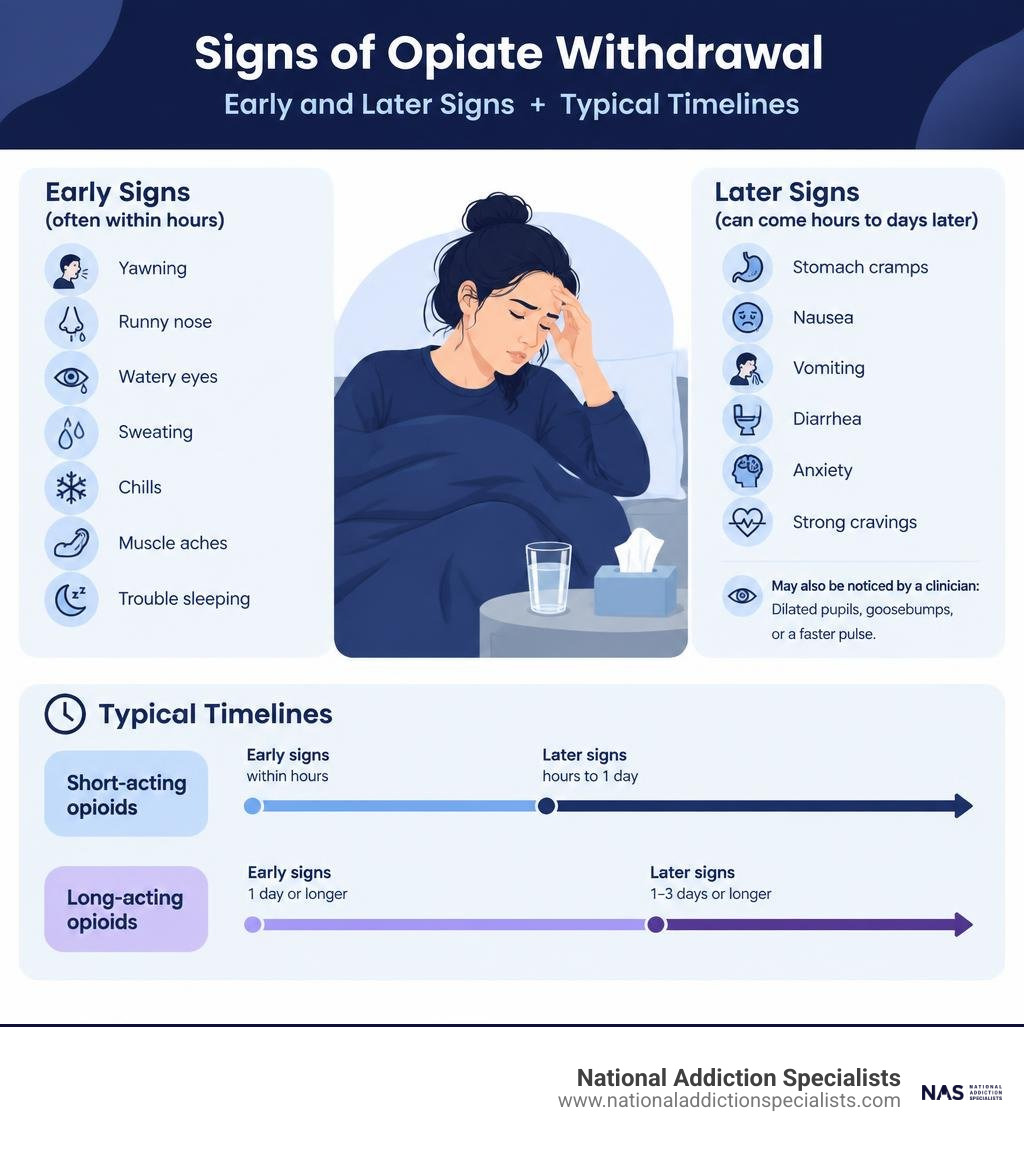
Signs of opiate withdrawal glossary:
Recognizing the Common Physical and Psychological Signs of Opiate Withdrawal
When someone regularly takes opioids, their central nervous system undergoes neuroadaptation. Opioids suppress natural noradrenaline (norepinephrine) production—the chemical that controls heart rate, blood pressure, alertness, and digestion. Over time, the brain compensates by building up its adrenaline-producing machinery just to function normally.
When opioids are suddenly reduced or stopped, that artificial brake is yanked away. The result is a massive sympathetic nervous system surge, often referred to as a neurotransmitter rebound. The body floods with adrenaline, triggering the classic clinical signs of opioid withdrawal that make people feel as though their entire system is in overdrive.
Objective Signs of Opiate Withdrawal Clinicians Look For
In clinical settings, healthcare providers separate what they can physically verify (objective signs) from what a patient feels internally. Objective signs provide an unvarnished measurement of autonomic hyperactivity:
- Pupillary Dilation (Mydriasis): Pupils widen significantly compared to their normal baseline.
- Piloerection: The classic appearance of goosebumps (“gooseflesh”), where skin hairs stand on end due to involuntary muscle contraction.
- Rhinorrhea and Lacrimation: An excessively runny nose and constant, uncontrollable tearing of the eyes without an emotional trigger.
- Diaphoresis: Heavy, spontaneous sweating, even in cool environments.
- Gastrointestinal Hypermotility: Rapid stomach and bowel churning, leading to audible gut sounds, frequent vomiting, and watery diarrhea.
- Resting Tremor: Involuntary shaking or trembling in the hands and limbs.
- Elevated Vital Signs: A noticeable rise in resting pulse (tachycardia) and elevated blood pressure.

Subjective Signs of Opiate Withdrawal Reported by Patients
While clinicians look at pupil gauges and heart monitors, patients experience an exhausting internal storm. Recognizing these subjective opioid withdrawal symptoms is vital for understanding why this process feels so overwhelming:
- Intense Drug Cravings: An overwhelming, compulsive drive to consume opioids to stop physical pain.
- Generalized Myalgia and Bone Aches: Deep, agonizing aches in the legs, lower back, and joints that feel like they radiate from inside the bone marrow.
- Severe Anxiety and Restlessness: An inner agitation often described as “crawling out of one’s skin,” accompanied by involuntary leg kicking (restless legs).
- Insomnia and Sleep Disruption: Inability to fall or stay asleep, paired with extreme physical exhaustion.
- Dysphoria and Irritability: Profound emotional depression, mood swings, and a feeling that everyday comfort is impossible.
- Hot and Cold Flushes: Shivering violently under blankets one minute and kicking them off in a drenching sweat the next.
Distinguishing Opioid Withdrawal from an Opioid Overdose
It is essential to understand that opioid withdrawal and opioid overdose are complete physiological opposites. While withdrawal is a state of over-activation that feels miserable, an overdose is a life-threatening state of system suppression that requires immediate action.
According to emergency care guidelines for opioid overdose, an overdose causes profound central nervous system depression, leading to respiratory failure, coma, and death within minutes if untreated.
| Feature | Opioid Withdrawal | Opioid Overdose (Medical Emergency) |
|---|---|---|
| Pupil Size | Dilated (enlarged) | Pinpoint (constricted, tiny) |
| Breathing | Rapid, normal, or deep | Extremely slow, shallow, or stopped |
| Consciousness | Awake, agitated, restless | Unresponsive, unconscious, limp body |
| Skin Temperature/Color | Sweating, goosebumps, hot/cold chills | Clammy, pale, bluish/purple lips or fingernails |
| Heart Rate | Elevated (fast pulse) | Slow, faint, or undetectable pulse |
| Sounds | Moaning, complaining of pain | Snoring, choking, or gurgling sounds |
| Immediate Action | Medical assessment, comfort meds, MAT | Call 911 immediately, administer Naloxone (Narcan) |
The Opiate Withdrawal Timeline: Short-Acting vs. Long-Acting Opioids
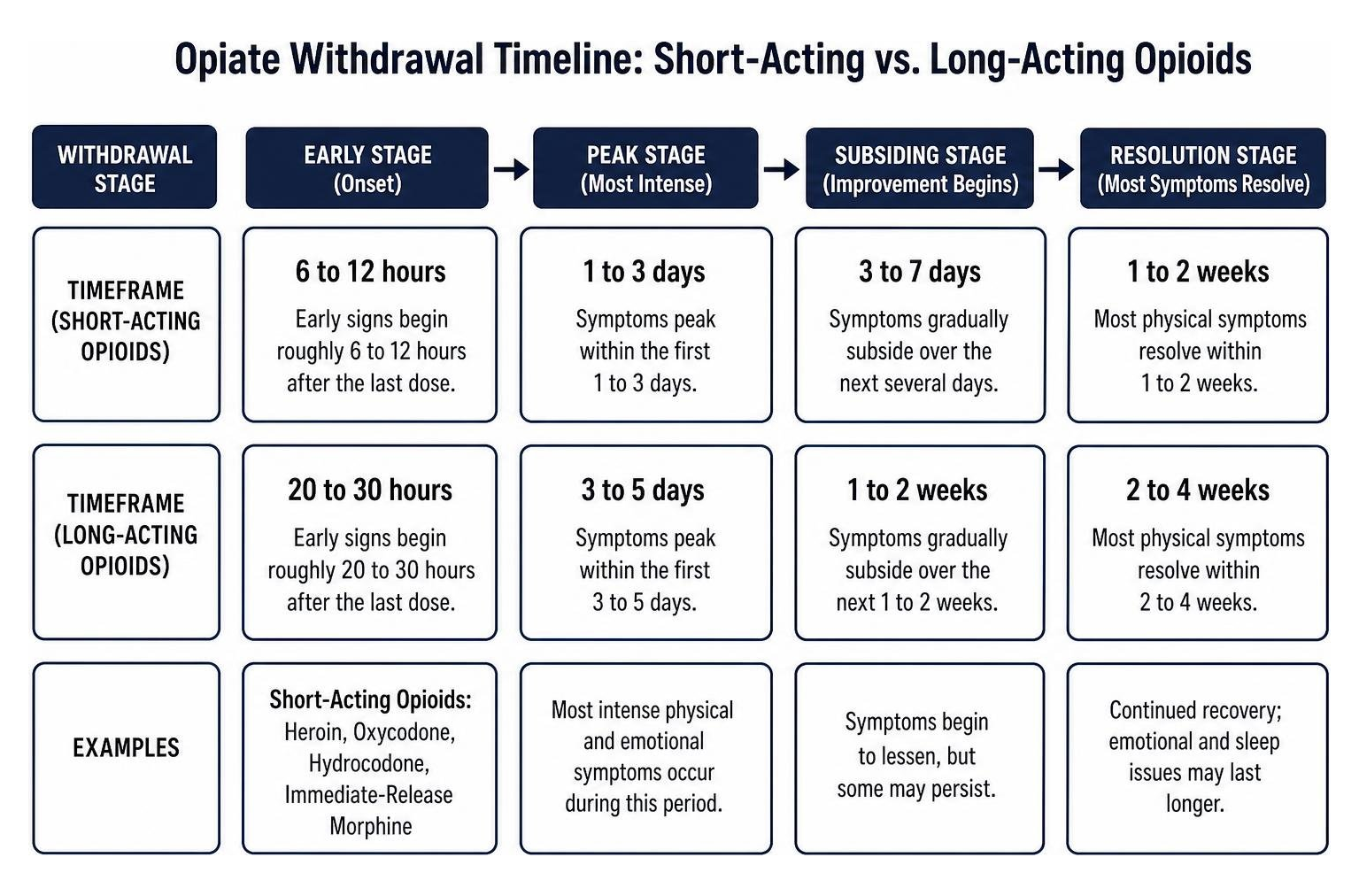
The speed at which withdrawal begins and how long it lasts depends heavily on the elimination half-life and metabolic clearance of the specific opioid used. Reviewing a detailed drug withdrawal timeline helps individuals anticipate these shifts.
Early-Stage Symptoms and Onset (Hours 6 to 36)
The initial phase of withdrawal features subtle physical and emotional clues that the body’s opioid levels are dropping. According to clinical consensus on withdrawal onset, early Grade 1 and Grade 2 symptoms emerge as follows:
- Short-Acting Opioids (Heroin, Oxycodone, Hydrocodone, Immediate-Release Morphine): Early signs begin roughly 6 to 12 hours after the last dose. You may notice frequent yawning, watery eyes, a runny nose, mild sweating, and an unsettled sense of anxiety.
- Long-Acting Opioids (Methadone, Extended-Release Formulations): Because these compounds clear slowly from tissue stores, early symptoms typically take 24 to 36 hours (and sometimes up to 48 hours) to appear.
Peak Withdrawal and Resolution (Days 1 to 14+)
As the body enters fully developed withdrawal, symptoms shift into Grade 3 and Grade 4 severity before gradually stabilizing:
- Short-Acting Opioids: Symptoms peak within 1 to 3 days (24 to 72 hours). During this window, gastrointestinal distress (vomiting, diarrhea), full-body tremors, intense muscle spasms, and severe insomnia reach their height. Physical symptoms begin resolving around day 5 to 7, with acute physical signs largely clearing by day 10.
- Long-Acting Opioids: Peak intensity occurs between days 3 and 6 (72 to 144 hours). Gastrointestinal and muscular symptoms can remain pronounced for a week or longer. Full resolution of acute physical symptoms often requires 14 days or more.
Understanding this progression is critical when navigating day-by-day opioid withdrawal toward long-term stabilization.
| Metric | Short-Acting Opioids (e.g., Heroin, Oxycodone) | Long-Acting Opioids (e.g., Methadone) |
|---|---|---|
| Onset of First Symptoms | 6–12 hours | 24–36 hours |
| Peak Symptom Intensity | 24–72 hours (Days 1–3) | 72–144 hours (Days 3–6) |
| Acute Physical Duration | 5–10 days | 14–21+ days |
| Primary Acute Symptoms | Rapid sweating, diarrhea, severe cramps | Prolonged lethargy, deep bone aches, insomnia |
Key Predictors of Withdrawal Severity and Duration
Not everyone experiences withdrawal with the exact same intensity. Several clinical predictors influence how severe the process will be:
- Duration of Use: People who have used opioids daily for longer than two weeks—and especially for more than 90 days or over six months—experience far more intense neuroadaptation and severe withdrawal than intermittent users.
- Daily Dosage: High daily intake saturates mu-opioid receptors, leading to a much steeper drop when the substance is removed.
- Type of Opioid: Potent synthetic opioids and long-acting agents create prolonged, complex clearance dynamics compared to lower-potency, short-acting pills.
- General Health and Metabolism: Hydration status, liver and kidney clearance rates, nutrition, and co-occurring mental health conditions all shape a person’s physical resilience during detox.
Make an Appointment to Treat Addiction Please don’t hesitate. Make an appointment today.
Clinical Assessment: Using the Clinical Opiate Withdrawal Scale (COWS)
To eliminate guesswork, clinicians utilize standardized, validated tools to measure withdrawal severity. The most widely used instrument is the Clinical Opiate Withdrawal Scale (COWS).

COWS scores 11 specific physical signs and patient-reported symptoms:
- Resting pulse rate
- Sweating
- Restlessness
- Pupil size
- Bone or joint aches
- Runny nose or tearing eyes
- Gastrointestinal upset
- Tremor
- Yawning
- Anxiety or irritability
- Gooseflesh skin (piloerection)
COWS Scoring Ranges and Interpretation
Each symptom is assigned a numerical value based on observation, and the scores are added together:
- 5 to 12: Mild withdrawal
- 13 to 24: Moderate withdrawal
- 25 to 36: Moderately severe withdrawal
- Greater than 36: Severe withdrawal
Clinicians re-evaluate patients every 2 to 6 hours during acute assessment to track symptom trajectory and determine when specific medical interventions are safe and effective.
The Risk of Precipitated Withdrawal with Buprenorphine Induction
One of the most critical reasons for calculating an accurate COWS score is preventing precipitated withdrawal. Medications like Suboxone combine buprenorphine and naloxone. Buprenorphine is a partial opioid agonist with an exceptionally high binding affinity for mu-opioid receptors.
If buprenorphine is taken while full-agonist opioids (like oxycodone, heroin, or methadone) are still attached to receptors, it knocks those full agonists off and replaces them without fully activating the receptor. This causes a sudden, dramatic drop in opioid effect within minutes, throwing the person into severe withdrawal.
To prevent this, clinicians require clear evidence of objective withdrawal—including objective markers like pupil dilation and gooseflesh—and a COWS score of at least 6 to 12 or higher before starting medication. Learning why Suboxone works for opiate withdrawal helps individuals feel confident during this transition.
Medical Management, Home Remedies, and Supportive Care Options
With modern addiction medicine, no one has to endure agonizing withdrawal symptoms without relief. Knowing how to manage opioid withdrawal symptoms safely combines medical oversight, targeted pharmaceuticals, and practical comfort strategies.
Evidence-Based Medications for Opioid Withdrawal Management
Modern protocols use targeted medications to calm the central nervous system and restore stability:
- Buprenorphine/Naloxone (Suboxone): The gold standard of care. It satisfies opioid receptors enough to eliminate cravings and stop physical withdrawal without producing a dangerous high.
- Alpha-2 Adrenergic Agonists (Clonidine and Lofexidine): Non-opioid blood pressure medications that suppress the brain’s excess adrenaline output, reducing sweating, hot flushes, rapid heart rate, and anxiety.
- Antiemetics: Medications like ondansetron or metoclopramide to stop nausea and vomiting.
- Antidiarrheals: Targeted use of medications like loperamide under medical direction to control bowel hypermotility.
- Analgesics: Simple non-steroidal anti-inflammatory drugs (NSAIDs) or acetaminophen to alleviate muscle and joint aches.
Over-the-Counter Relief and Home Supportive Strategies
When preparing for home-based comfort during outpatient care, simple supportive steps can make a meaningful difference, as highlighted in practical home supportive care guides:
- Hydration and Electrolytes: Persistent vomiting and diarrhea rapidly deplete fluids. Drink electrolyte-rich beverages (such as oral rehydration salts, Pedialyte, or diluted sports drinks) rather than plain water alone.
- OTC Pain and Gastrointestinal Relief: Standard doses of ibuprofen or acetaminophen can take the edge off muscle aches. Always follow package instructions and avoid excessive dosing.
- Environmental Comfort: Keep extra changes of loose, breathable clothing and blankets nearby to handle hot and cold flushes. Warm baths or heating pads can soothe cramping muscles.
- Rest and Mental Distraction: Engaging your mind with movies, audiobooks, or light reading helps distract from cravings. Light movement or stretching can also encourage natural endorphin release. (And yes, eating a little chocolate can give you a small, harmless boost of feel-good endorphins!)
Risks of Unassisted Withdrawal and When to Seek Emergency Care
While opioid withdrawal is rarely fatal on its own in healthy adults, unassisted “cold turkey” detox carries significant medical and psychological risks:
- Severe Dehydration and Electrolyte Imbalance: Uncontrolled vomiting and diarrhea can lead to dangerous dehydration, kidney strain, and heart rhythm irregularities.
- Aspiration: Inhaling vomit into the lungs while severely ill or sedated can trigger life-threatening pneumonia.
- Loss of Tolerance and Overdose: This is by far the most dangerous complication. After just a few days of withdrawal, the body’s tolerance to opioids drops sharply. If severe distress causes a person to relapse at their previous dosage, their respiratory system can quickly shut down, resulting in a fatal overdose.
If you experience confusion, chest pain, an irregular heart rhythm, inability to keep liquids down for over 24 hours, or thoughts of self-harm, seek immediate emergency medical care. Exploring structured outpatient withdrawal management provides the safety, oversight, and relief needed to prevent these emergencies.
Frequently Asked Questions About Opiate Withdrawal
How long do the physical signs of opiate withdrawal last?
For short-acting opioids (like heroin or immediate-release painkillers), acute physical symptoms typically peak within 1 to 3 days and subside significantly by days 5 to 7. For long-acting opioids like methadone, physical symptoms peak between days 3 and 6 and can linger for 14 days or longer. Lingering sleep issues, mild fatigue, and mood fluctuations can persist for several weeks as the brain resets its natural chemistry.
Can opiate withdrawal be managed safely at home?
Yes, for many individuals, outpatient withdrawal management is completely safe and effective when conducted under professional medical supervision. Through telemedicine, addiction medicine specialists can evaluate symptoms, prescribe comfort medications, initiate Suboxone therapy, and monitor progress without requiring an inpatient hospital stay.
What is the most effective medication to stop opioid withdrawal?
Buprenorphine (often formulated with naloxone as Suboxone) is widely recognized as the most effective medication for stopping opioid withdrawal. It binds tightly to opioid receptors, eliminating physical sickness and curbing cravings within hours of proper induction, allowing people to return to their daily routines.
Conclusion
Experiencing opioid withdrawal can feel daunting, but you do not have to walk this path alone or suffer through unmanaged physical pain. Recognizing the symptoms is the first step toward getting your life and health back on solid ground.
At National Addiction Specialists, we provide convenient, confidential, telemedicine-based Suboxone treatment and comprehensive counseling directly from the comfort of your home. Serving patients across Tennessee (including Brentwood) and Virginia (including Virginia Beach), our expert medical team designs personalized recovery plans that fit your life. We proudly accept Medicaid and Medicare, ensuring evidence-based care is accessible to those who need it.
Take the first step toward lasting health today by exploring our comprehensive opioid withdrawal care and connecting with our team.
Suboxone® and Subutex® are a registered trademark of Indivior UK Limited. Any mention and reference of Suboxone® and Subutex® in this website is for informational purposes only and is not an endorsement or sponsorship by Indivior UK Limited.
This article was medically reviewed by: Chad Elkin, MD, DFASAM is a board-certified addiction medicine physician, founder, and Chief Medical Officer of National Addiction Specialists, dedicated to treating substance use disorders. A Distinguished Fellow of the American Society of Addiction Medicine (ASAM), Dr Elkin currently serves as President of the Tennessee Society of Addiction Medicine (TNSAM) and has held various leadership roles within the organization. Dr Elkin chairs ASAM’s Health Technology Subcommittee and is an active member of its Practice Management and Regulatory Affairs Committee, State Advocacy and Legislative Affairs Committee, and other committees. He also serves on the planning committee for the Vanderbilt Mid-South Addiction Conference. Committed to advancing evidence-based policy, Dr Elkin is Chairman of the Tennessee Association of Alcohol, Drug, & Other Addiction Services (TAADAS) Addiction Medicine Council, which collaborates with the TN Department of Mental Health & Substance Abuse Services (TDMHSAS). He has contributed to numerous local, state, and national task forces, helping develop professional guidelines, policies, and laws that align with best practices in addiction medicine. His work focuses on reducing addiction-related harm, combating stigma, and ensuring access to effective treatment.Passionate about the field of addiction medicine, he remains dedicated to shaping policy and enhancing patient care.