
A Clinical Guide to Understanding Depressant Drug Withdrawal
Withdrawal Symptoms of Depressant Drugs: What to Watch For
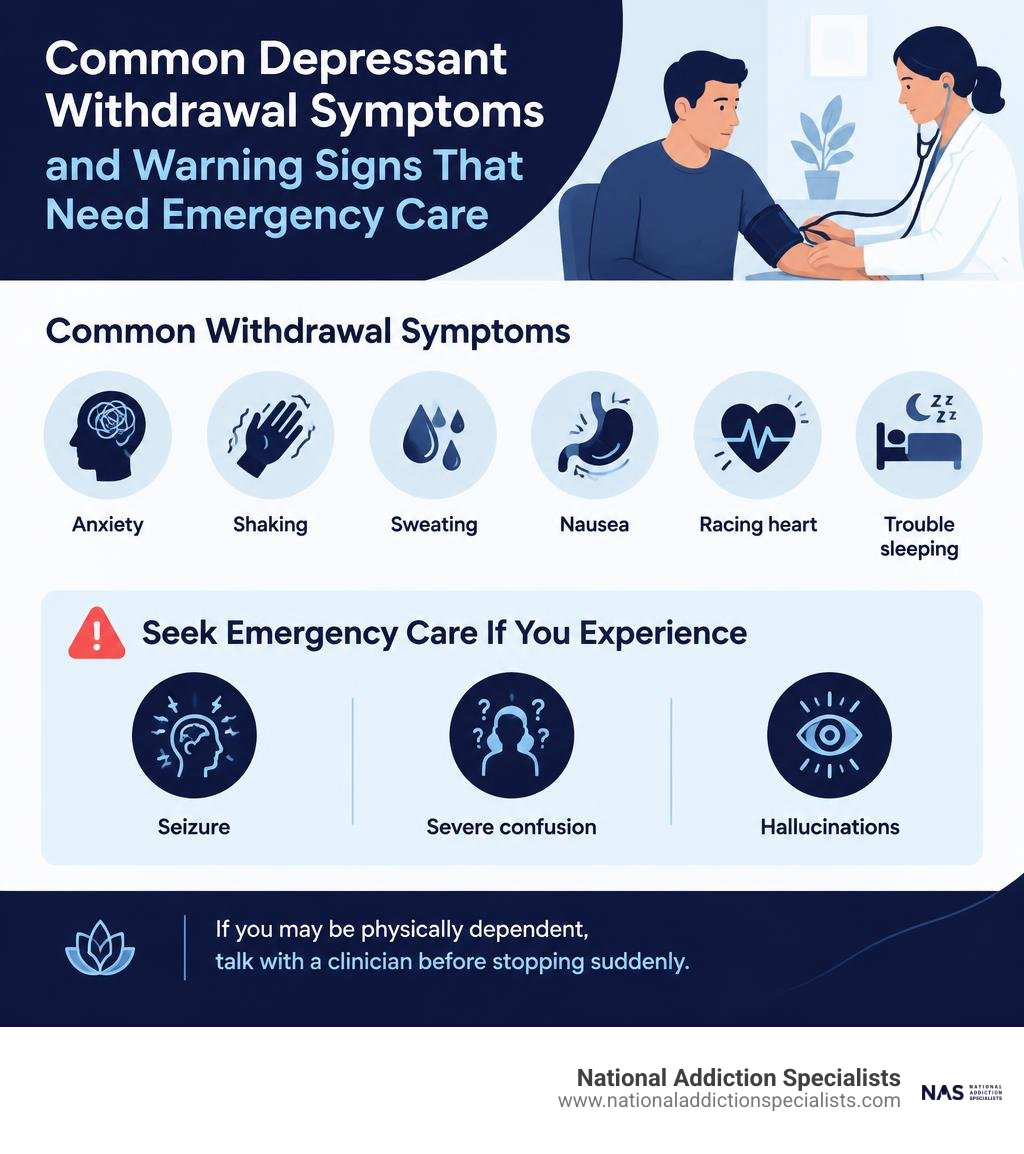
Withdrawal symptoms of depressant drugs can include anxiety, shaking, sweating, nausea, a racing heart, and trouble sleeping. Alcohol, benzodiazepines, barbiturates, and GHB can also cause seizures, hallucinations, or severe confusion when stopped after regular use. If you may be physically dependent, talk with a clinician before stopping suddenly. Seek emergency care for a seizure, severe confusion, or hallucinations.
Symptoms vary by drug, dose, and length of use. They happen because the nervous system has adapted to the drug and can become overactive when its effects wear off. Physical dependence does not, by itself, mean addiction.
I’m Dr. Chad Elkin, a board-certified physician in addiction medicine and internal medicine, and the founder and medical director of National Addiction Specialists. My work in substance use care informs this guide to withdrawal symptoms of depressant drugs and the steps that can help people stay safe.
Must-know withdrawal symptoms of depressant drugs terms:
Identifying the Core Withdrawal Symptoms of Depressant Drugs
Central nervous system (CNS) depressants function primarily by amplifying gamma-aminobutyric acid (GABA), the brain’s primary inhibitory neurotransmitter. By binding to specific receptor complexes—most notably the GABA-A receptor—these substances slow neural firing, promote muscle relaxation, reduce anxiety, and induce sedation.
When a person consumes depressants continuously, the brain initiates compensatory adaptations to maintain equilibrium. It downregulates GABA receptor sensitivity and upregulates excitatory systems, primarily glutamate and its NMDA receptors. When the depressant is abruptly reduced or eliminated, this inhibitory brake is suddenly removed. The uninhibited excitatory neurotransmission leads to autonomic hyperactivity, hyperreflexia, and profound central nervous system rebound (Lerner & Klein, 2019).

This rebound creates a spectrum of physical and psychological disturbances that require careful clinical identification and monitoring.
Physical and Neurological Withdrawal Symptoms of Depressant Drugs
As the sympathetic nervous system shifts into overdrive, physical symptoms manifest across multiple organ systems:
- Autonomic Instability: Diaphoresis (profuse sweating), tachycardia (heart rate exceeding 100 beats per minute), and marked hypertension.
- Neuromuscular Dysregulation: Fine and coarse tremors (prominently affecting the hands and tongue), muscle twitches, hyperreflexia, and motor agitation.
- Gastrointestinal Distress: Nausea, vomiting, abdominal cramping, and loss of appetite.
- Somatic Complaints: Severe tension headaches, muscle aches, and generalized physical weakness.
- Grand Mal Seizures: Severe, generalized tonic-clonic convulsions can occur without warning, carrying high risks of physical trauma and status epilepticus.
Psychological and Cognitive Symptoms
The neurochemical shift away from inhibition produces intense cognitive and affective disruptions (NBK64178):
- Rebound Anxiety and Panic: Acute, overwhelming surges of apprehension, dread, and sudden panic attacks that often exceed the severity of any underlying baseline anxiety.
- Severe Insomnia: Total sleep fragmentation, nightmares, and the inability to enter restorative slow-wave sleep.
- Sensory and Perceptual Distortions: Heightened sensitivity to light and sound (photophobia and phonophobia), paresthesias (burning or tingling sensations), and feelings of derealization.
- Hallucinations: Auditory, visual, or tactile sensations (such as formication, the sensation of insects crawling on the skin) occurring while the patient maintains a clear sensorium.
- Delirium and Psychosis: Complete disorientation to time, place, and person, accompanied by agitated confusion, paranoid delusions, and cognitive clouding.
Comparing Depressant Classes: Alcohol, Benzodiazepines, Barbiturates, and GHB
While all central nervous system depressants act by dampening neurological excitability, their pharmacokinetics, binding sites, receptor dynamics, and clinical risks differ substantially.
| Depressant Class | Primary Mechanism | Typical Withdrawal Onset | Peak Severity Window | Major Clinical Complications |
|---|---|---|---|---|
| Alcohol (Ethanol) | Modulates GABA-A, inhibits NMDA glutamate receptors | 6–12 hours | 48–72 hours | Tonic-clonic seizures, delirium tremens, cardiovascular collapse |
| Short-Acting Benzodiazepines (e.g., Xanax, Ativan) | Positive allosteric GABA-A modulation | 8–24 hours | 2–4 days | Status epilepticus, profound rebound panic, delirium |
| Long-Acting Benzodiazepines (e.g., Valium, Klonopin) | Positive allosteric GABA-A modulation | 2–7 days | 5–14 days | Protracted withdrawal, delayed seizures, prolonged insomnia |
| Barbiturates (e.g., Phenobarbital, Butalbital) | Directly opens GABA-A chloride channels | 8–16 hours | 2–4 days | High seizure incidence, acute respiratory failure, fatal hyperthermia |
| GHB / GBL | Binds GHB receptors and GABA-B receptors | 1–4 hours | 24–48 hours | Rapid autonomic storming, severe delirium, extreme physical agitation |
Alcohol and Benzodiazepine Discontinuation Risks
Alcohol withdrawal is driven by rapid ethanol metabolic clearance. Patients often experience early morning tremors and anxiety within 6 to 12 hours of their last drink. It is critical to recognize the warning signs of alcohol withdrawal early, as symptoms can progress to life-threatening complications like delirium tremens (DTs) between 48 and 72 hours. According to medical resources on what to expect during alcohol cessation, symptoms such as severe confusion, hyperthermia, and malignant hypertension require immediate emergency stabilization.
Benzodiazepines carry unique discontinuation complexities. Physical dependence can establish itself within as little as 4 to 6 weeks of regular therapeutic use (Lerner & Klein, 2019). Short-acting formulations trigger intense, rapid-onset distress within 24 hours, whereas long-acting compounds exhibit a prolonged lag period of 3 to 7 days before acute symptoms emerge. Both present significant risks of tonic-clonic convulsions.
Barbiturates and GHB Withdrawal Profiles
Barbiturates feature a narrow therapeutic index and directly increase the duration of chloride channel opening, making withdrawal severe. Abrupt discontinuation precipitates profound autonomic instability, high fever, delirium, and life-threatening seizures.
Gamma-hydroxybutyrate (GHB) and its precursor gamma-butyrolactone (GBL) possess exceptionally short half-lives. Withdrawal emerges within 1 to 4 hours of the last dose and progresses rapidly into an acute “autonomic storm.” Patients frequently experience severe psychomotor agitation, paranoia, hallucinations, and rapid shifts in blood pressure that mirror severe delirium tremens, often requiring high-dose sedative infusions in intensive care settings.
Timeline and Duration of Depressant Withdrawal
The timeline of depressant withdrawal is governed by the specific substance’s half-life, the presence of active metabolites, liver clearance capacity, and the extent of neurological adaptation.
Acute Withdrawal Phases and Peak Intensity
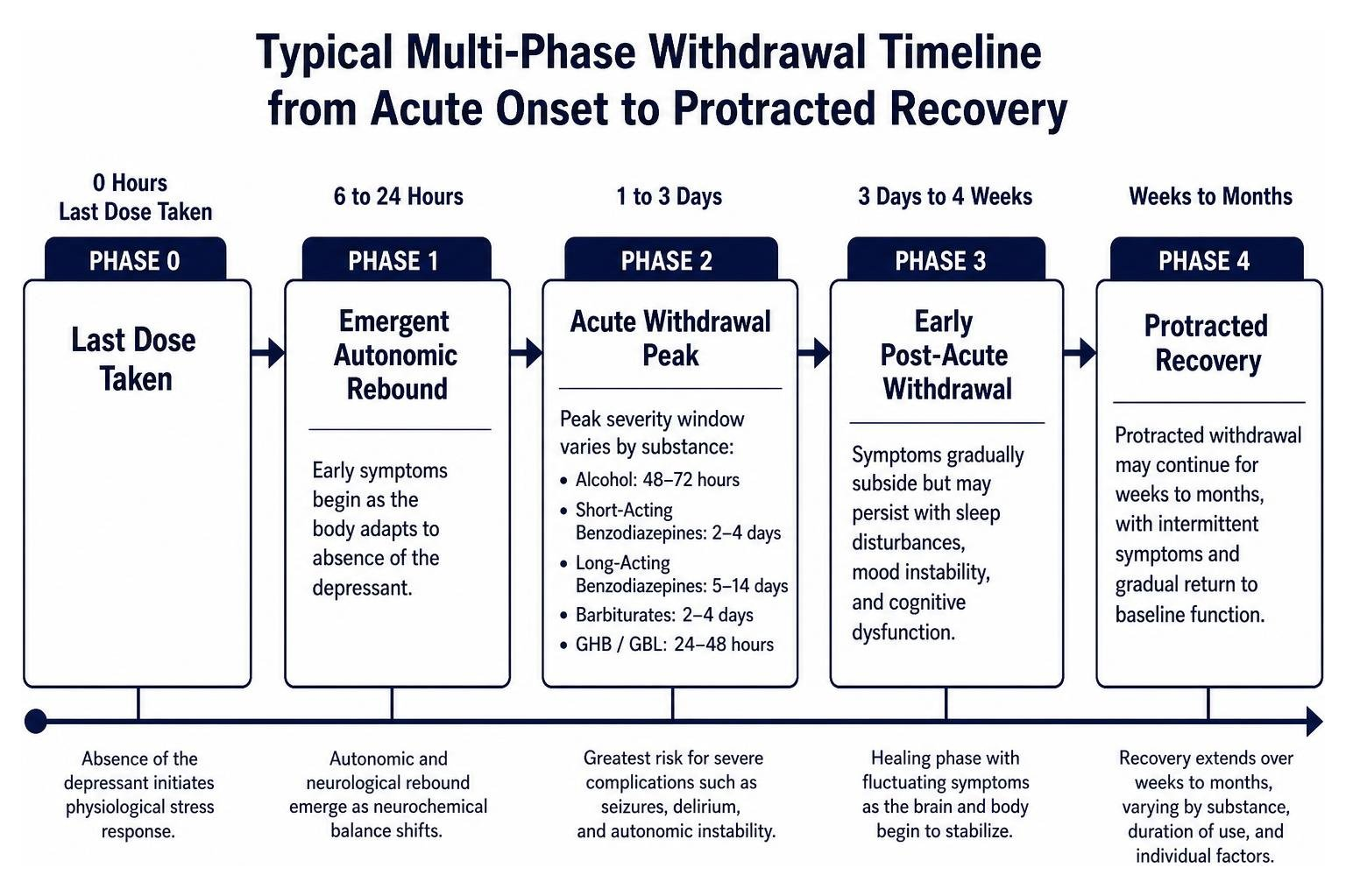
For most central nervous system depressants, acute symptoms settle down within approximately 5 to 7 days. However, the internal trajectory varies:
- Initial Stage (6–24 hours): Emergence of mild tremors, sleep disturbances, restlessness, and mild tachycardia.
- Peak Stage (24–72 hours for short-acting; 4–10 days for long-acting): The nervous system reaches maximum excitability. This window carries the highest vulnerability for grand mal seizures and delirium.
- Resolution Stage (Day 5–10): Vital signs begin to stabilize, autonomic storming abates, and gastrointestinal symptoms subside.
Variables That Influence the Severity of Withdrawal Symptoms of Depressant Drugs
Several pharmacological and host-specific factors determine whether an individual experiences a mild discontinuation syndrome or a catastrophic clinical crisis:
- Daily Dosage and Potency: Doses sustained at two to three times therapeutic limits dramatically heighten dependence severity.
- Duration of Exposure: Extended exposure over months or years solidifies deep receptor neuroadaptations.
- Metabolic and Hepatic Health: Impaired liver clearance prolongs elimination times, altering symptom onset and complicating cross-taper pharmacokinetics.
- Patient Age: Older adults face higher rates of acute delirium, confusion, and cardiovascular stress during withdrawal.
- Polysubstance Dependence: Combining multiple depressants (such as alcohol with benzodiazepines) produces compounding neuroadaptations and exponentially elevates seizure vulnerability.
Acute Rebound vs. Protracted Withdrawal Syndrome
Clinicians distinguish between three distinct post-discontinuation phenomena:
- Acute Rebound: The transient, amplified return of baseline symptoms (such as original insomnia or panic) immediately after drug cessation, typically resolving within days (Lerner & Klein, 2019).
- Acute Withdrawal: The drug-specific constellation of autonomic, physical, and psychological symptoms resulting from systemic physical dependence.
- Protracted Withdrawal Syndrome: Also known as post-acute withdrawal syndrome (PAWS), this stage may start 4 to 6 weeks after discontinuation and persist for 6 to 12 months—or up to 2 years in severe benzodiazepine cases (Lerner & Klein, 2019). Symptoms include mood instability, persistent anhedonia, cognitive fog, tinnitus, paresthesias, and protracted disruptions in sleep architecture.
Clinical Management, Medical Tapering, and Treatment Pathways
Attempting abrupt discontinuation (“cold turkey”) from central nervous system depressants is dangerous and medically contraindicated. Safe recovery requires structured, individualized medical management.

Safe Tapering Protocols and Medical Supervision
The gold standard for discontinuing high-potency or short-acting depressants involves transitioning the patient to an equivalent dose of a long-acting agent (such as diazepam or chlordiazepoxide) or implementing a slow, hyperbolic dose reduction schedule. Hyperbolic tapering reduces doses by small percentages relative to the current dose rather than the starting dose, preventing sudden receptor vacancy drops.
Under medically supervised withdrawal protocols, physicians monitor vital signs, administer targeted detox medications, and adjust taper schedules based on clinical withdrawal scales (such as the CIWA-Ar for alcohol or CIWA-B for sedatives).
Seek immediate emergency medical evaluation if any of the following high-risk symptoms appear:
- Sustained heart rate above 120 beats per minute or severe hypertension
- Shivering, fever, or core body temperature elevation
- Visual, tactile, or auditory hallucinations
- Confusion, disorientation, or inability to recognize familiar people
- Muscle rigidity or any seizure activity
Make an Appointment to Treat Addiction Please don’t hesitate. Make an appointment today.
Depressants Versus Opioids and Polysubstance Considerations
It is important to contrast depressant withdrawal with other substance classes. While acute opioid withdrawal causes severe distress—intense muscle aches, flu-like symptoms, diarrhea, and severe cravings—it is rarely life-threatening in adults unless complicated by extreme dehydration. In contrast, depressant withdrawal directly destabilizes autonomic regulation and brain seizure thresholds, presenting severe mortality risks.
When depressants and opioids are used concurrently, detoxification protocols must prioritize neurological stability first, preventing seizures while coordinating medication-assisted treatment for opioid dependence.
Frequently Asked Questions About Depressant Withdrawal
How long do depressant withdrawal symptoms typically last?
Acute withdrawal symptoms from central nervous system depressants generally settle down within 5 to 7 days for short-acting agents and alcohol. Long-acting benzodiazepines may involve an acute phase lasting 10 to 14 days, with potential protracted symptoms such as mild anxiety and sleep disturbances persisting for months.
Why can stopping depressant drugs abruptly be life-threatening?
Abrupt cessation removes the chemical suppression of excitatory neurotransmitters. The sudden, unopposed surge of glutamate causes massive neuro-electrical firing throughout the brain, which can trigger refractory status epilepticus, malignant cardiac arrhythmias, severe hyperthermia, and cardiovascular collapse.
What is the difference between physical dependence and addiction to depressants?
Physical dependence is a predictable, biological neuroadaptation where the body requires the drug to maintain baseline physiological function, resulting in withdrawal upon cessation. Addiction (substance use disorder) involves compulsive, uncontrollable drug-seeking behavior, loss of control over consumption, and continued use despite severe negative consequences to health, relationships, or legal standing.
Conclusion
Withdrawing from central nervous system depressants involves intricate neurobiological shifts that require professional clinical oversight. Safely navigating this process involves gradual, medically managed tapering schedules, continuous vital sign monitoring, and evidence-based psychological support.
At National Addiction Specialists, we specialize in comprehensive, compassionate care. Our expert clinical team provides outpatient telemedicine services across Tennessee and Virginia, offering individualized recovery plans and evidence-based treatments from the comfort and privacy of home. Whether you are addressing depressant dependence or navigating opioid withdrawal, professional medical care provides the foundation for safe, sustainable recovery.
Scientific References
Lerner A, Klein M. “Dependence, withdrawal and rebound of CNS drugs: an update and regulatory considerations for new drugs development..” Brain communications, 2019. PMCID PMC7425303. NBK64178. Hengartner MP, Davies J, Read J. “Antidepressant withdrawal – the tide is finally turning..” Epidemiology and psychiatric sciences, 2019. PMCID PMC8061160.
Suboxone® and Subutex® are a registered trademark of Indivior UK Limited. Any mention and reference of Suboxone® and Subutex® in this website is for informational purposes only and is not an endorsement or sponsorship by Indivior UK Limited.
This article was medically reviewed by: Chad Elkin, MD, DFASAM is a board-certified addiction medicine physician, founder, and Chief Medical Officer of National Addiction Specialists, dedicated to treating substance use disorders. A Distinguished Fellow of the American Society of Addiction Medicine (ASAM), Dr Elkin currently serves as President of the Tennessee Society of Addiction Medicine (TNSAM) and has held various leadership roles within the organization. Dr Elkin chairs ASAM’s Health Technology Subcommittee and is an active member of its Practice Management and Regulatory Affairs Committee, State Advocacy and Legislative Affairs Committee, and other committees. He also serves on the planning committee for the Vanderbilt Mid-South Addiction Conference. Committed to advancing evidence-based policy, Dr Elkin is Chairman of the Tennessee Association of Alcohol, Drug, & Other Addiction Services (TAADAS) Addiction Medicine Council, which collaborates with the TN Department of Mental Health & Substance Abuse Services (TDMHSAS). He has contributed to numerous local, state, and national task forces, helping develop professional guidelines, policies, and laws that align with best practices in addiction medicine. His work focuses on reducing addiction-related harm, combating stigma, and ensuring access to effective treatment.Passionate about the field of addiction medicine, he remains dedicated to shaping policy and enhancing patient care.