

What ACOG Says About Suboxone During Pregnancy
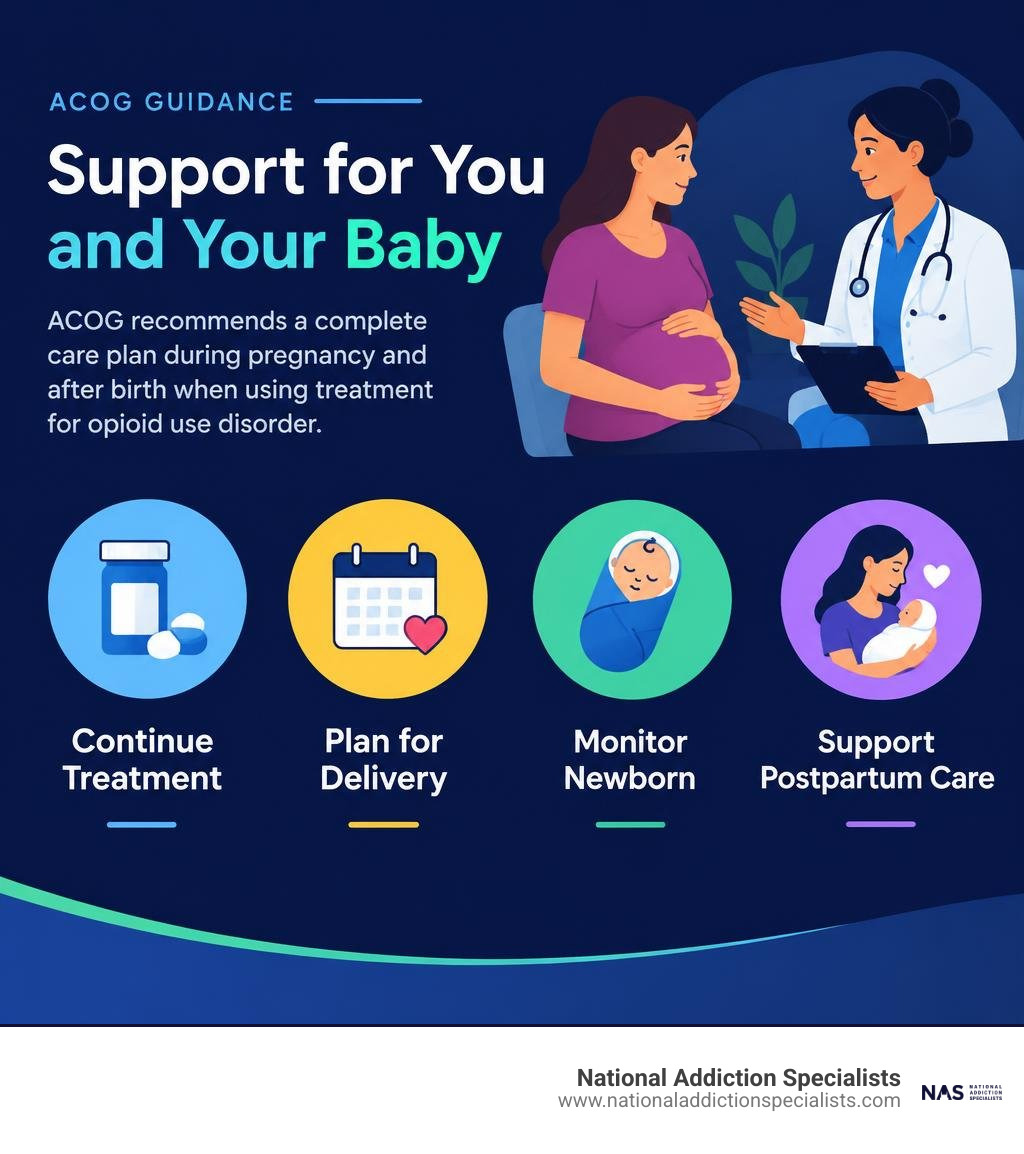
ACOG recommends buprenorphine-based medication to treat opioid use disorder during pregnancy, rather than stopping opioids abruptly. Suboxone contains buprenorphine and naloxone. ACOG’s pregnancy guidance historically favored buprenorphine alone, but growing evidence supports the combination product as an option. If you take Suboxone, do not stop or switch it on your own. Talk with your obstetric and addiction care teams about the safest plan for you and your baby.
Treatment can help you stay well during pregnancy, though your newborn may still need monitoring for withdrawal symptoms. Care should continue through delivery and after birth.
I’m Chad Elkin, founder and medical director of National Addiction Specialists and a board-certified addiction medicine and internal medicine physician. I draw on my experience treating opioid use disorder to explain ACOG guidance on Suboxone in pregnancy and how addiction treatment fits with prenatal care.
For readers seeking ACOG guidance on Suboxone in pregnancy, these resources may help:
Clinical Overview: Opioid Use Disorder and Maternal-Fetal Health
Navigating a pregnancy while managing an opioid dependency can feel daunting, but having the right clinical facts changes everything. The American College of Obstetricians and Gynecologists (ACOG) emphasizes that Opioid Use Disorder (OUD) is a chronic, treatable medical condition. When a pregnant individual experiences repeated cycles of opioid intoxication and withdrawal, the physiological swings place severe stress on both maternal systems and the placenta.
To identify needs early, ACOG advocates for universal screening during the initial prenatal visit. Rather than utilizing punitive or selective drug testing, healthcare systems implement the Screening, Brief Intervention, and Referral to Treatment (SBIRT) framework alongside validated verbal screening tools like the 4Ps, CRAFFT, or NIDA Quick Screen.

Untreated opioid addiction carries significant physiological dangers. When maternal blood levels of opioids crash, the uterus can experience intense cramping, causing reduced uteroplacental perfusion, fetal hypoxia, and even placental abruption. Medical stabilization via medications for opioid use disorder (MOUD) prevents these violent physiological peaks and troughs, safeguarding fetal development and preventing complications like intrauterine growth restriction and preterm delivery.
According to the landmark ACOG Committee Opinion on Opioid Use Disorder in Pregnancy, non-punitive, supportive care is vital. Understanding the risks of illicit opioid exposure while expecting makes it clear why healthcare providers prioritize harm reduction and rapid clinical stabilization over judgment or discharge.
Risks of Medically Supervised Withdrawal vs. Pharmacotherapy
A frequent question expectant mothers ask is: “Shouldn’t I just detox completely to protect my baby from all medications?” While this thought comes from a place of maternal love, medical data consistently demonstrates that medically supervised withdrawal (detoxification) during pregnancy carries unacceptable risks.
Relapse rates following prenatal detoxification range between 59% and more than 90%. When a patient relapses after an attempt at abstinence, their opioid tolerance has dropped, dramatically increasing the risk of fatal overdose. Furthermore, acute maternal withdrawal triggers severe sympathetic nervous system surges that can cause fetal distress, meconium aspiration, preterm labor, and fetal demise.
Because of these findings, clinical bodies universally advise against medically supervised withdrawal. Instead, initiating evidence-based suboxone use during pregnancy or continuing maintenance therapy provides a stable intrauterine environment, keeps the mother healthy, and keeps prenatal care on track.
Behavioral Health Integration and Social Support Systems
Medication is the anchor of addiction recovery, but long-term stabilization thrives when paired with comprehensive behavioral health support. ACOG and leading addiction specialists emphasize trauma-informed psychotherapy and dual-diagnosis screening.
Over 30% of pregnant women entering substance use treatment screen positive for moderate to severe depression, and over 40% experience postpartum depressive symptoms. Integrating cognitive behavioral therapy (CBT), peer recovery coaching, and social work services helps mothers address underlying trauma, build coping mechanisms, and secure essential resources such as safe housing and nutrition.
Understanding Suboxone in Pregnancy ACOG Clinical Standards
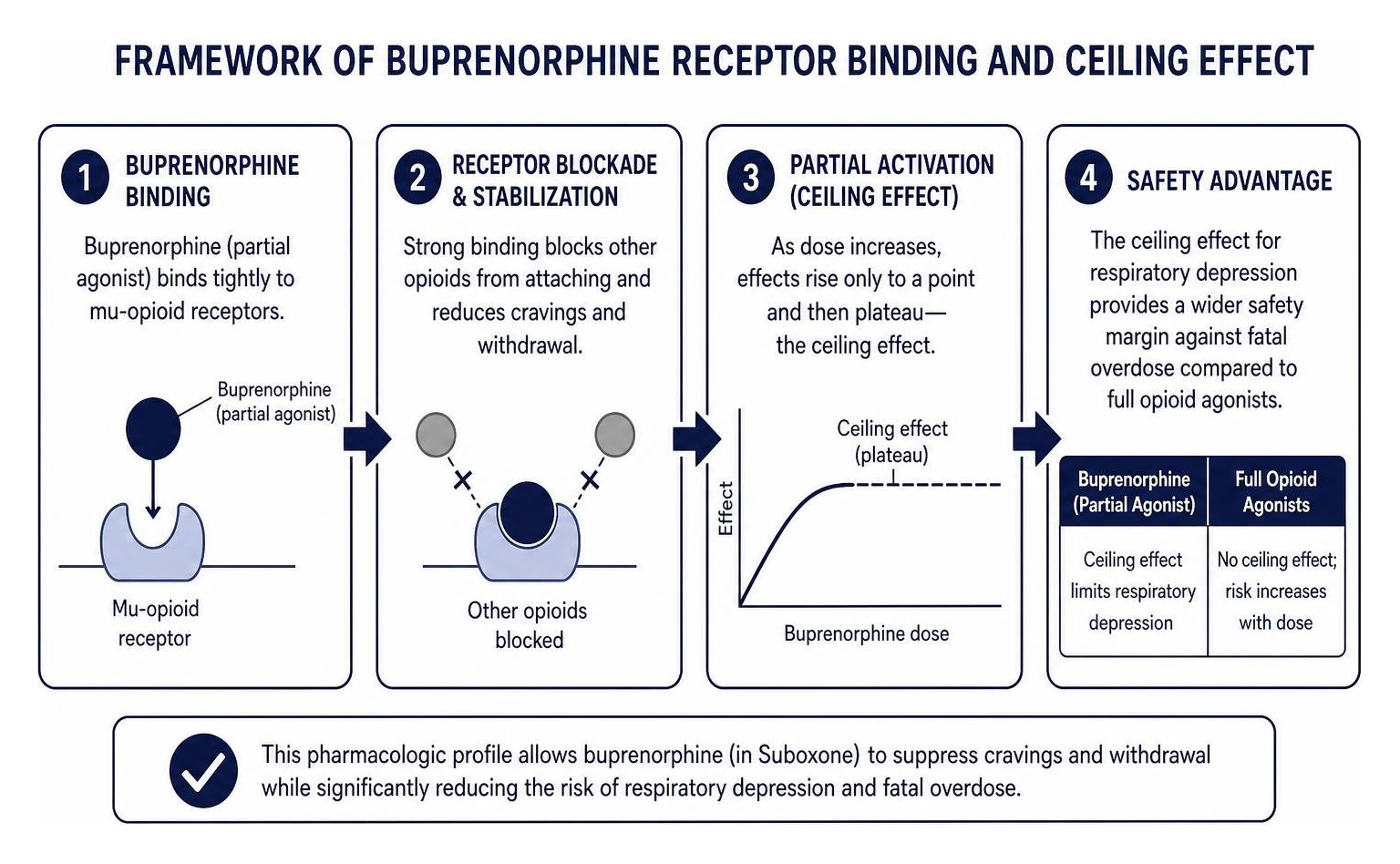
Suboxone combines buprenorphine (a partial opioid agonist) and naloxone (an opioid antagonist) in a 4:1 ratio. Buprenorphine binds tightly to mu-opioid receptors, suppressing cravings and eliminating withdrawal symptoms without causing the euphoric spikes associated with short-acting full agonists like heroin or oxycodone.
Critically, buprenorphine features a pharmacological “ceiling effect” for respiratory depression, giving it a much wider safety margin against fatal overdose compared to full agonists. As outlined by the CDC recommendations for opioid use disorder treatment during pregnancy, buprenorphine is a first-line treatment option for clinical management.
Mothers often worry about how the medication functions as their pregnancy progresses. The established safety profile of Suboxone across trimesters shows that maintaining maternal stability consistently leads to significantly improved birth weights and longer gestational ages compared to illicit drug exposure.
Combination vs. Monotherapy: Suboxone in Pregnancy ACOG Position on Naloxone
Historically, clinical guidelines suggested that pregnant women take buprenorphine monotherapy rather than the combination formulation (Suboxone), out of theoretical concern that naloxone could cross the placenta or cause fetal distress.
However, robust modern research has revised this perspective. When taken sublingually as prescribed, naloxone has poor oral bioavailability (less than 3% to 5%) and does not produce significant maternal or fetal systemic levels. A comprehensive review by the Clinical Advisory Committee guidance on combination buprenorphine-naloxone confirmed that maternal and neonatal outcomes between the monoproduct and combination product are essentially equivalent.
Using combination Suboxone reduces the risk of medication diversion, discourages intravenous misuse, and eliminates the logistical stress of forcing a mother to switch formulations during pregnancy or postpartum. For a closer look at the pharmacology, read our guide on naloxone safety and bioavailability during pregnancy.
Transitioning Between Medications and Managing Complex Dependencies
Transitioning medications while expecting requires careful clinical oversight. Because buprenorphine has a high binding affinity, starting it while full agonists are still active on receptors can trigger precipitated withdrawal.
For patients transitioning from illicit short-acting opioids, clinical induction begins when the patient reaches mild-to-moderate objective withdrawal (measured via the Clinical Opiate Withdrawal Scale, or COWS). For patients transitioning from another opioid treatment medication, a switch to buprenorphine can be complex and requires specialist guidance. Clinicians may use carefully planned dose adjustments or specialized low-dose buprenorphine initiation protocols.
Maintaining continuous care without administrative disruptions is paramount. For actionable advice on minimizing transition anxiety, explore our clinical overview on managing treatment continuity safely during pregnancy.
Make an Appointment to Treat Addiction Please don’t hesitate. Make an appointment today.
Buprenorphine-Based Treatment for Opioid Use Disorder
Buprenorphine has transformed outpatient addiction medicine. Buprenorphine can be prescribed in office-based and telemedicine settings. This outpatient flexibility reduces transportation barriers, eliminates daily clinic queues, and allows mothers to maintain employment and family responsibilities.
| Clinical Consideration | Buprenorphine-Based Treatment |
|---|---|
| Care Setting | Office-based or telehealth treatment when clinically appropriate |
| Treatment Goal | Prevent withdrawal and cravings while supporting consistent prenatal care |
| Dosing Approach | Individualized by a qualified clinician, with adjustments as pregnancy changes |
| Ongoing Support | Coordinated obstetric, addiction medicine, behavioral health, and pediatric care |
Neonatal Abstinence Syndrome (NAS) Severity and Management
Neonatal Abstinence Syndrome (NAS)—also called Neonatal Opioid Withdrawal Syndrome (NOWS)—is an expected, treatable condition occurring in roughly 30% to 80% of newborns exposed to opioid agonist therapy in utero. Symptoms can include tremors, high-pitched crying, hypertonia, poor latching, loose stools, and temperature instability.
Crucially, the maternal dose of buprenorphine does not predict the severity of NAS. Mothers should never intentionally under-dose or endure cravings out of fear of causing NAS; maternal instability poses a far greater risk to the pregnancy.
Research on buprenorphine-based treatment shows that infants may need monitoring and supportive care for neonatal withdrawal symptoms after birth. Pediatric teams can tailor observation and treatment to each newborn’s needs. Learn more in our detailed look at the long-term infant developmental outlook.
Comprehensive Care Protocols Across Antepartum, Labor, and Postpartum Phases
Managing OUD during pregnancy requires synchronized collaboration among the obstetrician, addiction medicine provider, labor and delivery nursing staff, and pediatric team.

Dosing Protocols for Suboxone in Pregnancy ACOG Postpartum and Delivery Frameworks
As pregnancy advances into the second and third trimesters, maternal physiology changes dramatically. Blood plasma volume expands by nearly 50%, renal filtration accelerates, and hepatic enzyme activity (notably cytochrome P450 CYP3A4) increases.
These changes speed up the clearance of buprenorphine, meaning a dose that kept a patient stable in the first trimester may cause late-afternoon withdrawal symptoms or cravings later in pregnancy.
Instead of simply increasing the single daily dose, ACOG and addiction specialists recommend split dosing (e.g., taking medication twice or three times daily). Splitting the total daily amount maintains steady receptor occupancy around the clock without spiking peak plasma levels. For exact management strategies, check our guide to buprenorphine dosing adjustments during pregnancy.
Intrapartum Pain Management and Delivery Room Strategies
A common misconception among hospital staff is that a patient’s daily buprenorphine provides adequate pain relief for labor and delivery. It does not. The maintenance dose occupies receptors to prevent withdrawal, but its analgesic properties last only 4 to 8 hours.
ACOG intrapartum pain management standards recommend:
- Continue Baseline Buprenorphine: Do not stop or taper Suboxone prior to labor or cesarean delivery. Withdrawing medication destabilizes the patient and complicates pain control.
- Utilize Neuraxial Analgesia: Epidurals and spinal blocks remain the first-line gold standard for labor pain and are fully effective for patients on buprenorphine.
- Add Full Agonist Opioids as Needed: If surgical delivery or severe perineal trauma occurs, short-acting full agonist opioids (such as fentanyl, hydromorphone, or oxycodone) can be titrated at higher-than-average doses to overcome buprenorphine’s binding affinity under direct medical monitoring.
- Incorporate Multimodal Analgesia: Scheduled acetaminophen, NSAIDs (postpartum), and local nerve blocks provide potent opioid-sparing relief.
Postpartum Relapse Prevention and Breastfeeding Guidelines
The postpartum period is a uniquely vulnerable window. Sleep deprivation, hormone drops, postpartum pain, and new parenting stress converge just as prenatal visit frequency tapers off. Unsurprisingly, relapse rates rise significantly during the first year postpartum.
Continued maintenance pharmacotherapy alongside close behavioral support is vital throughout this transitional period.
ACOG, the Academy of Breastfeeding Medicine, and the American Academy of Pediatrics strongly encourage breastfeeding for mothers on buprenorphine who are clinically stable and free of active illicit drug use. Buprenorphine concentrations in human breast milk are exceptionally low, and infant oral bioavailability of the swallowed milk is minimal.
Breastfeeding also provides natural soothing, improves infant bonding, and directly decreases the severity and duration of neonatal abstinence syndrome.
Frequently Asked Questions About Suboxone and Pregnancy
Does taking Suboxone during pregnancy cause birth defects?
Extensive clinical studies show that buprenorphine and naloxone are not teratogenic and do not increase the baseline risk of congenital malformations or birth defects. The primary risk of maternal opioid therapy is treatable neonatal abstinence syndrome, which does not cause structural abnormalities.
Can an infant develop Neonatal Abstinence Syndrome if the mother takes Suboxone?
Yes. Between 30% and 80% of exposed infants experience some degree of withdrawal. However, infants exposed to buprenorphine generally exhibit milder withdrawal, shorter hospital stays, and lower requirements for medical intervention than those exposed to full opioid agonists.
Is breastfeeding safe while maintaining a Suboxone regimen?
Yes. Clinical evidence demonstrates that only minuscule amounts of buprenorphine pass into breast milk, and the infant’s digestive system breaks down nearly all of what is ingested. Breastfeeding is safe, clinically recommended, and helps reduce the symptoms of newborn withdrawal.
Conclusion
A successful pregnancy while managing opioid use disorder is entirely achievable when backed by evidence-based medicine, compassion, and coordinated clinical care. ACOG guidelines make it clear: maintenance pharmacotherapy with buprenorphine-based treatment protects both mother and child far better than unassisted withdrawal or untreated addiction.
At National Addiction Specialists, we provide expert, confidential, telemedicine-based Suboxone treatment across Tennessee and Virginia, with clinic locations in Brentwood, TN, and Virginia Beach, VA. Our board-certified physicians work with your prenatal providers to ensure safe dosing, compassionate support, and smooth delivery planning—all from the comfort and privacy of your home. We accept Medicaid, Medicare, and commercial insurance to keep your care accessible.
Explore how telehealth Suboxone treatment works and let our clinical team help you build a healthy future for you and your baby.
Suboxone® and Subutex® are a registered trademark of Indivior UK Limited. Any mention and reference of Suboxone® and Subutex® in this website is for informational purposes only and is not an endorsement or sponsorship by Indivior UK Limited.
This article was medically reviewed by: Chad Elkin, MD, DFASAM is a board-certified addiction medicine physician, founder, and Chief Medical Officer of National Addiction Specialists, dedicated to treating substance use disorders. A Distinguished Fellow of the American Society of Addiction Medicine (ASAM), Dr Elkin currently serves as President of the Tennessee Society of Addiction Medicine (TNSAM) and has held various leadership roles within the organization. Dr Elkin chairs ASAM’s Health Technology Subcommittee and is an active member of its Practice Management and Regulatory Affairs Committee, State Advocacy and Legislative Affairs Committee, and other committees. He also serves on the planning committee for the Vanderbilt Mid-South Addiction Conference. Committed to advancing evidence-based policy, Dr Elkin is Chairman of the Tennessee Association of Alcohol, Drug, & Other Addiction Services (TAADAS) Addiction Medicine Council, which collaborates with the TN Department of Mental Health & Substance Abuse Services (TDMHSAS). He has contributed to numerous local, state, and national task forces, helping develop professional guidelines, policies, and laws that align with best practices in addiction medicine. His work focuses on reducing addiction-related harm, combating stigma, and ensuring access to effective treatment.Passionate about the field of addiction medicine, he remains dedicated to shaping policy and enhancing patient care.