What to Expect During an Outpatient Alcohol Detox Program
What to Expect From an Outpatient Alcohol Detox Program
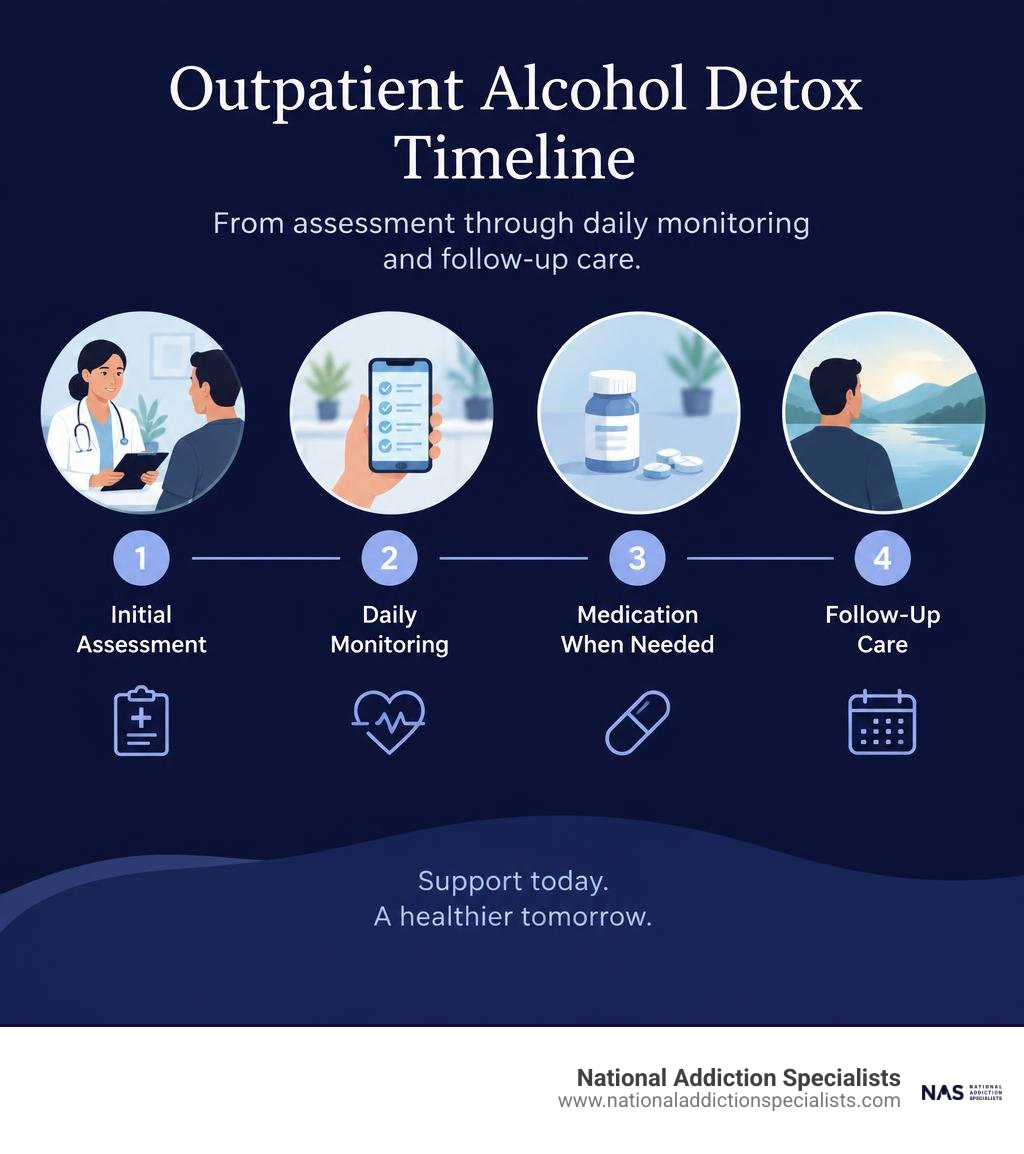
An outpatient alcohol detox program helps you manage alcohol withdrawal with medical care while you live at home. You can expect an initial health assessment, regular check-ins to track symptoms, and medication when needed. Detox often takes several days. It may be an option if your withdrawal risk is low enough and you have a safe, supportive place to stay.
Do not try to manage alcohol withdrawal on your own if you may be at risk of seizures or other serious symptoms. A clinician can help you decide whether outpatient care is safe before you stop drinking.
I’m Chad Elkin, a physician board-certified in addiction medicine and internal medicine and the founder of National Addiction Specialists. My experience leading addiction care teams informs this guide to what an outpatient alcohol detox program involves and when a higher level of care may be needed.
Outpatient alcohol detox program terms simplified:
- managing alcohol withdrawal symptoms
- severe alcohol withdrawal treatment
- alcohol withdrawal relapse prevention
What Is an Outpatient Alcohol Detox Program and How Does It Work?
Ambulatory detoxification—more commonly referred to as outpatient medical detox—is a structured clinical framework designed to help individuals clear alcohol from their systems safely without requiring an overnight hospital stay (Hayashida, 1998). When chronic alcohol consumption stops abruptly, the central nervous system experiences a rebound surge of neurochemical activity. Without proper clinical oversight, this sudden shift can lead to severe physiological instability.
The primary objective of an outpatient detox setting is withdrawal stabilization. Patients attend scheduled appointments at a clinic or connect through structured clinical check-ins while sleeping in their own homes at night. During these visits, medical providers conduct objective symptom monitoring, track vital signs, adjust supportive medications, and assess emotional well-being (Hayashida, 1998).
Detoxification is not a standalone cure for alcohol use disorder; rather, it is the initial medical bridge that clears physical dependence so you can safely engage in comprehensive recovery. Clinical research confirms that outpatient detoxification is as safe and effective as inpatient detoxification for individuals experiencing mild-to-moderate withdrawal symptoms, while offering a far less restrictive and more cost-effective path to stabilization (Hayashida, 1998). In fact, standard addiction treatment data shows that fewer than 10 percent of individuals experiencing alcohol withdrawal symptoms require acute inpatient hospital admission (Hayashida, 1998).
Outpatient vs. Inpatient Detox: Key Differences
Choosing between outpatient and residential detox depends on medical risk, home stability, and personal obligations. Inpatient detox provides 24-hour residential care, continuous bedside nursing, and immediate access to intensive medical interventions. This higher level of care is vital for individuals at significant risk of severe complications, but it requires temporarily pausing employment, parenting, and daily routines.
By contrast, the outpatient detoxification process allows you to live at home while following strict medically supervised withdrawal protocols.
| Feature | Outpatient Detox | Inpatient / Residential Detox |
|---|---|---|
| Living Arrangement | Sleep at home; commute to clinic or attend virtual check-ins | 24/7 stay in a specialized medical facility |
| Medical Supervision | Daily clinical visits and scheduled monitoring | Continuous around-the-clock nursing and physician access |
| Average Duration | 3 to 7 days (average 6.5 days) | 5 to 14 days (average 9 days) |
| Daily Routine | Maintain basic home routines and family support | Fully structured, immersive institutional schedule |
| Cost & Flexibility | Significantly lower cost; minimal life disruption | Higher overall cost due to housing, meals, and 24-hour staffing |
| Ideal Candidate | Mild-to-moderate withdrawal risk; stable living environment | High risk for seizures or DTs; unstable home environment |
Who Is a Good Candidate for an Outpatient Alcohol Detox Program?
Patient safety dictates placement. Clinicians utilize validated risk assessment instruments, such as the Clinical Institute Withdrawal Assessment for Alcohol, Revised (CIWA-Ar), to evaluate symptom severity. You can learn more about how clinicians measure withdrawal severity by understanding clinical alcohol withdrawal assessment scales.
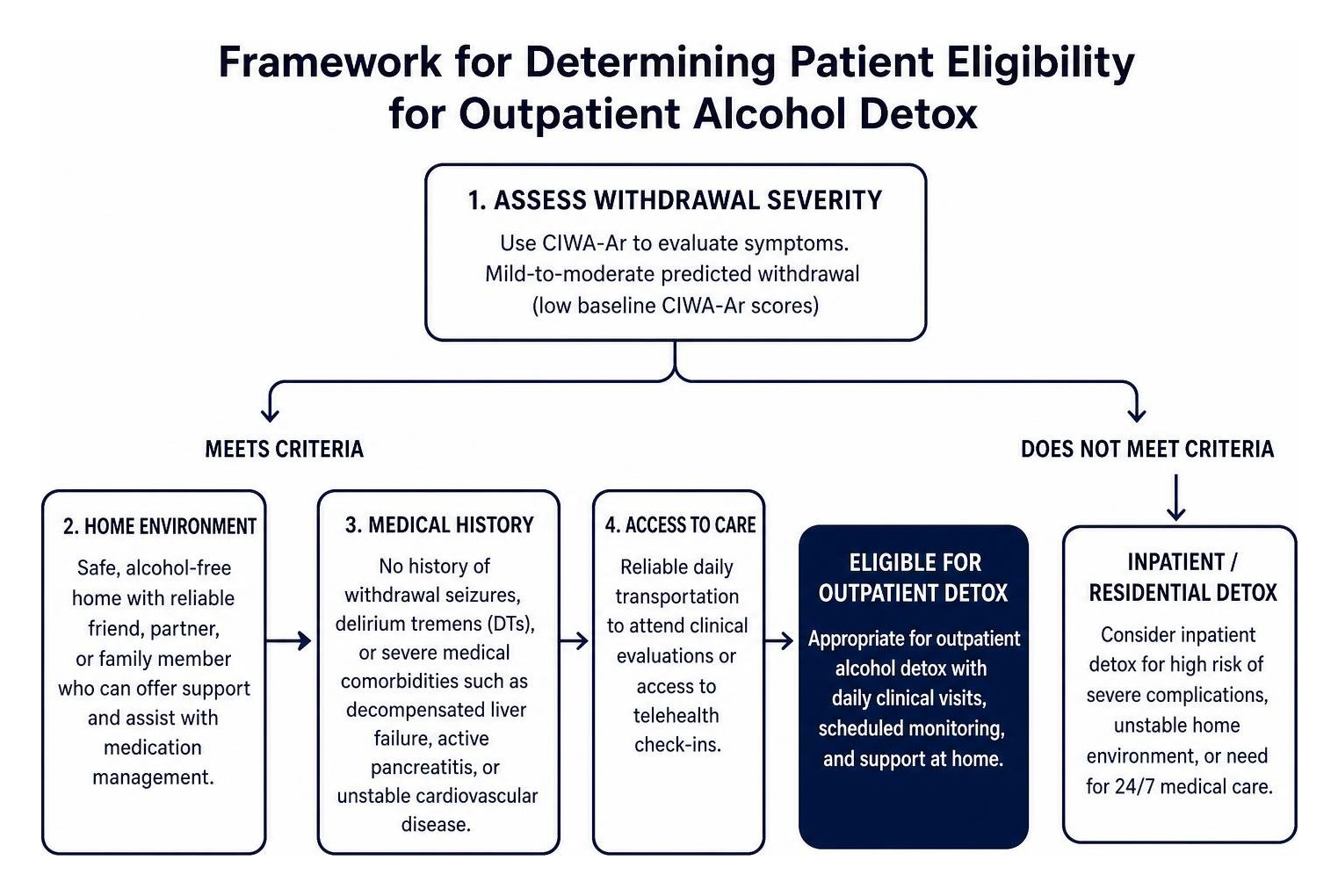
A suitable candidate for outpatient detox typically meets the following criteria:
- Demonstrates mild-to-moderate predicted withdrawal symptoms (low baseline CIWA-Ar scores).
- Has a safe, alcohol-free home environment with a reliable friend, partner, or family member who can offer support and assist with medication management.
- Has no personal history of withdrawal seizures, delirium tremens (DTs), or severe medical comorbidities such as decompensated liver failure, active pancreatitis, or unstable cardiovascular disease (Hayashida, 1998).
- Has reliable daily transportation to attend clinical evaluations or access to telehealth check-ins.
- Shows no acute psychiatric crisis, such as active psychosis or immediate suicidal ideation.
Risk stratification studies highlight the importance of careful patient screening. Research shows that patients with three or four complicating risk factors (such as a documented history of alcohol-related seizures, previous episodes of delirium tremens, current unemployment, or acute intoxication at the initial intake visit) have roughly a 30 percent chance of successfully completing outpatient detox (Hayashida, 1998). Conversely, candidates who present with none of these high-risk factors achieve a 95 percent outpatient completion rate (Hayashida, 1998). Taking time for evaluating safety before detoxing at home ensures that patients are matched with the proper level of medical care.
The Outpatient Detox Timeline and Daily Treatment Experience
Medical detox from alcohol generally lasts from a few days up to a week, depending on metabolism, overall health, and drinking history. In clinical trials evaluating withdrawal treatment, the average duration of treatment for outpatients was 6.5 days, which is notably shorter than the 9-day average seen in inpatient settings (Hayashida, 1998). A standard 7-day protocol provides an effective timeframe for the vast majority of individuals working through mild-to-moderate dependence.
Withdrawal Timeline from Day 1 to Day 7

Understanding how long alcohol withdrawal lasts helps remove the fear of the unknown. Reviewing these hour-by-hour alcohol detox milestones clarifies what your body experiences as it recalibrates:
- Hours 6 to 12 (Initial Onset): Mild symptoms begin as blood alcohol levels decline toward zero. Patients often notice mild hand tremors, restlessness, headache, sweating, mild nausea, and post-drinking anxiety.
- Hours 12 to 24 (Escalation): Autonomic hyperactivity increases. Heart rate and blood pressure elevate. Sleep disruption is common. For a small percentage of individuals with high biological risk, withdrawal seizures may occur during this window (occurring in roughly 1 to 4 percent of all withdrawal cases) (Hayashida, 1998).
- Hours 24 to 72 (Acute Peak): Symptoms reach their maximum intensity. Autonomic instability, marked tremors, gastrointestinal distress, and heightened emotional agitation peak during days 2 and 3. Medical monitoring and targeted medications keep these symptoms within safe, manageable thresholds.
- Days 4 to 7 (Resolution and Stabilization): Physical symptoms subside significantly. Blood pressure and heart rate stabilize, appetite returns, and cognitive clarity improves. Medications are systematically tapered down, and clinical attention shifts toward psychological stabilization and long-term recovery planning.
What Happens During a Typical Day in an Outpatient Alcohol Detox Program?
Your daily routine during outpatient detox centers on medical accountability and symptom control. While your mornings and evenings are spent resting in the comfort of your home, mid-day sessions involve focused clinical check-ins.
During a daily visit or appointment, clinicians will:
- Check vital signs, including blood pressure, pulse, temperature, and pupil response.
- Administer a breathalyzer test to confirm abstinence from alcohol.
- Conduct a standardized symptom assessment to evaluate tremors, sweats, nausea, and anxiety, ensuring our team is always recognizing the signs of alcohol withdrawal early.
- Review medication efficacy, managing doses or adjusting prescriptions as symptoms ease.
- Provide clear hydration and nutritional guidance to replenish depleted electrolytes and essential vitamins.
- Check in with the patient’s designated support person to verify home safety and compliance.
Medical Management and Safety Protocols
Medical oversight transforms what could otherwise be a dangerous, distressing withdrawal process into a safe, tolerable experience. Pharmacotherapy prevents complications, eases physical discomfort, and shields the nervous system from dangerous overexcitation.
Make an Appointment to Treat Addiction Please don’t hesitate. Make an appointment today.
Medications Prescribed During Outpatient Detox
The gold standard for alcohol withdrawal management involves benzodiazepines, such as chlordiazepoxide, diazepam, lorazepam, or oxazepam (Hayashida, 1998). Benzodiazepines enhance gamma-aminobutyric acid (GABA) neurotransmission, replacing alcohol’s sedative effects and preventing dangerous central nervous system rebound (Hayashida, 1998).
Physicians utilize specific detox medications for severe withdrawal using one of two primary strategies:
- Fixed-Schedule Regimens: Doses are administered at regular, predetermined intervals and gradually tapered over several days. This is common in outpatient care to provide consistent, around-the-clock symptom suppression (Hayashida, 1998).
- Symptom-Triggered Dosing: Medication is taken only when objective clinical scores (such as CIWA-Ar) exceed a specific threshold. This approach minimizes total medication exposure while addressing breakthrough discomfort (Hayashida, 1998).
In addition to benzodiazepines, providers frequently incorporate:
- Anticonvulsants (e.g., gabapentin, carbamazepine): Helpful for mood stabilization, mild tremor control, and seizure threshold support (Hayashida, 1998).
- Beta-Blockers or Alpha-2 Agonists (e.g., propranolol, clonidine): Used as adjuncts to reduce elevated heart rate, high blood pressure, and physical shakiness.
- Nutritional and Vitamin Support: High-dose thiamine (Vitamin B1), folate, and multivitamins are vital. Chronic alcohol use impairs thiamine absorption, and rapid repletion protects against serious neurological conditions like Wernicke-Korsakoff syndrome.
Identifying Severe Risks: Delirium Tremens and Complications

While outpatient detox is safe for screened individuals, severe complications can emerge if risk factors were masked or if a patient’s physiological dependence was underestimated. Medical providers maintain clear escalation criteria to transfer patients to an acute inpatient setting if severe warning signs appear.
Delirium Tremens (DTs) represents the most dangerous complication of alcohol withdrawal. DTs typically emerge 48 to 96 hours after the last drink and are characterized by profound confusion, severe autonomic hyperactivity (extreme fever, tachycardia, hypertension), vivid hallucinations, and full-body tremors. Understanding the timeline and signs of delirium tremens is critical, as DTs is a medical emergency requiring intensive inpatient ICU care.
If an outpatient develops unmanageable vomiting preventing oral medication retention, worsening hallucinations, unstable vital signs, or breakthrough seizures, immediate transfer to an inpatient hospital ensures safety, as outlined in our guide on surviving severe alcohol withdrawal.
Costs, Insurance, and Transitioning to Long-Term Recovery
Detoxification safely manages the acute physical crisis of alcohol cessation, but long-term recovery requires ongoing therapeutic engagement.
Cost Differences and Insurance Coverage
One of the greatest benefits of ambulatory detox is affordability. Inpatient medical detox can cost anywhere from $3,000 to $8,000 for a short stay due to room, board, and 24-hour facility overhead. In contrast, standard outpatient treatment typically ranges from $800 to $1,800 per month, while Intensive Outpatient Programs (IOP) range from $2,500 to $4,500 per month.
Most commercial health insurance plans, Medicaid, and Medicare cover evidence-based addiction treatment services, which can reduce out-of-pocket costs down to $0 for eligible individuals. Regional public health data underscores the critical need for accessible care: approximately 8.4% of adults in Ohio, 7.7% of adults in Maryland, and 8.1% of adults in California experience a substance use disorder annually.
For individuals seeking care across the Mid-Atlantic, exploring state-specific resources such as Drug & Alcohol Rehabs in Virginia can help locate nearby options. You can also review our clear breakdown of insurance coverage and pricing options to understand how benefits apply to care.
Transitioning from Detox to Ongoing Support and Relapse Prevention
Long-term success depends heavily on what happens immediately after detox ends. Clinical trials show that approximately one-half of all patients remain abstinent six months following detoxification, regardless of whether they completed detox as an inpatient or outpatient (Hayashida, 1998). However, because one-third to one-half of individuals who undergo detox return to drinking within six months without structured follow-up, immediate transition into rehabilitative care is essential (Hayashida, 1998).
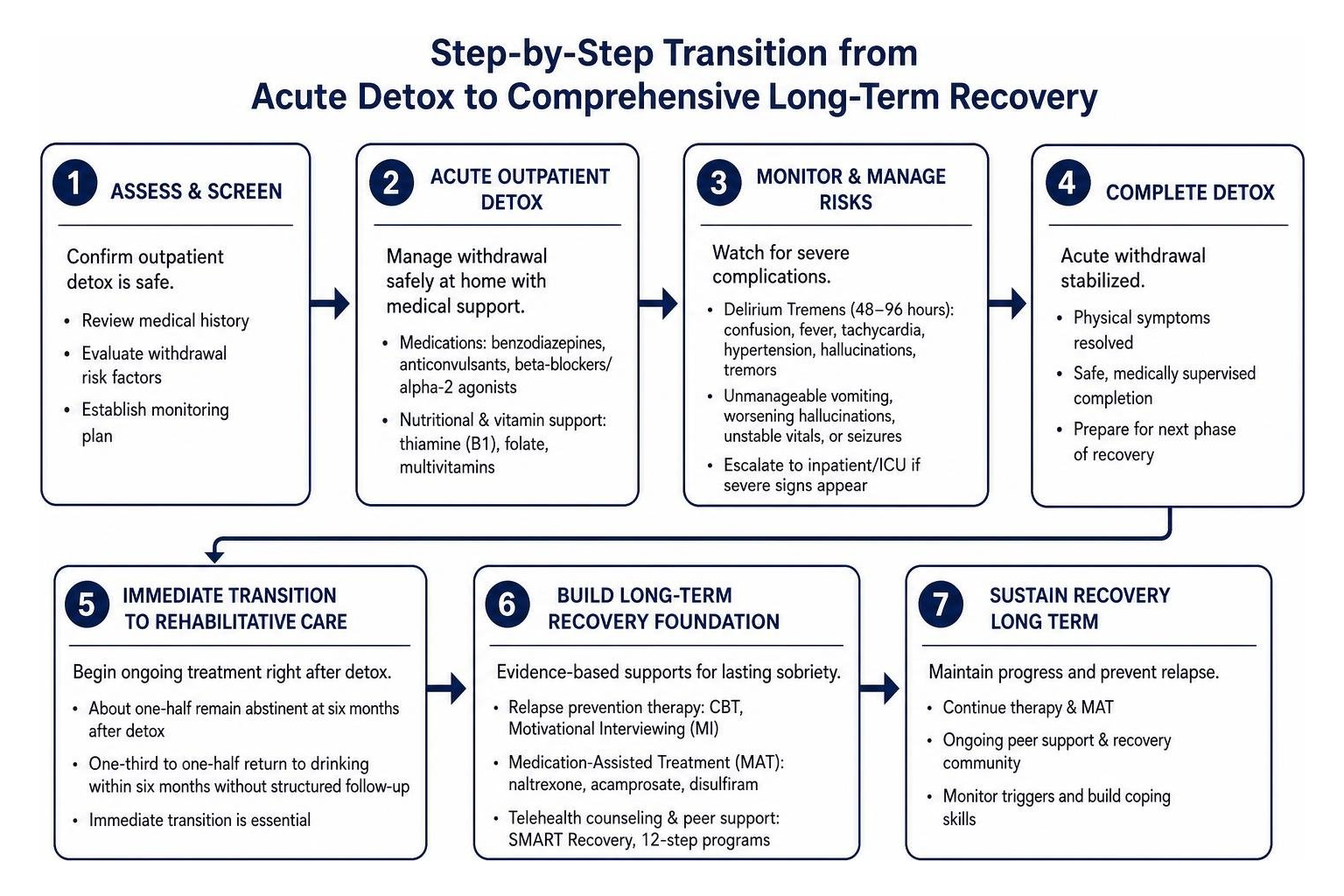
A comprehensive recovery continuum combines:
- Relapse Prevention Therapy: Evidence-based behavioral modalities like Cognitive Behavioral Therapy (CBT) and Motivational Interviewing (MI) help identify drinking cues, build coping mechanisms, and reinforce alcohol withdrawal relapse prevention strategies.
- Ongoing Medication-Assisted Treatment (MAT): Post-detox medications—such as naltrexone, acamprosate, or disulfiram—help normalize brain chemistry, block intoxicating effects, and significantly diminish alcohol cravings. Exploring the benefits of medication-assisted treatment provides a sustainable biochemical foundation for ongoing sobriety.
- Telehealth Counseling and Peer Support: Virtual therapy sessions, recovery coaching, and community groups (such as SMART Recovery or 12-step programs) provide continuous encouragement and accountability.
Frequently Asked Questions About Outpatient Alcohol Detox
How long does an outpatient alcohol detox program typically take?
Most outpatient alcohol detox programs last between 3 and 7 days, with an average clinical duration of 6.5 days (Hayashida, 1998). The exact timeframe depends on your baseline health, how heavily you drank, how quickly acute withdrawal symptoms peak and resolve, and the pace of your medication taper.
Is outpatient alcohol detox safe for everyone?
No. Outpatient detox is specifically designed for individuals presenting with mild-to-moderate withdrawal risks. Anyone with a personal history of withdrawal seizures, delirium tremens, uncontrolled co-occurring psychiatric conditions, severe medical illnesses, or an unstable home environment should always complete detox in an inpatient medical facility (Hayashida, 1998).
Can I continue working while participating in outpatient detox?
While outpatient care offers the freedom to sleep in your own bed, we strongly advise patients to take several days off work during the acute withdrawal phase (typically Days 1 through 4). Alcohol withdrawal places substantial physical and mental stress on the body, and medications such as benzodiazepines cause sedation. Giving yourself space to rest, hydrate, and attend appointments speeds recovery and lowers stress.
Conclusion
An outpatient alcohol detox program provides a clinically proven, compassionate, and cost-effective pathway to overcome alcohol dependence without uprooting your home life (Hayashida, 1998). By pairing daily medical check-ins with targeted medications, patients safely navigate withdrawal and build momentum for lasting sobriety.
Detox is simply the opening chapter of your recovery journey. At National Addiction Specialists, we provide personalized, evidence-based telemedicine care, specialized counseling, and medication management across Tennessee and Virginia. Whether you are seeking care in Brentwood, TN, Virginia Beach, VA, or nearby communities, our expert medical team accepts Medicaid and Medicare to make confidential, life-saving care accessible from home.
When you are ready to take control of your health, take the first step toward recovery with our dedicated providers today.
Suboxone® and Subutex® are a registered trademark of Indivior UK Limited. Any mention and reference of Suboxone® and Subutex® in this website is for informational purposes only and is not an endorsement or sponsorship by Indivior UK Limited.
This article was medically reviewed by: Chad Elkin, MD, DFASAM is a board-certified addiction medicine physician, founder, and Chief Medical Officer of National Addiction Specialists, dedicated to treating substance use disorders. A Distinguished Fellow of the American Society of Addiction Medicine (ASAM), Dr Elkin currently serves as President of the Tennessee Society of Addiction Medicine (TNSAM) and has held various leadership roles within the organization. Dr Elkin chairs ASAM’s Health Technology Subcommittee and is an active member of its Practice Management and Regulatory Affairs Committee, State Advocacy and Legislative Affairs Committee, and other committees. He also serves on the planning committee for the Vanderbilt Mid-South Addiction Conference. Committed to advancing evidence-based policy, Dr Elkin is Chairman of the Tennessee Association of Alcohol, Drug, & Other Addiction Services (TAADAS) Addiction Medicine Council, which collaborates with the TN Department of Mental Health & Substance Abuse Services (TDMHSAS). He has contributed to numerous local, state, and national task forces, helping develop professional guidelines, policies, and laws that align with best practices in addiction medicine. His work focuses on reducing addiction-related harm, combating stigma, and ensuring access to effective treatment.Passionate about the field of addiction medicine, he remains dedicated to shaping policy and enhancing patient care.