Suboxone and Sleep Paralysis: What to Do First
Suboxone and sleep paralysis may seem linked, but research has not shown that Suboxone directly causes it. Suboxone can disturb sleep, and poor sleep may make episodes more likely. If you wake up unable to move, note when it happens, how long it lasts, and whether you recently changed your dose or added a sleep aid. Share those details with your prescriber. Do not stop Suboxone or add a sleep medicine on your own.
Sleep paralysis is a brief period when you are aware but cannot move as you fall asleep or wake up. It can be frightening, especially during recovery. If someone notices that you stop breathing during sleep, or you have severe trouble breathing, seek urgent medical help.
I’m Chad Elkin, MD, a physician board-certified in addiction medicine and internal medicine and the medical director of National Addiction Specialists. In my work with people receiving Suboxone treatment, questions about Suboxone and sleep paralysis call for a careful look at sleep, medication changes, and recovery needs.
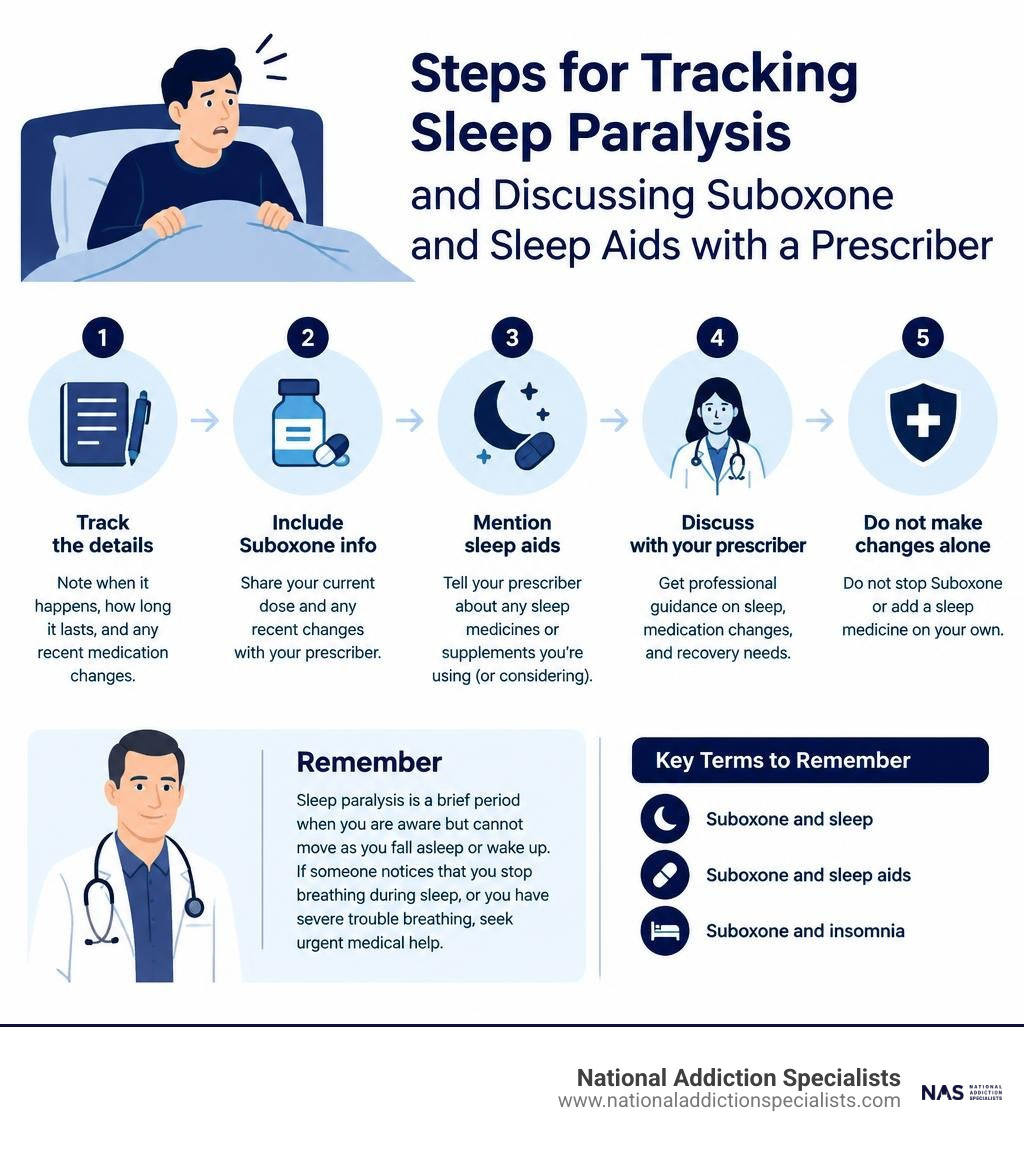
Suboxone and sleep paralysis terms to remember:
Understanding Suboxone and Sleep Paralysis: How Buprenorphine Affects Sleep Architecture
Waking up trapped in your own body while conscious of your bedroom is deeply unsettling. Many individuals in recovery describe this exact scenario: mind awake, muscles unresponsive, and sometimes a sense of pressure or shadows in the room. To understand how recovery medications might play into this, we have to look closely at the medication’s pharmacology.
Suboxone combines buprenorphine—a partial $\mu$-opioid receptor agonist and $\kappa$-opioid receptor antagonist—with naloxone. While buprenorphine provides life-saving stabilization by curbing cravings and blunting withdrawal, opioid receptor agonists naturally modify human sleep architecture. In general, opioids tend to fragment sleep stages, shift sleep onset latency, and suppress deep restorative rest.
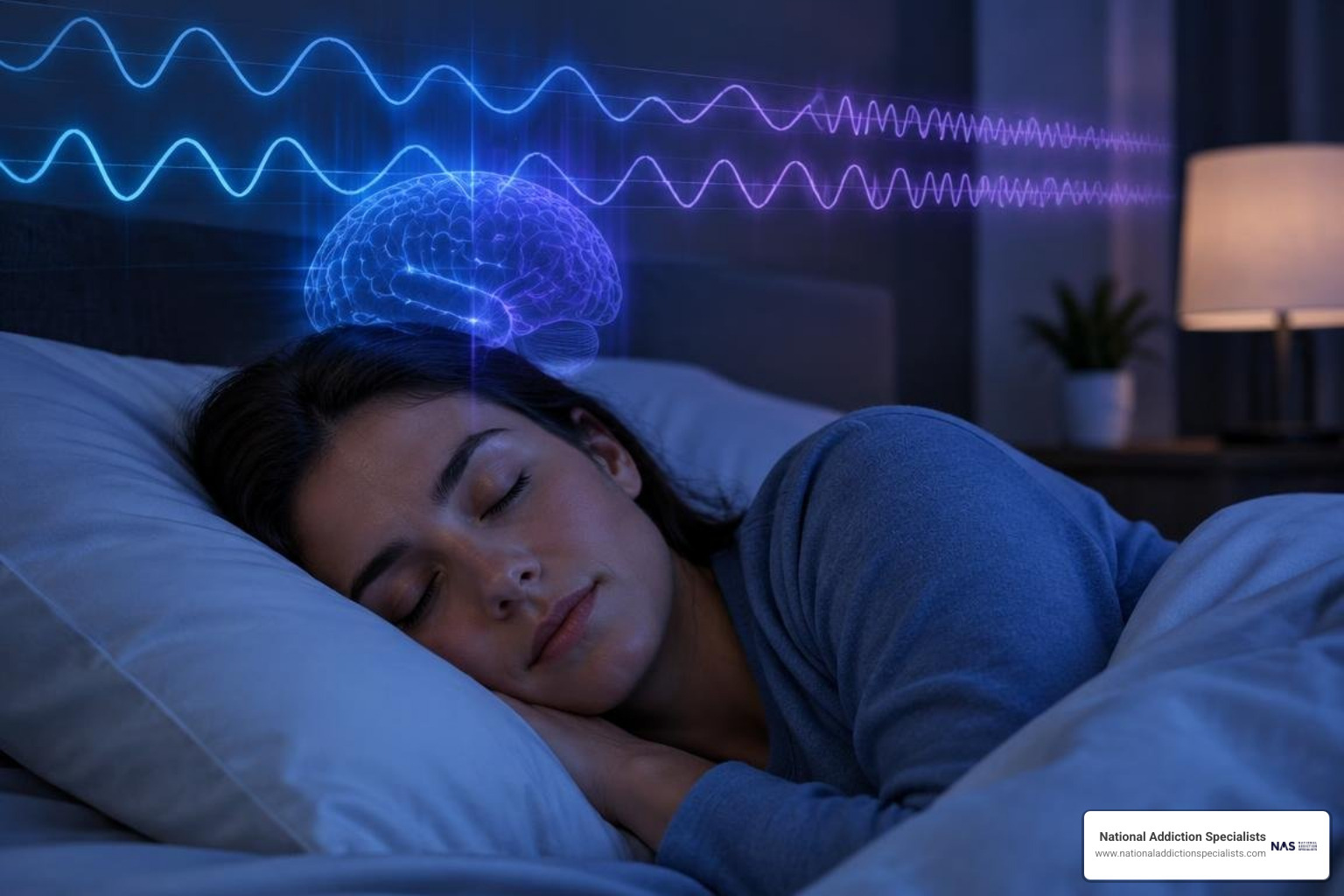
Preclinical studies demonstrate just how distinct these neurobiological shifts can be. Research examining buprenorphine’s impact on sleep architecture showed that administration caused a significant increase in wakefulness of 25.2%, alongside a decrease in non-rapid eye movement (NREM) sleep by 22.1% and rapid eye movement (REM) sleep by 3.1% (Gauthier et al., 2011). For a broader look at how medication-assisted treatment alters nighttime patterns, you can read our guide to Suboxone sleep effects.
When sleep architecture is broken into irregular fragments, the brain struggles to transition cleanly between wakefulness, NREM, and REM stages. This fragmentation is precisely where parasomnias such as sleep paralysis and hypnagogic hallucinations tend to take root.
The Neurobiology of Suboxone and Sleep Paralysis: Adenosine and REM Intrusion
To understand why sleep paralysis occurs, we must examine the boundary line between dreaming and waking. During normal REM sleep, your brain initiates a protective mechanism called muscle atonia. Specialized motor neurons in the brainstem temporarily paralyze your skeletal muscles so you do not act out vivid dreams.
Sleep paralysis is essentially an asynchronous transition: your conscious mind awakens (or enters a hypnagogic state while falling asleep, or a hypnopompic state while waking up), but your brainstem maintains REM atonia. You are awake, but your motor system remains offline.
Neurochemical signaling in key brain structures—specifically the pontine reticular formation and the substantia innominata (part of the basal forebrain)—regulates these transitions. Buprenorphine has been shown to alter neurochemical signaling in these regions, impacting overall arousal. When daytime sleepiness or disrupted nighttime rest occurs, the threshold for REM intrusion into waking consciousness drops. If you frequently battle daytime fatigue, exploring our insights on suboxone and sleepiness can help clarify why these daytime-nighttime rhythms get misaligned.
REM Rebound, Opioid Tapering, and Nighttime Hallucinations
Sleep disruption often peaks during dosage adjustments or opioid tapers. Because opioids suppress REM sleep, any rapid drop in opioid blood levels can trigger a neurobiological phenomenon known as REM rebound.
During REM rebound, the central nervous system attempts to catch up on lost dream-stage sleep. This results in:
- Unusually intense, vivid, and bizarre nightmares.
- Rapid, premature onset of REM cycles right as you drift off.
- Increased vulnerability to hypnagogic (sleep-onset) and hypnopompic (waking) hallucinations.
- Higher incidence of brief muscle atonia episodes while conscious.
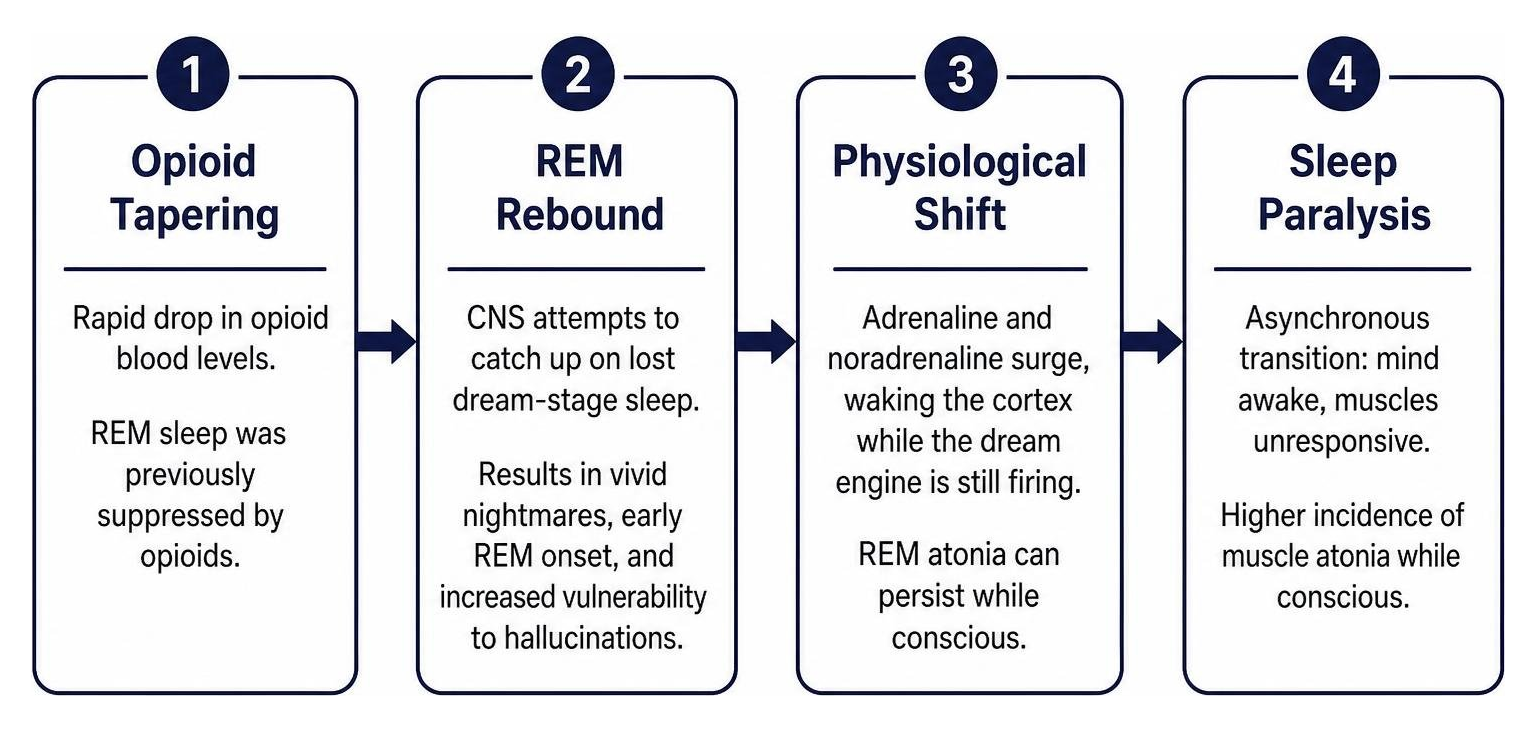
When patients experience acute withdrawal fluctuations, adrenaline and noradrenaline levels surge, waking the cortex while the dream engine is still firing. Managing these shifts carefully is essential; reviewing our protocol on conquering sleep during opioid recovery provides structured ways to navigate tapering without destabilizing sleep quality. Research protocols on sleep disturbance during opioid tapering underscore that tapering schedules must be gradual to prevent severe rebound parasomnias.
The Adenosine Connection: Why Buprenorphine Disrupts Natural Sleep Cycles
Why does buprenorphine cause wakefulness and lighter sleep in the first place? A critical piece of the puzzle lies in adenosine, a crucial homeostatic sleep regulator. Throughout the day, adenosine builds up in the basal forebrain, creating “sleep pressure”—that heavy, natural urge to sleep at night.
Groundbreaking animal studies published in sleep neurobiology reveal that buprenorphine directly alters this chemical drive. Specifically, buprenorphine administration decreased adenosine concentrations by 14.6% in the pontine reticular formation and by 36.7% in the substantia innominata (Gauthier et al., 2011).
When adenosine levels drop in these sleep-regulating centers:
- The brain experiences an artificial reduction in homeostatic sleep drive.
- EEG delta power (the slow brainwaves characteristic of deep NREM sleep) becomes fragmented.
- Sleep onset latency increases, leading to middle-of-the-night awakenings and suboxone-related insomnia.
Because adenosine is nature’s internal “sleep switch,” lowering its presence creates micro-arousals. These micro-arousals break REM cycles into jagged pieces, creating the prime neurological environment for conscious awareness during muscle atonia.
Suboxone and Sleep Paralysis in Clinical Studies: The Orexin Paradox
While buprenorphine can fragment sleep, its pharmacological relationship with sleep disorders features a fascinating paradox. In sleep medicine, the orexin (hypocretin) neuropeptide system in the hypothalamus regulates arousal and prevents unwanted REM intrusions like cataplexy and sleep paralysis. Narcolepsy type 1 is characterized by a loss of these orexin-producing neurons.
Curiously, clinical evidence indicates that opioid receptor modulation can sometimes stabilize aberrant REM motor control. A documented medical case report examined a 39-year-old female with narcolepsy type 1 and severe cataplexy who experienced significant symptom reduction after initiating low-dose opioids, with sustained improvement when transitioned to Suboxone (buprenorphine/naloxone 1 to 4 mg sublingually twice daily) (Omari & Kinyungu, 2022).
Researchers theorize that partial $\mu$-opioid agonists may indirectly stimulate residual hypothalamic neurons or modulate downstream monoaminergic pathways, curbing daytime muscle atonia. While Suboxone is an FDA-approved treatment for opioid use disorder and not a primary treatment for narcolepsy, this case report on cataplexy reduction with Suboxone demonstrates how profoundly buprenorphine interacts with the brain’s REM gating mechanisms.
Managing Sleep Aids: Melatonin, Suvorexant, and Eszopiclone Interactions
When nighttime awakenings or parasomnias arise, it is tempting to reach for sleep aids. However, combining sedative-hypnotics or supplements with Suboxone requires extreme caution due to risks of central nervous system (CNS) depression, paradoxical sleep fragmentation, or worsening sleep paralysis.
| Medication / Supplement | Mechanism / Class | Interaction Level with Suboxone | Impact on Sleep Architecture & Parasomnias | Clinical Safety Considerations |
|---|---|---|---|---|
| Melatonin | Hormone receptor agonist (MT1/MT2) | Moderate | May alter circadian timing; high doses can cause vivid dreams | Can increase next-day dizziness, drowsiness, and cognitive fog. Consult your doctor (Gauthier et al., 2011). |
| Suvorexant (Belsomra®) | Dual Orexin Receptor Antagonist (DORA) | Clinical Trial Context | Directly suppresses wake-drive; documented 7% incidence of sleep paralysis | Blocks orexin; can induce temporary muscle atonia and vivid hypnagogic dreams during tapers. |
| Eszopiclone (Lunesta®) | Non-benzodiazepine GABA-A hypnotic | Major (CNS Depressant) | Mitigates buprenorphine-induced wakefulness in lab models | High risk of respiratory depression and excessive sedation when combined with opioids. Strictly physician-managed. |
Before adding any over-the-counter sleep supplement, review our safety principles for counting sheep safely while on Suboxone and check verified melatonin and Suboxone drug interaction details. In clinical trials evaluating orexin antagonists like suvorexant during opioid tapering, sleep paralysis was observed in approximately 7% of participants, showing that pharmaceutical modulation of wake pathways can directly trigger isolated paralysis episodes.
If you are experiencing troubling sleep disruptions or need structured support for your recovery journey, Make an Appointment to Treat Addiction Please don’t hesitate. Make an appointment today.
Step-by-Step Strategies to Prevent Sleep Disturbances During Recovery
Managing parasomnias and nighttime anxiety does not require navigating the journey alone. By combining clinical precision with behavioral tools, you can steady your circadian rhythm and reduce sleep fragmentation.

Optimizing Medication Timing and Dosage Adjustments
Medication timing plays a significant role in nighttime neurochemistry. Because buprenorphine peak blood levels occur roughly 1 to 3 hours after sublingual administration, taking a full dose right before laying your head on the pillow can elevate wakefulness during early sleep cycles.
- Shift Dosing to Morning or Early Afternoon: If you experience insomnia or middle-of-the-night waking, talk with your doctor about shifting your primary dose to the morning.
- Discuss Split-Dosing: If you experience late-night micro-withdrawals (which provoke adrenaline spikes and vivid nightmares), a split morning/late-afternoon dosing regimen may provide steady 24-hour receptor coverage without a late-night peak.
- Avoid Unilateral Dose Drops: Rapid decreases in medication trigger REM rebound. Check our guide on adjusting Suboxone dose and sleep quality and stay informed on standard Suboxone side effect expectations.
Establishing Sleep Hygiene and Nighttime Safety Protocols
Implementing structured sleep habits stabilizes neurotransmitter release and protects against parasomnias:
- Fix Your Wake-Up Time: Wake up at the exact same time 7 days a week. Consistent morning light exposure sets your circadian pacemaker, enhancing natural nighttime adenosine accumulation.
- Cultivate a 60-Minute Wind-Down Buffer: Power down blue-light screens (smartphones, televisions, tablets) one hour before bed. Blue light suppresses endogenous melatonin and stimulates hypothalamic wake centers.
- Practice Grounding for Sleep Paralysis: If you wake up frozen, remember: your diaphragm is working and the episode will pass within seconds. Focus entirely on wiggling a single toe or blinking rapidly to break brainstem motor inhibition.
- Optimize Bedroom Acoustics and Temperature: Keep your room cool (65°F to 68°F) and pitch-black. Cooler core body temperatures promote deeper NREM stages and prevent restless arousals.
- Explore Evidence-Based Recovery Sleep Tools: For a comprehensive toolkit on retraining your brain for restorative rest, explore our guide on restoring your sleep in recovery.
Frequently Asked Questions About Suboxone and Sleep Disturbances
Can Suboxone directly trigger episodes of sleep paralysis?
Suboxone does not directly cause sleep paralysis as an intended drug action, but it can contribute indirectly. By altering adenosine concentrations in the basal forebrain and fragmenting sleep architecture, buprenorphine increases nighttime micro-arousals. When you awaken abruptly from a fragmented REM state, muscle atonia (paralysis) can linger for several seconds while your conscious mind is awake.
Is it safe to take over-the-counter sleep aids like melatonin with Suboxone?
While melatonin is available over the counter, combining it with Suboxone is classified as a moderate interaction. Both substances influence central nervous system signaling, which can cause additive morning dizziness, daytime drowsiness, and impaired motor coordination. Always consult your prescribing physician before introducing melatonin, valerian root, or any other sleep supplement.
How does tapering off Suboxone affect nightmares and REM sleep?
Tapering too quickly can precipitate REM rebound. Because chronic opioid therapy suppresses REM duration, reducing medication levels allows the brain to rapidly enter extended, intense REM stages. This can lead to vivid dreams, night sweats, and frequent hypnopompic awakenings. Tapers should always be gradual and monitored by an addiction medicine physician to maintain neurochemical balance.
Conclusion
Sleep disturbances, night terrors, and episodes of sleep paralysis during opioid use disorder treatment can feel overwhelming, but they are understandable neurobiological events with clear solutions. By understanding how buprenorphine interacts with sleep architecture, adenosine signaling, and REM motor control, you and your healthcare team can implement targeted dosing schedules and sleep hygiene practices that restore peaceful rest.
At National Addiction Specialists, our compassionate team provides personalized, evidence-based telemedicine care across Tennessee and Virginia. We help you balance effective craving control with restorative sleep, meeting you wherever you are in your recovery. To learn more about our comprehensive care models, explore comprehensive Suboxone treatment options and take the next step toward whole-body healing today.
References
Gauthier EA, Guzick SE, Brummett CM, Baghdoyan HA, Lydic R. “Buprenorphine disrupts sleep and decreases adenosine concentrations in sleep-regulating brain regions of Sprague Dawley rat..” Anesthesiology, 2011. PMCID PMC3197808. Nathan B. Omari, Ngugi M. Kinyungu. “Reduced Cataplexy Symptoms While on Suboxone: A Case Report.” Journal of Behavioral and Brain Science, 2022. DOI 10.4236/jbbs.2022.1211032.
Suboxone® and Subutex® are a registered trademark of Indivior UK Limited. Any mention and reference of Suboxone® and Subutex® in this website is for informational purposes only and is not an endorsement or sponsorship by Indivior UK Limited.
This article was medically reviewed by: Chad Elkin, MD, DFASAM is a board-certified addiction medicine physician, founder, and Chief Medical Officer of National Addiction Specialists, dedicated to treating substance use disorders. A Distinguished Fellow of the American Society of Addiction Medicine (ASAM), Dr Elkin currently serves as President of the Tennessee Society of Addiction Medicine (TNSAM) and has held various leadership roles within the organization. Dr Elkin chairs ASAM’s Health Technology Subcommittee and is an active member of its Practice Management and Regulatory Affairs Committee, State Advocacy and Legislative Affairs Committee, and other committees. He also serves on the planning committee for the Vanderbilt Mid-South Addiction Conference. Committed to advancing evidence-based policy, Dr Elkin is Chairman of the Tennessee Association of Alcohol, Drug, & Other Addiction Services (TAADAS) Addiction Medicine Council, which collaborates with the TN Department of Mental Health & Substance Abuse Services (TDMHSAS). He has contributed to numerous local, state, and national task forces, helping develop professional guidelines, policies, and laws that align with best practices in addiction medicine. His work focuses on reducing addiction-related harm, combating stigma, and ensuring access to effective treatment.Passionate about the field of addiction medicine, he remains dedicated to shaping policy and enhancing patient care.