Why Suboxone and Sleep Apnea Is a Connection You Need to Know About
Suboxone and sleep apnea are more closely linked than most people — and even many doctors — realize. Suboxone (buprenorphine/naloxone) is one of the most effective treatments for opioid use disorder. But research shows it can significantly disrupt breathing during sleep, even at normal therapeutic doses.
Here’s the short answer:
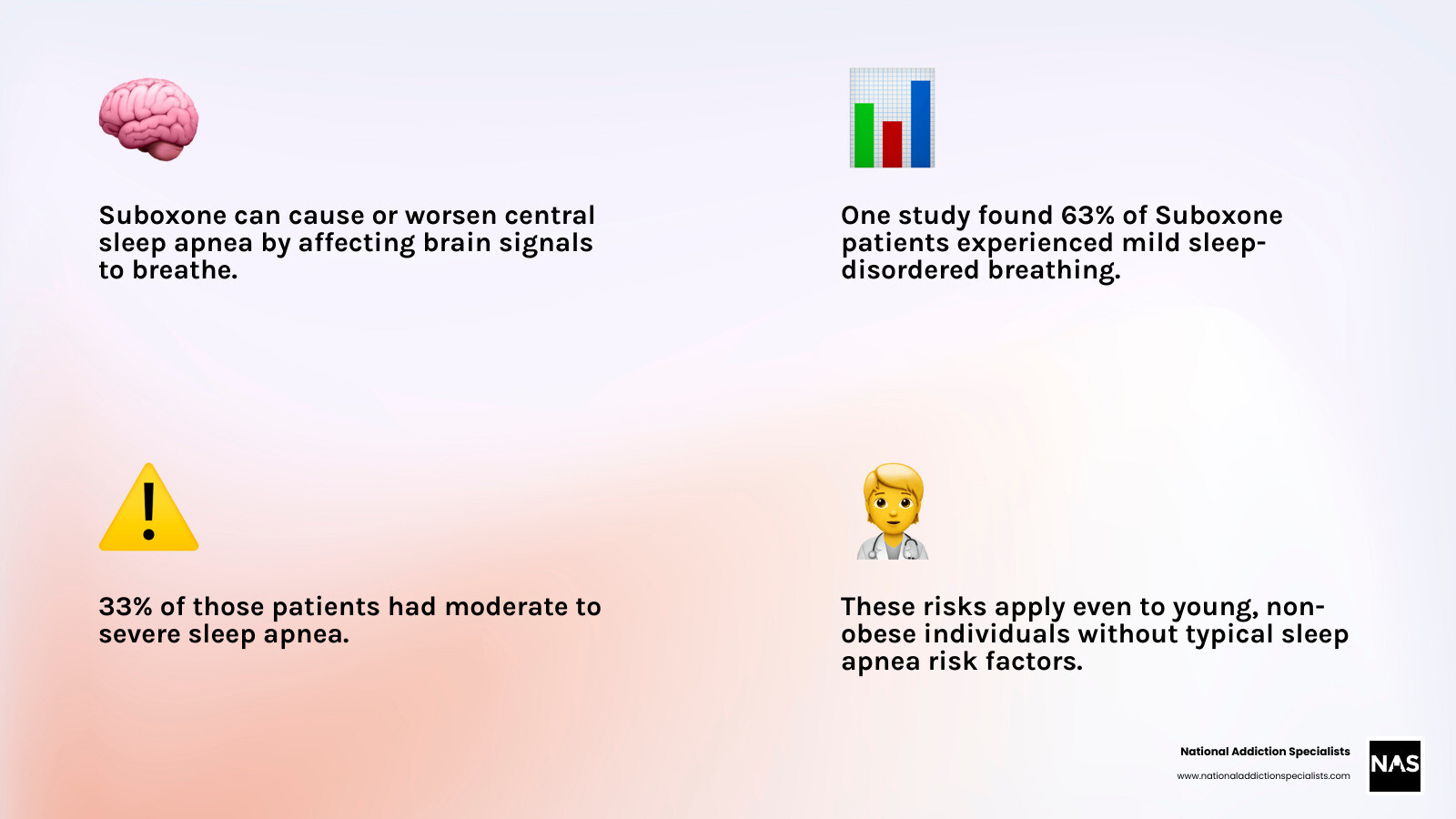
- Suboxone can cause or worsen sleep apnea, particularly central sleep apnea (where the brain fails to signal the lungs to breathe)
- In one study, 63% of patients on buprenorphine/naloxone showed at least mild sleep-disordered breathing
- 33% had moderate to severe sleep apnea
- These risks exist even in patients who are young, non-obese, and have no classic sleep apnea risk factors
- The good news: the condition is manageable — through dose adjustment, CPAP therapy, or adaptive servo-ventilation (ASV)
This doesn’t mean Suboxone is unsafe. It means the breathing effects of this medication during sleep deserve serious attention.
Suboxone works by binding to opioid receptors in the brain. That same mechanism that eases withdrawal and cravings can also suppress the brain’s drive to breathe normally during sleep. The result can range from mild disruptions to significant oxygen drops throughout the night — often without the patient knowing it’s happening.
For someone already navigating recovery, poor sleep isn’t just uncomfortable. It raises stress, increases cravings, and puts long-term recovery at real risk.
I’m Chad Elkin, MD — board-certified in Addiction Medicine and founder of National Addiction Specialists — and I’ve worked closely with patients managing the intersection of suboxone and sleep apnea throughout my career in addiction medicine. In this guide, I’ll walk you through everything you need to know to protect both your recovery and your breathing.
This article was medically reviewed by:
Chad Elkin, MD, DFASAM is a board-certified addiction medicine physician, founder, and Chief Medical Officer of National Addiction Specialists, dedicated to treating substance use disorders. A Distinguished Fellow of the American Society of Addiction Medicine (ASAM), Dr. Elkin currently serves as President of the Tennessee Society of Addiction Medicine (TNSAM) and has held various leadership roles within the organization. Dr. Elkin chairs ASAM’s Health Technology Subcommittee and is an active member of its Practice Management and Regulatory Affairs Committee, State Advocacy and Legislative Affairs Committee, and other committees. He also serves on the planning committee for the Vanderbilt Mid-South Addiction Conference. Committed to advancing evidence-based policy, Dr. Elkin is Chairman of the Tennessee Association of Alcohol, Drug, & Other Addiction Services (TAADAS) Addiction Medicine Council, which collaborates with the TN Department of Mental Health & Substance Abuse Services (TDMHSAS). He has contributed to numerous local, state, and national task forces, helping develop professional guidelines, policies, and laws that align with best practices in addiction medicine. His work focuses on reducing addiction-related harm, combating stigma, and ensuring access to effective treatment. Passionate about the field of addiction medicine, he remains dedicated to shaping policy and enhancing patient care.
Suboxone® and Subutex® are a registered trademark of Indivior UK Limited. Any mention and reference of Suboxone® and Subutex® in this website is for informational purposes only and is not an endorsement or sponsorship by Indivior UK Limited.
Key terms for suboxone and sleep apnea:
Understanding the Link Between Suboxone and Sleep Apnea

To understand how suboxone and sleep apnea interact, we first have to look at what Suboxone is. It is a combination of two medications: buprenorphine and naloxone. Buprenorphine is a “partial opioid agonist.” This means it activates the mu-opioid receptors in the brain but only to a certain point—a “ceiling effect” that makes it much safer than full agonists like heroin or oxycodone when it comes to fatal overdose.
However, even as a partial agonist, buprenorphine still interacts with the respiratory centers in the brainstem. While you are awake, you might not notice any change in your breathing. But when you fall asleep, your body relies on automatic signals to keep your lungs moving. Suboxone can dampen these signals, leading to what researchers call sleep-disordered breathing in buprenorphine patients.
How Suboxone and Sleep Apnea Affect Breathing Patterns
There are two main types of sleep apnea, and Suboxone can play a role in both:
- Obstructive Sleep Apnea (OSA): This happens when the muscles in the back of your throat relax too much, physically blocking your airway. Opioids can worsen this by further relaxing those muscles.
- Central Sleep Apnea (CSA): This is the more common concern with suboxone and sleep apnea. In CSA, your airway is open, but your brain simply “forgets” to tell your muscles to breathe. This leads to pauses in breathing and “ataxic breathing” (also known as Biot’s respiration), which is an irregular, jerky breathing pattern.
When these pauses happen, your oxygen levels drop—a state called hypoxemia. This triggers a “panic” response in your brain, causing you to wake up briefly to gasp for air. You might not even remember these micro-awakenings, but they prevent you from getting the deep, restorative sleep you need for recovery. For more on how this medication affects your body, you can read more info about Suboxone side effects.
Identifying Symptoms of Suboxone and Sleep Apnea
If you are taking Suboxone, it is important to be a detective regarding your own sleep quality. Many patients assume they are just tired because of the recovery process, but it could be something more. Watch out for these red flags:
- Loud Snoring: Especially if it is interrupted by silence and then a loud gasp or snort.
- Witnessed Apneas: If a partner tells you that you stop breathing for several seconds during the night.
- Excessive Daytime Sleepiness: Feeling like you could fall asleep at your desk or while driving, despite getting “eight hours” of sleep.
- Morning Headaches: Caused by low oxygen levels and high carbon dioxide in the blood overnight.
- Waking up Gasping: A sudden feeling of choking or being unable to catch your breath.
If you find yourself nodding off frequently during the day, you might want to check out more info about Suboxone and sleepiness to see if your medication or a sleep disorder is the culprit.
Scientific Evidence and Prevalence Statistics
The connection between suboxone and sleep apnea isn’t just anecdotal; it is backed by significant clinical data. In April 2026, we now have a clearer picture of just how common these issues are.
A landmark study of 70 patients receiving buprenorphine/naloxone therapy revealed startling numbers. Researchers used the Apnea-Hypopnea Index (AHI)—which measures how many times per hour your breathing stops or slows down—to grade the severity of the condition.
| Sleep Apnea Severity | AHI (Events per hour) | Prevalence in Suboxone Users |
|---|---|---|
| Mild | 5 to 14 | 63% |
| Moderate | 15 to 29 | 16% |
| Severe | 30+ | 17% |
Beyond just the pauses in breathing, 38.6% of patients experienced significant hypoxemia (oxygen levels below 90% for a tenth of the night). Interestingly, the study found that females tended to have higher rates of central apneas (14.9 events/h) compared to males (6.3 events/h). This suggests that everyone on Suboxone, regardless of gender or physical build, should be monitored.
Risk Factors and Clinical Precautions
In traditional sleep medicine, we look for “classic” risk factors: a high Body Mass Index (BMI), older age, or a large neck circumference. Doctors often use the “STOP-Bang” score to screen patients.
However, with suboxone and sleep apnea, the rules change. Research has shown that standard risk factors like BMI and age are not reliable predictors of who will develop sleep apnea on Suboxone. Even thin, young, and otherwise healthy individuals can develop severe central sleep apnea.
Key risks and precautions include:
- Benzodiazepine Use: Combining Suboxone with “benzos” like Xanax or Valium is extremely risky. Both suppress the central nervous system and can lead to fatal respiratory depression during sleep.
- Subtherapeutic or Inconsistent Dosing: Surprisingly, some case reports show that even very low doses (like 2mg) or inconsistent use can trigger severe central sleep apnea.
- Individual Susceptibility: Some people’s brains are simply more sensitive to the respiratory-dampening effects of opioids.
In our Brentwood, TN and Virginia Beach, VA locations, we follow the Tennessee Nonresidential Buprenorphine Treatment Guidelines to ensure that we are screening for these risks and providing the safest care possible.
Diagnosis and Treatment Strategies
If you or your provider suspect a link between your suboxone and sleep apnea, the first step is a formal diagnosis.
- Polysomnography (Sleep Study): This is the gold standard. You spend a night in a sleep lab where sensors monitor your brain waves, oxygen levels, heart rate, and breathing patterns.
- Home Sleep Tests: While convenient, these may sometimes miss the subtle signs of central sleep apnea that a full lab study would catch.
Once diagnosed, there are several effective ways to manage the condition:
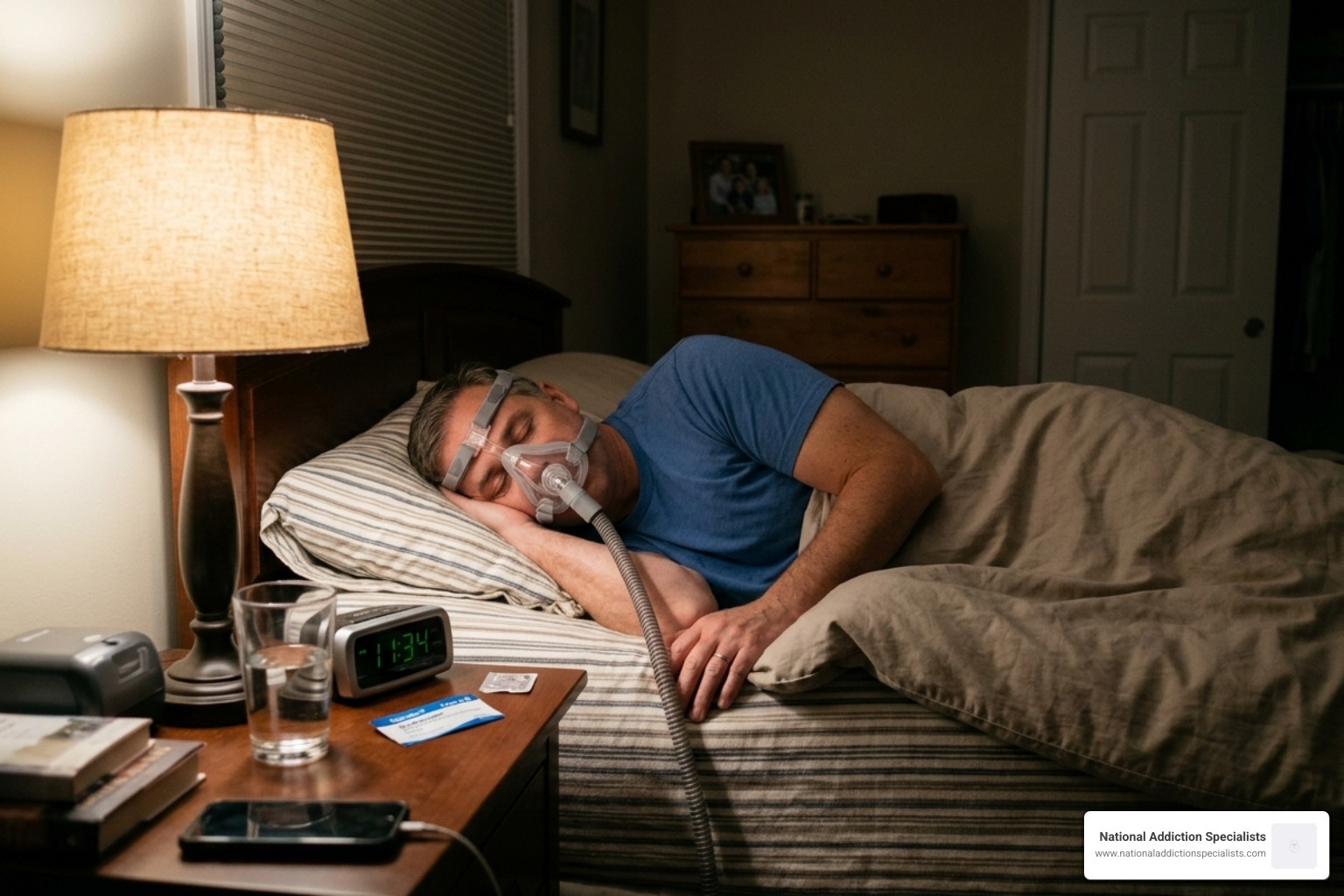
- CPAP Therapy: Continuous Positive Airway Pressure uses a mask to keep your airway physically open. While great for obstructive apnea, it doesn’t always fix central apnea.
- Adaptive Servo-Ventilation (ASV): This is a more advanced machine that “learns” your breathing pattern and intervenes only when it detects a pause. It is often the best choice for opioid-induced central sleep apnea.
- Dose Reduction: In some cases, scientific research on buprenorphine-associated central sleep apnea has shown that simply lowering the Suboxone dose under medical supervision can completely resolve the apnea.
- Oxygen Therapy: Supplemental oxygen can help keep your levels stable throughout the night.
Managing Sleep Quality During Recovery
While medical intervention is often necessary, your lifestyle choices also play a huge role in how you feel. Good “sleep hygiene” is essential for anyone in recovery.
- Stick to a Schedule: Go to bed and wake up at the same time every day, even on weekends.
- Optimize Your Environment: Your bedroom should be a cave—dark, quiet, and cool.
- CBT-I: Cognitive Behavioral Therapy for Insomnia is a highly effective, non-drug way to retrain your brain to sleep.
- Avoid Sedatives: Steer clear of alcohol or over-the-counter sleep aids that can further suppress your breathing. If you are also dealing with other substances, it’s helpful to understand the impact of alcohol withdrawal on sleep patterns.
Frequently Asked Questions about Suboxone and Sleep
Can reducing my Suboxone dose help my sleep apnea?
Yes. There are documented case reports where reducing the daily dose of Suboxone led to a significant decrease in the number of apnea events per hour. However, this must only be done under the guidance of your addiction specialist to ensure you don’t experience withdrawal or increased cravings.
Is Suboxone safer for breathing than methadone?
Generally, yes. Because Suboxone is a partial agonist with a “ceiling effect,” it is less likely to cause fatal respiratory depression than methadone, which is a full agonist. However, as the statistics show, Suboxone can still cause significant sleep-disordered breathing that needs to be treated.
When should I seek immediate medical attention for sleep issues?
You should reach out to us or your primary doctor immediately if you:
- Wake up gasping for air or feeling like you are suffocating.
- Fall asleep while driving or performing daily tasks.
- Have a partner who notices long pauses in your breathing.
- Experience severe morning headaches that don’t go away.
Conclusion
At National Addiction Specialists, we believe that recovery is about more than just stopping drug use—it’s about reclaiming your health and your life. Understanding the relationship between suboxone and sleep apnea is a vital part of that journey.
Through our telemedicine platform, we provide personalized recovery plans for patients across Tennessee and Virginia. We don’t just write a prescription; we monitor your overall well-being, including your sleep health. Whether you are in Brentwood, Richmond, or Virginia Beach, our expert providers are here to help you breathe easy. For more information on how we tailor our care, see more info about Suboxone treatment options.
Make an Appointment to Treat Addiction Please don’t hesitate. Make an appointment today. https://www.nationaladdictionspecialists.com/new-patient-packet/
This article was medically reviewed by:
Chad Elkin, MD, DFASAM is a board-certified addiction medicine physician, founder, and Chief Medical Officer of National Addiction Specialists, dedicated to treating substance use disorders. A Distinguished Fellow of the American Society of Addiction Medicine (ASAM), Dr Elkin currently serves as President of the Tennessee Society of Addiction Medicine (TNSAM) and has held various leadership roles within the organization. Dr Elkin chairs ASAM’s Health Technology Subcommittee and is an active member of its Practice Management and Regulatory Affairs Committee, State Advocacy and Legislative Affairs Committee, and other committees. He also serves on the planning committee for the Vanderbilt Mid-South Addiction Conference. Committed to advancing evidence-based policy, Dr Elkin is Chairman of the Tennessee Association of Alcohol, Drug, & Other Addiction Services (TAADAS) Addiction Medicine Council, which collaborates with the TN Department of Mental Health & Substance Abuse Services (TDMHSAS). He has contributed to numerous local, state, and national task forces, helping develop professional guidelines, policies, and laws that align with best practices in addiction medicine. His work focuses on reducing addiction-related harm, combating stigma, and ensuring access to effective treatment. Passionate about the field of addiction medicine, he remains dedicated to shaping policy and enhancing patient care.
Suboxone® and Subutex® are a registered trademark of Indivior UK Limited. Any mention and reference of Suboxone® and Subutex® in this website is for informational purposes only and is not an endorsement or sponsorship by Indivior UK Limited.