
Mastering Alcohol Withdrawal Relapse Prevention Strategies That Work
How to Prevent Relapse After Alcohol Withdrawal
Before withdrawal care ends, make a plan for what comes next. Schedule a follow-up visit, ask a clinician whether medication such as naltrexone or acamprosate fits your needs, and choose a counselor or support group you can contact. Write down your likely triggers and what you will do when a craving hits. If you drink again, tell your care team promptly so they can help you stay safe and adjust the plan.
Detox treats withdrawal; it does not treat every reason you drank. Recovery takes ongoing care, and a slip is a reason to get support, not to give up.
I’m Dr. Chad Elkin, a board-certified addiction and internal medicine physician and founder of National Addiction Specialists. My work in alcohol withdrawal relapse prevention focuses on helping people move from safe withdrawal care to practical, long-term treatment.
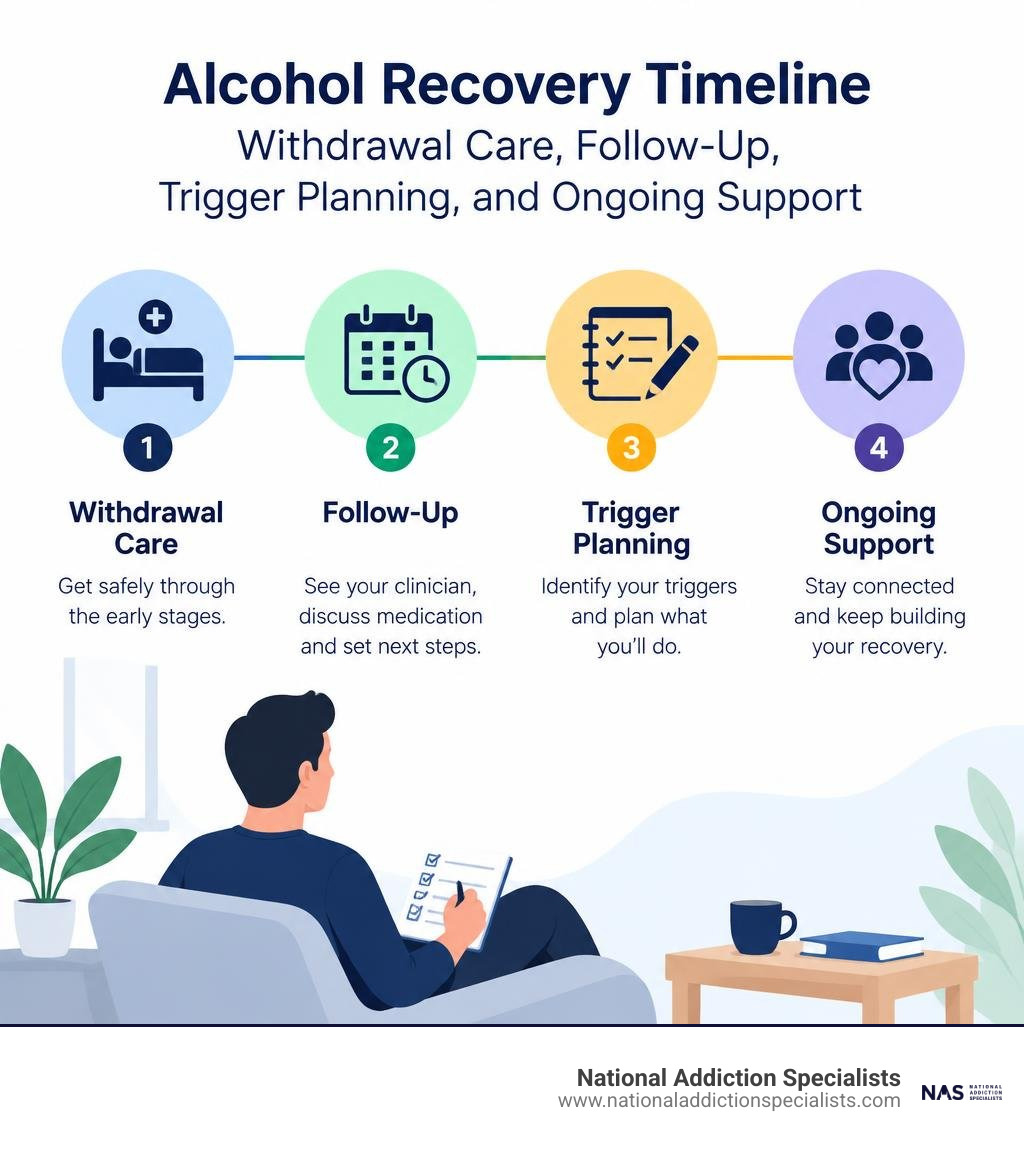
Key components of alcohol withdrawal relapse prevention include managing alcohol withdrawal symptoms, navigating post acute alcohol withdrawal, and understanding the expected alcohol withdrawal duration of symptoms.
Completing acute detoxification is a massive milestone, but it represents the starting line of sustainable healing rather than the finish line. Up to 50% of individuals experience a return to drinking within the first 12 weeks following intensive treatment programs (NBK551500). Because alcohol use disorder (AUD) operates as a chronic medical condition, maintaining long-term sobriety requires a continuous, structured framework. Transitioning from the acute phase of physical stabilization into post-acute recovery requires practical medical interventions, behavioral tools, and everyday coping strategies.
Understanding Relapse: Stages, Triggers, and the Lapse vs. Relapse Distinction

In addiction medicine, distinguishing between a “lapse” and a “relapse” is vital for preventing a single mistake from derailing your overall journey. A lapse (often called a slip) is a brief, isolated instance of drinking that is recognized immediately and interrupted before destructive behavioral cycles resume. Conversely, a relapse involves a sustained return to previous patterns of uncontrolled alcohol use, accompanied by the cognitive and social behaviors that originally fueled active addiction.
A major medical concern during any return to drinking is the loss of physiological tolerance. After a period of complete abstinence, the brain and liver lose the enzymatic and neurochemical adaptations that previously compensated for large amounts of alcohol. Consuming the same volume of alcohol you tolerated before detox can quickly lead to severe alcohol poisoning, profound central nervous system depression, or fatal accidental overdose.
| Metric / Dimension | Lapse (Slip) | Full Relapse |
|---|---|---|
| Duration & Extent | Brief, isolated event (e.g., a single drink or single evening) | Sustained, repeated drinking over days, weeks, or months |
| Mindset & Awareness | Immediate awareness, guilt, and a desire to regain control | Resignation, denial, abandonment of recovery boundaries |
| Tolerance Risk | Moderate; quickly interrupted | Severe risk of acute alcohol poisoning or overdose |
| Primary Clinical Need | Rapid debriefing, trigger analysis, and coping plan adjustment | Medical assessment, possible re-detoxification, and intensive care restructuring |
The Three Stages of Relapse and Warning Signs
Relapse is never a sudden, random event; it is an active, multi-stage process that unfolds over days or weeks before a person ever picks up a drink (NBK551500).
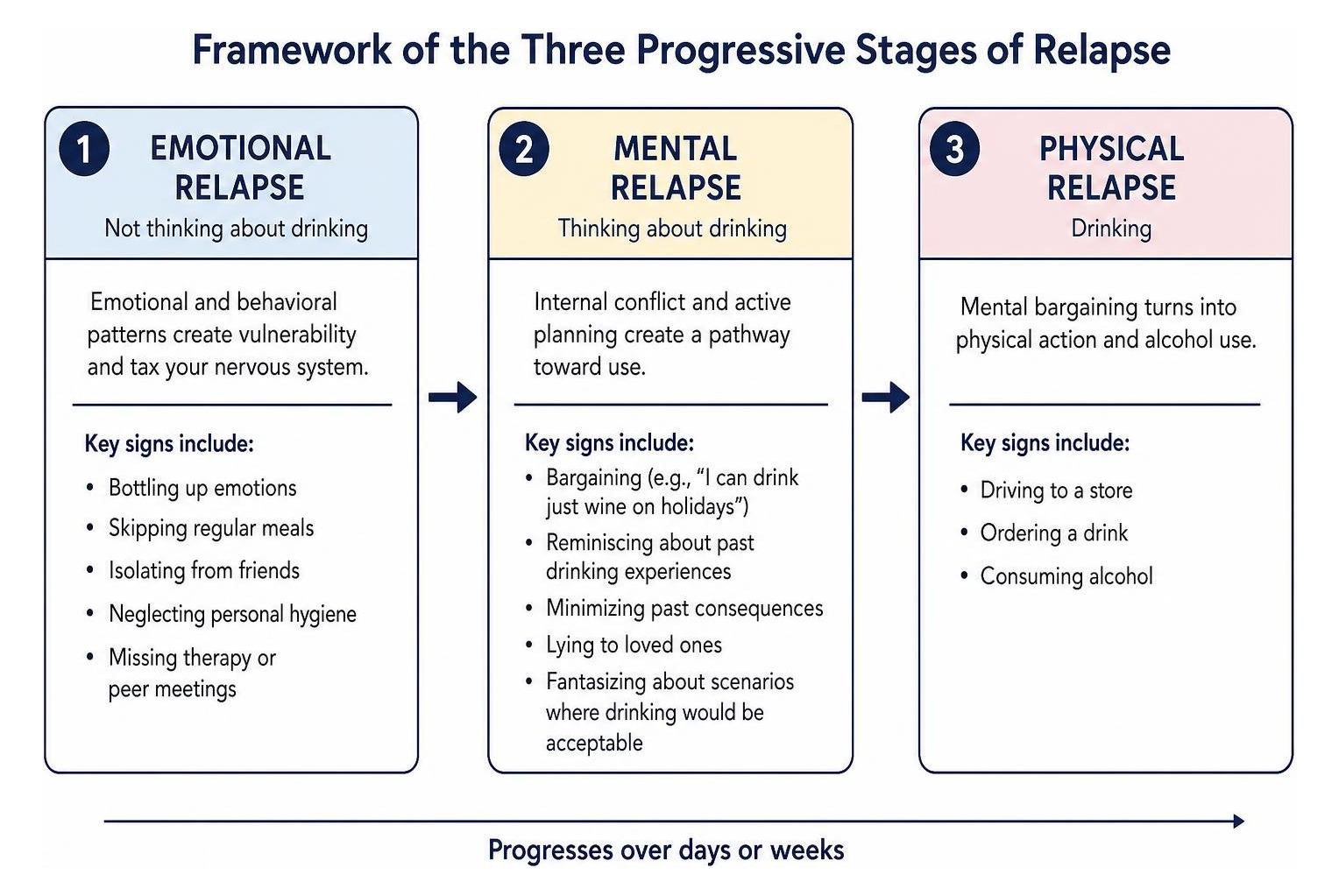
- Emotional Relapse: In this initial stage, you are not consciously thinking about drinking. Instead, emotional and behavioral patterns set the stage for future vulnerability. Key signs include bottling up emotions, skipping regular meals, isolating from friends, neglecting personal hygiene, and missing therapy or peer meetings. At this point, poor self-care begins taxing your nervous system.
- Mental Relapse: This phase is characterized by an internal tug-of-war. Part of you wants to stay sober, while another part is actively planning an escape. Warning signs include bargaining (e.g., “I can drink just wine on holidays”), reminiscing about past drinking experiences, minimizing past consequences, lying to loved ones, and actively fantasizing about scenarios where drinking would be acceptable.
- Physical Relapse: This occurs when mental bargaining turns into physical action: driving to a store, ordering a drink, and consuming alcohol.
Recognizing early emotional and mental cues—and understanding how to recognize the signs of alcohol withdrawal alongside how alcohol use disorder affects mental health—allows you to intervene long before physical use happens.
Identifying and Managing High-Risk Relapse Triggers
Navigating early recovery requires identifying both internal vulnerabilities and external triggers. A reliable framework for assessing internal states is the HALT model, which prompts individuals to check if they are:
- Hungry (destabilized blood glucose spikes cravings)
- Angry (unresolved resentment elevates cortisol)
- Lonely (social isolation fuels self-medication impulses)
- Tired (sleep deprivation impairs prefrontal cortex executive control)
During early recovery, the brain continues rebalancing neurotransmitters like dopamine, GABA, and glutamate. This protracted adjustment period often causes post acute withdrawal syndrome, marked by lingering anxiety, mood swings, and a disrupted impact of alcohol withdrawal on sleep patterns. Utilizing smart strategies to navigate the stages of alcohol withdrawal helps build resilience against these neurochemical shifts.
Evidence-Based Alcohol Withdrawal Relapse Prevention Medications
Relying solely on willpower overlooks the complex biological changes created by chronic alcohol exposure. Clinical guidelines, including the Optimal usage guide – Alcohol withdrawal and relapse prevention, emphasize pairing evidence-based medications with psychosocial counseling to support lasting recovery. Doctors utilize specific detox medications how doctors treat severe alcohol and drug withdrawal to stabilize acute symptoms before transitioning patients to maintenance therapies.
Core Pharmacotherapies: Naltrexone, Acamprosate, and Disulfiram
The FDA has approved three primary medications for alcohol relapse prevention, each working through a distinct biological mechanism (NBK551500):
- Naltrexone: A pure opioid receptor antagonist that blocks the euphoric reinforcement of alcohol by preventing endorphin-mediated dopamine surges in the brain’s reward pathway. The number-needed-to-treat (NNT) for naltrexone to prevent a return to any drinking is 20 (NBK551500). Because naltrexone blocks opioid receptors, it is strictly contraindicated in individuals currently taking prescription opioids or undergoing acute opioid withdrawal.
- Acamprosate (Campral): Acts directly on the central nervous system to modulate NMDA receptors and stabilize hyperactive glutamate neurotransmission caused by chronic alcohol exposure. By restoring harmony between GABA and glutamate, it significantly reduces protracted withdrawal symptoms and physical cravings. Acamprosate has a superior NNT of 12 to prevent a return to any drinking (NBK551500). It is excreted almost exclusively by the kidneys, requiring dose adjustments in mild-to-moderate renal impairment and avoidance in severe renal failure.
- Disulfiram (Antabuse): Serves as an aversive conditioning agent by inhibiting the aldehyde dehydrogenase enzyme. If a person consumes alcohol while taking disulfiram, toxic acetaldehyde accumulates in the bloodstream within minutes, triggering severe facial flushing, throbbing headaches, nausea, vomiting, and chest discomfort. Disulfiram shows substantial superiority over other medications, but primarily when administered via observed daily dosing where a clinician or supportive family member confirms compliance.
Physicians regularly reference resources such as Québec’s national medical protocol – Relapse prevention in a person with alcohol use disorder to tailor these pharmacotherapies safely.
Off-Label Options and Clinical Monitoring Protocols
In clinical practice, when first-line medications are contraindicated or poorly tolerated, addiction specialists evaluate evidence-backed off-label options:
- Gabapentin: Helpful for stabilizing mood, easing post-acute anxiety, and restoring normal sleep architecture by modulating voltage-gated calcium channels. It is typically titrated gradually to minimize sedation.
- Topiramate: Facilitates GABA transmission while inhibiting AMPA/kainate glutamate receptors, demonstrating efficacy in reducing both heavy drinking days and baseline cravings.
Implementing these medical regimens safely requires objective clinical monitoring, which includes evaluating withdrawal severity using clinical alcohol withdrawal risk assessment scales and establishing clear baselines through regular laboratory tests (such as liver function panels and serum creatinine). Comprehensive guidelines from health authorities, such as the NICE quality standard for alcohol-use disorders: diagnosis and management, reinforce these safety protocols.
Make an Appointment to Treat Addiction Please don’t hesitate. Make an appointment today.
Behavioral and Psychosocial Recovery Frameworks

Medications provide the biological foundation for stability, but behavioral therapy equips you with the day-to-day skills needed to build a fulfilling life in recovery. Combining medical care with evidence-based counseling provides the most effective long-term defense against relapse. Research indicates that structured behavioral frameworks produce strong clinical outcomes: Contingency Management demonstrates robust effect sizes up to d=0.62, while Motivational Interviewing (MI) achieves effect sizes up to d=0.5 in sustaining recovery motivation (NBK551500).
Integrating targeted tips to prevent addiction relapse alongside comprehensive addiction recovery strategies allows individuals to construct sustainable routines that reinforce sobriety.
Non-Pharmacological Alcohol Withdrawal Relapse Prevention Strategies
Mastering simple, in-the-moment behavioral techniques helps interrupt cravings and de-escalate acute stress responses:
- The 5-4-3-2-1 Sensory Grounding Technique: When an intense craving hits, rapidly redirect your attention by naming 5 things you can see, 4 things you can physically feel, 3 things you hear, 2 things you smell, and 1 thing you can taste. This pulls your mind out of emotional distress and anchors you in the present moment.
- “Play the Tape Through”: Cravings often highlight a false fantasy of that “first euphoric drink.” Intentionally pause and run the mental tape forward to the end: the inevitable loss of control, the next-day hangover, the shame, and the broken trust with family.
- Controlled Deep Breathing (Box Breathing): Inhale for 4 seconds, hold for 4 seconds, exhale for 4 seconds, and hold empty for 4 seconds. This directly stimulates the vagus nerve, lowering heart rate and dampening acute autonomic arousal.
- Holistic Lifestyle Integration: Long-term brain healing relies heavily on practicing daily meditation for addiction recovery, understanding the importance of nutrition in addiction recovery to balance neurotransmitter production, and utilizing exercise alcohol addiction recovery routines to naturally stimulate endorphins.
Building Support Networks and Establishing Healthy Boundaries
Recovery cannot happen in isolation. Family members, partners, and friends play an essential role, but they must understand the line between constructive support and accidental enabling.
- Supporting vs. Enabling: Healthy support involves driving a loved one to appointments, providing a substance-free home environment, and offering non-judgmental empathy. Enabling, on the other hand, involves making excuses for unmanaged behaviors, paying off debts caused by drinking, or lying to employers to protect the person from natural consequences.
- Mutual-Aid Communities: Engaging consistently with peer support communities—such as SMART Recovery (a secular, CBT-based framework) or traditional 12-step programs—creates accountability and counters isolation.
Learning practical steps on how to support someone recovery and discovering how to connect and conquer top online recovery support options empowers families to navigate this journey together.
Navigating Slips and Implementing Continuous Recovery Monitoring
It often takes five to six recovery attempts before an individual achieves sustained, long-term remission from alcohol or substance use disorders. Rather than viewing a slip as a moral failure, effective recovery frameworks treat every lapse as a critical diagnostic feedback loop. A slip highlights exactly where an individual’s recovery plan had a gap—whether in stress management, medication adherence, or social boundary setting.
Harm-reduction principles ensure that individuals who slip do not spiral into complete disengagement. Engaging in regular virtual addiction counseling provides an immediate, judgment-free clinical outlet to assess challenges and rebuild momentum quickly.
Immediate Post-Relapse Action Plan
If a lapse or relapse occurs, take immediate, systematic action to minimize harm:
- Stop Drinking Immediately: Discard all remaining alcohol in the home or safe environment.
- Ensure Physical and Medical Safety: If alcohol was consumed in large quantities after a period of abstinence, monitor closely for acute alcohol toxicity or severe withdrawal symptoms, seeking urgent medical evaluation if vital signs become unstable.
- Practice Immediate Clinical Transparency: Contact your addiction medicine physician, therapist, or recovery coach within 24 hours. Hiding a slip allows shame to accelerate into a full-blown relapse.
- Debrief and Adapt the Plan: Analyze what emotional, social, or environmental triggers preceded the event. Work with your care provider to build a personalized recovery plan and review the best ways ask help addiction to reinforce accountability.
Monitoring Tools for Alcohol Withdrawal Relapse Prevention
Objective monitoring tools provide structure, accountability, and clinical visibility:
- Remote Bluetooth Breathalyzers: Handheld devices equipped with facial recognition that allow patients to log scheduled breath alcohol tests from home, instantly transmitting verified results to their clinical team.
- Laboratory Biomarkers & Urine Drug Screens: Regular screening for ethyl glucuronide (EtG) in urine or periodic Phosphatidylethanol (PEth) blood tests helps verify ongoing abstinence over multi-week windows (NBK551500).
- Telehealth Follow-Up Care: Frequent video check-ins ensure that medication side effects, mood changes, and cravings are addressed proactively.
Our detailed telemedicine addiction treatment complete guide highlights how virtual care simplifies continuous monitoring, aligning with modern clinical frameworks described in Alcohol use disorder: beyond prohibition – Public Health in Pharmacy Practice.
Frequently Asked Questions About Alcohol Relapse Prevention
What is the most effective medication for alcohol relapse prevention?
There is no single “best” medication for everyone; the most effective medication depends on an individual’s liver health, kidney function, and overall treatment goals. Acamprosate is exceptionally effective for maintaining complete abstinence (NNT = 12) and is safe for those with liver compromise (NBK551500). Naltrexone (NNT = 20) is ideal for targeting reward cravings and heavy drinking days (NBK551500). Disulfiram is highly effective when daily dosing is supervised by a partner or clinician (NBK551500).
How does tolerance loss increase overdose risk after alcohol detox?
Chronic heavy drinking forces the liver to upregulate metabolizing enzymes and causes the central nervous system to adapt to constant depressant exposure. After completing detoxification and achieving a period of abstinence, these adaptations disappear. If a person relapses and consumes their old baseline volume of alcohol, the brain’s respiratory centers can rapidly shut down, leading to fatal alcohol poisoning or polysubstance overdose.
What should family members do immediately if a loved one relapses?
First, ensure their immediate physical safety. If they are unresponsive, vomiting uncontrollably, or exhibiting respiratory depression, call emergency services immediately. If they are medically stable, encourage open transparency without resorting to shouting, guilt-tripping, or punitive threats. Set clear personal boundaries against enabling behaviors, and help them contact their medical provider or counselor to recalibrate their treatment plan.
Conclusion
Sustaining recovery after alcohol withdrawal is not a matter of unassisted willpower—it is a chronic medical journey that requires an evidence-based roadmap. Combining medical stabilization, proven pharmacotherapies like acamprosate or naltrexone, cognitive-behavioral skills, and objective monitoring creates a dependable safety net. In fact, 87% of individuals report feeling significantly more supported when utilizing combined medical and psychosocial treatment approaches.
At National Addiction Specialists, we specialize in providing accessible, high-quality, and confidential care for substance use disorders. Through our modern telemedicine platform, patients across Tennessee and Virginia (including Brentwood, TN, and Virginia Beach, VA) can access personalized medical plans, medication management, and ongoing recovery support from the comfort and privacy of home. We accept Medicaid and Medicare, ensuring high-quality evidence-based care remains within reach. Take the next step in your recovery journey and explore our confidential personalized addiction recovery care today.
Suboxone® and Subutex® are a registered trademark of Indivior UK Limited. Any mention and reference of Suboxone® and Subutex® in this website is for informational purposes only and is not an endorsement or sponsorship by Indivior UK Limited.
This article was medically reviewed by: Chad Elkin, MD, DFASAM is a board-certified addiction medicine physician, founder, and Chief Medical Officer of National Addiction Specialists, dedicated to treating substance use disorders. A Distinguished Fellow of the American Society of Addiction Medicine (ASAM), Dr Elkin currently serves as President of the Tennessee Society of Addiction Medicine (TNSAM) and has held various leadership roles within the organization. Dr Elkin chairs ASAM’s Health Technology Subcommittee and is an active member of its Practice Management and Regulatory Affairs Committee, State Advocacy and Legislative Affairs Committee, and other committees. He also serves on the planning committee for the Vanderbilt Mid-South Addiction Conference. Committed to advancing evidence-based policy, Dr Elkin is Chairman of the Tennessee Association of Alcohol, Drug, & Other Addiction Services (TAADAS) Addiction Medicine Council, which collaborates with the TN Department of Mental Health & Substance Abuse Services (TDMHSAS). He has contributed to numerous local, state, and national task forces, helping develop professional guidelines, policies, and laws that align with best practices in addiction medicine. His work focuses on reducing addiction-related harm, combating stigma, and ensuring access to effective treatment.Passionate about the field of addiction medicine, he remains dedicated to shaping policy and enhancing patient care.