Why You Still Feel Like Hot Garbage Weeks Later
Why You Still Feel Like Hot Garbage Weeks After Quitting Alcohol
Post acute alcohol withdrawal (PAWS) is a real medical condition where symptoms like anxiety, depression, brain fog, mood swings, and sleep problems linger for months — sometimes up to two years — after the initial detox phase is over.
Here’s a quick breakdown of what PAWS looks like:
| Symptom | How Long It Can Last |
|---|---|
| Anxiety and irritability | Up to 2 years |
| Sleep disturbances | 1-3 years in some cases |
| Depression and mood swings | Several months to years |
| Cognitive fog and memory issues | Weeks to 1 year |
| Cravings for alcohol | Most intense in first 3 weeks |
| Anhedonia (inability to feel pleasure) | Up to several months |
You survived detox. You pushed through the shakes, the sweats, the worst of it. But now, weeks later, you still feel off. Foggy. Flat. Anxious for no clear reason. Some days are okay — then suddenly you’re back to feeling terrible again.
That’s not weakness. That’s not failure. That’s your brain still healing.
PAWS happens because alcohol rewires your brain over time. When you stop drinking, your brain doesn’t just snap back overnight. It has to slowly recalibrate its chemistry — and that process takes time, often much longer than most people expect.
The frustrating part? Most people are never told this. They finish detox and assume they should feel normal. When they don’t, they wonder what’s wrong with them.
Nothing is wrong with you. This is a known, documented phase of recovery — and it’s manageable.
I’m Dr. Chad Elkin, board-certified in Addiction Medicine and founder of National Addiction Specialists, and I’ve worked with hundreds of patients navigating post acute alcohol withdrawal as part of their long-term recovery. The sections below break down exactly what’s happening in your brain, what symptoms to watch for, and what actually helps.
Understanding Post Acute Alcohol Withdrawal vs. Acute Detox
To understand why you feel this way, we have to distinguish between the two main phases of withdrawal. Most people are familiar with the “acute” phase. This is the immediate physical reaction your body has when you stop drinking. According to BMJ Best Practice, acute symptoms typically begin within 6 to 24 hours after the last drink.
During acute detox, you experience autonomic hyperactivity—your heart races, you sweat, and you might have tremors (the “shakes”). In severe cases, this phase can include seizures or delirium tremens (DTs), which is a life-threatening medical emergency occurring in about 5% of cases. As we discuss in our guide on How Long Does Alcohol Withdrawal Last, this physical storm usually peaks within 48 to 72 hours and subsides after about a week.
Post acute alcohol withdrawal, however, is a different beast entirely. While acute withdrawal is primarily physical, PAWS is primarily psychological and neurological. It involves “subacute” intensity—meaning the symptoms aren’t as violent as a seizure, but they are persistent, wearing you down over months.
| Feature | Acute Withdrawal | Post-Acute Withdrawal (PAWS) |
|---|---|---|
| Primary Symptoms | Tremors, sweating, nausea, seizures | Anxiety, brain fog, mood swings, insomnia |
| Timeline | 3–7 days | Months to 2 years |
| Focus | Physical stabilization | Brain recalibration |
| Risk | High immediate medical risk | High relapse risk due to emotional distress |
The Neurobiology of Why Your Brain Feels Broken
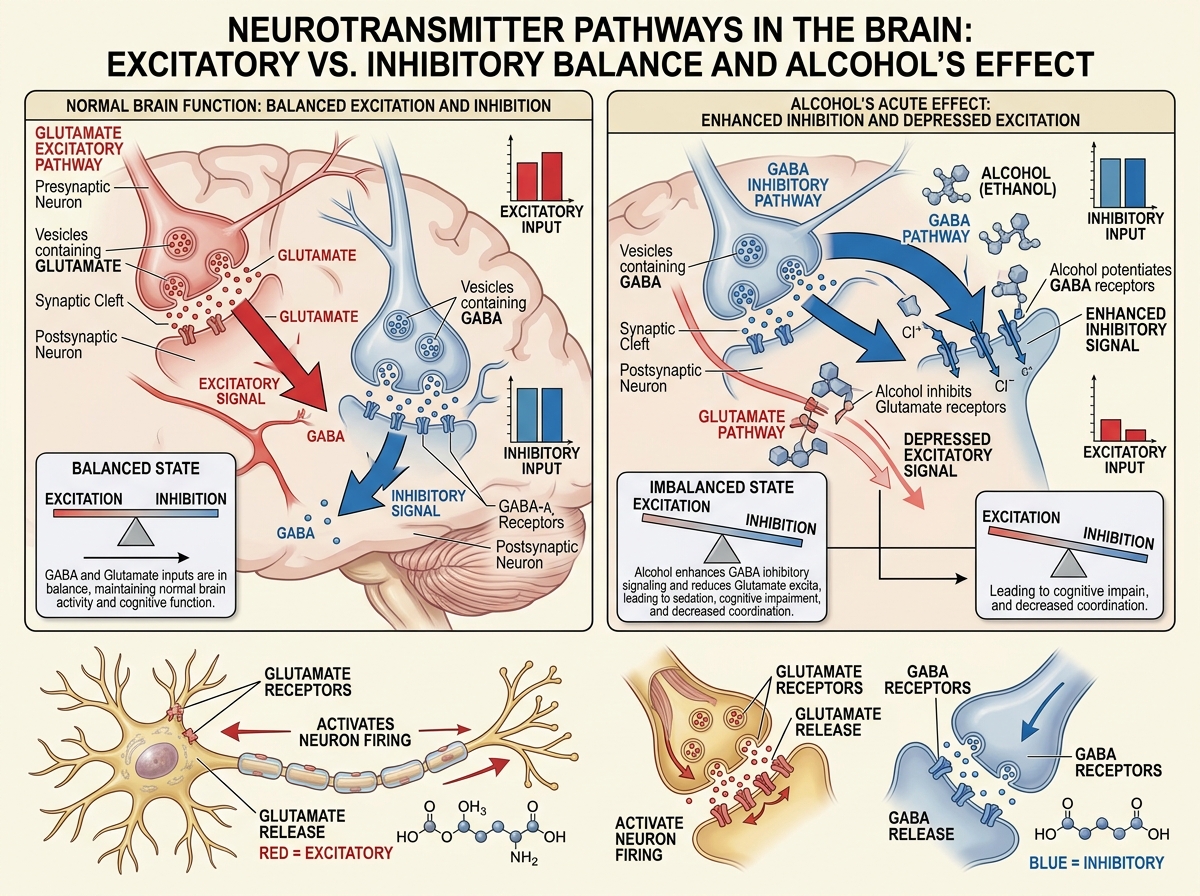
If you feel like your “processor” is running at 20% capacity, there is a biological reason for it. Chronic alcohol use forces the brain to make major adjustments to stay functional. Think of it like a car: alcohol acts as a heavy foot on the brake. To keep the car moving, your brain slams its foot on the gas. When you suddenly remove the “brake” (alcohol), the “gas” is still floored.
GABA and Glutamate Imbalance
Alcohol enhances GABA, the brain’s primary inhibitory (calming) neurotransmitter. To compensate, the brain undergoes GABA receptor downregulation—it makes those receptors less sensitive. At the same time, it increases NMDA (glutamate) receptors to keep you alert. When alcohol is gone, you are left with a brain that is “hyperexcitable.” This is why How Alcohol Use Disorder Affects Mental Health often involves high levels of baseline anxiety; your brain is literally struggling to calm itself down.
The Reward System and Anhedonia
Research on the Neurobiology and Symptomatology of Post-Acute Alcohol Withdrawal shows that early abstinence is marked by “dopaminergic hypoactivity.” Essentially, your dopamine system—the “joy” center of your brain—is exhausted. This leads to anhedonia, a state where you can’t feel pleasure from things you used to enjoy. Nearly 20% of individuals in early recovery report this.
Stress and the Kindling Effect
Your brain’s stress systems are also out of whack. Cortisol levels remain elevated, and Orexin-A levels (which regulate arousal and cravings) fluctuate wildly. Furthermore, every time someone goes through the cycle of drinking and withdrawing, the brain becomes more sensitive. This is known as the “kindling effect,” where each subsequent withdrawal episode becomes more severe and more likely to result in prolonged PAWS.
Symptoms and the Post Acute Alcohol Withdrawal Timeline
Recovery isn’t a straight line upward; it’s more like a series of “windows and waves.” You might have a “window” of a few days where you feel clear-headed and energetic, only to be hit by a “wave” of exhaustion and irritability the following week. These waves are often triggered by stress, social conflict, or even just poor sleep.
Recognizing the Signs of Post Acute Alcohol Withdrawal
It is vital to recognize that these aren’t just “personality flaws”—they are clinical symptoms. Common signs include:
- Cognitive Fog: Difficulty concentrating or making simple decisions.
- Memory Deficits: Struggling to remember names or tasks that used to be second nature.
- Emotional Dysregulation: Feeling “raw” or overreacting to minor inconveniences.
- Sleep Disturbances: This is one of the most persistent issues. Statistics show that 52% of patients experience insomnia during PAWS.
- Physical Fatigue: Feeling like you’ve run a marathon after just doing the dishes.
These are all Signs of Alcohol Addiction recovery in progress, not signs that you are failing at sobriety.
Navigating the Post Acute Alcohol Withdrawal Timeline
While every journey is unique, research suggests a general pattern:
- 0–1 Month: Cravings are at their peak. Anhedonia and anxiety are very high.
- 1–6 Months: This is often the most intense period for PAWS. Symptoms like insomnia are common; in fact, 33% of patients have prolonged insomnia lasting up to 169 days.
- 6 Months–2 Years: Symptoms begin to fade and the “waves” become less frequent and less intense.
- Beyond 2 Years: For most, the brain has fully recalibrated, though some minor sleep issues can persist for up to 3 years.
The duration is influenced by your usage history, genetics, and any co-occurring mental health conditions. As we note in our article on the Impact of Alcohol Withdrawal on Sleep Patterns, addressing sleep early is key to preventing long-term exhaustion.
Evidence-Based Treatments and Management Strategies
You don’t have to just “white-knuckle” your way through post acute alcohol withdrawal. There are evidence-based strategies that can take the edge off and help your brain heal faster.
Pharmacological Interventions
Several medications can help stabilize brain chemistry:
- Acamprosate: Helps balance the GABA/glutamate system and reduces the “protracted” distress that leads to relapse.
- Anticonvulsants: Medications like carbamazepine can help manage the hyperexcitability of the brain and may even help reduce the kindling effect.
- Antidepressants: If depression or anxiety is overwhelming, these can provide a necessary floor for your mood.
Psychosocial and Lifestyle Support
- CBT and Motivational Interviewing: These therapies help you identify triggers and develop “coping thoughts” for when the waves of PAWS hit.
- Exercise: We strongly advocate for Exercise Alcohol Addiction Recovery. Physical activity naturally boosts dopamine and helps regulate the stress response.
- Nutritional Support: Chronic drinking depletes vital nutrients. Supplementing with thiamine (B1), magnesium, and zinc is often necessary for neurological repair.
- Sleep Hygiene: Since insomnia is a major relapse trigger, establishing a strict sleep routine is non-negotiable.
Support Networks
Peer support groups (like AA or SMART Recovery) are invaluable. Hearing someone else say, “I felt like garbage for six months, too,” can be the difference between staying sober and giving up.
Make an Appointment to Treat Addiction Please don’t hesitate. Make an appointment today. Make an Appointment
Relapse Prevention and the Path to Brain Healing
The danger of PAWS is that it makes “just one drink” look like a solution to the misery. If you feel flat and anxious for months, the temptation to “self-medicate” is massive. This is why understanding the Long-term Effects of Alcohol Addiction is so important—it reminds you that the discomfort is temporary, but the damage of a relapse is immediate.
The good news? The brain possesses incredible neuroplasticity. While it feels “broken” now, it is actually in a state of intense repair. Most changes are fully reversible with time and sustained abstinence. By identifying your triggers—especially social conflicts and high-stress environments—you can protect your brain while it does the hard work of rebuilding its neural pathways.
Frequently Asked Questions about PAWS
Is post-acute withdrawal syndrome permanent?
No. While it can feel like it will never end, PAWS is a transitional phase. Most people see significant improvement within 6 to 12 months, and almost all symptoms resolve within 2 years of continuous abstinence.
Why do my symptoms come and go in waves?
This is the “windows and waves” phenomenon. It happens because your brain is trying to find a new equilibrium. Stress, fatigue, or even minor illnesses can temporarily overwhelm your brain’s fragile new balance, causing a temporary return of symptoms.
Who is most at risk for experiencing PAWS?
Those with a long history of heavy use, individuals who have gone through multiple detoxes (the kindling effect), and those with co-occurring disorders like anxiety or depression are more likely to experience prolonged post acute alcohol withdrawal.
Conclusion
At National Addiction Specialists, we understand that “getting sober” is just the first step of a much longer journey. If you are in Tennessee or Virginia and find yourself struggling with the lingering effects of alcohol cessation, you don’t have to navigate it alone.
Our telemedicine-based approach means you can access expert care and personalized recovery plans from the comfort of your home in Brentwood, Virginia Beach, or anywhere across our service areas. We accept Medicaid and Medicare, ensuring that high-quality addiction medicine is accessible to those who need it most.
Recovery is a marathon, not a sprint. The “hot garbage” feeling you have right now is a sign that your brain is fighting to get back to health. Keep going—it gets better.
This article was medically reviewed by: Chad Elkin, MD, DFASAM is a board-certified addiction medicine physician, founder, and Chief Medical Officer of National Addiction Specialists, dedicated to treating substance use disorders. A Distinguished Fellow of the American Society of Addiction Medicine (ASAM), Dr Elkin currently serves as President of the Tennessee Society of Addiction Medicine (TNSAM) and has held various leadership roles within the organization. Dr Elkin chairs ASAM’s Health Technology Subcommittee and is an active member of its Practice Management and Regulatory Affairs Committee, State Advocacy and Legislative Affairs Committee, and other committees. He also serves on the planning committee for the Vanderbilt Mid-South Addiction Conference. Committed to advancing evidence-based policy, Dr Elkin is Chairman of the Tennessee Association of Alcohol, Drug, & Other Addiction Services (TAADAS) Addiction Medicine Council, which collaborates with the TN Department of Mental Health & Substance Abuse Services (TDMHSAS). He has contributed to numerous local, state, and national task forces, helping develop professional guidelines, policies, and laws that align with best practices in addiction medicine. His work focuses on reducing addiction-related harm, combating stigma, and ensuring access to effective treatment. Passionate about the field of addiction medicine, he remains dedicated to shaping policy and enhancing patient care.
Suboxone® and Subutex® are a registered trademark of Indivior UK Limited. Any mention and reference of Suboxone® and Subutex® in this website is for informational purposes only and is not an endorsement or sponsorship by Indivior UK Limited.