
Detox Medications: How Doctors Treat Severe Alcohol and Drug Withdrawal
Which Drugs Help With Withdrawal Symptoms?
The right medication depends on what you are withdrawing from. Doctors commonly use benzodiazepines to manage alcohol withdrawal and help prevent seizures. For opioid withdrawal, buprenorphine or methadone can ease symptoms and cravings. Non-opioid options such as lofexidine can reduce symptoms like sweating and a racing heart, but they do not treat cravings.
Withdrawal from alcohol or sedatives can be dangerous without medical care. A clinician can check your symptoms, choose a safe medication, and adjust treatment as your needs change. If you are worried about privacy or fitting care around work and family, ask which supervised options are appropriate for you.
I’m Chad Elkin, a physician board-certified in addiction medicine and internal medicine and the founder and medical director of National Addiction Specialists. My work treating substance use disorders has shown me why choosing drugs for withdrawal symptoms requires a personal safety plan, not a one-size-fits-all list.
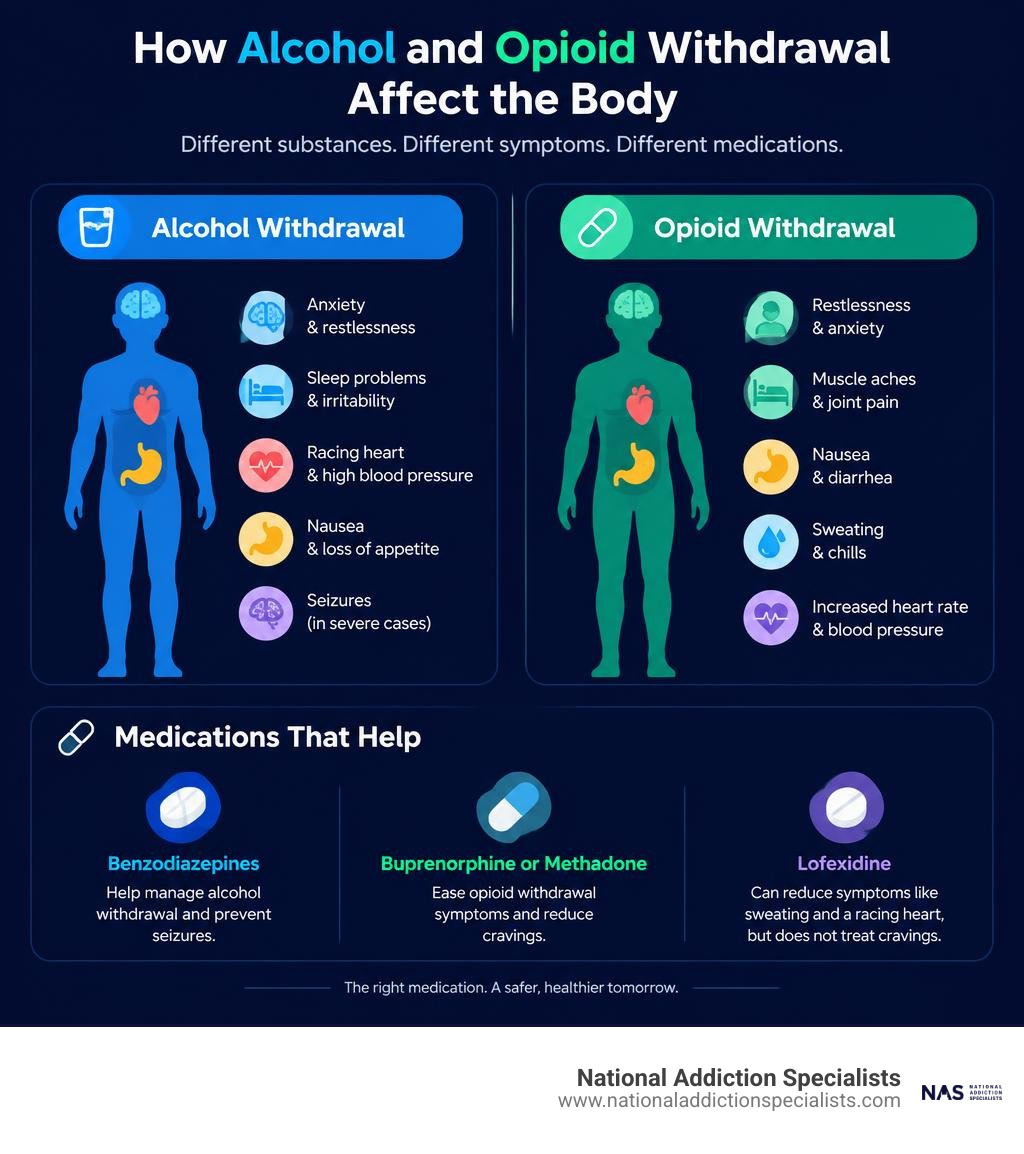
Essential drugs for withdrawal symptoms terms:
Introduction
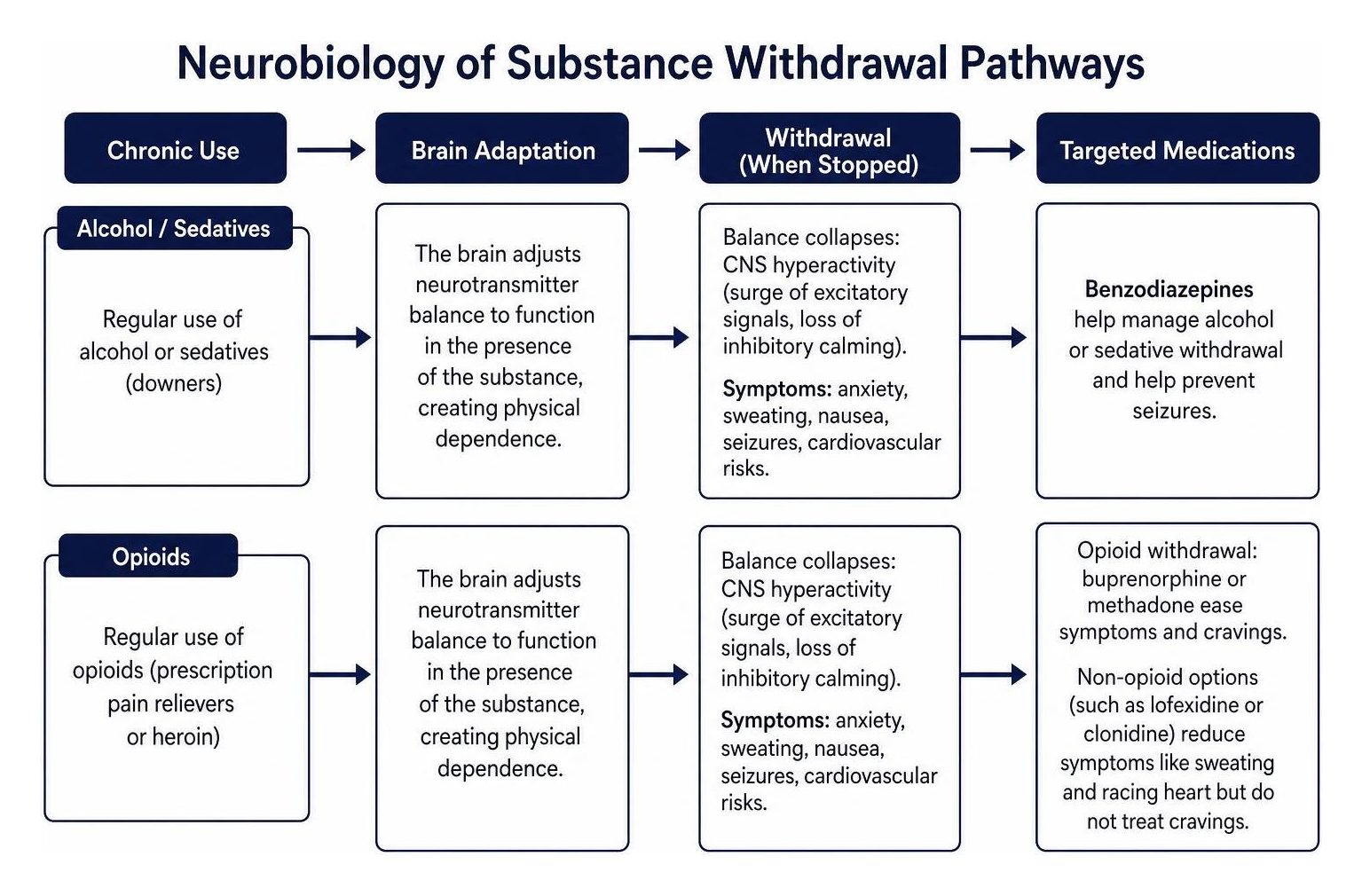
When someone regularly consumes alcohol, opioids, or sedatives, the central nervous system undergoes profound neurochemical adaptation. Over time, the brain adjusts its baseline neurotransmitter production to function in the presence of these substances, establishing physical dependence.
When the substance is suddenly reduced or stopped, this delicate balance collapses. The brain experiences central nervous system hyperactivity—a sudden surge of excitatory signals paired with a loss of calming inhibitory feedback. This rebound effect produces acute drug withdrawal symptoms, ranging from intense anxiety, sweating, and nausea to life-threatening seizures and cardiovascular collapse.
Detoxification is not simply a matter of waiting out physical discomfort; it is a clinical intervention designed to achieve physiological stabilization. Using evidence-based pharmacotherapy, medical providers can manage neurochemical pathways, ease severe distress, and protect vital organ systems during acute detoxification.
The Critical Role of Medical Supervision During Detoxification
Attempting unsupervised detox—frequently called going “cold turkey”—carries severe medical risks. An estimated 5% to 10% of the population meets the criteria for alcohol use disorder, and a significant portion faces severe withdrawal risks upon stopping. Similarly, in the United States, approximately 7.6 million people misuse prescription pain relievers, and over 500,000 use heroin, putting millions at risk for severe physiological distress when use stops.
The primary hazard of unmonitored withdrawal is unchecked autonomic rebound. In severe alcohol or sedative withdrawal, unchecked central nervous system stimulation can lead to generalized tonic-clonic seizures and delirium tremens (DTs). Delirium tremens involves severe confusion, autonomic hyperactivity, rapid heart rate, and vivid hallucinations. Historically, untreated DTs carried a mortality rate as high as 20%. With early recognition and modern medical protocols, that mortality rate falls to between 1% and 5%.
Opioid withdrawal, while rarely fatal on its own, presents severe physical challenges. Unmanaged vomiting and diarrhea cause profound dehydration, electrolyte imbalances, and hemodynamic instability. Furthermore, an unsupervised detox drastically increases the risk of a fatal overdose: when a person completes a brief period of abstinence without ongoing medical support, their biological tolerance drops precipitously. Resuming substance use at previous doses frequently leads to fatal respiratory arrest.
Reviewing everything you need to know about medically supervised withdrawal helps clarify why structured medical oversight is essential. Professional supervision ensures continuous vital sign monitoring, rapid medication adjustments, and a safe bridge to long-term care, aligning directly with the SAMHSA Treatment Options Guide.

Primary Prescription Drugs for Withdrawal Symptoms Across Substance Classes
Clinicians rely on distinct medication classes to manage withdrawal symptoms safely, targeting the specific receptors affected by each substance:
| Drug Class | Primary Medications | Mechanism of Action | Clinical Indication | Key Side Effects & Risks |
|---|---|---|---|---|
| Benzodiazepines | Diazepam, Lorazepam, Chlordiazepoxide, Oxazepam | Enhances GABA-A receptor opening frequency; CNS sedation | Alcohol and sedative withdrawal; seizure prevention | Over-sedation, respiratory depression, ataxia, potential for dependence |
| Anticonvulsants / Barbiturates | Phenobarbital, Carbamazepine, Gabapentin | Modulates glutamate, enhances GABA, blocks voltage-gated calcium/sodium channels | Refractory alcohol detox, sedative tapering, adjunctive relief | Drowsiness, dizziness, unsteadiness, hypotension |
| Opioid Agonists / Partial Agonists | Buprenorphine, Methadone | Full or partial mu-opioid receptor stimulation; dampens cravings and withdrawal | Acute and chronic opioid withdrawal management | Constipation, sedation, headache, precipitated withdrawal (buprenorphine), QT prolongation (methadone) |
| Alpha-2 Adrenergic Agonists | Lofexidine, Clonidine | Stimulates central presynaptic alpha-2 receptors; suppresses norepinephrine surge | Autonomic opioid withdrawal signs (sweating, tachycardia, chills) | Orthostatic hypotension, bradycardia, dizziness, dry mouth, somnolence |
Benzodiazepines and Anticonvulsants: Essential Drugs for Withdrawal Symptoms in Alcohol Detox
In alcohol withdrawal, the central nervous system suffers from severe GABA underactivity and excessive NMDA/glutamate stimulation. Benzodiazepines remain the gold standard of care because they bind to GABA-A receptors, restoring inhibitory tone and calming neural firing.
- Long-Acting Agents (Diazepam, Chlordiazepoxide): Provide a smooth, self-tapering pharmacokinetic profile that prevents breakthrough tremors and seizures.
- Intermediate/Short-Acting Agents (Lorazepam, Oxazepam): Preferred for patients with compromised liver function or elderly individuals because they bypass hepatic oxidation and do not generate active metabolites.
Learning how to recognize the signs of alcohol withdrawal ensures that benzodiazepine therapy is initiated before symptoms escalate to delirium tremens. Providers often combine these with smart strategies to navigate the stages of alcohol withdrawal, including mandatory intravenous or oral thiamine (Vitamin B1) administration before glucose infusions to prevent Wernicke-Korsakoff syndrome.
Anticonvulsants like carbamazepine, gabapentin, and valproic acid serve as helpful alternatives or adjuncts in mild-to-moderate alcohol detox, lowering seizure risk and alleviating autonomic symptoms without the misuse liability of sedatives. Phenobarbital is also utilized in emergency or inpatient protocols for its robust, long-lasting seizure suppression.
Agonists and Alpha-2 Adrenergic Agonists: Target Drugs for Withdrawal Symptoms from Opioids
Opioid withdrawal is characterized by intense mu-opioid receptor starvation accompanied by a massive noradrenergic surge from the locus coeruleus in the brainstem.
- Buprenorphine (Suboxone / Subutex): A high-affinity partial mu-opioid agonist that displaces other opioids while activating the receptor enough to stop withdrawal and cravings without generating full euphoric highs. Understanding why Suboxone works for opiate withdrawal helps patients transition smoothly into recovery while avoiding severe cravings.
- Methadone: A full mu-opioid agonist administered through specialized clinics, offering steady receptor coverage to manage severe dependence.
- Lofexidine (LUCEMYRA): An FDA-approved non-opioid, selective alpha-2 adrenergic agonist indicated specifically for mitigating opioid withdrawal symptoms during abrupt discontinuation. In clinical trials, lofexidine significantly lowered mean withdrawal scores (SOWS-Gossop score of 6.1 vs. 8.8 for placebo) and improved 7-day treatment retention (40% vs. 28% for placebo). Detailed dosing and contraindications are available in the Lofexidine Prescribing Information.
- Clonidine: An off-label alpha-2 agonist commonly used to quiet the autonomic surge. Providers often explain how clonidine helps you kick opiates by reducing sweating, rapid heart rate, and goosebumps caused by acute opioid withdrawal symptoms.
Sedative-Hypnotic and Adjunctive Symptom Relievers
Detoxification from benzodiazepines, barbiturates, and sleep aids requires cross-tolerant tapering regimens using long-acting equivalents (such as clonazepam or phenobarbital) stepped down gradually over several weeks.

Alongside core detox agents, supportive medications address distressing secondary symptoms:
- Ondansetron & Promethazine: 5-HT3 and histamine antagonists that target severe nausea and vomiting.
- Loperamide: Peripheral mu-opioid agonist that controls intestinal hypermotility and diarrhea without crossing the blood-brain barrier at standard doses.
- NSAIDs (Ibuprofen, Ketorolac): Relieve muscle aches, bone pain, and joint stiffness.
- Hydroxyzine: An antihistamine that reduces anxiety, restlessness, and mild insomnia without addictive potential.
If you or a loved one is struggling with substance dependence, Make an Appointment to Treat Addiction Please don’t hesitate. Make an appointment today.
Short-Term Detox Medications vs. Long-Term Maintenance Therapy
A common point of confusion is the distinction between acute detoxification and long-term maintenance therapy.
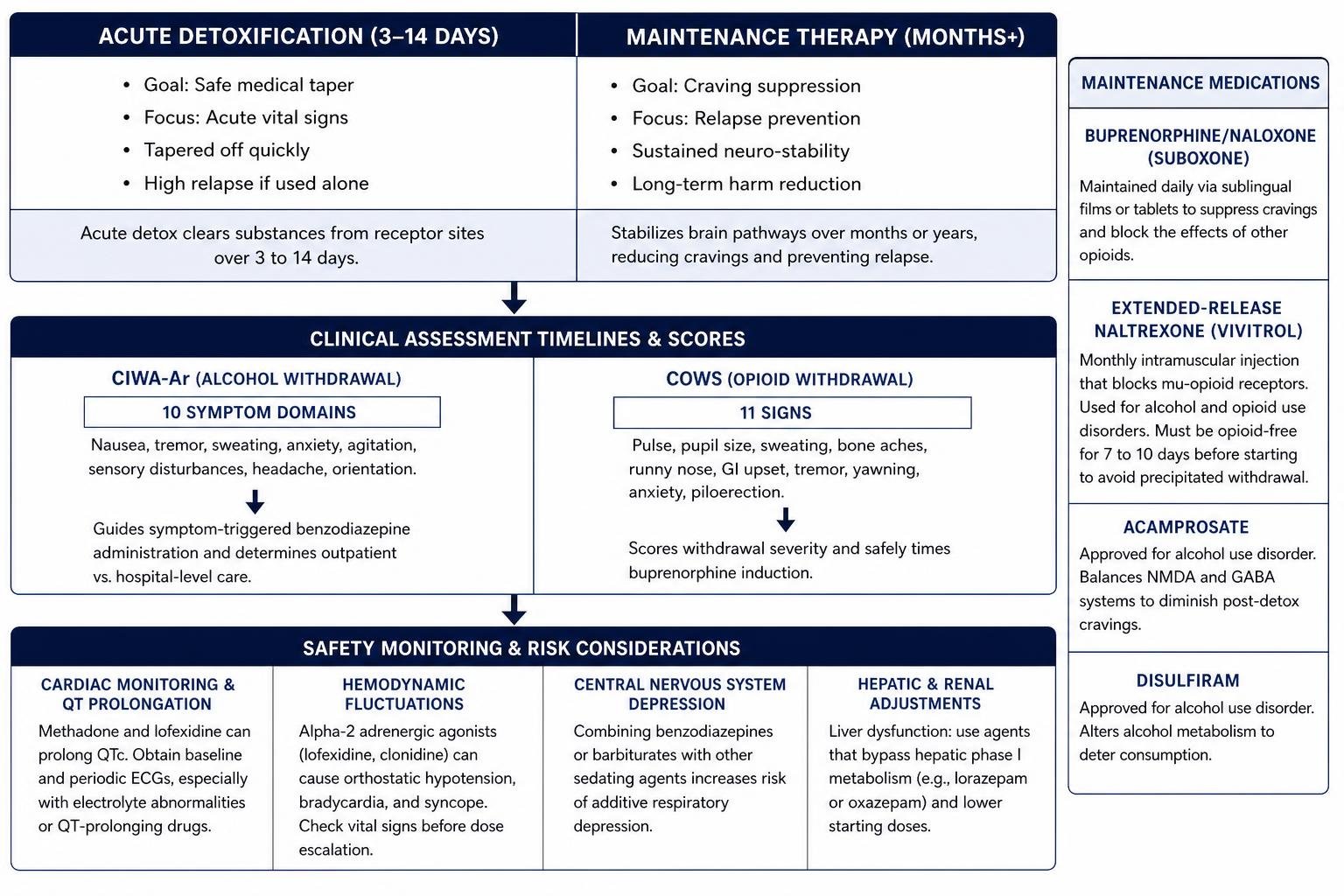
Short-term detox is designed purely for acute stabilization—clearing substances from receptor sites over 3 to 14 days while keeping vital signs safe. However, acute detox alone does not treat the underlying chronic brain adaptations associated with substance use disorder. Patients discharged after detox without ongoing medication face high rates of relapse.
Long-term maintenance stabilizes brain pathways over months or years, allowing individuals to repair their physical, social, and emotional well-being without constant cravings:
- Buprenorphine/Naloxone (Suboxone): Maintained daily via sublingual films or tablets to suppress cravings and block the effects of other opioids.
- Extended-Release Naltrexone (Vivitrol): A monthly intramuscular injection that completely blocks mu-opioid receptors. It is prescribed for both alcohol and opioid use disorders, though patients must be entirely opioid-free for 7 to 10 days before starting to avoid precipitated withdrawal, as detailed in the Vivitrol Prescribing Label.
- Acamprosate & Disulfiram: Approved for alcohol use disorder. Acamprosate balances NMDA and GABA systems to diminish post-detox cravings, while Disulfiram alters alcohol metabolism to deter consumption.
Clinical Assessment Protocols, Timelines, and Safety Risks
Medical providers rely on standardized, validated assessment scales to measure withdrawal severity and determine precise medication adjustments:
- CIWA-Ar (Clinical Institute Withdrawal Assessment for Alcohol, Revised): Measures 10 symptom domains (nausea, tremor, sweating, anxiety, agitation, sensory disturbances, headache, orientation) to guide symptom-triggered benzodiazepine administration. Clinicians use understanding clinical alcohol withdrawal risk assessment scales to gauge whether outpatient or hospital-level care is required.
- COWS (Clinical Opiate Withdrawal Scale): Evaluates 11 resting and autonomic signs (pulse, pupil size, sweating, bone aches, runny nose, GI upset, tremor, yawning, anxiety, piloerection) to score withdrawal severity and safely time buprenorphine induction.
Prescribing detox medications requires careful evaluation of patient-specific risks:
- Cardiac Monitoring & QT Prolongation: Methadone and lofexidine can prolong the cardiac QTc interval. Baseline and periodic electrocardiograms (ECGs) are necessary, particularly in patients with electrolyte abnormalities or co-prescribed QT-prolonging drugs.
- Hemodynamic Fluctuations: Alpha-2 adrenergic agonists (lofexidine, clonidine) cause orthostatic hypotension, bradycardia, and syncope. Vital signs must be verified prior to escalating doses.
- Central Nervous System Depression: Combining benzodiazepines or barbiturates with other sedating agents creates additive respiratory depression risks.
- Hepatic and Renal Clearance Adjustments: Patients with liver dysfunction require agents that bypass hepatic phase I metabolism (such as lorazepam or oxazepam) and lower starting doses of cleared medications.
Frequently Asked Questions About Withdrawal Medications
Can you safely detox from alcohol or sedatives at home without medication?
Detoxing from heavy alcohol or sedative use at home without medical oversight is unsafe and carries real health risks. Unmanaged withdrawal can rapidly escalate into severe complications, including grand mal seizures, severe autonomic instability, and delirium tremens.
However, patients with mild-to-moderate opioid withdrawal or carefully screened alcohol dependency can succeed via medically directed outpatient care. Exploring options for navigating outpatient opioid withdrawal allows individuals to receive prescription detox protocols and regular clinical check-ins from home.
What are the safest non-narcotic options for managing acute withdrawal?
Alpha-2 adrenergic agonists like lofexidine and clonidine are effective, non-controlled prescription medications for reducing autonomic opioid withdrawal symptoms (sweating, rapid pulse, chills). Non-narcotic adjuncts like ondansetron for nausea, loperamide for diarrhea, hydroxyzine for anxiety, and NSAIDs for muscle pain provide targeted, non-addictive relief without central nervous system sedation.
How quickly do clinical detox medications alleviate severe withdrawal?
Most acute detox medications work rapidly. Sublingual buprenorphine typically brings noticeable relief from opioid withdrawal within 30 to 60 minutes after induction. Oral benzodiazepines like diazepam or lorazepam begin easing alcohol withdrawal tremors and anxiety within 20 to 45 minutes, while intravenous administration works within minutes during emergency hospital stabilization.
Conclusion: Reclaiming Stability Through Medically Supervised Recovery
Substance withdrawal is a complex physiological event, but it does not have to be faced alone or in severe distress. Evidence-based medications stabilize neurotransmitter systems, protect cardiovascular function, and ease severe discomfort, creating a safe pathway to lasting health.
At National Addiction Specialists, we provide accessible, compassionate care for individuals working to overcome opioid dependence. Serving patients across Tennessee and Virginia, our board-certified clinicians provide confidential, telemedicine-based Suboxone treatment plans covered by Medicare, Medicaid, and major commercial insurance plans.
You can safely stabilize your health and take the next step in your recovery from the privacy of your home. Contact our clinical team today to explore our telemedicine-based opioid withdrawal treatment programs.
Suboxone® and Subutex® are a registered trademark of Indivior UK Limited. Any mention and reference of Suboxone® and Subutex® in this website is for informational purposes only and is not an endorsement or sponsorship by Indivior UK Limited.
This article was medically reviewed by: Chad Elkin, MD, DFASAM is a board-certified addiction medicine physician, founder, and Chief Medical Officer of National Addiction Specialists, dedicated to treating substance use disorders. A Distinguished Fellow of the American Society of Addiction Medicine (ASAM), Dr Elkin currently serves as President of the Tennessee Society of Addiction Medicine (TNSAM) and has held various leadership roles within the organization. Dr Elkin chairs ASAM’s Health Technology Subcommittee and is an active member of its Practice Management and Regulatory Affairs Committee, State Advocacy and Legislative Affairs Committee, and other committees. He also serves on the planning committee for the Vanderbilt Mid-South Addiction Conference. Committed to advancing evidence-based policy, Dr Elkin is Chairman of the Tennessee Association of Alcohol, Drug, & Other Addiction Services (TAADAS) Addiction Medicine Council, which collaborates with the TN Department of Mental Health & Substance Abuse Services (TDMHSAS). He has contributed to numerous local, state, and national task forces, helping develop professional guidelines, policies, and laws that align with best practices in addiction medicine. His work focuses on reducing addiction-related harm, combating stigma, and ensuring access to effective treatment.Passionate about the field of addiction medicine, he remains dedicated to shaping policy and enhancing patient care.