


Drug Withdrawal Symptoms in Newborns: What to Watch For
Drug withdrawal symptoms in newborns can include shaking, a high-pitched cry, trouble sleeping, poor feeding, vomiting, diarrhea, sweating, and fast breathing. Signs often appear within one to three days after birth, but some start later. Tell your baby’s care team promptly if you notice these signs, especially if your baby may have been exposed to opioids or other substances during pregnancy. The team can check for other causes and help your baby stay comfortable.
This group of symptoms is called neonatal abstinence syndrome (NAS). Exposure can happen with prescribed medications as well as other drugs. Sharing what you took during pregnancy helps the care team plan the right care; it is not a reason to feel ashamed.
I’m Chad Elkin, MD, a board-certified addiction medicine and internal medicine physician and founder of National Addiction Specialists. My work helping people access substance use treatment informs this guide to drug withdrawal symptoms in newborns and the support available to families.
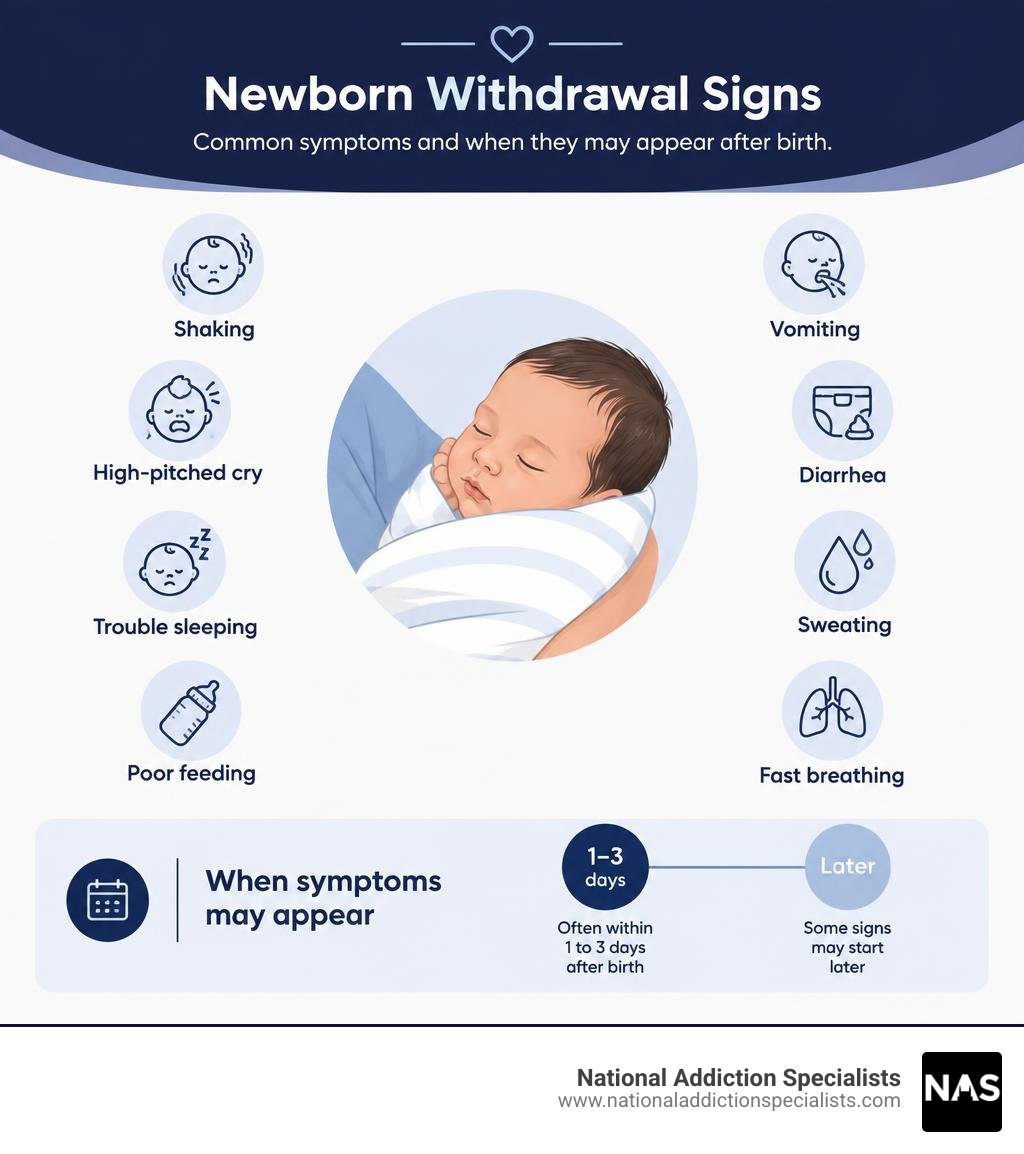
Common drug withdrawal symptoms in newborns vocab:
- common drug withdrawal symptoms
- drug withdrawal symptoms timeline
- what are withdrawal symptoms of drugs
What is Neonatal Abstinence Syndrome (NAS) and What Causes It?
Neonatal Abstinence Syndrome (NAS)—often specifically called Neonatal Opioid Withdrawal Syndrome (NOWS) when opioids are the primary agent—occurs when an infant experiences physical withdrawal from substances they were exposed to in utero. During pregnancy, many substances readily cross the placenta. The developing fetus absorbs these molecules through the umbilical circulation, integrating them into their developing central nervous system and metabolic processes.
When the umbilical cord is clamped at birth, the newborn’s continuous supply of the drug stops abruptly. As the substance clears from the baby’s bloodstream, their developing neurochemical pathways experience sudden rebound hyperactivity. In the case of opioids, chronic in utero exposure leads to receptor down-regulation and altered cellular signaling. Without the substance present to maintain balance, the infant’s central, autonomic, and gastrointestinal systems become overstimulated, as outlined in clinical guidance from the American Academy of Pediatrics.
Among neonates exposed to opioids in utero, withdrawal signs develop in 55% to 94%. However, exposure does not automatically mean a baby will face severe complications. When expectant mothers coordinate with medical professionals, carefully managing Suboxone use during pregnancy provides physiological stability for both mother and child, substantially lowering maternal-fetal distress compared to the cycles of illicit drug use and withdrawal.
Substances Linked to Neonatal Withdrawal
While opioids are the most common driver of neonatal withdrawal, several other drug classes cross the placenta and trigger distinct withdrawal or discontinuation syndromes:
- Opioids: Includes illicit narcotics (heroin, illicit fentanyl) as well as prescribed maintenance medications such as buprenorphine and prescription analgesics (oxycodone, hydrocodone, morphine).
- Benzodiazepines: Medications like diazepam, lorazepam, and alprazolam can cause delayed, prolonged neonatal withdrawal or sedation.
- Selective Serotonin Reuptake Inhibitors (SSRIs) and SNRIs: Antidepressants can trigger a neonatal discontinuation syndrome. Between 10% and 30% of babies exposed in utero to an SSRI or SNRI in late pregnancy experience some signs of withdrawal, such as mild jitteriness or respiratory irritability.
- Sedatives and Barbiturates: Chronic exposure can lead to prolonged central nervous system excitability.
- Polysubstance Exposure: Combining multiple substances—such as opioids with nicotine, sedatives, or the profound risks of alcohol addiction during pregnancy—can significantly amplify withdrawal severity and prolong the baby’s hospital stay.
Recognizing Key Drug Withdrawal Symptoms in Newborns

Newborn withdrawal does not present as a single symptom. Instead, it involves a cluster of multi-system clinical signs (NBK551498). Because babies cannot tell us how they feel, medical teams evaluate observable behavioral, physical, and autonomic cues to understand their level of distress. An overview of neonatal abstinence syndrome shows that symptoms generally fall into neurological, gastrointestinal, and autonomic categories.
Neurological and Behavioral Drug Withdrawal Symptoms in Newborns
The infant’s central nervous system becomes hyperactive during withdrawal. Parents and caregivers might notice a triad of increased muscle tone, tremors, and an exaggerated startle (Moro) reflex—essentially the infant’s nervous system firing on overdrive. Common neurological signs include:
- Excessive, High-Pitched Crying: A shrill, piercing cry that is difficult to soothe with normal comforting methods.
- Coarse Tremors and Jitteriness: Shaking movements of the limbs, noticeable both when the baby is disturbed and when resting quietly.
- Hypertonia: Stiff, rigid muscle tone; the baby may resist bending their arms and legs.
- Sleep Disturbances: Inability to settle into restorative sleep cycles, often waking abruptly after less than an hour.
- Neonatal Seizures: In the acute phase, seizures occur in 2% to 11% of infants withdrawing from opioids, presenting as rhythmic jerking, eye deviation, or bicycling leg movements requiring immediate medical intervention.
Gastrointestinal and Autonomic Signs of Withdrawal
Withdrawal strongly affects the infant’s digestive tract and involuntary nervous system. These autonomic and gastrointestinal disruptions include:
- Poor Feeding and Uncoordinated Sucking: The infant may root frantically but struggle to latch, suck, and swallow effectively.
- Regurgitation and Vomiting: Frequent spitting up or projectile vomiting during or after feeds.
- Loose, Watery Stools: Frequent diarrhea that can quickly cause dehydration and painful diaper rash.
- Diaphoresis (Sweating): Excessive sweating, especially around the head and neck, even in a temperature-controlled room.
- Tachypnea: Fast breathing (often greater than 60 breaths per minute) accompanied by chest retractions or nasal flaring.
- Fever and Temperature Instability: Fluctuations in body temperature unrelated to room environment or infection.
- Frequent Yawning, Sneezing, and Nasal Stuffy-Nose: Repetitive bouts of sneezing or yawning (more than 3–4 times in a row) are classic autonomic markers.
Diagnosis and Clinical Assessment of Infant Withdrawal
Diagnosing neonatal withdrawal requires clinical evaluation combined with an understanding of maternal substance exposure. Hospital teams conduct a comprehensive evaluation of neonatal withdrawal that combines maternal history, physical exams, and biological laboratory tests.
Biological testing helps confirm the timing and types of exposure:
- Maternal and Neonatal Urine Screening: Detects recent substance exposure (within the previous 24 to 72 hours).
- Meconium Analysis: The baby’s first bowel movements capture substance metabolites deposited from the second trimester onward, offering a broader window of exposure.
- Umbilical Cord Tissue Testing: A quick and reliable method that provides a comprehensive drug exposure history similar to meconium.
How Clinical Teams Assess Drug Withdrawal Symptoms in Newborns

To determine whether an infant needs medication or just supportive comfort measures, clinical teams use standardized scoring tools rather than guessing.
- Finnegan Neonatal Abstinence Scoring System (FNASS): The traditional gold standard, FNASS evaluates 21 distinct symptoms on a numerical scale scored every 3 to 4 hours. A cumulative score of 8 or more on three consecutive evaluations (or 12 on two consecutive evaluations) typically indicates the need for pharmacologic therapy.
- Eat, Sleep, Console (ESC) Model: A modern, family-centered approach gaining widespread adoption. Instead of counting every sneeze or tremor, the ESC approach asks three functional questions: Can the baby eat appropriately for their age (at least 1 ounce per feed or breastfeed effectively)? Can they sleep undisturbed for at least one hour? Can they be consoled within 10 minutes when upset?
- Lipsitz Tool: A simplified scoring tool focusing on core autonomic and neurological symptoms, frequently used for its clinical ease of use.
Timeline and Onset Across Different Substances
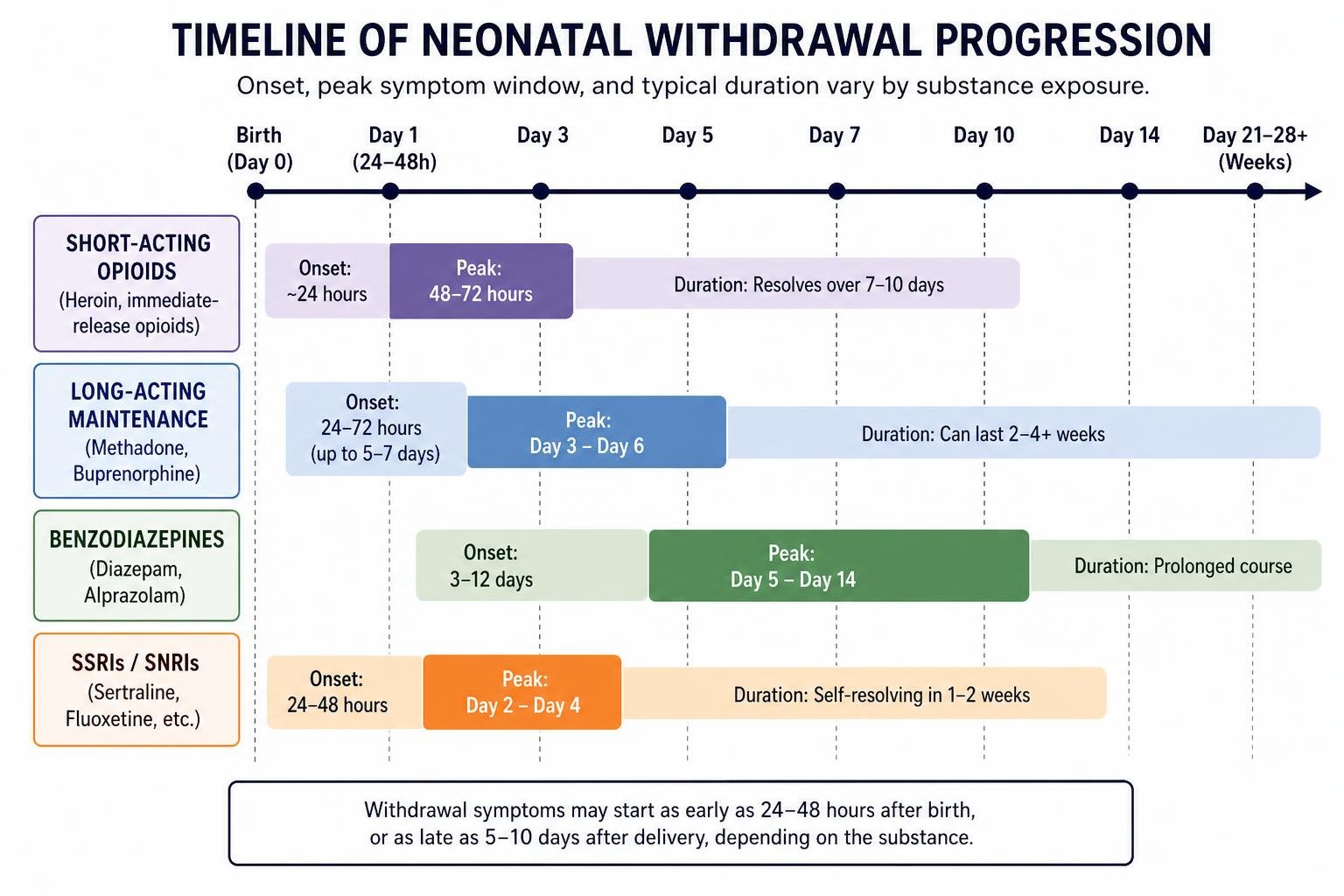
Withdrawal onset varies significantly based on the substance’s half-life, timing of the last maternal dose, and infant metabolism. Withdrawal symptoms may start as soon as 24 to 48 hours after birth, or emerge as late as 5 to 10 days after delivery.
| Substance Exposure Class | Typical Onset of Withdrawal | Peak Symptom Window | Clinical Characteristics & Duration |
|---|---|---|---|
| Short-Acting Opioids (Heroin, immediate-release opioids) | 24 hours | 48 – 72 hours | Acute autonomic agitation, diarrhea, rapid onset; resolves over 7–10 days |
| Long-Acting Maintenance (Buprenorphine) | 24 – 72 hours (up to 5–7 days) | Day 3 – Day 6 | Subacute onset, pronounced hypertonia, prolonged course; can last 2–4+ weeks |
| Benzodiazepines (Diazepam, Alprazolam) | 3 – 12 days | Day 5 – Day 14 | Delayed presentation, hypoventilation, hypertonicity, marked restlessness |
| SSRIs / SNRIs (Sertraline, Fluoxetine, etc.) | 24 – 48 hours | Day 2 – Day 4 | Transient jitteriness, mild respiratory tachypnea, weak cry; self-resolving in 1–2 weeks |
If you or a loved one is navigating opioid dependence during pregnancy, please don’t navigate this alone. Make an Appointment to Treat Addiction with our team today.
Evidence-Based Treatment and Hospital Management for NAS
Treating newborn withdrawal focuses on keeping the baby comfortable, preventing complications, and supporting healthy parent-infant bonding. Infants with NAS stay in the hospital longer than other babies (an average of two to four weeks). However, modern care models show that family-centered, non-pharmacologic interventions can shorten these stays.
When evaluating medication-assisted treatment for mothers, research highlights significant differences in newborn outcomes. Evidence shows that infants born to mothers treated with buprenorphine can have shorter hospital stays and treatment durations for NAS, and may require lower cumulative morphine doses. Clinicians frequently evaluate which treatment is better for the baby to optimize outcomes before delivery.
Non-Pharmacologic and Rooming-In Interventions
Non-pharmacologic comfort care is the foundational, first-line treatment for every newborn showing withdrawal signs. Medications are only added if these strategies are not enough on their own.
- Rooming-In Care: Keeping the mother and newborn together in the same postpartum room rather than separating the infant to a neonatal intensive care unit (NICU). Rooming-in reduces the need for pharmacotherapy by over 60% and cuts hospital stays by an average of 10 days.
- Skin-to-Skin (Kangaroo) Care: Direct skin contact stabilizes infant heart rates, regulates body temperature, lowers cortisol levels, and calms central nervous system agitation.
- Low-Stimulation Environments: Keeping lights dimmed, sound levels low, and grouping nursing exams together prevents sensory overload in hypersensitive newborns.
- Swaddling and Gentle Rocking: Snug swaddling with arms flexed close to the chest gives reassuring boundaries, dampening startle reflexes.
- Small, Frequent Feedings: Higher-calorie formulas or frequent on-demand breastfeeding address the elevated metabolic demands caused by withdrawal tremors.
- Breastfeeding Support: Breast milk provides optimal nutrition and maternal antibodies while transferring minute, safe traces of maintenance medication that gently ease the infant’s transition.
Pharmacologic Protocols and Weaning Strategies
When non-pharmacologic comfort measures do not sufficiently control symptoms, medical teams initiate carefully tapered drug protocols:
- Morphine: Oral morphine solution remains a widely used first-line therapy, administered in measured doses titrated to the infant’s scoring assessments.
- Buprenorphine: Sublingual buprenorphine protocols are increasingly used in neonatal units, offering smooth symptom control and shorter weaning timelines.
- Second-Line Adjuncts: When polysubstance exposure (especially sedatives) makes opioid monotherapy insufficient, clinicians add phenobarbital (a barbiturate that controls central agitation and prevents seizures) or clonidine (an alpha-2 adrenergic agonist that calms autonomic overactivity).
Once stabilized, medications are tapered down slowly over days or weeks. Long-term studies evaluating the outlook for babies exposed to prenatal medications show that structured medical management provides stable environments where children thrive.
Prevention, Maternal Support, and Treatment Resources
Preventing severe neonatal abstinence syndrome starts with accessible, non-judgmental healthcare for expectant mothers. Abruptly quitting opioids “cold turkey” during pregnancy carries severe risks, including placental abruption, preterm labor, and fetal demise due to recurring uterine contractions.
Medical consensus strongly recommends comprehensive medication-assisted treatment (MAT). Establishing proper buprenorphine dosing for expectant mothers maintains stable maternal blood levels, prevents illicit drug cravings, and shields the developing pregnancy from the physiological shocks of active addiction.
At National Addiction Specialists, we provide accessible, compassionate telemedicine-based treatment for opioid use disorder. Expectant mothers and postpartum parents across Tennessee and Virginia can access personalized recovery plans, Suboxone treatment, and physician counseling from the comfort and privacy of home. We accept Medicaid and Medicare, removing common barriers to recovery.
Frequently Asked Questions About Neonatal Drug Withdrawal
How soon after birth do drug withdrawal symptoms appear in newborns?
Withdrawal symptoms typically appear within 24 to 72 hours after delivery for short-acting opioids and immediate-release medications. However, when exposure involves long-acting opioids (like methadone or buprenorphine) or sedatives (like benzodiazepines), the onset of symptoms can be delayed up to 5 to 10 days after birth. Because of this variation, hospitals recommend observing exposed infants for at least 4 to 7 days before safe discharge.
Can a mother breastfeed if her baby has neonatal abstinence syndrome?
Yes, breastfeeding is strongly encouraged for mothers participating in stable medication-assisted treatment programs who do not have medical contraindications (such as HIV infection or active illicit substance use). Breast milk transfers tiny, safe amounts of maintenance medications that help soothe infant withdrawal, while skin-to-skin contact directly reduces the baby’s stress.
How long does a newborn with NAS typically stay in the hospital?
Hospital stays for infants with NAS vary based on symptom severity and the care model used. Infants managed with non-pharmacologic strategies like rooming-in and the Eat, Sleep, Console model often go home within 5 to 10 days. If an infant requires medication therapy to control severe withdrawal, hospital stays average two to four weeks to allow for safe, gradual dose tapering.
Conclusion
Recognizing and treating drug withdrawal symptoms in newborns requires compassionate, evidence-based care focused on family unity. Through modern approaches like rooming-in, skin-to-skin contact, and validated scoring systems, healthcare teams help infants move through withdrawal safely.
If you are an expectant or postpartum mother facing opioid dependence in Tennessee or Virginia, supportive medical care is available. Our board-certified clinical team at National Addiction Specialists offers confidential, compassionate telehealth care for opioid withdrawal and long-term recovery—helping you build a healthy foundation for you and your baby.
References
Suboxone® and Subutex® are a registered trademark of Indivior UK Limited. Any mention and reference of Suboxone® and Subutex® in this website is for informational purposes only and is not an endorsement or sponsorship by Indivior UK Limited.
This article was medically reviewed by: Chad Elkin, MD, DFASAM is a board-certified addiction medicine physician, founder, and Chief Medical Officer of National Addiction Specialists, dedicated to treating substance use disorders. A Distinguished Fellow of the American Society of Addiction Medicine (ASAM), Dr Elkin currently serves as President of the Tennessee Society of Addiction Medicine (TNSAM) and has held various leadership roles within the organization. Dr Elkin chairs ASAM’s Health Technology Subcommittee and is an active member of its Practice Management and Regulatory Affairs Committee, State Advocacy and Legislative Affairs Committee, and other committees. He also serves on the planning committee for the Vanderbilt Mid-South Addiction Conference. Committed to advancing evidence-based policy, Dr Elkin is Chairman of the Tennessee Association of Alcohol, Drug, & Other Addiction Services (TAADAS) Addiction Medicine Council, which collaborates with the TN Department of Mental Health & Substance Abuse Services (TDMHSAS). He has contributed to numerous local, state, and national task forces, helping develop professional guidelines, policies, and laws that align with best practices in addiction medicine. His work focuses on reducing addiction-related harm, combating stigma, and ensuring access to effective treatment.Passionate about the field of addiction medicine, he remains dedicated to shaping policy and enhancing patient care.