Which is Better for Baby? Methadone or Buprenorphine Compared
Pharmacological Differences and the Importance of MOUD
To understand why health experts evaluate methadone vs buprenorphine in pregnancy, it helps to look at how these medications act on the brain. Both belong to a class of care known as Medications for Opioid Use Disorder (MOUD). Learning how medication-assisted treatment works highlights why maintaining stable receptor activation is vital during pregnancy.
Understanding Pharmacology: Partial vs Full Agonists
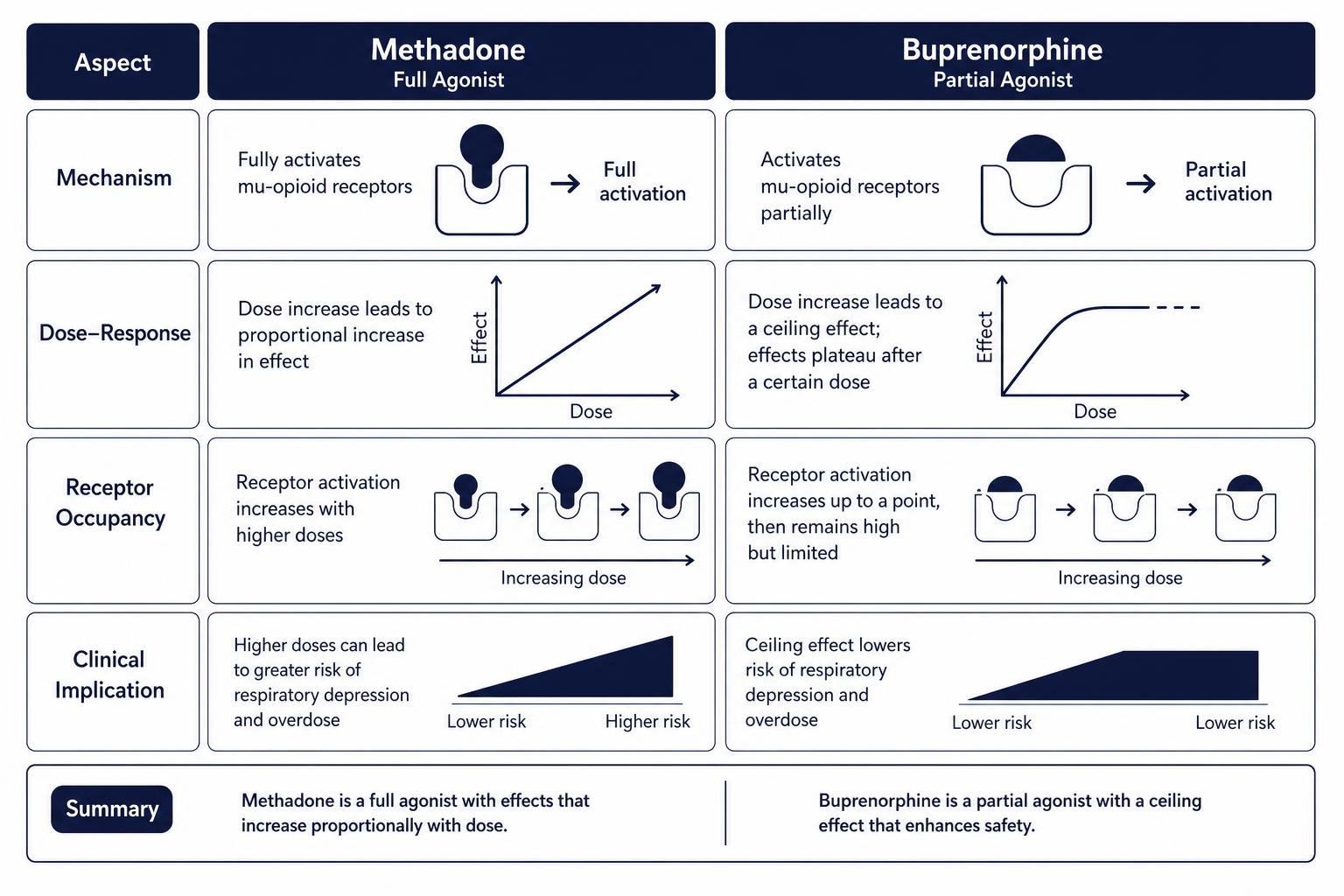
Methadone is a full mu-opioid agonist. It fully activates opioid receptors in the brain, relieving severe cravings and withdrawal symptoms without producing euphoria in opioid-tolerant individuals. Because it is a full agonist, increasing the dose increases its effect proportionally.
Buprenorphine is a partial mu-opioid agonist. It binds tightly to opioid receptors but activates them only partially. This unique property creates a “ceiling effect”—after a certain dose, the physical effects do not intensify, which significantly reduces the risk of respiratory depression and overdose. Knowing the difference between single-ingredient Subutex vs Suboxone formulations can also help clarify how partial agonists function during prenatal care.
Risks of Untreated OUD vs Supervised Withdrawal
Untreated opioid use disorder presents severe risks to both mother and fetus. Non-prescribed opioid use causes fluctuating drug levels in maternal blood, subjecting the placenta to constant cycles of toxicity and acute withdrawal. This instability increases the risk of:
- Miscarriage and stillbirth
- Placental abruption and placental insufficiency
- Severe fetal distress
- Preterm labor and birth
Some pregnant women wonder if stopping opioids completely through medically supervised withdrawal (detoxification) is safer. Leading medical organizations strongly advise against detox during pregnancy. Tapering off opioids carries an exceptionally high rate of relapse to illicit street drugs, exposing the fetus to dangerous overdose risks and chaotic environments. Stable MOUD maintenance remains the standard of care. Suboxone use during pregnancy guidance consistently emphasizes that preventing relapse is the single most important factor for protecting unborn babies.
Clinical Outcomes: Methadone vs Buprenorphine in Pregnancy

When comparing methadone vs buprenorphine in pregnancy, clinical studies show significant advantages for buprenorphine regarding neonatal health parameters, while maternal safety outcomes remain equal.
Neonatal Health Metrics: Methadone vs Buprenorphine in Pregnancy
Neonatal Opioid Withdrawal Syndrome (NOWS), historically called Neonatal Abstinence Syndrome (NAS), is an expected and treatable condition that occurs when an infant transitions away from in utero opioid exposure.
Research demonstrates that babies exposed to buprenorphine generally experience milder NOWS symptoms than those exposed to methadone:
- Morphine Requirements: Buprenorphine-exposed infants require significantly less morphine or medication to treat withdrawal symptoms.
- Hospital Duration: Neonates exposed to buprenorphine spend noticeably fewer days in the hospital (averaging ~10 days vs ~17.5 days for methadone).
- Growth Metrics: Infants born to mothers taking buprenorphine average higher birth weights (between 184g and 343g heavier across major meta-analyses) and larger head circumferences.
| Outcome Metric | Buprenorphine Exposure | Methadone Exposure | Risk Difference / Effect |
|---|---|---|---|
| Neonatal Abstinence Syndrome (NAS) | 52.0% | 69.2% | Relative Risk 0.73 (27% lower) |
| Preterm Birth (<37 weeks) | 14.4% | 24.9% | Relative Risk 0.58 (42% lower) |
| Low Birth Weight (<2500g) | 8.3% | 14.9% | Relative Risk 0.56 (44% lower) |
| Small for Gestational Age (SGA) | 12.1% | 15.3% | Relative Risk 0.72 (28% lower) |
| Cesarean Section Rate | 33.6% | 33.1% | Relative Risk 1.02 (Similar) |
| Severe Maternal Complications | 3.3% | 3.5% | Relative Risk 0.91 (Similar) |
Evidence detailed in the NEJM study on neonatal outcomes and backed by a comprehensive meta-analysis on maternal-fetal safety reinforces that buprenorphine leads to overall milder neonatal withdrawal trajectories.
Comparing the NEJM 2022 Cohort Study and MOTHER Trial
Historically, the landmark MOTHER trial (Maternal Opioid Treatment: Human Development for Infants) provided randomized controlled evidence that buprenorphine reduced NAS duration and infant hospital stays. However, the trial faced limitations, including a 33% maternal drop-out rate in the buprenorphine arm due to rigid dosing protocols.
In 2022, a massive population-based cohort study published in the New England Journal of Medicine evaluated over 2.5 million pregnant Medicaid recipients. By using high-dimensional propensity-score weighting, researchers controlled for underlying mental health conditions, socioeconomic factors, and substance use severity. This study confirmed that buprenorphine’s neonatal benefits observed in smaller clinical trials hold true across real-world clinical populations on a massive scale.
Real-World Access, Fentanyl Challenges, and Evidence Limitations

Selecting a medication involves practical considerations beyond biological statistical averages. Access to care, daily routine, and drug history play vital roles in overall recovery stability.
Treatment Access and Administration: Methadone vs Buprenorphine in Pregnancy
Methadone regulation requires patients to attend specialized Opioid Treatment Programs (OTPs) daily for observed liquid dosing. While this structure offers valuable accountability and daily check-ins, it can impose severe logistical hurdles for working mothers, those raising other children, or patients residing in rural areas without local clinics.
In contrast, buprenorphine can be prescribed in conventional office-based settings or via specialized telemedicine care, allowing patients to pick up prescriptions at retail pharmacies and self-administer medication conveniently at home.
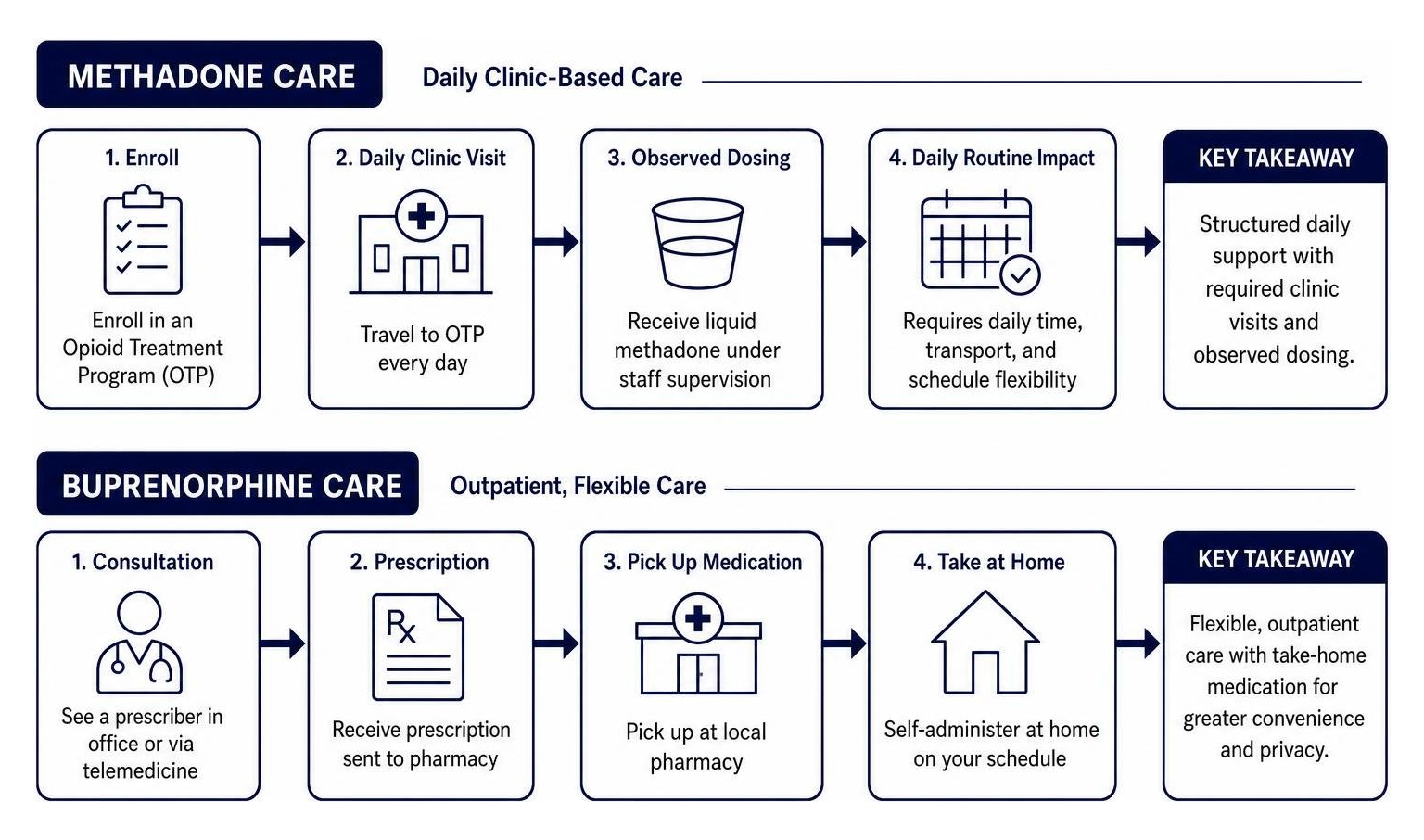
A comprehensive real-world comparison study confirmed that buprenorphine offers an accessible option for pregnant women seeking recovery without sacrificing personal privacy or daily obligations. Reviewing our guide to buprenorphine dosing during pregnancy can help expectant mothers understand how outpatient adjustments maintain stability as plasma volumes change throughout gestation.
The Impact of Synthetic Opioids and Evidence Limitations
The modern illicit drug supply is heavily dominated by high-potency synthetic opioids like fentanyl. Fentanyl accumulates in body fat, making the transition onto buprenorphine challenging due to the risk of precipitated withdrawal. If a partial agonist like buprenorphine is taken while full-agonist opioids are active on receptors, it can suddenly displace them, inducing acute withdrawal.
For pregnant patients actively using non-prescribed fentanyl:
- Methadone induction may be easier because it is a full agonist and carries no risk of precipitated withdrawal.
- Micro-dosing protocols (micro-induction) allow gradual transition onto buprenorphine while slowly displacing illicit fentanyl without triggering withdrawal.
Additionally, observational studies carry inherent selection bias; healthier patients with milder addiction histories are sometimes preferentially prescribed buprenorphine, whereas patients with severe, unstable substance use may be directed toward methadone clinics.
Make an Appointment to Treat Addiction. Please don’t hesitate. Make an appointment today.
Official Guidelines from ACOG and SAMHSA
The American College of Obstetricians and Gynecologists (ACOG) and the Substance Abuse and Mental Health Services Administration (SAMHSA) emphasize that MOUD is the gold standard for managing OUD during pregnancy.
Key clinical guidelines include:
- Medication Selection: Both buprenorphine and methadone are safe first-line therapies. Buprenorphine is increasingly encouraged as a initial choice when clinically feasible due to its favorable neonatal profile, supported by a published systematic review on comparative outcomes.
- Postpartum Continuation: MOUD should never be stopped immediately after delivery. Tapering should be avoided during the fragile postpartum period while caring for a newborn.
- Breastfeeding Support: Breastfeeding is strongly encouraged for mothers taking either methadone or buprenorphine (unless contraindicated by conditions like HIV infection). Breastmilk contains minimal trace amounts of medication and actively reduces the severity of infant NOWS symptoms.
- Informed Choice: Pregnant patients should feel fully supported without fear of judgment. Reviewing resources on understanding real risks of treatment while expecting assists patients in having open, informed discussions with their healthcare providers.
Frequently Asked Questions About OUD Treatment During Pregnancy
Is buprenorphine safer for unborn babies than methadone?
Buprenorphine is associated with lower risks of preterm birth, low birth weight, small size for gestational age, and less severe Neonatal Opioid Withdrawal Syndrome (NOWS). However, both medications are safe, proven treatments that dramatically reduce the severe maternal-fetal risks of untreated opioid addiction.
Can pregnant women switch from methadone to buprenorphine?
Switching from methadone to buprenorphine during pregnancy requires cautious medical supervision due to the risk of precipitated withdrawal, which causes acute distress to both mother and fetus. If a patient is stable on methadone, clinical guidelines generally recommend remaining on methadone rather than attempting a mid-pregnancy transition.
Should medication-assisted treatment be stopped after delivery?
No. Stopping MOUD postpartum significantly increases the risk of relapse, fatal overdose, and loss of child custody. Maintenance therapy should continue postpartum to safeguard long-term recovery and provide stability while caring for a baby.
Conclusion: Making the Right Choice for You and Your Baby

Comparing methadone vs buprenorphine in pregnancy highlights that while buprenorphine offers distinct advantages in reducing neonatal withdrawal duration and birth weight complications, both options are safe and infinitely better than active street drug use. The best choice is the medication that keeps you healthy, supported, and drug-free.
At National Addiction Specialists, we provide compassionate, confidential telemedicine-based buprenorphine treatment tailored to mothers in Tennessee and Virginia. Our team works alongside your prenatal care team to ensure a safe pregnancy and recovery journey from the comfort of your home. Get started with confidential telemedicine care today to protect your baby’s future.
This article was medically reviewed by: Chad Elkin, MD, DFASAM is a board-certified addiction medicine physician, founder, and Chief Medical Officer of National Addiction Specialists, dedicated to treating substance use disorders. A Distinguished Fellow of the American Society of Addiction Medicine (ASAM), Dr Elkin currently serves as President of the Tennessee Society of Addiction Medicine (TNSAM) and has held various leadership roles within the organization. Dr Elkin chairs ASAM’s Health Technology Subcommittee and is an active member of its Practice Management and Regulatory Affairs Committee, State Advocacy and Legislative Affairs Committee, and other committees. He also serves on the planning committee for the Vanderbilt Mid-South Addiction Conference. Committed to advancing evidence-based policy, Dr Elkin is Chairman of the Tennessee Association of Alcohol, Drug, & Other Addiction Services (TAADAS) Addiction Medicine Council, which collaborates with the TN Department of Mental Health & Substance Abuse Services (TDMHSAS). He has contributed to numerous local, state, and national task forces, helping develop professional guidelines, policies, and laws that align with best practices in addiction medicine. His work focuses on reducing addiction-related harm, combating stigma, and ensuring access to effective treatment. Passionate about the field of addiction medicine, he remains dedicated to shaping policy and enhancing patient care.
Suboxone® and Subutex® are a registered trademark of Indivior UK Limited. Any mention and reference of Suboxone® and Subutex® in this website is for informational purposes only and is not an endorsement or sponsorship by Indivior UK Limited.