What You Need to Know Before Trying Alcohol Detox at Home
Safe Alcohol Detox at Home Starts With a Medical Plan
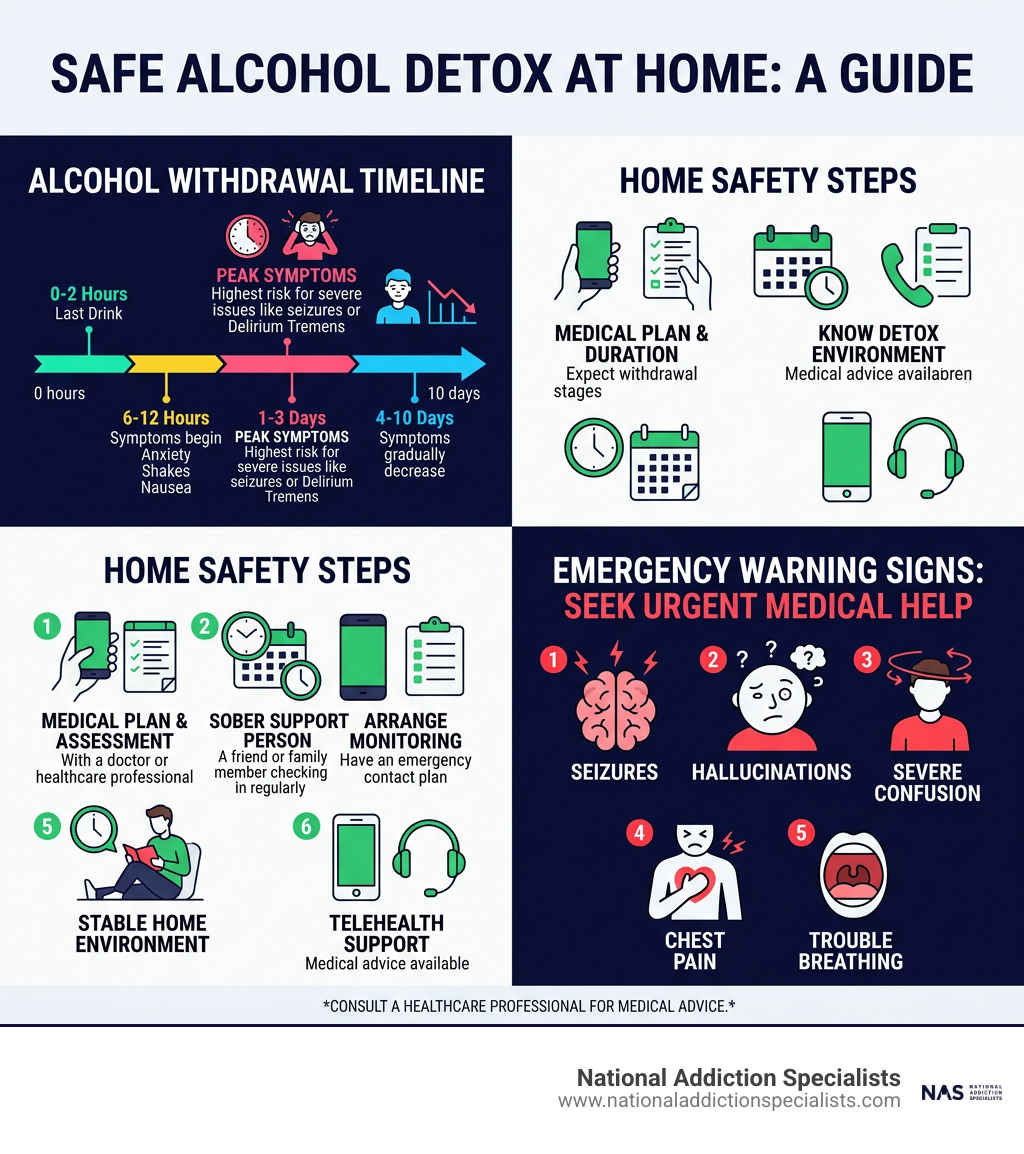
A safe alcohol detox at home is only appropriate for people with a low risk of severe withdrawal and a plan made with a healthcare professional. Before cutting down or stopping, get an assessment, arrange for a sober adult to check on you, keep a phone and emergency plan nearby, and seek urgent help for seizures, hallucinations, confusion, chest pain, or trouble breathing.
Alcohol withdrawal is not simply a test of willpower. When someone who drinks heavily or regularly suddenly stops, symptoms can begin within hours and may become dangerous over the next one to three days. Seizures and delirium tremens (DTs), a severe state of confusion and instability, require emergency medical care.
Home detox should not mean detoxing alone. It can be a private and flexible option when medical screening, telehealth support, prescribed treatment when needed, stable housing, and reliable support are in place. If you have had withdrawal seizures or DTs before, have serious medical or mental health concerns, use other sedating drugs, are pregnant, or cannot be monitored safely, inpatient medical detox is the safer choice.
I am Chad Elkin, MD, a board-certified physician in Addiction Medicine and Internal Medicine and the founder and medical director of National Addiction Specialists. My work in telehealth addiction care focuses on helping people access safe alcohol detox at home when clinically appropriate, while recognizing when a higher level of care is needed.
Safe alcohol detox at home helpful reading:
Understanding Alcohol Withdrawal and the Risks of Detoxing Alone
To understand why quitting alcohol cold turkey can be hazardous, we have to look at the brain’s delicate neurochemical balance. Alcohol acts as a central nervous system depressant. It enhances the inhibitory neurotransmitter gamma-aminobutyric acid (GABA) and suppresses the excitatory neurotransmitter glutamate. Over months or years of heavy drinking, the brain adapts to this continuous suppression by downregulating GABA receptors and producing more glutamate receptors to keep you functional.
When alcohol suddenly disappears from the equation, the brain is stripped of its primary calming mechanism. This causes severe neuroadaptation rebound: an uncontrolled surge of glutamate activity and profound central nervous system excitability. We often explain why your body reacts violently when quitting drinking as an autonomic alarm system that has lost its brakes.
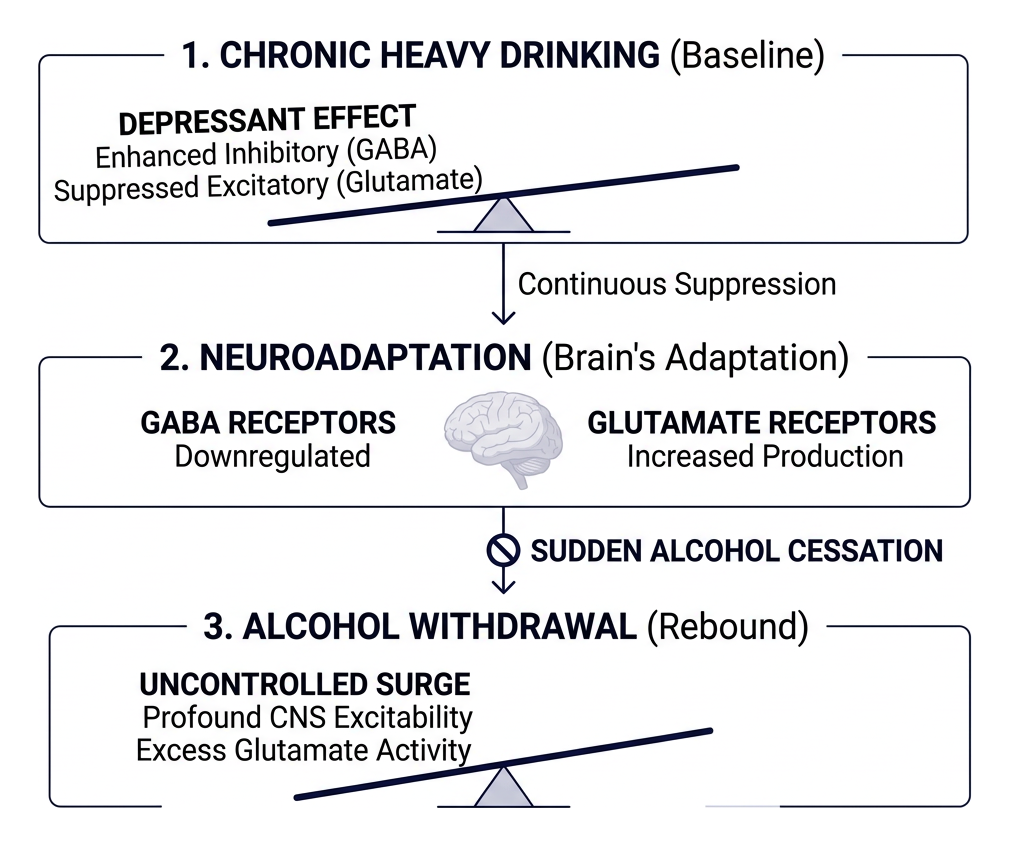
This neurological rebound triggers autonomic instability—rapid spikes in heart rate, elevated blood pressure, severe tremors, profuse sweating, and intense internal agitation. In the United States, an estimated 28.9 million individuals struggle with alcohol use disorder, and excessive alcohol use contributes to nearly 141,000 deaths annually. Recognizing the earliest signs of autonomic overdrive is essential; our guide on how to recognize the signs of alcohol withdrawal outlines these subtle physical shifts before they escalate.
Severe Complications: Seizures and Delirium Tremens
Without medical oversight, acute alcohol withdrawal can rapidly turn life-threatening. The two most severe medical emergencies encountered during unmanaged detox are withdrawal seizures and delirium tremens (DTs).
- Withdrawal Seizures: According to the National Institute on Alcohol Abuse and Alcoholism (NIAAA), seizures occur in approximately 25% of individuals experiencing significant alcohol withdrawal. These are typically generalized tonic-clonic episodes that can develop within 12 to 48 hours after the last drink, sometimes occurring before other severe symptoms become prominent.
- Delirium Tremens (DTs): DTs develop in about 5% of patients undergoing withdrawal. This condition represents complete autonomic collapse and profound neurological confusion, featuring visual or tactile hallucinations, extreme agitation, severe hyperthermia, and cardiovascular instability. Without professional medical intervention, delirium tremens carries a mortality rate of up to 37%, though structured clinical care reduces this risk below 5%.
Understanding the timeline and risks of delirium tremens is vital for anyone planning a detox journey. Having a dedicated protocol for managing severe alcohol withdrawal ensures that unexpected complications receive immediate, life-saving medical escalation.
How to Plan a Safe Alcohol Detox at Home
A successful home detox is not an impromptu decision made after an evening of drinking. It requires structured preparation, objective clinical screening, and continuous communication with a dedicated healthcare team.

Modern addiction medicine demonstrates that community-based withdrawal can be exceptionally effective for the right candidates. Medical research on primary care home detoxification (Davis, 2018) indicates that structured home detox programs managed by medical professionals can be 10.6 to 22.7 times more cost-effective than inpatient care, while maintaining high completion rates and excellent drinking outcomes.
A structured home plan involves:
- Comprehensive Medical Assessment: Evaluating overall health, drinking history, prior withdrawal episodes, and baseline vital signs via telehealth.
- Dedicated Sober Support: A responsible adult caregiver must remain present 24/7 to observe symptoms, assist with hydration, and initiate emergency protocols if needed.
- Objective Severity Scoring: Utilizing clinical frameworks like the Clinical Institute Withdrawal Assessment for Alcohol, revised (CIWA-Ar) to monitor nausea, tremors, sweating, and anxiety levels.
- Emergency Escalation Protocol: Keeping local emergency numbers and transportation options prepared in case medical transfer becomes necessary.
Exploring evidence-based addiction treatment at home allows patients to receive high-level clinical guidance while remaining in the comfort and privacy of their personal surroundings.
Candidate Criteria for Safe Alcohol Detox at Home
To qualify for an at-home detox, a patient must meet strict clinical criteria:
- Mild-to-Moderate Dependence: Daily alcohol intake and past withdrawal episodes fall within mild or moderate thresholds.
- Stable Living Environment: A calm, quiet home free of alcohol and active substance use.
- Reliable Sober Caregiver: A trusted friend, partner, or family member committed to remaining on-site continuously.
- Absence of Polysubstance Dependence: No concurrent physical dependence on benzodiazepines, opioids, or other sedatives.
- Psychiatric Stability: No active suicidal ideation, severe psychosis, or unmanaged bipolar disorder.
When Inpatient Medical Detox Is Mandatory
Certain risk factors make home detox unsafe. Inpatient hospital or residential medical detox is mandatory for individuals with:
- A personal history of withdrawal seizures, delirium tremens, or severe hallucinations.
- Co-occurring chronic health conditions, such as advanced cirrhosis, congestive heart failure, severe kidney disease, or unstable diabetes.
- Active polysubstance abuse, particularly involving sedatives or central nervous system depressants.
- Lack of a stable home environment or lack of a reliable, sober caregiver.
- Pregnancy, where autonomic instability poses acute risks to both mother and fetus.
The Alcohol Detox Timeline: What to Expect Hour by Hour
The physical trajectory of alcohol withdrawal follows a predictable biological pattern. While up to 50% of people with a history of long-term heavy drinking experience mild withdrawal signs within 24 hours of their last drink, symptoms can begin as early as 2 hours after alcohol levels start dropping.
| Withdrawal Phase | Approximate Timeline | Common Symptoms & Clinical Indicators | Severity Level |
|---|---|---|---|
| Stage 1: Early Onset | 0 – 24 Hours | Mild anxiety, hand tremors, headache, nausea, sweating, insomnia | Mild to Moderate (Peak Seizure Risk at 12–24h) |
| Stage 2: Peak Acute | 24 – 72 Hours | Heightened agitation, rapid heart rate, elevated BP, intense diaphoresis, potential DT onset | Moderate to Severe (Critical Medical Window) |
| Stage 3: Subacute & Taper | Days 4 – 7 | Subsiding physical symptoms, ongoing fatigue, emotional fluctuations, normalized vitals | Mild |
| Stage 4: Post-Acute (PAWS) | Weeks to Months | Sleep disturbances, mood swings, intermittent cravings, brain fog | Chronic / Neurochemical Adjustment |
Gaining clarity on understanding how long alcohol withdrawal lasts gives patients and their caregivers realistic expectations. For a comprehensive breakdown, review our detailed hour-by-hour alcohol detox roadmap.
Hours 0 to 24: Early Symptoms and Peak Seizure Risk
The initial hours after the last drink mark the start of the body’s metabolic transition. Early symptoms frequently emerge between 6 and 12 hours, characterized by fine tremors in the hands, inner restlessness, mild nausea, headaches, and disturbed sleep.
Between hours 12 and 24, autonomic hyperactivity increases. Blood pressure and pulse rates begin to rise, and this window represents the earliest onset risk for withdrawal-related seizures. Continuous caregiver presence and regular vital sign checks are critical during this opening day.
Hours 24 to 72: Peak Discomfort and Critical Monitoring
The 24- to 72-hour window is universally recognized as the most intense phase of acute alcohol withdrawal. Physical symptoms reach their peak:
- Pronounced diaphoresis (profuse sweating)
- Coarse tremors
- Severe gastrointestinal upset and vomiting
- Significant increases in systolic and diastolic blood pressure
- Auditory or visual disturbances (alcoholic hallucinosis)
Between 48 and 72 hours, the risk for delirium tremens reaches its apex. A sober caregiver must watch closely for confusion, disorientation, severe agitation, or tactile sensations (such as feeling bugs on the skin), escalating immediately to emergency medical care if any arise.
Days 4 to 10 and Beyond: Physical Stabilization and PAWS
By day 4 or 5, the most dangerous acute physical symptoms generally begin to subside. Heart rate and blood pressure stabilize, appetite returns, and tremors gradually resolve. However, residual fatigue, emotional lability, and profound sleep disturbances often persist through days 7 to 10.
Following acute physical recovery, many individuals encounter Post-Acute Withdrawal Syndrome (PAWS). PAWS involves prolonged neurological recalibration that can last for several weeks or months, manifesting as intermittent cravings, mood swings, anxiety, and sleep disruption. Implementing smart strategies for each withdrawal stage ensures that the transition from acute detox to long-term recovery remains stable and resilient.
Medical Tapering and Supportive Home Management Strategies
For individuals who are clinically eligible for outpatient or home-based care, abrupt cessation without preparation is never recommended. Under medical guidance, a gradual taper or prescription support protocol allows the central nervous system to adapt smoothly.

When tapering is medically supervised, standard drink definitions must be strictly observed:
- 12 ounces of standard beer (approximately 5% alcohol by volume)
- 5 ounces of wine (approximately 12% alcohol by volume)
- 1.5 ounces of distilled spirits (approximately 40% alcohol by volume)
A physician-directed taper gradually reduces daily standard drink equivalents over a structured 3- to 7-day period while watching vitals and CIWA scores. Clinicians may also prescribe non-sedating supportive medications to manage blood pressure, nausea, and sleep disturbances. To learn more about structured clinical pathways, explore our clinically guided at-home detox options.
Nutrition and Supportive Care for Safe Alcohol Detox at Home
Chronic alcohol intake severely impairs the digestive tract’s ability to absorb vital nutrients, creating significant metabolic deficiencies that worsen withdrawal distress.
- Oral Thiamine (Vitamin B1): Alcohol depletes thiamine reserves, putting individuals at risk for acute encephalopathy and permanent cognitive damage known as Wernicke-Korsakoff syndrome. High-dose thiamine supplementation must begin immediately before and during detox.
- Electrolytes and Hydration: Sweating, vomiting, and diarrhea quickly cause dehydration and electrolyte imbalances. Drink 6 to 8 glasses of non-alcoholic fluids daily, including oral rehydration salts, broths, and electrolyte-rich solutions.
- Magnesium and Multivitamins: Magnesium deficiency exacerbates muscle cramps, tremors, and cardiac irritability. A balanced daily multivitamin replenishes essential micronutrients.
- Nutritional Support: Focus on small, frequent, protein-rich meals paired with complex carbohydrates to stabilize blood glucose levels without overwhelming sensitive digestive systems.
- Rest and Nervous System Regulation: Maintain a quiet, low-lit environment. Warm showers, controlled box-breathing exercises, and guided meditation help calm the autonomic nervous system.
Emergency Red Flags Requiring Immediate 911 Care
Home detox must instantly convert to an emergency hospital admission if any of the following red flag symptoms appear:
- Any seizure activity (witnessed tonic-clonic convulsions or sudden loss of consciousness)
- Visual, auditory, or tactile hallucinations
- Profound disorientation, confusion, or inability to recognize familiar people
- Chest tightness, severe palpitations, or shortness of breath
- High fever (temperature exceeding 101°F / 38.3°C)
- Persistent, unmanageable vomiting preventing hydration
Long-Term Sobriety and Relapse Prevention After Detox
Successfully clearing alcohol from your system is a major physical milestone, but detox alone is not a cure for alcohol use disorder. Without a structured recovery and behavioral treatment plan, relapse rates remain high.
A comprehensive aftercare plan bridges the gap between acute detox and sustained lifelong wellness:
- Medication-Assisted Treatment (MAT): FDA-approved medications such as Acamprosate (which helps balance post-detox brain chemistry and reduce physical cravings) and Naltrexone (which blocks the rewarding effects of alcohol) significantly reduce relapse risk when integrated into daily recovery.
- Behavioral Therapy: Engaging in Cognitive Behavioral Therapy (CBT) helps identify emotional triggers, build distress tolerance, and reframe negative thought patterns that drive alcohol use.
- Mutual Support Groups: Connecting with peer recovery communities—such as SMART Recovery, Alcoholics Anonymous (AA), or digital support networks—provides accountability, shared experience, and sustained encouragement.
- Lifestyle Restructuring: Establishing predictable sleep routines, regular physical exercise, and healthy dietary habits actively repairs the body’s neurotransmitter systems and reduces everyday stress.
Make an Appointment to Treat Addiction. Please don’t hesitate. Make an appointment today.
Frequently Asked Questions About Alcohol Detox at Home
Can you safely detox from alcohol at home cold turkey?
Detoxing cold turkey without medical guidance is unsafe for anyone with moderate to heavy physical alcohol dependence. Abrupt cessation shocks the central nervous system, triggering an uncontrolled glutamate surge that can cause life-threatening seizures, severe cardiovascular spikes, and delirium tremens within 24 to 72 hours. Detox should always involve medical assessment and structured tapering or clinical support.
How long does acute alcohol detox take at home?
The acute phase of alcohol detox generally lasts between 3 and 7 days. Early physical symptoms begin within 6 to 12 hours of the last drink, reach their maximum severity between 24 and 72 hours, and gradually taper off by days 5 through 7. While acute physical symptoms resolve within a week, psychological symptoms like anxiety and insomnia may linger for several weeks.
What vitamins are essential during an at-home alcohol detox?
The most critical vitamin during alcohol detox is thiamine (Vitamin B1), which protects against severe neurological complications like Wernicke-Korsakoff syndrome. A comprehensive B-complex supplement, magnesium, and a high-potency daily multivitamin are also essential to correct chronic nutritional depletion, stabilize cellular energy, and support nervous system healing.
Conclusion
Overcoming alcohol dependence is a profound, life-changing decision. While the prospect of completing detox in the privacy of your own home is appealing, personal safety must always come first. A safe detox requires professional medical evaluation, objective risk screening, 24/7 sober support, and an immediate plan for emergency care if complications arise.
Detoxification is simply the first step along the continuum of healing. True, lasting recovery is built through comprehensive post-detox treatment, therapy, and ongoing peer support.
At National Addiction Specialists, we provide compassionate, evidence-based telehealth-based addiction treatment and recovery across Tennessee and Virginia. We specialize in personalized, outpatient medication-assisted treatment that allows you to rebuild your health and reclaim your life safely from home.
Medical Review and Clinical Leadership
This article was medically reviewed by: Chad Elkin, MD, DFASAM is a board-certified addiction medicine physician, founder, and Chief Medical Officer of National Addiction Specialists, dedicated to treating substance use disorders. A Distinguished Fellow of the American Society of Addiction Medicine (ASAM), Dr Elkin currently serves as President of the Tennessee Society of Addiction Medicine (TNSAM) and has held various leadership roles within the organization.
Dr Elkin chairs ASAM’s Health Technology Subcommittee and is an active member of its Practice Management and Regulatory Affairs Committee, State Advocacy and Legislative Affairs Committee, and other committees. Committed to advancing evidence-based policy, Dr Elkin is Chairman of the Tennessee Association of Alcohol, Drug, & Other Addiction Services (TAADAS) Addiction Medicine Council, which collaborates with the TN Department of Mental Health & Substance Abuse Services (TDMHSAS). He also serves on the planning committee for the Vanderbilt Mid-South Addiction Conference.
He has contributed to numerous local, state, and national task forces, helping develop professional guidelines, policies, and laws that align with best practices in addiction medicine. His work focuses on reducing addiction-related harm, combating stigma, and ensuring access to effective treatment. Passionate about the field of addiction medicine, he remains dedicated to shaping policy and enhancing patient care.
References
Davis C. “Home detox – supporting patients to overcome alcohol addiction..” Australian prescriber, 2018. PMCID PMC6299173.
Suboxone® and Subutex® are a registered trademark of Indivior UK Limited. Any mention and reference of Suboxone® and Subutex® in this website is for informational purposes only and is not an endorsement or sponsorship by Indivior UK Limited.