How to Approach Suboxone Detox at Home
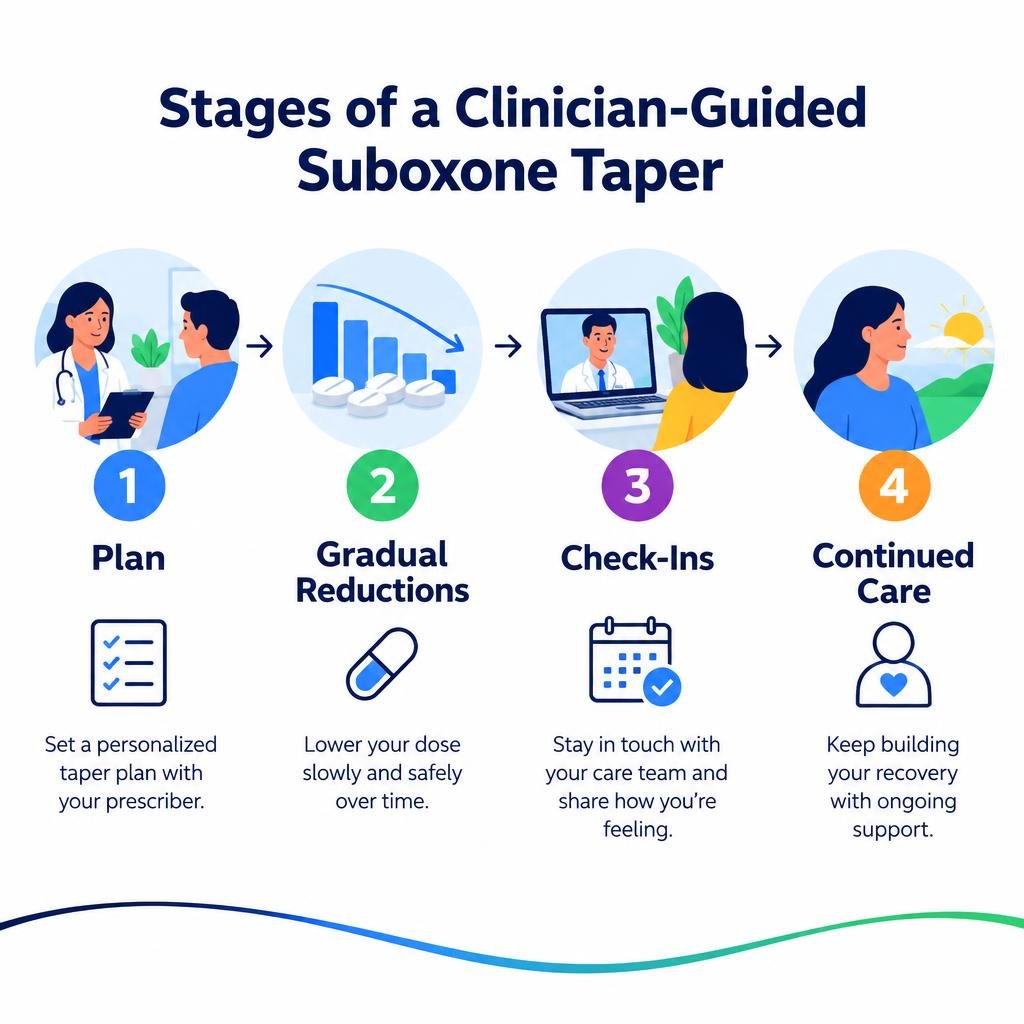
Suboxone detox at home is safest as a gradual taper planned with your prescriber, not a sudden stop. Agree on dose changes and check-ins before you begin. Tell your care team if withdrawal symptoms or cravings get worse, and keep naloxone available in case of an opioid overdose. Stopping Suboxone can lower your opioid tolerance, which makes a return to opioid use especially dangerous.
If you mean starting Suboxone at home to manage withdrawal from other opioids, that is a different process. Your first dose must be timed carefully with your prescriber to avoid sudden, severe withdrawal.
I’m Chad Elkin, founder and medical director of National Addiction Specialists and board-certified in addiction medicine and internal medicine. My experience leading telemedicine-based opioid treatment informs this guide to Suboxone detox at home.
Simple guide to Suboxone detox at home:
How Suboxone Detox at Home Works
Undergoing opioid withdrawal can feel daunting, but modern medication makes the process manageable, safe, and dignified. When transitioning off full-agonist opioids like oxycodone, hydrocodone, heroin, or fentanyl, medical guidance on opiate and opioid withdrawal emphasizes the use of evidence-based medications to alleviate distress. Choosing a structured program for at-home detox allows you to stabilize your body without uprooting your daily life.
Suboxone works by combining two distinct medications: buprenorphine and naloxone. Buprenorphine acts as a partial mu-opioid agonist. Unlike full opioids that activate receptors completely, buprenorphine provides just enough stimulation to silence cravings and stop physical withdrawal, while its natural “ceiling effect” prevents euphoria and significantly reduces the risk of respiratory depression. Naloxone is included purely as an abuse deterrent; when taken sublingually as prescribed, it does not absorb into your bloodstream in significant amounts, but it prevents misuse if someone attempts to inject the medication.
Understanding Buprenorphine and Naloxone
Buprenorphine possesses an exceptionally high binding affinity for mu-opioid receptors in the brain. This means it grips receptor sites far more tightly than almost any other opioid. Once bound, it acts as a steady anchor, providing consistent symptom relief over a prolonged 24- to 36-hour period. Because it is absorbed sublingually (under the tongue) or buccally (inside the cheek), buprenorphine bypasses initial stomach breakdown and delivers stable blood plasma concentrations within three to seven days of regular use.
Is a Suboxone Detox at Home Safe and Medically Sound?
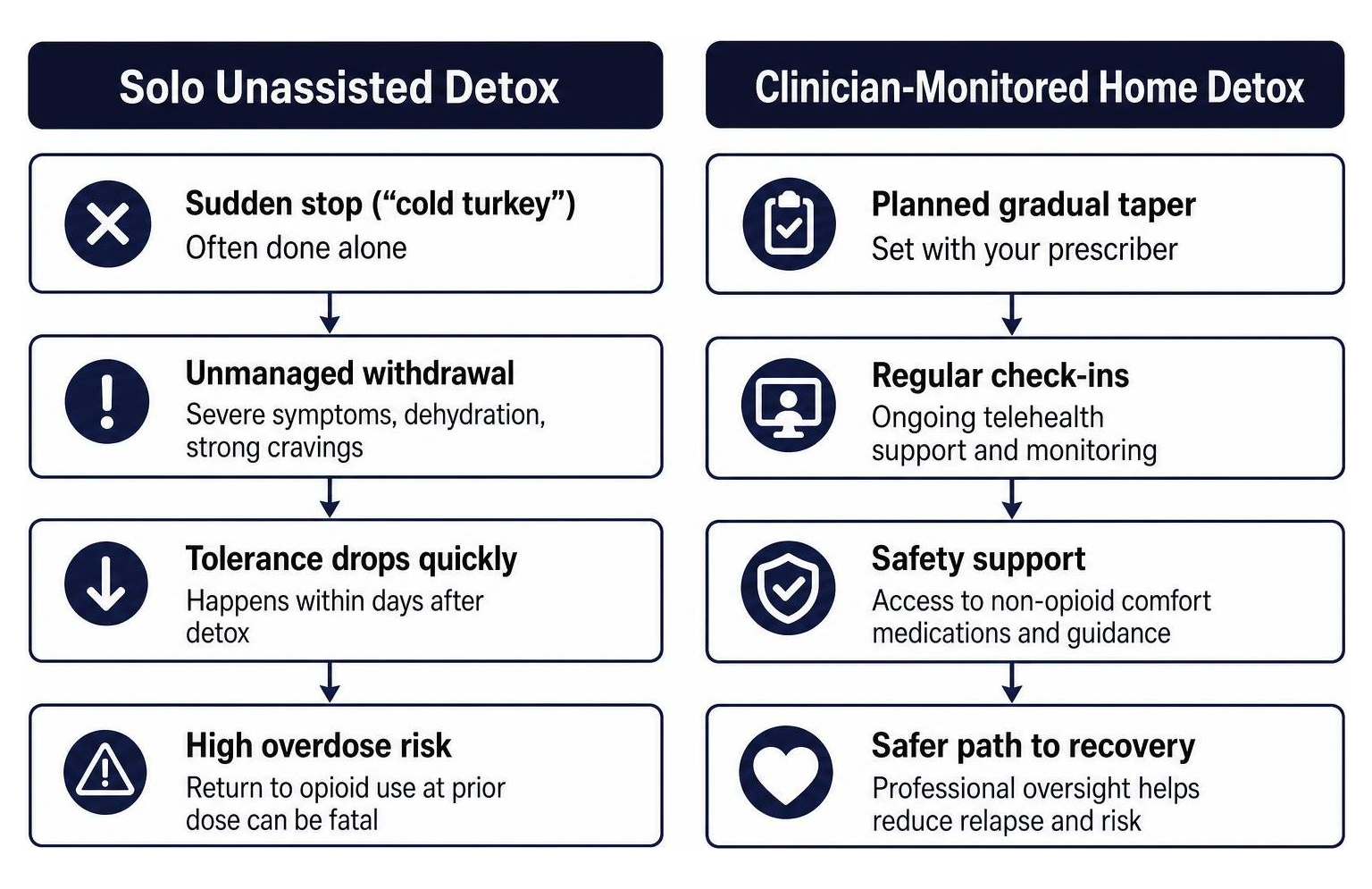
Attempting to detox completely on your own—often called going “cold turkey”—carries substantial medical and emotional hazards. Clinical reviews examining the risks of detoxing alone demonstrate that unmanaged physical withdrawal frequently leads to severe dehydration, unmanageable cravings, and rapid relapse.
Crucially, when someone completes an unassisted detox, their physiological tolerance to opioids plummets within days. If a relapse occurs at prior dosage levels, the chance of a fatal overdose spikes dramatically. Enrolling in a supervised at-home Suboxone treatment plan provides ongoing clinical oversight, access to non-opioid comfort medications, and regular telehealth check-ins, ensuring that safety remains the top priority throughout every phase of recovery.
Step-by-Step Guide to Starting Suboxone Detox at Home
Initiating Suboxone at home—a process known clinically as home induction—requires precision and patience. Following a structured first-day survival guide ensures that you introduce the medication only when your body is fully ready to receive it, avoiding common early pitfalls.

Assessing Withdrawal Severity Before the First Dose
Before placing your first Suboxone tablet or film under your tongue, your brain’s opioid receptors must be partially cleared of full-agonist opioids. Taking buprenorphine too early will abruptly knock remaining opioids off your receptors, triggering sudden and severe withdrawal.
Clinicians evaluate this readiness using the Clinical Opioid Withdrawal Scale (COWS) or the Subjective Opioid Withdrawal Scale (SOWS). You must wait until you reach a moderate withdrawal score (typically a COWS score of 13 or higher) before starting.
Watch for these objective physical indicators:
- Enlarged, dilated pupils
- Visible body tremors and muscle twitches
- Goosebumps (“cold turkey” skin) and persistent shivering
- Restlessness, pacing, and inability to sit still
- Runny nose, yawning, and excessive tearing
- Stomach cramps, nausea, vomiting, or diarrhea
For short-acting prescription opioids (like immediate-release oxycodone or hydrocodone), this moderate withdrawal state usually develops within 12 to 24 hours after your last use. For long-acting opioids (such as extended-release formulas or methadone), you may need to wait 24 to 48 hours or longer.
Traditional Induction vs. Microdosing for Fentanyl and Prescription Opioids
Illicit fentanyl presents unique clinical challenges due to its high lipophilicity; it stores itself in fatty tissues and leaches out unpredictably over several days. For fentanyl users, waiting for traditional withdrawal can sometimes result in lingering receptor activity. To navigate this, providers utilize specific clinical home start protocols tailored to the patient’s specific opioid history.
| Protocol Type | Target Opioid Type | Withdrawal Required? | Starting Dose | Key Benefit |
|---|---|---|---|---|
| Traditional Home Induction | Short-acting prescription opioids, standard heroin | Yes (COWS score ≥ 13) | 2 mg to 4 mg sublingually | Rapid symptom suppression within hours |
| Microdosing (Bernese Method) | Illicit fentanyl, long-acting opioids, methadone | No | 0.25 mg to 0.5 mg micro-doses | Avoids abrupt full-agonist displacement |
| Macrodosing (Provider-Guided) | High-tolerance individuals under direct oversight | Yes (COWS score ≥ 13) | 8 mg to 16 mg initial dose | Rapid stabilization for intense cravings |
Safe Daily Dosing Protocols for a Suboxone Detox at Home
When embarking on outpatient opioid withdrawal management, following established dosing schedules—such as those outlined in the AHRQ patient guide to buprenorphine—keeps your recovery on a predictable, comfortable track.
Here is what a standard traditional home induction timeline looks like:
- Day 1 (Initiation & Relief): Once moderate withdrawal is verified, place a 2 mg or 4 mg dose under your tongue. Keep it there until completely dissolved (typically 5 to 10 minutes) without swallowing saliva immediately, eating, drinking, or talking. Wait 60 to 120 minutes. If symptoms improve but linger, take a second 2 mg to 4 mg dose. The typical target total for Day 1 is 8 mg (rarely exceeding 12 mg to 16 mg).
- Day 2 (Stabilization): Take the total effective dose from Day 1 as a single morning dose (or split into two daily doses as directed). If mild cravings or aches persist, your prescriber may advise adding 2 mg to 4 mg, reaching 12 mg to 16 mg total.
- Day 3 and Beyond (Maintenance): Most patients stabilize comfortably between 12 mg and 16 mg daily. Blood levels reach a steady state within three to seven days, eliminating physical withdrawal and dramatically quieting mental cravings.
Managing Withdrawal Symptoms and Preventing Complications
Detoxification is more than just taking medication; it is about keeping your whole body balanced, hydrated, and rested while your neurochemistry adjusts. Having a comprehensive guide to Suboxone withdrawal relief empowers you to navigate the first week with confidence.
Avoiding and Managing Precipitated Withdrawal
Precipitated withdrawal occurs when buprenorphine is taken while full-agonist opioids are still actively stimulating receptor sites. Because buprenorphine binds tighter than almost any full opioid but activates the receptor with lower intrinsic intensity, it violently strips the full agonist away, plunging the individual into immediate, severe withdrawal within 30 to 60 minutes.
If this occurs at home:
- Do not panic. While deeply uncomfortable, precipitated withdrawal is not fatal.
- Contact your telemedicine provider immediately. Depending on your situation, your clinician will evaluate whether to pause dosing and administer adjunctive comfort medications, or prescribe supplemental buprenorphine to overcome receptor blockade.
- Explore professional Suboxone withdrawal treatment options rather than attempting to self-treat with illicit full agonists, which carries an immense risk of fatal overdose.
Comfort Medications and Home Remedies for Symptom Relief
Even with buprenorphine, your nervous system may experience autonomic rebound during the initial transition. Your provider can prescribe targeted non-opioid medications alongside proven best home remedies for withdrawal:
- Clonidine: An alpha-2 adrenergic agonist that calms hyperactive adrenaline responses, lowering blood pressure, reducing chills, sweating, and heart palpitations.
- Ondansetron (Zofran): Highly effective prescription anti-emetic that stops nausea and vomiting without causing excessive sedation.
- Loperamide: Manages intestinal hypermotility and diarrhea (use only at standard recommended doses).
- Acetaminophen or Ibuprofen: Relieves lingering muscle and joint aches.
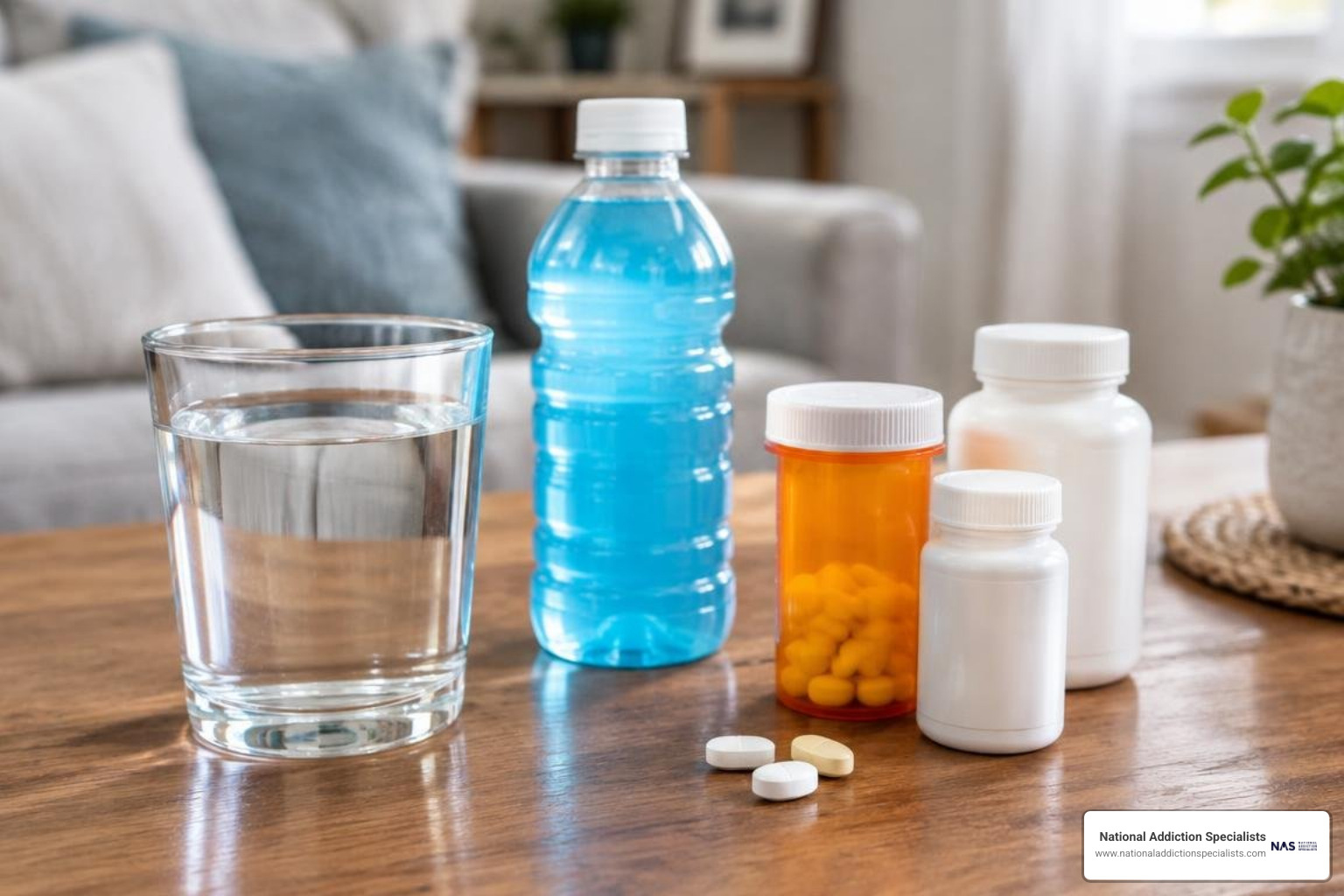
- Electrolyte Hydration Solutions: Sip broths, oral rehydration salts, or sports drinks continuously to maintain fluid and mineral balance.
- Warm Baths and Heating Pads: Soothe aching muscles and restless legs naturally.
Make an Appointment to Treat Addiction Please don’t hesitate. Make an appointment today.
Detoxing Safely: Red Flags and Long-Term Recovery Paths
Detox is the opening chapter of recovery, not the entire book. Clinical research confirms that standalone withdrawal management without transition into ongoing maintenance is associated with high rates of relapse and mortality. True healing occurs when physical stability is matched with long-term psychological and behavioral support.
Critical Red Flags and Emergency Support
While most symptoms during a medically managed detox are routine, certain warning signs require immediate medical intervention:
- Inability to keep any liquids down for more than 24 hours, leading to severe dehydration (dark urine, dizziness upon standing, extreme dry mouth)
- Aspiration risk (vomiting while excessively drowsy)
- Shortness of breath, chest pains, or irregular heart rhythms
- Severe confusion, hallucinations, or acute suicidal thoughts
If you or a loved one encounter these severe symptoms, call 911 immediately or contact the SAMHSA National Helpline at 1-800-662-4357 for 24/7 crisis support.
Transitioning from Detox to Long-Term Maintenance
Once acute withdrawal is suppressed, you and your physician will decide the best path forward. According to the clinical Suboxone dosing guide, Opioid Agonist Therapy (OAT) provides the highest rates of sustained recovery. Staying on a stable maintenance dose protects against accidental overdose, restores emotional well-being, and gives you time to rebuild your life.
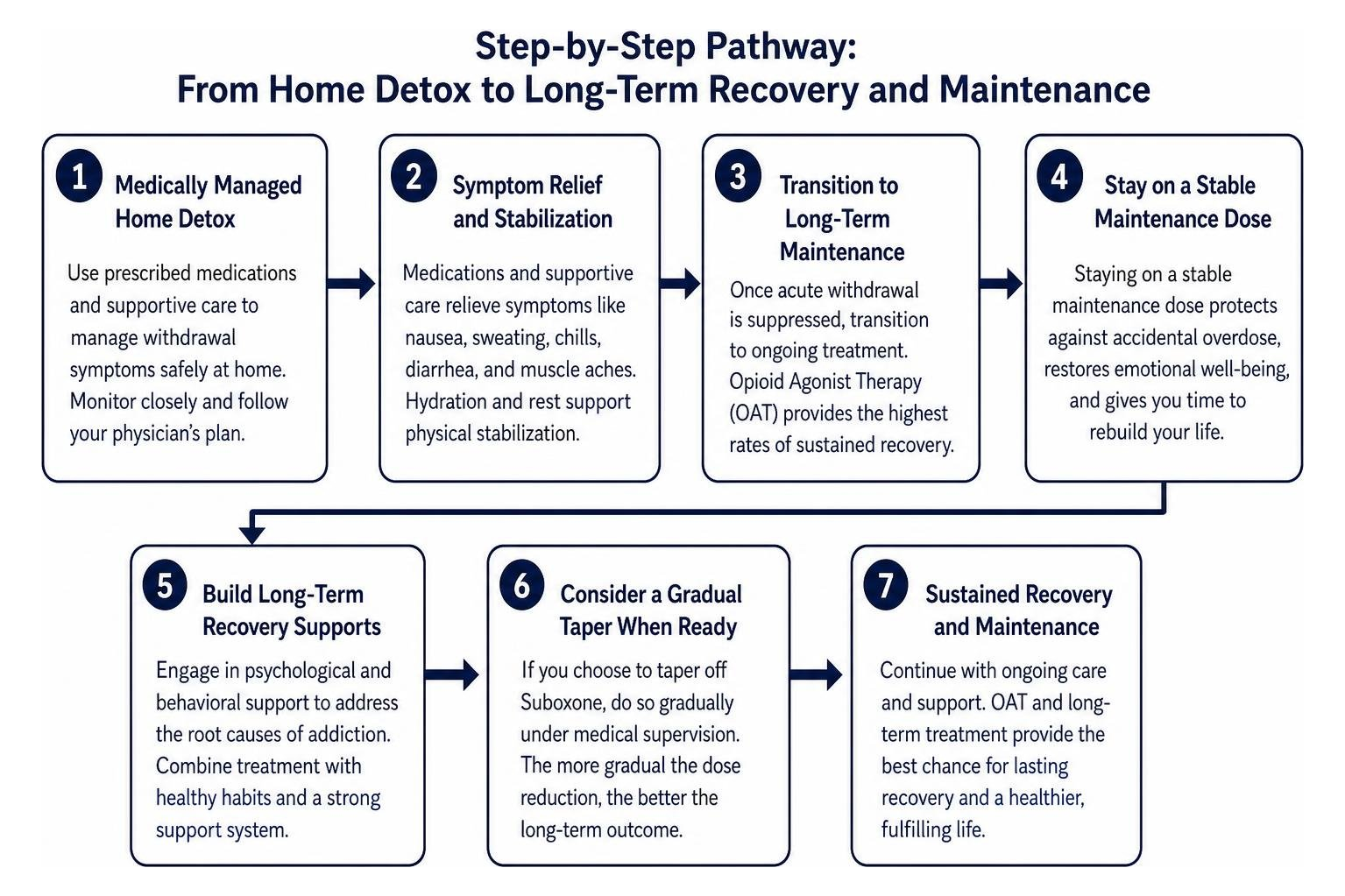
If you eventually choose to taper off Suboxone, understand that significant symptoms are rare during a gradual, medically supervised reduction. The broader evidence is clear: the more gradual the dose reduction, the better the long-term outcome. When you feel fully ready, learning how to taper off Suboxone within the realistic context of the Suboxone withdrawal timeline ensures a smooth, sustainable finish.
Frequently Asked Questions About Suboxone Detox
Can I use benzodiazepines or other opioids during Suboxone detox?
No. Combining Suboxone with full-agonist opioids, alcohol, or sedatives—particularly benzodiazepines (like Xanax, Valium, or Klonopin)—is extremely dangerous. While buprenorphine itself has a respiratory ceiling, combining it with central nervous system depressants suppresses breathing reflexes and dramatically increases the risk of fatal overdose. Always keep your provider fully informed about every medication you take. Learning how Suboxone treatment at home made simple works will help you coordinate medications safely.
How long does an at-home Suboxone detox typically take?
The initial induction and acute stabilization phase typically takes 3 to 7 days, which is the time required for buprenorphine to reach steady-state blood levels and fully suppress acute withdrawal. If your goal is a short-term taper, that medical reduction generally spans several weeks to months to avoid rebound cravings. Long-term maintenance may last months or years depending entirely on your personal recovery milestones.
What should I do if I experience precipitated withdrawal at home?
If you mistakenly take your first Suboxone dose too early and feel sudden, intense chills, nausea, and agitation, reach out to your prescribing clinician immediately. Do not attempt to overpower the buprenorphine by consuming street opioids. Rest in a safe, warm environment, hydrate with small sips of water, take prescribed non-opioid comfort medications like clonidine or ondansetron, and follow your physician’s exact dosing adjustments.
Conclusion
A successful recovery begins with taking that very first step in a safe, comfortable, and supportive environment. At National Addiction Specialists, we provide compassionate, confidential telemedicine-based Suboxone treatment throughout Tennessee and Virginia, including Brentwood, TN, and Virginia Beach, VA. Our expert medical team creates personalized treatment and tapering plans tailored to your life, accepting both Medicaid and Medicare to ensure care remains accessible. You do not have to walk through withdrawal alone—reach out to our caring team today and take control of your future with our at-home recovery programs.
Suboxone® and Subutex® are a registered trademark of Indivior UK Limited. Any mention and reference of Suboxone® and Subutex® in this website is for informational purposes only and is not an endorsement or sponsorship by Indivior UK Limited.
This article was medically reviewed by: Chad Elkin, MD, DFASAM is a board-certified addiction medicine physician, founder, and Chief Medical Officer of National Addiction Specialists, dedicated to treating substance use disorders. A Distinguished Fellow of the American Society of Addiction Medicine (ASAM), Dr Elkin currently serves as President of the Tennessee Society of Addiction Medicine (TNSAM) and has held various leadership roles within the organization. Dr Elkin chairs ASAM’s Health Technology Subcommittee and is an active member of its Practice Management and Regulatory Affairs Committee, State Advocacy and Legislative Affairs Committee, and other committees. He also serves on the planning committee for the Vanderbilt Mid-South Addiction Conference. Committed to advancing evidence-based policy, Dr Elkin is Chairman of the Tennessee Association of Alcohol, Drug, & Other Addiction Services (TAADAS) Addiction Medicine Council, which collaborates with the TN Department of Mental Health & Substance Abuse Services (TDMHSAS). He has contributed to numerous local, state, and national task forces, helping develop professional guidelines, policies, and laws that align with best practices in addiction medicine. His work focuses on reducing addiction-related harm, combating stigma, and ensuring access to effective treatment.Passionate about the field of addiction medicine, he remains dedicated to shaping policy and enhancing patient care.