Navigating Drug Withdrawals Symptoms: Timelines, Signs, and Support
Understanding Drug Withdrawals Symptoms Across Substance Classes
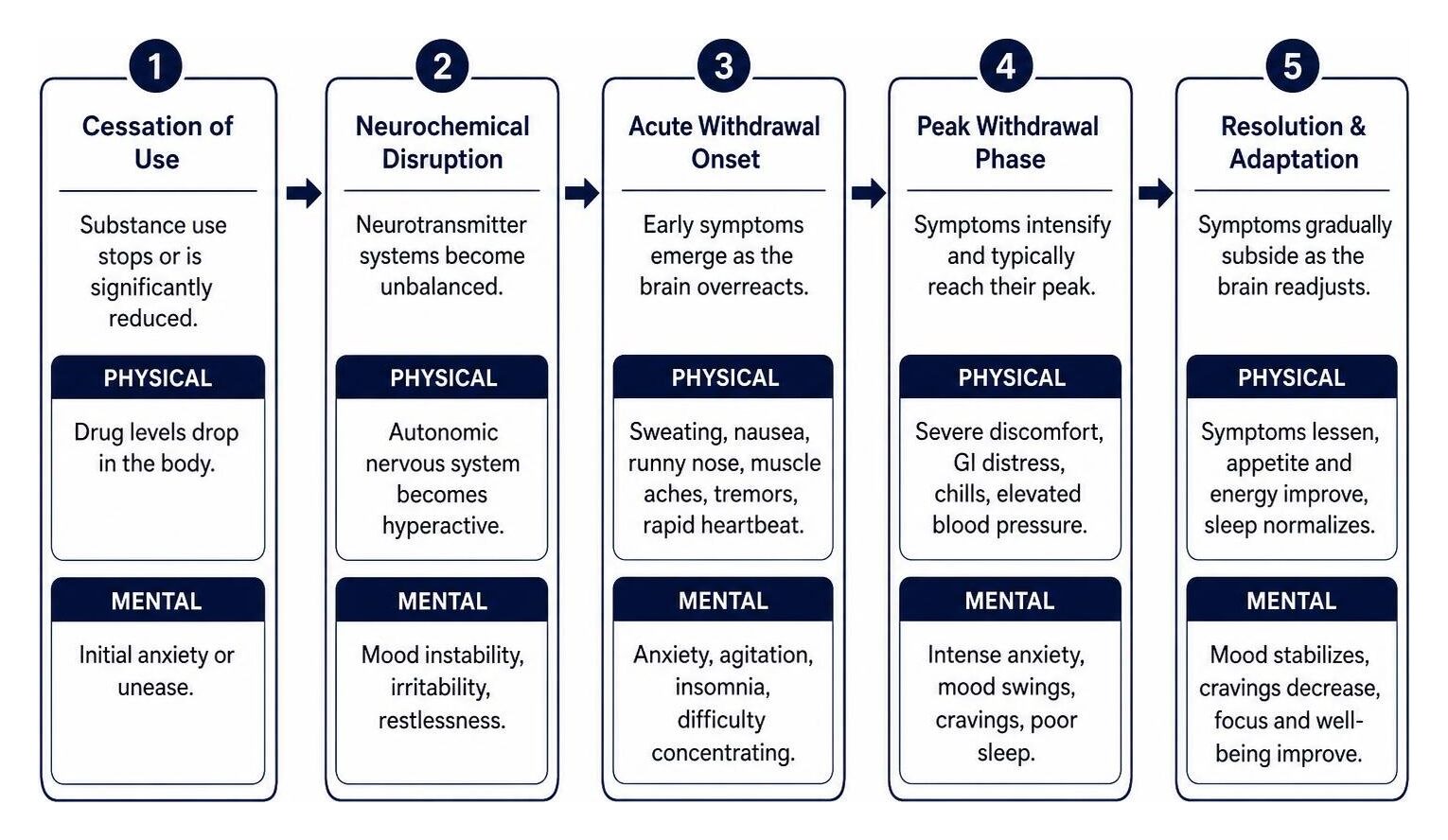
Withdrawal looks and feels different depending on the substance involved, as each drug class interacts with distinct neurotransmitter pathways in the central nervous system. When routine substance use ceases, the brain experiences a sudden rebound effect.
For clinical details on how opioids alter central nervous system signaling during toxicity and withdrawal, refer to the Opioid Toxicity and Withdrawal – Psychiatry – Merck Manual Professional Edition. For broader context on managing physical dependency, explore our overview of Drug Withdrawal Symptoms.
Breakdown by Drug Class
- Opioids: Opioid dependency alters mu-opioid receptors and norepinephrine regulation in the locus coeruleus. Stopping short-acting opioids (e.g., heroin, oxycodone) leads to early flu-like distress within 8 to 24 hours. Long-acting options like methadone may delay onset to 12–48 hours, with acute symptoms lasting 10 to 20 days.
- Alcohol: Chronic alcohol intake suppresses gamma-aminobutyric acid (GABA) and overstimulates glutamate pathways. Abrupt cessation leads to autonomic hyperactivity starting within 6 to 24 hours, peaking around 36 to 72 hours.
- Benzodiazepines: Similar to alcohol, sedative-hypnotics act on GABA receptors. Short-acting types (e.g., alprazolam) show withdrawal signs within 1 to 2 days, while long-acting variants (e.g., diazepam) can take 2 to 7 days to manifest, lingering for several weeks.
- Stimulants: Quitting methamphetamine, cocaine, or amphetamines drains dopamine stores, causing a acute “crash” within 24 hours that lasts 3 to 5 days.
- Cannabis & Inhalants: Cannabis withdrawal presents mild physical discomfort lasting 1 to 2 weeks. Inhalant withdrawal starts within a few hours to days and typically lasts between 2 days and 2 weeks.
| Substance Class | Onset of Symptoms | Acute Peak Phase | Average Duration | Key Physical & Mental Symptoms |
|---|---|---|---|---|
| Short-Acting Opioids | 8–24 hours | 48–72 hours | 4–10 days | Lacrimation, rhinorrhea, pupillary dilation, myalgia, severe GI cramps, nausea |
| Long-Acting Opioids | 12–48 hours | 3–6 days | 10–20 days | Extended bone aches, sweating, insomnia, protracted cravings, chills |
| Alcohol | 6–24 hours | 36–72 hours | 2–10 days | Tremors, autonomic hyperactivity, hypertension, risk of DTs, severe anxiety |
| Benzodiazepines | 1–7 days | Week 1–2 | 2–8+ weeks | Rebound insomnia, severe anxiety, panic attacks, muscular tremors, seizures |
| Stimulants | Within 24 hours | 24–48 hours | 3–5 days | Anhedonia, deep fatigue, increased appetite, vivid dreams, depressive mood |
| Cannabis | 24–48 hours | Day 3–7 | 1–2 weeks | Irritability, sleep disruption, loss of appetite, stomach discomfort, vivid dreams |
Physical vs Psychological Drug Withdrawals Symptoms
Withdrawal symptoms generally fall into physical (somatic) and psychological categories.
Physical Symptoms arise from autonomic hyperactivity as the sympathetic nervous system surges. These include elevated heart rate, profuse sweating, piloerection (“goose flesh”), stomach cramps, vomiting, and diarrhea.
Psychological Symptoms stem from altered neurochemistry. Depleted neurotransmitters like dopamine and serotonin can trigger intense emotional distress, panic, and powerful cravings.
Post-Acute Withdrawal Syndrome (PAWS)
While acute physical symptoms resolve over days or weeks, many people experience Post Acute Withdrawal Syndrome. PAWS can persist for months, presenting as mood instability, persistent sleep disturbances, brain fog, and intermittent cravings.
Factors Influencing Withdrawal Severity
No two individuals experience withdrawal identically. Key variables dictate symptom intensity:
- Duration and Dosage: Higher doses over extended periods create deeper neurochemical adaptation, intensifying withdrawal upon stopping.
- Drug Half-Life: Rapidly cleared drugs trigger abrupt, severe symptoms, whereas long half-life compounds cause a slower, more extended onset.
- Genetic and Metabolic Differences: Variations in liver enzymes (such as CYP450) alter how fast drugs clear the body.
- Polysubstance Use: Combining depressants like alcohol and benzodiazepines increases the risk of severe central nervous system instability.
- Co-Occurring Disorders: Pre-existing mental health conditions like depression or anxiety can worsen during detoxification.
Clinical Assessment, Tapering, and Differentiating Relapse

Accurate medical evaluation helps ensure safety during detoxification. Clinical guidelines from the Opioid Withdrawal – StatPearls – NCBI Bookshelf emphasize standardized scoring systems to measure physical stability and symptom progression.
Standardized tools include:
- COWS (Clinical Opioid Withdrawal Scale): Evaluates 11 parameters (pulse, sweating, pupil size, GI distress) scoring from mild (5–12) to severe (>37).
- SOWS (Short Opioid Withdrawal Scale): A patient self-assessment tracking acute subjective discomfort.
- AWS (Alcohol Withdrawal Scale) and CIWA-Ar: Clinical tools used to titrate sedative support during alcohol detoxification.
Differentiating Withdrawal from Condition Relapse
Distinguishing acute withdrawal from the return of an underlying medical or mental health condition requires careful assessment.
As detailed in the Evidence review: Withdrawal symptoms – NCBI Bookshelf, symptoms like rebound pain, sleep disruption, or severe anxiety often mirror the health issues for which medications were originally prescribed.
However, withdrawal symptoms onset rapidly after stopping the substance, present distinct physical signs (e.g., dilated pupils, goosebumps, sweating), and typically resolve as the nervous system stabilizes.
Safe Tapering Protocols vs Abrupt Discontinuation
Stopping dependence-forming drugs abruptly (“cold turkey”) can be dangerous and increases the risk of relapse. Safe medical management relies on gradual tapering schedules tailored to the specific substance.
- Benzodiazepines: Patients taking short-acting benzodiazepines are often transitioned to an equivalent dose of a long-acting option like diazepam before starting a step-down taper over weeks or months.
- Opioids: Switching full opioid agonists to a partial agonist like buprenorphine provides receptor stabilization while preventing severe withdrawal. Read our Suboxone Withdrawal Taper Complete Guide to learn more about controlled dose reduction.
- Adjuvant Support: Medications such as clonidine help reduce sympathetic hyperactivity, lower blood pressure, and ease muscle discomfort. Learn more about How Clonidine Helps You Kick Opiates for Good.
Medical Management and Pharmacological Support

Modern addiction medicine offers evidence-based strategies to relieve physical distress during detoxification. To learn how structured medical oversight helps protect long-term recovery, read Everything You Need to Know About Medically Supervised Withdrawal.
Pharmacological Interventions
- Buprenorphine (Suboxone): As a partial mu-opioid agonist, buprenorphine suppresses cravings and physical distress without producing full opioid euphoria. Our team specializes in personalized Suboxone Withdrawal Treatment delivered via outpatient telemedicine across Tennessee and Virginia.
- Methadone: A full opioid agonist that stabilizes receptors; requires daily clinic administration.
- Alpha-2 Adrenergic Agonists: Lofexidine and clonidine target central sympathetic tone, helping ease sweating, tachycardia, goose flesh, and muscle pain.
- Thiamine (Vitamin B1) & Hydration: Crucial in alcohol withdrawal management to prevent cognitive impairment like Wernicke-Korsakoff syndrome.
Identifying Severe Drug Withdrawals Symptoms Requiring Emergency Care
While many withdrawal symptoms can be managed through outpatient care, certain severe reactions require immediate emergency medical attention.
Severe alcohol or benzodiazepine withdrawal can trigger Delirium Tremens (DTs)—a medical emergency marked by confusion, visual or tactile hallucinations, hyperthermia, and seizures. Read A Guide to Surviving and Treating Severe Alcohol Withdrawal to learn more about these warning signs.
Relapse Risks and Post-Detox Overdose Prevention
A major risk following acute detox is the rapid loss of drug tolerance. If a relapse occurs at doses previously used, the risk of a fatal overdose is significantly elevated.
Preventative strategies include:
- Naloxone Distribution: Providing patients and loved ones with opioid-reversal agents.
- Transitioning to Maintenance Therapy: Coupling tapering programs with ongoing medication support. Discover how structured programs function in our guide on Suboxone Taper for Heroin Withdrawal.
- Psychosocial Support: Engaging in cognitive behavioral therapy (CBT) and peer support networks to address addiction triggers.
Frequently Asked Questions About Substance Withdrawal
What are the earliest signs that substance withdrawal is starting?
Early signs usually reflect mild autonomic arousal: watery eyes (lacrimation), frequent yawning, runny nose (rhinorrhea), light sweating, restless sleep, and a subtle rise in heart rate and anxiety.
How long do acute withdrawal symptoms typically last?
Acute withdrawal ranges from 3 to 5 days for stimulants, 4 to 10 days for short-acting opioids, 2 to 10 days for alcohol, and 2 to 8 weeks for long-acting benzodiazepines.
Is it safe to manage drug withdrawal at home without medical supervision?
Attempting home detox without medical oversight can be risky, especially for alcohol and benzodiazepines where seizures can occur. However, medically guided outpatient care can be conducted safely from home. Explore our guide on At-Home Detox to understand how virtual supervision works.
Conclusion

Understanding drug withdrawals symptoms helps strip away fear and equips you to take control of your recovery. While physical dependency changes nervous system baseline function, modern medicine offers safe, effective protocols to ease the transition back to health.
At National Addiction Specialists, we provide confidential, expert outpatient recovery care using telemedicine. Serving patients throughout Tennessee and Virginia, our team delivers personalized treatment plans—including medication management with Suboxone and ongoing recovery support—right to your home.
Whether you need guidance on tapering safely or are ready to begin recovery, specialized medical assistance is available. Explore our resources on Opioid Withdrawal Care or Get Started Today to speak with a physician.
Make an Appointment to Treat Addiction
Please don’t hesitate. Make an appointment today.
This article was medically reviewed by: Chad Elkin, MD, DFASAM is a board-certified addiction medicine physician, founder, and Chief Medical Officer of National Addiction Specialists, dedicated to treating substance use disorders. A Distinguished Fellow of the American Society of Addiction Medicine (ASAM), Dr Elkin currently serves as President of the Tennessee Society of Addiction Medicine (TNSAM) and has held various leadership roles within the organization. Dr Elkin chairs ASAM’s Health Technology Subcommittee and is an active member of its Practice Management and Regulatory Affairs Committee, State Advocacy and Legislative Affairs Committee, and other committees. He also serves on the planning committee for the Vanderbilt Mid-South Addiction Conference. Committed to advancing evidence-based policy, Dr Elkin is Chairman of the Tennessee Association of Alcohol, Drug, & Other Addiction Services (TAADAS) Addiction Medicine Council, which collaborates with the TN Department of Mental Health & Substance Abuse Services (TDMHSAS). He has contributed to numerous local, state, and national task forces, helping develop professional guidelines, policies, and laws that align with best practices in addiction medicine. His work focuses on reducing addiction-related harm, combating stigma, and ensuring access to effective treatment.Passionate about the field of addiction medicine, he remains dedicated to shaping policy and enhancing patient care.
Suboxone® and Subutex® are a registered trademark of Indivior UK Limited. Any mention and reference of Suboxone® and Subutex® in this website is for informational purposes only and is not an endorsement or sponsorship by Indivior UK Limited.