“I Started Kratom for Anxiety/Pain/Focus — Now I Can’t Stop”
What Is Kratom and How Does It Function in the Brain?
Kratom comes from Mitragyna speciosa, a tropical tree native to Southeast Asia that belongs to the same plant family as coffee. For centuries, workers in Thailand and Malaysia chewed fresh leaves or brewed teas to fight fatigue and ease physical aches. Today, it is widely sold across the United States as raw leaf powder, capsules, liquid extracts, and concentrated shots.
To understand why people turn to kratom for anxiety, we have to look at its primary active alkaloids: mitragynine and 7-hydroxymitragynine. These compounds cross the blood-brain barrier and bind to multiple receptor systems:
- Mu-Opioid Receptors: Mitragynine acts as a partial agonist at mu-opioid receptors. This primary interaction explains its ability to dull physical pain and create a sense of mild euphoria or emotional numbness.
- Serotonergic and Dopaminergic Pathways: Kratom alkaloids interact with serotonin (5-HT1A, 5-HT2A) and dopamine receptors. These pathways regulate mood, emotional stability, and motivation, producing temporary feelings of relief.
- Alpha-2 Adrenergic Receptors: By binding to these receptors, kratom modulates central nervous system arousal, acting similarly to certain blood pressure or anti-anxiety medications that reduce stress responses.
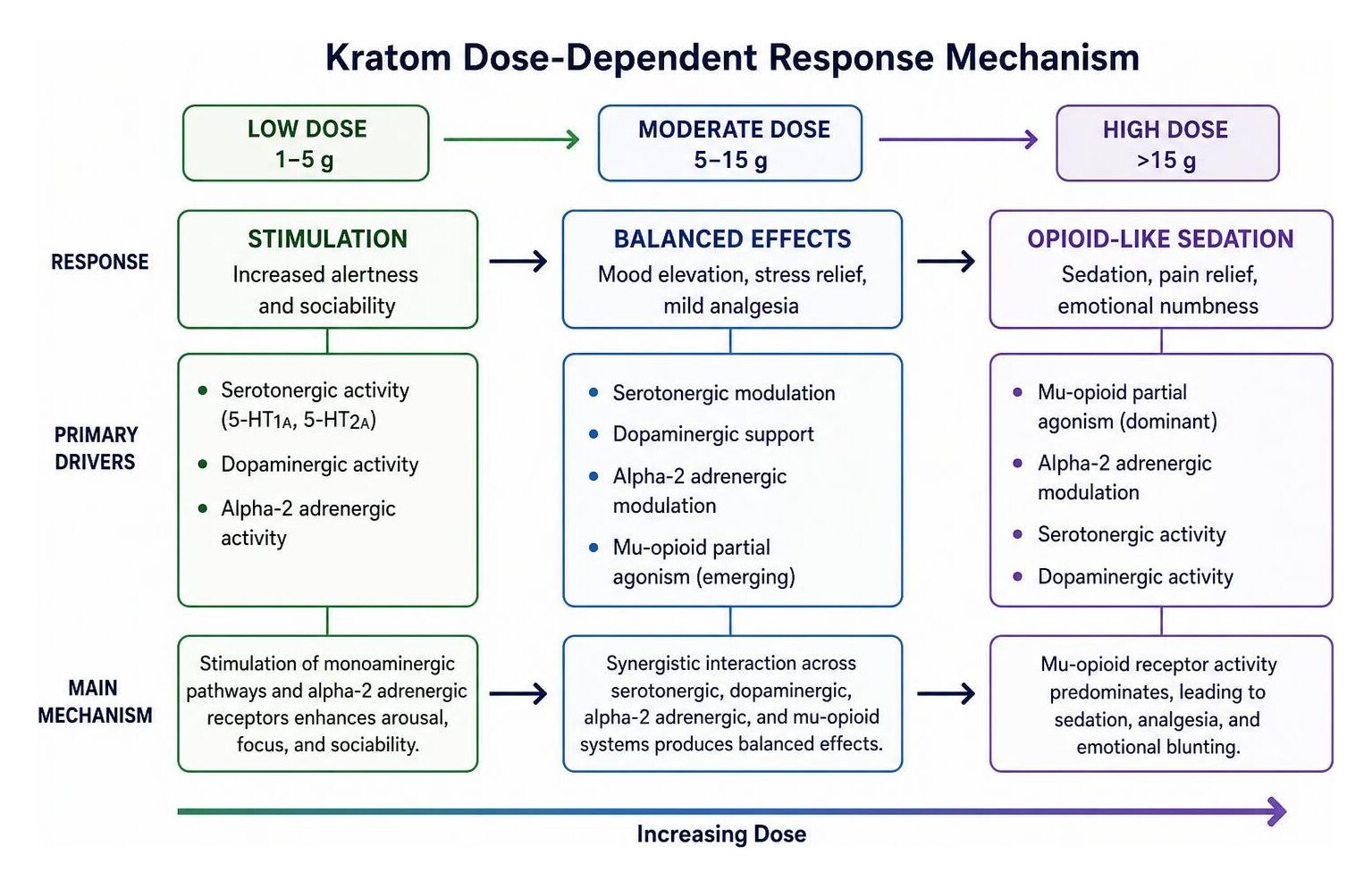
Kratom exhibits a unique dose-dependent pharmacological profile:
At low doses (1 to 5 grams), it acts primarily as a stimulant, increasing alertness and sociability. At higher doses (5 to 15 grams), the opioidergic effects dominate, producing sedation and pain relief. For a deeper breakdown of its complex chemistry, read our comprehensive overview on Everything You Need to Know About Kratom or consult this overview of kratom pharmacology.
The Scientific Reality of Using Kratom for Anxiety
Anxiety disorders affect roughly 19% of adults across the United States. With healthcare access barriers and long wait times for psychiatric care, millions turn to over-the-counter options. Survey data shows that out of 2,798 active kratom users, 67% reported using the plant specifically to self-manage anxiety symptoms.
Despite these self-reported benefits, controlled clinical evidence supporting kratom for anxiety is virtually non-existent. There are no randomized, double-blind, placebo-controlled clinical trials in human populations confirming that kratom safely or effectively treats Generalized Anxiety Disorder (GAD), Social Anxiety Disorder, or Panic Disorder.
Instead, scientific literature highlights a distinct “bell-shaped” response curve:
- Low Doses: May temporarily reduce social hesitation or quiet a racing mind.
- Moderate Doses: Can induce mild muscle relaxation and emotional detachment.
- High Doses: Exceeding tolerance sweet spots often triggers acute autonomic panic, rapid heart rates, severe paranoia, and hyper-arousal.
While short-term relief leads many into kratom self-management for mood disorders, rigorous medical evaluations show that long-term consumption frequently destabilizes underlying emotional health. To learn more about these risks, read this review of beneficial and adverse health effects.
Strains and Vein Colors Associated With Kratom for Anxiety
Kratom products are typically categorized by leaf vein color, which reflects the leaf’s maturity and specific alkaloid composition:
- Red Vein Strains (e.g., Red Bali, Red Borneo, Red Indo): Typically contain higher relative proportions of sedating alkaloids. Users often choose red strains in the evening to combat persistent worries, physical tension, and insomnia.
- Green Vein Strains (e.g., Green Malay, Green Maeng Da): Offer a balance between mild stimulation and gentle relaxation. Many report using green strains during the daytime to manage social anxiety while remaining functional at work.
- White Vein Strains (e.g., White Thai, White Maeng Da): Known for energetic, coffee-like stimulant effects. White strains carry the highest risk of triggering jitteriness, rapid heart rates, panic attacks, and heightened nervous stress.
Reviewing user reported anxiolytic strain profiles illustrates how strain selection varies among consumers, though individual reactions remain unpredictable due to lack of standard manufacturing controls.
Dosage Sweet Spots and the Risks of High-Dose Kratom for Anxiety
Because commercial kratom is unregulated, finding a standardized dose is impossible. User forums and retail sites often discuss informal dosing tiers:
- Low Dose (1 to 5 grams): Generally produces mild caffeine-like energy and elevated mood.
- High Dose (5 to 15 grams): Yields pronounced opioid-like analgesia, physical heaviness, and sedation.
- Risky Dose (Above 15 grams): Significantly increases the danger of severe toxicity, extreme vomiting, motor impairment, and psychiatric disorientation.
Many consumers practice the “toss-and-wash” method (swallowing raw powder with a beverage) or swallow pre-measured capsules. However, powder potency varies wildly from batch to batch. What starts as a 2-gram dose can quickly scale upward as physical tolerance builds. Over time, higher amounts are required just to prevent physical withdrawal and baseline rebound anxiety. Check out this dosage thresholds and strain guide 2026 for further insights into user trends.
Side Effects, Psychiatric Risks, and Substance Interactions
While vendors market kratom as a gentle, natural tea, consuming concentrated active alkaloids daily places significant burden on bodily organs and central nervous system pathways.
Common physical side effects include:
- Chronic constipation and digestive dysmotility
- Persistent nausea, stomach cramping, and loss of appetite
- Dry mouth, skin hyperpigmentation, and hair thinning
- Tremors, dizziness, and compromised motor coordination
More severe physiological complications involve potential hepatotoxicity (acute liver injury) and cardiotoxicity (including abnormal heart rhythms, QT prolongation, and elevated blood pressure). For an in-depth analysis of these risks, consult this clinical pharmacology and abuse potential review.
If you are struggling with substance use or feeling overwhelmed by kratom dependence, Make an Appointment to Treat Addiction. Please don’t hesitate. Make an appointment today.
Rebound Anxiety, Mood Swings, and Psychosis Risk
As the opioid, serotonin, and adrenergic pathways become desensitized to regular kratom exposure, a profound neurochemical crash occurs whenever the substance wears off. This gives rise to rebound anxiety—a state where nervous apprehension returns far more than before taking kratom.
Over time, chronic use disrupts emotional regulation, leading to:
- Rapid, unpredictable mood swings and sudden bouts of irritability or rage
- Anhedonia (the inability to experience natural pleasure without kratom)
- Exacerbation of pre-existing mood disorders, including triggering manic episodes in individuals with bipolar vulnerabilities
- Acute kratom-induced psychosis, characterized by severe persecutory delusions, auditory or visual hallucinations, and intense paranoia
Pre-clinical research into stress mechanisms study confirms that kratom interacts heavily with stress-response pathways. To learn how evidence-based medical care stabilizes central nervous system chemistry, read How Suboxone Can Help With Anxiety Disorder.
Dangerous Interactions with Prescription Medications and Alcohol
One of the most dangerous aspects of using kratom for anxiety is its impact on liver metabolism. Mitragynine strongly inhibits two vital liver enzymes: CYP3A4 and CYP2D6. These metabolic pathways are responsible for processing a majority of prescription psychiatric and cardiovascular medications.
When kratom blocks these enzymes, co-administered medications cannot break down efficiently, causing their levels in the bloodstream to spike to toxic concentrations.
Critical interaction risks include:
- SSRIs and SNRIs (e.g., Fluoxetine, Sertraline, Venlafaxine): High risk of serotonin syndrome, characterized by fever, muscular rigidity, confusion, and seizures.
- Benzodiazepines (e.g., Alprazolam, Clonazepam) & Alcohol: Combining central nervous system depressants with kratom’s opioidergic activity drastically increases the risk of severe respiratory depression, profound sedation, coma, and fatal overdose.
- Atypical Antipsychotics & Beta-Blockers: Elevated blood levels can cause dangerous drops in blood pressure or life-threatening cardiac arrhythmias.
Legal Status, FDA Regulatory Position, and Safety Warnings
The U.S. Food and Drug Administration (FDA) has not approved kratom for any medical use, including the treatment of anxiety, pain, or depression. The agency has repeatedly issued public safety warnings cautioning against its ingestion due to risks of addiction, abuse, liver injury, and sudden death.
Because kratom is marketed as an unregulated botanical or dietary supplement, quality control is inconsistent:
- Heavy Metal Contamination: Independent lab testing frequently uncovers dangerous levels of lead, nickel, and arsenic in imported powdered leaf products.
- Bacterial Adulteration: Numerous public health recalls have linked raw kratom powders to widespread Salmonella outbreaks.
- Synthetic Adulteration: Unscrupulous manufacturers sometimes spike powders and liquid shots with high-potency synthetic opioids or illegal chemical analogs to make their products seem stronger.
In response to public health concerns, six states and dozens of municipalities across the nation have outlawed kratom entirely. If you live in or near impacted regions, read our guide on How to Prepare for Tennessees Kratom Ban with 5 Quick Changes.
Recognizing Kratom Dependence and How to Break the Cycle

What often begins as a gentle dose of kratom for anxiety can quietly evolve into Kratom Use Disorder (KUD). Because mitragynine acts on mu-opioid receptors, daily consumption causes physical adaptation. When a person tries to cut back or stop entirely, a distinct withdrawal syndrome emerges:
- Physical Symptoms: Deep aching in bones and muscles, severe abdominal cramps, nausea, sweating, chills, runny nose, and intense restless leg syndrome.
- Psychological Symptoms: Severe rebound anxiety, profound depression, panic attacks, extreme irritability, and intense drug cravings.
- Sleep Disturbances: Severe insomnia and nighttime agitation that make stopping without support feel impossible.
Attempting an unassisted “cold turkey” taper often leads to repeated relapse cycles because the underlying anxiety returns alongside painful physical withdrawal. If you or someone you love is stuck in this cycle, explore our comprehensive Kratom Treatment protocols and learn How to Break Kratom Addiction the Right Way.
Medication-Assisted Treatment (MAT) and Suboxone
For individuals struggling with moderate-to-severe kratom dependence, Medication-Assisted Treatment (MAT) provides a proven, safe path to stability. Clinical literature shows that buprenorphine (the active ingredient in Suboxone) is utilized in nearly 90% of formal medical cases treated for Kratom Use Disorder.
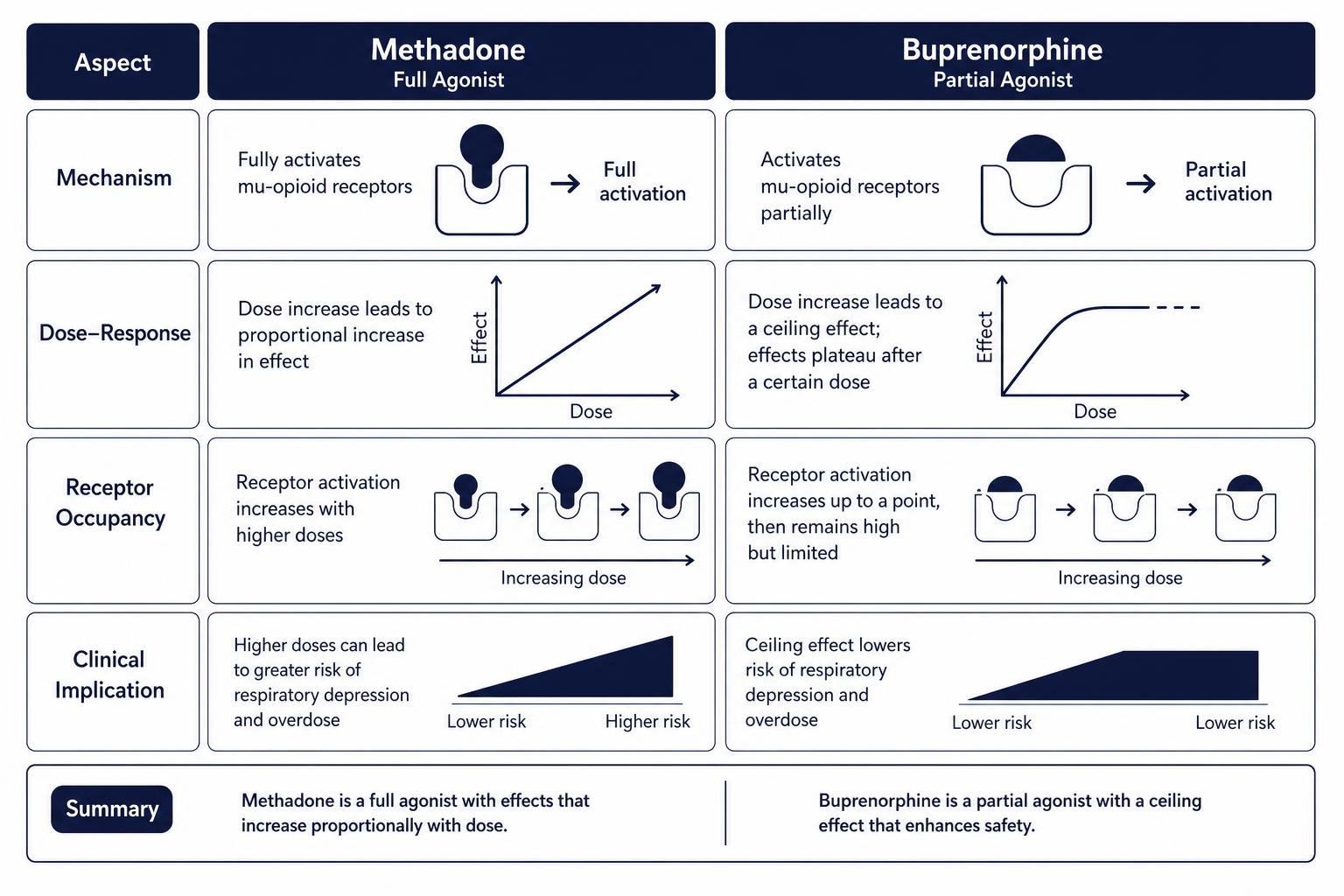
Suboxone works effectively because buprenorphine is a partial mu-opioid agonist with a high binding affinity:
- Eliminates Withdrawal: It binds tightly to opioid receptors, immediately stopping physical sickness and muscle restlessness.
- Blocks Cravings: It stabilizes brain chemistry, allowing patients to regain control over their daily lives without feeling “high.”
- Ceiling Effect: Buprenorphine carries a built-in safety profile that minimizes the risk of respiratory depression.
Through confidential telemedicine services in Tennessee and Virginia, National Addiction Specialists offers personalized, home-based care covered by Medicaid and Medicare. Read more about this approach in Can Suboxone Help With Kratom Dependence and An Essential Guide to Suboxone for Kratom Dependence.
Safer, Evidence-Based Alternatives for Anxiety Management
Managing anxiety requires evidence-based therapies that heal the nervous system long-term rather than temporarily masking symptoms through unregulated herbal remedies.
| Treatment Approach | Mechanism of Action | Long-Term Safety Profile | Risk of Dependence |
|---|---|---|---|
| Kratom Self-Treatment | Short-term mu-opioid & monoamine stimulation | High risk of organ stress, rebound anxiety, and tolerance | Very High |
| Cognitive Behavioral Therapy (CBT) | Rewires negative thought loops & coping mechanisms | Excellent; builds lifelong emotional resilience | Zero Risk |
| Prescription SSRIs / SNRIs | Regulates serotonin & norepinephrine reuptake | Clinically monitored; non-addictive, stable mood balance | Zero Addiction Risk |
| Lifestyle & Mindfulness | Lowers nervous system arousal via somatic grounding | High overall health & stress reduction benefits | Zero Risk |
To explore safe, clinical options for managing mental health, review The Science of Better Moods Through Medication and see How to Treat Depression Without Leaving Your Living Room.
Frequently Asked Questions About Kratom and Mental Health
Can kratom trigger long-term mental health problems like psychosis or severe mood swings?
Yes. Prolonged high-dose kratom use can severely deplete key brain neurotransmitters like serotonin and dopamine while keeping stress pathways hyper-activated. In vulnerable individuals, this emotional dysregulation can precipitate acute manic episodes, severe depressive crashes, or kratom-induced psychosis characterized by paranoia and severe delusions.
How long does it take to develop a physical dependence on kratom?
Physical dependence can develop in as little as two to three weeks of consistent daily use. Because alkaloids accumulate in fat tissues and have an extended elimination half-life, the brain quickly adjusts to their constant presence, leading to physical withdrawal symptoms whenever a dose is missed.
Why is combining kratom with prescribed anxiety medication dangerous?
Kratom inhibits essential liver metabolic enzymes (CYP3A4 and CYP2D6). When combined with prescribed antidepressants, anti-anxiety medications, or sedatives, it prevents those drugs from clearing your system, causing medication levels to climb to toxic heights. This raises the risk of severe complications such as serotonin syndrome, fatal respiratory arrest, or sudden cardiac events.
Conclusion

Attempting to treat anxiety with unregulated substances often trades temporary relief for a long-term cycle of tolerance, mood swings, and dependence. True recovery from anxiety and substance use is achieved through evidence-based, compassionate care tailored to your life.
At National Addiction Specialists, we provide confidential, expert telemedicine services across Tennessee and Virginia. Our team accepts Medicaid and Medicare, delivering personalized recovery plans directly to your home so you can heal safely and privately. Explore our Medication-Assisted Treatment Services today to take your first step toward lasting peace of mind.
This article was medically reviewed by: Chad Elkin, MD, DFASAM is a board-certified addiction medicine physician, founder, and Chief Medical Officer of National Addiction Specialists, dedicated to treating substance use disorders. A Distinguished Fellow of the American Society of Addiction Medicine (ASAM), Dr Elkin currently serves as President of the Tennessee Society of Addiction Medicine (TNSAM) and has held various leadership roles within the organization. Dr Elkin chairs ASAM’s Health Technology Subcommittee and is an active member of its Practice Management and Regulatory Affairs Committee, State Advocacy and Legislative Affairs Committee, and other committees. Committed to advancing evidence-based policy, Dr Elkin is Chairman of the Tennessee Association of Alcohol, Drug, & Other Addiction Services (TAADAS) Addiction Medicine Council, which collaborates with the TN Department of Mental Health & Substance Abuse Services (TDMHSAS). He also serves on the planning committee for the Vanderbilt Mid-South Addiction Conference. He has contributed to numerous local, state, and national task forces, helping develop professional guidelines, policies, and laws that align with best practices in addiction medicine. His work focuses on reducing addiction-related harm, combating stigma, and ensuring access to effective treatment. Passionate about the field of addiction medicine, he remains dedicated to shaping policy and enhancing patient care.
Suboxone® and Subutex® are a registered trademark of Indivior UK Limited. Any mention and reference of Suboxone® and Subutex® in this website is for informational purposes only and is not an endorsement or sponsorship by Indivior UK Limited.