How to Prepare for Tennessee’s Kratom Ban with 5 Quick Changes
Tennessee’s Kratom Ban Is 6 Weeks Away — Here’s What You Need to Know Now
If you’re wondering what to do before Tennessee’s kratom ban takes effect, the short answer is: act now, not on July 1.
Here are the five most important steps to take immediately:
- Assess your current kratom use — daily dose, frequency, and whether you use 7-OH extracts
- Talk to a doctor before stopping — cold turkey can cause serious withdrawal symptoms
- Start a medically supervised taper or Suboxone transition — relief can begin within hours
- Arrange legal disposal of any stock — no grace period exists after July 1, 2026
- Build a support network — family, a counselor, or a telemedicine provider like National Addiction Specialists
Tennessee’s HB 1649 — signed into law as Matthew Davenport’s Law — passed with an overwhelming legislative majority (78-9 in the House, 23-3 in the Senate). Starting July 1, 2026, kratom in all forms becomes a controlled substance in Tennessee. That includes powders, capsules, beverages, and high-potency 7-OH extracts. There is no grace period for existing stock.
For daily kratom users — especially those using concentrated 7-OH products — this isn’t just a legal issue. It’s a health issue. When supply disappears overnight, so does the substance your body has come to depend on. Withdrawal can begin within hours.
I’m Dr. Chad Elkin, board-certified in Addiction Medicine and founder of National Addiction Specialists. In my work treating hundreds of patients across Tennessee, I’ve helped many people navigate what to do before Tennessee’s kratom ban takes effect — and the most important lesson is that early action makes all the difference.
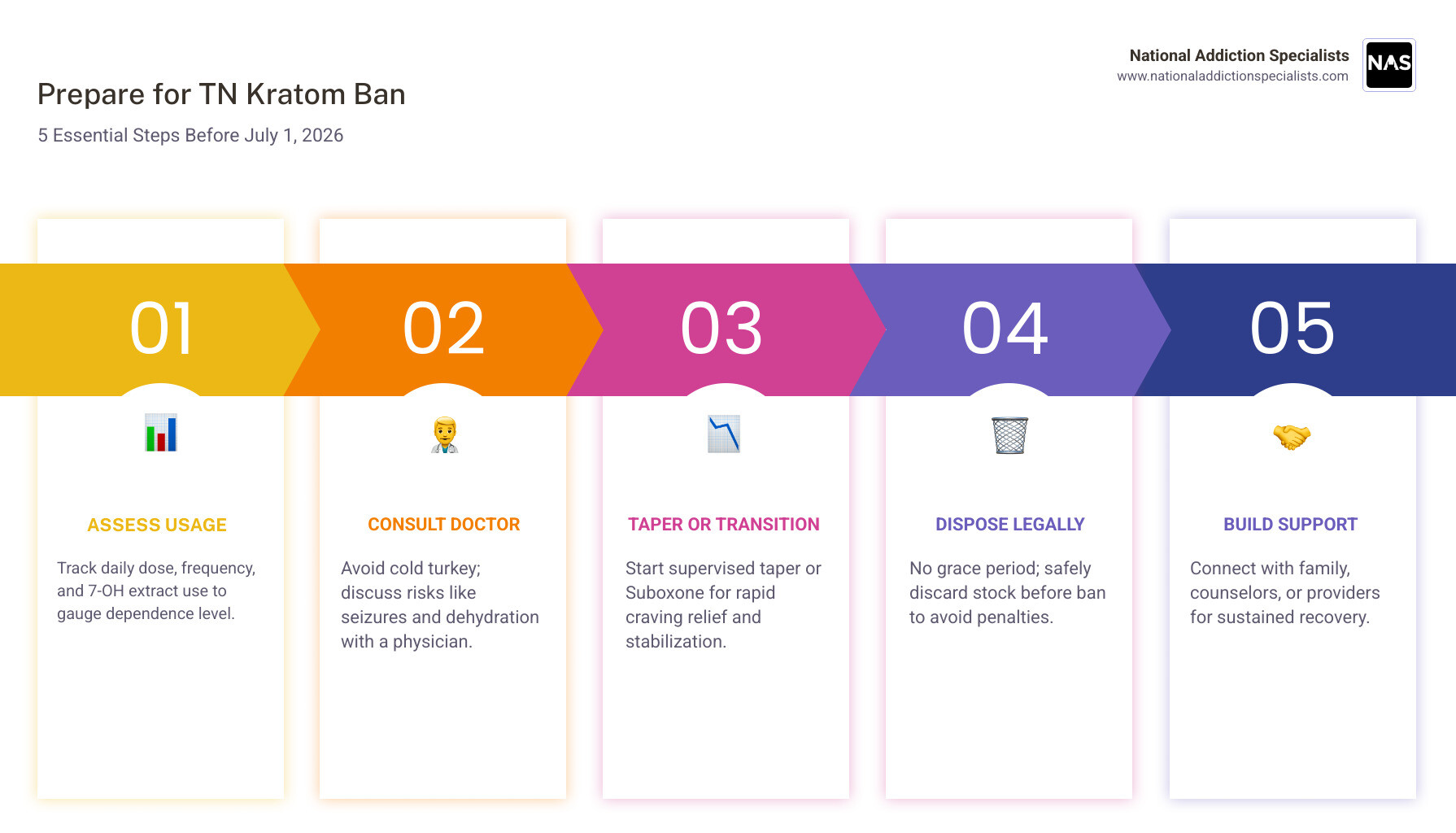
What to Do Before Tennessee’s Kratom Ban Takes Effect terms at a glance:
Understanding Matthew Davenport’s Law and the 2026 Deadline
The legislative landscape in Tennessee changed significantly in April 2026 when Governor Bill Lee signed HB 1649 into law. Known officially as Matthew Davenport’s Law, this legislation was named in memory of a 27-year-old Tennessean who tragically passed away in 2024 following a lethal interaction between kratom and prescription medications.
The law marks a total shift from regulation to prohibition. While previous years saw debates over the Kratom Consumer Protection Act, Tennessee ultimately chose a full ban. The clock is ticking toward July 1, 2026, which is the hard effective date. Unlike some laws that allow businesses to “sell through” their remaining inventory, this bill offers no such leniency. On the morning of July 1, what was a legal herbal supplement the night before becomes a controlled substance.
Tennessee bill banning kratom will go into effect July 1 and the implications for the thousands of regular users in cities like Nashville, Columbia, and Brentwood are immense.
Penalties for Possession and Sale After July 1
The legal consequences of ignoring the ban are severe. Under the new classification:
- Possessing kratom will be charged as a Class A misdemeanor. In Tennessee, this can result in up to 11 months and 29 days in jail and significant fines.
- Selling, delivering, or manufacturing kratom escalates to a felony (specifically Class C or D depending on the specific circumstances and quantities).
- Sales to minors are classified as a Class B felony, reflecting the state’s aggressive stance on protecting youth from these substances.
For many, the transition from a “customer” at a local vape shop to a “defendant” in a criminal case is a terrifying prospect. This is why understanding everything you need to know about kratom and its new legal status is vital for your protection.
Why 7-OH Concentrates Triggered the Ban
A major catalyst for this total ban was the rise of 7-hydroxymitragynine (7-OH) products. While traditional kratom leaf contains low levels of this alkaloid, new concentrated extracts have flooded gas stations and convenience stores.
Research indicates that 7-OH can be up to 13 times more potent than morphine. These products act heavily on the mu-opioid receptors, leading critics to label them “gas station heroin.” Because these concentrates carry a much higher risk of respiratory depression and intense physical dependence, they became the primary target of lawmakers. Is kratom safe? Rising health concerns explained by medical experts often highlights that while the natural leaf has been used for centuries, these modern, highly processed extracts are a different animal entirely.
What to Do Before Tennessee’s Kratom Ban Takes Effect: 5 Essential Steps

Preparation is the only way to avoid a health crisis or a legal nightmare. We recommend following these five steps to ensure you are ready before the July deadline.
Step 1: Assess Your Current Usage and Dependence
Be honest with yourself about your relationship with the substance. Are you using it for energy, or do you feel physically ill if you miss a dose?
- Dosage: Are you taking a few capsules of leaf powder, or are you spending hundreds of dollars a week on 7-OH liquid shots?
- Withdrawal History: Have you ever tried to stop? If you experienced “skin crawling,” intense anxiety, or insomnia, your body has developed a physical dependence.
- Frequency: Daily users are at the highest risk for severe symptoms when the ban takes effect.
Identifying your level of dependence is the first step in kratom treatment and helps determine if you need a medical intervention.
Step 2: Seek Medical Supervision Instead of Cold Turkey
Many people believe they can just “tough it out” when the supply runs out. However, going cold turkey after heavy kratom use is not just “uncomfortable”—it can be dangerous.
- Seizure Risk: While rare, some high-dose users have reported seizures during abrupt cessation.
- Dehydration and Heart Issues: Severe nausea and diarrhea can lead to electrolyte imbalances.
- Relapse Prevention: The psychological cravings are often so intense that users may turn to dangerous illicit opioids just to stop the pain of withdrawal.
The importance of medical kratom detox cannot be overstated. A physician-led plan ensures your safety and increases the likelihood of long-term success.
Transitioning to Suboxone for Kratom Withdrawal
For many of our patients at National Addiction Specialists, Suboxone (buprenorphine/naloxone) has been the “bridge” that allowed them to reclaim their lives. Because kratom’s active alkaloids, mitragynine and 7-OH, bind to the same mu-opioid receptors as traditional opioids, Suboxone is remarkably effective at stabilizing brain chemistry.
| Feature | Kratom Withdrawal | Suboxone Stabilization |
|---|---|---|
| Physical Pain | Severe muscle aches and “restless legs” | Significant reduction in physical discomfort |
| Mood | Intense anxiety and deep depression | Emotional stabilization |
| Cravings | Overwhelming urge to use | Suppression of the “hunger” for the drug |
| Sleep | Severe insomnia | Improved ability to rest and recover |
| Safety | Risk of relapse to illegal substances | Medically monitored and legal |
If you are struggling with dependence, reading an essential guide to Suboxone for kratom dependence can help you understand how this medication works to block withdrawal symptoms within hours of the first dose.
How Suboxone Manages What to Do Before Tennessee’s Kratom Ban Takes Effect
Clinical studies and our own experience in Tennessee show that patients using high-dose kratom or 7-OH extracts typically stabilize on Suboxone doses of 12-16 mg daily. This isn’t just about replacing one thing with another; it’s about using a long-acting, FDA-approved medication to allow your brain to heal without the “highs and lows” of unregulated kratom extracts.
By starting this transition now, you ensure that when July 1 arrives, you are already stabilized on a legal, prescribed medication. You won’t be scouring empty shelves or risking a felony charge; you’ll be under the care of a licensed physician. Our medication-assisted treatment Tennessee ultimate guide provides more details on this transition.
Accessing Telemedicine and Insurance Coverage in Tennessee
One of the biggest barriers to treatment is the “clinic commute.” We understand that many kratom users lead busy lives or live in rural parts of Tennessee where specialized doctors are scarce. That is why we provide telemedicine-based care.
You can meet with our providers via secure video from your home in Brentwood, Nashville, or anywhere in the state. We also accept TennCare (Medicaid) and Medicare, making treatment accessible regardless of your financial situation. We are proud to be among the leading Suboxone clinics in Tennessee that take insurance, ensuring that the cost of recovery isn’t what stops you from getting help.
Comparing Tennessee’s Law to Other States
Tennessee is joining a growing list of states that have moved toward total bans. As of 2026, kratom is banned in states like Alabama, Arkansas, Indiana, and Wisconsin. California also implemented a de facto ban that saw 95% retailer compliance and thousands of products pulled from shelves by March 2026.
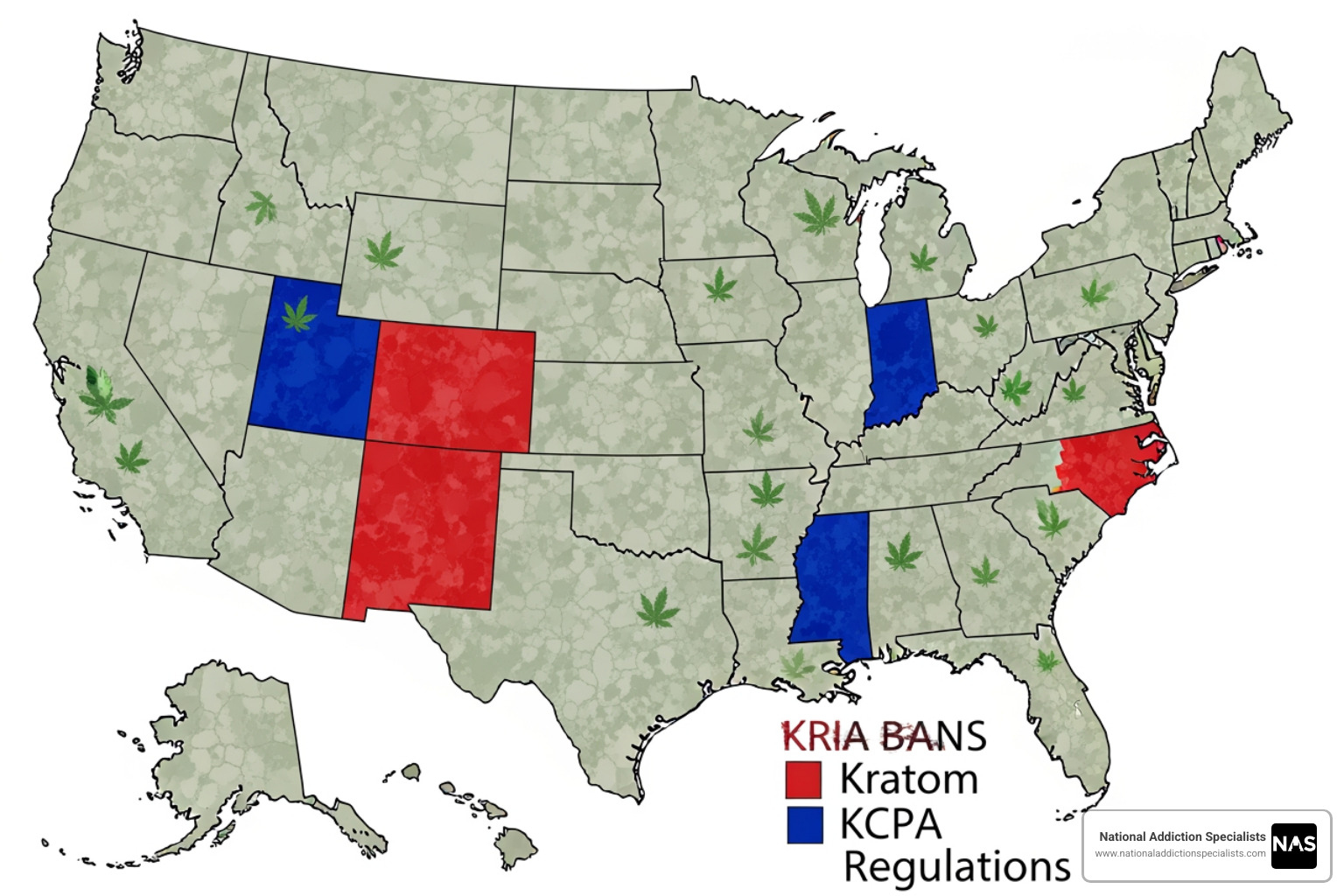
In contrast, 14 states, including our neighbors in Georgia and Kentucky, have passed the Kratom Consumer Protection Act (KCPA). These states choose to regulate alkaloids and enforce age limits rather than banning the substance entirely. However, for those living in Tennessee, the debate is over. The ban is the law of the land, and we must prepare accordingly.
Frequently Asked Questions about the Tennessee Kratom Ban
Is there a grace period for existing kratom stock?
No. The law is very clear: the effective date is July 1, 2026. After the clock strikes midnight, possession becomes a Class A misdemeanor. There is no “grandfather clause” for products purchased before the ban.
Can I legally stockpile kratom before the ban?
You can legally purchase kratom until June 30, 2026. However, stockpiling is a dangerous strategy. Not only will you be in illegal possession on July 1, but possessing large quantities could lead to “intent to distribute” charges, which are serious felonies. The safest path is to use this time to transition off the substance entirely.
What to Do Before Tennessee’s Kratom Ban Takes Effect if I use it for pain?
Many Tennesseans turned to kratom as an alternative to prescription painkillers. If this is you, do not lose hope. There are many legal, non-opioid medical alternatives for pain management. Our Suboxone doctors in Tennessee can help evaluate your situation and coordinate care that addresses both your pain and your dependence safely.
Conclusion
The upcoming ban doesn’t have to be a crisis. It can be the catalyst you need to break free from kratom and 7-OH dependence once and for all. At National Addiction Specialists, we offer a confidential, compassionate, and convenient way to navigate this transition through telemedicine.
Whether you are in Brentwood, Virginia Beach, or a small town in rural Tennessee, we are here to help you get ahead of the July 1 deadline. Don’t wait for the shelves to go bare and the withdrawal to set in. Take the first step today.
Make an Appointment to Treat Addiction Please don’t hesitate. Make an appointment today. https://www.nationaladdictionspecialists.com/new-patient-packet/
This article was medically reviewed by: Chad Elkin, MD, DFASAM is a board-certified addiction medicine physician, founder, and Chief Medical Officer of National Addiction Specialists, dedicated to treating substance use disorders. A Distinguished Fellow of the American Society of Addiction Medicine (ASAM), Dr Elkin currently serves as President of the Tennessee Society of Addiction Medicine (TNSAM) and has held various leadership roles within the organization. Dr Elkin chairs ASAM’s Health Technology Subcommittee and is an active member of its Practice Management and Regulatory Affairs Committee, State Advocacy and Legislative Affairs Committee, and other committees. He also serves on the planning committee for the Vanderbilt Mid-South Addiction Conference. Committed to advancing evidence-based policy, Dr Elkin is Chairman of the Tennessee Association of Alcohol, Drug, & Other Addiction Services (TAADAS) Addiction Medicine Council, which collaborates with the TN Department of Mental Health & Substance Abuse Services (TDMHSAS). He has contributed to numerous local, state, and national task forces, helping develop professional guidelines, policies, and laws that align with best practices in addiction medicine. His work focuses on reducing addiction-related harm, combating stigma, and ensuring access to effective treatment. Passionate about the field of addiction medicine, he remains dedicated to shaping policy and enhancing patient care.
Suboxone® and Subutex® are a registered trademark of Indivior UK Limited. Any mention and reference of Suboxone® and Subutex® in this website is for informational purposes only and is not an endorsement or sponsorship by Indivior UK Limited.