Can Suboxone Help with Kratom Dependence?
Can Suboxone Help With Kratom Dependence?
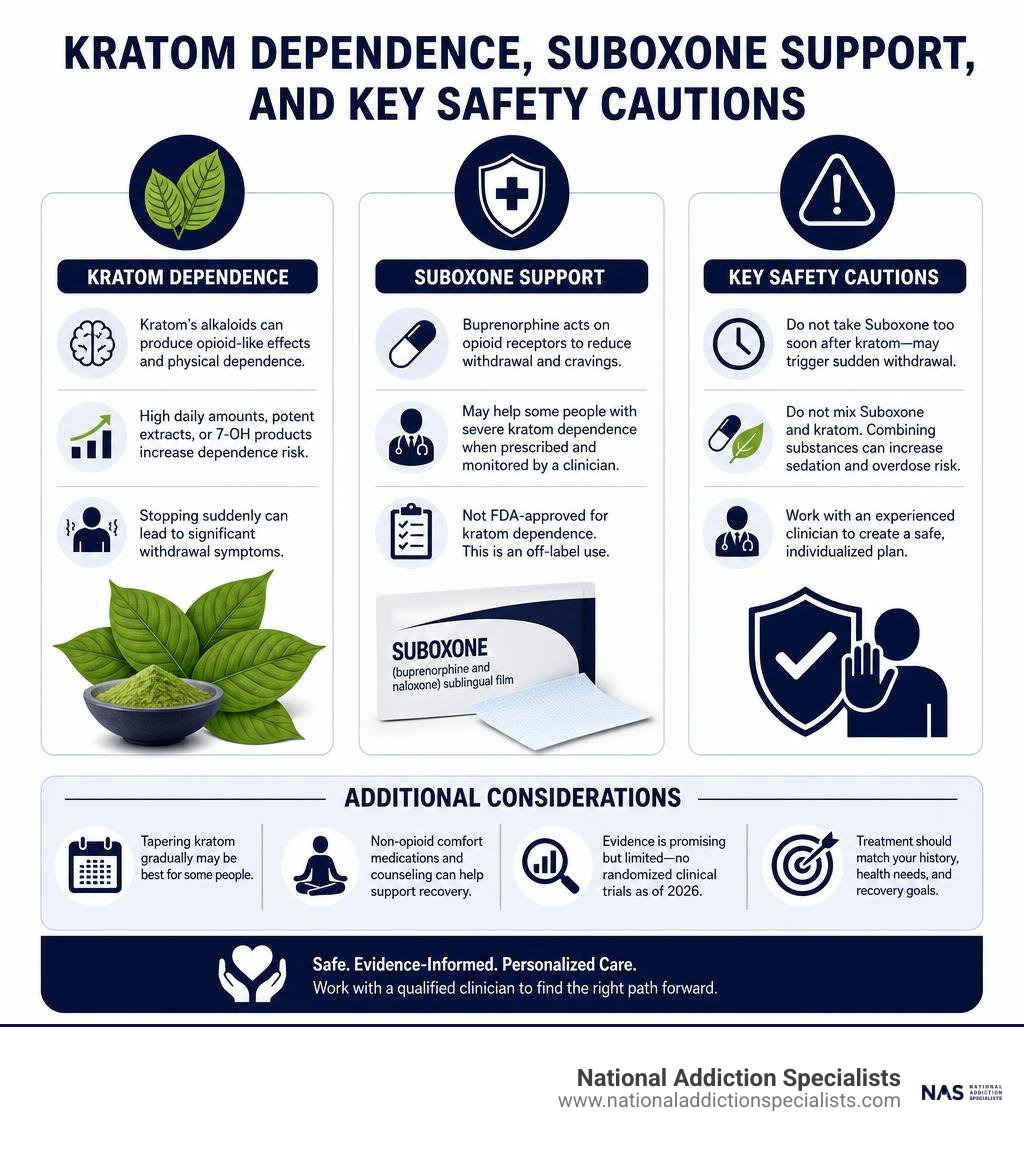
Suboxone Kratom treatment can help people with severe kratom dependence, but it is not always the right choice for everyone. Suboxone contains buprenorphine and naloxone. Buprenorphine acts on many of the same opioid receptors affected by kratom’s active compounds, which may reduce withdrawal symptoms and cravings when prescribed and monitored by an experienced clinician.
Kratom is not a traditional opioid, but its alkaloids, including mitragynine and 7-hydroxymitragynine, can produce opioid-like effects and physical dependence. People who use high daily amounts, potent extracts, or 7-OH products may find it very hard to stop without support.
The quick answer:
- Can Suboxone help? Yes, published case reports suggest it can ease severe kratom withdrawal and support abstinence.
- Is it FDA-approved for kratom dependence? No. This is an off-label use of a medication approved for opioid use disorder.
- Can you mix Suboxone and kratom? Not safely without medical guidance. Taking buprenorphine too soon after kratom may trigger sudden withdrawal, and combining substances can raise sedation and overdose risks.
- Is Suboxone always needed? No. A gradual kratom taper, non-opioid comfort medications, and counseling may be better for some people, especially those without prior opioid use.
The evidence is promising but limited. There are no randomized clinical trials specifically testing Suboxone for kratom use disorder as of August 2026. That means treatment should be based on the person’s kratom product, daily amount, withdrawal history, other medications, mental health needs, and past opioid exposure.
I am Chad Elkin, a board-certified physician in Addiction Medicine and Internal Medicine and the founder and medical director of National Addiction Specialists. My work with Suboxone Kratom treatment focuses on confidential, evidence-informed care that accounts for withdrawal risk, medication interactions, and each person’s recovery goals.
Understanding the Science Behind Suboxone Kratom Interactions
To understand how Suboxone Kratom protocols function, we must first look at the neurological mechanics of both substances. Kratom (Mitragyna speciosa) is a botanical plant native to Southeast Asia that contains more than 40 distinct chemical alkaloids. The two primary compounds responsible for its main physiological effects are mitragynine and 7-hydroxymitragynine (7-OH).
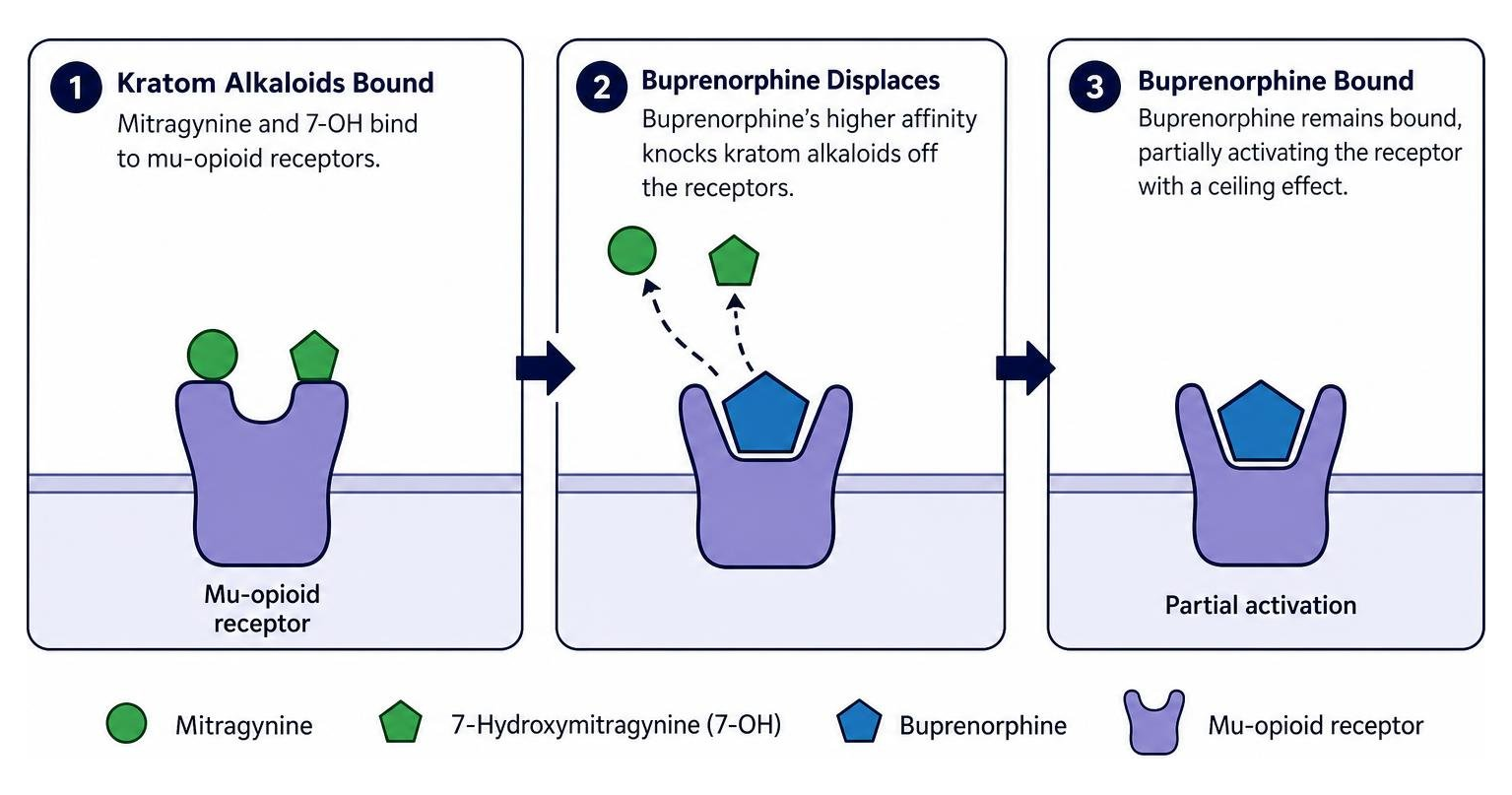
Both of these active compounds act as partial agonists at the mu-opioid receptors in the brain—the exact same neuroreceptors targeted by traditional prescription painkillers, heroin, and synthetic opioids. While raw kratom leaf powder acts simultaneously as a stimulant at low doses and an opioid-like sedative at higher doses, its physical dependence stems directly from this continuous mu-opioid receptor binding.
When someone develops a physical tolerance to kratom, stopping its use causes the brain’s mu-opioid receptors to suddenly lose their accustomed stimulation, triggering acute withdrawal symptoms. Buprenorphine—the core active ingredient in Suboxone—is a partial mu-opioid agonist with an extremely high receptor binding affinity. Because buprenorphine binds tightly to these receptors without fully activating them to the maximum level (a characteristic known as the “ceiling effect”), it satisfies the neurochemical demand, neutralizing severe physical withdrawal and curbing cravings without producing a full intoxicating high. To explore more about the natural mechanics of this plant, read Everything You Need to Know About Kratom.
High-Potency 7-OH Extracts and Receptor Binding
While raw leaf kratom powder typically contains low concentrations of 7-hydroxymitragynine, the commercial marketplace has seen a dramatic surge in highly concentrated 7-OH liquid extracts, shots, and synthetic alkaloid tablets. Pharmacological research reveals that 7-hydroxymitragynine is significantly more potent than mitragynine—and by some measures, up to 10 times more potent than morphine at the mu-opioid receptor.
Individuals using these concentrated products often experience rapid tolerance escalation. As daily consumption shifts from raw powder to high-potency extracts, receptor saturation increases, creating a profound level of physical dependence. When individuals attempt to stop using these concentrated products cold turkey, the resulting physical discomfort and neurological rebound can be overwhelming.
Risks and Dangers of Concurrent Suboxone Kratom Ingestion
Combining Suboxone and kratom without structured medical protocols carries real health risks. Because buprenorphine possesses a far stronger binding affinity for mu-opioid receptors than mitragynine or 7-OH, taking Suboxone while kratom is actively bound to those receptors will cause buprenorphine to forcefully knock the kratom alkaloids off the receptors.
Because buprenorphine is only a partial agonist, this abrupt displacement can trigger precipitated withdrawal—a sudden, violent onset of severe muscle aches, profuse sweating, extreme nausea, vomiting, abdominal cramping, and intense anxiety within minutes of administration.
Furthermore, consuming kratom while already stabilized on Suboxone introduces unpredictable central nervous system (CNS) depression and sedation risks. While buprenorphine features a ceiling effect regarding respiratory depression, unregulated kratom products may contain variable alkaloid concentrations or adulterants that increase respiratory risks when combined with other CNS depressants.
Clinical Evidence: Does Suboxone Work for Kratom Dependence?
Because kratom dependence is a relatively modern clinical challenge in North America, high-volume randomized controlled trials (RCTs) directly testing Suboxone for kratom use disorder do not yet exist. However, a growing body of published peer-reviewed medical case reports, clinical reviews, and case series provides substantial real-world evidence supporting its clinical efficacy.
For example, a landmark case report published in the journal Cureus detailed the successful long-term treatment of a patient consuming up to 40 grams of kratom powder daily (spending $100 to $600 per week to sustain the habit). Clinicians stabilized the patient using a buprenorphine/naloxone protocol and executed a structured step-down taper over 23 weeks, resulting in total abstinence from both kratom and buprenorphine.
To learn more about clinical off-label discussions, view Should Suboxone Be Used to Treat Kratom Addiction? — Pain News Network and review our detailed clinical breakdown in An Essential Guide to Suboxone for Kratom Dependence.
Evaluating Evidence in Opioid-Naive vs. OUD Patients
An essential consideration in clinical practice is distinguishing between two primary patient groups:
- Patients with a prior history of Opioid Use Disorder (OUD): Many individuals initially started using kratom as a self-directed strategy to stop taking prescription opioids or illicit substances. In a 2016 survey of over 6,100 kratom users, nearly 10% reported using kratom primarily to treat opioid addiction. For these patients, Suboxone is a natural fit, replacing an unregulated, unstable botanical product with a standardized, safe, FDA-regulated medication-assisted treatment (MAT) framework.
- Opioid-naive patients: These individuals started using kratom solely for energy, anxiety relief, or mild pain, having never previously used traditional opioids. An expert scientific consensus forum emphasizes caution here: prescribing Suboxone to an opioid-naive individual carries a risk of inducing a long-term physical dependence on buprenorphine itself. In these cases, clinicians carefully weigh whether a conservative non-opioid taper is more appropriate before starting MAT.
Pharmacokinetic Drug Interactions and Toxicity
Kratom alkaloids—specifically mitragynine—inhibit major metabolic liver enzymes, including Cytochrome P450 2D6 (CYP2D6) and Cytochrome P450 3A4 (CYP3A4). When patients combine heavy kratom use with common prescription medications, such as antidepressants (like venlafaxine) or antipsychotics (like quetiapine), kratom can block the breakdown of these drugs, leading to dangerous toxic accumulation.
A published medical case report documented a patient consuming ~90 grams of kratom daily alongside venlafaxine and quetiapine who developed severe serotonin syndrome and ECG abnormalities due to CYP enzyme inhibition. Once the patient stopped the interacting medications, clinicians successfully managed the underlying kratom dependency using an at-home buprenorphine/naloxone induction protocol. Learn more by reviewing A Case of Potential Pharmacokinetic Kratom-drug Interactions Resulting in Toxicity and Subsequent Treatment of Kratom Use Disorder With Buprenorphine/Naloxone.
Supervised Medical Induction and Tapering Protocols
At National Addiction Specialists, we never recommend attempting a DIY transition between kratom and Suboxone. Medical supervision is essential to ensure safety, comfort, and long-term recovery.
Initial dosing tiers are tailored directly to the patient’s daily kratom intake volume:
- Low-to-moderate daily intake (<20 grams/day): Patients are often initiated on low Suboxone starting doses ranging from 4/1 mg to 8/2 mg daily.
- High daily intake (>40 grams/day or heavy 7-OH extract use): Patients may require higher initial stabilization doses ranging from 12/3 mg to 16/4 mg daily.
To review proper tapering structures, consult How to Break Kratom Addiction the Right Way.
Make an Appointment to Treat Addiction. Please don’t hesitate. Make an appointment today.
Navigating Suboxone Kratom Induction Timelines
To completely prevent precipitated withdrawal, clinicians utilize objective scoring tools like the Clinical Opiate Withdrawal Scale (COWS). Patients must wait until active kratom alkaloids clear their receptors and moderate physical withdrawal symptoms manifest before taking their first Suboxone dose.
A typical supervised protocol includes:
- Pre-Induction Assessment: Reviewing exact products (raw powder vs. concentrated extracts), daily dosage, medical history, and concurrent prescription medications.
- First Dose Timing: Waiting until COWS scores indicate mild-to-moderate objective withdrawal (typically 12 to 24 hours after the last kratom dose, depending on individual metabolism).
- Micro-Dosing / Titration: Administering a small initial dose (e.g., 2 mg buprenorphine), observing for 60 to 90 minutes, and incrementally titrating until physical discomfort and cravings subside.
- Divided Daily Dosing: Because kratom alkaloids affect multiple non-opioid receptor pathways, dividing Suboxone into twice-daily doses often provides more consistent symptom coverage.
Kratom Withdrawal Timeline vs. Traditional Opioid Detox
Kratom withdrawal differs significantly from standard short-acting opioid withdrawal. While acute physical symptoms from drugs like oxycodone or heroin typically peak within 48 to 72 hours and resolve within 7 to 10 days, kratom withdrawal can follow a more protracted timeline.
| Feature | Short-Acting Opioid Withdrawal | Kratom Withdrawal |
|---|---|---|
| Onset of Symptoms | 6 – 12 hours after last dose | 8 – 24 hours after last dose |
| Peak Physical Discomfort | Days 2 to 3 | Days 2 to 4 |
| Acute Duration | 5 to 7 days | 7 to 14 days |
| Protracted Symptoms | 2 to 4 weeks (primarily mood) | Up to 1 to 3 months (anxiety, fatigue, sleep disturbances) |
| Primary Receptor Mechanisms | Mu-Opioid Receptors | Mu/Delta Opioid, Adrenergic, Serotonergic |
Because kratom interacts with alpha-2 adrenergic and serotonergic pathways in addition to opioid receptors, patients frequently experience persistent fatigue, profound lethargy, severe anxiety, and insomnia for weeks or months afterstopping physical use. Suboxone effectively stabilizes the mu-opioid component, providing a solid foundation while the brain heals.
Alternative Approaches and Non-Opioid Comfort Medications

Suboxone is not the only option for overcoming kratom dependence. For individuals with mild daily consumption habits or those who prefer to avoid buprenorphine, non-opioid pharmacological strategies and structured tapering plans offer safe alternatives. Read more about comprehensive options at Kratom Treatment.
Alternative strategies include:
- Gradual Self-Tapering: Slow, scheduled reductions in daily kratom powder intake (e.g., reducing daily dose by 0.5 grams every few days) to allow neuroreceptors time to adapt.
- Alpha-2 Adrenergic Agonists (Clonidine or Lofexidine): Prescription medications that lower sympathetic nervous system overactivity, relieving sweating, chills, muscle cramping, and anxiety.
- Non-Opioid Comfort Medications: Short-term prescriptions for muscle relaxants, anti-nausea agents (ondansetron), and non-addictive sleep aids to manage acute detox discomfort.
- Behavioral Therapy and Counseling: Cognitive Behavioral Therapy (CBT) and recovery support programs to address psychological triggers, emotional stress, and underlying coping habits.
Off-Label Regulatory Status and Legal Considerations
It is important to understand the regulatory landscape surrounding Suboxone Kratom treatment:
- FDA Approval: The FDA has approved Suboxone specifically for the treatment of Opioid Use Disorder (OUD). Using Suboxone to treat kratom use disorder is an off-label medical practice. Prescribing FDA-approved medications off-label is a common, legal, and medically established standard of care when guided by expert clinical judgment.
- Regulatory Status: Kratom is not currently a controlled substance under federal law, though the FDA has issued public health warnings regarding its safety risks. Furthermore, individual state regulations vary. In our service areas of Tennessee and Virginia, state agencies closely monitor herbal supplement safety and public health advisories. For local public health guidelines in Virginia, consult Kratom – Environmental Health.
Using Kratom for Withdrawal from Suboxone: A Dangerous Trap
Just as some people consider using Suboxone to quit kratom, others attempt the reverse: using unregulated commercial kratom to self-treat Suboxone or opioid withdrawal.
We strongly advise against this approach. Kratom products sold at convenience stores, smoke shops, or online are completely unregulated. Product testing routinely reveals vast discrepancies in alkaloid concentration, as well as contamination with heavy metals, dangerous bacteria (such as Salmonella), and synthetic research chemicals. Attempting to manage Suboxone withdrawal with kratom frequently leads to uncontrolled dose escalation, financial strain, and dual physical dependence. Explore this topic further in Kratom for Withdrawal from Suboxone: Safe Remedy or Dangerous Trap?.
Frequently Asked Questions About Suboxone and Kratom
Is Suboxone FDA-approved to treat kratom addiction?
No. Suboxone is officially FDA-approved exclusively for treating Opioid Use Disorder (OUD). Utilizing Suboxone to treat kratom dependence is considered an off-label clinical application. Licensed addiction medicine physicians can legally prescribe Suboxone off-label when, in their professional judgment, the medical benefits of stabilizing severe kratom withdrawal outweigh the risks.
Can taking Suboxone too soon after kratom cause precipitated withdrawal?
Yes. Because buprenorphine has a significantly higher binding affinity for mu-opioid receptors than kratom’s primary active alkaloids (mitragynine and 7-hydroxymitragynine), taking Suboxone while kratom is still active in your system will displace those alkaloids rapidly. This sudden shift can trigger acute, intense withdrawal symptoms. Patients should always undergo an objective clinical assessment (such as the COWS score) before taking their first dose.
How long does kratom withdrawal last compared to Suboxone detox?
Acute physical withdrawal symptoms from kratom usually peak between days 2 and 4 after stopping, with primary physical discomfort lasting 7 to 14 days. However, post-acute psychological symptoms—such as persistent fatigue, anxiety, sleep disturbances, and cravings—can linger for 1 to 3 months. By comparison, a medically supervised Suboxone program allows for a controlled, gradual step-down taper over several months, minimizing physical discomfort so patients can maintain their daily routines and work schedules.
Conclusion
Overcoming kratom dependence can be physically and emotionally challenging, particularly with the proliferation of high-potency extracts and 7-OH products. While Suboxone Kratom therapy represents an off-label treatment route, clinical experience and published evidence demonstrate that medically supervised buprenorphine stabilization can safely eliminate severe withdrawal symptoms, reduce cravings, and restore quality of life.
At National Addiction Specialists, we provide compassionate, confidential, and evidence-based addiction care from the comfort and privacy of your home through our specialized telemedicine platform. Serving patients across Tennessee (including our Brentwood location) and Virginia (including Virginia Beach), our expert medical team tailors individualized treatment plans—incorporating medication-assisted treatment, personalized tapering protocols, and behavioral support—covered by major insurance providers, including Medicaid and Medicare.
If you or a loved one is struggling to break free from kratom or opioids, help is available without the stress of an in-person clinic visit. Explore our comprehensive Medication-Assisted Treatment Services today to take your first confident step toward lasting recovery.
This article was medically reviewed by: Chad Elkin, MD, DFASAM is a board-certified addiction medicine physician, founder, and Chief Medical Officer of National Addiction Specialists, dedicated to treating substance use disorders. A Distinguished Fellow of the American Society of Addiction Medicine (ASAM), Dr Elkin currently serves as President of the Tennessee Society of Addiction Medicine (TNSAM) and has held various leadership roles within the organization. Dr Elkin chairs ASAM’s Health Technology Subcommittee and is an active member of its Practice Management and Regulatory Affairs Committee, State Advocacy and Legislative Affairs Committee, and other committees. He also serves on the planning committee for the Vanderbilt Mid-South Addiction Conference. Committed to advancing evidence-based policy, Dr Elkin is Chairman of the Tennessee Association of Alcohol, Drug, & Other Addiction Services (TAADAS) Addiction Medicine Council, which collaborates with the TN Department of Mental Health & Substance Abuse Services (TDMHSAS). He has contributed to numerous local, state, and national task forces, helping develop professional guidelines, policies, and laws that align with best practices in addiction medicine. His work focuses on reducing addiction-related harm, combating stigma, and ensuring access to effective treatment. Passionate about the field of addiction medicine, he remains dedicated to shaping policy and enhancing patient care.
Suboxone® and Subutex® are a registered trademark of Indivior UK Limited. Any mention and reference of Suboxone® and Subutex® in this website is for informational purposes only and is not an endorsement or sponsorship by Indivior UK Limited.