A Comprehensive Guide to Kratom Addiction & Treatment Options
Kratom Addiction & Treatment Guide: What You Need to Know
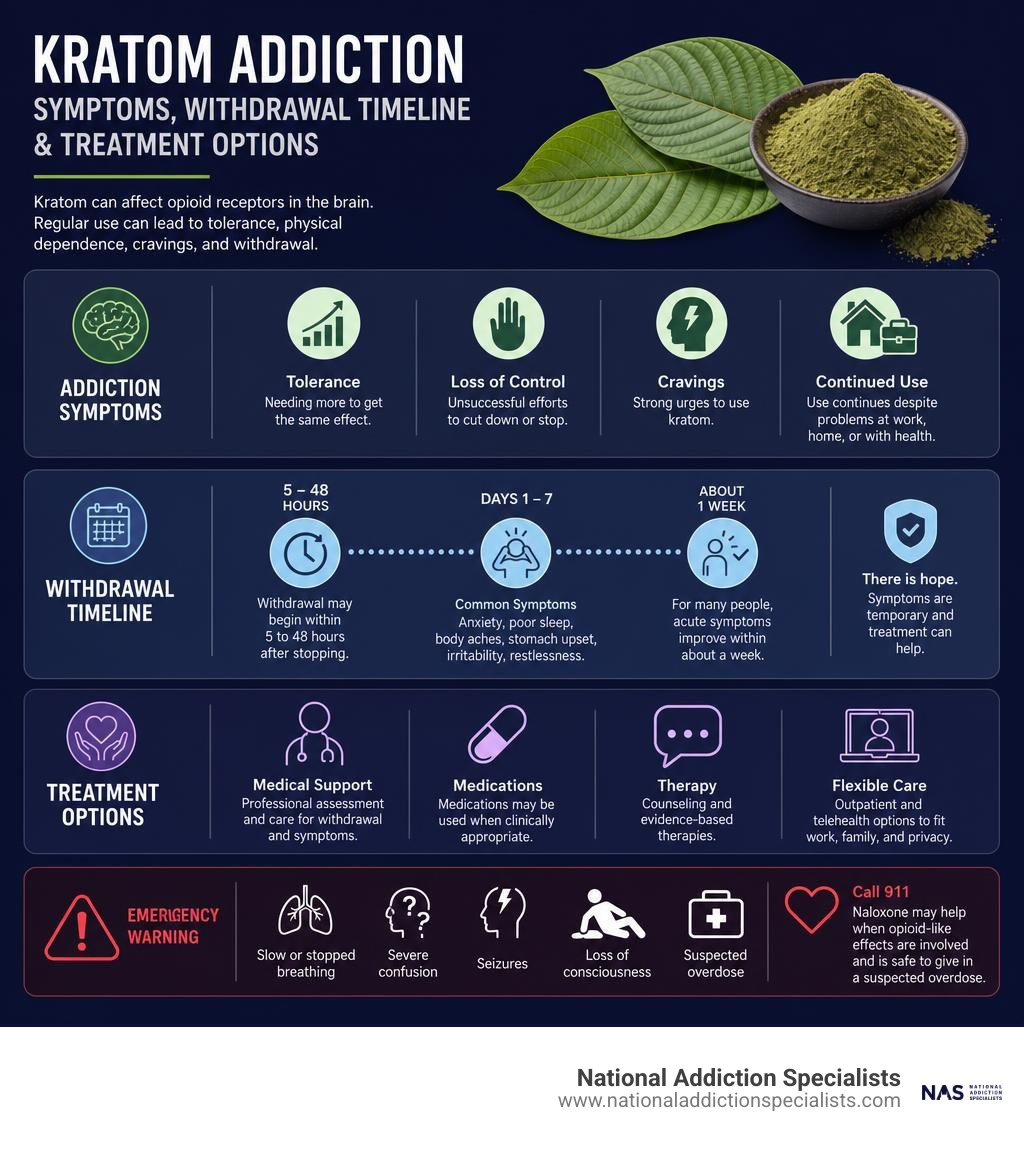
This Kratom Addiction & Treatment Guide explains the key facts: kratom can cause tolerance, physical dependence, cravings, and withdrawal because its active compounds affect opioid receptors in the brain. The safest next step is a confidential medical assessment, especially for people using daily, taking concentrated extracts, mixing substances, or using kratom to manage opioid withdrawal.
- Kratom is a plant product from Mitragyna speciosa. Low amounts may feel stimulating, while higher amounts can produce opioid-like effects.
- Addiction signs can include needing more to get the same effect, unsuccessful efforts to stop, cravings, and continued use despite harm at work, home, or in health.
- Withdrawal may begin within 5 to 48 hours after stopping. Symptoms often include anxiety, poor sleep, body aches, stomach upset, irritability, and restlessness. For many people, acute symptoms improve within about a week.
- Treatment can include medical support for withdrawal, medications when clinically appropriate, therapy, and flexible outpatient or telehealth care.
- Emergency warning: Call 911 for slow or stopped breathing, severe confusion, seizures, loss of consciousness, or suspected overdose. Naloxone may help when opioid-like effects are involved and is safe to give in a suspected opioid overdose.
Kratom is sometimes sold as a “natural” option for pain, energy, anxiety, or opioid withdrawal. But natural does not mean risk-free. Its main alkaloids, mitragynine and 7-hydroxymitragynine, can affect opioid and other brain receptors. Regular use can make stopping harder, particularly with high-dose extracts or newer concentrated 7-OH products.
The risks rise when kratom is combined with alcohol, benzodiazepines, opioids, or other sedating drugs. Product strength can also vary widely, and some products may contain contaminants or undisclosed ingredients. U.S. Poison Center calls involving kratom reportedly increased 1,200% between 2015 and 2025, underscoring why new or worsening symptoms should be taken seriously.
I am Chad Elkin, MD, an addiction medicine and internal medicine physician and founder of National Addiction Specialists, where I lead telehealth-based substance use treatment. My experience in addiction care informs this Kratom Addiction & Treatment Guide, including practical, nonjudgmental support for people who need care that fits work, family, and privacy needs.
Discover more about Kratom Addiction & Treatment Guide:
Understanding Kratom: Pharmacology, Dependence, and Health Risks
To understand why so many people feel trapped by kratom, we have to look under the hood at its complex botanical chemistry. Derived from Mitragyna speciosa, a tropical tree native to Southeast Asia, kratom leaves contain more than 40 unique psychoactive alkaloids. While it belongs to the same plant family as coffee (Rubiaceae), its pharmacological footprint in the human central nervous system is far more intricate and potent.
When consumed, kratom interacts with several distinct neurotransmitter systems simultaneously. Understanding the clinical pharmacology of kratom helps explain why stopping its use can feel like trying to land a plane in a thunderstorm. The primary compounds, mitragynine and 7-hydroxymitragynine (7-OH), bind as partial agonists to human mu-opioid receptors. This triggers pain relief, relaxation, and euphoria similar to traditional opioids. However, these compounds also engage alpha-2 adrenergic receptors, serotonin receptors, and adenosine pathways.
For those who want to dive deeper into its origins and preparations, check out our guide on Everything You Need to Know About Kratom.
While kratom is often touted as a “gentle herbal tea,” high-dose daily consumption presents serious health concerns. In our addiction medicine practice serving patients across Tennessee and Virginia, we frequently see organ toxicity risks, particularly liver stress (hepatotoxicity) and cardiovascular strain. Because kratom alkaloids inhibit key liver enzymes—specifically CYP3A4 and CYP2D6—combining kratom with prescription medications or other over-the-counter substances can severely slow drug clearance, raising the risk of toxic drug-drug interactions.
What Is Kratom and Why Is It Addictive?
Why does kratom have such a dual personality? It all comes down to dosage thresholds and alkaloid dynamics. At lower servings (typically under 5 grams of raw powder), kratom acts predominantly on adrenergic receptors, delivering a burst of physical energy, heightened focus, and mild euphoria. Historically, field laborers in Southeast Asia chewed raw leaves to fight off exhaustion during arduous agricultural work.

However, as consumption increases toward 5 to 15 grams or involves concentrated extracts, its mu-opioid receptor binding takes center stage. High doses produce profound sedation, pain relief, and emotional blunting.
As detailed in the scientific literature, such as the guide for healthcare providers, regular exposure to these mu-opioid agonists leads the brain to alter its cellular biochemistry. Over time, nerve cells downregulate natural endorphin production and adjust receptor sensitivity. This creates tolerance: you need larger and more frequent doses to achieve the same feelings or simply to feel “normal.” Once physical dependence sets in, skipping a dose triggers an intense wave of physiological stress.
Key Signs and Symptoms of Kratom Addiction
Under the DSM-5 framework, Kratom Use Disorder (KUD) is recognized under the category of “Other (or Unknown) Substance Use Disorder.” Physical dependence—developing tolerance and experiencing withdrawal—is a natural biological reaction to daily use, but true addiction involves a pattern of compulsive intake despite negative life consequences.
Common clinical signs and behavioral symptoms include:
- Loss of control: Consistently taking larger quantities or using kratom over a longer period than originally intended.
- Unsuccessful attempts to cut down: Setting rules to reduce daily dose, only to abandon them when physical or psychological distress sets in.
- Time investment: Spending significant time, money, and mental energy sourcing, preparing, and taking kratom products throughout the day.
- Intense cravings: Experiencing persistent, overwhelming urges to consume kratom, especially during stressful moments or upon waking.
- Functional impairment: Neglecting personal responsibilities, work performance, or family obligations in Tennessee or Virginia because of sedation, fatigue, or mood swings.
- Continued use despite harm: Persisting in daily intake even after noticing physical health problems, emotional numbness, financial hardship, or interpersonal conflict.
The Kratom Withdrawal Timeline and Physical Symptoms
Stopping kratom after weeks or months of daily use triggers a distinct withdrawal syndrome. Because kratom activates both opioid and adrenergic pathways, its withdrawal combines classic opioid-like body aches with intense stimulant-rebound anxiety and restlessness.
To help you anticipate what lies ahead, here is the standard physical withdrawal progression:
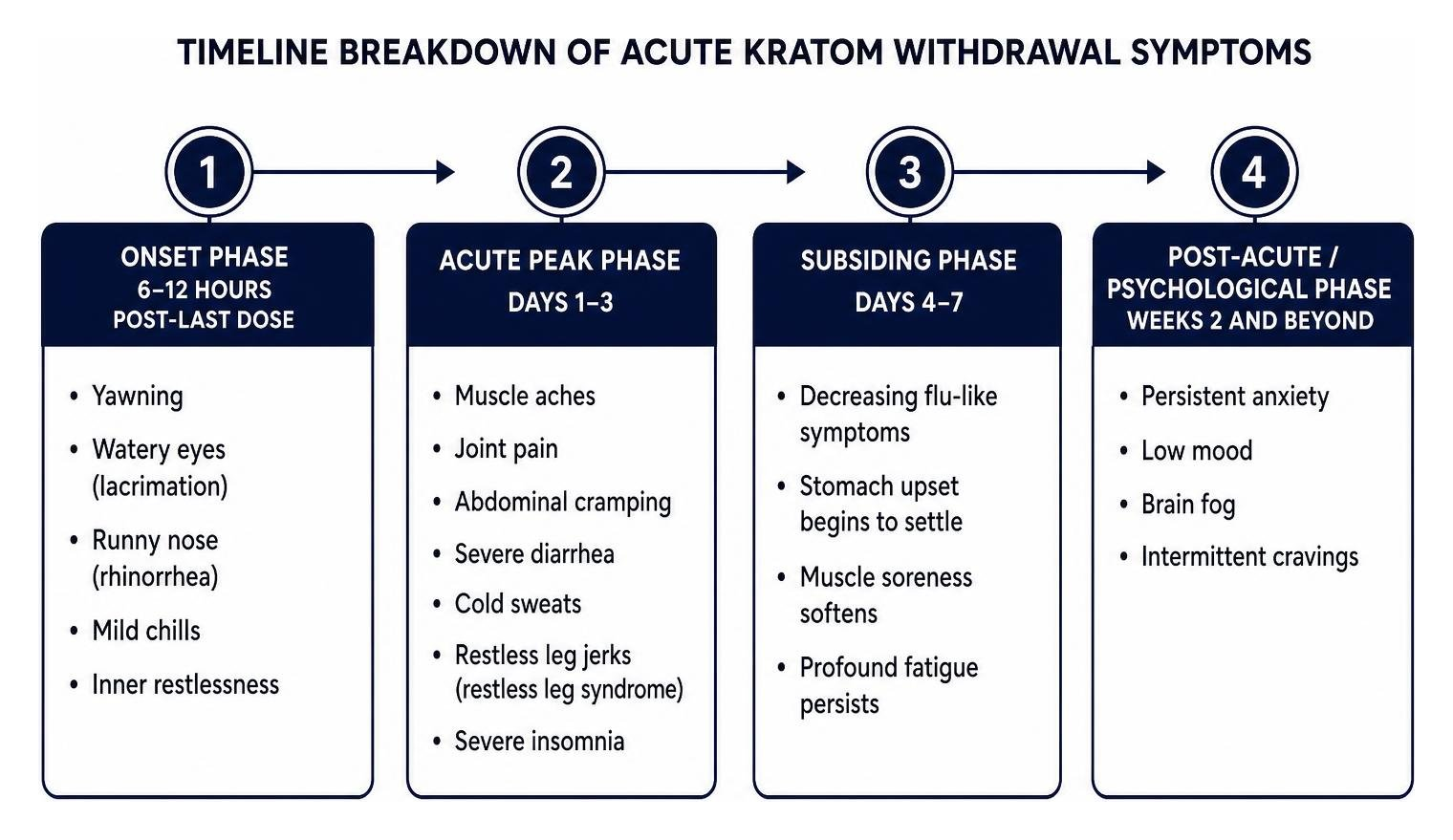
- Onset Phase (6 to 12 hours post-last dose): As alkaloid levels drop, initial symptoms emerge. You may notice frequent yawning, watery eyes (lacrimation), a runny nose (rhinorrhea), mild chills, and an uncomfortable inner restlessness.
- Acute Peak Phase (Days 1 to 3): Physical discomfort reaches its maximum intensity. Muscle aches, joint pain, abdominal cramping, severe diarrhea, cold sweats, and involuntary leg jerks (“restless leg syndrome”) make sleep nearly impossible.
- Subsiding Phase (Days 4 to 7): Physical flu-like symptoms gradually decrease in severity. Stomach upset begins to settle, and muscle soreness softens, though fatigue remains profound.
- Post-Acute / Psychological Phase (Weeks 2 and Beyond): While acute bodily distress resolves, lingering psychological symptoms—such as persistent anxiety, low mood, brain fog, and intermittent cravings—can persist if left unaddressed.
For comprehensive insights into managing this process, read our personal perspective guide, I Started Kratom for Anxiety/Pain/Focus, Now I Can’t Stop.
Kratom Addiction & Treatment Guide: Navigating Withdrawal
Navigating kratom withdrawal requires understanding both its physical and emotional impact. The multi-receptor pharmacology of mitragynine means that quitting cold turkey touches almost every major organ system.
| Symptom Category | Common Physical & Psychological Manifestations | Clinical Impact on Daily Functioning |
|---|---|---|
| Physical (Opioidergic) | Diffuse muscle aches (myalgia), bone discomfort, severe chills, sweating, GI cramps, diarrhea, nausea | Causes severe physical exhaustion, forcing individuals to stay in bed or miss work. |
| Neurological / Sleep | Profound insomnia, severe restless leg syndrome (RLS), muscle twitches, tremors | Prevents restful sleep, compounding fatigue and reducing coping capacity. |
| Psychological (Adrenergic) | Severe anxiety, panic attacks, extreme irritability, dark mood, emotional fragility | Makes interpersonal communication difficult and triggers intense substance cravings. |
| Autonomic Stress | Dilated pupils, elevated heart rate (tachycardia), high blood pressure, goosebumps | Creates a feeling of constant fight-or-flight arousal and physical tension. |
Attempting to tough out these symptoms alone without medical guidance often leads to relapse simply to end the physical pain. Fortunately, evidence-based addiction medicine offers compassionate, effective solutions.
Evidence-Based Treatment Options for Kratom Dependence
Recovery from kratom dependence is not a one-size-fits-all journey. Depending on your daily dose, intake history, co-occurring mental health conditions, and personal responsibilities, different levels of clinical care are available. We outline these individualized approaches on our Kratom Treatment page.
A thorough medical evaluation by an addiction medicine physician is the foundation of effective recovery. As highlighted in research on the assessment and diagnosis of kratom use disorder, clinicians look at your overall substance history, perform diagnostic screenings, and rule out product adulteration.
Treatment options include:
- Medical Detoxification: Medically supervised management of acute withdrawal symptoms using targeted non-opioid medications or agonist stabilization to ensure safety and physical comfort.
- Outpatient Programs & Telemedicine: Highly flexible care models allowing you to receive professional medical treatment, prescription support, and clinical counseling from home without taking leave from your job or family duties.
- Individual Counseling & Support: Group therapy, individual psychotherapy, and peer recovery support that address the underlying drivers of substance use and build long-term resilience.
Make an Appointment to Treat Addiction. Please don’t hesitate. Make an appointment today.
Medication-Assisted Treatment and Suboxone
For individuals experiencing severe kratom dependence, high-dose extract use, or repeated quit attempts that ended in relapse, Medication-Assisted Treatment (MAT) provides a proven path to stability.
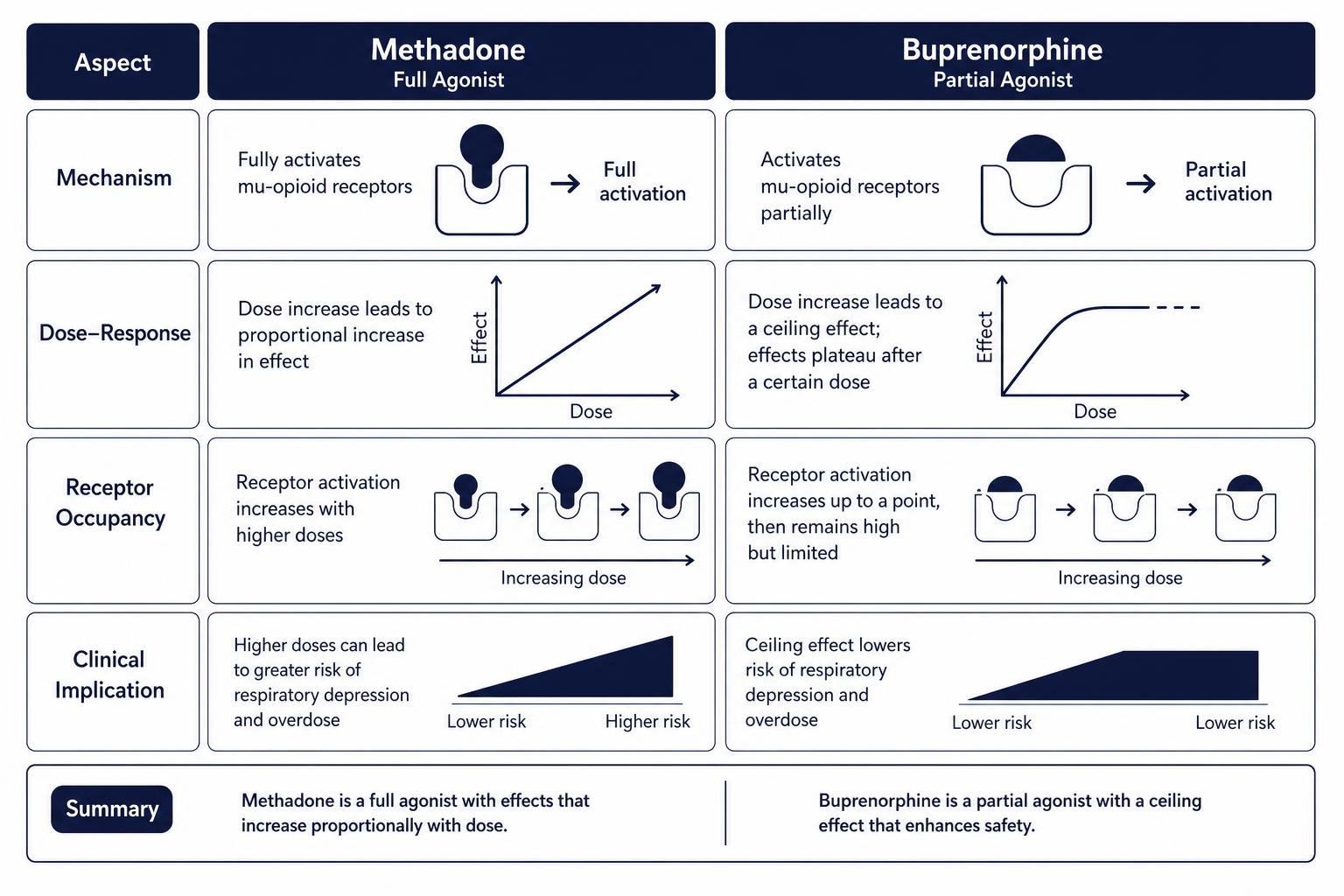
Although the FDA has not formally approved a drug solely for kratom addiction, board-certified addiction medicine specialists frequently utilize Medications for Opioid Use Disorder (MOUD)—most notably sublingual buprenorphine-naloxone (Suboxone)—off-label with exceptional clinical success. Buprenorphine’s high affinity for mu-opioid receptors allows it to replace kratom alkaloids, instantly neutralizing physical withdrawal symptoms and eliminating overwhelming cravings without producing a full-agonist “high.”
To understand how buprenorphine therapy works in detail, explore An Essential Guide to Suboxone for Kratom Dependence and review Can Suboxone Help With Kratom Dependence?.
In addition to buprenorphine maintenance, physicians may utilize short-term supportive medications during detoxification:
- Clonidine or Lofexidine: Alpha-2 adrenergic agonists that calm sympathetic nervous system overactivity, relieving anxiety, sweating, rapid pulse, and muscle tension.
- Hydroxyzine: A non-addictive antihistamine that reduces acute anxiety and promotes restful sleep.
- Targeted Supportive Care: Non-NSAID analgesics for body aches and anti-motility agents to soothe gastrointestinal distress.
Behavioral Therapy and Long-Term Recovery
Medication provides a stable foundation by quieting physical cravings, but long-term recovery is built through evidence-based behavioral therapies. Psychotherapy equips you with psychological tools to understand why you turned to kratom in the first place—whether to self-treat stress, chronic pain, social anxiety, or fatigue—and how to build healthier coping mechanisms.
Core therapeutic modalities include:
- Cognitive Behavioral Therapy (CBT): CBT helps identify distorted thinking patterns and emotional triggers that lead to substance use. By recognizing early warning signs, you learn actionable strategies to pause, reframe thoughts, and navigate stress without reaching for kratom.
- Contingency Management (CM): A structured approach that reinforces positive behavioral choices and recovery milestones through tangible rewards and goal setting.
- Relapse Prevention Planning: Creating a practical roadmap for high-risk situations, such as managing social environments, coping with chronic pain flair-ups, or handling sudden emotional stress.
- Peer Support Groups: Engaging with recovery communities provides peer encouragement, accountability, and a powerful reminder that you are not walking this path alone.
Kratom Addiction & Treatment Guide: How to Quit Safely

When you decide to stop using kratom, safety and sustainability should be your top priorities. Quitting abruptly (“cold turkey”) from high daily doses can trigger intense physiological stress, extreme insomnia, and severe mood crashes that make relapse almost irresistible.
The safest, most comfortable way to break free is under professional medical supervision. An addiction medicine provider can design a tailored taper protocol or transition you smoothly onto stabilized medication support.
For step-by-step strategies on safe reduction, read our guide on How to Break Kratom Addiction the Right Way. Public health resources, such as the NYS OASAS Kratom Information portal, also emphasize the importance of seeking professional care rather than attempting unmonitored home detoxes.
Key safety guidelines when preparing to quit:
- Be completely honest with your healthcare provider: Share exact details about your intake—whether you consume raw leaf powder, liquid shots, or concentrated 7-OH tablets.
- Avoid dangerous multi-substance combinations: Never attempt to cushion kratom withdrawal by taking alcohol, prescription opioids, or illicit sedatives. Mixing central nervous system depressants dramatically increases fatal overdose risks.
- Establish a supportive home environment: Clear your living space of all kratom products, inform trusted family members or friends of your recovery goal, and streamline your schedule to prioritize rest.
Kratom Addiction & Treatment Guide: Supporting a Loved One
Watching a family member, spouse, or friend struggle with kratom dependence can feel overwhelming and confusing. Because kratom is legal in many areas and frequently sold in gas stations or smoke shops, loved ones often downplay its risks until severe financial, emotional, or physical consequences emerge.
Here is how you can offer meaningful support:
- Educate yourself first: Learn about kratom’s dual stimulant/opioid nature so you can speak knowledgeably without relying on media sensationalism or dismissive lecture styles.
- Initiate an empathetic, nonjudgmental dialogue: Choose a calm, private moment to express your concern. Use “I” statements focused on their health and well-being (e.g., “I’ve noticed how stressed and exhausted you seem lately, and I want to support you”), rather than placing blame.
- Encourage professional clinical screening: Offer to help them schedule a confidential telemedicine consultation with an addiction specialist. Reassure them that seeking medical help is a sign of strength, not failure.
- Maintain healthy personal boundaries: Support their recovery journey enthusiastically, but avoid enabling behaviors such as funding their kratom purchases or making excuses for missed responsibilities.
Frequently Asked Questions About Kratom Addiction
Can Suboxone be prescribed for kratom dependence?
Yes. Licensed medical providers who treat substance use disorders can evaluate patients with severe kratom dependence and prescribe sublingual buprenorphine-naloxone (Suboxone) when clinically appropriate. Buprenorphine binds tightly to mu-opioid receptors, effectively stopping kratom withdrawal symptoms and suppressing intense cravings. At National Addiction Specialists, our providers evaluate each patient in Tennessee and Virginia individually to determine if MAT is the safest, most effective path to lasting recovery.
What are the dangers of synthetic 7-hydroxymitragynine (7-OH) products?
Synthetic or lab-concentrated 7-hydroxymitragynine (7-OH) products represent a dramatically higher risk level than traditional raw leaf kratom powder. While natural kratom leaves contain only trace amounts of 7-OH, commercially isolated tablets and liquid shots contain highly concentrated doses.
7-OH acts as a potent full mu-opioid receptor agonist. As a result, these high-potency products cause rapid tolerance development, intense physical dependence, severe psychological addiction, and a greatly heightened risk of acute overdose or toxicity. Poison control centers across the nation have noted a dramatic spike in emergency calls tied directly to these concentrated extract products.
How quickly does physical dependence on kratom develop?
Physical dependence can develop surprisingly fast—often within 4 to 6 weeks of regular daily use. Factors that accelerate dependence include consuming high doses (greater than 5 to 10 grams daily), taking concentrated extract formulations, or dosing multiple times throughout the day. As your brain adapts to constant alkaloid exposure, skipping even a single dose can trigger early withdrawal symptoms within hours.
Conclusion
Breaking free from kratom dependence can feel daunting, but you do not have to navigate this journey alone. With proper medical guidance, evidence-based medication-assisted treatment, and compassionate counseling, full recovery and lasting peace of mind are completely within reach.
At National Addiction Specialists, we provide confidential, convenient, telemedicine-based recovery care from the comfort and privacy of your home in Tennessee and Virginia. Our experienced addiction medicine team accepts Medicare and Medicaid, making high-quality personalized care accessible when you need it most.
Explore our Medication-Assisted Treatment Services today to take your first step toward recovery.
This article was medically reviewed by: Chad Elkin, MD, DFASAM is a board-certified addiction medicine physician, founder, and Chief Medical Officer of National Addiction Specialists, dedicated to treating substance use disorders. A Distinguished Fellow of the American Society of Addiction Medicine (ASAM), Dr Elkin currently serves as President of the Tennessee Society of Addiction Medicine (TNSAM) and has held various leadership roles within the organization. Dr Elkin chairs ASAM’s Health Technology Subcommittee and is an active member of its Practice Management and Regulatory Affairs Committee, State Advocacy and Legislative Affairs Committee, and other committees. He has contributed to numerous local, state, and national task forces, helping develop professional guidelines, policies, and laws that align with best practices in addiction medicine. Committed to advancing evidence-based policy, Dr Elkin is Chairman of the Tennessee Association of Alcohol, Drug, & Other Addiction Services (TAADAS) Addiction Medicine Council, which collaborates with the TN Department of Mental Health & Substance Abuse Services (TDMHSAS). He also serves on the planning committee for the Vanderbilt Mid-South Addiction Conference. His work focuses on reducing addiction-related harm, combating stigma, and ensuring access to effective treatment. Passionate about the field of addiction medicine, he remains dedicated to shaping policy and enhancing patient care.
Suboxone® and Subutex® are a registered trademark of Indivior UK Limited. Any mention and reference of Suboxone® and Subutex® in this website is for informational purposes only and is not an endorsement or sponsorship by Indivior UK Limited.