The Ultimate Guide to Suboxone Withdrawal Relief
What Helps With Suboxone Withdrawal: A Quick Answer
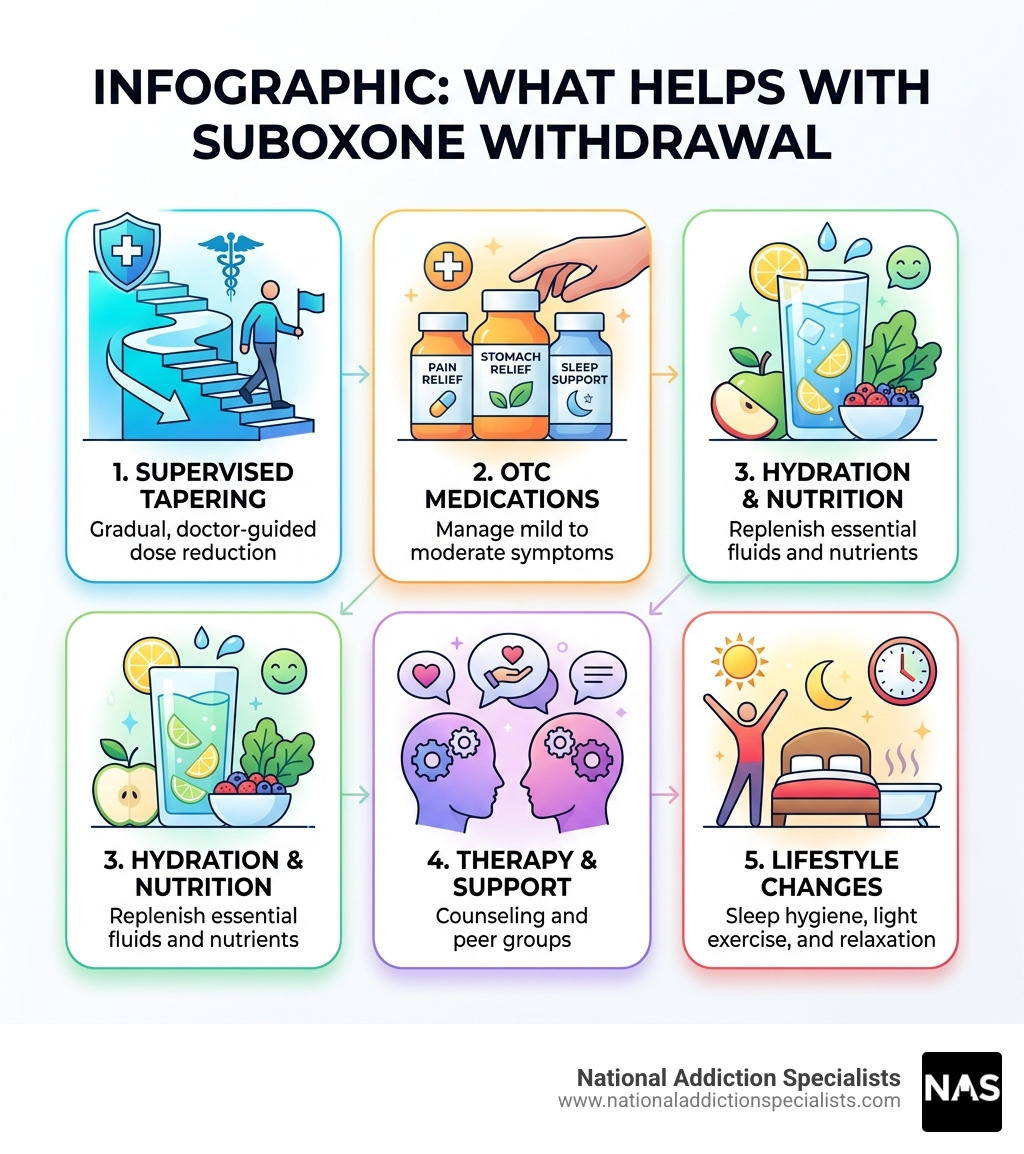
What helps with suboxone withdrawal comes down to a combination of medical support and practical self-care. Here is a quick overview:
| Approach | Examples |
|---|---|
| Supervised tapering | Gradual dose reduction under a doctor’s care |
| Prescription medications | Lucemyra (lofexidine), clonidine |
| OTC medications | Ibuprofen, loperamide, diphenhydramine |
| Hydration and nutrition | Water, electrolytes, bland balanced meals |
| Lifestyle support | Light exercise, sleep hygiene, warm baths |
| Psychological support | Therapy, support groups, mindfulness |
The single most important step? Work with your doctor to taper your dose slowly rather than stopping all at once.
Deciding to stop Suboxone is a major step in your recovery journey — and it is one worth taking seriously. Suboxone contains two active ingredients: buprenorphine, a partial opioid agonist, and naloxone, an opioid antagonist. Together, they reduce cravings and block withdrawal during opioid addiction treatment. But because buprenorphine acts on the same brain receptors as other opioids, long-term use can lead to physical dependence. When you stop — especially suddenly — your brain and body have to readjust, and that process can feel overwhelming.
The good news is that Suboxone withdrawal, while uncomfortable, is manageable. With the right plan, many people move through it with far less suffering than they expect.
I’m Dr. Chad Elkin, board-certified in Addiction Medicine and founder of National Addiction Specialists. With years of clinical experience helping patients understand what helps with suboxone withdrawal, I’ve seen how the right combination of medical guidance and practical strategies can make a real difference in outcomes. In this guide, I’ll walk you through everything you need to know — from the withdrawal timeline to proven relief strategies.
Learn more about what helps with suboxone withdrawal:
Understanding the Suboxone Withdrawal Timeline

When we talk about what helps with suboxone withdrawal, we first have to talk about time. Suboxone is a “long-acting” medication. Unlike heroin or oxycodone, which leave the system quickly and cause intense, immediate “crashes,” Suboxone has a long half-life of up to 42 hours. This means it takes a long time for the medication to actually leave your receptors.
Because of this slow exit, withdrawal symptoms don’t usually hit the moment you miss a dose. Instead, they linger and build gradually. This can be a double-edged sword: the symptoms are often less “violent” than short-acting opioids, but they can last much longer.
| Phase | Duration | Primary Symptoms |
|---|---|---|
| Acute Physical | Days 1–10 | Sweating, chills, nausea, muscle aches, insomnia |
| Early Psychological | Weeks 2–4 | Anxiety, low mood, fatigue, minor cravings |
| Protracted (PAWS) | Months 1–6+ | Depression, sleep disturbances, irritability |
For more detailed information, check out our guide on Suboxone withdrawal symptoms.
Early Symptoms (24–72 Hours)
In the first 24 to 72 hours after your last dose, you might not feel much at all, or you may notice the very beginnings of discomfort. This is often the “mental game” phase. You might experience:
- Increased Cravings: Your brain starts noticing the empty receptors.
- Anxiety and Restlessness: A feeling of “crawling out of your skin.”
- Insomnia: Difficulty falling or staying asleep.
- Physical Warning Signs: Excessive yawning, watery eyes, and a runny nose.
Understanding this detailed timeline of Suboxone withdrawal can help you prepare mentally for the days ahead.
Peak and Subsiding Phases (1–4 Weeks)
The “peak” of physical symptoms typically occurs around day 3 to day 5. This is when the flu-like symptoms are most prominent. You may experience muscle aches, nausea, and digestive distress.
By the end of the first week, the physical “storm” usually begins to subside, but the psychological journey continues. During weeks 2 through 4, many people report feeling “flat” or depressed. This is a natural part of the brain relearning how to produce its own feel-good chemicals without the help of buprenorphine.
Medical Strategies: What Helps With Suboxone Withdrawal
If you are wondering what helps with suboxone withdrawal most effectively, the answer is medical supervision. We strongly advise against going “cold turkey.” Not only is it unnecessarily painful, but it also significantly increases the risk of relapse.
Medical professionals can provide a “safety net” through two main avenues: a structured taper and supportive medications.
The Importance of a Supervised Taper
A taper is the process of gradually lowering your dose over weeks or months. This gives your brain’s receptors time to adjust to smaller and smaller amounts of the medication.
A common best practice is to reduce the dose by no more than 5–10% every 2 to 3 weeks. If you feel significant withdrawal, we slow the taper down. This “low and slow” approach is the gold standard for how to taper off Suboxone safely.
There is no “right” amount of time to be on the medication; the decision of how long to stay on Suboxone should be a collaborative choice between you and your provider based on your stability and recovery goals.
Over-the-Counter Options: What Helps With Suboxone Withdrawal Symptoms
While tapering, you may still experience mild discomfort. Several OTC medications can target specific symptoms:
- Muscle Aches and Headaches: Ibuprofen (Advil/Motrin) or Acetaminophen (Tylenol). Research suggests up to 800mg of ibuprofen every 6 hours can be effective for severe aches, but always follow your doctor’s specific dosing advice.
- Gastrointestinal Issues: Loperamide (Imodium) for diarrhea and Maalox or Tums for stomach upset.
- Insomnia: Diphenhydramine (Benadryl) can help with sleep, though some find it can worsen restless leg syndrome, so use it with caution.
Additionally, prescription non-opioid medications like Clonidine (for anxiety and chills) or Lucemyra (the first FDA-approved non-opioid specifically for opioid withdrawal) can be game-changers in managing the physical “edge” of detox.
Make an Appointment to Treat Addiction Please don’t hesitate. Make an appointment today. https://www.nationaladdictionspecialists.com/new-patient-packet/
At-Home Remedies and Lifestyle Changes for Relief
Medical help is the foundation, but what you do at home builds the rest of the house. Small lifestyle choices can have a massive impact on how you feel day-to-day.
Managing Physical Discomfort Naturally
When your body is in withdrawal, its internal thermostat is broken. You might swing from shivering to sweating in minutes.
- Hydration is King: Dehydration from sweating or GI issues makes everything feel worse. Drink plenty of water and electrolyte-rich beverages like Pedialyte or Gatorade.
- Warm Salt Baths: A warm bath with Epsom salts can soothe aching muscles and provide a much-needed sensory distraction.
- Nutrition: Stick to “bland” meals (the BRAT diet: Bananas, Rice, Applesauce, Toast) if your stomach is upset. Magnesium supplements may also help with muscle cramps and relaxation.
Many patients ask, does Suboxone help with withdrawal symptoms? While the medication itself prevents withdrawal from other opioids, managing the transition off Suboxone requires these natural supportive measures.
Psychological Coping Mechanisms
The “mental fog” and anxiety of withdrawal can be just as taxing as the physical pain.
- Distraction: Whether it’s binge-watching a lighthearted show, gaming, or reading, keeping your mind occupied prevents you from “hyper-focusing” on your symptoms.
- Exercise: You might not feel like hitting the gym, but a simple 15-minute walk can release natural endorphins—the body’s own “feel-good” chemicals.
- Journaling: Putting your feelings on paper can help you track your progress and remind you why you started this journey in the first place.
For those in Tennessee and Virginia, our team at National Addiction Specialists offers comprehensive Suboxone Withdrawal Treatment that includes these behavioral strategies.
Professional Support and Long-Term Recovery
Withdrawal is the sprint; recovery is the marathon. To stay successful long-term, you need a support system that extends beyond the physical detox phase.
Holistic Approaches: What Helps With Suboxone Withdrawal Naturally
Many people find relief through alternative therapies that treat the “whole person.” These include:
- Acupuncture and Massage: These can help regulate the nervous system and reduce cortisol (stress) levels.
- Yoga and Meditation: These practices teach you how to sit with discomfort and breathe through anxiety—skills that are vital for preventing relapse.
- Endorphin Boosters: Even small things, like eating a bit of dark chocolate, can provide a tiny natural dopamine boost when you’re feeling low.
Scientific evidence, such as this clinical study on Buprenorphine/Naloxone withdrawal, highlights that while withdrawal is a hurdle, it is a surmountable one with integrated care.
When to Seek Emergency Medical Help
While Suboxone withdrawal is rarely life-threatening on its own, complications can arise. You should seek immediate medical attention if you experience:
- Severe Dehydration: Inability to keep any liquids down for more than 12-24 hours.
- Hallucinations or Confusion: This may indicate a more complex medical issue.
- Suicidal Ideation: If you feel like hurting yourself, please call 988 or go to the nearest ER.
- Relapse Risks: If the cravings become so strong you feel you are about to use, professional intervention is needed immediately to prevent the high risk of overdosing on Suboxone or other opioids.
Frequently Asked Questions about Suboxone Withdrawal
Is it safe to stop Suboxone cold turkey?
We do not recommend it. Abruptly stopping Suboxone causes a “shock” to the system. While not usually fatal, the intensity of the symptoms often leads to a high risk of relapse. A medically supervised taper is much safer and significantly more comfortable.
How long does Suboxone withdrawal typically last?
The acute physical phase usually lasts 7 to 10 days, with the worst symptoms peaking around day 3 or 4. However, psychological symptoms like depression or cravings can persist for a month or longer. This is why long-term support is so important.
Can I manage Suboxone withdrawal at home?
Yes, many people manage their withdrawal at home, but it should still be done under the “remote” eye of a medical professional. Telemedicine services, like those we provide at National Addiction Specialists, allow you to have a professional tapering plan and prescription support while staying in the comfort of your own home.
Conclusion
Navigating what helps with suboxone withdrawal doesn’t have to be a solo mission. At National Addiction Specialists, we provide expert, telemedicine-based care for patients in Tennessee and Virginia. Whether you are in Brentwood, Virginia Beach, or anywhere else in these states, we offer personalized recovery plans that fit your life.
We accept Medicaid and Medicare, ensuring that high-quality, confidential addiction treatment is accessible to those who need it most. You’ve already done the hard work of starting your recovery—let us help you navigate the next chapter safely.
For more information, explore The Complete Guide to Suboxone Treatment Options.
This article was medically reviewed by: Chad Elkin, MD, DFASAM is a board-certified addiction medicine physician, founder, and Chief Medical Officer of National Addiction Specialists, dedicated to treating substance use disorders. A Distinguished Fellow of the American Society of Addiction Medicine (ASAM), Dr Elkin currently serves as President of the Tennessee Society of Addiction Medicine (TNSAM) and has held various leadership roles within the organization. Dr Elkin chairs ASAM’s Health Technology Subcommittee and is an active member of its Practice Management and Regulatory Affairs Committee, State Advocacy and Legislative Affairs Committee, and other committees. He also serves on the planning committee for the Vanderbilt Mid-South Addiction Conference. Committed to advancing evidence-based policy, Dr Elkin is Chairman of the Tennessee Association of Alcohol, Drug, & Other Addiction Services (TAADAS) Addiction Medicine Council, which collaborates with the TN Department of Mental Health & Substance Abuse Services (TDMHSAS). He has contributed to numerous local, state, and national task forces, helping develop professional guidelines, policies, and laws that align with best practices in addiction medicine. His work focuses on reducing addiction-related harm, combating stigma, and ensuring access to effective treatment. Passionate about the field of addiction medicine, he remains dedicated to shaping policy and enhancing patient care.
Suboxone® and Subutex® are a registered trademark of Indivior UK Limited. Any mention and reference of Suboxone® and Subutex® in this website is for informational purposes only and is not an endorsement or sponsorship by Indivior UK Limited.