Why Suboxone for Opioid Withdrawal Is a Game-Changer in Addiction Treatment
Suboxone for opioid withdrawal is one of the most effective, FDA-approved treatments available today for people struggling with opioid use disorder (OUD).
Here’s what you need to know right away:
| Question | Quick Answer |
|---|---|
| What is Suboxone? | A prescription medication combining buprenorphine and naloxone, used to treat opioid dependence |
| How does it work? | Buprenorphine partially activates opioid receptors to ease withdrawal and cravings; naloxone deters misuse |
| When can you start it? | After 12 hours from last short-acting opioid use, or 48-72 hours after long-acting opioids, once withdrawal symptoms appear |
| Is it effective? | Yes — patients are 59% more likely to complete withdrawal treatment compared to clonidine or lofexidine |
| Can it be prescribed remotely? | Yes, via telemedicine in many states |
Opioid withdrawal is physically painful and emotionally exhausting. Many people try to quit on their own — and fail — not because of lack of willpower, but because the biology of withdrawal is genuinely brutal. Suboxone changes that equation by giving the brain a safer, stable footing to recover from.
It works by partially activating the same opioid receptors that drugs like heroin or oxycodone target — reducing withdrawal symptoms and cravings without producing the same high or dangerous respiratory depression. The naloxone component adds a layer of protection against misuse.
This guide will walk you through everything you need to know: how Suboxone works, when and how to start it, what to expect, and how to stay safe throughout treatment.
I’m Dr. Chad Elkin, board-certified in Addiction Medicine and founder of National Addiction Specialists — I’ve spent years prescribing and overseeing Suboxone for opioid withdrawal across Tennessee and Virginia, helping patients access safe, evidence-based care both in-office and through telemedicine. This guide reflects the clinical protocols and real-world experience I rely on every day to help patients reclaim their lives.
Understanding Suboxone for Opioid Withdrawal
When we talk about suboxone for opioid withdrawal, we are referring to a medication that has fundamentally changed the landscape of addiction medicine. Approved by the FDA in 2002, Suboxone is a combination of two specific medications: buprenorphine and naloxone. Its primary goal is to stabilize the brain’s chemistry so that a person can focus on therapy and lifestyle changes rather than the agonizing physical symptoms of “dope sickness.”
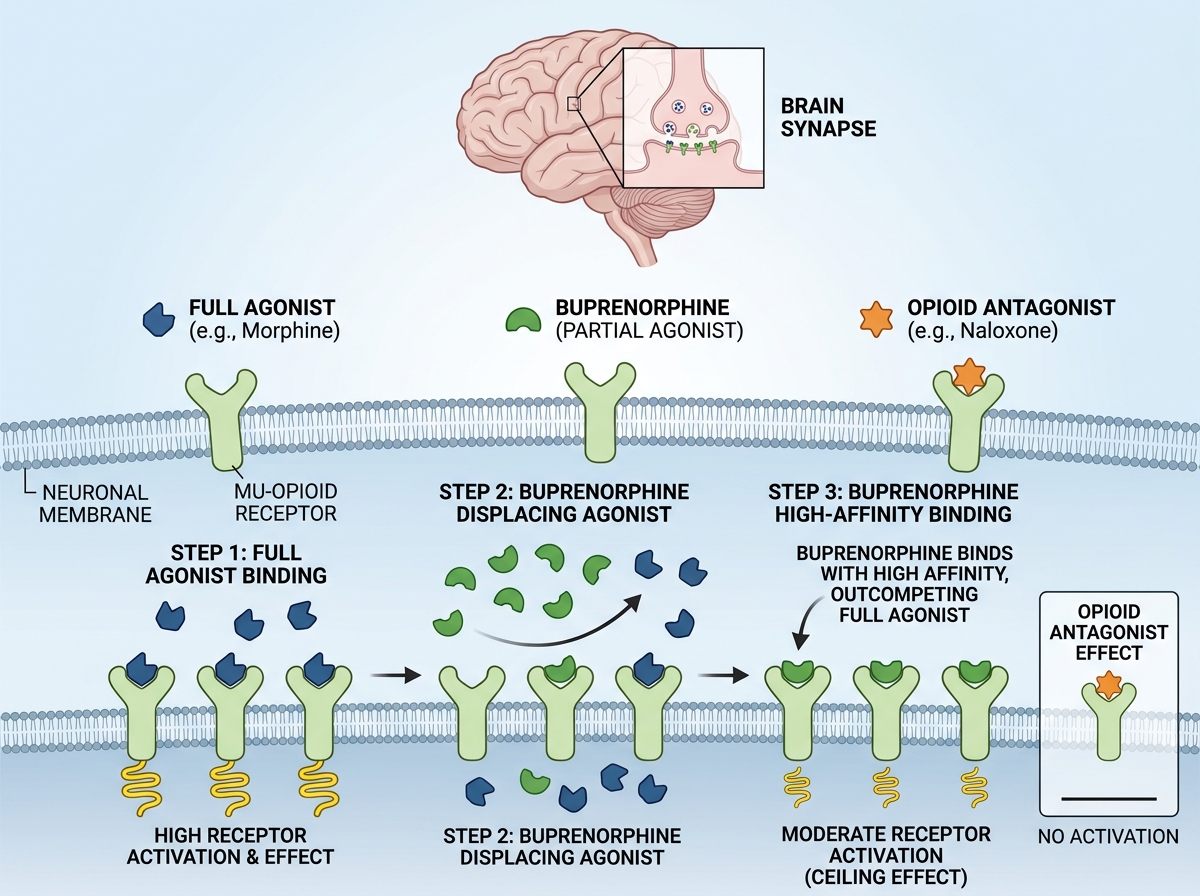
To understand what is Suboxone, we have to look at how it interacts with the brain. Unlike full opioids (like heroin, fentanyl, or oxycodone), which fully activate the brain’s opioid receptors, Suboxone acts as a “partial agonist.” This means it sits on the receptor and turns it on just enough to stop withdrawal and cravings, but not enough to produce a dangerous “high” in opioid-tolerant individuals.
For those interested in the scientific prescribing information for Suboxone, the medication is classified as a Schedule III controlled substance. This classification reflects its lower potential for abuse compared to Schedule II drugs like methadone or oxycodone. At National Addiction Specialists, we see how Suboxone treatment works to provide a bridge from active addiction to long-term stability.
Active Ingredients and Their Roles
Suboxone is a team effort between two ingredients:
- Buprenorphine (The Partial Agonist): This is the workhorse. It attaches strongly to the mu-opioid receptors. Because it is a partial agonist, it has a “ceiling effect.” This means that after a certain dose (usually around 24mg to 32mg), taking more won’t increase the effects or the risk of respiratory depression. This makes it significantly safer than traditional opioids.
- Naloxone (The Antagonist): Often misunderstood, naloxone is included specifically to deter misuse. When you take Suboxone sublingually (under the tongue) or buccally (inside the cheek), the naloxone is poorly absorbed and does almost nothing. However, if someone tries to dissolve and inject the medication, the naloxone enters the bloodstream immediately, blocking the opioid receptors and triggering instant, severe withdrawal.
This dual-action mechanism is a cornerstone of how Suboxone opioid treatment works, ensuring the medication is used as intended.
The Science of Receptor Affinity
One of the most important concepts in using suboxone for opioid withdrawal is “affinity.” Buprenorphine has a much higher affinity for opioid receptors than most other opioids. Think of it like a game of musical chairs: if buprenorphine enters the room, it will knock heroin or fentanyl out of their “chairs” (the receptors) and take their place.
According to the FDA label information, this high affinity is why the medication stays in the system so long—its half-life is between 24 and 42 hours. This allows for once-daily dosing, providing a steady state of comfort that prevents the “ups and downs” associated with short-acting drugs.
The Induction Process: Timing and Protocols
Induction is the technical term for the very first time you take Suboxone. Timing is everything here. If you take it too soon, you risk “precipitated withdrawal,” which is a rapid and intense onset of withdrawal symptoms. To avoid this, we use the Clinical Opioid Withdrawal Scale (COWS) to measure opioid withdrawal symptoms like heart rate, sweating, restlessness, and pupil size.
Starting Suboxone for Opioid Withdrawal Safely
We generally wait until a patient is in moderate withdrawal before starting the first dose. This ensures that the receptors are “empty” enough for buprenorphine to take over smoothly.
| Opioid Type | Examples | When to Start Suboxone |
|---|---|---|
| Short-Acting | Heroin, Oxycodone, Hydrocodone | 12–24 hours after last use |
| Long-Acting | Methadone, OxyContin ER | 48–72 hours after last use |
| Fentanyl | Illicit Fentanyl | Often 48-72 hours (due to fat-solubility) |
Clinical guidelines, such as the clinical guide for buprenorphine, suggest that a COWS score of at least 12 (moderate withdrawal) is the sweet spot for a safe start. Proper opioid withdrawal management requires patience during this window, but the relief that follows is worth the wait.
Risks of Precipitated Withdrawal
If Suboxone is taken while full opioids are still heavily occupying the receptors, the buprenorphine will violently “kick” those opioids off. Because buprenorphine only partially activates the receptor, the brain perceives a sudden, massive drop in opioid levels. This leads to suboxone withdrawal symptoms that are much more intense than standard withdrawal.
If this happens, don’t panic. We manage it with supportive care—hydration, non-opioid comfort medications, and sometimes carefully timed additional doses of buprenorphine to “override” the reaction.
Make an Appointment to Treat Addiction Please don’t hesitate. Make an appointment today. Make an Appointment
Efficacy and Comparison to Other Treatments
When it comes to medication-assisted treatment, the data is clear: Suboxone works. Research shows that buprenorphine is associated with a 59% higher likelihood of completing withdrawal treatment compared to non-opioid options like clonidine or lofexidine.
While clonidine can help with “goosebumps” and high blood pressure, it doesn’t stop the core cravings or the deep muscle aches the way buprenorphine does. In fact, the “number needed to treat” (NNT) for an additional beneficial outcome with buprenorphine vs. alpha2-agonists is only 4—meaning for every four people treated, one extra person successfully completes detox who wouldn’t have otherwise.
Why Choose Suboxone for Opioid Withdrawal?
The benefits of Suboxone treatment extend beyond just physical comfort. Because of its safety profile and “ceiling effect,” it is uniquely suited for outpatient and telemedicine care. Unlike methadone, which often requires daily visits to a clinic, Suboxone can be taken in the privacy of your home in Tennessee or Virginia.
There are many myths about using Suboxone, such as the idea that you are “just trading one drug for another.” In reality, you are trading a life-threatening, chaotic cycle of illicit drug use for a stable, medically supervised treatment that reduces mortality and helps you return to work and family. Suboxone for opioid addiction is a tool for recovery, not a substitute for the “high.”
Suboxone’s Role in Comprehensive Opioid Withdrawal Management
Effective opioid addiction treatment isn’t just about the pill; it’s about the person. Suboxone provides the physical stability needed to engage in counseling and behavioral therapies. Compared to older methods, Suboxone results in less severe withdrawal scores and much higher retention rates in long-term programs.
Managing Side Effects and Safety Precautions
Like any medication, Suboxone has side effects. Most are mild and resolve as your body adjusts. Common issues include:
- Nausea and vomiting
- Headaches
- Insomnia
- Constipation
- Oral numbness or redness (where the film dissolves)
Knowing what to expect: Suboxone side effects helps patients stay the course. We often recommend simple fixes, like drinking more water for constipation or adjusting the time of day you take your dose to help with sleep.
Regarding safety, while the ceiling effect makes it much safer than other opioids, there are still overdosing on Suboxone risks, especially if it is mixed with other substances that slow down breathing.
Co-occurring Substance Use Risks
The biggest danger when using suboxone for opioid withdrawal comes from mixing it with other “downers.” Benzodiazepines (like Xanax or Valium) and alcohol can combine with buprenorphine to cause dangerous respiratory depression.
We use the Prescription Drug Monitoring Program (PDMP) to check for other prescriptions and ensure your safety. If you have questions about specific interactions, our Suboxone treatment FAQ is a great resource.
Special Populations: Pregnancy and Adolescents
For pregnant patients, buprenorphine is often preferred over methadone because it is associated with shorter hospital stays and less severe Neonatal Opioid Withdrawal Syndrome (NOWS) for the baby. While we often use buprenorphine-only formulations (without naloxone) for pregnancy to minimize fetal exposure, recent studies show the combination product is also generally safe under expert supervision.
Recent FDA warnings also highlight the importance of dental health. Because the medication is acidic, it’s important to rinse your mouth with water after the film dissolves and wait at least one hour before brushing your teeth to protect your enamel.
Frequently Asked Questions
What happens if precipitated withdrawal occurs?
If you start suboxone for opioid withdrawal too early and feel worse, contact your provider immediately. We usually provide supportive care, such as dicyclomine for stomach cramps or ondansetron for nausea. In some cases, we may continue with small, frequent doses of buprenorphine to eventually saturate the receptors and stop the reaction.
How is Suboxone monitored to prevent misuse?
At National Addiction Specialists, we prioritize safety and integrity. This includes regular (but supportive) urine drug screening, occasional pill/film counts, and clear treatment agreements. These steps aren’t about “catching” you; they are about ensuring the treatment plan is working and keeping you safe from diversion or accidental misuse.
Can Suboxone be started via telemedicine?
Yes! Thanks to modern regulations, online Suboxone doctors can now conduct the entire process—from initial assessment to induction—via a secure video link. Our online Suboxone clinic allows patients in Virginia and Tennessee to start their recovery journey without the stress of a long commute.
Conclusion
Recovery is possible, and you don’t have to do it alone or in pain. Using suboxone for opioid withdrawal is a scientifically proven way to manage the hardest part of the journey. At National Addiction Specialists, we provide personalized, telemedicine-based care that fits into your life. Whether you are in Brentwood, TN, or Virginia Beach, VA, our expert providers are here to help you navigate the complexities of how Suboxone treatment works with compassion and confidentiality.
We accept Medicaid and Medicare because we believe everyone deserves access to high-quality addiction care. If you’re ready to take that first step, we’re ready to walk with you.
Make an Appointment to Treat Addiction Please don’t hesitate. Make an appointment today. Make an Appointment
This article was medically reviewed by: Chad Elkin, MD, DFASAM is a board-certified addiction medicine physician, founder, and Chief Medical Officer of National Addiction Specialists, dedicated to treating substance use disorders. A Distinguished Fellow of the American Society of Addiction Medicine (ASAM), Dr Elkin currently serves as President of the Tennessee Society of Addiction Medicine (TNSAM) and has held various leadership roles within the organization. Dr Elkin chairs ASAM’s Health Technology Subcommittee and is an active member of its Practice Management and Regulatory Affairs Committee, State Advocacy and Legislative Affairs Committee, and other committees. He also serves on the planning committee for the Vanderbilt Mid-South Addiction Conference. Committed to advancing evidence-based policy, Dr Elkin is Chairman of the Tennessee Association of Alcohol, Drug, & Other Addiction Services (TAADAS) Addiction Medicine Council, which collaborates with the TN Department of Mental Health & Substance Abuse Services (TDMHSAS). He has contributed to numerous local, state, and national task forces, helping develop professional guidelines, policies, and laws that align with best practices in addiction medicine. His work focuses on reducing addiction-related harm, combating stigma, and ensuring access to effective treatment. Passionate about the field of addiction medicine, he remains dedicated to shaping policy and enhancing patient care.
Suboxone® and Subutex® are a registered trademark of Indivior UK Limited. Any mention and reference of Suboxone® and Subutex® in this website is for informational purposes only and is not an endorsement or sponsorship by Indivior UK Limited.