
The Suboxone Withdrawal Symptom Checklist: Are You Prepared?
What You Need to Know About Suboxone Withdrawal
A suboxone withdrawal symptoms list is essential for anyone preparing to taper off this medication-assisted treatment. Understanding what to expect can reduce fear and help you plan for a safer recovery journey.
Quick Answer: Common Suboxone Withdrawal Symptoms
Physical Symptoms:
- Muscle aches and body pains
- Nausea, vomiting, and diarrhea
- Sweating, chills, and goosebumps
- Headaches and fatigue
- Insomnia and restless legs
- Runny nose and watery eyes
- Dilated pupils and yawning
Psychological Symptoms:
- Anxiety and irritability
- Depression and mood swings
- Intense drug cravings
- Difficulty concentrating
- Feelings of hopelessness
Suboxone contains buprenorphine, a partial opioid agonist, and naloxone. When you take it regularly, your brain adapts to its presence. Stopping suddenly disrupts this balance, triggering withdrawal symptoms that can last from days to months depending on your dosage, duration of use, and individual factors.
Withdrawal happens because Suboxone has changed your brain chemistry. Buprenorphine occupies opioid receptors without producing a strong high, reducing cravings and preventing withdrawal from other opioids. But your body becomes dependent on it over time. When you reduce or stop taking it, those receptors signal distress until your brain relearns how to function without the medication.
The symptoms you’ll experience vary widely. Some people face mostly physical discomfort like flu-like symptoms during the first week. Others struggle more with psychological effects like depression and cravings that can persist for months. The severity often depends on how long you’ve taken Suboxone and at what dose.
I’m Chad Elkin, a board-certified addiction medicine physician and founder of National Addiction Specialists, where I’ve guided countless patients through safe Suboxone tapers by providing them with a comprehensive suboxone withdrawal symptoms list and personalized treatment plans. My experience has shown me that preparation and professional support make all the difference in managing withdrawal successfully.
Simple suboxone withdrawal symptoms list glossary:
The Complete Suboxone Withdrawal Symptoms List
When we talk about Suboxone withdrawal, it’s important to understand that it’s a complex process unique to each individual. The severity and specific nature of the symptoms can be influenced by many factors, including how long someone has been using Suboxone, the dosage they were taking, their overall health, and whether they have any co-occurring mental health conditions. While Suboxone is a vital tool in treating opioid use disorder, our bodies develop a physical dependence on it over time. This means that when we reduce our dosage or stop taking it, our bodies react, leading to what we call opioid withdrawal syndrome.

Common Physical Suboxone Withdrawal Symptoms List
The physical symptoms of Suboxone withdrawal can often feel like a severe case of the flu, only much more prolonged and intense. These symptoms typically begin within 12 to 48 hours after the last dose, and for some, discomfort may start within 1 to 3 days, or 72 hours. Intense physical symptoms usually occur in the first few days.
Here’s a comprehensive suboxone withdrawal symptoms list covering the physical aspects:
- Flu-like symptoms: This is a broad category that includes a range of uncomfortable sensations. We often see chills, fever, and excessive sweating. Your nose might run constantly, your eyes might water, and you might get goosebumps (piloerection).
- Muscle aches and body pains: This can range from general discomfort to excruciating pain all over the body, including bone and joint pain. It often comes with a feeling of restlessness in the legs, sometimes described as “creepy crawlies” or “heebie jeebies.”
- Gastrointestinal issues: Nausea is very common, often leading to vomiting. Diarrhea and stomach cramps (abdominal cramping) are also frequent, making it difficult to keep food down and stay hydrated.
- Headaches: Persistent and sometimes severe headaches are a common complaint during withdrawal.
- Fatigue and lethargy: Despite feeling restless, many people experience profound tiredness and a lack of energy, making even simple tasks feel impossible.
- Insomnia and sleep disturbances: It’s incredibly difficult to get restful sleep during withdrawal. You might struggle to fall asleep, stay asleep, or experience fragmented sleep.
- Pupil changes: Your pupils might become dilated and you could experience increased sensitivity to light (photophobia).
- Other autonomic hyperactivity: This can include overactive reflexes, a fast breathing rate (tachypnea), increased heart rate (tachycardia), high blood pressure, and a high body temperature. Yawning is also a surprisingly common and persistent symptom.
These physical symptoms are usually at their worst during the first 72 hours of withdrawal.
Psychological and Emotional Suboxone Withdrawal Symptoms List
While the physical symptoms are challenging, for many, the psychological and emotional aspects of Suboxone withdrawal can be even more difficult to manage and tend to last longer. These symptoms often emerge or intensify after the initial physical peak.
Our suboxone withdrawal symptoms list for psychological and emotional effects includes:
- Anxiety: A pervasive feeling of unease, worry, and nervousness. This can be mild or severe, sometimes leading to panic attacks.
- Irritability and agitation: You might find yourself easily frustrated, short-tempered, and restless.
- Mood swings: Rapid shifts in mood are common. You might feel angry one minute and sad the next, experiencing intense emotional highs and lows.
- Depression: Feelings of sadness, hopelessness, and a loss of interest in activities can become profound, especially after the first week or two. This can be a significant challenge to long-term recovery.
- Difficulty concentrating: Your ability to focus on tasks, make decisions, or remember things might be impaired.
- Intense cravings: The urge to use opioids, including Suboxone, can be overwhelming. These cravings can persist long after physical symptoms subside, making relapse a constant risk.
- Feelings of hopelessness: The prolonged nature of withdrawal, especially the psychological symptoms, can lead to feelings of despair and a belief that recovery is impossible.
- Indifference and lethargy: A lack of motivation or enthusiasm, even for things you usually enjoy, can be part of the emotional landscape.
Some individuals may experience these psychological symptoms for weeks or even months after the physical symptoms have largely disappeared. This is often referred to as Post-Acute Withdrawal Syndrome (PAWS), which we’ll discuss in more detail.
Understanding the Suboxone Withdrawal Timeline
The timeline for Suboxone withdrawal is one of its most challenging aspects, primarily due to buprenorphine’s long half-life. Unlike shorter-acting opioids, Suboxone withdrawal tends to build up more slowly but can last for a significantly longer period. This extended duration means we need to be prepared for a marathon, not a sprint.

Buprenorphine, a key component of Suboxone, has a half-life of up to 42 hours (some sources indicate 37 hours). This is considerably longer than full opioid agonists like morphine, which typically have a half-life of 2-7 hours. This long half-life means the drug stays in your system for an extended period, delaying the onset of withdrawal symptoms but also prolonging their duration.
The exact timeline can vary widely based on individual factors such as your age, metabolism, liver function, body fat composition, urinary pH, the amount of drug used, and the duration of misuse. However, we can generally divide the Suboxone withdrawal journey into two main phases: the acute phase and the post-acute phase. For more on Suboxone’s properties, it’s helpful to understand how its unique pharmacology influences this timeline.
The Acute Phase: The First Month
This is typically the most intense period, where both physical and psychological symptoms are most pronounced.
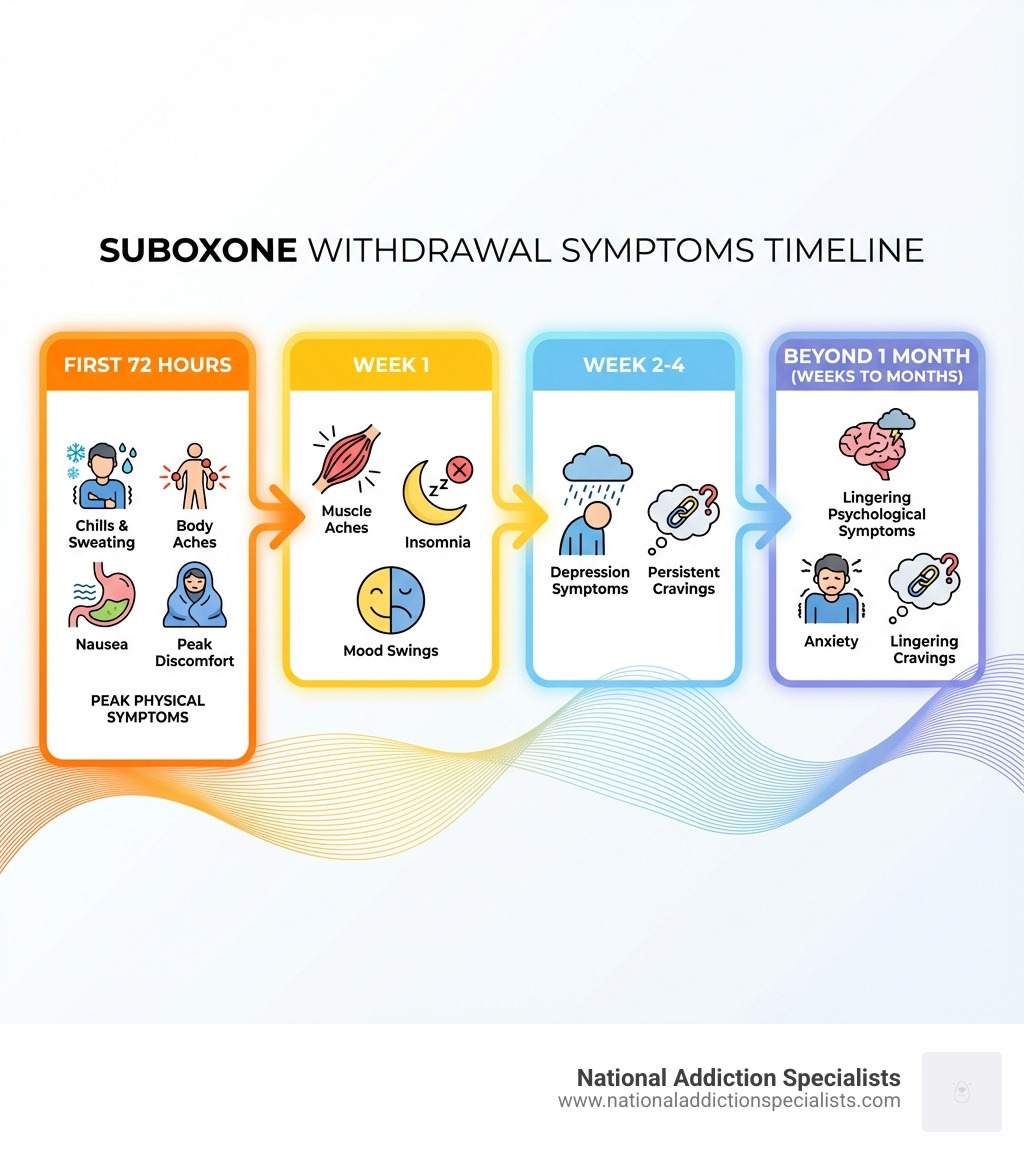
First 72 Hours:
- Onset of symptoms: Initial discomfort may begin within 12 to 48 hours after your last dose. For some, it might be 1-3 days.
- Peak intensity: Physical withdrawal symptoms are generally at their worst around the 72-hour mark. This is when you might experience the full brunt of chills, fever, headaches, and severe gastrointestinal problems like nausea, vomiting, and diarrhea. Insomnia, muscle aches, and sweating are also very prominent during this time.
- One patient described experiencing “creepy crawlies,” “heebie jeebies,” leg shaking, excruciating pain, stomach upset, nausea, vomiting, diarrhea, headaches, fever blisters, feeling uncomfortable in her skin, hallucinations, chills, and dizziness during this period.
Week 1:
- After the initial peak, physical symptoms may start to subside slightly but often continue as general aches and pains.
- Sleep disturbances and mood swings typically begin to emerge or intensify during this week. You might feel drained and fatigued, yet unable to rest properly.
Week 2-4:
- Physical symptoms decline: Most physical symptoms normally decline within a few days or weeks. By the end of the first month, most physical discomfort should have significantly reduced or disappeared.
- Psychological symptoms intensify: After two weeks, feelings of depression may begin to appear and intensify, becoming a major challenge. Mood swings, anxiety, agitation, difficulty concentrating, and intense cravings for Suboxone or other opioids often persist or worsen during this period.
- It’s a critical time where psychological dependence can still remain, even after the body feels better.
The Post-Acute Phase: Beyond the First Month
Even after the acute physical symptoms have subsided, many individuals experience a protracted withdrawal phase, often referred to as Post-Acute Withdrawal Syndrome (PAWS). This phase is characterized by milder but persistent psychological and emotional symptoms.
- Lingering psychological symptoms: These can include ongoing mood swings, anxiety, sleeplessness, and depression. Difficulty concentrating, indifference, and lethargy can also persist.
- Cravings: Intense drug cravings can remain a significant challenge for several weeks or even months. One statistic notes that after one month, individuals may still be experiencing intense cravings and depression.
- Duration: PAWS can last for several weeks, months, or even longer, depending on the individual. The one-month period is particularly challenging for individuals in recovery, and these lingering symptoms contribute to a high risk of relapse.
This extended timeline underscores the importance of a strong support system, access to counseling or therapy, and coping strategies to steer these ongoing challenges successfully.
How to Safely Manage Suboxone Withdrawal
Navigating Suboxone withdrawal is a journey that should never be undertaken alone. The risks associated with quitting Suboxone, especially cold turkey, are significant. Our primary goal at National Addiction Specialists is to ensure your safety and comfort while maximizing your chances for long-term recovery. This requires careful medical supervision and a comprehensive approach to detoxification.
We understand that thinking about withdrawal can be daunting. But with the right support, it’s a manageable process. Our approach focuses on medically supervised tapering plans, utilizing comfort medications, and providing robust therapeutic support to prevent relapse and ensure a smoother transition to an opioid-free life.
Make an Appointment to Treat Addiction Please don’t hesitate. Make an appointment today.
Tapering vs. Quitting Cold Turkey
The question of how to stop Suboxone is critical, and the answer is almost always to taper. Quitting cold turkey can be dangerous and is strongly discouraged.
| Feature | Tapering Off Suboxone (Medically Supervised) | Quitting Cold Turkey |
|---|---|---|
| Symptom Severity | Symptoms are less intense and more manageable. | Causes severe, abrupt, and overwhelming withdrawal symptoms. |
| Process | Involves a gradual dose reduction over weeks or months. | Involves stopping the medication all at once. |
| Relapse Risk | Significantly lower, as cravings and symptoms are managed. | Extremely high due to the intensity of withdrawal. |
| Overdose Risk | Lower. Tolerance is reduced gradually and in a controlled manner. | Very high. A relapse after tolerance has dropped can easily lead to a fatal overdose. |
| Safety | The safest method, allowing the body to adjust slowly. | Dangerous and can lead to complications like dehydration. Strongly discouraged. |
| Professional Guidance | Monitored by a medical professional who can adjust the plan and provide support. | No professional oversight, leaving the individual to manage severe symptoms alone. |