The Role of Counseling in Your Suboxone Journey
Why Counseling Is Essential to Your Suboxone Recovery
Suboxone treatment counseling combines medication with therapy to treat opioid addiction effectively. Here’s what you need to know:
Key Components:
- Medication (Suboxone) – Reduces cravings and withdrawal symptoms to stabilize you physically.
- Counseling/Therapy – Addresses the psychological causes of addiction and builds coping skills.
- Integrated Approach – Together, they create a comprehensive treatment plan for lasting recovery.
Why Both Matter:
- Suboxone alone treats physical dependence but not the underlying reasons for addiction.
- Counseling helps identify triggers, trauma, and patterns that led to opioid use.
- Therapy teaches you skills to manage stress, avoid relapse, and rebuild your life.
- Combined treatment has the highest success rates for long-term recovery.
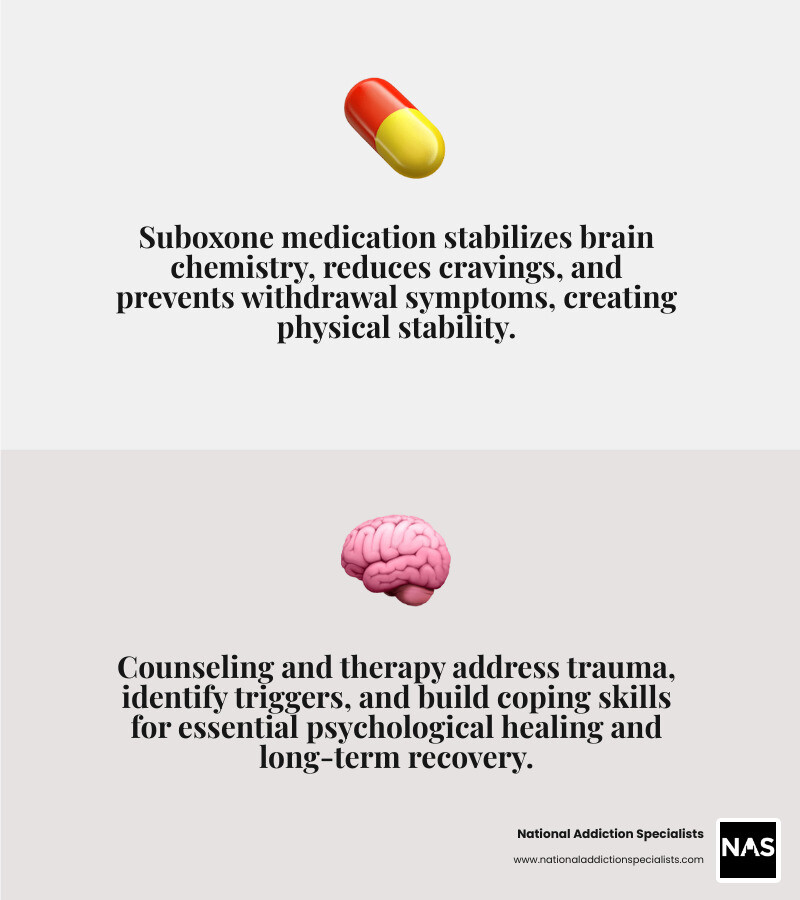
Opioid addiction affects both your body and mind. While Suboxone stabilizes your brain chemistry, stopping the cycle of cravings and withdrawal, it doesn’t address why you started using opioids. That’s where counseling becomes critical.
Research shows that medication-assisted treatment (MAT)—the combination of Suboxone with behavioral therapy—delivers better outcomes than medication alone. The medication creates a stable foundation, while counseling builds the skills and insights needed for lasting change. For an overview of MAT and its evidence base, see NIDA: Medications for Opioid Use Disorder and SAMHSA: Medication-Assisted Treatment.
Modern treatment options, including flexible telemedicine appointments, make it easier than ever to access care that fits your schedule and protects your privacy.
I’m Dr. Chad Elkin, founder and Medical Director of National Addiction Specialists, board-certified in Addiction Medicine. Through years of providing Suboxone treatment counseling via telemedicine, I’ve seen how this integrated approach gives people their lives back while maintaining the privacy and convenience they need.
Understanding Suboxone: The Foundation for Stability
Suboxone is a cornerstone of Medication-Assisted Treatment (MAT) for opioid use disorder (OUD). Often called the “gold standard of care,” it provides a path to stability by tackling the physical side of addiction, giving you the space to focus on psychological healing.
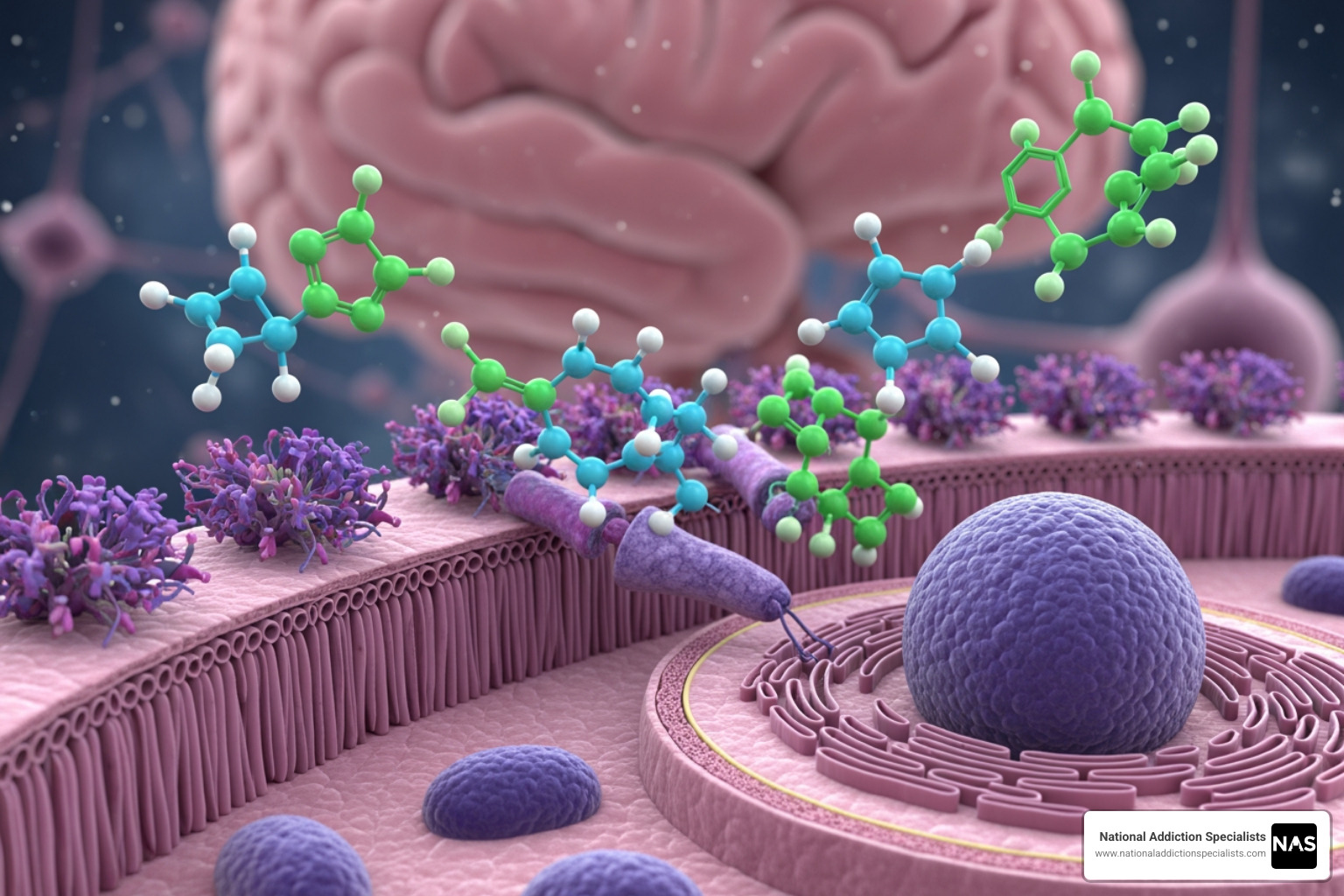
What is Suboxone? It’s a medication combining two active ingredients: buprenorphine and naloxone.
- Buprenorphine is a “partial opioid agonist.” It gently connects to opioid receptors in the brain, but only partially activates them. This action is enough to reduce cravings and alleviate withdrawal symptoms without producing the intense high of other opioids.
- Naloxone is an “opioid antagonist” included to deter misuse. If Suboxone is injected, naloxone can cause immediate withdrawal symptoms.
Together, these ingredients provide physical stability. Suboxone also has a “ceiling effect,” meaning that after a certain dose, its euphoric effects do not increase, which further reduces its potential for misuse. This stability is the first step in Suboxone treatment counseling, allowing you to fully engage in your healing journey.
Want to learn more? Visit our pages on What is Suboxone?, How Suboxone Treatment Works, and Medication Assisted Treatment.
How Suboxone Works
Suboxone works by binding to opioid receptors, which is enough to trick the brain into thinking it’s receiving opioids. This stops withdrawal symptoms and cuts down on cravings. By occupying these receptors, Suboxone also blocks the euphoria from other opioids, meaning you wouldn’t feel a “high” if you used another opioid. This mechanism helps stabilize brain chemistry, providing a break from the cycle of addiction and helping you regain control. For a closer look, check out our article on the Benefits of Suboxone Treatment.
Suboxone as Part of a MAT Program
While highly effective, Suboxone is just one tool in a complete Medication-Assisted Treatment (MAT) program); it is not a standalone cure. Think of it as the foundation on which your recovery is built. The medication addresses physical dependence, creating a stable base from which you can work on the psychological and emotional aspects of addiction in therapy. Our Medication Assisted Treatment Program shows how we blend medication with other vital services to support you.
The Critical Role of Suboxone Treatment Counseling
While Suboxone is highly effective at managing the physical symptoms of opioid addiction, it doesn’t address the deeper reasons you started using. That’s where Suboxone treatment counseling becomes essential.
Addiction has two sides: the physical dependence that Suboxone handles, and the psychological side. Counseling tackles the psychological aspect, addressing the stress, trauma, anxiety, or depression that may have led to opioid use. It’s where you ask: Why did I turn to opioids? What was I trying to fix? What needs to change so I don’t go back?
Through counseling, a professional helps you explore your history, identify relapse triggers, and recognize behavioral patterns that kept you stuck. You’ll build new, healthy coping skills to manage stress and uncomfortable emotions, allowing you to rebuild the parts of your life damaged by addiction.
This holistic approach is what makes recovery last. The Importance of Counseling and Therapy in Suboxone Treatment is the difference between just stopping opioid use and truly healing. Our Counseling for Opioid Addiction services focus on personalized Addiction Recovery Strategies.
Make an Appointment to Treat Addiction
Please don’t hesitate. Make an appointment today.
How Counseling Addresses the Underlying Causes of Addiction
Opioid addiction rarely exists in a vacuum; there’s almost always an underlying cause. Counseling provides a non-judgmental space to explore your personal history and identify specific triggers—be it stress, social situations, or difficult emotions.
Understanding your behavioral patterns allows you to develop healthier responses. Instead of turning to opioids, you might learn breathing techniques or other coping strategies. Counseling also helps address co-occurring mental health conditions like depression, anxiety, or PTSD, which is crucial for lasting recovery. This is why we emphasize the importance of treating Suboxone and Mental Health together.
Benefits of Integrating Counseling with Suboxone
Combining Suboxone with counseling creates a powerful foundation for lasting change. Research consistently shows that people in integrated treatment have significantly better outcomes.
- Increased long-term success: Counseling gives you the tools to stay in recovery for years, building a new relationship with yourself and the world.
- Reduced risk of relapse: Therapy helps you recognize and manage triggers before they become overwhelming. You’ll build resilience and a toolkit of coping strategies. See our Tips to Prevent Addiction Relapse.
- Improved mental health: Counseling provides a safe space to address co-occurring depression, anxiety, or trauma, leading to genuine emotional healing.
- Improved overall well-being: Therapy helps you refind your identity beyond addiction, improve communication skills, and develop a new sense of purpose.
- Rebuilding relationships: Addiction damages trust. Counseling, especially family therapy, helps mend bonds and repair the hurt that addiction caused.
This comprehensive approach is essential for your Addiction Recovery Journey. It’s about creating a life you don’t want to escape from.
Types of Therapy in a Suboxone Treatment Plan
Your path to recovery is unique, which is why Suboxone treatment counseling comes in many forms. We offer different types of therapy, and your plan may include one or a combination of several.

- Individual therapy provides one-on-one time with a therapist in a confidential setting to explore personal issues like trauma, triggers, or family dynamics.
- Group therapy connects you with peers who understand your journey. Sharing experiences reduces isolation and builds a strong sense of community.
- Family therapy brings loved ones into the process to improve communication, heal relationships, and build a supportive home environment.
- Cognitive-Behavioral Therapy (CBT) is a research-backed approach that helps you identify and change negative thought patterns and behaviors that fuel addiction.
- Motivational Interviewing (MI) is a collaborative style that strengthens your own motivation for change, especially if you feel uncertain about treatment.
We offer these approaches through our comprehensive Addiction Counseling Services and structured Counseling Program. Our Virtual Addiction Counseling brings expert care to your home through secure video sessions.
Individualized Suboxone Treatment Counseling
Individual therapy is often the backbone of effective Suboxone treatment counseling. In these private, one-on-one sessions, you have your therapist’s full attention. This safe space allows you to discuss sensitive topics you might not share in a group. Your therapist will help you set personalized goals, adapt to your specific needs—whether it’s processing trauma or managing co-occurring anxiety—and build the crucial trust and rapport that makes healing possible. This confidential relationship allows for complete honesty, which is where real growth happens.
Group and Family Support in Suboxone Treatment Counseling
While individual therapy is for deep personal work, group and family support provide connection and shared strength.
Group therapy reduces isolation by connecting you with people who get it. Hearing stories that mirror your own lifts the weight of stigma. In these sessions, you’ll learn new coping strategies, offer support to others (which strengthens your own recovery), and find accountability.
Family therapy addresses the damage addiction causes to relationships. It creates a safe space for honest communication, helping loved ones understand addiction as a disease. The goal is to learn how to support recovery without enabling, set healthy boundaries, and begin rebuilding trust. Whether through Online Addiction Counseling or in person, these connections create a vital support network.
Finding the Right Support for Your Recovery Journey
Choosing the right counselor for your Suboxone treatment counseling is a critical step. It’s about finding a qualified professional you can trust with your story.
Key qualifications to look for in a counselor:
- Licensed/Certified – Proper credentials in Tennessee or Virginia (e.g., LPC, LCSW, CAC).
- Experience with OUD – Specific experience treating opioid use disorder.
- Knowledge of MAT – Supportive and knowledgeable about how Suboxone and therapy work together.
- Good rapport – You should feel comfortable, respected, and understood.
Patient-therapist compatibility is crucial. It’s okay if it takes time to find the right fit. At National Addiction Specialists, our Suboxone Treatment Programs prioritize matching you with professionals who have the expertise and interpersonal skills to support your journey.
Accessing Integrated Care
Accessing integrated Suboxone treatment and counseling is easier than ever for residents of Tennessee and Virginia. Our telemedicine platform provides convenient, confidential care from home.
This means no travel, no waiting rooms, and complete privacy. You can meet with your doctor and counselor from wherever you feel most comfortable. We also accept Medicaid and Medicare, along with many other insurance plans, to remove financial barriers to your recovery.
For details on starting treatment, see our Patient Handbook.
Potential Challenges and Considerations
While life-changing, Suboxone treatment counseling has its challenges. Knowing what to expect can help you steer the journey.
- Time Commitment: Recovery requires dedicating time to appointments. Our flexible telemedicine scheduling helps fit treatment into your life.
- Emotional Vulnerability: Therapy involves opening up about painful experiences. This can be uncomfortable, but it’s where healing happens. Our therapists provide a safe, judgment-free space.
- Finding the Right Fit: It may take time to find a counselor you click with. We encourage you to speak up so we can find the right match.
- Cost and Insurance: It’s important to understand your coverage. Our team can help you steer the details.
- Sticking with It: Consistency is key. There will be tough days, but showing up is what matters. Remember why you started and know you’re not alone.
Conclusion: Building a Future Beyond Addiction
Recovery from opioid use disorder is a personal journey, but you don’t have to walk it alone. Suboxone provides crucial physical stability by managing cravings and withdrawal, giving you the space to heal. However, medication is just one piece of the puzzle.
Lasting change comes from the powerful combination of Suboxone treatment counseling. This integrated approach addresses the underlying psychological and emotional reasons for addiction. Through therapy, you gain coping skills, learn to manage triggers, and heal from past wounds. This dual focus dramatically boosts your chances of long-term success, reduces relapse risk, and improves your overall quality of life.
At National Addiction Specialists, we make expert care accessible for individuals in Tennessee and Virginia. Our telemedicine approach provides top-notch Suboxone treatment counseling conveniently and confidentially from your home. Lasting recovery isn’t just a dream; it’s an achievable goal.
If you’re ready to take the first step towards a healthier, opioid-free future, we are here to guide you. Find more about our approach in The Complete Guide to Suboxone Treatment Options and begin your journey by exploring our New Patient Packet.
This article was medically reviewed by: Chad Elkin, MD, DFASAM is a board-certified addiction medicine physician, founder, and Chief Medical Officer of National Addiction Specialists, dedicated to treating substance use disorders. A Distinguished Fellow of the American Society of Addiction Medicine (ASAM), Dr Elkin currently serves as President of the Tennessee Society of Addiction Medicine (TNSAM) and has held various leadership roles within the organization. Dr Elkin chairs ASAM’s Health Technology Subcommittee and is an active member of its Practice Management and Regulatory Affairs Committee, State Advocacy and Legislative Affairs Committee, and other committees. He also serves on the planning committee for the Vanderbilt Mid-South Addiction Conference. Committed to advancing evidence-based policy, Dr Elkin is Chairman of the Tennessee Association of Alcohol, Drug, & Other Addiction Services (TAADAS) Addiction Medicine Council, which collaborates with the TN Department of Mental Health & Substance Abuse Services (TDMHSAS). He has contributed to numerous local, state, and national task forces, helping develop professional guidelines, policies, and laws that align with best practices in addiction medicine. His work focuses on reducing addiction-related harm, combating stigma, and ensuring access to effective treatment.Passionate about the field of addiction medicine, he remains dedicated to shaping policy and enhancing patient care.
Suboxone® and Subutex® are a registered trademark of Indivior UK Limited. Any mention and reference of Suboxone® and Subutex® in this website is for informational purposes only and is not an endorsement or sponsorship by Indivior UK Limited.