Suboxone at Home: Your First Day Survival Guide
What You Need to Know About Starting Suboxone at Home
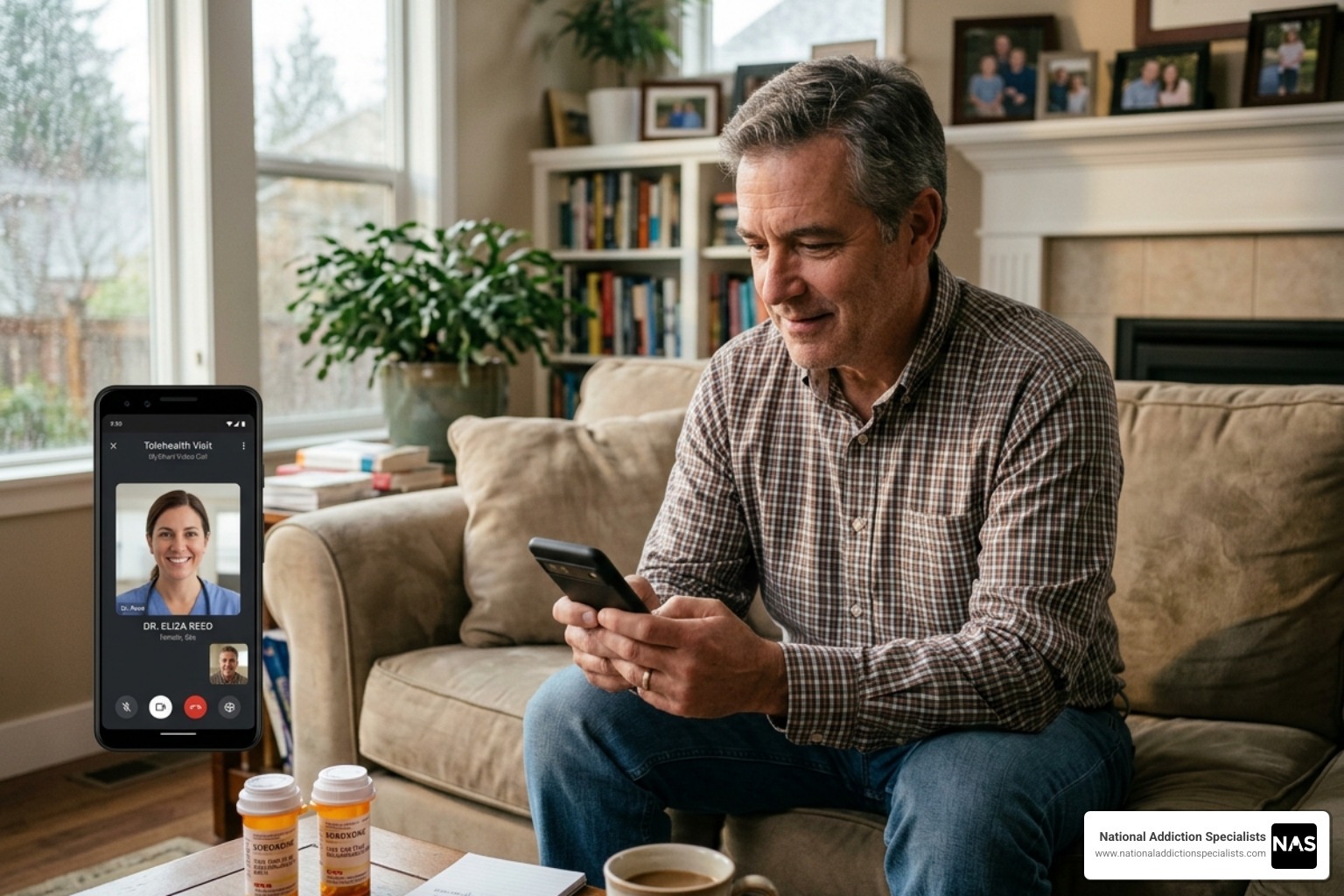
Suboxone at home is a safe, medically supervised way to begin treatment for opioid use disorder (OUD) — without stepping foot in a clinic on Day 1.
Here’s the quick version of how it works:
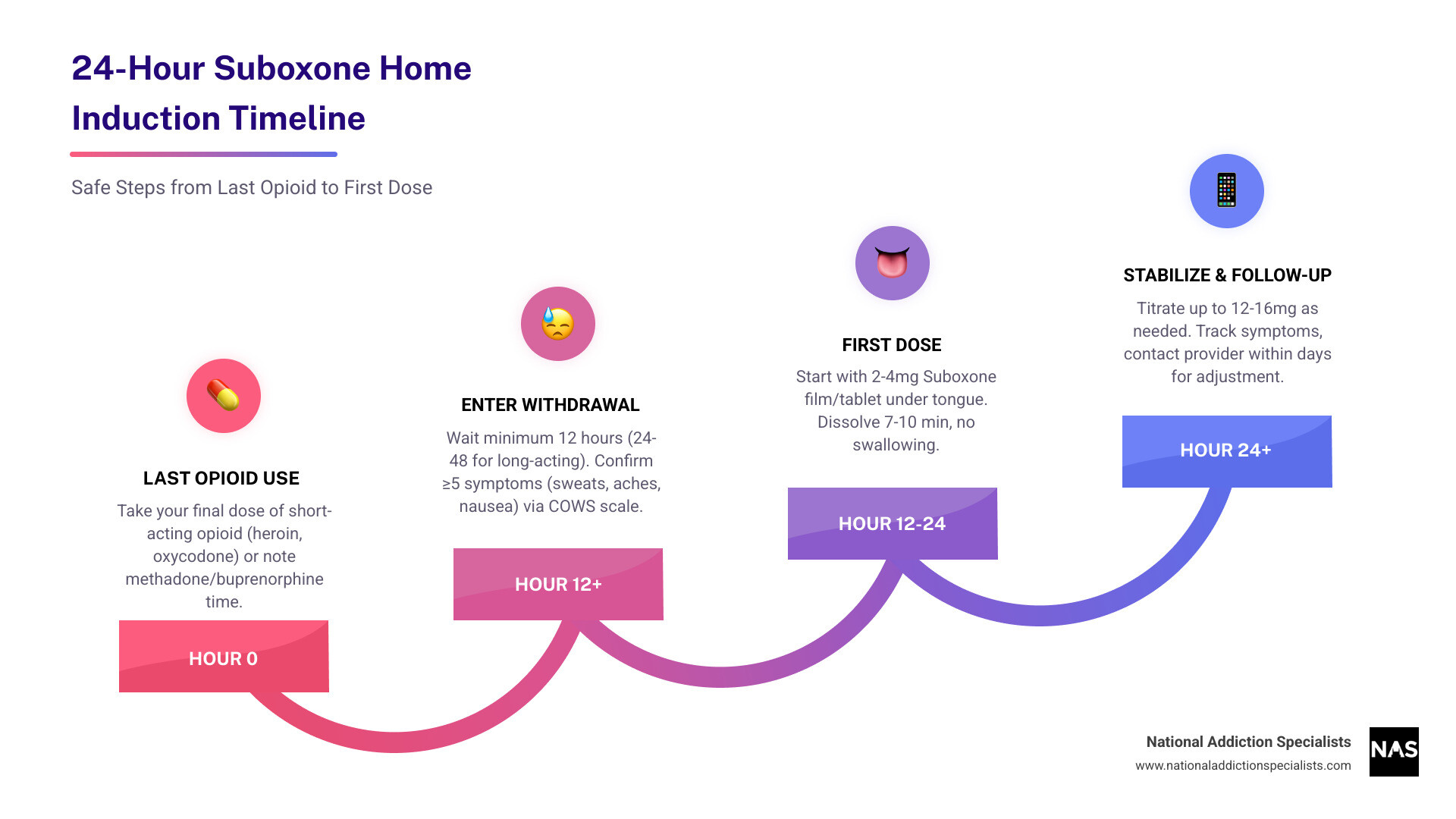
- Wait at least 12 hours after your last short-acting opioid (longer for methadone or extended-release opioids)
- Confirm you’re in withdrawal — you need at least 5 withdrawal symptoms before your first dose
- Place the film or tablet under your tongue and let it dissolve fully (7-10 minutes) — do not swallow it
- Start low — most protocols begin at 2-4 mg and allow re-dosing every 1-2 hours as needed
- Track every dose and follow up with your provider within a few days
This approach — called home induction — is now widely used as part of Medication-Assisted Treatment (MAT). Research published by the National Institutes of Health (NIH) shows MAT reduces the risk of a fatal opioid overdose by 76% and buprenorphine alone cuts the risk of death by over 50%.
The biggest barrier most people face isn’t the medication itself. It’s getting started — knowing exactly what to do, when to do it, and how to stay safe without a nurse standing next to you.
That’s exactly what this guide covers.
I’m Chad Elkin, MD — board-certified in Addiction Medicine and founder of National Addiction Specialists, where I’ve helped thousands of patients safely start Suboxone at home through telehealth. In this guide, I’ll walk you through everything you need to know about Suboxone at home, from your very first dose to what to do if things don’t go as planned.
Suboxone at home terms you need:
The Benefits of Starting Suboxone at Home
When we talk about what is Suboxone, we are looking at a combination of two medications: buprenorphine and naloxone. Buprenorphine is a partial opioid agonist. This means it sticks to the same receptors in your brain as heroin or oxycodone, but it doesn’t produce the same “high.” Instead, it satisfies the brain’s physical need for opioids, effectively quieting cravings and stopping withdrawal.
One of the most important safety features is the “ceiling effect.” Unlike full opioids, there is a point where taking more buprenorphine doesn’t increase its effects on breathing, making it significantly safer than traditional opioids. The naloxone component is added as an abuse deterrent; it only activates if the medication is injected, which helps keep the focus on recovery.
So, why choose Suboxone at home instead of a traditional clinic?
- Privacy and Discretion: Many of our patients in Tennessee and Virginia are professionals, parents, or simply private individuals. Home induction allows you to start your recovery journey without the “fishbowl” feeling of a clinic waiting room.
- Comfort: Let’s be honest—withdrawal is miserable. Being able to go through those first 24 hours in your own bed, with your own bathroom and your own support system, makes a world of difference.
- Convenience: For those in rural areas or with limited transportation, telemedicine in Suboxone treatment removes the barrier of a long commute.
- Effectiveness: Understanding how Suboxone treatment works is easier when you aren’t stressed by a clinical environment. Research published in JAMA Network Open shows that tele-buprenorphine patients have high engagement, with roughly 83% attending follow-up visits within 30 days.
Preparation: When Are You Ready for Induction?
The most critical rule of starting Suboxone at home is timing. If you take Suboxone too early, while other opioids are still active in your system, you can trigger “precipitated withdrawal”—an intense, sudden onset of sickness.
To avoid this, you must wait until you are in moderate to severe withdrawal. We use tools like the Subjective Opiate Withdrawal Scale (SOWS) or the Clinical Opiate Withdrawal Scale (COWS) to measure this. Generally, a SOWS score of 17 or higher is the “green light” to start.
The 12-Hour Rule and Beyond
The amount of time you need to wait depends entirely on the type of opioid you were using.
| Opioid Type | Examples | Wait Time Before First Dose |
|---|---|---|
| Short-Acting | Heroin, Percocet, Vicodin, IR Oxycodone | 12-24 hours |
| Intermediate/ER | OxyContin, MS Contin | 24-36 hours |
| Long-Acting | Methadone | 72+ hours (and dose must be <30mg) |
| Fentanyl | Street Fentanyl | Variable (often 48-72 hours) |
Before taking your first dose, you should check off at least five of these Suboxone withdrawal symptoms:
- Sweating or chills
- Yawning frequently
- Runny nose or watery eyes
- Restlessness or anxiety
- Goosebumps (piloerection)
- Stomach cramps, nausea, or diarrhea
- Joint and muscle aches
If you are just “feeling a little off,” you aren’t ready. You need to be truly uncomfortable.
Step-by-Step Guide to Your First Dose
Once you have your online Suboxone prescription and you’ve met the withdrawal criteria, it’s time for Day 1.
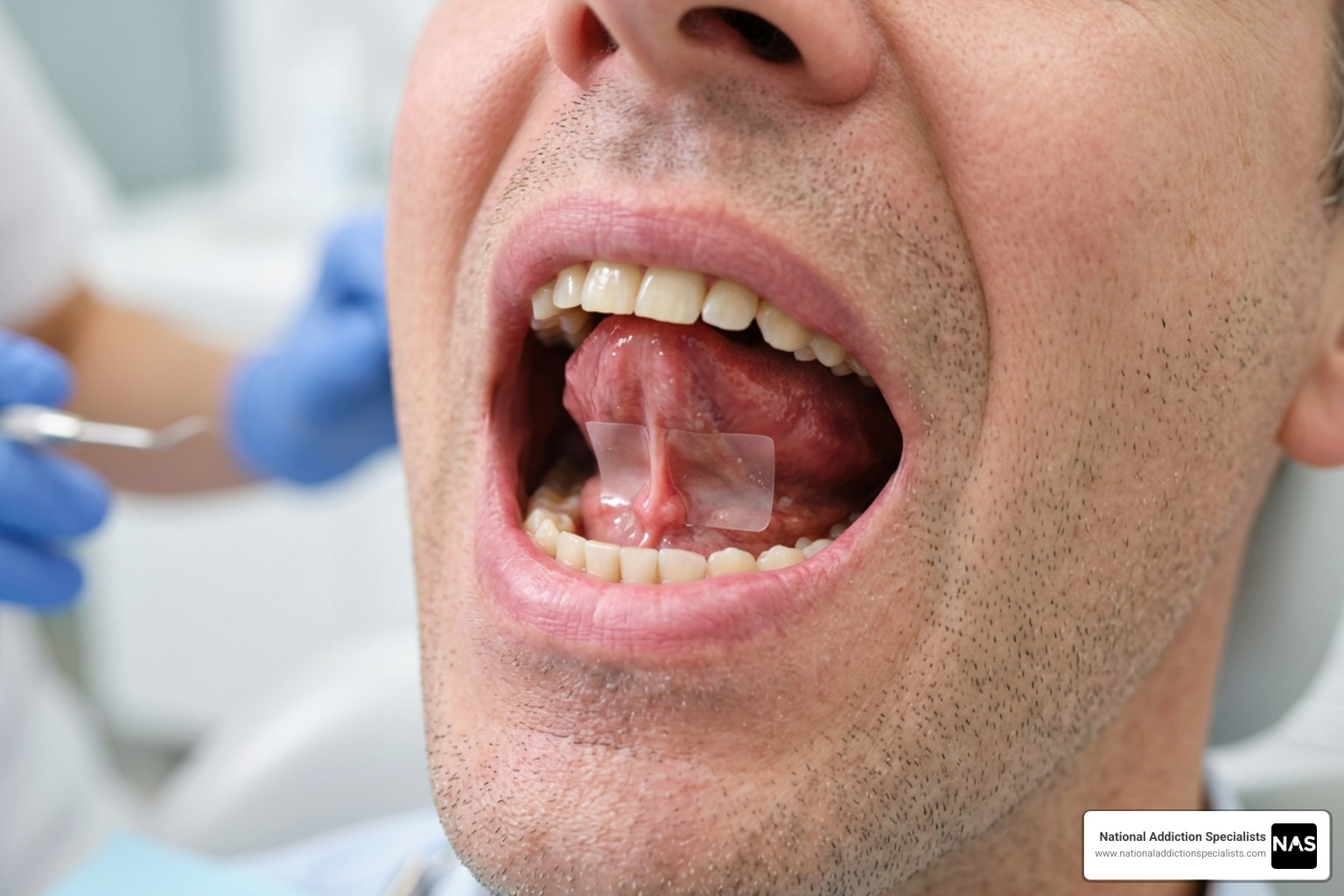
Proper administration is vital because Suboxone is not absorbed well through the stomach. If you swallow it like a regular pill, it won’t work. Here is the process for at home Suboxone treatment:
- Moisten Your Mouth: Take a sip of water to ensure your mouth isn’t bone-dry.
- Placement: Place the film or tablet under your tongue (sublingual). If you are taking two films, place them on opposite sides.
- The Wait: Let the medication dissolve completely. This usually takes 7 to 10 minutes for films and up to 20 minutes for tablets.
- No Talking/Swallowing: Do not talk, eat, drink, or swallow your saliva while the medication is dissolving.
- Post-Dose Care: Wait at least 30 minutes after it dissolves before eating or drinking anything.
Day 1 Dosing Plan for Suboxone at Home
On your first day, the goal is to find the “Goldilocks” dose—enough to stop withdrawal, but not so much that you feel overly sedated. Most patients receive a same-day Suboxone treatment online plan that looks like this:
- First Dose: Take 2mg or 4mg.
- Wait 1 to 2 Hours: Assess how you feel. You should start to feel relief within 30–45 minutes.
- Second Dose: If you still feel significant withdrawal symptoms, take another 4mg.
- Titration: You can repeat this every few hours until you feel “normal.”
- Daily Limit: For most home starts, we recommend a maximum of 12mg to 16mg on Day 1.
Pro-Tip: Keep a log! Write down the time and the amount of each dose. This is incredibly helpful for your follow-up appointment with us.
Day 2 and Beyond: Stabilizing Your Suboxone at Home
By Day 2, you should have a better idea of your “maintenance dose.” Usually, your Day 2 starting dose is the total amount you took on Day 1. For example, if you took 4mg in the morning and 4mg in the afternoon on Day 1, you would start Day 2 with 8mg.
The goal of the stabilization phase is to reach a point where you:
- Have zero withdrawal symptoms.
- Have significantly reduced or no cravings.
- Experience no side effects like heavy sedation.
Eventually, once you have achieved long-term stability, you and your provider might discuss how to taper off Suboxone, but for the first few months, the focus is entirely on staying steady and rebuilding your life.
Safety Precautions and Avoiding Precipitated Withdrawal
Starting Suboxone at home is safe, but it requires respect for the medication.
The Danger of Precipitated Withdrawal: This happens if buprenorphine “kicks” full opioids off your receptors too fast. If you feel significantly worse 30 minutes after your first dose (vomiting, intense shaking), you may have started too early. If this happens, do not panic. Stop dosing and contact your provider immediately.
Substance Interactions:
- Alcohol & Benzodiazepines: This is the most dangerous combination. Mixing Suboxone with alcohol or “benzos” (like Xanax or Valium) can lead to fatal respiratory depression.
- Other Opioids: Taking other opioids while on Suboxone is generally ineffective because the buprenorphine blocks the receptors.
Driving and Alertness: Do not drive or operate heavy machinery on Day 1. Even though Suboxone doesn’t produce a typical high, the transition into a new medication can affect your coordination and reaction time. Once you are stabilized (usually by Day 3 or 4), most people can drive safely.
Check out our Suboxone treatment FAQ for more detailed safety tips.
Frequently Asked Questions about Home Induction
Is Suboxone at home safe for pregnant individuals?
Yes. In fact, the American College of Obstetricians and Gynecologists (ACOG) recommends MAT (including buprenorphine) as the standard of care for pregnant individuals with OUD. It stabilizes the intrauterine environment and prevents the fetus from going through cycles of withdrawal. We provide specialized care for pregnant patients in Tennessee and Virginia.
Can I perform alert activities on Day 1?
We strongly advise against it. Your body is going through a significant chemical shift. Rest, hydrate, and give yourself 24 hours to adjust before returning to work or driving.
What should I do if my symptoms worsen after the first dose?
If you feel slightly worse, it may just be the tail end of your natural withdrawal. However, if you experience “precipitated withdrawal” (intense, rapid-onset sickness), stop taking further doses and call our office or your healthcare provider. If you experience trouble breathing, extreme sleepiness, or blurred vision, seek emergency care immediately.
Conclusion
Recovery is a journey, and the first step is often the hardest. At National Addiction Specialists, we believe that at-home addiction recovery should be accessible, dignified, and supported by experts who understand the science of addiction.
By choosing Suboxone at home, you are taking advantage of a modern, evidence-based approach that fits into your life rather than forcing you to plan your life around a clinic’s schedule. Whether you are in Brentwood, Virginia Beach, or anywhere across Tennessee and Virginia, our team is ready to help you navigate your first day and every day after.
Medication-Assisted Treatment isn’t “replacing one drug with another”—it is using a medical tool to fix a chemical imbalance in the brain, giving you the space to heal.
Make an Appointment to Treat Addiction Please don’t hesitate. Make an appointment today. https://www.nationaladdictionspecialists.com/new-patient-packet/
This article was medically reviewed by: Chad Elkin, MD, DFASAM is a board-certified addiction medicine physician, founder, and Chief Medical Officer of National Addiction Specialists, dedicated to treating substance use disorders. A Distinguished Fellow of the American Society of Addiction Medicine (ASAM), Dr Elkin currently serves as President of the Tennessee Society of Addiction Medicine (TNSAM) and has held various leadership roles within the organization. Dr Elkin chairs ASAM’s Health Technology Subcommittee and is an active member of its Practice Management and Regulatory Affairs Committee, State Advocacy and Legislative Affairs Committee, and other committees. He also serves on the planning committee for the Vanderbilt Mid-South Addiction Conference. Committed to advancing evidence-based policy, Dr Elkin is Chairman of the Tennessee Association of Alcohol, Drug, & Other Addiction Services (TAADAS) Addiction Medicine Council, which collaborates with the TN Department of Mental Health & Substance Abuse Services (TDMHSAS). He has contributed to numerous local, state, and national task forces, helping develop professional guidelines, policies, and laws that align with best practices in addiction medicine. His work focuses on reducing addiction-related harm, combating stigma, and ensuring access to effective treatment.Passionate about the field of addiction medicine, he remains dedicated to shaping policy and enhancing patient care.
Suboxone® and Subutex® are a registered trademark of Indivior UK Limited. Any mention and reference of Suboxone® and Subutex® in this website is for informational purposes only and is not an endorsement or sponsorship by Indivior UK Limited.