
Understanding the Reality of a National Health Crisis
Opioid use disorder (OUD) is a treatable, chronic brain disease characterized by the compulsive use of opioids despite harmful consequences. It affects millions of Americans and requires comprehensive medical care, just like diabetes or heart disease.
Quick Definition:
- Medical condition: A chronic brain disease, not a moral failing
- Symptoms: Uncontrollable cravings, loss of control, continued use despite harm
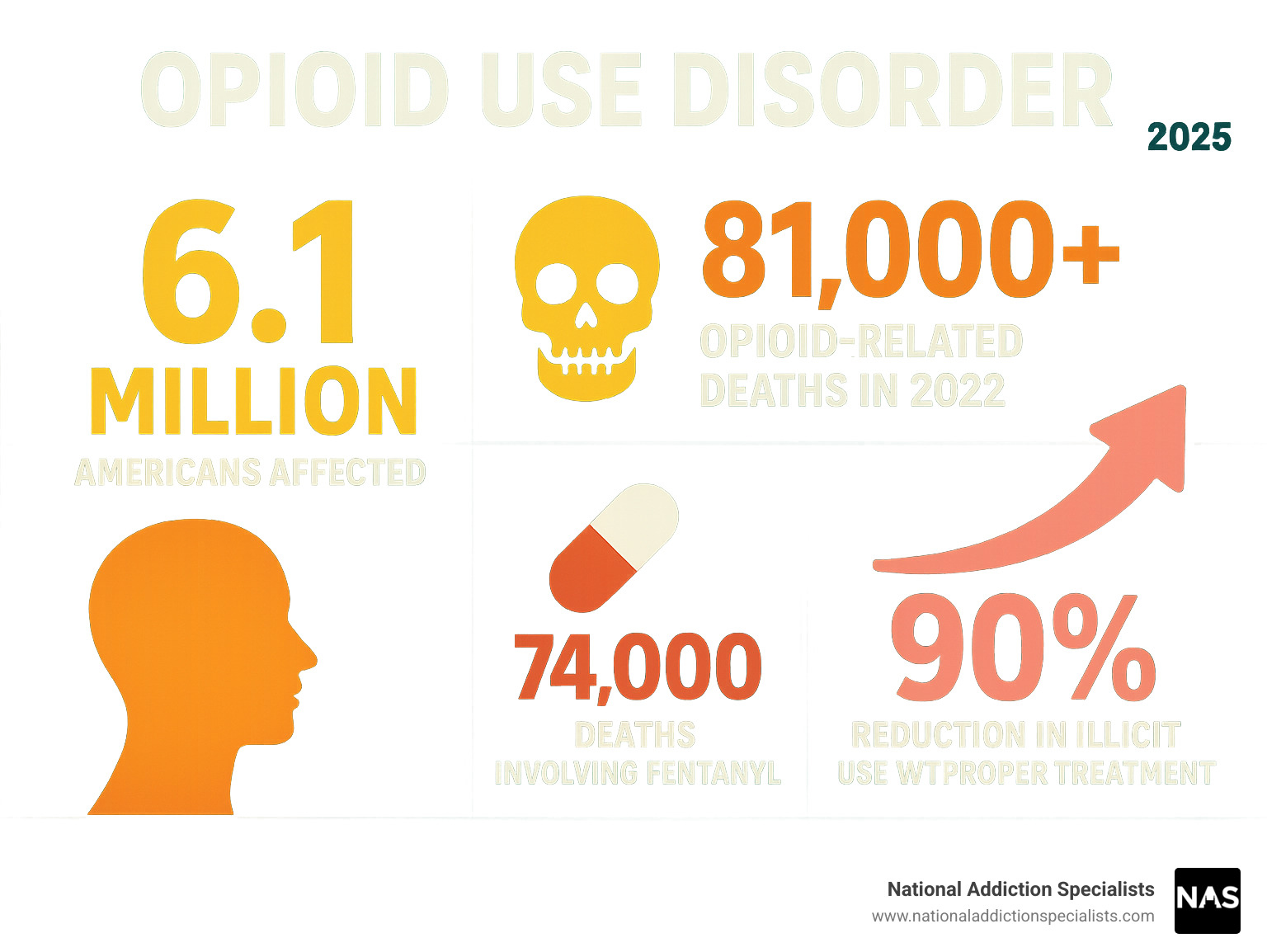
- Scope: Affects over 6.1 million Americans as of 2022
- Mortality: Contributed to over 81,000 deaths in 2022
- Treatment: Highly effective medications and therapies available
The numbers are sobering. In 2022, over 81,000 overdose deaths in the U.S. involved opioids, with the synthetic opioid fentanyl being a major driver. This isn’t about a lack of willpower; OUD fundamentally changes brain chemistry. But there is good news: Recovery is absolutely possible. Evidence-based treatments can reduce illicit opioid use by up to 90%, yet stigma remains a significant barrier to care.
As an addiction medicine physician, I’ve seen how proper, accessible treatment can transform lives. My goal is to help you understand this condition and find a path to recovery.
Key Opioid use disorder vocabulary:
What is Opioid Use Disorder (OUD)?
Opioid use disorder (OUD) is a chronic brain disease characterized by the compulsive use of opioids despite negative consequences. It’s a medical condition, not a moral failing, that alters brain function.
Opioids, which include prescription painkillers (like oxycodone) and illicit drugs (like heroin), work by binding to opioid receptors in the brain. This produces pain relief and can create a powerful sense of euphoria by flooding the brain with dopamine. The brain’s reward system can become “hijacked,” driving a person to seek the drug repeatedly.
How Opioids Affect the Brain
With continued use, the brain adapts, leading to:
- Tolerance: Needing more of the drug to get the same effect.
- Physical Dependence: The body adapts to the drug’s presence, causing withdrawal symptoms if use is stopped. This is different from addiction.
- Addiction (OUD): A brain disease defined by compulsive drug-seeking and use, even when it causes harm.
For a deeper dive, you can read about The Science Behind Opioid Addiction.
The Escalating Role of Fentanyl
The opioid crisis has been intensified by fentanyl, a synthetic opioid 50-100 times more potent than morphine. Illicitly manufactured fentanyl is often mixed with other drugs without the user’s knowledge, dramatically increasing the risk of a fatal overdose. For more information, see the NIDA information on Fentanyl.
Understanding Opioid Withdrawal
When someone with physical dependence stops using opioids, they experience withdrawal. Symptoms can be severe and include muscle aches, nausea, vomiting, anxiety, and intense cravings. While rarely life-threatening, the discomfort of withdrawal is a major reason people continue to use opioids. Learn more about Opioid Withdrawal Symptoms and how to manage them.
Signs, Symptoms, and Causes of OUD
Recognizing the signs of Opioid use disorder is the first step toward getting help. OUD affects a person’s behavior, thoughts, and physical health.

Key signs of OUD include:
- Uncontrollable cravings and a preoccupation with using opioids.
- Loss of control, such as using more than intended or being unable to quit.
- Neglecting responsibilities at work, school, or home.
- Risky use, like driving while impaired.
- Social isolation and withdrawing from friends, family, and hobbies.
For a more detailed list, see our guide on Opioid Addiction Symptoms.
What are the Causes and Risk Factors for Developing Opioid Use Disorder?
OUD is a complex disease with no single cause. Risk factors include:
- Genetic predisposition: A family history of addiction can increase risk.
- Environmental factors: Living in an environment where drug use is common.
- Psychological factors: Co-occurring mental health conditions like depression, anxiety, or PTSD.
- History of trauma: Adverse childhood experiences are a significant risk factor.
- Duration of opioid prescription: Long-term use of prescribed opioids increases the risk of dependence and addiction.
Common Signs of Opioid Misuse
Beyond the core symptoms, watch for these additional signs:
- Changes in sleep patterns (sleeping too much or too little).
- Persistent drowsiness or “nodding off.”
- Unexplained weight loss and poor hygiene.
- Frequent flu-like symptoms (which can be signs of withdrawal).
- Secretive behavior, lying, or stealing.
- Financial difficulties.
If you recognize these patterns in yourself or a loved one, help is available.
Make an Appointment to Treat Addiction
Please don’t hesitate. Make an appointment today.
Diagnosis and Comprehensive Treatment for Opioid Use Disorder
Seeking a professional assessment is a courageous first step toward recovery. At National Addiction Specialists, we provide a safe, supportive, and non-judgmental environment for diagnosis and treatment. Early intervention is crucial for better outcomes.

How is Opioid Use Disorder Diagnosed?
A diagnosis of Opioid use disorder is made through a comprehensive evaluation with a healthcare professional. We use the criteria outlined in the Diagnostic and Statistical Manual of Mental Disorders (DSM-5), which assesses patterns of opioid use and their impact on a person’s life. The severity of OUD (mild, moderate, or severe) is determined by the number of criteria met. This process also includes reviewing medical history and may involve a urine drug screen to create a personalized treatment plan. For more clinical details, providers can consult the CDC guide on OUD Diagnosis.
Medications for Opioid Use Disorder (MOUD)
Medication for Opioid Use Disorder (MOUD), also known as Medication-Assisted Treatment (MAT), is a highly effective, evidence-based approach. It combines FDA-approved medications with counseling to treat the whole person. These medications work by normalizing brain chemistry, reducing cravings, and preventing withdrawal symptoms, which allows you to focus on your recovery.
At National Addiction Specialists, our Medication Assisted Treatment (MAT) Program includes:
- Buprenorphine (Suboxone®): This medication reduces cravings and withdrawal without producing a high. It has a “ceiling effect,” making it a safer option. Learn more about Buprenorphine and Suboxone.
- Naltrexone: This medication blocks the effects of opioids, which can help prevent relapse. It is non-addictive and available as a daily pill or a monthly injection.
- Methadone: A long-acting opioid that reduces cravings and withdrawal, dispensed through federally regulated clinics.
Make an Appointment to Treat Addiction
Please don’t hesitate. Make an appointment today.
Counseling and Behavioral Therapies
Medication is most effective when paired with therapy. Counseling helps you develop coping skills and address the root causes of addiction. Common approaches include:
- Cognitive Behavioral Therapy (CBT): Helps change negative thought patterns and behaviors.
- Contingency Management: Provides positive reinforcement for staying on track with recovery goals.
- Family Therapy: Heals relationships and builds a strong support system at home.
- Peer Support Groups: Connects you with others who share similar experiences.
We use a holistic approach, creating a personalized Opioid Addiction Treatment plan that addresses your unique needs.
What is Opioid Use Disorder (OUD)?
Opioid use disorder (OUD) is a chronic, relapsing brain disease marked by compulsive opioid use despite harm. It’s a medical condition that changes brain function, not a moral failing.
Opioids interact with receptors in the brain and body to relieve pain and, for some, create euphoria via a dopamine surge. Over time, the reward system becomes conditioned to seek opioids, driving continued use.
We categorize opioids into two main groups:
- Prescription Opioids: Doctor-prescribed medications for pain (for example, oxycodone, hydrocodone, fentanyl, codeine, morphine). Misuse can lead to OUD.
- Illicit Opioids: Illegal drugs like heroin and illicitly manufactured fentanyl.
How Opioids Affect the Brain
Repeated exposure leads to:
- Tolerance: Needing more to get the same effect.
- Physical dependence: Withdrawal occurs if use stops.
- Addiction (OUD): Compulsive use despite consequences.
For more, see The Science Behind Opioid Addiction.
The Escalating Role of Fentanyl
Fentanyl is 50 times more potent than heroin and 100 times more potent than morphine. Illicit fentanyl is often mixed into other drugs without the user’s knowledge, dramatically increasing overdose risk. Learn more at NIDA information on Fentanyl.
Understanding Opioid Withdrawal
Withdrawal from opioids can include muscle aches, nausea, vomiting, anxiety, insomnia, and intense cravings. While rarely life-threatening, it powerfully drives ongoing use. See Opioid Withdrawal Symptoms for timelines and management tips.
Signs, Symptoms, and Causes of OUD
Recognizing Opioid use disorder early can save lives. OUD shows up through behavioral, psychological, and physical changes.
Someone struggling with OUD might exhibit:
- Uncontrollable cravings and preoccupation with using.
- Loss of control, using more or longer than intended and struggling to quit.
- Neglecting responsibilities at work, school, or home.
- Risky use, such as driving while impaired.
- Social isolation from family, friends, and hobbies.
Explore more signs at Opioid Addiction Symptoms.
What are the Causes and Risk Factors for Developing Opioid Use Disorder?
OUD arises from a mix of biological, psychological, and social factors:
- Genetics: Family history increases risk.
- Environment: Exposure to drug use or high-stress settings.
- Mental health: Depression, anxiety, PTSD, and other conditions.
- Trauma: Adverse childhood experiences raise vulnerability.
- Prescription exposure: Longer-term opioid use increases risk.
[LIST] of Common Signs of Opioid Misuse
- Changes in sleep (much more or less than usual)
- Persistent drowsiness or “nodding off”
- Unexplained weight loss or decline in hygiene
- Frequent flu-like symptoms (often withdrawal-related)
- Secretive behavior or lying
- Stealing or new financial problems
- Decreased libido
If several of these signs are present, professional help is strongly recommended.
Diagnosis and Comprehensive Treatment for Opioid Use Disorder
If you suspect you or someone you care about has Opioid use disorder, the first step is seeking a professional assessment. As clinicians, our role is to approach each individual with compassion and without judgment. We understand that asking for help can be incredibly difficult, and we’re here to provide a safe space. Early intervention is key, as it can significantly improve outcomes and prevent further complications.
How is Opioid Use Disorder Diagnosed?
Diagnosing Opioid use disorder involves a comprehensive evaluation by a healthcare professional. We use established criteria to determine if an individual meets the diagnostic threshold. The primary tool we use is the Diagnostic and Statistical Manual of Mental Disorders, Fifth Edition (DSM-5).
The DSM-5 outlines 11 criteria for OUD, and a diagnosis is made if at least two of these criteria are met within a 12-month period. These criteria cover various aspects, including:
- Taking opioids in larger amounts or over a longer period than intended.
- Persistent desire or unsuccessful efforts to cut down or control opioid use.
- Spending a great deal of time obtaining, using, or recovering from the effects of opioids.
- Craving, or a strong desire or urge to use opioids.
- Failure to fulfill major role obligations at work, school, or home due to opioid use.
- Continued opioid use despite having persistent or recurrent social or interpersonal problems caused or exacerbated by the effects of opioids.
- Giving up or reducing important social, occupational, or recreational activities because of opioid use.
- Recurrent opioid use in situations in which it is physically hazardous.
- Continued opioid use despite knowledge of having a persistent or recurrent physical or psychological problem that is likely to have been caused or exacerbated by the opioid.
- Tolerance, as defined by either a need for markedly increased amounts of opioids to achieve intoxication or desired effect, or a markedly diminished effect with continued use of the same amount of an opioid.
- Withdrawal, as manifested by either the characteristic opioid withdrawal syndrome or taking opioids (or a closely related substance) to relieve or avoid withdrawal symptoms.
The severity of OUD is determined by the number of criteria met:
- Mild OUD: 2-3 criteria
- Moderate OUD: 4-5 criteria
- Severe OUD: 6 or more criteria
Our diagnostic process also includes a thorough review of medical history, a social history to understand environmental factors, and often urine drug screening to confirm opioid use. For more details on the diagnostic process, the CDC guide on OUD Diagnosis provides valuable insights.
Medications for Opioid Use Disorder (MOUD)
One of the most effective and evidence-based approaches to treating Opioid use disorder is Medication-Assisted Treatment (MAT). We believe strongly in MAT because it combines FDA-approved medications with counseling and behavioral therapies, addressing both the physical and psychological aspects of the disorder.
MAT works by:
- Restoring brain balance: The medications help normalize brain chemistry that has been altered by chronic opioid use.
- Reducing cravings: They significantly reduce the intense cravings that often lead to relapse.
- Preventing withdrawal: They alleviate the painful and uncomfortable symptoms of opioid withdrawal, making it easier for individuals to focus on recovery.
- Preventing overdose: Some medications can block the euphoric effects of other opioids or reverse an overdose, significantly reducing the risk of death.
We offer comprehensive Medication Assisted Treatment (MAT) Program options custom to individual needs. The three FDA-approved medications for OUD are:
| Medication | How It Works We are passionately dedicated to guiding individuals toward healing and sustainable well-being, and we understand that choosing the right path for Opioid use disorder treatment can feel overwhelming. That’s why we’re here to help you steer through the options and make informed decisions.
Recovery, Rights, and Prevention
Recovery from Opioid use disorder is a journey, not a one-time event. It’s a manageable chronic condition, and while setbacks or relapses can happen, they are opportunities to learn and adjust your treatment plan with the help of your support team. Without treatment, OUD can lead to severe health complications, including a high risk of overdose.
The Role of Naloxone in Overdose Prevention
Naloxone (often known by the brand name Narcan®) is a life-saving medication that can rapidly reverse an opioid overdose. It works by blocking opioid effects on the brain, restoring normal breathing within minutes. Available as an easy-to-use nasal spray, it’s recommended that individuals with OUD, as well as their friends and family, carry it. Widespread access to naloxone is proven to reduce overdose deaths. Learn more from NIDA’s Naloxone DrugFacts.
Make an Appointment to Treat Addiction
Please don’t hesitate. Make an appointment today.
Your Rights: OUD and the Americans with Disabilities Act (ADA)
Opioid use disorder is recognized as a disability under the Americans with Disabilities Act (ADA). This provides crucial legal protections against discrimination in employment, housing, and healthcare for individuals in recovery. As long as you are not currently using illegal drugs (prescribed medications like Suboxone do not count as illegal use), you are protected. For more information, visit the EEOC’s website on the ADA.
Key Strategies for OUD Prevention
Preventing OUD is a community effort. Key strategies include:
- Safe Prescribing: Healthcare providers should use the lowest effective dose of opioids for the shortest duration necessary.
- Patient Education: Understanding the risks and proper use of prescription opioids is vital.
- Non-Opioid Pain Management: Exploring alternatives like physical therapy or non-addictive medications.
- Safe Storage and Disposal: Keep all medications secured and properly dispose of unused pills to prevent misuse. Follow the FDA’s guidelines for safe disposal.
Frequently Asked Questions about OUD
We know you have questions. Here are clear, straightforward answers to some of the most common ones.
Is Opioid Use Disorder a disability?
Yes. Opioid use disorder is often considered a disability under the Americans with Disabilities Act (ADA). This means if you are in recovery and not using illegal drugs, you are legally protected from discrimination in areas like employment and housing. Taking prescribed medication for OUD is part of your treatment, not illegal drug use.
What is the difference between physical dependence and addiction?
Physical dependence is a natural adaptation of the body to a drug. If you stop taking it, you’ll experience withdrawal. This can happen even when taking opioids as prescribed. Addiction (OUD) is a brain disease characterized by compulsive drug use despite negative consequences. You can be physically dependent without being addicted, but addiction typically involves physical dependence.
Can Opioid Use Disorder be cured?
There is no “cure” for OUD, but it is a highly treatable chronic condition, much like diabetes or heart disease. The goal is long-term recovery and management. With effective treatment, including medication and therapy, individuals can regain control, manage their symptoms, and live healthy, fulfilling lives. Recovery is absolutely possible.
Conclusion: Taking the First Step Towards Recovery

Understanding Opioid use disorder is the first step toward healing. OUD is a treatable medical condition, not a moral failing, and recovery is more achievable than ever.
With proven treatments like Medication for Opioid Use Disorder (MOUD), which can dramatically reduce illicit opioid use, there is real hope. Modern telemedicine makes accessing this care easier and more private than ever before. From your home in Tennessee or Virginia, you can connect with our expert providers without the stress of travel or waiting rooms.
At National Addiction Specialists, we believe everyone deserves compassionate, expert care. We proudly accept Medicaid and Medicare to ensure that financial barriers don’t stand in the way of your health. You don’t have to face this alone. Taking the first step is the bravest thing you can do, and our team is here to support you on your journey.
Your new chapter starts now. A chapter where you are in control, supported, and filled with hope.
Start your recovery journey with Medication-Assisted Treatment.
This article was medically reviewed by:
Chad Elkin, MD, DFASAM is a board-certified addiction medicine physician, founder, and Chief Medical Officer of National Addiction Specialists, dedicated to treating substance use disorders. A Distinguished Fellow of the American Society of Addiction Medicine (ASAM), Dr Elkin currently serves as President of the Tennessee Society of Addiction Medicine (TNSAM) and has held various leadership roles within the organization. Dr Elkin chairs ASAM’s Health Technology Subcommittee and is an active member of its Practice Management and Regulatory Affairs Committee, State Advocacy and Legislative Affairs Committee, and other committees. He also serves on the planning committee for the Vanderbilt Mid-South Addiction Conference. Committed to advancing evidence-based policy, Dr Elkin is Chairman of the Tennessee Association of Alcohol, Drug, & Other Addiction Services (TAADAS) Addiction Medicine Council, which collaborates with the TN Department of Mental Health & Substance Abuse Services (TDMHSAS). He has contributed to numerous local, state, and national task forces, helping develop professional guidelines, policies, and laws that align with best practices in addiction medicine. His work focuses on reducing addiction-related harm, combating stigma, and ensuring access to effective treatment.Passionate about the field of addiction medicine, he remains dedicated to shaping policy and enhancing patient care.
Suboxone® and Subutex® are a registered trademark of Indivior UK Limited. Any mention and reference of Suboxone® and Subutex® in this website is for informational purposes only and is not an endorsement or sponsorship by Indivior UK Limited.