
Understanding Suboxone Precipitated Withdrawal and How to Manage It
How to Prevent and Manage Suboxone Precipitated Withdrawal
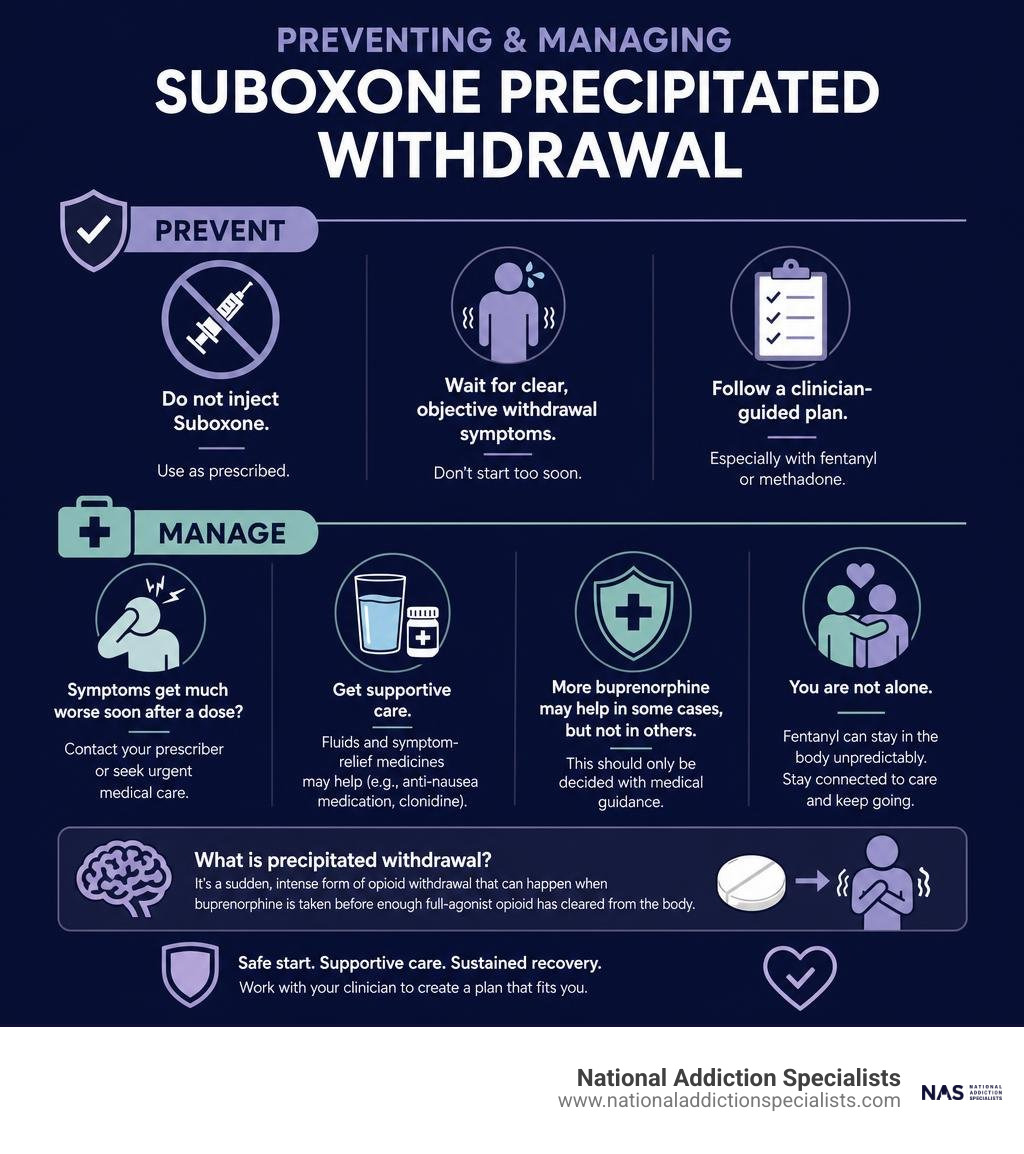
Suboxone precipitated withdrawal is a sudden, intense form of opioid withdrawal that can happen when buprenorphine is taken before enough full-agonist opioid has cleared from the body. To lower the risk, do not inject Suboxone, wait until you have clear, objective withdrawal symptoms before starting, and follow a clinician-guided plan, especially if fentanyl or methadone is involved.
If symptoms suddenly get much worse soon after a dose, contact your prescriber or seek urgent medical care. Clinicians may use fluids and symptom-relief medicines such as anti-nausea medication or clonidine. In some cases, more buprenorphine helps, but it can worsen symptoms in others, so it should be decided with medical guidance.
This is not a personal failure or a reason to give up on treatment. Fentanyl can remain in the body unpredictably, which means older timing rules do not always prevent withdrawal. This guide explains how to recognize the problem, get safe help, and use prevention strategies that fit your situation.
I am Chad Elkin, MD, a board-certified addiction medicine and internal medicine physician and the Founder and Medical Director of National Addiction Specialists. My work includes helping patients use flexible, evidence-based treatment plans to reduce the risks of Suboxone precipitated withdrawal and support long-term recovery.
Suboxone precipitated withdrawal terms you need:
Introduction
More than 760,000 people have died from drug overdoses in the United States since 1999, with annual overdose rates rising sharply—jumping 31% in a single year between 2019 and 2020 alone. In response to this public health crisis, medication-assisted treatment (MAT) has become the gold standard for treating opioid use disorder. Medications like Suboxone (a combination of buprenorphine and naloxone) save lives by eliminating cravings, blunting illicit opioid effects, and stabilizing brain chemistry.

However, fear of starting treatment remains widespread. Many individuals delay or avoid seeking help because they are terrified of the sudden, severe onset of withdrawal known as precipitated withdrawal. In fact, in large retrospective studies evaluating standard office-based buprenorphine initiations, nearly 10% of patients experienced precipitated opioid withdrawal. When managed incorrectly, this complication can lead to intense physical distress, emergency department visits, and early treatment dropouts.
Understanding how and why this happens is the first step toward preventing it. With modern clinical protocols, personalized induction pathways, and proper medical oversight, starting Suboxone can be safe, comfortable, and successful.
Understanding the Science of Suboxone Precipitated Withdrawal
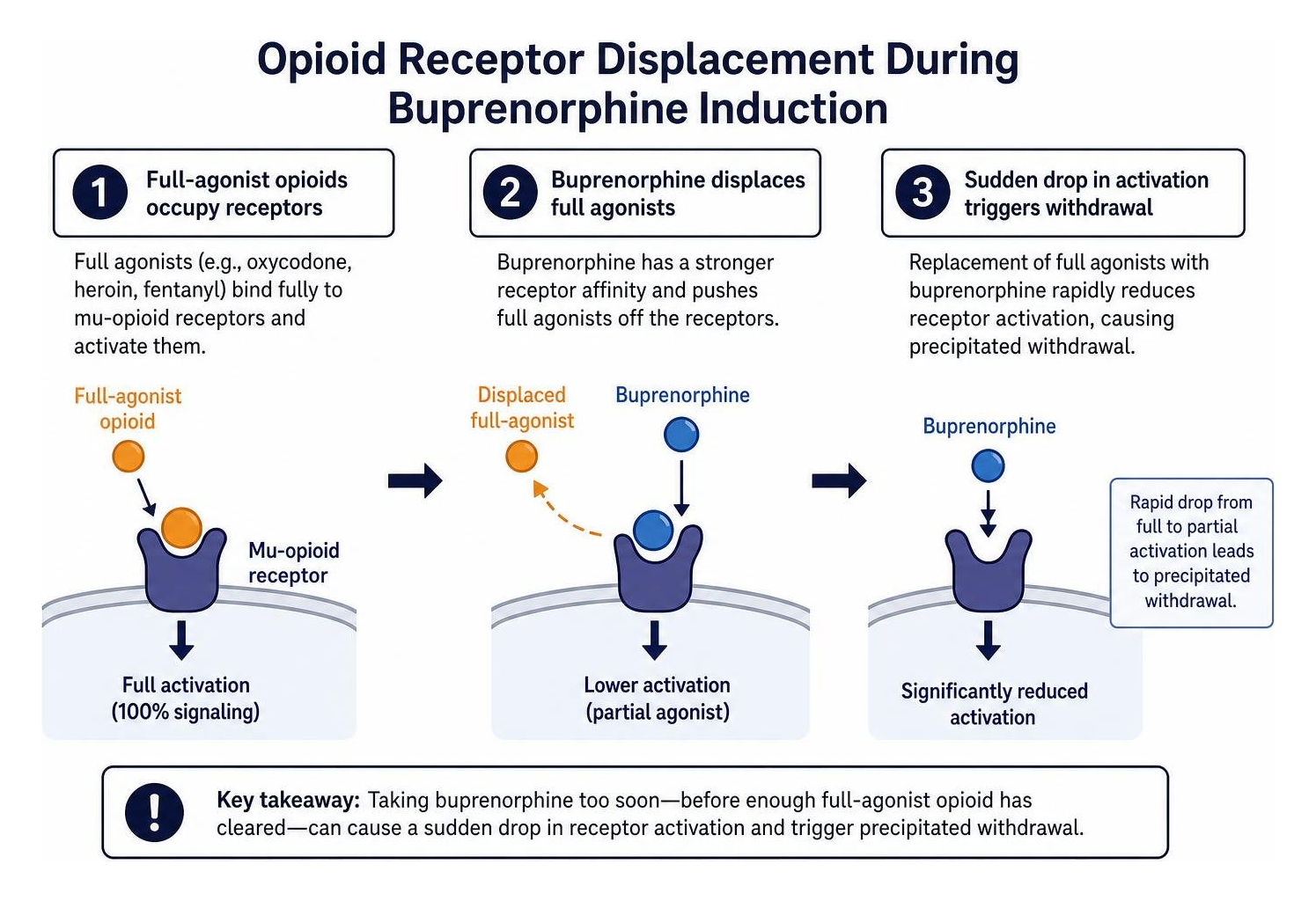
To understand why precipitated withdrawal occurs, we have to look at how different opioids interact with the brain’s mu-opioid receptors. Full opioid agonists—such as oxycodone, morphine, heroin, and illicit fentanyl—bind fully to these receptors, generating 100% intrinsic agonist signaling. This heavy activation is what produces pain relief, euphoria, and central nervous system depression.
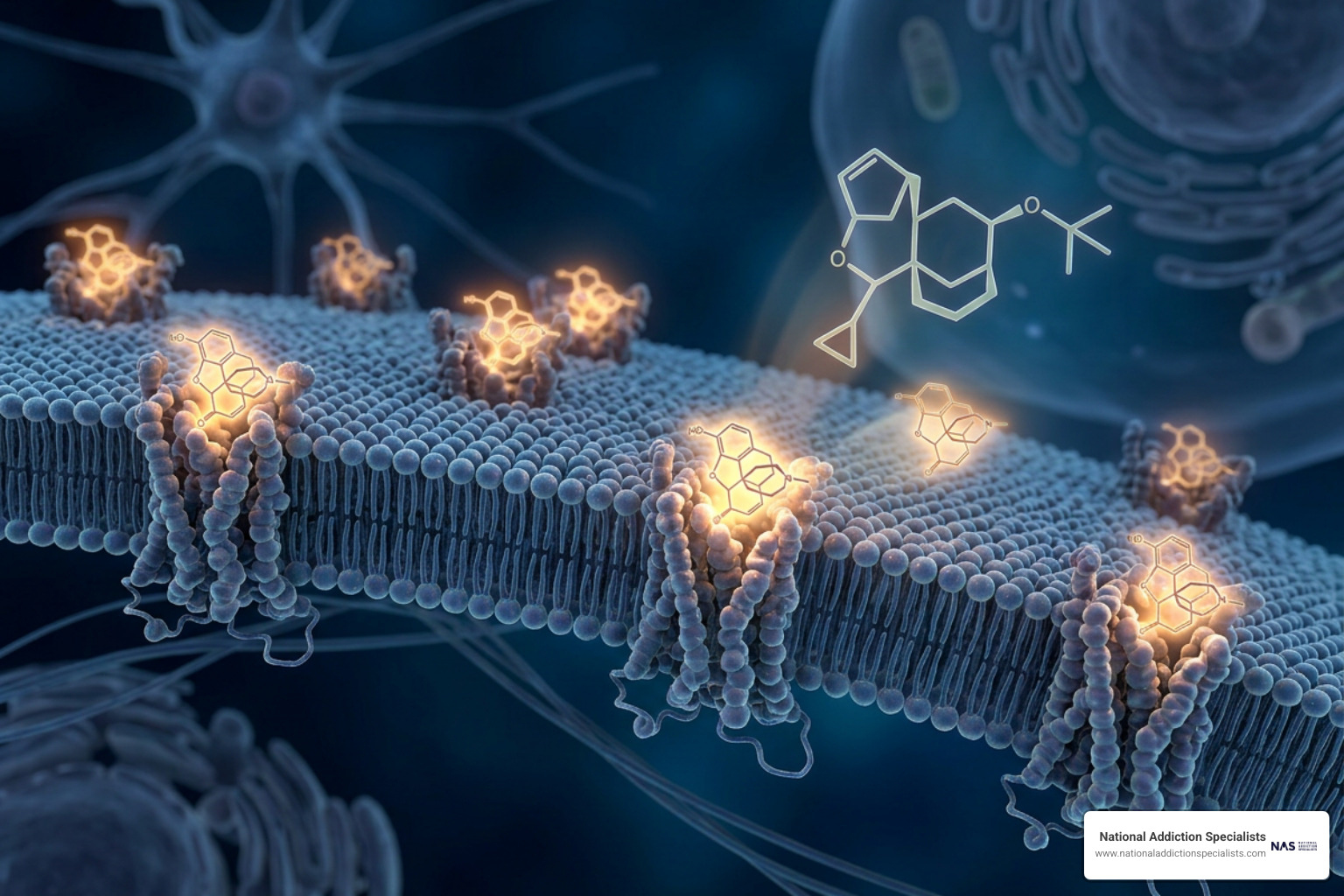
Buprenorphine acts very differently. It possesses an exceptionally high binding affinity for mu-opioid receptors, which means it binds far more tightly than almost any other full agonist. However, buprenorphine is only a partial agonist. It turns the receptor’s activation dial up to roughly 40–50% rather than 100%.
When an individual takes buprenorphine while full-agonist opioids are still actively bound to their mu-opioid receptors, the buprenorphine physically strips the full agonists off the receptors and locks itself in their place. Because the net activation abruptly plummets from 100% down to partial activation within minutes, the central nervous system experiences an immediate, crashing drop in opioid signaling. As detailed in published research on precipitated opioid withdrawal mechanisms, this sudden deficit triggers an acute, full-body withdrawal storm. To gain a broader understanding of how this partial agonist provides long-term stability once established, explore how Suboxone treatment works.
Why Naloxone and Intravenous Misuse Trigger Sudden Withdrawal
Suboxone is formulated with buprenorphine and naloxone in a 4:1 ratio. Naloxone is an opioid antagonist included specifically to deter misuse by injection. When taken sublingually as prescribed, naloxone has virtually zero bioavailability (less than 3%) and passes through the body without blunting buprenorphine’s therapeutic effects.
However, if a tablet or film is crushed, dissolved, and injected intravenously, naloxone becomes 100% bioavailable. As documented in a recent case study on intravenous buprenorphine precipitated withdrawal, injecting Suboxone while full agonists are present causes naloxone to instantly strip all agonists from receptors without providing any agonist tone whatsoever. Studies show that rates of MAT misuse can reach up to 28% among patients struggling with destabilized substance use, and intravenous administration almost universally triggers a profound, unmitigated autonomic surge. For more details on standard administration routes and medication design, review what is Suboxone.
How Fentanyl Increases the Risk of Suboxone Precipitated Withdrawal
The illicit opioid supply has shifted almost entirely to illicitly manufactured fentanyl and its analogs. Fentanyl has fundamentally transformed the pharmacokinetics of opioid induction because of its intense lipophilicity (fat solubility).
Unlike short-acting prescription opioids that clear from the body within 12 to 24 hours, chronic fentanyl use causes the drug to accumulate heavily in peripheral adipose tissue (body fat). Even after someone stops using fentanyl and begins to feel mild initial withdrawal, lipophilic stores slowly release fentanyl back into the bloodstream for days.
If buprenorphine is introduced too early—even 36 to 48 hours after last use—it will displace this slowly clearing fentanyl, triggering severe precipitated withdrawal. For patients using illicit street supplies, standard timelines are no longer sufficient. Reviewing Suboxone withdrawal what to expect in the first 24-48 hours provides critical context on navigating these extended timelines safely.
Identifying Symptoms: BAOW vs. True Precipitated Withdrawal
Recognizing the clinical difference between natural withdrawal, classic precipitated withdrawal, and emerging pharmacological phenomena is vital for safe clinical decision-making.
| Feature | Standard Opioid Withdrawal | True Precipitated Withdrawal | Buprenorphine-Associated Opioid Withdrawal (BAOW) |
|---|---|---|---|
| Onset Timing | Gradual (12–72 hours after last use) | Rapid (10–30 minutes post-dose) | Delayed (10–24 hours post-dose) |
| Trigger | Spontaneous clearance of opioids | High-affinity displacement of full agonists | Gradual pharmacokinetic shift / slow-release injectables |
| COWS Score Spike | Slow, incremental increase | Sudden spike (increase of $\ge 6$ points) | Moderate, persistent plateau |
| Primary Driver | Natural lack of receptor stimulation | Abrupt loss of aggregate opioid agonist tone | Incomplete receptor saturation vs. prolonged fentanyl clearance |
| Primary Strategy | Initiate standard buprenorphine dosing | Adjunctive comfort meds $\pm$ calculated rescue dosing | Watchful waiting, hydration, adjunctive symptom relief |
Classic precipitated opioid withdrawal typically strikes within 10 to 15 minutes after taking a sublingual buprenorphine dose. Patients experience an overwhelming escalation of physical distress: severe diaphoresis (sweating), gastrointestinal hypermotility, intractable vomiting, profuse watery diarrhea, severe piloerection (“gooseflesh”), tremors, and severe psychological panic. Clinicians measure this using the Clinical Opiate Withdrawal Scale (COWS), where precipitated withdrawal is formally defined as a sudden increase of 6 or more points on the scale shortly after dosing.
Recently, addiction medicine researchers have introduced the concept of Buprenorphine-Associated Opioid Withdrawal (BAOW) to describe withdrawal trajectories that do not fit the classic 30-minute window. As highlighted in an academic viewpoint on redefining precipitated withdrawal, long-acting injectable buprenorphine formulations or delayed fentanyl clearance can lead to withdrawal symptoms emerging 10 to 12 hours after administration. This reflects dynamic shifts in overall “opioid agonist tone” rather than immediate displacement. Understanding your exact physical timeline is essential; you can cross-reference physical indicators using our comprehensive Suboxone withdrawal symptoms list.
Step-by-Step Protocol: How to Manage and Treat Precipitated Withdrawal
When precipitated withdrawal occurs, rapid and structured medical management is essential to stabilize the patient’s autonomic system and restore comfort.
- Pause Additional Self-Dosing: Immediately stop unguided buprenorphine administration until clinical guidance is obtained.
- Conduct Clinical and Diagnostic Assessment: Clinicians assess vital signs (monitoring for hypertensive urgency and severe tachycardia), obtain an EKG, and draw laboratory panels to screen for hypokalemia (low potassium) resulting from gastrointestinal fluid loss.
- Initiate Aggressive Fluid Resuscitation: Administer intravenous crystalloid fluids (such as 1 liter of normal saline) or oral rehydration electrolytes to correct hypovolemia.
- Deploy Targeted Adjunctive Comfort Medications: Administer non-opioid medications targeting specific hyperactive receptor pathways (antiemetics, alpha-2 adrenergic agonists, and antispasmodics).
- Determine Pharmacological Strategy: Decide between high-dose buprenorphine saturation or watchful waiting with symptom management based on the patient’s opioid exposure timeline.
Clinicians follow established protocols to de-escalate acute distress, as outlined in emergency clinician guidelines for precipitated withdrawal management. For an overview of how these interventions integrate into comprehensive addiction recovery, read our guide to Suboxone withdrawal treatment.
The High-Dose Buprenorphine Rescue Dilemma and the Tipping Point
Historically, emergency medicine literature suggested that the best way to resolve precipitated withdrawal was to administer additional high doses of buprenorphine (such as an additional 8 mg to 16 mg, titrated up to 24–32 mg). The theoretical rationale is that by flooding the central nervous system with buprenorphine, clinicians achieve complete mu-opioid receptor saturation, maximizing partial agonist activation to overcome the deficit. In studies examining high-dose emergency room inductions across 579 patients, precipitated withdrawal occurred in only 5 individuals (0.8%), demonstrating that high initial macrodosing can often be safe under direct hospital observation.
However, case reports reveal a critical clinical dilemma: in some patients—particularly those with heavy, unmeasured fentanyl tissue saturation—giving more buprenorphine can paradoxically worsen withdrawal. If full agonists still dominate the receptors, adding more buprenorphine displaces those remaining full agonists without providing sufficient replacement agonist tone, causing total receptor activation to drop further.
Clinicians must evaluate whether a patient has reached the “clinical tipping point.” This is the point where enough receptors are already occupied by buprenorphine that an additional dose will alleviate symptoms rather than trigger further displacement. If the tipping point has not been reached, supportive comfort medications and watchful waiting are often far safer than reflexively prescribing more buprenorphine. For standard dosing parameters, consult our breakdown of Suboxone dosage information.
Adjunctive Medications for Rapid Symptom Relief
When buprenorphine re-dosing is contraindicated or ineffective, targeted adjunctive medications provide rapid relief across multiple organ systems:
- Clonidine (0.1 mg to 0.2 mg every 6 hours): A central alpha-2 adrenergic agonist that suppresses autonomic nervous system hyperactivity, reducing sweating, rapid heart rate, hypertension, and internal restlessness.
- Ondansetron (4 mg to 8 mg IV/oral) or Promethazine: Potent antiemetics that block 5-HT3 or H1 receptors in the chemoreceptor trigger zone to halt nausea and vomiting. For specialized strategies on handling stomach distress, read taming the nausea a guide to Suboxone withdrawal vomiting.
- Diazepam (5 mg to 10 mg) or Lorazepam: Short-term benzodiazepine therapy to treat extreme muscle cramping, severe central anxiety, and psychomotor agitation under close medical monitoring.
- Loperamide (4 mg initially, followed by 2 mg): A peripheral mu-opioid agonist that acts exclusively in the gastrointestinal tract to control watery diarrhea without crossing the blood-brain barrier.
- Ketamine Infusions (Sub-dissociative dosing): Used in specialized emergency settings to provide NMDA receptor antagonism, interrupting severe pain amplification and hyperalgesia.
For an exhaustive guide on non-opioid supportive agents, explore medications for Suboxone withdrawal.
Clinical Prevention Protocols: How to Safely Initiate Suboxone
Preventing precipitated withdrawal is entirely achievable with careful clinical evaluation, clear patient communication, and modern dosing protocols.
Standard induction protocols rely on evaluating objective, measurable withdrawal signs before administering the first dose of Suboxone:
- Short-Acting Opioids (Oxycodone, Hydrocodone, Heroin): Wait a minimum of 12 to 16 hours after last use.
- Extended-Release Formulations (OxyContin, MS Contin): Wait a minimum of 24 to 36 hours.
- Methadone: Wait at least 48 to 72 hours, ensuring the daily dose is tapered below 30 mg before standard induction.
- Fentanyl and Synthetic Analogs: Wait until the patient reaches an objective Clinical Opiate Withdrawal Scale (COWS) score of at least 12 to 13 (moderate withdrawal), which often requires 48 hours or more.
Key best practices include:
- Never start an induction based solely on the clock; always confirm observable physical symptoms (dilated pupils, sweating, muscle twitches, rhinorrhea).
- Start with a split test dose (such as 2 mg sublingual) rather than a full 8 mg dose when initiating standard protocols.
- Keep emergency comfort medications readily accessible at home.
- Maintain active communication with your telemedicine physician throughout induction day.
For a comprehensive walkthrough of initiation best practices, consult the Suboxone treatment complete guide.
Make an Appointment to Treat Addiction. Please don’t hesitate. Make an appointment today.
The Bernese Method and Low-Dose Microdosing Pathways
For patients using daily fentanyl or transitioning from methadone who cannot tolerate moderate withdrawal, low-dose microdosing—often called the Bernese method—is an effective alternative.

Micro-induction introduces buprenorphine in micro-doses (starting at 0.5 mg) while the patient continues using their full-agonist opioid as prescribed or required. Because the buprenorphine doses are tiny, only a fraction of mu-opioid receptors are bound at any single moment, avoiding any drop in aggregate agonist tone.
Over a 7- to 10-day period, the buprenorphine dose is gradually titrated upward while it slowly accumulates at the receptor level. Once therapeutic buprenorphine levels are established, the full agonist is discontinued seamlessly without acute withdrawal. Clinical feasibility trials show that micro-induction pathways achieve strong treatment adherence, with 30-day retention rates reaching 32% compared to 23.8% in standard induction groups. To see a detailed timeline of recovery milestones, see the Suboxone withdrawal journey what to expect day by day.
Emergency Medical Management of Suboxone Precipitated Withdrawal
When severe precipitated withdrawal occurs outside a clinic, emergency departments provide vital acute stabilization. Physicians focus on volume replacement, vital sign control, and preventing life-threatening electrolyte shifts. Severe catecholamine storms caused by abrupt withdrawal can, in rare cases, trigger stress-induced Takotsubo cardiomyopathy or pulmonary edema, making hospital-level monitoring critical for unmanaged cases.
Equally important is post-discharge harm reduction and continuity of care. Experiencing precipitated withdrawal can be traumatizing, leading some individuals to return to street opioids to stop the pain. Emergency departments and outpatient clinics must provide supportive reassurance, harm reduction tools, and immediate linkage to outpatient care. If you need clinical guidance on safely initiating MAT, connect with expert help for navigating Suboxone withdrawal.
Frequently Asked Questions About Precipitated Opioid Withdrawal
Can taking more Suboxone stop precipitated withdrawal immediately?
Not always. While high-dose rescue protocols (administering an additional 8 mg to 16 mg) are effective in many clinical settings by achieving receptor saturation, they can backfire if significant full-agonist opioids remain in your system. If full agonists still dominate the mu-opioid receptors, taking more buprenorphine displaces them further without providing sufficient agonist activity, worsening physical distress. Any rescue dosing must be evaluated by a healthcare professional based on your specific timeline.
How long does buprenorphine-precipitated withdrawal typically last?
Acute precipitated withdrawal symptoms peak rapidly within the first 1 to 4 hours post-dose. While acute physical distress usually stabilizes within 8 to 24 hours as the buprenorphine reaches steady receptor equilibrium, residual autonomic instability and fatigue can persist for a couple of days. Learn more about post-acute timelines by reading our breakdown of Suboxone withdrawal duration what to expect and when it ends.
What should you do if precipitated withdrawal occurs at home?
If you experience sudden, severe withdrawal after taking a dose at home, do not panic and do not attempt to overcome the blockade by using large amounts of illicit street opioids, which carries a severe risk of fatal overdose. Contact your telemedicine provider immediately. Begin drinking fluids with electrolytes, take prescribed comfort medications (such as clonidine or ondansetron), and seek emergency medical care if you experience severe dehydration, intractable vomiting, chest pain, or severe confusion.
Conclusion: Safe Suboxone Initiation and Long-Term Recovery
Precipitated opioid withdrawal is an intense, distressing experience, but it is entirely preventable with modern clinical protocols. At National Addiction Specialists, we provide accessible, compassionate, telemedicine-based addiction care tailored to your history and daily life. Serving individuals across Tennessee and Virginia—with physical offices in Brentwood, TN, and Virginia Beach, VA—our board-certified physicians specialize in low-barrier, personalized MAT inductions from the privacy of home.
We accept Medicare and Medicaid, ensuring you have access to expert medical care and comprehensive counseling. If you are ready to reclaim your life from opioid use disorder without fear, explore our telemedicine Suboxone treatment options and begin your recovery with a clinical team that puts your safety first.
Medical Review and Disclaimer
This article was medically reviewed by: Chad Elkin, MD, DFASAM is a board-certified addiction medicine physician, founder, and Chief Medical Officer of National Addiction Specialists, dedicated to treating substance use disorders. A Distinguished Fellow of the American Society of Addiction Medicine (ASAM), Dr Elkin currently serves as President of the Tennessee Society of Addiction Medicine (TNSAM) and has held various leadership roles within the organization. Dr Elkin chairs ASAM’s Health Technology Subcommittee and is an active member of its Practice Management and Regulatory Affairs Committee, State Advocacy and Legislative Affairs Committee, and other committees. Committed to advancing evidence-based policy, Dr Elkin is Chairman of the Tennessee Association of Alcohol, Drug, & Other Addiction Services (TAADAS) Addiction Medicine Council, which collaborates with the TN Department of Mental Health & Substance Abuse Services (TDMHSAS). He also serves on the planning committee for the Vanderbilt Mid-South Addiction Conference. He has contributed to numerous local, state, and national task forces, helping develop professional guidelines, policies, and laws that align with best practices in addiction medicine. His work focuses on reducing addiction-related harm, combating stigma, and ensuring access to effective treatment. Passionate about the field of addiction medicine, he remains dedicated to shaping policy and enhancing patient care.
Suboxone® and Subutex® are a registered trademark of Indivior UK Limited. Any mention and reference of Suboxone® and Subutex® in this website is for informational purposes only and is not an endorsement or sponsorship by Indivior UK Limited.