The Pros and Cons of Staying on Suboxone Long Term
Is Long-Term Suboxone Maintenance Right for You?
Suboxone long term maintenance is a medication-assisted treatment (MAT) approach where patients take buprenorphine/naloxone daily — not just to get through withdrawal, but for months, years, or even indefinitely — to stay stable and avoid relapse.
Here’s what the evidence says at a glance:
| Question | Quick Answer |
|---|---|
| How long can you stay on Suboxone? | Indefinitely — there is no FDA-recommended maximum duration |
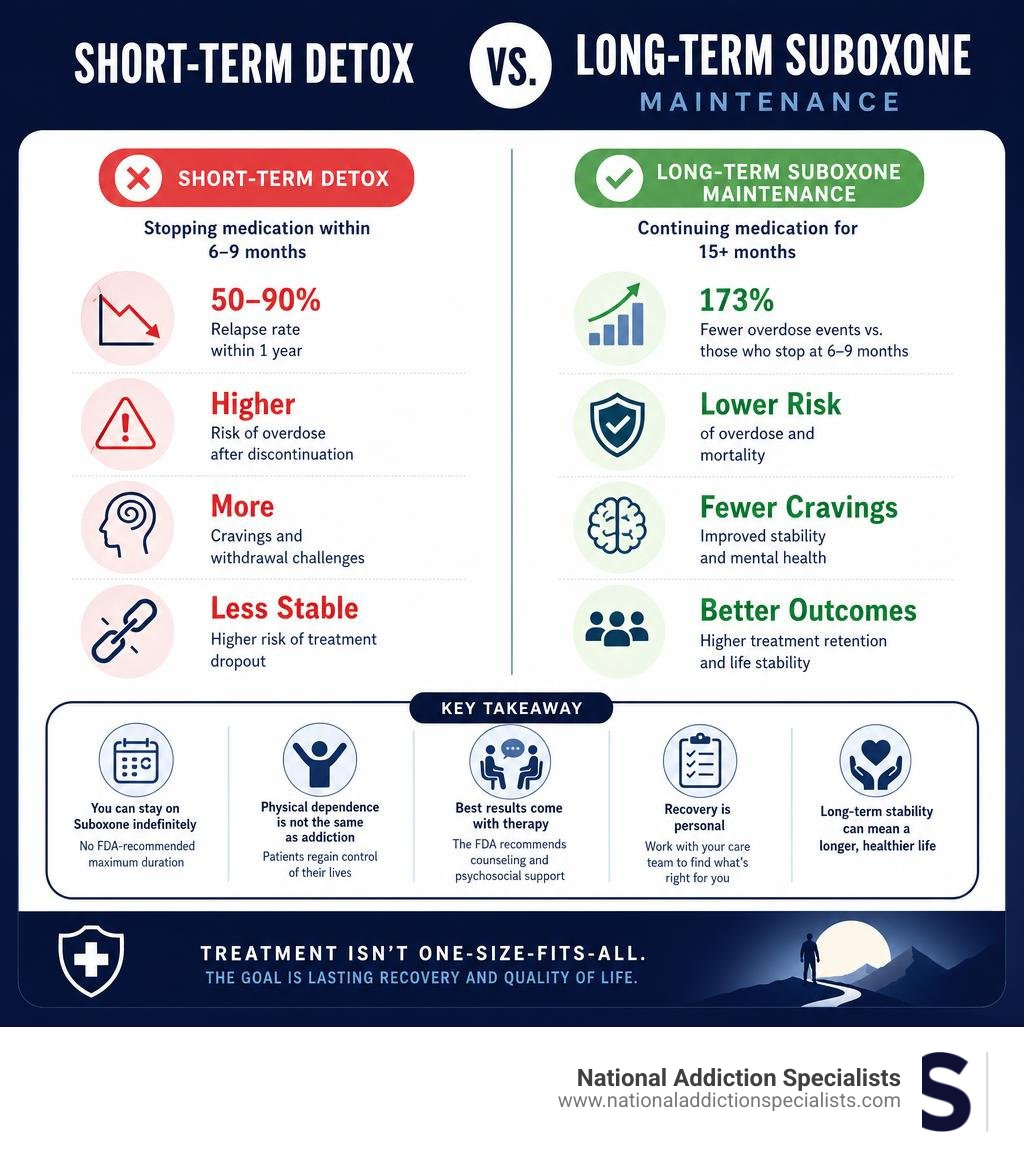
| Does longer treatment help? | Yes — patients on 15+ months show 173% fewer overdose events vs. those who stop at 6–9 months |
| Is it just replacing one addiction? | No — physical dependence differs from addiction; patients regain control of their lives |
| Do you need therapy too? | Yes — the FDA recommends combining Suboxone with counseling and psychosocial support |
| What are the main risks? | Physical dependence, mild side effects (constipation, dry mouth), and potential dental health impact |
The core question most people have is simple: should I stay on Suboxone long term, or try to taper off? The answer depends on your health history, your goals, and the science — and this guide walks through both sides honestly.
Opioid use disorder (OUD) is a chronic brain condition, not a moral failure. Like diabetes or hypertension, it often requires long-term medical management. Short-term detox alone has high relapse rates. Long-term maintenance changes that picture significantly.
I’m Dr. Chad Elkin, Founder and Medical Director of National Addiction Specialists, board-certified in both Addiction Medicine and Internal Medicine, with extensive experience helping patients navigate Suboxone long term maintenance as part of a personalized, evidence-based recovery plan. In the sections below, I’ll walk you through the real pros, the real cons, and the clinical evidence — so you can make an informed decision with your care team.
Quick look at suboxone long term maintenance:
Understanding Suboxone Long Term Maintenance
To understand why suboxone long term maintenance is so highly recommended by major health organizations, we first have to look at how the medication works in the human body. Suboxone is a combination of two distinct active ingredients: buprenorphine and naloxone.
Buprenorphine is a partial opioid agonist. This means it binds to the same mu-opioid receptors in the brain that full agonists (like heroin, oxycodone, or fentanyl) target, but it activates them to a much lesser degree. It provides just enough stimulation to silence severe withdrawal symptoms and eliminate intense drug cravings, but not enough to produce a euphoric “high.”
Furthermore, buprenorphine has a pharmacological “ceiling effect.” Once you reach a certain dosage (typically around 24mg daily), taking more of the medication does not increase its effects. This built-in safety mechanism dramatically reduces the risk of respiratory depression and accidental overdose compared to full opioid agonists.
Naloxone, the second ingredient, is an opioid antagonist (blocker). When Suboxone is taken sublingually (under the tongue) or buccally (inside the cheek) as prescribed, the naloxone is poorly absorbed and remains inactive. However, if someone attempts to crush and inject the film to abuse it, the naloxone enters the bloodstream immediately, blocking the buprenorphine and triggering rapid, highly unpleasant withdrawal symptoms. This makes Suboxone an exceptionally safe option for Medication-Assisted Treatment that can be safely managed from the comfort of your own home.
For a comprehensive overview of how this medication fits into a modern recovery protocol, you can consult our Suboxone Treatment Complete Guide.
Short-Term Detox vs. Long-Term Maintenance
When people first seek help for opioid use disorder, they often think of “detox” as the ultimate goal. Short-term detox is a brief intervention — usually lasting from a few days to a few weeks — focused purely on managing acute withdrawal symptoms until the drug is completely out of the patient’s system.
While detox is an essential first step for many, relying on short-term detox alone is rarely successful for long-term recovery. Once the physical withdrawal symptoms fade, the underlying changes in brain chemistry caused by chronic opioid use remain. Without ongoing pharmacological support, the brain continues to experience severe cravings, leading to incredibly high relapse rates.
In contrast, suboxone long term maintenance focuses on long-term brain stabilization. Rather than rushing to taper off the medication, maintenance therapy keeps the patient on a steady, daily dose of Suboxone for months, years, or even decades. This consistent treatment allows the brain’s chemistry to gradually balance out, giving the individual the mental space and stability needed to rebuild their life.
When considering which path is right for you, it is helpful to ask, How Long Should I Stay on Suboxone? Clinical research overwhelmingly supports the idea that longer treatment durations lead to far better, more stable outcomes.
How Suboxone Long Term Maintenance Prevents Relapse
The primary mechanism through which long-term maintenance prevents relapse is receptor blockade and craving reduction. Because buprenorphine has an incredibly strong affinity for the brain’s opioid receptors, it binds to them tightly and refuses to let go easily. If a patient on a stable maintenance dose of Suboxone experiences a moment of vulnerability and uses an illicit opioid, the buprenorphine blocks that substance from binding to the receptors. As a result, the patient will not experience the expected high, effectively breaking the psychological cycle of reward and reinforcement.
This biological shield is backed by powerful clinical data. For example, the landmark RECOVER study findings on sustained abstinence demonstrated a clear, dose-response relationship between the duration of buprenorphine treatment and long-term sobriety. In the study, 46.9% of participants maintained sustained opioid abstinence over the entire 18-month post-treatment follow-up period.
More importantly, those who had longer prior treatment durations had dramatically higher success rates. Patients who remained on buprenorphine for 13 to 18 months achieved a 62.5% sustained abstinence rate post-discontinuation, compared to a meager 36.6% for those who only stayed on the medication for 0 to 2 months. Keeping the brain stabilized over a longer period builds a much stronger foundation for a drug-free future.
The Pros: Clinical and Lifestyle Benefits of Extended Therapy

When we evaluate the clinical benefits of suboxone long term maintenance, the statistics speak for themselves. This therapy is not merely a “crutch”; it is a life-saving medical intervention that dramatically reduces mortality and improves overall quality of life.
Consider these critical findings from a comprehensive Medicaid study on buprenorphine health outcomes:
- Overdose Reduction: Patients on continuous buprenorphine treatment for at least 15 months experienced a 173% relative reduction in overdose events compared to those who discontinued their treatment early (at 6 to 9 months).
- Fewer Hospitalizations: Long-term maintenance was associated with a 52% reduction in all-cause inpatient hospital use.
- Fewer Emergency Visits: Patients on long-term therapy saw a 26% reduction in emergency department visits.
By keeping patients stable and out of the hospital, long-term MAT lowers the chances of relapse, reduces the transmission of infectious diseases, and decreases criminal activity associated with obtaining illicit substances. To learn more about these clinical advantages, you can read about the overall Benefits of Suboxone Treatment.
Rebuilding Daily Life, Work, and Relationships
Beyond the clinical metrics, the real-world impact of long-term Suboxone therapy on a patient’s daily life is profound. Active addiction is chaotic, consuming vast amounts of time, money, and mental energy. Once a patient is stabilized on a daily maintenance plan, that chaos disappears.
Research shows that 75% of patients maintain Suboxone treatment after 24 weeks, and this adherence directly translates to personal and professional stabilization:
- Employment: Patients on maintenance therapy show a 15% increase in employment rates by the end of their initial maintenance phase, working an average of 4.6 more hours weekly.
- Finances: Financial security improves dramatically as money is no longer diverted to illicit substances.
- Relationships: Addiction takes a heavy toll on families, with 76% of families reporting severe relationship strain and 42% reporting significant trust issues. Stable maintenance therapy provides the emotional consistency and reliability needed to slowly rebuild that shattered family trust.
With a stable daily routine, patients can show up for their jobs, care for their children, and participate fully in their communities without the constant threat of withdrawal hanging over their heads.
The Role of Counseling and Mental Health Support
While Suboxone is incredibly effective at stabilizing brain chemistry, medication is only one piece of the puzzle. The FDA prescribing guidelines explicitly state that Suboxone should be used as part of a complete treatment plan that includes counseling, behavioral therapy, and psychosocial support.
We always emphasize the deep connection between Suboxone and Mental Health. Many individuals struggling with opioid use disorder also live with co-occurring mental health conditions, such as depression, anxiety, PTSD, or chronic pain. Counseling helps patients:
- Identify and manage psychological triggers.
- Develop healthy, substance-free coping mechanisms.
- Process underlying trauma that may have contributed to the addiction.
- Build a robust, supportive community through peer support groups.
Combining consistent medication with professional therapy addresses both the biological and psychological aspects of addiction, paving the way for true, holistic healing.
The Cons: Potential Risks and Side Effects of Long-Term Use

While the benefits of long-term maintenance are immense, a balanced decision requires a clear understanding of the potential risks and side effects. Like any daily prescription medication, long-term Suboxone use can have physical and psychological impacts.
Some of the most common physical side effects include:
- Digestive Issues: Constipation is a well-known effect of all mu-opioid receptor agonists, including buprenorphine, as it slows down gastrointestinal motility.
- Sleep Disturbances: Some patients report mild insomnia or changes in their sleep architecture.
- Hormonal Changes: Extended opioid use can sometimes affect the endocrine system, occasionally leading to lower testosterone levels in men or menstrual irregularities in women.
- Cognitive Effects: While most patients function at a very high level, some report mild cognitive fatigue, minor memory issues, or a feeling of mild emotional blunting.
Additionally, long-term use inevitably leads to physical dependence. This is not the same as addiction (which we will discuss below), but it does mean that if you abruptly stop taking Suboxone, you will experience physical withdrawal symptoms. For a deeper dive into these long-term considerations, consult our guide on the Long-Term Effects of Suboxone Use.
Managing Physical Side Effects and Dental Health
One of the most important long-term risks to monitor is oral health. In recent years, the FDA issued warnings highlighting that sublingual and buccal buprenorphine medications can contribute to dental issues, including cavities, oral infections, and tooth decay.
This occurs primarily because the acidic nature of the dissolving film, combined with a common side effect of dry mouth (reduced saliva production), creates an environment where harmful oral bacteria can thrive. Fortunately, this risk can be managed with proactive habits:
- Maintain Strict Hygiene: Brush and floss regularly, but wait at least 30 minutes after your Suboxone film has completely dissolved before brushing to avoid abrasive wear on your teeth.
- Rinse Thoroughly: After the medication has fully dissolved, rinse your mouth thoroughly with water and swallow or spit it out.
- Stay Hydrated: Drink plenty of water throughout the day or use sugar-free gum to stimulate saliva flow.
- Visit the Dentist: Inform your dentist that you are taking Suboxone so they can monitor your enamel closely and recommend protective fluoride rinses if necessary.
For more answers to common questions about managing daily side effects, visit our Suboxone Treatment FAQ.
Addressing the Stigma of “Replacing One Addiction with Another”
Perhaps the most challenging “con” of long-term Suboxone maintenance isn’t medical at all — it is social. Many patients face intense stigma from well-meaning friends, family members, or even misinformed healthcare providers who claim that staying on Suboxone is simply “replacing one addiction with another.”
This is a fundamental scientific misconception. It confuses physical dependence with addiction:
- Addiction is a disease characterized by compulsive drug seeking, loss of control, cravings, and continued use despite severe negative consequences (such as job loss, legal trouble, or ruined relationships).
- Physical dependence is a normal physiological adaptation to a substance. A person who takes daily blood pressure medication, insulin, or antidepressants is physically dependent on those medications to function, but they are not “addicted” to them.
When you are on a stable, medically supervised dose of Suboxone, you do not experience a euphoric high, you do not obsessively seek out the drug, and you do not engage in destructive behaviors. Instead, you regain control over your life, fulfill your daily responsibilities, and experience improved health. The medical consensus is clear: treating OUD with long-term Suboxone is chronic disease management, identical to treating diabetes with insulin.
Clinical Guidelines: Dosing and Tapering Protocols
Every patient’s recovery journey is unique, which is why Suboxone treatment must be highly individualized. Below is a general overview of how a standard Suboxone treatment plan progresses over time:
| Phase | Clinical Focus | Typical Dosage Range | Key Goals |
|---|---|---|---|
| 1. Induction | Safe transition from active opioid use to Suboxone; avoiding precipitated withdrawal. | Day 1: Up to 8mg/2mg Day 2: Up to 16mg/4mg |
Eliminate acute withdrawal symptoms safely. |
| 2. Stabilization | Finding the lowest effective dose that completely controls cravings and side effects. | 4mg/1mg to 24mg/6mg daily | Achieve physical comfort and mental clarity. |
| 3. Maintenance | Ongoing, long-term daily dosing combined with psychosocial support. | Average: 16mg/4mg daily | Maintain long-term sobriety and rebuild life. |
| 4. Medically Supervised Taper | Gradual, step-by-step reduction of the dose (only when the patient is fully ready). | Step-down increments (e.g., 2mg reductions) | Safely transition off the medication without relapsing. |
To learn more about the specifics of these phases, you can check our detailed guide on Suboxone Dosage Information.
Designing a Safe Suboxone Long Term Maintenance Dosing Plan
A proper maintenance plan is established during the stabilization phase. The goal is to find a daily dose that completely suppresses cravings and withdrawal symptoms without causing excessive sedation or side effects.
According to the official FDA prescribing guidelines for Suboxone, the standard target maintenance dose is 16mg/4mg of buprenorphine/naloxone daily, administered as a single dose. While some patients do exceptionally well on lower doses (such as 4mg or 8mg), others with high opioid tolerances may require up to 24mg daily to achieve complete receptor blockade. Dosages above 24mg daily have not been shown to provide additional clinical benefit in clinical trials.
Finding the right balance requires open, honest communication with your healthcare provider. For more details on how these clinical decisions are made, read The Right Dose: Unpacking Suboxone Treatment Guidelines.
What to Expect When Tapering Off Suboxone
For some patients, suboxone long term maintenance is a lifelong commitment. For others, there comes a time when they feel stable, secure, and ready to gradually transition off the medication.
Tapering should never be rushed or attempted without strict medical supervision. If you decrease your dose too quickly, you risk triggering severe withdrawal symptoms and intense cravings, which can easily lead to a relapse. A successful taper is highly gradual — often taking several months or even a year — slowly lowering the daily dose in small increments (such as 2mg or 1mg at a time) to allow the brain’s receptors to gently adapt.
If you and your doctor decide that you are ready to begin this process, we recommend following a structured, medically supervised protocol like our Suboxone Maintenance and Taper Guide.
Frequently Asked Questions About Long-Term Suboxone Use
Can I stay on Suboxone maintenance indefinitely?
Yes. There is no maximum recommended duration for Suboxone treatment. Because opioid use disorder is a chronic, relapsing brain disease, many patients require indefinite, lifetime maintenance to keep their brain chemistry balanced and protect themselves against relapse. As long as you are benefiting from the medication and meeting your recovery goals, staying on Suboxone indefinitely is a safe and clinically sound decision.
What happens if I need emergency surgery while on Suboxone?
If you require emergency surgery or find yourself needing acute pain management, it is absolutely vital to inform the medical team immediately that you are taking Suboxone. Because buprenorphine binds so tightly to opioid receptors, traditional pain medications (like morphine or fentanyl) may be less effective at standard doses. Anesthesiologists and surgical teams are fully trained to manage this. They can adjust anesthetic dosages, utilize regional nerve blocks, or use highly potent, high-affinity full agonists to safely manage your pain while coordinating with your addiction specialist.
Does long-term Suboxone use cause liver damage?
While Suboxone is generally very safe and metabolically benign, buprenorphine is processed by the liver. In rare cases, clinically significant hepatic events have been reported, particularly in individuals with pre-existing liver conditions (such as Hepatitis C) or those who misuse other substances. To ensure your safety, we conduct baseline liver function tests before initiating treatment and perform routine, periodic blood tests to monitor your hepatic enzymes over time.
Conclusion
Deciding whether to utilize suboxone long term maintenance is a deeply personal choice, but it is one that should be guided by clinical science rather than fear or social stigma. The medical evidence is overwhelming: long-term maintenance saves lives, prevents fatal overdoses, stabilizes families, and gives individuals the foundation they need to build a fulfilling, productive life.
At National Addiction Specialists, we understand that recovery doesn’t look the same for everyone. We provide convenient, confidential, telemedicine-based Suboxone treatment, allowing you to access expert care and personalized recovery plans right from the comfort of your home. Serving patients across Tennessee (including Brentwood) and Virginia (including Virginia Beach), we are proud to accept both Medicaid and Medicare to make life-saving care accessible to all who need it.
If you or a loved one is ready to take the next step toward lasting stability, we are here to support you every single step of the way.
Make an Appointment to Treat Addiction
Please don’t hesitate. Make an appointment today.
Click here to access our New Patient Packet and get started.
This article was medically reviewed by: Chad Elkin, MD, DFASAM is a board-certified addiction medicine physician, founder, and Chief Medical Officer of National Addiction Specialists, dedicated to treating substance use disorders. A Distinguished Fellow of the American Society of Addiction Medicine (ASAM), Dr Elkin currently serves as President of the Tennessee Society of Addiction Medicine (TNSAM) and has held various leadership roles within the organization. Dr Elkin chairs ASAM’s Health Technology Subcommittee and is an active member of its Practice Management and Regulatory Affairs Committee, State Advocacy and Legislative Affairs Committee, and other committees. He also serves on the planning committee for the Vanderbilt Mid-South Addiction Conference. Committed to advancing evidence-based policy, Dr Elkin is Chairman of the Tennessee Association of Alcohol, Drug, & Other Addiction Services (TAADAS) Addiction Medicine Council, which collaborates with the TN Department of Mental Health & Substance Abuse Services (TDMHSAS). He has contributed to numerous local, state, and national task forces, helping develop professional guidelines, policies, and laws that align with best practices in addiction medicine. His work focuses on reducing addiction-related harm, combating stigma, and ensuring access to effective treatment. Passionate about the field of addiction medicine, he remains dedicated to shaping policy and enhancing patient care.
Suboxone® and Subutex® are a registered trademark of Indivior UK Limited. Any mention and reference of Suboxone® and Subutex® in this website is for informational purposes only and is not an endorsement or sponsorship by Indivior UK Limited.