
The Essential Guide to Buprenorphine Dosing for Expectant Mothers
Why Getting Your Buprenorphine Pregnancy Dose Right Could Save Two Lives
Understanding the correct buprenorphine pregnancy dose is one of the most important steps you can take for both your health and your baby’s health. Here is a quick overview of what the evidence says:
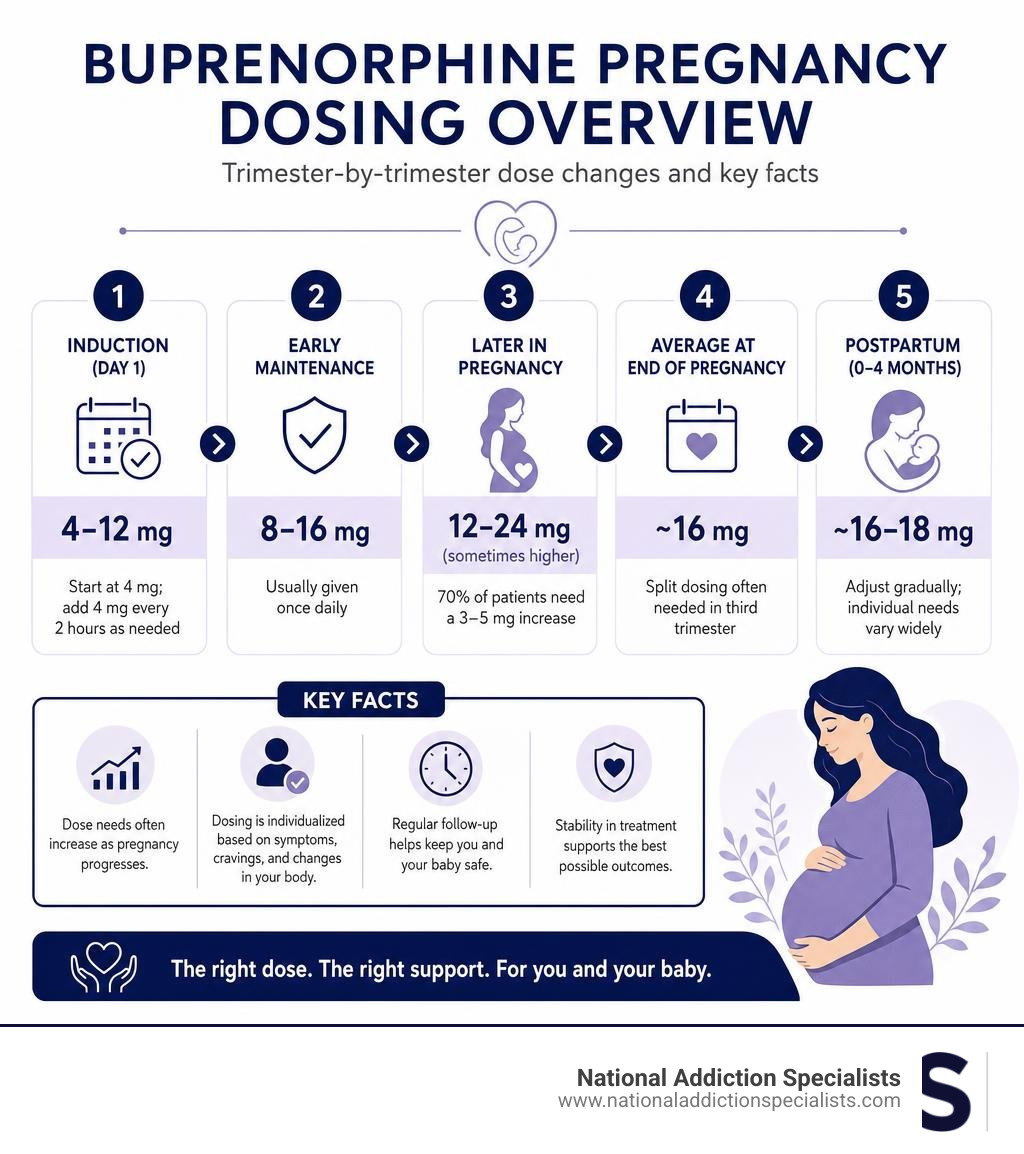
Quick Reference: Buprenorphine Dosing During Pregnancy
| Stage | Typical Daily Dose | Key Notes |
|---|---|---|
| Induction (Day 1) | 4-12 mg | Start at 4 mg; add 4 mg every 2 hours as needed |
| Early maintenance | 8-16 mg | Usually given once daily |
| Later in pregnancy | 12-24 mg (sometimes higher) | 70% of patients need a 3-5 mg increase |
| Average at end of pregnancy | ~16 mg | Split dosing often needed in third trimester |
| Postpartum (0-4 months) | ~16-18 mg | Adjust gradually; individual needs vary widely |
These numbers are starting points — not fixed targets. Your provider will adjust your dose based on your withdrawal symptoms, cravings, and how your body changes throughout pregnancy.
Opioid use disorder during pregnancy is serious — but it is treatable. Buprenorphine is a safe, evidence-based medication that reduces the risks of preterm birth, severe maternal complications, and NICU admissions when used correctly. Yet many expectant mothers struggle to find clear, judgment-free information about how dosing actually works across pregnancy and into the postpartum period.
That is exactly what this guide covers. Whether you are just starting treatment or already on buprenorphine and wondering if your dose needs to change, you will find straightforward, clinically grounded answers here.
I’m Dr. Chad Elkin, board-certified in Addiction Medicine and founder of National Addiction Specialists, where I have helped hundreds of pregnant and postpartum patients navigate safe buprenorphine pregnancy dose management as part of a comprehensive, individualized recovery plan. My goal in this guide is to give you the clear, honest information you deserve — without the stigma.
Buprenorphine pregnancy dose terms to learn:
Clinical Guidelines for Initiating Buprenorphine During Pregnancy
When an expectant mother is struggling with opioid use disorder (OUD), starting treatment is a priority. However, in the medical world, “priority” does not mean we rush in without a plan. Pregnancy is considered an indication for priority treatment, but it is not an emergency that requires bypassing standard clinical protocols.
At National Addiction Specialists, we focus on safe, structured, and compassionate initiation. Universal screening at the first prenatal visit is recommended for all pregnant individuals to reduce stigma and catch OUD early. Once identified, managing OUD requires a multidisciplinary care team, linking addiction specialists, obstetricians, and pediatricians to ensure a seamless safety net for both mother and child. For more background on how these medications function during this critical time, you can read More info on Suboxone use during pregnancy.
Confirming Pregnancy and Opioid Dependence
Before we can determine your buprenorphine pregnancy dose, we must establish two critical pieces of clinical data: confirmation of a viable intrauterine pregnancy and a formal diagnosis of opioid dependence.
- Viable Pregnancy Confirmation: A simple home pregnancy test is not sufficient for starting clinical buprenorphine therapy. Medical guidelines require a formal ultrasound confirming a viable intrauterine pregnancy with a visible heartbeat, performed by an obstetric provider or a community health clinic.
- Confirming Opioid Dependence: We use the Diagnostic and Statistical Manual of Mental Disorders (DSM-5) criteria to diagnose OUD. Additionally, we utilize the Clinical Opiate Withdrawal Scale (COWS) to document physical opioid dependence and run a urine toxicology screen to confirm recent exposure.
It is worth noting that mild to moderate opioid withdrawal symptoms are not dangerous to a pregnancy. However, severe withdrawal can cause maternal stress and uterine contractions, which is why we aim to transition patients to a stable buprenorphine dose as smoothly as possible.
Determining the Initial Buprenorphine Pregnancy Dose
Once dependence and pregnancy are confirmed, the next step is induction—introducing the first buprenorphine doses. The traditional approach requires the patient to be in moderate withdrawal (typically a COWS score greater than 12) before taking the first dose. This reduces the risk of precipitated withdrawal, which occurs if buprenorphine knocks existing full-agonist opioids off the brain’s receptors too quickly.
- Standard Induction Dosing: We typically start with an initial dose of 4 mg (or 2 mg for women who are not heavily physically dependent on opioids). If withdrawal symptoms improve, additional 4 mg doses can be given every 2 hours as needed, up to a maximum of 12 mg on the first day of treatment.
- Low-Dose Initiation (Microdosing): For patients who dread the thought of waiting to enter moderate withdrawal, newly emerging low-dose initiation protocols (often called the Bernese method) allow patients to start buprenorphine without stopping their current opioid use immediately. This protocol starts with very small doses, such as 0.5 mg (using split films) up to every 3 hours on day one, gradually increasing over six days to 8 mg twice daily, at which point other opioid use is discontinued.
- Fentanyl Considerations: Because synthetic fentanyl is stored in the body’s fat cells, traditional induction can be highly unpredictable. For patients actively using fentanyl, some clinical guidelines now recommend a rapid high-dose/quick start protocol with an initial dose of 8 mg to 16 mg (with a first-day total up to 32-40 mg) to completely override the fentanyl tolerance and prevent prolonged withdrawal.
No matter which path we take, clinical research shows that receiving treatment is always the safer choice. According to a landmark study on Buprenorphine Treatment in Pregnancy and Maternal-Infant Outcomes – PMC, pregnant individuals treated with buprenorphine had a 5.1 percentage point lower probability of any adverse pregnancy outcome, including lower rates of preterm birth, severe maternal morbidity, and NICU admissions compared to those who remained untreated.
Adjusting Your Buprenorphine Pregnancy Dose by Trimester

A common misconception is that once you find a stable buprenorphine dose, it will stay the same until you give birth. In reality, your body undergoes massive physical and chemical transformations during pregnancy that directly impact how medications are processed.
As pregnancy progresses, your liver enzymes (specifically CYP3A4 and UGT) become significantly more active. This metabolic clearance means your body breaks down and eliminates buprenorphine much faster than it did before you were pregnant. To understand the science behind these changes, you can consult A Pharmacologic Evaluation of Buprenorphine in Pregnancy and the Postpartum Period.
Physiological Changes and Increased Blood Volume
The most prominent physiological change affecting your buprenorphine pregnancy dose is a massive increase in blood volume and total body water. This dilutes the concentration of the medication in your bloodstream.
Because of these pharmacokinetic changes, approximately 70% of patients who were stable on buprenorphine prior to becoming pregnant will need a modest dose increase of 3–5 mg as their pregnancy progresses. For women who begin buprenorphine treatment during pregnancy, the average daily dose by the end of gestation is approximately 16 mg.
If you find yourself needing a higher dose in your second or third trimester, please do not feel guilty or worry that you are “backsliding.” This is a purely physical response to your changing body, and adjusting your dose is essential to prevent cravings and withdrawal. For more peace of mind, read our guide on Understanding the Real Risks of Suboxone Use While Expecting.
The Role of Split Dosing in Later Gestation
As your metabolism speeds up in the later stages of pregnancy, taking your buprenorphine once a day may no longer keep you stable for a full 24 hours. You might notice mild withdrawal symptoms or cravings creeping in by late afternoon or evening.
To combat this, we often recommend split dosing—dividing your total daily dose into two, three, or even four smaller doses spread throughout the day.
- Why Split Dosing Works: Pharmacokinetic studies show that split dosing helps maintain a steady trough concentration of buprenorphine (ideally around 1 ng/ml in plasma), which is the sweet spot for suppressing cravings and keeping the uterus stable.
- The Trend: Clinical data shows that split dosing (twice or thrice daily) is highly common, increasing from 37.2% of patients in the first trimester to 50.8% of patients by the third trimester.
Postpartum Buprenorphine Dosing and Monitoring
The moment your baby is born, your body begins another rapid transition. The placenta, which drove many of the hormonal and metabolic changes of pregnancy, is gone, and your liver metabolism and blood volume gradually begin returning to pre-pregnancy levels.
However, this transition does not happen overnight. Managing your postpartum buprenorphine dose requires close monitoring and highly individualized care. To see how these patterns play out across large patient cohorts, refer to the study on Buprenorphine dosing for the treatment of opioid use disorder through pregnancy and postpartum.
Managing Postpartum Dose Adjustments and Individual Variability
Many people assume that postpartum buprenorphine doses should immediately drop back down to pre-pregnancy levels. However, clinical tracking reveals that postpartum dosing needs vary wildly from person to person:
- Postpartum Dose Trends: Interestingly, data shows that mean total daily doses can actually remain higher in the postpartum period than during pregnancy. One study tracked mean doses at 16.78 mg (0–4 months postpartum), 18.22 mg (4–8 months), and 18.06 mg (8–12 months).
- Individual Trajectories: From delivery through 4 months postpartum, 43.5% of women actually increased their total dose (by a mean of +6.9 mg), 15.3% decreased their dose (by a mean of -4.6 mg), and 41.2% remained on the exact same dose.
Because there is no “one-size-fits-all” trajectory, we do not automatically lower your dose after delivery. Instead, we work with you to adjust your medication gradually based on how you feel.
Monitoring for Withdrawal, Cravings, and Mood Changes
The postpartum period is a time of immense vulnerability. Sleep deprivation, hormonal fluctuations, and the stress of caring for a newborn can easily mimic or trigger cravings and mood swings.
During our postpartum telemedicine visits, we carefully evaluate:
- Withdrawal and Cravings: Are you experiencing physical symptoms of withdrawal or mental cravings? If so, a temporary dose increase may be necessary.
- Sedation: As your metabolism slows back down, your current dose might begin to feel too strong, causing excessive sleepiness. If you experience sedation, we will work with you to safely and gradually reduce your dose.
- Postpartum Depression (PPD): Up to 30% of pregnant women in substance use treatment screen positive for depression. We conduct regular postpartum mental health screenings to ensure you have the emotional and psychological support you need.
Comparing Buprenorphine Formulations and Frequencies
Choosing the right formulation of buprenorphine is just as important as finding the correct dose. Different products have unique absorption rates, safety profiles, and clinical benefits. For an in-depth look at all available options, visit our More info on buprenorphine dosage resource page.
Mono-product vs. Combination Formulations in Pregnancy
Historically, medical guidelines recommended that pregnant women only use buprenorphine mono-product (commonly known as Subutex) to avoid exposing the fetus to naloxone. However, clinical practice in 2026 has evolved significantly:
- The Safety of Combination Products: Extensive research has shown that when buprenorphine/naloxone (Suboxone) is taken sublingually or buccally as directed, virtually no naloxone is absorbed into the bloodstream. It is safe for both mother and baby.
- Reducing Diversion and Anxiety: Many providers now prefer the combination product for all patients, including pregnant women. It reduces the risk of medication diversion and eliminates the need for an anxious medication transition in the postpartum period.
- Formulation Shifts: Reflecting this clinical shift, the use of the buprenorphine mono-product has declined significantly, dropping from 60% of patients at delivery to just 16.2% by 4 months postpartum as patients transition back to combination films or tablets.
Optimizing Daily Dosing Frequencies
How often you take your medication depends entirely on your clearance rate and how your body responds. While once-daily dosing is standard for non-pregnant individuals, split dosing (two to four times daily) is often the key to staying stable during the second half of pregnancy.
To evaluate whether your dosing frequency is working, we look at clinical markers like pupil diameter (which constricts when the medication is active and dilates during withdrawal), COWS scores, and patient-reported craving levels. Our goal is to keep your plasma levels stable so you do not experience the “rollercoaster” effect of highs and lows.
Pain Management Strategies During Labor and Delivery

One of the most common fears pregnant patients on buprenorphine have is: How will my pain be managed during childbirth?
Let us be completely clear: Your buprenorphine pregnancy dose will not treat the acute pain of labor and delivery. You deserve, and will receive, proper pain management. For a comprehensive look at planning your delivery, check out Navigating Suboxone Use During Pregnancy Without the Stress.
Multimodal Analgesia and Safe Pain Control
To keep you comfortable and safe during childbirth, hospital care teams use a multimodal pain management approach. This means combining different types of pain relief that work in different ways:
- First-Line Options: Epidurals, spinal blocks, and nitrous oxide (laughing gas) are highly effective and are the preferred methods for labor pain because they target the pain locally without affecting your buprenorphine treatment.
- Non-Opioid Medications: Standing doses of acetaminophen (Tylenol) and NSAIDs (like ibuprofen) are used to manage baseline inflammation and post-delivery soreness.
- Short-Acting Opioids: If you require a cesarean section or experience severe tearing, short-acting opioid analgesics (like fentanyl or morphine) can still be used. However, because buprenorphine blocks opioid receptors, you may require up to a 70% increase in standard short-acting opioid doses to achieve adequate pain control. This is safe and expected, and your hospital team will monitor you closely.
Contraindicated Medications to Avoid
While many pain medications are safe to use alongside buprenorphine, there are a few specific pain relievers that must be avoided at all costs during labor and delivery:
- Nalbuphine (Nubain)
- Butorphanol (Stadol)
- Pentazocine (Talwin)
These medications are mixed agonist-antagonists. If they are administered to a patient who is taking buprenorphine, they will immediately trigger severe, acute precipitated withdrawal, which is dangerous for both you and your baby during labor. Make sure your obstetric team has these listed as contraindications in your chart.
Make an Appointment to Treat Addiction
Please don’t hesitate. Make an appointment today. Make an Appointment to Treat Addiction
Care Coordination and Support Services
Successfully navigating OUD during pregnancy requires a village. At National Addiction Specialists, we do not operate in a vacuum. We actively coordinate your care with your entire medical team to ensure everyone is on the same page. For more details on our treatment philosophy, see More info on buprenorphine.
Collaborative Care and Referrals
Between 24 and 32 weeks of pregnancy, we work with you to establish key consultations and care plans:
- HIPAA-Compliant Consents: We obtain your permission to share your dosing and treatment status with your obstetrician and your baby’s future pediatrician.
- Anesthesia Consultation: We recommend meeting with the hospital’s anesthesia team before your due date to discuss your pain management plan.
- Pediatric Consultation: We connect you with a pediatrician to discuss what to expect after birth, including the Eat, Sleep, Console (ESC) approach. This is a modern, supportive model of care that prioritizes keeping mothers and babies together, using skin-to-skin contact, breastfeeding, and quiet environments to manage neonatal symptoms rather than relying immediately on intensive care or medications.
Breastfeeding and Parenting on a Buprenorphine Pregnancy Dose
If you are stable on your buprenorphine pregnancy dose and are not using other non-prescribed substances, we highly encourage you to breastfeed.
- Lactation Safety: Buprenorphine and its metabolites pass into breast milk in extremely low quantities and have very poor oral bioavailability, meaning your baby will absorb almost none of it.
- Benefits for the Baby: Breastfeeding has been shown to significantly reduce the severity and duration of Neonatal Opioid Withdrawal Syndrome (NOWS). It comforts your baby and promotes deep bonding.
- CPS Considerations: Being on medication-assisted treatment (MAT) alone is not a legal justification for contacting Child Protective Services (CPS) or removing a child. We work with you to document your treatment compliance and support your parenting journey from day one.
Frequently Asked Questions about Buprenorphine Dosing in Pregnancy
Is the combination of buprenorphine and naloxone safe during pregnancy?
Yes. While older guidelines favored buprenorphine monotherapy, extensive clinical evidence from the last decade confirms that combination buprenorphine/naloxone (Suboxone) is safe and effective during pregnancy. Because the naloxone component is not significantly absorbed when taken sublingually as directed, it does not harm the fetus or trigger withdrawal.
Does a higher buprenorphine dose increase the severity of Neonatal Opioid Withdrawal Syndrome (NOWS)?
No. Multiple clinical studies have confirmed that there is no correlation between your maternal buprenorphine dose and the severity of NOWS in your newborn. A mother taking 24 mg of buprenorphine is no more likely to have a baby with severe withdrawal than a mother taking 4 mg. For this reason, we never recommend tapering or keeping your dose artificially low out of fear of infant withdrawal. Keeping yourself stable is what protects your baby.
Can I safely breastfeed while taking buprenorphine?
Absolutely. Buprenorphine is highly compatible with breastfeeding. The amount of medication that enters breast milk is incredibly small, and breastfeeding actually helps soothe your baby and reduces the likelihood that they will need pharmacological treatment for withdrawal symptoms.
Conclusion
Finding and maintaining the right buprenorphine pregnancy dose is a dynamic, highly individualized process, but you do not have to navigate it alone.
At National Addiction Specialists, we provide telemedicine-based Suboxone treatment, allowing you to access expert, confidential care and personalized recovery plans right from the comfort of your home. We proudly serve expectant and postpartum mothers across Tennessee (including our Brentwood location) and Virginia (including our Virginia Beach location). We accept Medicaid and Medicare, ensuring that financial barriers do not stand in the way of your recovery.
Your journey to a healthy pregnancy and a bright future for your baby starts with a single step. Reach out to us today to schedule your confidential consultation.
This article was medically reviewed by: Chad Elkin, MD, DFASAM is a board-certified addiction medicine physician, founder, and Chief Medical Officer of National Addiction Specialists, dedicated to treating substance use disorders. A Distinguished Fellow of the American Society of Addiction Medicine (ASAM), Dr Elkin currently serves as President of the Tennessee Society of Addiction Medicine (TNSAM) and has held various leadership roles within the organization. Dr Elkin chairs ASAM’s Health Technology Subcommittee and is an active member of its Practice Management and Regulatory Affairs Committee, State Advocacy and Legislative Affairs Committee, and other committees. He also serves on the planning committee for the Vanderbilt Mid-South Addiction Conference. Committed to advancing evidence-based policy, Dr Elkin is Chairman of the Tennessee Association of Alcohol, Drug, & Other Addiction Services (TAADAS) Addiction Medicine Council, which collaborates with the TN Department of Mental Health & Substance Abuse Services (TDMHSAS). He has contributed to numerous local, state, and national task forces, helping develop professional guidelines, policies, and laws that align with best practices in addiction medicine. His work focuses on reducing addiction-related harm, combating stigma, and ensuring access to effective treatment. Passionate about the field of addiction medicine, he remains dedicated to shaping policy and enhancing patient care.
Suboxone® and Subutex® are a registered trademark of Indivior UK Limited. Any mention and reference of Suboxone® and Subutex® in this website is for informational purposes only and is not an endorsement or sponsorship by Indivior UK Limited.