

Long-Term Effects of Suboxone: Benefits and Risks to Watch
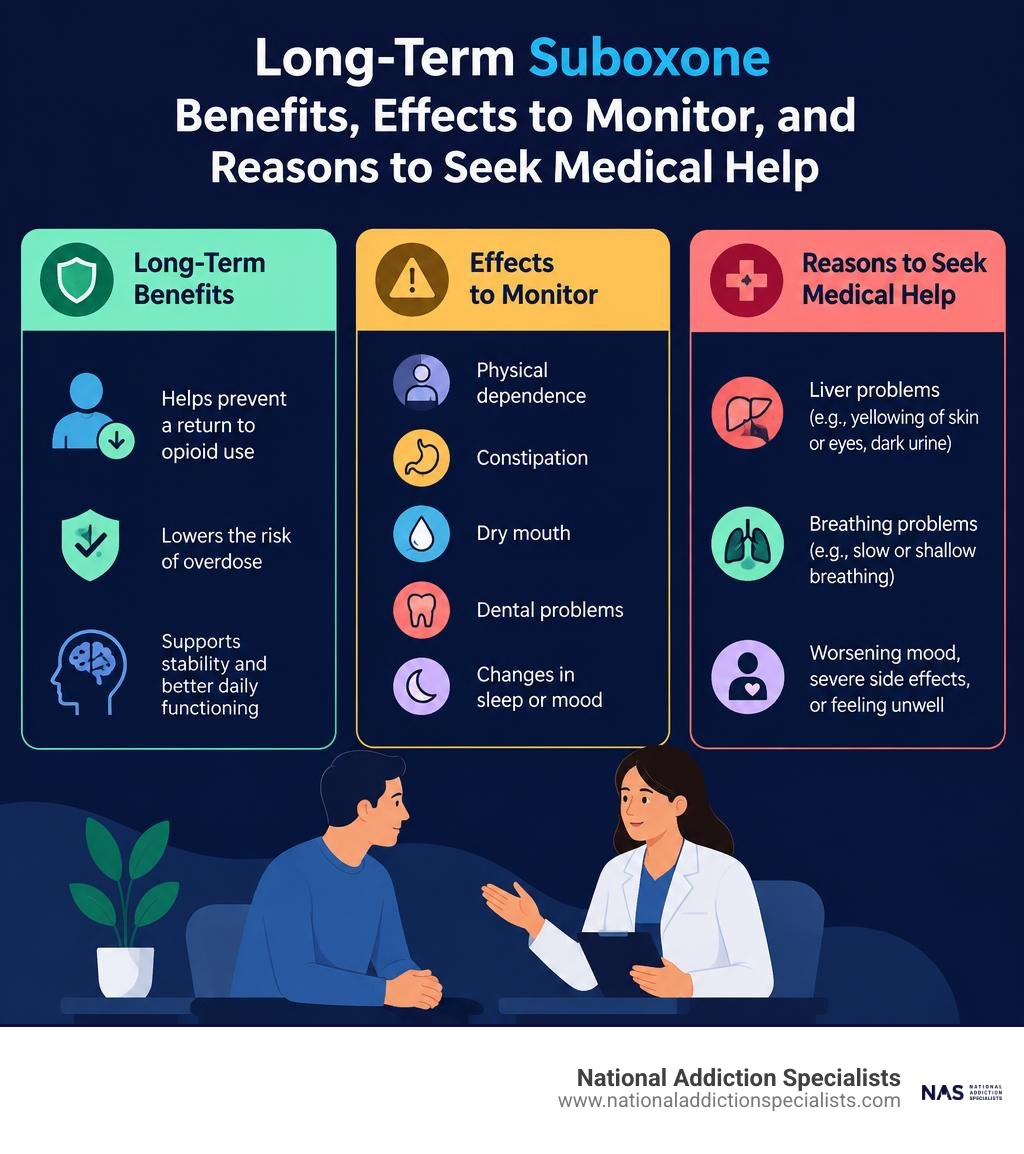
The long-term effects of Suboxone can include physical dependence, constipation, dry mouth, and dental problems. Some people also notice changes in sleep or mood. Serious liver or breathing problems are less common but need medical attention. At the same time, staying on treatment can help prevent a return to opioid use and lower the risk of overdose. Do not stop suddenly; review side effects and any plans to change your dose with your clinician.
Suboxone combines buprenorphine, which eases cravings and withdrawal, with naloxone, which helps discourage misuse. Your dose, health, and other medicines all affect what long-term treatment looks like for you.
I’m Chad Elkin, a physician board-certified in addiction medicine and internal medicine and the founder and medical director of National Addiction Specialists. I help patients weigh the long-term effects of suboxone against its benefits and build treatment plans that fit their lives.
Know your long-term effects of suboxone terms:
What Are the Long-Term Effects of Suboxone?
When considering the long-term journey of recovery, understanding how medication interacts with your system over months or years is essential. Suboxone brings together two active components: buprenorphine, a partial opioid agonist that activates receptors just enough to relieve cravings without producing intense euphoria, and naloxone, an opioid antagonist designed to deter injection or misuse.
Because everyone metabolizes medication differently, individual reactions vary significantly based on physical health, genetics, and concurrent medications. Being aware of potential long-term side effects allows you and your care team to take a proactive approach to your overall wellness.
Key long-term physical and psychological areas to monitor include:
- Oral Health: Changes in saliva production and sublingual acidity affecting enamel.
- Gastrointestinal Function: Ongoing slowing of bowel motility leading to chronic constipation.
- Endocrine Function: Potential shifts in hormone levels, including testosterone, impacting energy and libido.
- Hepatic Health: Liver enzyme variations, especially in patients with preexisting liver conditions.
- Sleep and Respiration: Central nervous system sedation patterns and nighttime breathing stability.
- Mental and Emotional Wellbeing: Stabilization or shifts in mood, anxiety levels, and cognitive clarity.
What are the long-term effects of Suboxone on the body and mind?
Over extended periods, buprenorphine interacts with multiple physiological systems. By looking closely at clinical evidence, we can separate normal, manageable physiological adaptations from rare complications.
Oral and Dental Health Because sublingual tablets and films dissolve directly in the mouth, they can contribute to dry mouth (xerostomia) and lower oral pH. The FDA and clinical bodies note that prolonged exposure may increase the risk of tooth decay, cavities, erosion, and gum issues. Brushing gently after waiting at least an hour post-dissolution, drinking plenty of water, and keeping regular dental visits can prevent long-term damage.
Gastrointestinal and Metabolic Health Like all opioid-based medications, buprenorphine slows gastrointestinal motility. Constipation is among the most frequent ongoing complaints. Without proactive hydration, dietary fiber, and occasional stool softeners, it can become chronic. Some individuals also experience subtle metabolic shifts, including changes in appetite or weight.
Endocrine and Sexual Function Opioids can suppress the hypothalamic-pituitary-gonadal axis over time. While buprenorphine typically causes less endocrine suppression than some full opioid agonists, some individuals experience reduced libido, erectile dysfunction, menstrual irregularities, or mild fatigue related to androgen deficiency.
Liver Monitoring Buprenorphine is processed by the liver, and liver injury is uncommon. Mayo Clinic guidance notes the importance of monitoring, especially for people with viral hepatitis. Periodic blood tests can help a care team follow liver enzyme levels during treatment.
Sleep, Mood, and Mental Clarity For many people, Suboxone helps create more stability during recovery. Others may have ongoing sleepiness, insomnia, emotional blunting, or sleep-related breathing concerns, including central sleep apnea. The NHS overview of buprenorphine side effects describes similar symptoms that should be discussed with a clinician.
How do long-term effects of Suboxone vary by dose and duration?
The physiological impact of Suboxone often corresponds to dosing levels and the duration of maintenance therapy. Higher daily doses place a greater demand on metabolic pathways and receptor saturation, which may heighten daytime fatigue, constipation, or hormonal changes. Conversely, lower maintenance doses may reduce side effects while still effectively managing cravings.
External factors play an equally large role:
- Concurrent Central Nervous System Depressants: Combining buprenorphine with sedatives, sleeping aids, or alcohol significantly elevates the risk of severe respiratory depression.
- Pre-existing Health Conditions: Underlying hepatic impairment, structural lung disease, or metabolic disorders will alter drug clearance and symptom presentation.
- Psychological Adjustment: As brain chemistry stabilizes away from the peaks and troughs of illicit opioids, observing how Suboxone affects mood helps clinicians distinguish between expected emotional recalibration and emergent mood disorders requiring therapy adjustments.
Regular dose reviews ensure that you remain on the minimum effective dose required to maintain lasting remission without carrying unnecessary side-effect burdens.
Which side effects need prompt medical attention?
Mild dry mouth or morning grogginess can often be addressed with routine care. In contrast, symptoms that suggest toxicity, a severe allergic response, or organ strain need prompt medical assessment. The Cleveland Clinic’s buprenorphine/naloxone guidance also identifies situations that call for immediate clinical attention.
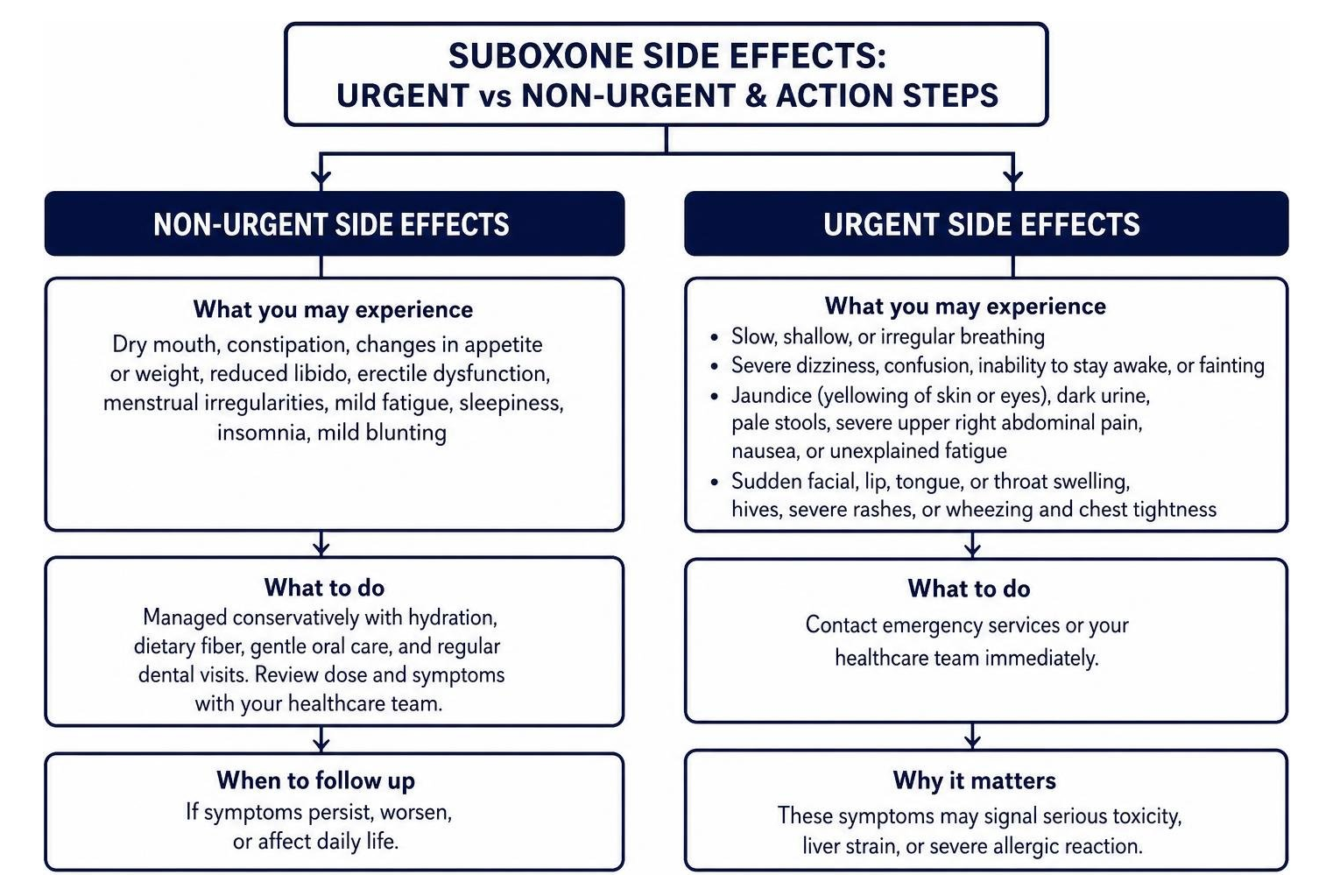
Contact emergency services or your healthcare team immediately if you experience:
- Respiratory and Neurological Symptoms: Noticeably slow, shallow, or irregular breathing; severe dizziness; confusion; inability to stay awake; or fainting.
- Hepatic Distress: Jaundice (yellowing of the skin or whites of the eyes), persistently dark urine, pale stools, severe upper right abdominal pain, or unexplained nausea and fatigue.
- Severe Allergic Reactions: Sudden facial, lip, tongue, or throat swelling; hives; severe skin rashes; or sudden wheezing and tightness in the chest.
- Adrenal Insufficiency: Severe weakness, dizziness upon standing, profound chronic fatigue, or persistent vomiting.
How Does Long-Term Treatment Compare With Stopping Earlier?
A common question in addiction medicine centers on whether patients should stop medication-assisted treatment (MAT) as soon as they feel stable—typically around the historical 6-to-9-month mark—or maintain therapy across several years.
Rigorous observational evidence demonstrates that remaining on buprenorphine for longer periods yields dramatically superior health outcomes compared to early discontinuation. In large-scale analyses of Medicaid enrollees, continuous treatment lasting at least 15 months, compared to stopping between 6 and 9 months, demonstrated substantial risk reductions across critical metrics (Samples et al., 2020):
- All-Cause Inpatient Admissions: 52% relative reduction.
- Emergency Department Visits: 26% relative reduction.
- Opioid-Related Hospital Admissions: 128% relative reduction.
- Overdose Events: 173% relative reduction.
- Prescription Opioid Use: 120% relative reduction in new opioid prescriptions and 124% decrease in the overall rate of prescription opioid use.
When individuals discontinue buprenorphine prematurely, healthcare claims show that their healthcare utilization and prescription opioid risks often surge back toward pre-treatment levels within just four weeks.
Furthermore, 5-year longitudinal follow-up data demonstrates that patients who maintain agonist therapy achieve near-zero days of illicit opioid use per month, whereas those who stop agonist medications average roughly 12 days of illicit use per month. After 5 years, approximately 50% of patients initially prescribed buprenorphine maintain total illicit opioid abstinence.
Does continuing treatment help prevent relapse?
Opioid use disorder creates long-lasting neurobiological alterations in the brain’s reward and stress circuits. Buprenorphine acts as a biological shield, occupying mu-opioid receptors with high affinity. This satisfies receptor cravings, eliminates physical withdrawal, and blocks the euphoric effects of other opioids should an accidental exposure or lapse occur.
When determining how long to stay on Suboxone, the prevailing clinical consensus is clear: treatment should continue for as long as it provides clinical benefit and supports your life stability. There is no arbitrary deadline for recovery. Premature discontinuation often exposes individuals to high relapse vulnerabilities before coping mechanisms, financial stability, and supportive relationships are fully solidified.
How Can You Manage Dependence and Reduce Long-Term Risks?
Taking an active role in your daily health makes long-term maintenance safer and more comfortable. While buprenorphine is remarkably safe for long-term use due to its ceiling effect on respiratory depression, comprehensive care involves monitoring physical dependence, managing lifestyle factors, and keeping up with routine healthcare.
Understanding what to expect from Suboxone side effects can make ongoing treatment feel more manageable. For additional education, NAMI’s buprenorphine/naloxone overview explains common considerations patients may want to raise with their care team.
What is the difference between physical dependence and addiction?
One of the largest barriers to staying on necessary medication is the confusion between physical dependence and addiction.
- Physical Dependence is a normal, predictable physiological adaptation. When your body receives a medication consistently over time, cellular receptors adapt to its presence. If the medication is stopped abruptly, you will experience withdrawal symptoms. This occurs with blood pressure medications, antidepressants, insulin, and buprenorphine alike. Physical dependence alone is not a disease.
- Addiction (Substance Use Disorder) is characterized by compulsive behaviors, loss of control, cravings, and continued use despite severe negative consequences to one’s health, family, legal standing, or career.
When you take Suboxone exactly as prescribed under medical supervision to function normally, fulfill your responsibilities, and protect your health, you are managing a chronic health condition—not engaging in addiction. Recognizing this distinction reduces unearned stigma and reinforces confidence in your long-term care plan.
What supports safer long-term treatment?
A holistic recovery strategy ensures that medication serves as one part of a balanced, healthy life.
- Routine Medical and Oral Care: Schedule bi-annual dental check-ups, inform your dentist of your sublingual medication, and maintain routine blood panels to monitor liver enzymes.
- Nutrition and Hydration: Increase soluble fiber, drink 2 to 3 liters of water daily to counteract dry mouth and constipation, and incorporate daily physical movement.
- Medication Reviews: Always notify all healthcare providers about your Suboxone regimen to avoid drug-drug interactions, particularly with sedatives, muscle relaxants, or specific antibiotics.
- Integrated Behavioral Therapy: Combining medication with structured counseling—such as Cognitive Behavioral Therapy (CBT), Dialectical Behavior Therapy (DBT), or motivational interviewing—addresses the psychological roots of substance use. Exploring dedicated Suboxone treatment and counseling ensures you build robust coping strategies for life’s stressors.
If you are ready to take the next step toward a stable, medically supervised recovery plan from home, Make an Appointment to Treat Addiction Please don’t hesitate. Make an appointment today.
Who May Need Additional Support or Help With Access?
Sustaining long-term recovery requires uninterrupted access to care. Unfortunately, systemic hurdles often complicate retention for vulnerable groups, including Medicaid enrollees and individuals navigating co-occurring psychiatric conditions.
What can make long-term treatment harder to maintain?
Many individuals face administrative and geographic obstacles that threaten treatment continuity:
- Prior Authorization and Quantity Limits: Complex insurance approvals and frequent reauthorization demands can delay prescription refills, placing patients at high risk of sudden withdrawal.
- Geographic and Transportation Barriers: In rural or underserved areas of Tennessee and Virginia, traveling to specialized addiction clinics every few weeks creates logistical and financial strain.
- Stigma and Fragmented Care: Navigating disconnected medical systems where primary care providers, psychiatrists, and addiction specialists do not communicate often leaves patients feeling misunderstood or under-supported.
What can patients and clinicians do to support continuity?
Addressing these hurdles requires coordinated, patient-centered care models. Integrating mental health support is crucial, as treating underlying Suboxone and mental health concerns like depression and generalized anxiety directly boosts treatment retention.
Telemedicine has revolutionized modern addiction medicine across Tennessee and Virginia. By offering virtual consultations, rapid electronic prescription management, and integrated counseling, our providers at National Addiction Specialists eliminate travel burdens, help navigate insurance authorizations (including Medicaid and Medicare), and provide consistent, stigma-free clinical oversight.
Frequently Asked Questions About Long-Term Suboxone Use
Is it safe to take Suboxone for years?
Yes. Clinical studies and long-term surveillance show that buprenorphine/naloxone can be safely used for years under regular medical supervision. Ongoing monitoring of dental health, liver enzymes, and overall wellbeing ensures that the long-term benefits continue to outweigh any potential risks.
Should someone stop Suboxone after six to nine months?
Not necessarily. While historical benchmarks sometimes evaluated 6-to-9-month intervals, recent evidence shows that patients maintained on treatment for 15 months or longer have significantly lower rates of overdose, hospital admissions, and relapse. Discontinuation should always be an individualized decision based on personal stability, not an arbitrary calendar date.
Can Suboxone cause withdrawal if stopped?
Yes. Because the body develops physical dependence with daily use, stopping Suboxone abruptly will trigger opioid withdrawal symptoms such as restlessness, muscle aches, insomnia, nausea, and sweating. If you and your provider decide it is time to stop, a slow, medically guided dose reduction (taper) minimizes discomfort and supports ongoing stability.
Conclusion
Navigating the long-term effects of Suboxone is about balancing manageable physical considerations against the profound, life-saving benefits of sustained recovery. With consistent medical oversight, proactive dental hygiene, lifestyle modifications, and integrated counseling, Suboxone provides a dependable bridge to health and personal fulfillment.
At National Addiction Specialists, we provide compassionate, individualized, telemedicine-based medication-assisted treatment for individuals across Tennessee and Virginia. Our experienced providers accept Medicaid and Medicare, helping you access expert care from the comfort and privacy of your home.
Make an Appointment to Treat Addiction. Please don’t hesitate. Make an appointment today.
Suboxone® and Subutex® are a registered trademark of Indivior UK Limited. Any mention and reference of Suboxone® and Subutex® in this website is for informational purposes only and is not an endorsement or sponsorship by Indivior UK Limited.
This article was medically reviewed by: Chad Elkin, MD, DFASAM is a board-certified addiction medicine physician, founder, and Chief Medical Officer of National Addiction Specialists, dedicated to treating substance use disorders. A Distinguished Fellow of the American Society of Addiction Medicine (ASAM), Dr Elkin currently serves as President of the Tennessee Society of Addiction Medicine (TNSAM) and has held various leadership roles within the organization. Dr Elkin chairs ASAM’s Health Technology Subcommittee and is an active member of its Practice Management and Regulatory Affairs Committee, State Advocacy and Legislative Affairs Committee, and other committees. He also serves on the planning committee for the Vanderbilt Mid-South Addiction Conference. Committed to advancing evidence-based policy, Dr Elkin is Chairman of the Tennessee Association of Alcohol, Drug, & Other Addiction Services (TAADAS) Addiction Medicine Council, which collaborates with the TN Department of Mental Health & Substance Abuse Services (TDMHSAS). He has contributed to numerous local, state, and national task forces, helping develop professional guidelines, policies, and laws that align with best practices in addiction medicine. His work focuses on reducing addiction-related harm, combating stigma, and ensuring access to effective treatment.Passionate about the field of addiction medicine, he remains dedicated to shaping policy and enhancing patient care.