Stop the Search for Opioid Addiction Treatment Near Me
You Can Stop Searching — Here’s How to Find Opioid Addiction Treatment Near You
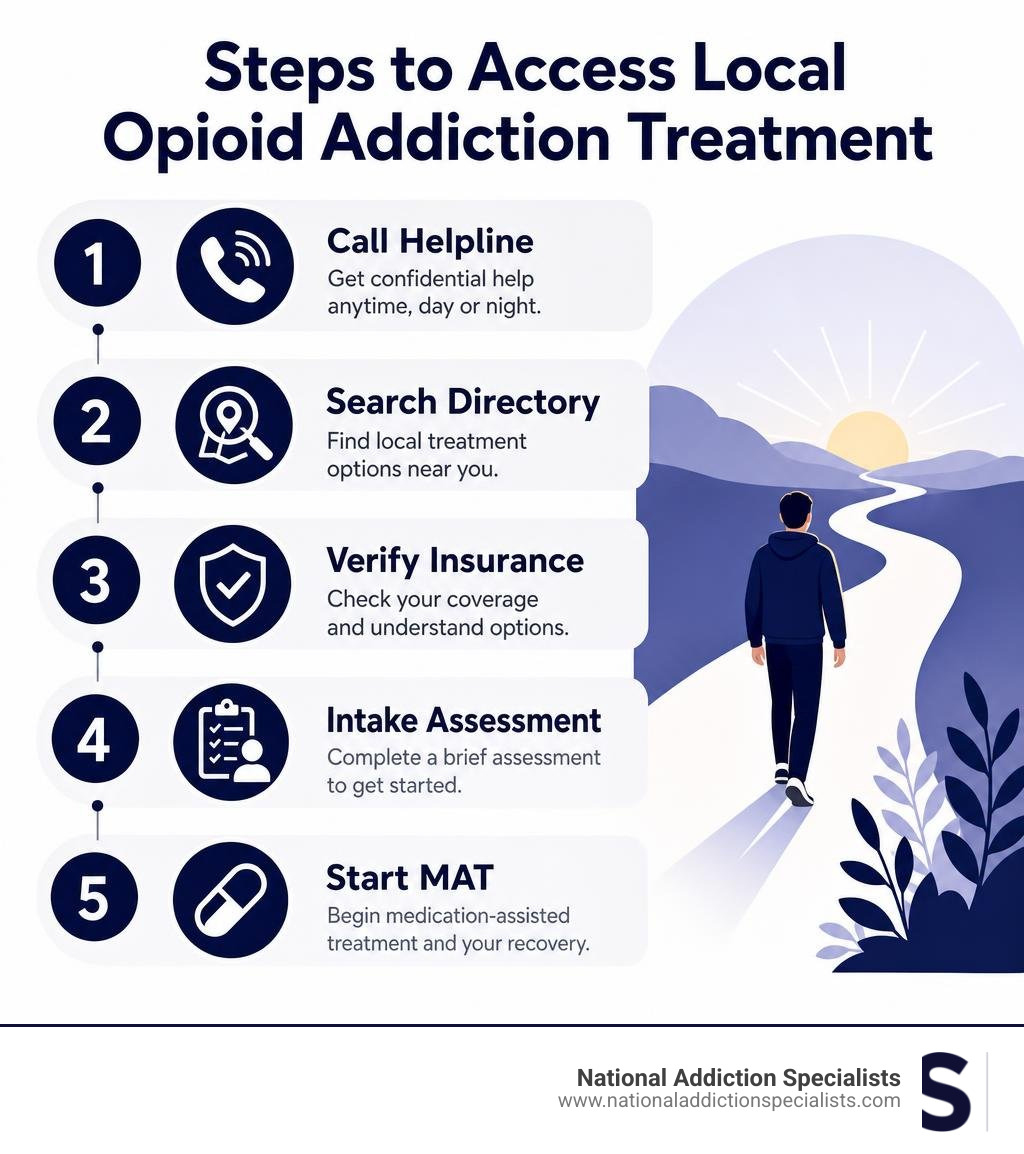
If you’re looking for opioid addiction treatment near me, here are the fastest ways to get started today:
- Call SAMHSA’s National Helpline — 1-800-662-4357 (free, confidential, 24/7)
- Search FindTreatment.gov — a free, anonymous directory of over 2,100 certified opioid treatment programs across the U.S.
- Contact a telehealth MAT provider — services like National Addiction Specialists let you start buprenorphine treatment from home, often within days
- Walk into a local OTP clinic — many offer same-day or next-day intake appointments
- Call or text 988 — for immediate substance use crisis support
Opioid use disorder is serious — but it is treatable. Millions of Americans are living proof that recovery is possible, and effective, evidence-based care is more accessible than most people realize.
The hardest part is often just taking that first step. Whether fear of judgment, work and family obligations, or simply not knowing where to start is holding you back — you are not alone, and help is closer than you think.
I’m Dr. Chad Elkin, Founder and Medical Director of National Addiction Specialists, a board-certified physician in both Addiction Medicine and Internal Medicine with extensive experience connecting patients with opioid addiction treatment near me — including through telehealth, so you can begin recovery without disrupting your life. In the sections below, I’ll walk you through every option available to you, step by step.
Easy opioid addiction treatment near me word list:
- Suboxone doctors Medicaid
- mat clinics near me
- online suboxone doctors that accept medicaid
Recognizing the Signs of Opioid Use Disorder

Before diving into the various treatment pathways, it is essential to understand what opioid use disorder (OUD) actually looks like. Many people believe that addiction is simply a matter of willpower, but medical science has proven otherwise. Opioids fundamentally hijack the brain’s dopamine reward system, reinforcing repeated drug use and altering decision-making pathways. This makes stopping without professional help incredibly difficult.
Clinically, OUD is recognized as a chronic, relapsing brain disease. Under the Diagnostic and Statistical Manual of Mental Disorders (DSM-5), a diagnosis of opioid use disorder is made when an individual meets at least 2 of 11 specific criteria within a 12-month period. These criteria evaluate both the physical dependence and the behavioral changes associated with compulsive drug use:
- Taking larger amounts of opioids or taking them over a longer period than intended.
- Having a persistent desire or making unsuccessful efforts to cut down or control use.
- Spending a great deal of time obtaining, using, or recovering from the effects of opioids.
- Experiencing intense cravings or strong desires to use opioids.
- Failing to fulfill major obligations at work, school, or home due to drug use.
- Continuing use despite having persistent social or interpersonal problems caused or worsened by opioids.
- Giving up important social, occupational, or recreational activities because of opioid use.
- Using opioids in situations where it is physically hazardous (such as driving).
- Continuing use despite knowing that physical or psychological problems are likely caused or worsened by the drug.
- Developing tolerance (needing significantly increased amounts to achieve the desired effect).
- Experiencing withdrawal symptoms when attempting to stop, or taking opioids to avoid withdrawal.
If you or a loved one are experiencing these symptoms, it is time to seek professional care. Recognizing these signs early can save lives. Learn more about opioid addiction symptoms to better understand how physical dependence and behavioral patterns manifest.
Understanding Your Options for Opioid Addiction Treatment Near Me
When you begin searching for opioid addiction treatment near me, the sheer volume of options can feel overwhelming. Treatment is not one-size-fits-all. Depending on your medical history, the severity of your physical dependence, and your personal obligations, different levels of care may suit you best.
| Treatment Level | What It Involves | Best Suited For |
|---|---|---|
| Medical Detox | 24/7 supervised withdrawal management in a residential setting. | Individuals with severe physical dependence who need immediate stabilization. |
| Inpatient Rehab | Residential stay with daily therapy, group sessions, and medical monitoring. | Those needing a structured environment away from daily triggers. |
| Outpatient Care | Scheduled therapy and medical visits while living at home and working. | Individuals with mild-to-moderate OUD and strong support systems. |
| Telehealth MAT | Virtual doctor visits and home-based medication management (like Suboxone). | Those seeking maximum convenience, privacy, and flexibility. |
To make an informed decision, it helps to understand the full continuum of care. Explore comprehensive opioid dependence treatment options to see which path aligns with your recovery goals.
Finding Outpatient Opioid Addiction Treatment Near Me
For many individuals in Tennessee and Virginia, taking weeks or months away from work, school, or family responsibilities to attend inpatient rehab is simply not feasible. This is where outpatient care becomes an invaluable resource.
Outpatient programs allow you to receive medical supervision, behavioral counseling, and peer support while maintaining your daily life. In-person outpatient services provide structured therapy during the day or evening, allowing you to return home at night.
Alternatively, virtual outpatient support has revolutionized recovery. At National Addiction Specialists, we provide telemedicine-based outpatient care that brings expert medical providers directly to your screen. This eliminates the need for long commutes, allows you to attend appointments privately from home, and makes balancing your recovery with your daily responsibilities entirely manageable.
The Role of Medication-Assisted Treatment (MAT) in Opioid Addiction Treatment Near Me
Medication-Assisted Treatment (MAT) is widely recognized by major medical organizations—including the World Health Organization and SAMHSA—as the gold standard of care for opioid use disorder. Rather than “trading one drug for another,” MAT uses FDA-approved medications to normalize brain chemistry, block the euphoric effects of opioids, relieve severe physiological cravings, and prevent agonizing withdrawal symptoms.
Decades of clinical research show that MAT significantly reduces illicit drug use, lowers overdose death rates, improves social functioning, and helps individuals maintain long-term recovery. For example, clinical studies highlight that over 75% of patients utilizing medication-assisted treatment test opioid-free within just four weeks of starting, with more than 80% remaining opioid-free after six months of continuous care.
To learn more about how these medical protocols can stabilize your recovery, read our Guide to medication-assisted treatment for opioid addiction.
FDA-Approved Medications for Opioid Use Disorder
There are three primary FDA-approved medications used to treat opioid use disorder, each operating differently within the brain’s opioid receptors:
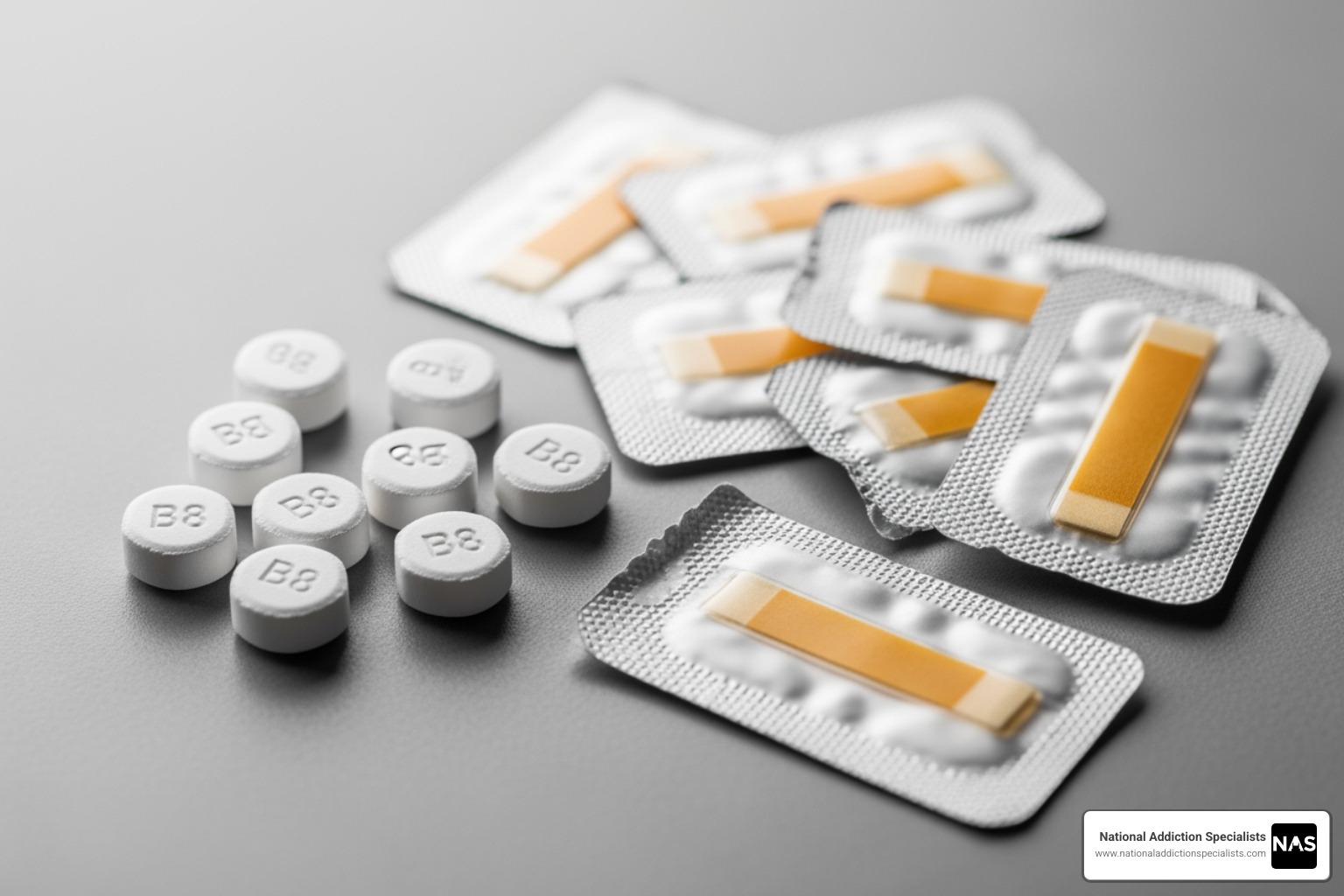
- Buprenorphine (including Suboxone): A partial opioid agonist. It binds to the brain’s opioid receptors but only partially activates them. This action is powerful enough to eliminate cravings and stop withdrawal symptoms, but it features a “ceiling effect” that prevents a high. Suboxone combines buprenorphine with naloxone (an opioid antagonist) to prevent misuse; if the medication is dissolved and injected, the naloxone blocks the effects, inducing immediate withdrawal.
- Methadone: A full opioid agonist. It fully activates the opioid receptors to prevent withdrawal and cravings. Because of its strength and potential for misuse, methadone can only be dispensed through highly regulated, certified Opioid Treatment Programs (OTPs) that require daily, in-person supervised dosing.
- Naltrexone (Vivitrol): An opioid antagonist. It completely blocks opioid receptors so that if a person uses opioids, they feel no effect. Naltrexone is non-addictive and available as a monthly injection, but patients must be fully detoxed from all opioids for 7 to 10 days before starting to avoid severe precipitated withdrawal.
For those looking for flexibility, office-based or telehealth-based buprenorphine (Suboxone) prescriptions are often the most practical choice. Unlike methadone, which requires daily trips to a clinic, Suboxone can be prescribed by qualified medical providers and taken in the comfort of your own home.
If you are navigating the transition to medication-managed recovery, our Detailed opioid addiction recovery guide offers deep insights into selecting the right medication for your physical profile.
How to Access Local Treatment and Verify Insurance

Accessing opioid addiction treatment near me should not be a bureaucratic nightmare. If you prefer in-person care in Tennessee or Virginia, directories like SAMHSA’s Opioid Treatment Program Directory can help you locate physical clinics in your area. These directories provide comprehensive lists of certified local providers, outpatient clinics, and residential detoxification facilities near you.
However, if you want to avoid waiting rooms, long drives, and potential stigma, virtual care is an incredibly efficient alternative. National Addiction Specialists specializes in telemedicine-based Suboxone treatment across both Tennessee and Virginia.
One of the biggest concerns for patients is cost. Fortunately, federal law requires most health insurance plans to provide coverage for substance use disorder treatment. We proudly accept Medicaid and Medicare, ensuring that low-cost or free treatment options are accessible to those who need them most. Before scheduling your first visit, you can easily Verify insurance and pricing details on our website to ensure a seamless, stress-free start.
What to Expect During Your First Week of Recovery
Taking the step to start treatment is courageous, but it is completely normal to feel anxious about what the first week will look like. At National Addiction Specialists, we strive to make this transition as comfortable and transparent as possible:
- Day 1 – Intake and Assessment: You will meet virtually with one of our compassionate, board-certified medical providers. We will review your medical history, discuss your substance use, and design a personalized recovery plan tailored to your life.
- Days 2 to 3 – Buprenorphine Induction: To safely start Suboxone (buprenorphine/naloxone), you must be in mild-to-moderate opioid withdrawal. If you take buprenorphine while opioids are still fully active on your brain’s receptors, it can kick them off too quickly, causing sudden and severe “precipitated withdrawal.” Our medical team will guide you step-by-step on the exact timing of your first dose.
- Week 1 – Stabilization and Support: Once your dose is stabilized, your physical cravings and withdrawal symptoms will fade. This allows you to focus on the psychological aspects of recovery through integrated counseling and support.
To prepare yourself for this initial phase, it is helpful to understand what your body will go through. Read about Understanding opioid withdrawal symptoms to know what to expect and how our medical protocols keep you safe and comfortable.
That recovery is a marathon, not a sprint. While detox and initial stabilization happen quickly, clinical studies show that most people benefit from spending at least 90 days in treatment to build a firm foundation for lasting recovery. During this time, learning Strategies for opioid relapse prevention is vital to maintaining your progress and protecting your future.
Frequently Asked Questions About Opioid Rehab
How long does opioid addiction treatment typically last?
There is no fixed timeline for recovery. While the first phase of stabilization occurs within the first week, clinical research indicates that at least 90 days of continuous treatment is recommended to significantly reduce the risk of relapse. Many individuals choose to stay on maintenance medications like Suboxone for months or even years. Just like taking daily medication for high blood pressure or diabetes, long-term MAT is a safe, medically sound approach that supports a stable, productive life. For more detailed answers, consult our Opioid addiction help guide.
Can I access Suboxone treatment online from home?
Yes, absolutely. Telehealth regulations allow qualified providers to prescribe Suboxone online via secure, HIPAA-compliant video visits. If you reside in Tennessee or Virginia, National Addiction Specialists can manage your entire recovery journey virtually. This means you can complete your medical assessments, speak with your doctor, and have your Suboxone prescription sent directly to your local pharmacy without ever having to step foot inside a crowded clinic. Learn more about the evolving landscape of virtual care in our Opioid addiction recovery guide 2025.
Does Medicaid cover medication-assisted treatment?
Yes, Medicaid and Medicare are legally required to cover essential substance use disorder treatments, including FDA-approved medications like buprenorphine and counseling services. At National Addiction Specialists, we are committed to keeping treatment accessible and affordable, which is why we proudly accept both Medicaid and Medicare plans for our virtual care services in Tennessee and Virginia.
Conclusion
Your search for opioid addiction treatment near me ends here. You do not have to put your life on hold, compromise your privacy, or travel hours to a physical clinic to get the help you deserve.
At National Addiction Specialists, we provide expert, compassionate, and confidential telemedicine-based Suboxone treatment throughout Tennessee and Virginia—including dedicated care for residents in Brentwood, TN, and Virginia Beach, VA. Our personalized recovery plans are designed to fit your unique lifestyle, allowing you to heal comfortably from home.
If you are ready to take control of your life, break free from the cycle of addiction, and step into a brighter, healthier future, we are here to support you every single step of the way. Start your recovery with online Suboxone doctors today.
Make an Appointment to Treat Addiction
Please don’t hesitate. Make an appointment today.
This article was medically reviewed by: Chad Elkin, MD, DFASAM is a board-certified addiction medicine physician, founder, and Chief Medical Officer of National Addiction Specialists, dedicated to treating substance use disorders. A Distinguished Fellow of the American Society of Addiction Medicine (ASAM), Dr Elkin currently serves as President of the Tennessee Society of Addiction Medicine (TNSAM) and has held various leadership roles within the organization. Dr Elkin chairs ASAM’s Health Technology Subcommittee and is an active member of its Practice Management and Regulatory Affairs Committee, State Advocacy and Legislative Affairs Committee, and other committees. He also serves on the planning committee for the Vanderbilt Mid-South Addiction Conference. Committed to advancing evidence-based policy, Dr Elkin is Chairman of the Tennessee Association of Alcohol, Drug, & Other Addiction Services (TAADAS) Addiction Medicine Council, which collaborates with the TN Department of Mental Health & Substance Abuse Services (TDMHSAS). He has contributed to numerous local, state, and national task forces, helping develop professional guidelines, policies, and laws that align with best practices in addiction medicine. His work focuses on reducing addiction-related harm, combating stigma, and ensuring access to effective treatment. Passionate about the field of addiction medicine, he remains dedicated to shaping policy and enhancing patient care.
Suboxone® and Subutex® are a registered trademark of Indivior UK Limited. Any mention and reference of Suboxone® and Subutex® in this website is for informational purposes only and is not an endorsement or sponsorship by Indivior UK Limited.