Finding the Right Suboxone Clinic That Accepts Your Insurance
Suboxone clinics near me that accept insurance can be located through several straightforward methods:
Quick Answer: How to Find Suboxone Clinics That Accept Your Insurance
- Use SAMHSA’s Buprenorphine Treatment Practitioner Locator – Search by state, city, or zip code
- Contact your insurance provider – Ask for in-network MAT providers
- Search online directories – Check your insurance company’s provider search tool
- Call clinics directly – Verify they accept your specific insurance plan
- Consider telehealth options – Many online clinics accept insurance for virtual visits
If you’re struggling with opioid addiction, finding affordable treatment shouldn’t add to your stress. The good news is that many Suboxone clinics accept insurance, including Medicaid, Medicare, and commercial plans. Most patients can start treatment within 1-3 days, and some clinics even offer same-day appointments.
Insurance coverage has improved dramatically since the Consolidated Appropriations Act of 2023 eliminated prescribing restrictions. This means more doctors can prescribe buprenorphine, and expanding access to Medication-Assisted Treatment (MAT) has become a national priority to reduce overdose deaths.
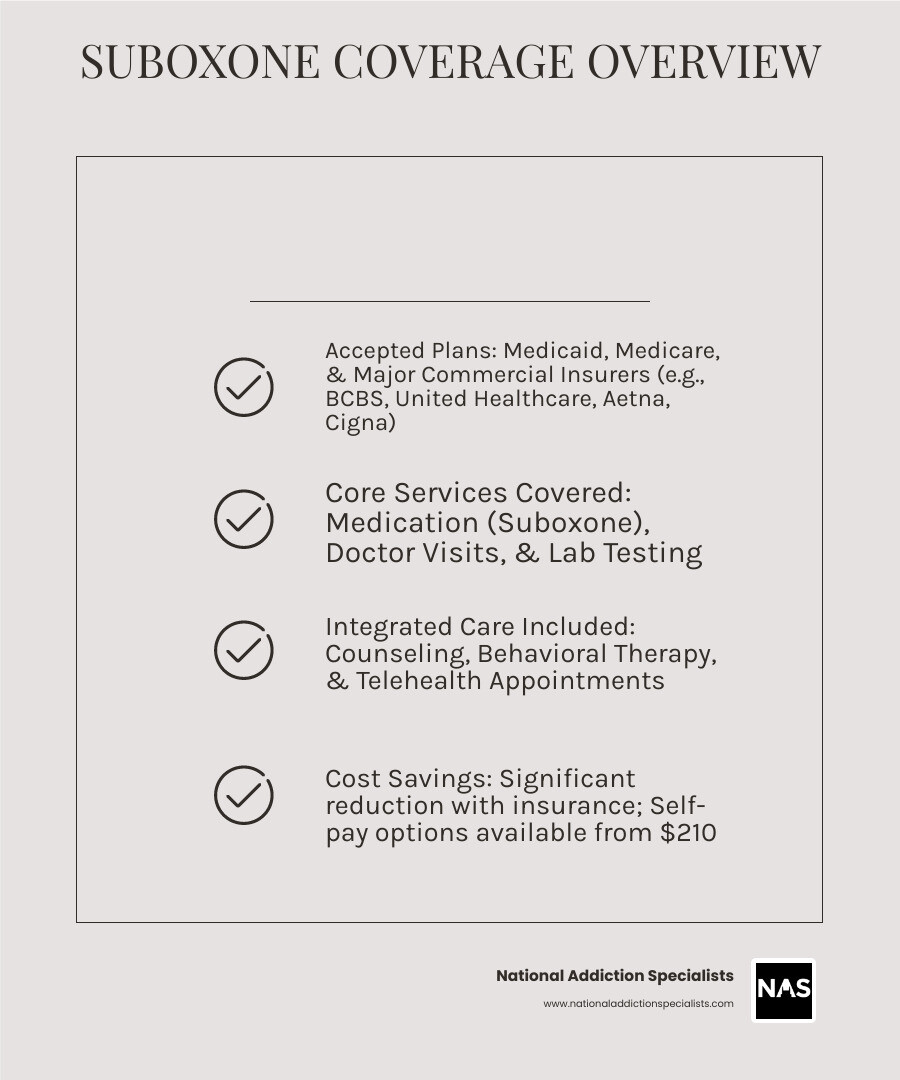
Many people worry about cost, but both Medicaid and Medicare cover Suboxone treatment as part of behavioral health benefits. Coverage typically includes the medication itself, doctor visits, counseling sessions, lab testing, and even telehealth appointments. Some clinics offer self-pay programs starting at $210 for those without insurance.
As Chad Elkin, founder and Medical Director of National Addiction Specialists, I’ve spent over a decade helping patients steer suboxone clinics near me that accept insurance through our telehealth services in Tennessee and Virginia. My goal is to help you understand your options so you can access the care you deserve without financial barriers holding you back.
Important suboxone clinics near me that accept insurance terms:
Understanding Suboxone and Medication-Assisted Treatment (MAT)
When we talk about effective treatment for opioid use disorder (OUD), Suboxone often comes up, and for good reason. It’s a cornerstone of Medication-Assisted Treatment (MAT), an evidence-based approach that combines medication with counseling and behavioral therapies. This comprehensive strategy has been shown to significantly improve long-term recovery outcomes.
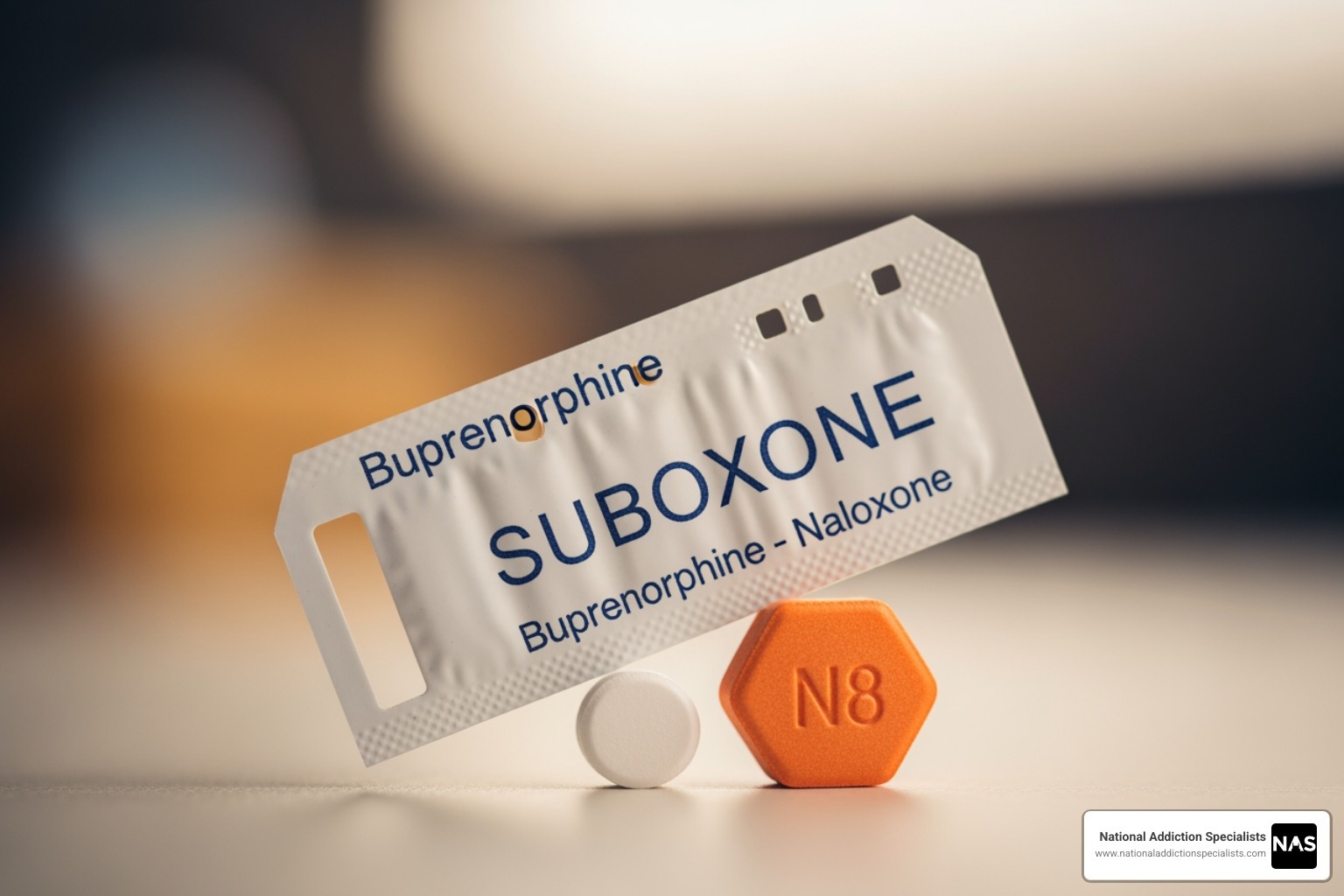
Suboxone is a prescription medication that contains two active ingredients: buprenorphine and naloxone. Think of it as a dynamic duo working together to support your recovery.
What is Suboxone and how does it work?
Suboxone’s effectiveness stems from its two main components:
- Buprenorphine: This is a partial opioid agonist. What does “partial” mean? It means buprenorphine activates the opioid receptors in your brain, but only partially. This activation is enough to reduce cravings and withdrawal symptoms without producing the intense “high” associated with full opioid agonists like heroin or prescription painkillers. This partial activation also has a “ceiling effect,” meaning that after a certain dose, taking more buprenorphine won’t increase its opioid effects, which reduces the risk of misuse and overdose. It helps normalize brain chemistry, allowing you to focus on your recovery without the constant battle against cravings.
- Naloxone: This is an opioid antagonist, meaning it blocks opioid receptors. It’s included in Suboxone as a safeguard. If someone tries to inject Suboxone to get high, the naloxone becomes active and can cause immediate and unpleasant withdrawal symptoms. This mechanism helps deter misuse and keeps the medication safer.
Together, buprenorphine and naloxone help to stabilize your brain chemistry, reduce the physical discomfort of withdrawal, and diminish the intense cravings that often lead to relapse. This allows individuals to engage more fully in counseling and rebuild their lives. The Consolidated Appropriations Act, 2023, eliminated the waiver previously required for practitioners to prescribe buprenorphine, meaning more healthcare providers can now offer this vital treatment, expanding access for those who need it.
For a deeper dive into how this treatment works, check out our Suboxone Treatment FAQ.
What are the benefits and potential side effects of Suboxone?
The benefits of using Suboxone for opioid addiction are substantial and well-documented:
- Reduced Cravings and Withdrawal: Suboxone effectively alleviates the physical agony of withdrawal and the psychological pull of cravings, making it easier to maintain sobriety.
- Lower Overdose Risk: By stabilizing opioid receptors, Suboxone significantly lowers the risk of overdose from illicit opioids.
- Increased Treatment Retention: Patients on Suboxone are more likely to stay in treatment programs, leading to better long-term outcomes.
- Improved Stability: With the physical and psychological burden of addiction lessened, individuals can focus on rebuilding their lives, improving relationships, and returning to work or school.
- Reduced Illicit Opioid Use: Studies show that Suboxone, when combined with counseling, drastically reduces the use of illegal opioids.
While Suboxone is a life-saving medication, like all medications, it can have side effects. Most are mild and temporary as your body adjusts to the medication. Common side effects include:
- Nausea
- Headache
- Constipation
- Sweating
- Insomnia
- Mouth numbness or pain
It’s crucial to communicate openly with your healthcare provider about any side effects you experience. We’ll help you manage them or adjust your treatment plan if necessary. You should contact a doctor immediately if you experience severe symptoms such as difficulty breathing, severe dizziness, or confusion.
For more comprehensive information on treatment options, explore our Suboxone Treatment Programs.
How to Find Suboxone Clinics Near Me That Accept Insurance
Finding the right suboxone clinics near me that accept insurance can feel like a quest, but we’re here to guide you. The key is a systematic approach to research and verification. Our goal is to make this process as smooth as possible so you can focus on your recovery.

Using Online Tools to Find Suboxone Clinics Near Me That Accept Insurance
Several valuable online resources can help you locate a Suboxone clinic that fits your needs:
-
SAMHSA’s Buprenorphine Treatment Practitioner Locator: The Substance Abuse and Mental Health Services Administration (SAMHSA) provides an invaluable tool to find practitioners authorized to treat opioid dependency with buprenorphine. You can search by state, city, or zip code to find providers in Tennessee or Virginia. Thanks to the Consolidated Appropriations Act, 2023, all practitioners with DEA Schedules II-V on their DEA Registration can now prescribe buprenorphine for OUD, making it easier to find a provider.
Buprenorphine Treatment Practitioner Locator from SAMHSA -
Your Insurance Provider’s Directory: Most insurance companies have an online directory of in-network providers. Log in to your insurer’s website or app and search for “Suboxone,” “buprenorphine,” “Medication-Assisted Treatment,” or “addiction treatment.” This is often the most reliable way to find providers specifically covered by your plan.
-
Google Maps Search: A simple search for “Suboxone clinics near me that accept insurance” or “Suboxone doctors Tennessee insurance” can yield local results. Pay attention to the clinic’s website for details on accepted insurance plans and services. Reading reviews can also give you insight into other patients’ experiences.
-
Specialized Online Directories: Websites dedicated to addiction treatment often have search filters for insurance acceptance and location.
For more local support, explore our page on Addiction Specialists Near Me.
Key Steps to Verify Your Insurance Coverage
Once you’ve identified potential clinics, verifying your insurance coverage is the next crucial step. Don’t assume a clinic accepts your plan just because they say “we accept insurance.” Insurance plans vary widely, even within the same provider. Here’s our recommended checklist:
- Call your insurance provider’s member services number: This number is usually found on the back of your insurance card. Be prepared to provide your member ID.
- Ask about coverage for “Medication-Assisted Treatment” and “buprenorphine”: Specifically inquire about Suboxone or other buprenorphine-containing medications. Ask about your mental health and substance use disorder benefits.
- Inquire about in-network vs. out-of-network providers: Understand what your plan covers for both. In-network providers typically result in lower out-of-pocket costs.
- Contact the clinic directly to confirm they accept your specific plan: Even if your insurance provider lists them, it’s always best to double-check with the clinic. Provide them with your insurance details so they can verify coverage.
- Ask about prior authorization requirements: Some plans require prior authorization for Suboxone treatment or specific medications. Understanding this upfront can prevent delays in starting treatment.
Navigating Insurance Coverage for Suboxone Treatment
Understanding the intricacies of health insurance can feel like deciphering an ancient text, but it’s a vital step in accessing affordable Suboxone treatment. We want to empower you with the knowledge to steer this system effectively.
What Insurance Plans Do Suboxone Clinics Near Me That Accept Insurance Typically Cover?
The good news is that due to increased awareness and federal mandates, most suboxone clinics near me that accept insurance are now in-network with a wide range of plans. Expanding access to MAT services has been a national priority for the Centers for Medicare & Medicaid Services (CMS) to reduce overdose deaths and improve recovery outcomes. Integrating MAT into public health coverage saves lives and improves treatment retention rates.
For our services in Tennessee and Virginia, we typically see acceptance for:
- Medicaid: This state-federal program for low-income individuals and families is a crucial payer for Suboxone treatment. In Tennessee, for example, TennCare Medicaid (including Wellpoint, AmeriGroup, BlueCare, and United Healthcare Medicaid) often covers treatment at zero cost to the patient. We proudly accept Medicaid to ensure broad access to care.
- Medicare: This federal health insurance program for people 65 or older, and younger people with certain disabilities, also covers Suboxone treatment.
- Commercial Insurance: Most private insurance plans, such as Blue Cross Blue Shield, United Healthcare, Ambetter, Humana, and Anthem, provide coverage for MAT, including Suboxone. Coverage details will vary by plan, so verification is always essential.
If you’re wondering about the specifics, our guide “Does Insurance Cover Suboxone Treatment?” offers more detailed insights. For those with Medicaid, specifically, you might find our page on Suboxone Doctors Near Me That Accept Medicaid particularly helpful.
Understanding Potential Costs and Co-Pays
Even with insurance, you might still encounter some out-of-pocket costs. These commonly include:
- Deductibles: The amount you must pay out of pocket before your insurance starts to cover costs.
- Co-payments (Co-pays): A fixed amount you pay for a covered healthcare service after you’ve paid your deductible.
- Co-insurance: A percentage of the cost of a covered healthcare service that you pay after you’ve paid your deductible. For example, if your co-insurance is 20%, and your bill is $100 after your deductible, you’d pay $20.
- Medication Costs: While your insurance might cover the doctor’s visit, the Suboxone prescription itself may have a separate co-pay or be subject to your pharmacy benefits. It’s important to check your prescription drug coverage.
If insurance doesn’t cover everything, or if you don’t have insurance, don’t lose hope. Many clinics, including ours, offer:
- Self-pay options: Some programs, especially for telemedicine, can start at surprisingly affordable rates, such as $210.
- Payment plans: To help manage costs over time.
- Sliding scale fees: Based on your income and ability to pay.
We believe access to evidence-based treatment should never depend on a person’s ability to pay. Our team is dedicated to working with you to explore all options and help you procure the coverage you need. For more information on financial aspects, visit our Insurance and Pricing page.
Your Suboxone Treatment Journey: What to Expect
Starting on Suboxone treatment is a brave and significant step towards reclaiming your life. Knowing what to expect can help ease any anxieties and prepare you for a successful journey. Our approach emphasizes personalized care, combining medication with essential counseling and support.
The First Appointment and Induction Phase
Your first appointment is a crucial step where we get to know you and your unique needs. This initial visit, whether in-person or via telemedicine, typically involves:
- Comprehensive Medical History Review: We’ll discuss your health background, substance use history, and any co-occurring mental health conditions.
- Physical Assessment: To ensure Suboxone is medically appropriate and safe for you.
- Urine Drug Screen: To confirm opioid use and rule out other substances.
- Discussion of Treatment Goals: We’ll work together to establish what you hope to achieve through treatment.
Following the initial assessment, you’ll enter the induction phase. This is when you’ll take your first dose of Suboxone under medical supervision. The goal of induction is to safely transition you from opioid use to Suboxone, managing withdrawal symptoms effectively. You must be in a state of moderate opioid withdrawal before taking your first dose of Suboxone to prevent precipitated withdrawal (a sudden, severe worsening of withdrawal symptoms).
Once induction is complete, you move into the stabilization phase. During this period, we’ll work to find the optimal Suboxone dose that effectively reduces your cravings and withdrawal symptoms without causing unwanted side effects. Regular follow-up appointments, often weekly at first, are common during this phase.
For more insights on finding a provider, visit our Suboxone Dr Near Me page.
The Role of Counseling and Long-Term Support
Medication-Assisted Treatment is most effective when it’s just that – assisted by more than just medication. Counseling and behavioral therapy are indispensable components of a successful Suboxone treatment journey. Suboxone has been shown to improve long-term recovery outcomes when combined with counseling and behavioral support.
At National Addiction Specialists, we integrate various therapeutic approaches to support your recovery:
- Individual Counseling: One-on-one sessions with a therapist help you explore the underlying causes of your addiction, identify triggers, develop healthy coping mechanisms, and address any co-occurring mental health issues like depression or anxiety. These personalized sessions are vital for self-findy and growth.
- Group Therapy: Participating in group sessions provides a supportive community where you can share experiences, gain insights from peers, and practice new communication and social skills. This peer support can be invaluable, reminding you that you’re not alone.
- Behavioral Therapies: Techniques like Cognitive Behavioral Therapy (CBT) and Motivational Interviewing help you change negative thought patterns, develop problem-solving skills, and strengthen your motivation for recovery.
The duration of Suboxone treatment varies for each person. Some may benefit from it for a few months, while others may require longer-term care, even years. The goal is to provide enough time for you to achieve stability, work through therapeutic issues, and build a strong foundation for long-term recovery. We’ll work with you to determine the best plan for your unique journey.
Ongoing support, including aftercare planning and connection to community resources, is crucial for relapse prevention and maintaining lasting sobriety. We’re here to walk alongside you every step of the way.
Make an Appointment to Treat Addiction
Please don’t hesitate. Make an appointment today.
https://www.nationaladdictionspecialists.com/new-patient-packet/
The Rise of Online Suboxone Clinics and Telehealth
The landscape of addiction treatment has evolved significantly, with online Suboxone clinics and telehealth emerging as game-changers. This shift has made treatment more accessible, convenient, and private for many individuals seeking help, especially in states like Tennessee and Virginia where we operate.
Can I Get Suboxone Treatment Online?
Absolutely! Thanks to advancements in technology and recent regulatory changes, receiving Suboxone treatment online through telehealth is not only possible but often preferred by patients. The Consolidated Appropriations Act, 2023, eliminated the DATA-2000 waiver for buprenorphine prescribing, further streamlining the process for practitioners to offer this care.
Here’s how online Suboxone treatment typically works:
- Telehealth Appointments: You’ll have virtual consultations with your doctor and therapist via secure video conferencing from the comfort and privacy of your home. This eliminates the need for travel, childcare, or taking time off work.
- Virtual Consultations: Our expert providers conduct thorough assessments, monitor your progress, and adjust your treatment plan, all through confidential online meetings.
- E-Prescribing: Your Suboxone prescription can be electronically sent directly to your preferred pharmacy, or in some cases, even delivered to your door, making medication access incredibly convenient.
Online treatment offers immense benefits, including flexibility and anonymity, which can be particularly helpful for individuals who are shy or uncomfortable in traditional clinic settings. The quality of telemedicine video calls is now exceptional, provided you have a high-speed internet connection.
To learn more about this convenient option, check out our Online Suboxone Clinic and find how you can get Same Day Suboxone Treatment Online.
Finding Online Suboxone Doctors That Take Insurance
Just like with in-person clinics, it’s crucial to find online Suboxone doctors that accept your insurance. The process for verifying coverage for telehealth services is similar to traditional care, but with a few nuances.
When searching for online suboxone clinics near me that accept insurance:
- Verify Insurance for Telehealth: Confirm with your insurance provider that they cover telemedicine for Suboxone treatment. Most major plans, including Medicaid, Medicare, and commercial insurance (Blue Cross Blue Shield, United Healthcare, Ambetter), do.
- In-Network Online Providers: Ensure the online clinic or provider is in-network with your specific insurance plan to minimize out-of-pocket costs.
- State-Specific Rules: Be aware of any state-specific regulations. For instance, in Tennessee, only BeSMART-certified Suboxone clinics can provide TennCare Medicaid patients with online addiction treatment. This ensures high-quality, regulated care. We are proud to offer services that meet these state requirements in Tennessee and Virginia.
The convenience of online Suboxone treatment, combined with insurance coverage, removes significant barriers to care. It allows you to receive personalized, evidence-based treatment from expert providers, all while maintaining your privacy and fitting treatment into your daily life.
For more details on online providers, explore our page on Online Suboxone Doctors That Take Insurance.
Conclusion: Take the First Step Towards Recovery
Finding suboxone clinics near me that accept insurance is a critical step on your journey to recovery from opioid use disorder. We understand that navigating treatment options and insurance coverage can be daunting, but as we’ve explored, accessible and affordable care is more within reach than ever before.
Suboxone, as part of Medication-Assisted Treatment, offers a powerful tool to reduce cravings, prevent withdrawal, and lower the risk of overdose. When combined with counseling and behavioral therapy, it significantly improves your chances for long-term sobriety and a stable, fulfilling life.
Whether you prefer in-person care or the convenience and privacy of telehealth, options are available. With major insurance plans like Medicaid, Medicare, and various commercial plans increasingly covering Suboxone treatment, financial barriers are diminishing. We, at National Addiction Specialists, are committed to providing convenient, confidential, and expert telemedicine-based Suboxone treatment in Tennessee and Virginia.
Your recovery journey is unique, but you don’t have to walk it alone. Take control of your life and accept the hope that effective treatment offers. The first step is often the hardest, but it’s also the most empowering.
Find an Online Suboxone Doctor Near You
This article was medically reviewed by:
Chad Elkin, MD, DFASAM is a board-certified addiction medicine physician, founder, and Chief Medical Officer of National Addiction Specialists, dedicated to treating substance use disorders. A Distinguished Fellow of the American Society of Addiction Medicine (ASAM), Dr Elkin currently serves as President of the Tennessee Society of Addiction Medicine (TNSAM) and has held various leadership roles within the organization. Dr Elkin chairs ASAM’s Health Technology Subcommittee and is an active member of its Practice Management and Regulatory Affairs Committee, State Advocacy and Legislative Affairs Committee, and other committees. He also serves on the planning committee for the Vanderbilt Mid-South Addiction Conference. Committed to advancing evidence-based policy, Dr Elkin is Chairman of the Tennessee Association of Alcohol, Drug, & Other Addiction Services (TAADAS) Addiction Medicine Council, which collaborates with the TN Department of Mental Health & Substance Abuse Services (TDMHSAS). He has contributed to numerous local, state, and national task forces, helping develop professional guidelines, policies, and laws that align with best practices in addiction medicine. His work focuses on reducing addiction-related harm, combating stigma, and ensuring access to effective treatment.Passionate about the field of addiction medicine, he remains dedicated to shaping policy and enhancing patient care.
Suboxone® and Subutex® are a registered trademark of Indivior UK Limited. Any mention and reference of Suboxone® and Subutex® in this website is for informational purposes only and is not an endorsement or sponsorship by Indivior UK Limited.