
Finding the Right Opiate Withdrawal Medicine for You
Why Finding the Right Opiate Withdrawal Medicine Matters
The right opiate withdrawal medicine can make the difference between a manageable recovery and an overwhelming experience that leads back to use. Here’s a quick look at your main options:
| Medication | Type | Primary Use | Key Benefit |
|---|---|---|---|
| Buprenorphine (Suboxone) | Opioid agonist | Withdrawal + maintenance | Reduces cravings, lowers overdose risk |
| Methadone | Opioid agonist | Withdrawal + maintenance | Long-acting, well-studied |
| Clonidine | Non-opioid (alpha-2 agonist) | Symptom relief | No opioid dependency risk |
| Lofexidine (Lucemyra) | Non-opioid (alpha-2 agonist) | Symptom relief | FDA-approved, fewer blood pressure effects than clonidine |
| Mirtazapine | Non-opioid (antidepressant) | Symptom relief | May address multiple symptoms at once |
Withdrawal from opioids is often described as a severe flu — deeply uncomfortable, but not usually life-threatening for most adults. Still, the physical and emotional intensity of withdrawal is one of the biggest reasons people return to opioid use before getting the help they need.
That’s why choosing the right medication — matched to your specific drug use history, health status, and recovery goals — is so important.
Not all medications work the same way for every person. Some treat withdrawal symptoms directly. Others also address the underlying opioid use disorder (OUD) long-term. Understanding the difference can help you and your doctor make a smarter, safer plan.
I’m Chad Elkin, MD, founder and Medical Director of National Addiction Specialists, and I’m board-certified in both Addiction Medicine and Internal Medicine — with years of clinical experience helping patients find the right opiate withdrawal medicine for their situation. In the sections below, I’ll walk you through each major option so you can have an informed conversation with your care team.
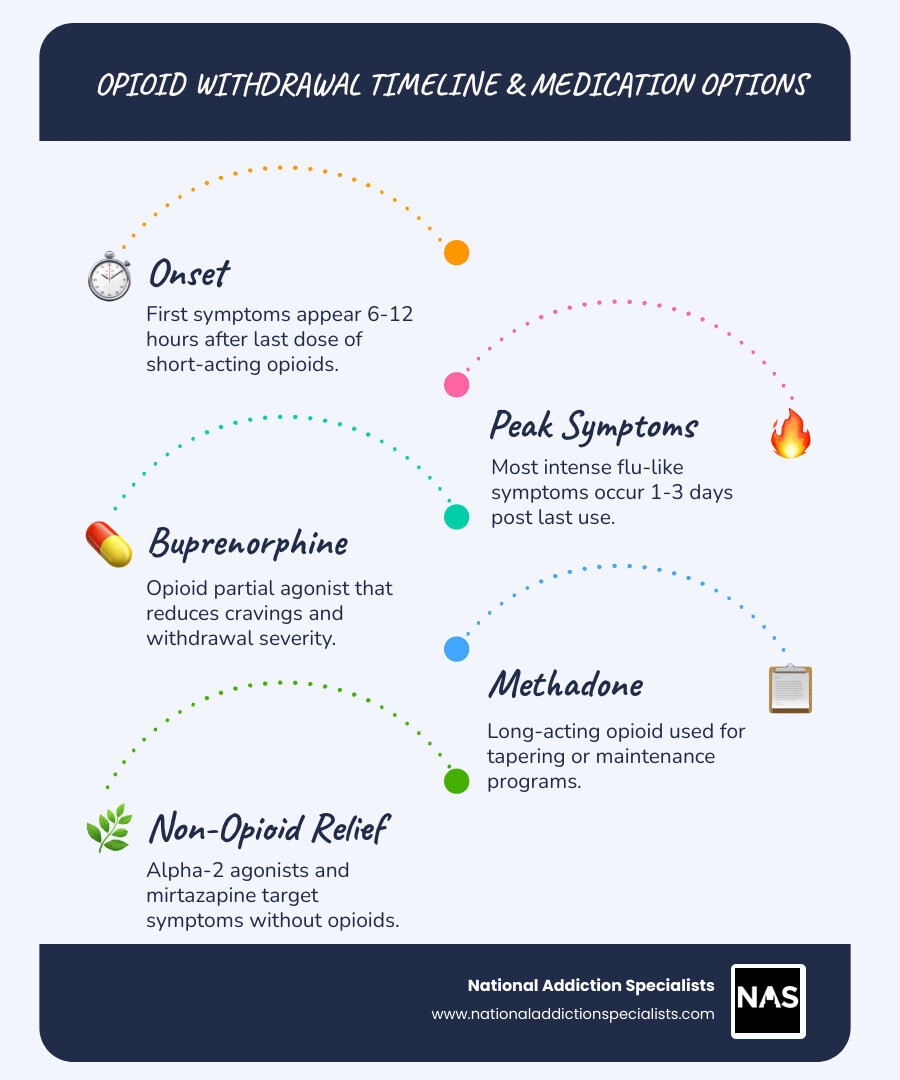
Opiate withdrawal medicine basics:
Understanding Opioid Withdrawal: Symptoms and Timelines
To choose the right opiate withdrawal medicine, we must first look at what happens in the body when opioids are reduced or stopped. Opioids alter brain chemistry by binding to specific receptors. Over time, the body adapts, leading to two distinct physiological changes:
- Drug Tolerance: The brain and body become less sensitive to the drug, requiring higher doses to achieve the same effect.
- Physical Dependence: The body adapts to the constant presence of the substance. If you stop taking it suddenly, your system goes into shock, resulting in drug withdrawal symptoms.
The timeline and severity of these symptoms depend heavily on the type of opioid used:
- Short-acting opioids (e.g., heroin, immediate-release prescription painkillers): According to clinical data, physical symptoms of heroin withdrawal typically commence 6 to 12 hours after the last use. These symptoms peak within 1 to 3 days and generally last for approximately 5 days.
- Long-acting opioids (e.g., methadone, extended-release pain medications): Withdrawal has a slower onset, often starting 30 hours or more after the last exposure, but the symptoms have a much longer duration and can drag on for several weeks.
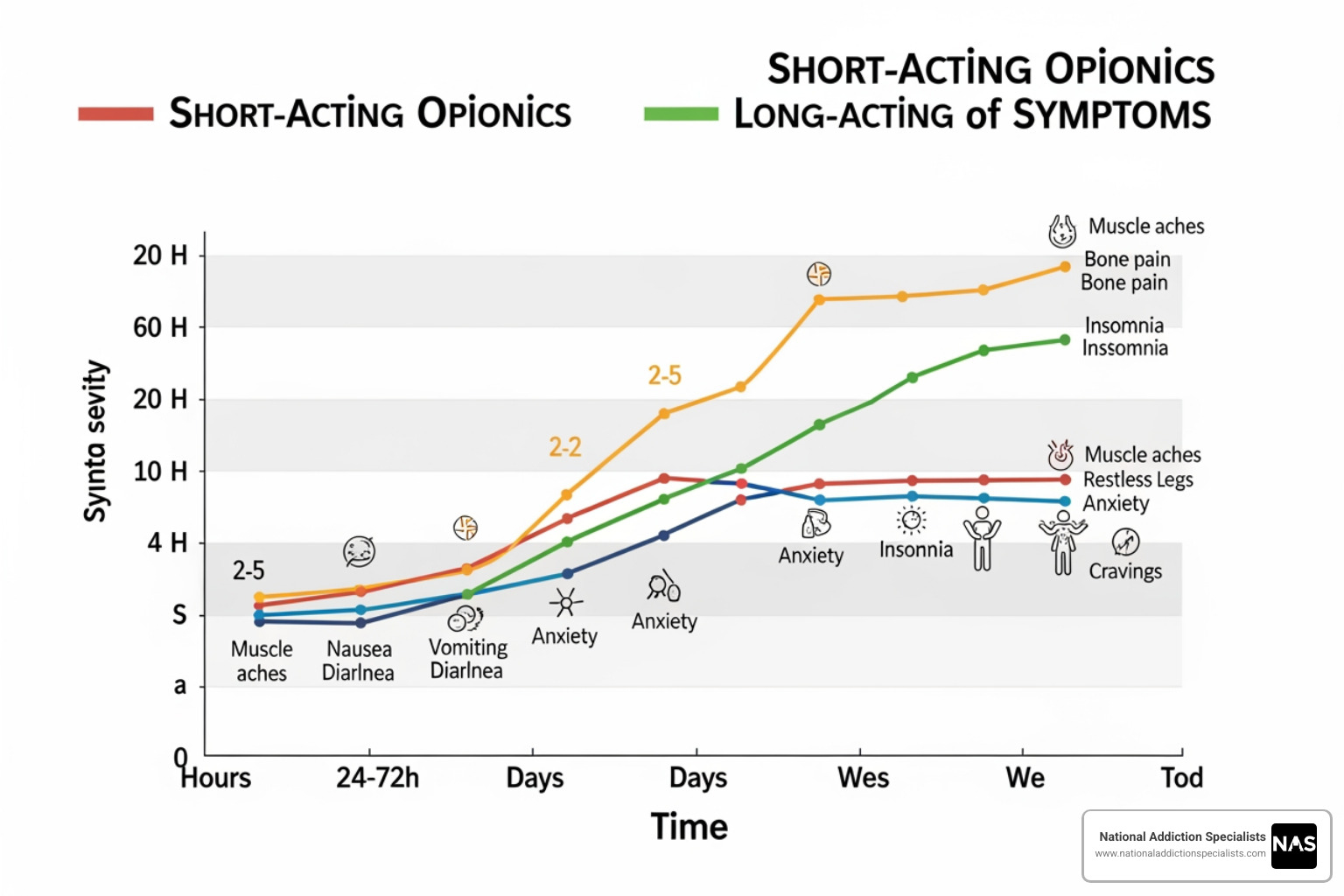
Clinical guidelines emphasize using validated tools to measure these symptoms objectively. The most common tool is the Clinical Opiate Withdrawal Scale (COWS). It helps medical providers rate the severity of eleven common symptoms, including:
- Early symptoms: Agitation, anxiety, muscle aches, increased tearing (lacrimation), runny nose (rhinorrhea), sweating, yawning, and insomnia.
- Late symptoms: Abdominal cramping, diarrhea, dilated pupils, goosebumps (piloerection), nausea, and vomiting.
For a comprehensive breakdown of what to expect during this period, you can read more about Opioid Withdrawal Symptoms, Timeline & Detox Treatment and review the medical details in the Opiate and opioid withdrawal: MedlinePlus Medical Encyclopedia. Understanding these patterns is essential for selecting a medication that targets the right symptoms at the right time, as detailed in this Review article: Effective management of opioid withdrawal symptoms.
Choosing the Best Opiate Withdrawal Medicine: Opioid vs. Non-Opioid Options
When managing withdrawal, we have two primary pharmacological pathways: using opioid agonists (medications that act on the same brain receptors as the misused drug) or non-opioid medications (which target specific symptoms like high blood pressure, anxiety, or nausea).
While detoxification clears the immediate toxins from your system, it is rarely enough on its own. Evidence-based guidelines show that standalone detox has incredibly high relapse rates. True recovery requires transitioning from acute symptom management to a long-term relapse prevention strategy.
Buprenorphine: A Leading Opiate Withdrawal Medicine
Buprenorphine is a partial opioid agonist. It binds to the same mu-opioid receptors in the brain as heroin or prescription pain pills, but it activates them only partially. This “ceiling effect” means it satisfies cravings and eliminates physical withdrawal symptoms without producing a powerful, dangerous high.
When using buprenorphine as an opiate withdrawal medicine, timing is everything. Because buprenorphine binds so tightly to opioid receptors, it will knock any remaining full opioids off those receptors. If buprenorphine is taken while full opioids are still active in the system, it will cause an immediate, severe onset of symptoms known as precipitated withdrawal.
To prevent this, we use the COWS scale. Buprenorphine should only be initiated when there is clear, objective evidence of moderate withdrawal (such as dilated pupils, sweating, or goosebumps) and a COWS score of 6 or more.
Buprenorphine Initiation Protocol (Outpatient Example):
- Step 1: Wait for clear objective withdrawal signs (COWS score of 6+).
- Step 2: Administer initial dose (typically 2–4 mg of buprenorphine).
- Step 3: Monitor for 1–2 hours. If symptoms persist without worsening, additional small doses may be given.
Buprenorphine is highly effective both for short-term withdrawal management and long-term maintenance treatment. To learn more about how this medication works, see our guide on Buprenorphine and explore the question, Does Suboxone Help with Withdrawal Symptoms? If you are transitioning away from other treatments, you may also find our resource on Suboxone Withdrawal Treatment helpful.
Methadone Tapering and Maintenance
Methadone is a long-acting full opioid agonist. It has been used for decades to treat opioid dependence. Because it is a full agonist, it completely satisfies the brain’s opioid receptors, preventing withdrawal and cravings.
For acute withdrawal, a medical provider might design a methadone taper, starting with a dose of 20 to 30 mg to suppress acute symptoms, and then gradually lowering the dose over several days or weeks. However, methadone is more commonly used as a long-term maintenance medication.
Because methadone is a highly regulated Schedule II controlled substance, federal law dictates that it can only be dispensed for addiction treatment through certified opioid treatment programs (OTPs) as stipulated in 42 CFR 8.12.
Methadone carries significant safety warnings. It has a long half-life, meaning it builds up in the body over time. The peak respiratory depressant effect of methadone occurs later and lasts longer than its pain-relieving effects, raising the risk of accidental overdose, especially when starting treatment or increasing doses. It also carries a boxed warning for QT prolongation, a serious heart rhythm abnormality.
Additionally, methadone is metabolized by cytochrome P450 enzymes in the liver. Concomitant use with CYP3A4, 2B6, 2C19, 2C9, or 2D6 inhibitors can prevent the body from breaking down methadone, leading to a dangerous build-up and potential overdose. Conversely, stopping a CYP inducer can have the same effect.
For complete safety details, refer to the DailyMed – METHADOSE- methadone hydrochloride concentrate METHADOSE SUGAR-FREE- methadone hydrochloride concentrate and the official Methadone: Package Insert / Prescribing Information / MOA. You can also review the FDA’s strict safety warnings regarding METHADOSE Boxed Warnings and Prescribing Details.
Alpha-2 Adrenergic Agonists: Non-Opioid Opiate Withdrawal Medicine
If you prefer a non-opioid approach, or if opioid agonists are not appropriate for you, alpha-2 adrenergic agonists are an excellent option. When you stop using opioids, your central nervous system goes into overdrive, producing a massive surge of adrenaline. This surge causes many of the physical symptoms of withdrawal, such as a racing heart, high blood pressure, sweating, chills, and intense anxiety.
Alpha-2 adrenergic agonists work by turning down the volume on this adrenaline surge.
- Clonidine: Historically used to treat high blood pressure, clonidine is widely used off-label to ease the physical symptoms of opioid withdrawal. It is highly effective at reducing sweating, hot and cold flashes, and restlessness. To see how this medication fits into a recovery plan, read How Clonidine Helps You Kick Opiates for Good.
- Lofexidine (Lucemyra): Approved by the FDA in 2018, lofexidine is the first non-opioid medication specifically indicated for the mitigation of opioid withdrawal symptoms to facilitate abrupt opioid discontinuation in adults. Clinical studies show that while withdrawal symptoms occur earlier with alpha-2 agonists compared to a slow methadone taper, treatment completion rates are very similar. Crucially, lofexidine has a much lower impact on blood pressure than clonidine, making it a safer option for many outpatients.
Lofexidine is typically taken as three 0.18 mg tablets orally 4 times daily at 5- to 6-hour intervals for up to 14 days, followed by a gradual dose reduction over 2 to 4 days to prevent a sudden spike in blood pressure. For more, consult the Label: LOFEXIDINE HYDROCHLORIDE tablet, film coated and the FULL PRESCRIBING INFORMATION: CONTENTS*.
Mirtazapine: A Novel Single-Agent Strategy
Traditionally, non-opioid withdrawal management relies on “polypharmacy” — prescribing a cocktail of different medications to target individual symptoms. A patient might take loperamide for diarrhea, ondansetron for nausea, hydroxyzine for anxiety, and a sleep aid for insomnia.
While effective, polypharmacy has major drawbacks, including an increased risk of drug-drug interactions, high prescription costs, and confusion that can lead to missed doses or accidental relapse.
An emerging alternative is mirtazapine, a noradrenergic and specific serotonergic antidepressant (NaSSA). Researchers are studying mirtazapine as a potential “one-stop” strategy because its unique pharmacological profile targets multiple withdrawal symptoms simultaneously:
- Nausea and Vomiting: It blocks 5-HT3 serotonin receptors (the same mechanism used by anti-nausea drugs like ondansetron).
- Insomnia and Anxiety: Its strong antihistamine and sedative properties help restore sleep and calm the nervous system.
- Diarrhea and Itching: It helps regulate gut motility and blocks histamine receptors that cause opioid-induced itching (pruritus).
By replacing multiple pills with a single daily medication, mirtazapine may simplify the detox process and improve treatment adherence. For a deeper look at the clinical evidence, read Mirtazapine: A One-Stop Strategy for Treatment of Opioid Withdrawal Symptoms – PMC.
Safety Considerations, Contraindications, and Special Populations
Every opiate withdrawal medicine carries unique risks that require careful medical supervision.

- Cardiovascular Risks: Both methadone and lofexidine can prolong the QT interval, which can lead to life-threatening heart arrhythmias. Patients with pre-existing heart conditions, electrolyte imbalances, or those taking other QT-prolonging drugs require close ECG monitoring. Clonidine and lofexidine can also cause severe low blood pressure (hypotension) and a slow heart rate (bradycardia).
- Central Nervous System (CNS) Depression: Combining opioid agonists like buprenorphine or methadone with other CNS depressants, such as alcohol, benzodiazepines, or certain sleep medications, can cause profound sedation, respiratory depression, coma, and death.
- Special Populations: Managing withdrawal during pregnancy requires extreme care. Abrupt opioid withdrawal is generally not recommended for pregnant women because the physical stress of withdrawal can cause uterine contractions, miscarriage, or premature delivery. Instead, the clinical gold standard is stable opioid maintenance therapy using methadone or buprenorphine. This prevents withdrawal cycles, protects the fetus, and allows for managed treatment of neonatal opioid withdrawal syndrome (NOWS) after birth.
For those considering managing their symptoms outside of a hospital, our guide on Detox at Home: Understanding Outpatient Opioid Withdrawal outlines key safety protocols, and you can also learn about managing specific symptoms like insomnia in our article on Gabapentin for Suboxone Withdrawal and Sleep.
Frequently Asked Questions About Opiate Withdrawal Medicine
Is opioid withdrawal life-threatening?
On its own, opioid withdrawal is rarely life-threatening for healthy adults, though it is incredibly uncomfortable. However, severe complications can arise. Constant vomiting and diarrhea can lead to extreme dehydration and electrolyte imbalances, which can cause cardiovascular complications if left untreated. This is why supportive care, adequate hydration, and clinical monitoring are so important.
Can pregnant women safely undergo opioid withdrawal?
No, clinical guidelines generally advise pregnant women against undergoing acute opioid withdrawal. The physical fluctuations of withdrawal pose significant risks to the pregnancy, including miscarriage and premature delivery. Instead, stabilizing the mother on a long-acting opioid agonist like methadone or buprenorphine is the safest, most effective approach for both mother and child.
What is the difference between withdrawal management and long-term MAT?
Withdrawal management (detox) is a short-term intervention designed to help you safely and comfortably clear opioids from your body. It is only the first step. Long-term Medication-Assisted Treatment (MAT) involves staying on a maintenance medication (like buprenorphine or methadone) alongside counseling. MAT is associated with up to a 50% reduction in opioid overdose and death, helping you rebuild your life without constant cravings.
Conclusion
Finding the right opiate withdrawal medicine is a deeply personal process that depends on your health, your history, and your goals. Whether you choose an opioid agonist like buprenorphine to manage cravings long-term, or a non-opioid option like lofexidine to ease physical symptoms, the most important step is partnering with a medical team that understands your needs.
At National Addiction Specialists, we provide telemedicine-based Suboxone treatment, allowing you to access personalized, expert recovery plans from the comfort and privacy of your own home. We serve patients across Tennessee (including Brentwood) and Virginia (including Virginia Beach), offering convenient, confidential care. We believe that financial barriers should not stand in the way of recovery, which is why we accept both Medicaid and Medicare.
If you are ready to take the first step toward a safer, healthier future, read More info about outpatient services and connect with our compassionate team today.
Make an Appointment to Treat Addiction Please don’t hesitate. Make an appointment today.
This article was medically reviewed by: Chad Elkin, MD, DFASAM is a board-certified addiction medicine physician, founder, and Chief Medical Officer of National Addiction Specialists, dedicated to treating substance use disorders. A Distinguished Fellow of the American Society of Addiction Medicine (ASAM), Dr Elkin currently serves as President of the Tennessee Society of Addiction Medicine (TNSAM) and has held various leadership roles within the organization. Dr Elkin chairs ASAM’s Health Technology Subcommittee and is an active member of its Practice Management and Regulatory Affairs Committee, State Advocacy and Legislative Affairs Committee, and other committees. He also serves on the planning committee for the Vanderbilt Mid-South Addiction Conference. Committed to advancing evidence-based policy, Dr Elkin is Chairman of the Tennessee Association of Alcohol, Drug, & Other Addiction Services (TAADAS) Addiction Medicine Council, which collaborates with the TN Department of Mental Health & Substance Abuse Services (TDMHSAS). He has contributed to numerous local, state, and national task forces, helping develop professional guidelines, policies, and laws that align with best practices in addiction medicine. His work focuses on reducing addiction-related harm, combating stigma, and ensuring access to effective treatment. Passionate about the field of addiction medicine, he remains dedicated to shaping policy and enhancing patient care.
Suboxone® and Subutex® are a registered trademark of Indivior UK Limited. Any mention and reference of Suboxone® and Subutex® in this website is for informational purposes only and is not an endorsement or sponsorship by Indivior UK Limited.