A Spoonful of Suboxone Helps the Cravings Go Down
What Is a Suboxone Sublingual Tablet and How Does It Work?
Suboxone sublingual tablet is a prescription medication used to treat opioid use disorder (OUD). It combines two active ingredients — buprenorphine and naloxone — and is placed under the tongue to dissolve.
Quick facts at a glance:
| Feature | Details |
|---|---|
| Drug type | Partial opioid agonist + opioid antagonist |
| Active ingredients | Buprenorphine + naloxone (4:1 ratio) |
| Available strengths | 2 mg/0.5 mg and 8 mg/2 mg |
| How to take it | Dissolve under the tongue — do not chew or swallow |
| Main use | Reduces opioid cravings and withdrawal symptoms |
| Target maintenance dose | 16 mg/4 mg once daily |
| Controlled substance | Schedule III |
Opioid use disorder affects millions of people. Getting help can feel overwhelming — especially when you’re juggling work, family, and the fear of being judged. Suboxone sublingual tablets are one of the most widely used and clinically supported tools for recovery. They work by easing withdrawal symptoms and reducing cravings, without producing the intense “high” of full opioid agonists like heroin or oxycodone.
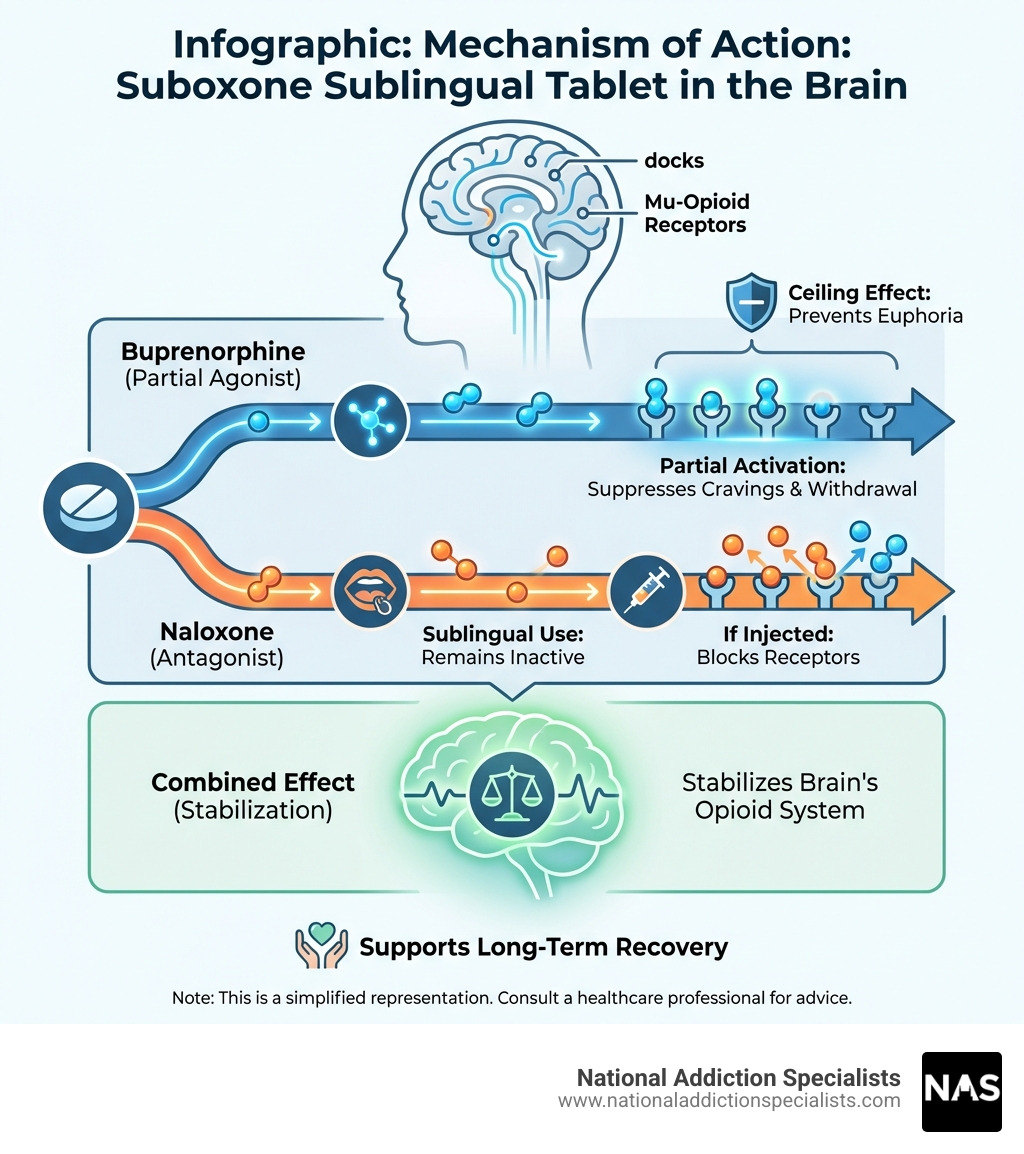
The key is how the medication is designed. Buprenorphine is a partial opioid agonist — it activates opioid receptors just enough to prevent withdrawal and cravings, but has a ceiling effect that limits euphoria and reduces overdose risk. Naloxone is added to deter misuse: it stays inactive when the tablet dissolves under the tongue, but triggers immediate withdrawal if someone tries to inject it.
This makes Suboxone both effective and safer than many alternatives.
I’m Chad Elkin, MD — founder and Medical Director of National Addiction Specialists, board-certified in both Addiction Medicine and Internal Medicine, with years of clinical experience prescribing the Suboxone sublingual tablet as part of comprehensive, evidence-based treatment plans. In this guide, I’ll walk you through everything you need to know to use it safely and effectively.
Understanding the Suboxone Sublingual Tablet and Its Ingredients
To understand why this medication is so effective, we have to look at its “secret sauce”—the combination of two active ingredients in a specific 4:1 ratio.
The first ingredient is buprenorphine hydrochloride. This is a partial mu-opioid agonist. In plain English, it sits on the same “docks” in your brain that heroin or oxycodone use, but it doesn’t “turn the lights on” all the way. It satisfies the brain’s physical need for opioids to prevent withdrawal, but it has a built-in “ceiling effect.” This means that after a certain dose, taking more won’t make you feel “higher” or cause more respiratory depression, which significantly lowers the risk of a fatal overdose compared to full opioids.
The second ingredient is naloxone hydrochloride. This is an opioid antagonist, or a “blocker.” When you take a suboxone sublingual tablet correctly under your tongue, the naloxone isn’t absorbed well into your bloodstream and doesn’t really do anything. However, if someone tries to crush and inject the tablet, the naloxone activates immediately, stripping opioids off the receptors and causing instant, severe withdrawal. This makes the medication much less attractive for misuse.
For a deeper dive into the science, you can read more about What is Suboxone? or review the official Suboxone Product Label and Ingredients.
How to Take a Suboxone Sublingual Tablet Correctly
Taking your medication the right way is the difference between feeling stable and feeling like you’re in withdrawal. Because buprenorphine is destroyed by stomach acid, you cannot simply swallow these tablets. They must be absorbed through the thin skin under your tongue—a process called sublingual administration.
Here is the step-by-step process we recommend:
- Drink some water: Moisten your mouth first. A dry mouth makes it harder for the tablet to dissolve.
- Place the tablet: Put the whole tablet under your tongue, near the base on either side of the center.
- Wait and stay still: Let the tablet dissolve completely. This usually takes about 5 to 10 minutes, though it can take up to 30.
- Don’t talk, eat, or drink: Moving your tongue or talking can swallow the medicine before it absorbs.
- The “No-Go” Zone: Do not chew, crush, or swallow the tablet. If you swallow it, it won’t work.
Understanding How Does Suboxone Treatment Work? involves realizing that patience during those few minutes of dissolution is vital for your recovery.
Recommended Strengths for Suboxone Sublingual Tablet Therapy
The suboxone sublingual tablet typically comes in two primary strengths:
- 2 mg buprenorphine / 0.5 mg naloxone: Often used for fine-tuning a dose or during the final stages of a taper.
- 8 mg buprenorphine / 2 mg naloxone: The most common strength used for daily maintenance.
These tablets are generally orange in color and hexagonal in shape. Your provider will determine the right “dosage titration” for you—which is just a fancy way of saying they will find the lowest dose that keeps you feeling “normal” and craving-free. You can learn more about how we use these strengths at Suboxone for Opioid Addiction.
Clinical Dosing for Induction and Maintenance
The journey with Suboxone usually happens in two phases: Induction and Maintenance.
Induction is the “start-up” phase. It is critical that you are in moderate to severe withdrawal before taking your first dose. If you take it too soon while other opioids are still on your receptors, the buprenorphine will kick them off too fast, causing “precipitated withdrawal”—which feels like a “turbo-charged” version of regular withdrawal. Doctors often use the Clinical Opiate Withdrawal Scale (COWS) to make sure you are ready.
Maintenance is the long-term phase where we keep you stable.
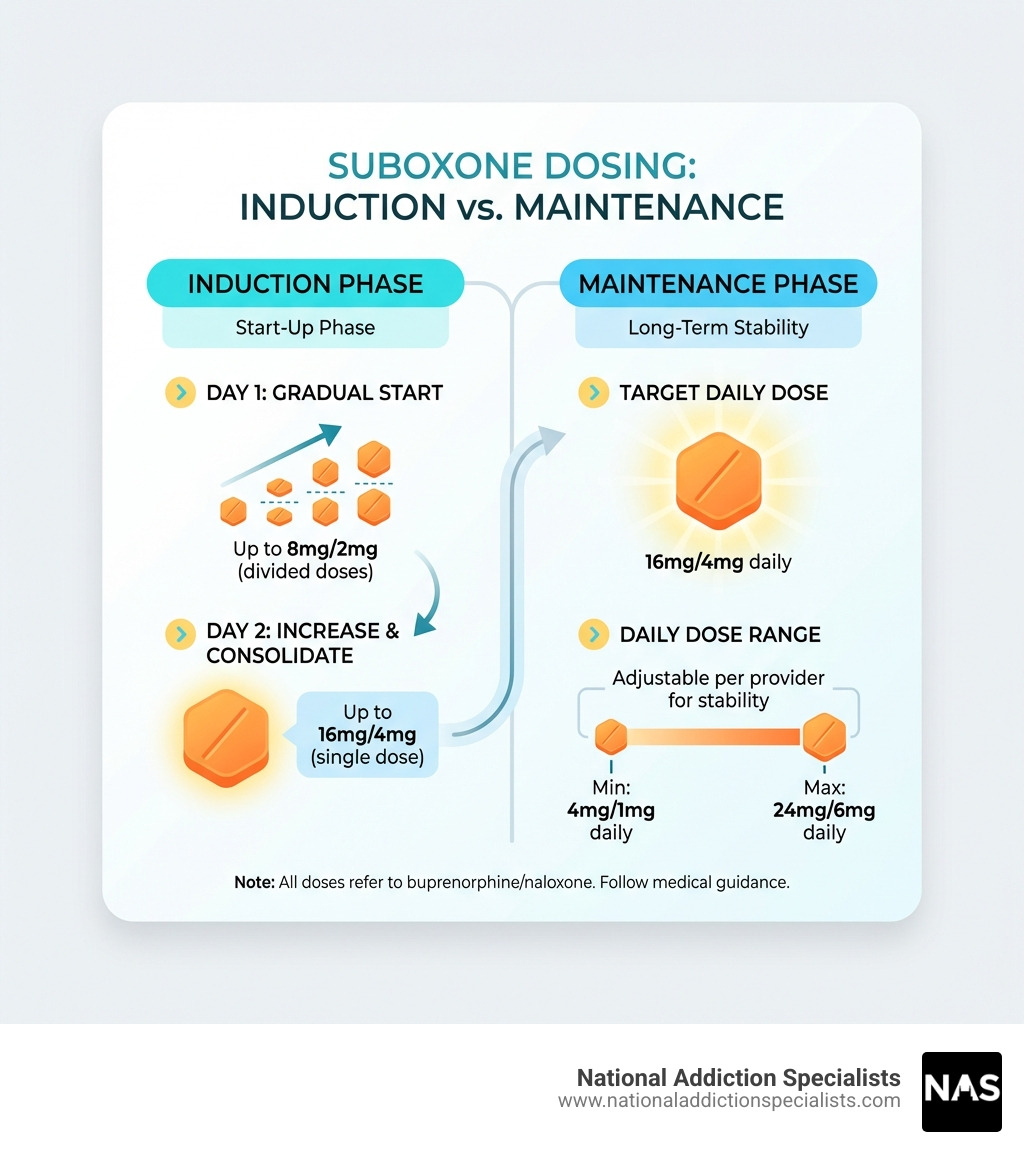
Many patients find success following a Buprenorphine/naloxone 2-day home dosing plan under strict medical guidance.
Signs of Underdosing and Withdrawal Management
If your dose is too low, you might experience “breakthrough” symptoms. It’s important to recognize these so we can adjust your plan. Signs of underdosing include:
- Intense drug cravings
- Anxiety or irritability
- Muscle aches and “goosebumps”
- Yawning and watery eyes
- Nausea or diarrhea
If you feel these, don’t just take more medicine—call your provider. We want to know if you’re asking, Does Suboxone Help with Withdrawal Symptoms? because if it isn’t, we need to adjust your dose.
Safety Warnings, Side Effects, and Drug Interactions
While the suboxone sublingual tablet is a lifesaver, it is still a powerful medication. The biggest risk involves “CNS depressants.” Mixing Suboxone with alcohol, benzodiazepines (like Xanax or Valium), or sleep medications can lead to fatal respiratory depression (where your breathing slows down or stops).
Other warnings include:
- MAOIs: Do not use Suboxone if you have taken an MAOI antidepressant in the last 14 days.
- Sleep Apnea: Suboxone can worsen sleep-related breathing disorders.
- Liver Health: We monitor liver function because, in rare cases, buprenorphine can cause hepatitis or liver injury.
Common side effects often include headaches (reported by about 36% of patients), nausea, and insomnia. You can read more about the Dangers of Mixing Suboxone and Alcohol to stay safe.
Dental Health and Oral Risks
One unique side effect of transmucosal buprenorphine (meds dissolved in the mouth) is the risk to your teeth. The acidity of the tablets can lead to:
- Cavities and tooth decay
- Enamel erosion
- Oral numbness (hypoesthesia)
The NAS Safety Protocol: To protect your smile, rinse your mouth with water after the tablet has fully dissolved. However, wait at least one hour before brushing your teeth to avoid scrubbing the acid into your enamel while it’s softened. Regular dental checkups are a must. Check our Suboxone Treatment FAQ for more oral care tips.
Recognizing and Treating an Overdose
Even with the “ceiling effect,” an overdose is possible, especially if Suboxone is mixed with other drugs or taken by someone without an opioid tolerance.
Signs of overdose:
- Pinpoint (tiny) pupils
- Extreme sleepiness or inability to wake up
- Blurred vision or dizziness
- Slow, shallow breathing
- Blue or pale skin/lips
If an overdose is suspected, administer naloxone (Narcan) if available and call 911 immediately. Because buprenorphine sticks so tightly to brain receptors, emergency teams may need to give multiple doses of naloxone. For more details, see Overdosing on Suboxone.
Special Populations and Long-Term Care
We take extra care with certain groups of patients:
- Pregnancy: Suboxone can be used during pregnancy, but babies may experience Neonatal Opioid Withdrawal Syndrome (NOWS). Interestingly, research (like the MOTHER study) shows that babies born to mothers on buprenorphine often need less morphine and have shorter hospital stays than those on methadone.
- Breastfeeding: Buprenorphine passes into breast milk in very small amounts, generally considered safe, but the baby must be monitored for sleepiness.
- Hepatic Impairment: If you have severe liver disease, your body may struggle to clear the naloxone, which could cause issues.
- Geriatric Patients: We monitor older adults more closely for sedation and fall risks.
Recovery is a marathon, not a sprint. We help you understand the Long-term Effects Suboxone Use so you can make informed decisions about your future.
Switching Forms and Safe Discontinuation
Sometimes, a patient might switch from a suboxone sublingual tablet to a sublingual film. It is important to know that these are not bioequivalent at all doses. This means an 8mg film might put more medicine into your blood than an 8mg tablet. When switching, we monitor you closely for signs of over- or under-dosing.
When you are ready to stop treatment, never go “cold turkey.” Abruptly stopping will cause withdrawal. We use a gradual tapering schedule to slowly lower your dose over weeks or months, ensuring your brain has time to adjust. Learn more about How to Taper off Suboxone or consult Health Canada’s Drug Product Database for technical bioavailability data.
Frequently Asked Questions
How long does Suboxone stay in your system?
Buprenorphine has a long half-life of 24 to 42 hours. This is why you only need to take it once a day. In most healthy people, the drug is completely gone from the system within 5 to 8 days after the last dose.
Will Suboxone show up on a standard drug test?
Generally, no. Most standard 5-panel or 10-panel employer drug screens look for “opiates” (like heroin, codeine, or morphine). Suboxone is a synthetic opioid and requires a specific test for buprenorphine to be detected.
How should I store and dispose of my medication?
Store your suboxone sublingual tablet at room temperature (68-77°F) in a secure, locked location. Accidental ingestion by a child is a medical emergency and can be fatal. If you have unused medication, the FDA recommends flushing it down the toilet if a drug take-back program isn’t immediately available.
Conclusion
At National Addiction Specialists, we believe that recovery should fit into your life, not the other way around. Based in Brentwood, TN, and Virginia Beach, VA, we provide telemedicine-based Suboxone treatment across Tennessee and Virginia. Our goal is to offer confidential, expert care from the comfort of your home. We accept Medicaid and Medicare because we believe everyone deserves access to high-quality recovery tools like the suboxone sublingual tablet.
Recovery is possible, and you don’t have to do it alone. By combining medication-assisted treatment with personalized counseling, we help you reclaim your life. Explore the Benefits of Suboxone Treatment and see how we can help.
Make an Appointment to Treat Addiction Please don’t hesitate. Make an appointment today. https://www.nationaladdictionspecialists.com/new-patient-packet/
This article was medically reviewed by: Chad Elkin, MD, DFASAM is a board-certified addiction medicine physician, founder, and Chief Medical Officer of National Addiction Specialists, dedicated to treating substance use disorders. A Distinguished Fellow of the American Society of Addiction Medicine (ASAM), Dr Elkin currently serves as President of the Tennessee Society of Addiction Medicine (TNSAM) and has held various leadership roles within the organization. Dr Elkin chairs ASAM’s Health Technology Subcommittee and is an active member of its Practice Management and Regulatory Affairs Committee, State Advocacy and Legislative Affairs Committee, and other committees. He also serves on the planning committee for the Vanderbilt Mid-South Addiction Conference. Committed to advancing evidence-based policy, Dr Elkin is Chairman of the Tennessee Association of Alcohol, Drug, & Other Addiction Services (TAADAS) Addiction Medicine Council, which collaborates with the TN Department of Mental Health & Substance Abuse Services (TDMHSAS). He has contributed to numerous local, state, and national task forces, helping develop professional guidelines, policies, and laws that align with best practices in addiction medicine. His work focuses on reducing addiction-related harm, combating stigma, and ensuring access to effective treatment. Passionate about the field of addiction medicine, he remains dedicated to shaping policy and enhancing patient care.
Suboxone® and Subutex® are a registered trademark of Indivior UK Limited. Any mention and reference of Suboxone® and Subutex® in this website is for informational purposes only and is not an endorsement or sponsorship by Indivior UK Limited.