Everything You Need to Know About 8-2 Suboxone
What You Need to Know About Buprenorphine 8mg Naloxone 2mg (Suboxone®)
Buprenorphine 8mg naloxone 2mg is a prescription sublingual medication used to treat opioid use disorder (OUD) in adults. Here’s a quick summary:
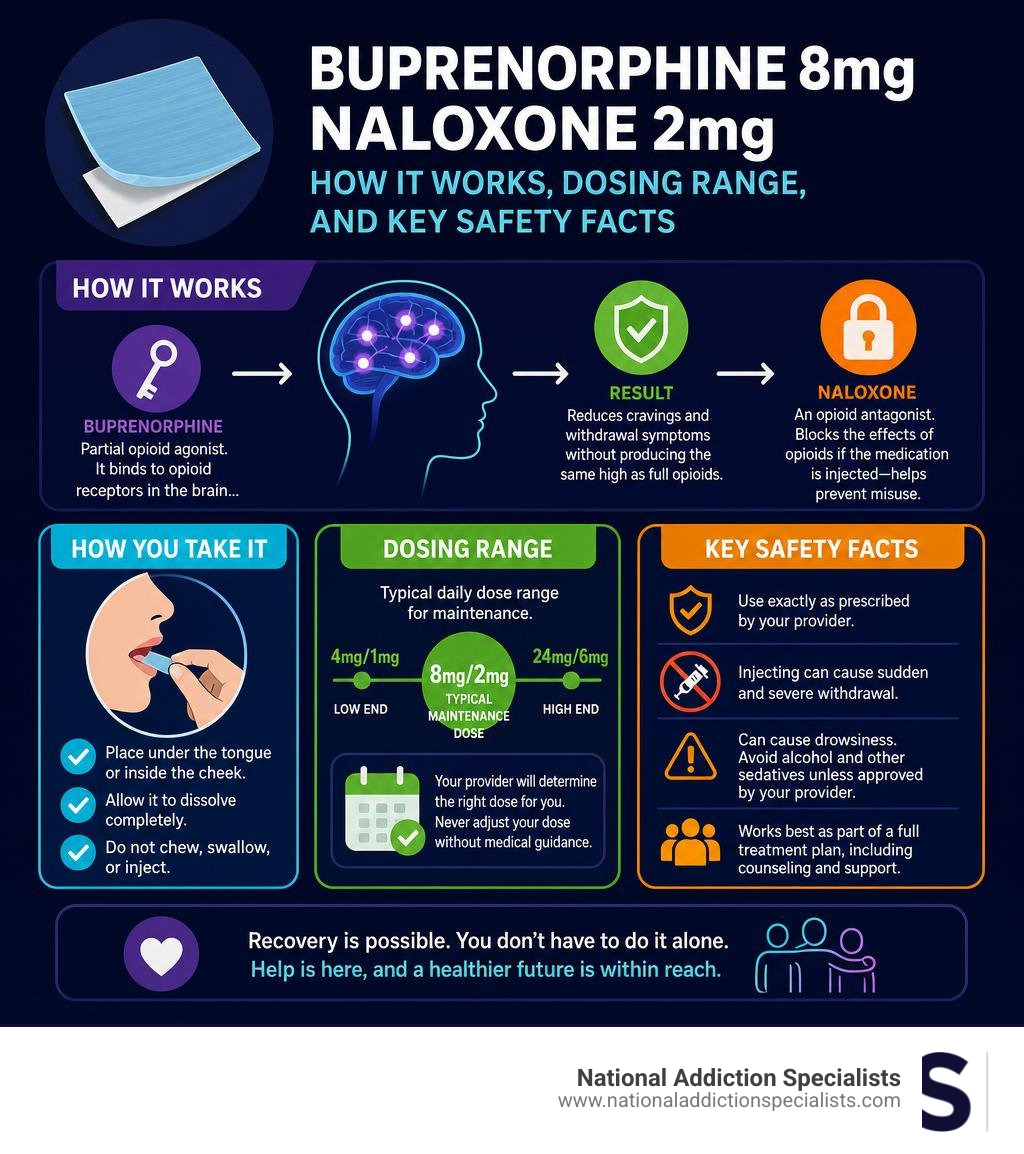
- What it is: A combination of buprenorphine (a partial opioid agonist) and naloxone (an opioid antagonist), available as a sublingual film or tablet
- How you take it: Dissolved under the tongue or inside the cheek — never chewed, swallowed, or injected
- Typical dose: 8mg/2mg is a standard maintenance dose; the daily range is usually 4mg/1mg to 24mg/6mg
- What it does: Reduces opioid cravings and withdrawal symptoms without producing the same high as full opioids
- Why naloxone is included: To prevent misuse — injecting the medication triggers severe withdrawal
- Who prescribes it: A licensed provider, used as part of a full treatment program including counseling
If you or someone you love is dealing with opioid addiction, this medication may feel like a lifeline — or a confusing next step. Either way, you’re not alone.
Opioid use disorder affects millions of people across the United States. The good news? Effective, evidence-based treatment exists. Medication-assisted treatment (MAT) using buprenorphine/naloxone is one of the most well-studied and widely used approaches available today.
But understanding exactly how this medication works — how to take it safely, what to expect, and what to watch out for — can make a real difference in your recovery.
I’m Dr. Chad Elkin, Founder and Medical Director of National Addiction Specialists, and I’m board-certified in both Addiction Medicine and Internal Medicine. I’ve helped thousands of patients use buprenorphine 8mg naloxone 2mg as a cornerstone of their recovery, and I’ll walk you through everything you need to know in plain language. This guide covers dosing, administration, side effects, interactions, and more — so you can start treatment with confidence.
Buprenorphine 8mg naloxone 2mg glossary:
- buprenorphine and naloxone sublingual
- buprenorphine hydrochloride sublingual 8 mg
- sublingual suboxone clinic virginia
What is Buprenorphine 8mg Naloxone 2mg?
At its core, buprenorphine 8mg naloxone 2mg is a carefully balanced combination of two distinct active ingredients. It is classified as a Schedule III controlled substance because, while it contains an opioid, its design significantly lowers the potential for misuse and physical dependence compared to Schedule II opioids like methadone, oxycodone, or fentanyl.
To understand why this medication is so effective for maintaining long-term recovery, we have to look at how these two ingredients work together. For a deeper dive into this pairing, check out our resource on More info about buprenorphine and naloxone.
This combination therapy is widely recognized as a gold standard in addiction medicine. As highlighted by Buprenorphine/Naloxone (Suboxone) – NAMI, it is designed to be used as part of a comprehensive treatment plan that incorporates counseling and behavioral therapies.
How Buprenorphine Works in the Brain
Buprenorphine is the heavy lifter of this combination. It is a partial mu-opioid receptor agonist.
To picture how this works, imagine the opioid receptors in your brain as locks. Full opioids (like heroin, oxycodone, or fentanyl) act like master keys that turn the lock completely, opening the door to intense euphoria and, dangerously, severe respiratory depression.
Buprenorphine, on the other hand, acts like a key that only turns the lock halfway. It binds incredibly tightly to the receptors—so tightly, in fact, that it knocks other opioids off and blocks them from attaching. Because it only activates the receptor partially, it provides a “ceiling effect.” This means that after a certain dose, the effects do not increase. This ceiling effect dramatically reduces the risk of respiratory depression and prevents the intense “high” associated with full agonists, while successfully silencing cravings and keeping withdrawal symptoms at bay. You can read more about this biological lock-and-key system in our guide on How Buprenorphine Works.
The Role of Naloxone in Preventing Misuse
If buprenorphine is the shield that protects you from cravings, naloxone is the safety lock on the medication itself. Naloxone is an opioid antagonist—a blocker.
When you take buprenorphine 8mg naloxone 2mg correctly under your tongue or inside your cheek, the naloxone is poorly absorbed by your body. It essentially goes unnoticed, allowing the buprenorphine to do its job.
However, if someone attempts to misuse the medication by crushing and injecting it, the naloxone enters the bloodstream directly and completely blocks the opioid receptors. This immediately triggers sudden, severe withdrawal symptoms (known as precipitated withdrawal). Thus, naloxone is included solely as an abuse deterrent to discourage intravenous misuse.
Proper Administration and Dosage Guidelines
Getting the most out of your medication means taking it exactly as prescribed. Because buprenorphine has poor bioavailability when swallowed (your stomach acid and liver break it down before it can reach your brain), it must be absorbed through the mucous membranes in your mouth. This is done either sublingually (under the tongue) or buccally (inside the cheek).
For a comprehensive overview of dosing structures, you can view our Buprenorphine Dosage Complete Guide.
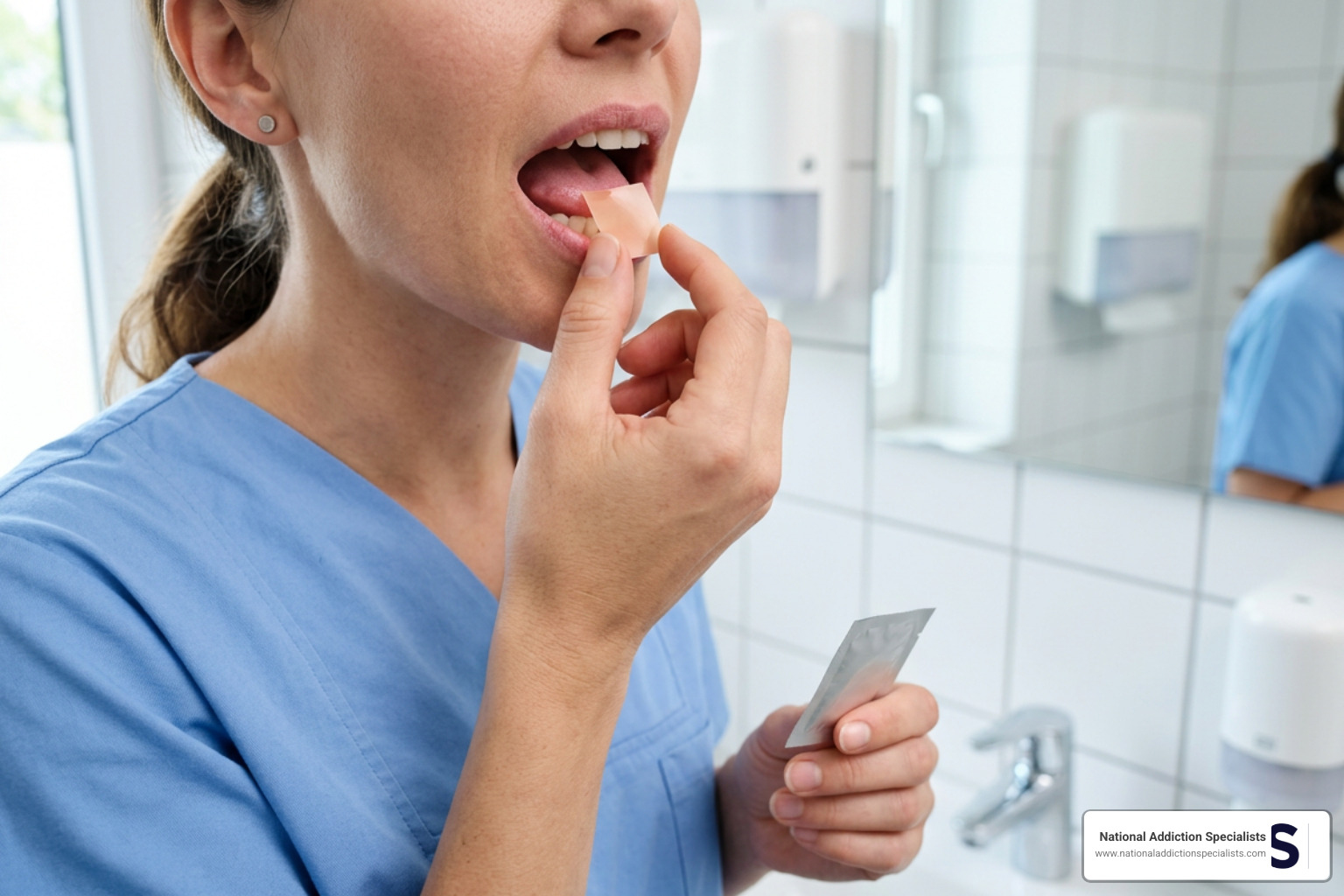
Step-by-Step Guide to Taking Buprenorphine 8mg Naloxone 2mg
To ensure your body absorbs the full dose of buprenorphine 8mg naloxone 2mg, follow these clinical best practices:
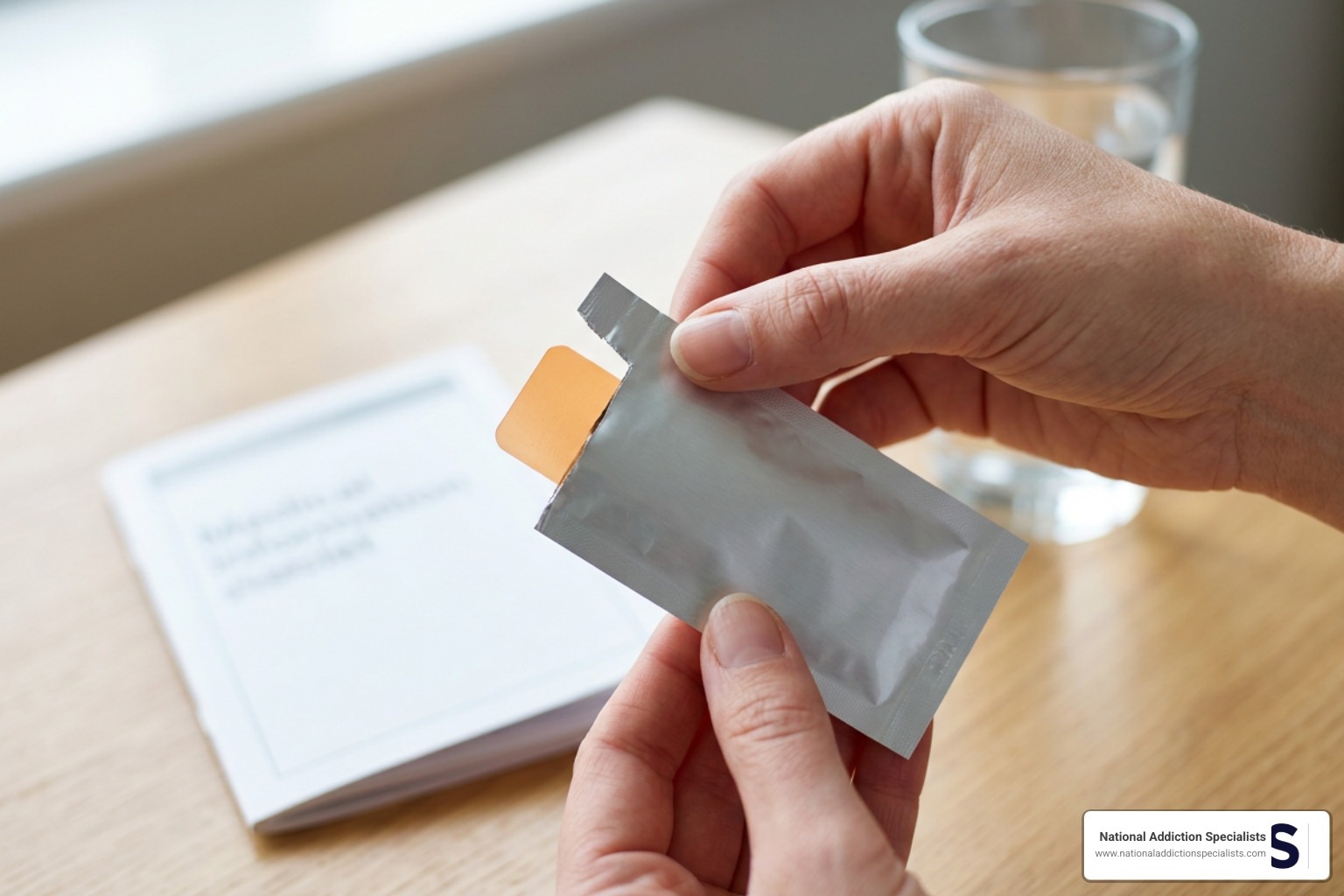
- Prep your mouth: Drink a sip of water to moisten your mouth before taking the medication. This helps the film or tablet dissolve more easily.
- Dry your hands: Make sure your hands are completely dry before handling the film or tablet. Moisture can cause the medication to stick to your fingers.
- Place the medication: Place the film or tablet under your tongue, on either side of the tissue that connects your tongue to the bottom of your mouth. If you are using the buccal route, place it inside your cheek.
- Let it dissolve: Keep the medication in place until it is completely dissolved. This typically takes 5 to 10 minutes for tablets and slightly less for films.
- Do not disturb: Do not talk, swallow, chew, or move the medication while it is dissolving.
For additional details on proper administration, consult the official buprenorphine 8 mg-naloxone 2 mg sublingual film guide.
Crucial Dental Care Instructions After Dosing
Sublingual buprenorphine products are slightly acidic, which can affect your tooth enamel over time if proper precautions aren’t taken. To protect your teeth and gums, follow this post-dose routine:
- Once the film or tablet has completely dissolved, take a large sip of water.
- Swish the water gently around your teeth and gums, then swallow.
- Do not brush your teeth for at least one hour after the medication dissolves. Brushing too soon while your enamel is temporarily softened by the acidity can cause damage.
- Schedule regular dental exams and let your dentist know you are taking this medication.
Starting Treatment: Induction and Titration
Starting buprenorphine/naloxone is a process that requires careful timing. If you take your first dose too soon after using another opioid, you can trigger severe, sudden withdrawal symptoms. This is because buprenorphine will aggressively knock the remaining full opioids off your receptors but only activate them partially.
To safely navigate this transition, we use the Clinical Opiate Withdrawal Scale (COWS) to measure your symptoms. Learn more about this transition in our resource: Everything You Should Know About Buprenorphine Hydrochloride Sublingual 2 mg and 8 mg.
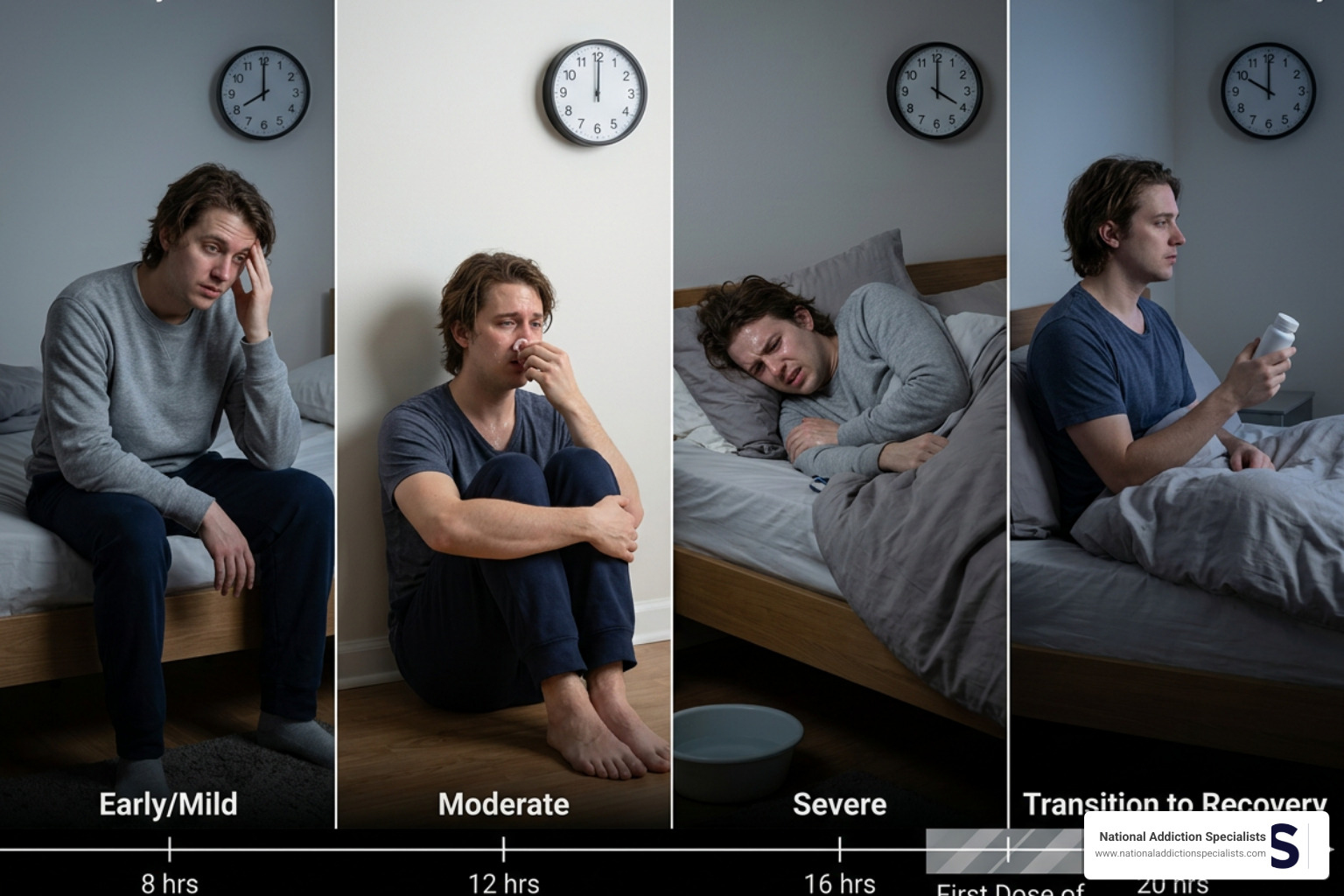
Determining Readiness for Your First Dose
You must be in moderate to severe withdrawal before taking your first dose of buprenorphine 8mg naloxone 2mg. This typically means waiting at least 12 to 24 hours after your last use of short-acting opioids (like heroin or oxycodone), and significantly longer for long-acting opioids (like methadone).
To begin treatment, you should experience several of the following common withdrawal symptoms:
- Sweating and goosebumps
- Shaking or tremors
- Nausea, vomiting, or diarrhea
- Muscle aches and joint pain
- Severe anxiety and irritability
- Runny nose and watery eyes
- Dilated pupils
Standard Titration Schedule for Buprenorphine 8mg Naloxone 2mg
In a typical home or clinical induction, your provider will guide you through a step-by-step titration schedule:
- Day 1: An initial dose (often 2mg to 4mg of buprenorphine) is given once clear withdrawal symptoms are present. If symptoms persist after an hour, another small dose may be taken, up to a maximum of 8mg/2mg on the first day.
- Day 2: Your provider may adjust your dose based on how you felt on Day 1. The goal is to quickly stabilize you, often targeting a dose of 16mg/4mg (two 8mg/2mg films or tablets) on Day 2 if needed.
- Maintenance Phase: Once stabilized, most patients find their sweet spot within a standard maintenance range of 4mg/1mg to 24mg/6mg daily. Dosages higher than 24mg daily have not shown additional clinical benefits.
Side Effects, Risks, and Drug Interactions
Like any medication, buprenorphine/naloxone carries risks of side effects. While most are mild and manageable, it is vital to know what is normal and what requires immediate medical attention.
For official prescribing and safety details, you can refer to the Buprenorphine and Naloxone DailyMed Label.
Common and Serious Side Effects
According to clinical studies, some of the most common side effects reported by patients include:
- Headaches: Experienced by approximately 36% of users
- Nausea and Constipation: Common gastrointestinal effects of all opioid-based medications
- Insomnia: Difficulty sleeping, especially during the initial titration phase
- Sweating: Increased perspiration, particularly when first starting the medication
While rare, some serious side effects require immediate medical evaluation:
- Respiratory Depression: Slowed or shallow breathing, especially if combined with other sedatives
- Liver Damage: Symptoms include yellowing of the skin or eyes (jaundice), dark urine, or severe abdominal pain
- Adrenal Insufficiency: Symptoms include extreme fatigue, dizziness, and low blood pressure
- Severe Allergic Reactions: Hives, swelling of the face, lips, or throat, and difficulty breathing
Dangerous Drug Interactions to Avoid
Buprenorphine is metabolized primarily by the liver enzyme CYP3A4. Therefore, certain medications can change how your body processes it. For a complete safety breakdown, see our Buprenorphine HCL Complete Guide.
The most critical drug interactions to avoid include:
- Benzodiazepines and Alcohol: Combining buprenorphine with benzodiazepines (like Xanax or Valium), alcohol, or other central nervous system (CNS) depressants can lead to severe sedation, respiratory depression, coma, or death.
- CYP3A4 Inhibitors and Inducers: Medications like certain antibiotics (erythromycin), antifungals (ketoconazole), or HIV medications can alter buprenorphine levels in your blood, potentially causing over-sedation or bringing on withdrawal symptoms.
Conclusion and Next Steps
Recovery is a journey, but you don’t have to walk it alone. At National Addiction Specialists, we provide convenient, confidential, telemedicine-based buprenorphine/naloxone treatment. Our expert providers offer personalized recovery plans that you can access entirely from the comfort of your own home. We proudly serve patients across Tennessee (including our location in Brentwood, TN) and Virginia (including Virginia Beach, VA), and we accept both Medicaid and Medicare to ensure that lifesaving care is accessible to everyone.
To learn more about how online treatment works, read our Online Buprenorphine Complete Guide or search for Buprenorphine Doctors in My Area.
Comparing Formulations: Sublingual Films vs. Tablets
When you are prescribed buprenorphine 8mg naloxone 2mg, you may have the choice between sublingual films and sublingual tablets. Both are highly effective, but they have subtle differences in convenience and absorption.
| Feature | Sublingual Film | Sublingual Tablet |
|---|---|---|
| Dissolving Speed | Generally faster (3 to 7 minutes) | Slightly slower (5 to 10 minutes) |
| Taste | Mild citrus/lime flavor | Often described as slightly bitter or orange-flavored |
| Discretion | Thin and easy to place | Slightly bulkier under the tongue |
| Dose Splitting | Can be cut with clean scissors if directed | Harder to split accurately without crumbling |
To explore more about these options, read our guide on Buprenorphine.
Frequently Asked Questions About 8-2 Suboxone
Why does buprenorphine have poor bioavailability if I swallow it?
Your digestive system and liver are incredibly efficient at filtering out buprenorphine before it reaches your general circulation. This is called “first-pass metabolism.” By dissolving the medication under your tongue, it enters your bloodstream directly through the sublingual blood vessels, bypassing the digestive tract entirely.
What is the half-life of buprenorphine/naloxone?
Buprenorphine has a very long mean elimination half-life of approximately 37 hours. This is why many patients only need to take it once daily to remain free from cravings and withdrawal symptoms for a full 24 to 48 hours. Naloxone, on the other hand, has a short half-life of about 1.1 hours, meaning it is cleared from your body very quickly.
What is the ceiling effect?
The ceiling effect means that after a certain dose is reached, the opioid-like effects (such as respiratory depression and euphoria) flatline. This makes buprenorphine much safer in terms of overdose risk compared to full opioids like fentanyl or methadone.
What should I do in case of an emergency or overdose?
Even though buprenorphine has a ceiling effect, overdoses can still occur—especially if the medication is combined with alcohol, benzodiazepines, or other sedatives. Always keep a naloxone rescue kit (such as Narcan) on hand. Family members and loved ones should know how to administer it in case of an emergency. Because buprenorphine binds so tightly to opioid receptors, higher or repeated doses of naloxone rescue spray may be required to reverse an overdose.
Make an Appointment to Treat Addiction
Please don’t hesitate. Make an appointment today.
This article was medically reviewed by: Chad Elkin, MD, DFASAM is a board-certified addiction medicine physician, founder, and Chief Medical Officer of National Addiction Specialists, dedicated to treating substance use disorders. A Distinguished Fellow of the American Society of Addiction Medicine (ASAM), Dr Elkin currently serves as President of the Tennessee Society of Addiction Medicine (TNSAM) and has held various leadership roles within the organization. Dr Elkin chairs ASAM’s Health Technology Subcommittee and is an active member of its Practice Management and Regulatory Affairs Committee, State Advocacy and Legislative Affairs Committee, and other committees. He also serves on the planning committee for the Vanderbilt Mid-South Addiction Conference. Committed to advancing evidence-based policy, Dr Elkin is Chairman of the Tennessee Association of Alcohol, Drug, & Other Addiction Services (TAADAS) Addiction Medicine Council, which collaborates with the TN Department of Mental Health & Substance Abuse Services (TDMHSAS). He has contributed to numerous local, state, and national task forces, helping develop professional guidelines, policies, and laws that align with best practices in addiction medicine. His work focuses on reducing addiction-related harm, combating stigma, and ensuring access to effective treatment. Passionate about the field of addiction medicine, he remains dedicated to shaping policy and enhancing patient care.
Suboxone® and Subutex® are a registered trademark of Indivior UK Limited. Any mention and reference of Suboxone® and Subutex® in this website is for informational purposes only and is not an endorsement or sponsorship by Indivior UK Limited.