
The Suboxone Taper Tango: Dancing Towards Better Sleep
Understanding How Reducing Your Suboxone Dose Affects Your Sleep
Decreasing suboxone dose and sleep are closely connected. If you’re struggling to get rest during your taper, you’re not alone. Here’s what you need to know:
Quick Answer: What Happens to Sleep When Tapering Suboxone
- Insomnia is common – Most people experience trouble falling asleep or staying asleep when reducing their dose.
- Symptoms peak early – Sleep problems are usually worst in the first 1-2 weeks after a dose reduction.
- Duration varies – Acute sleep issues typically last 2-4 weeks, but some people have lingering problems for months.
- Slower tapers help – Gradual dose reduction (10-25% every 1-3 weeks) causes less sleep disruption than rapid tapers.
- Sleep does improve – With the right approach and support, your sleep will return to normal.
Trying to taper off Suboxone and suddenly being unable to sleep is frustrating. You’re exhausted but wide awake, waking up every hour, and questioning if tapering is worth it.
The truth is, sleep problems during a Suboxone taper are a normal part of your brain adjusting. Buprenorphine (the active ingredient in Suboxone) affects brain regions that control sleep. When you reduce your dose, it takes time for your body to rebalance. Research shows withdrawal can cause a 25% increase in wakefulness and significant decreases in deep and REM sleep.
Understanding why this happens and having a plan makes all the difference. With the right strategies—from sleep hygiene to medical support—you can manage these challenges and keep moving forward in your recovery.
I’m Dr. Chad Elkin, a board-certified addiction medicine physician and founder of National Addiction Specialists. I’ve helped hundreds of patients steer the relationship between decreasing suboxone dose and sleep by creating personalized taper plans that minimize discomfort. This guide will walk you through what to expect and how to get the rest you need.
Why Tapering Suboxone Disrupts Your Sleep
If you’ve wondered why decreasing suboxone dose and sleep problems go hand in hand, the answer lies in how your brain adapts to buprenorphine—and what happens when you reduce it.
Buprenorphine, the active ingredient in Suboxone, is a partial opioid agonist with a long half-life. This means it stays in your system for a while, providing a steady presence that your brain gets used to. When you start tapering, your central nervous system must learn to function without it, triggering opioid withdrawal syndrome as your brain goes into overdrive to compensate.
Scientific research on buprenorphine and sleep disruption shows that buprenorphine changes your sleep architecture—the natural cycle of sleep stages. It increases wakefulness while decreasing deep (NREM) and REM sleep. It also reduces levels of adenosine, one of your brain’s natural sleep promoters. When you reduce your dose, your brain’s sleep-wake system struggles to find its rhythm again.
This adjustment period creates central nervous system hyperactivity, a state of hyperarousal that makes sleep feel impossible. Your nervous system is essentially “wired,” making it difficult to relax. For a deeper understanding, see our guide on Suboxone Withdrawal.
Common Sleep Disturbances When Decreasing Suboxone Dose and Sleep
When decreasing suboxone dose and sleep becomes a challenge, you’ll likely experience predictable patterns. Understanding what’s normal can help.
- Insomnia: This is the most common issue, presenting as difficulty falling asleep, staying asleep, or waking up too early.
- “Wired but Tired” Feeling: Your body is exhausted, but your brain won’t shut off, often leading to racing thoughts.
- Frequent Awakenings: Fragmented sleep, waking up multiple times per night, leaves you feeling unrested.
- Restless Legs Syndrome (RLS): An overwhelming urge to move your legs, often with uncomfortable crawling or aching sensations, makes lying still unbearable.
- Vivid Dreams and Nightmares: Erratic brain activity during REM sleep can create intense, disturbing dreams.
- Daytime Fatigue: The frustrating irony of feeling exhausted during the day but being unable to sleep at night.
These symptoms are part of the broader withdrawal experience. Learn more in our article on What to Expect: Suboxone Side Effects.
The Physiological and Psychological Mechanisms
Understanding the science behind your sleep issues can help you be more patient with your body. When you taper, your body experiences several changes:
- Noradrenergic System Overdrive: This system, responsible for the “fight or flight” response, rebounds and floods your body with norepinephrine, creating intense anxiety, restlessness, and hyperarousal.
- Neurotransmitter Dysregulation: Levels of dopamine and serotonin, which regulate the sleep-wake cycle, fluctuate and contribute to mood changes and an inability to relax.
- Increased Cortisol: Your body produces more of the stress hormone cortisol, which disrupts your natural circadian rhythm and promotes alertness.
This leads to rebound anxiety and hyperarousal, creating a vicious cycle: you’re anxious because you can’t sleep, and you can’t sleep because you’re anxious. These are normal neurochemical responses to reducing an opioid medication. Your brain is resilient and will rebalance with time and the right strategies. For more on this connection, read our article on Suboxone and Mental Health.
The Tapering Timeline: What to Expect and When
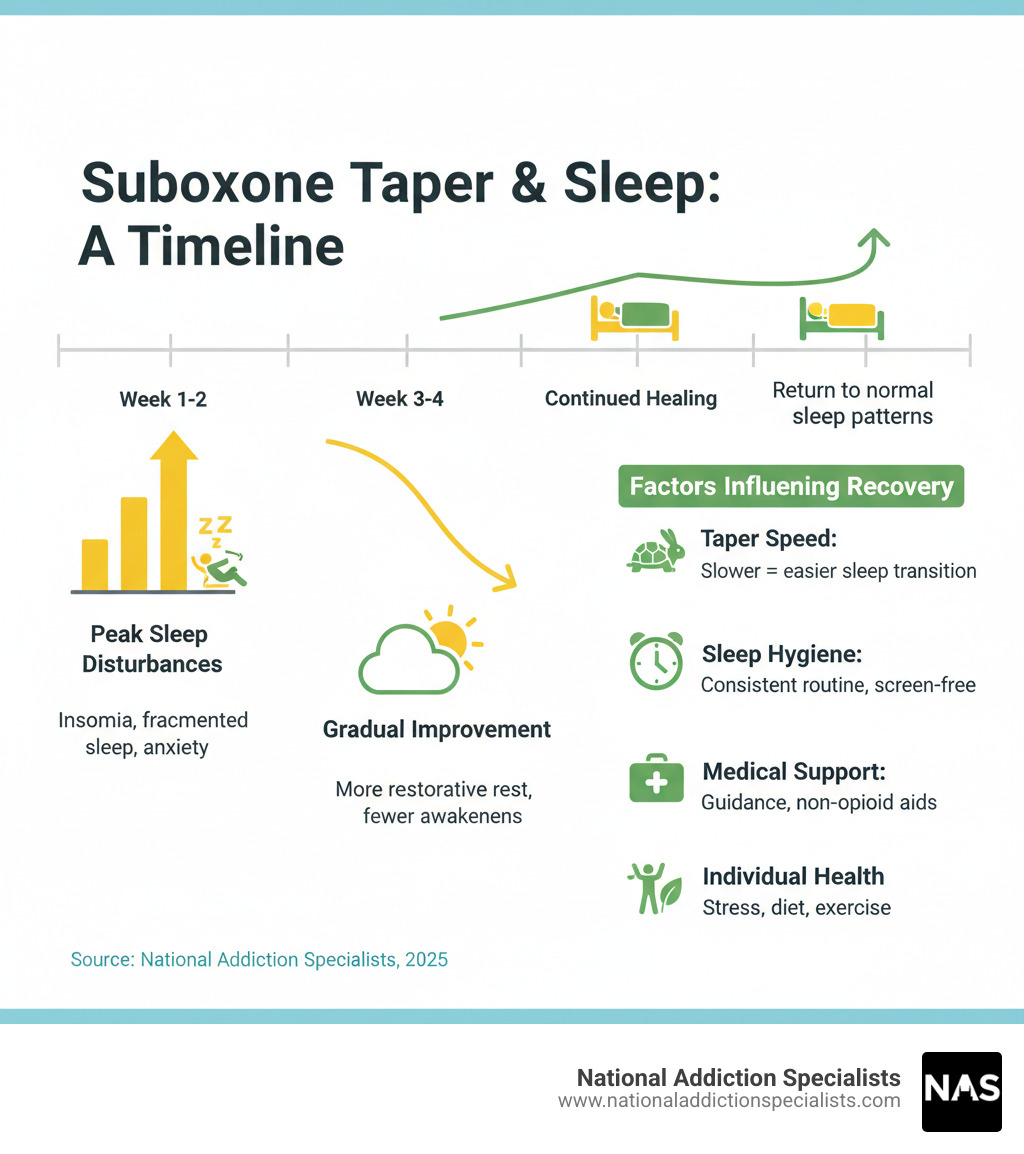
Understanding the timeline of decreasing suboxone dose and sleep challenges is like having a roadmap for a difficult journey. While everyone’s experience is different, there are consistent patterns.
Early symptoms often start within one to three days of a dose reduction. The toughest part, with peak physical symptoms and relentless sleep problems, usually occurs between day four and day seven. By week three or four, many intense physical symptoms ease, but some sleep issues, aches, and psychological symptoms like depression may linger.
Even at the one-month mark, some people experience Post-Acute Withdrawal Syndrome (PAWS), which can involve mood swings, anxiety, and sleep disturbances for weeks or months. However, these effects gradually lessen over time as your brain heals. Your personal timeline depends on factors like your dosage and how long you’ve been taking Suboxone. For a comprehensive look, check out From Start to Finish: Understanding the Suboxone Withdrawal Timeline.
How Taper Speed Influences Sleep Problems
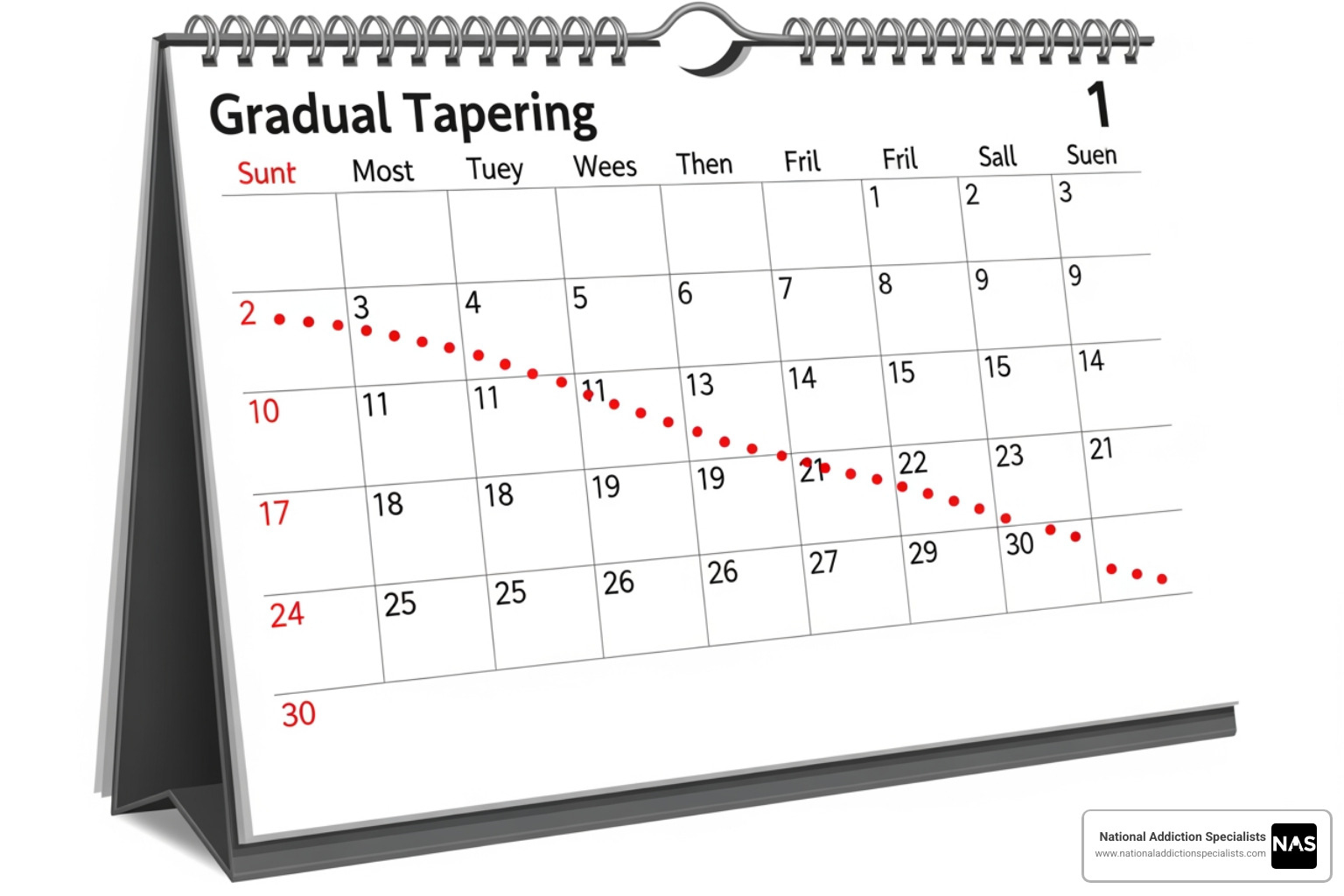
The speed of your Suboxone taper makes an enormous difference. A slow taper is the recommended approach for managing decreasing suboxone dose and sleep problems. This typically means reducing your total daily dose by 10% to 25% every 1 to 3 weeks. This gradual method gives your brain time to adjust, preventing a dramatic rebound in your neurotransmitter systems and resulting in less anxiety, restlessness, and better sleep.
In contrast, fast tapering (reducing the dose every few days) or abrupt cessation (“cold turkey”) doesn’t give your brain time to recalibrate. This leads to more intense withdrawal symptoms, severe sleep disruption, and a significantly higher risk of relapse. We strongly advise against stopping Suboxone suddenly. Our team creates personalized, gradual tapering schedules that align with expert-recommended tapering guidelines. Learn more in our guide on How to Taper Off Suboxone.
Individual Factors That Impact Your Experience
No two people experience decreasing suboxone dose and sleep challenges in the same way. Your individual circumstances matter tremendously. Key factors include:
- Duration of Suboxone use: Longer use often requires a longer adjustment period.
- Tapering dosage: Starting from a higher dose or making larger reductions can intensify symptoms.
- Co-occurring conditions: Pre-existing anxiety, depression, sleep disorders, or chronic pain can be exacerbated during withdrawal.
- Metabolism: How quickly your body processes buprenorphine affects the timing and intensity of symptoms.
- Overall health and support system: Good nutrition, hydration, physical activity, and strong emotional support provide a crucial foundation for recovery.
Because everyone’s situation is different, a cookie-cutter solution won’t work. Your taper plan must be custom to your unique needs, which is why working with a healthcare provider is so important. For more insights, read How Long Should I Stay on Suboxone?
Strategies for Better Sleep While Decreasing Your Suboxone Dose
When decreasing suboxone dose and sleep feels impossible, it’s easy to feel defeated. However, effective strategies can help you rest better. This isn’t about overnight fixes, but a holistic approach combining behavioral changes with medical support to build a foundation for good sleep that will serve you long after your taper is complete.

The key is to try different approaches and be patient with yourself. This phase is temporary. For more comprehensive guidance, our article on Addiction Recovery Strategies offers additional support.
Non-Pharmacological Approaches: Building a Strong Sleep Foundation
Start with non-medication strategies to create a solid foundation for sleep. Consistency is key.
- Establish a consistent sleep schedule: Go to bed and wake up at the same time every day, even on weekends, to regulate your internal clock.
- Create a bedroom sanctuary: Make your room dark, quiet, and cool (around 65-68°F). Blackout curtains and a white noise machine can be great investments.
- Watch your intake: Avoid caffeine, nicotine, and heavy meals close to bedtime. Power down screens at least an hour before bed, as the blue light suppresses melatonin.
- Incorporate relaxation techniques: Actively signal to your body it’s time to wind down. Try deep breathing, guided meditation, listening to calming music, or taking a warm bath.
- Get light exercise during the day: A morning walk or afternoon yoga can improve sleep quality, but avoid vigorous workouts close to bedtime.
These healthy habits support your well-being long into recovery. For more on incorporating meditation, explore our guide on Meditation for Addiction Recovery.
Medications and Supplements for Decreasing Suboxone Dose and Sleep
Sometimes, behavioral strategies aren’t enough, and additional support is needed. Never start any new medication or supplement without consulting your doctor first, as interactions can occur.
- Non-addictive comfort medications: Your doctor may prescribe medications like Clonidine to calm the overactive nervous system, reducing anxiety and restlessness that prevent sleep.
- Over-the-counter supplements: After discussing with your doctor, Melatonin (a natural sleep hormone) or Magnesium (for muscle relaxation and RLS) may be helpful.
- A word of caution: Be careful with antihistamines like diphenhydramine (Benadryl), as they can worsen Restless Legs Syndrome for some. We also strongly advise against benzodiazepines (Xanax, Klonopin) and similar sedatives (Ambien), as they are highly addictive and can derail your recovery.
The goal is to manage symptoms safely without creating new dependencies. Your healthcare team can help find the right balance. For more information, visit our page on Suboxone Withdrawal Treatment.
Make an Appointment to Treat Addiction
Please don’t hesitate. Make an appointment today.
The Importance of Professional Guidance During Your Taper
Tapering off Suboxone without professional guidance is like navigating dense fog without a compass. When you’re already dealing with decreasing suboxone dose and sleep challenges, going it alone can lead to serious trouble.
A major pitfall of self-managing a taper is the temptation to use other substances like alcohol or sedatives to cope with withdrawal. This can quickly lead to a new addiction or a relapse into opioid use, erasing your hard-won progress. The Dangers of Mixing Suboxone and Alcohol are particularly severe.
Professional guidance provides a comprehensive safety net, supporting every aspect of your recovery. It’s the difference between white-knuckling through withdrawal and following a structured, supportive path.
The Role of Your Healthcare Provider
An addiction medicine specialist is your most valuable partner during a Suboxone taper. Our expertise can make the difference between a successful taper and an unnecessarily difficult one.
We provide:
- A personalized tapering schedule: We create a plan based on your unique history, health, and lifestyle. This customized, gradual approach minimizes discomfort.
- Symptom management: When decreasing suboxone dose and sleep becomes a problem, we can prescribe non-addictive comfort medications like Clonidine to ease withdrawal symptoms safely.
- Emotional support: Tapering is an emotional process. We’re here to listen, offer encouragement, and connect you with counseling resources.
- A flexible plan: Tapers rarely go perfectly. We monitor your progress and adjust the plan as needed, slowing down or trying different comfort medications to ensure your success.
At National Addiction Specialists, we make expert care accessible through telemedicine. You can connect with our providers from home and receive the quality care you deserve. Learn more about our Online Suboxone Doctors.
Make an Appointment to Treat Addiction
Please don’t hesitate. Make an appointment today.
https://www.nationaladdictionspecialists.com/new-patient-packet/
Preparing Your Support System
Your recovery shouldn’t be a solo journey. A strong support system of family and friends is transformative.
- Communicate openly: Explain that sleep problems and mood changes are a normal part of the process. This helps them offer patience and empathy.
- Set realistic expectations: Help them understand that recovery has ups and downs. Setbacks are not failures but part of healing.
- Ask for help: Don’t be afraid to ask for practical support, like help with errands, or just for someone to be there with you. A 2 AM text to a friend can be a lifeline.
- Create a supportive environment: Ask for help keeping the house quiet or minimizing stress. A supportive environment makes everything easier.
Asking for support is a sign of strength. For more guidance, check out our resource on How to Support Someone in Recovery. With professional guidance and a strong support system, you have a powerful combination for success.
Frequently Asked Questions about Suboxone Tapering and Sleep
When you’re navigating decreasing suboxone dose and sleep challenges, it’s natural to have questions. Here are straightforward answers to some common concerns.
How long will insomnia from Suboxone withdrawal last?
The duration of insomnia varies. The most intense sleep disturbances typically occur during the acute withdrawal phase, which lasts about 1 to 2 weeks after a dose reduction. For some, lingering sleep issues can persist for several weeks or months as part of Post-Acute Withdrawal Syndrome (PAWS). However, with patience and healthy habits, most people see a gradual but steady improvement in sleep quality. It does get better.
Is it normal to feel exhausted but be unable to sleep?
Yes, absolutely. This frustrating symptom is often called paradoxical fatigue and restlessness. You feel drained, yet your mind and body feel restless and “wired.” This is a classic sign that your central nervous system is in a state of heightened arousal as it rebalances. While unpleasant, it’s a very normal part of the process when you’re decreasing suboxone dose and sleep is trying to find its new rhythm.
Can I use over-the-counter sleep aids during my taper?
Always consult your doctor first. While some over-the-counter (OTC) options like melatonin or magnesium may be helpful, they are not for everyone. Common OTC sleep aids containing antihistamines (like diphenhydramine) can actually worsen symptoms like Restless Legs Syndrome (RLS) for some people and cause next-day grogginess. Your doctor can recommend safe, non-addictive options that won’t interfere with your taper or create new problems.
Conclusion
Navigating decreasing suboxone dose and sleep challenges is one of the toughest parts of the tapering process. It’s understandable to feel frustrated when all you want is a good night’s rest.
The most important thing to remember is that this sleep disruption is a temporary phase. It’s a sign that your body is healing and re-learning how to find its natural balance. The key takeaway is that a slow, medically-supervised taper is the safest and most effective path forward. It minimizes discomfort and supports your long-term recovery by giving your body the time it needs to adjust.
Pairing this medical guidance with consistent behavioral strategies—like a calming bedtime routine and a regular sleep schedule—will empower you to regain control. These are crucial tools in your recovery toolkit.
At National Addiction Specialists, we are here to support you every step of the way. We provide personalized, compassionate care to help you achieve lasting sobriety and a healthier, more rested future. Don’t let sleep challenges derail your progress. Reach out and let us help you on your path to recovery.
Schedule Addiction Treatment https://www.nationaladdictionspecialists.com/schedule-addiction-treatment/