Choosing Your Path: Methadone, Suboxone, or Subutex for Opioid Recovery
Suboxone vs Subutex vs Methadone: Core Pharmacological Differences
Understanding the differences between these medications starts at the cellular level. Opioids exert their effects by binding to mu-opioid receptors in the central nervous system. How strongly a drug attaches to these receptors (binding affinity) and how vigorously it activates them (intrinsic efficacy) determines how the medication performs in clinical practice.
To see how medication-assisted treatment works, it helps to compare the three core medications across their key pharmacological and regulatory traits:
| Medication | Active Ingredient(s) | Receptor Mechanism | Route of Administration | DEA Schedule | Primary Setting |
|---|---|---|---|---|---|
| Suboxone | Buprenorphine + Naloxone (4:1 ratio) | Partial Mu-Opioid Agonist / Kappa Antagonist | Sublingual tablet or sublingual/buccal film | Schedule III | Office-based, Telehealth, Pharmacy |
| Subutex | Buprenorphine monotherapy | Partial Mu-Opioid Agonist / Kappa Antagonist | Sublingual tablet | Schedule III | Specialized Office-based, Pharmacy |
| Methadone | Methadone hydrochloride | Full Mu-Opioid Agonist / NMDA Antagonist | Oral liquid concentrate, powder, tablet | Schedule II | Certified Opioid Treatment Programs (OTPs) |
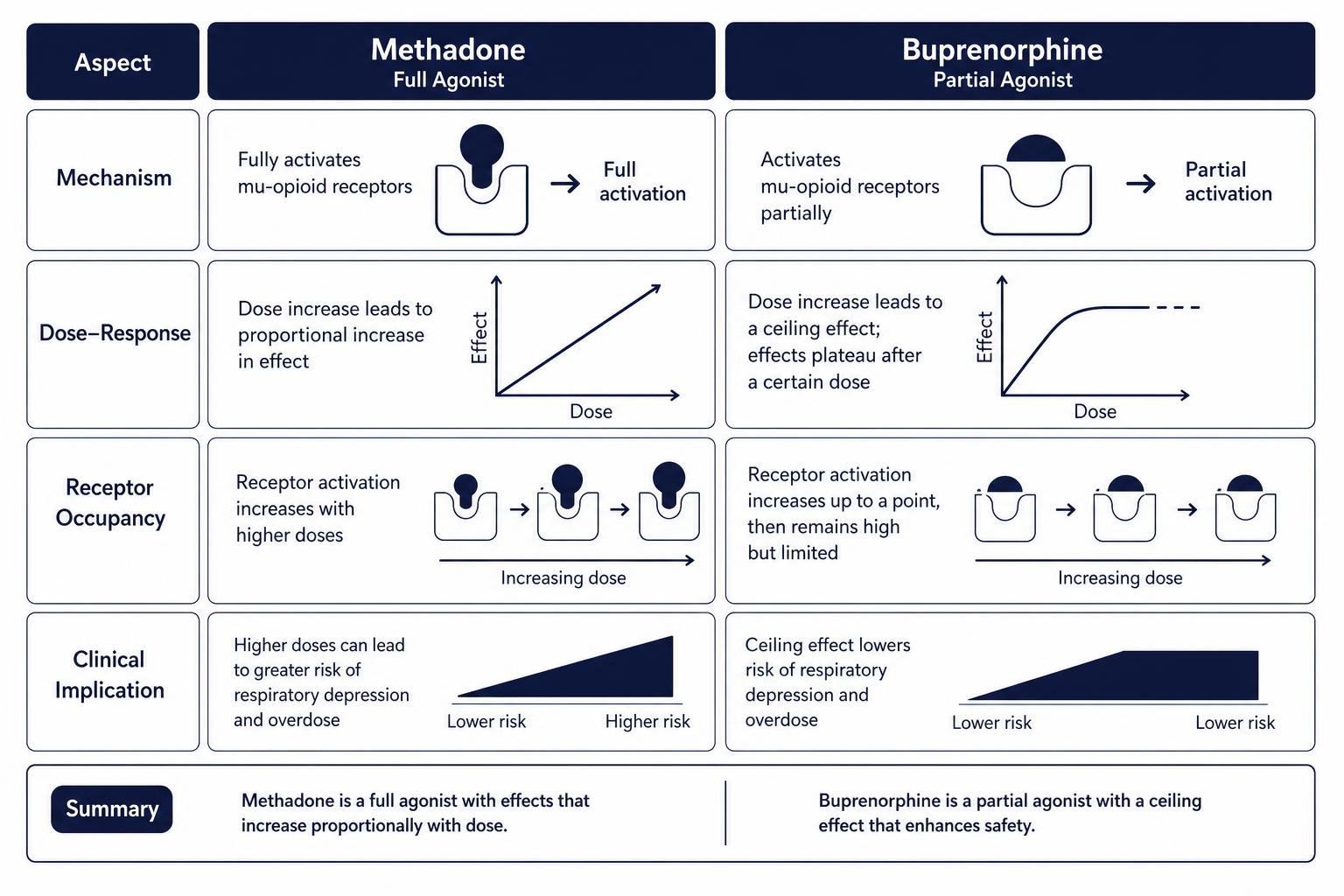
Methadone is a full agonist that binds completely and produces full receptor activation (Whelan & Remski, 2012). In contrast, buprenorphine—the active opioid component in both Suboxone and Subutex—binds with exceptionally high affinity but only partially stimulates the receptor.
Full Agonist vs Partial Agonist: The Ceiling Effect and Safety Profiles
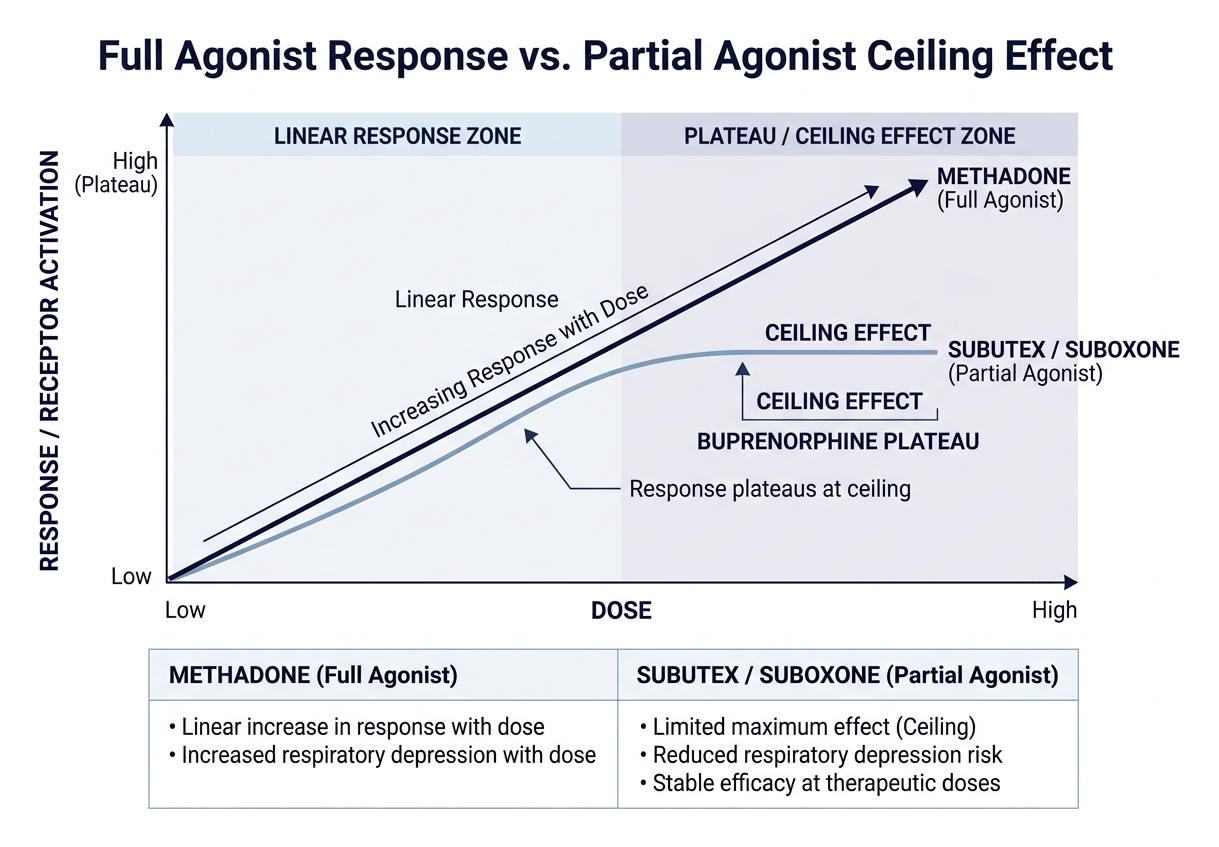
The defining clinical distinction between buprenorphine formulations and methadone lies in the pharmacological “ceiling effect” of partial agonists.
With a full agonist like methadone, increasing the dose produces a continuous, linear increase in receptor activation, respiratory depression, and sedation. If an individual takes too much methadone, especially alongside other sedatives such as benzodiazepines or alcohol, the brainstem’s drive to breathe can shut down entirely, leading to a fatal overdose. Methadone also carries unique cardiac risks; at elevated doses, it can prolong the QTc interval, raising the risk of fatal arrhythmias such as Torsades de Pointes.
Buprenorphine operates differently. While its binding affinity is so high that it displaces most other opioids, its intrinsic efficacy reaches a plateau—or ceiling—at standard therapeutic doses (typically between 16 mg and 24 mg daily). Beyond this point, taking higher doses does not cause proportionate increases in respiratory depression or euphoria. This built-in pharmacological limit makes buprenorphine significantly safer regarding accidental overdose death (Whelan & Remski, 2012). Furthermore, buprenorphine acts as an antagonist at the kappa-opioid receptor, an action associated with antidepressant and anti-dysphoric effects that help stabilize mood during recovery.
Suboxone vs Subutex vs Methadone Formulations and Abuse Deterrence
While both Suboxone and Subutex contain buprenorphine, their formulations serve different clinical purposes.
Suboxone combines buprenorphine and naloxone in a 4:1 ratio. Naloxone is an opioid antagonist with virtually zero bioavailability when absorbed under the tongue (sublingually) or through the cheek (buccally). When taken as directed, the buprenorphine is absorbed while the naloxone remains clinically inactive. However, if an individual attempts to crush, dissolve, and inject a Suboxone film or tablet, the naloxone enters the bloodstream rapidly, blocking mu receptors and precipitating acute, severe withdrawal symptoms. This abuse-deterrent mechanism significantly decreases intravenous misuse and street diversion.
Understanding what is Subutex highlights the contrast: Subutex is pure buprenorphine without naloxone. Because it lacks an abuse-deterrent antagonist, injecting it will not trigger naloxone-induced withdrawal. Consequently, single-entity buprenorphine carries a higher diversion profile (Whelan & Remski, 2012). Methadone, by comparison, is primarily dispensed as an oral liquid concentrate under direct clinical observation in certified clinics, which reduces diversion through physical supervision rather than chemical deterrents.
Clinical Effectiveness, Retention Rates, and Overdose Prevention
Evaluating the clinical effectiveness of medication for opioid use disorder (MOUD) requires looking at two primary metrics: treatment retention and mortality reduction.
Large-scale cohort studies and an extensive Cochrane systematic review of 24 randomized controlled trials demonstrate that methadone holds a statistical advantage in keeping patients enrolled in treatment over long durations (relative risk = 0.8 favoring methadone) (Whelan & Remski, 2012). In a population-based study of 30,891 incident users, 88.8% of buprenorphine/naloxone users discontinued treatment within 24 months compared to 81.5% of methadone users (adjusted hazard ratio, 1.58). The median time to treatment interruption was 66 days for methadone compared to 30 days for buprenorphine/naloxone.
Methadone maintenance has been shown to save two lives for every one lost annually (Whelan & Remski, 2012). The higher retention seen with methadone is often attributed to its full agonist nature, which completely eliminates cravings and relieves severe physical dependence, as well as the structured accountability of daily clinic visits.
However, when patients remain consistently engaged in care, both medications perform with equal excellence. A comprehensive evidence review on clinical and cost-effectiveness confirms that buprenorphine/naloxone is as effective as methadone at adequate maintenance doses (typically 8 mg to 16 mg or higher per day) (NBK195158). In per-protocol analyses examining active treatment, mortality rates are low and comparable: 0.08% for buprenorphine/naloxone versus 0.13% for methadone among incident users (adjusted HR, 0.57; 95% CI, 0.24-1.35). Understanding what is Suboxone helps clarify why so many clinicians favor it as a first-line option: it provides robust protection against fatal overdose without requiring daily clinic visits.
Suboxone vs Subutex vs Methadone in the Era of High-Potency Fentanyl
The illicit drug supply has shifted dramatically toward synthetic illicit fentanyl and its analogues. Fentanyl is lipophilic, meaning it stores in adipose tissue and slowly releases back into the bloodstream over days or weeks following heavy, chronic use.
This pharmacological trait creates distinct challenges for recovery medications:
- Receptor Saturation: Patients with heavy illicit fentanyl habits develop profound opioid tolerance. Methadone’s status as a full agonist allows clinicians to titrate doses upward without an intrinsic ceiling, effectively satisfying intense cravings and preventing withdrawal in high-tolerance individuals.
- Precipitated Withdrawal Risks: Initiating buprenorphine products (Suboxone or Subutex) too soon can trigger severe precipitated withdrawal, as buprenorphine displaces residual fentanyl from receptor sites without providing the same level of receptor stimulation.
- Craving Management: When titrated to therapeutic levels, buprenorphine successfully manages fentanyl cravings for the vast majority of patients while offering greater safety against accidental overdose during a recurrence of use.
Induction Protocols: Standard Timing vs Low-Dose Microdosing
Starting MOUD requires clinical planning to avoid precipitated withdrawal.
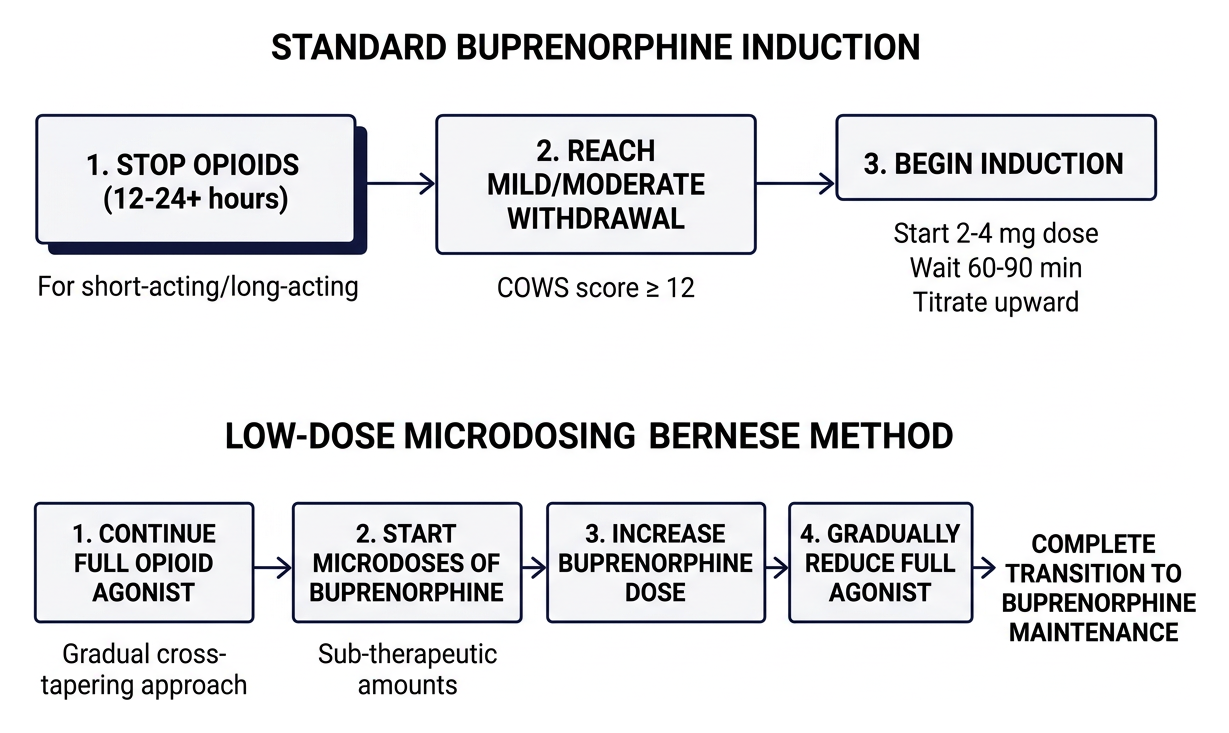
Standard Buprenorphine Induction:
- Patients must stop all short-acting opioids for at least 12 to 24 hours (and longer for long-acting formulations).
- Induction begins only when the patient reaches mild-to-moderate objective withdrawal, measured by a Clinical Opiate Withdrawal Scale (COWS) score of 12 or higher.
- An initial dose of 2 mg to 4 mg of buprenorphine is administered and evaluated after 60 to 90 minutes before titrating upward.
Low-Dose Induction (The Bernese Method):
- Developed to bypass the requirement for acute withdrawal, this protocol introduces micro-doses of buprenorphine (e.g., 0.5 mg once daily) while the individual continues their full opioid agonist.
- Over 7 to 10 days, the buprenorphine dose is gradually doubled as it slowly replaces full agonists at the receptor level.
- Once a therapeutic dose of 12 mg to 16 mg is reached, full agonist opioids are discontinued without triggering severe withdrawal.
Methadone Induction:
- Methadone does not displace other opioids or cause precipitated withdrawal, so patients can start immediately without waiting for active withdrawal.
- Initial doses are typically capped at 20 mg to 30 mg to prevent cumulative sedation, slowly increasing over weeks under medical observation.
If you are struggling to manage cravings or withdrawal and need clinical guidance, we can help you navigate your recovery safely. Make an Appointment to Treat Addiction. Please don’t hesitate. Make an appointment today.
Prescribing Regulations, Accessibility, and Daily Treatment Logistics
Federal and state legal frameworks significantly dictate how patients receive each medication.
Methadone is classified as a Schedule II controlled substance. Federal regulations require that methadone for addiction maintenance be dispensed exclusively through SAMHSA-certified Opioid Treatment Programs (OTPs). Patients must initially visit the clinic in person each morning to ingest their dose under nurse observation, earning take-home doses only after demonstrated clinical stability over months.
Suboxone and Subutex are Schedule III controlled substances. Following the federal elimination of the DEA “X-waiver” requirement, any licensed practitioner with standard Schedule III prescribing authority can prescribe buprenorphine. Evaluating Subutex vs Suboxone in practice highlights that Suboxone is universally favored for outpatient dispensing due to its naloxone safety component, whereas single-entity Subutex is closely monitored.
Opioid Treatment Programs vs Office-Based and Telehealth Prescribing
The structural difference between clinic-based care and outpatient prescribing has a substantial effect on daily life:
- Opioid Treatment Programs (Methadone): Provide comprehensive on-site structure, including mandatory counseling, regular toxicology screening, and medical oversight. However, daily commuting requirements can create major barriers for working professionals, parents, and rural residents who face significant transportation challenges.
- Office-Based and Telehealth Prescribing (Suboxone): Patients can consult with board-certified addiction specialists via secure video visits from home. Prescriptions are sent electronically to local retail pharmacies and picked up on a standard monthly or bi-weekly schedule, providing greater privacy and daily flexibility.
Cost, Insurance Coverage, and Long-Term Accessibility
Financial feasibility is essential for sustaining long-term recovery care.
Both buprenorphine and methadone have affordable generic options. Methadone clinics bundle nursing, drug testing, and medication into daily, weekly, or monthly clinic fees, which are widely covered by Medicaid and Medicare, though commercial insurance out-of-network restrictions can sometimes create out-of-pocket costs.
Generic buprenorphine/naloxone sublingual films and tablets are tier-one covered medications under Medicare Part D, state Medicaid programs, and the vast majority of commercial health plans. To review specific pricing structures and pharmacy copays, our subutex vs suboxone cost guide provides a breakdown of out-of-pocket variables and prior authorization requirements.
Special Populations and Transitioning Between Medications
Different clinical circumstances—such as organ health, pain management, and pregnancy—play a major role in medication selection.
- Hepatic Impairment: Both buprenorphine and methadone are metabolized primarily by the liver via the cytochrome P450 enzyme system. In patients with severe hepatic impairment, buprenorphine/naloxone requires careful monitoring because naloxone plasma levels can rise if liver clearance is compromised.
- Comorbid Chronic Pain: Methadone is a full agonist that also acts as an NMDA receptor antagonist, making it a viable option for treating concurrent severe neuropathic and somatic chronic pain. However, buprenorphine is also highly effective for chronic pain when dosed in split intervals throughout the day.
- Drug-Drug Interactions: Methadone carries a higher risk of adverse interactions with medications that inhibit or induce CYP3A4 enzymes or prolong the QT interval (such as certain antibiotics, antifungals, and psychotropics). Buprenorphine displays a more favorable overall drug interaction profile.
Managing OUD During Pregnancy: Buprenorphine Monotherapy vs Maintenance Alternatives
Treating opioid use disorder during pregnancy protects both maternal and fetal health by preventing the dangerous cycles of acute withdrawal and illicit drug exposure.
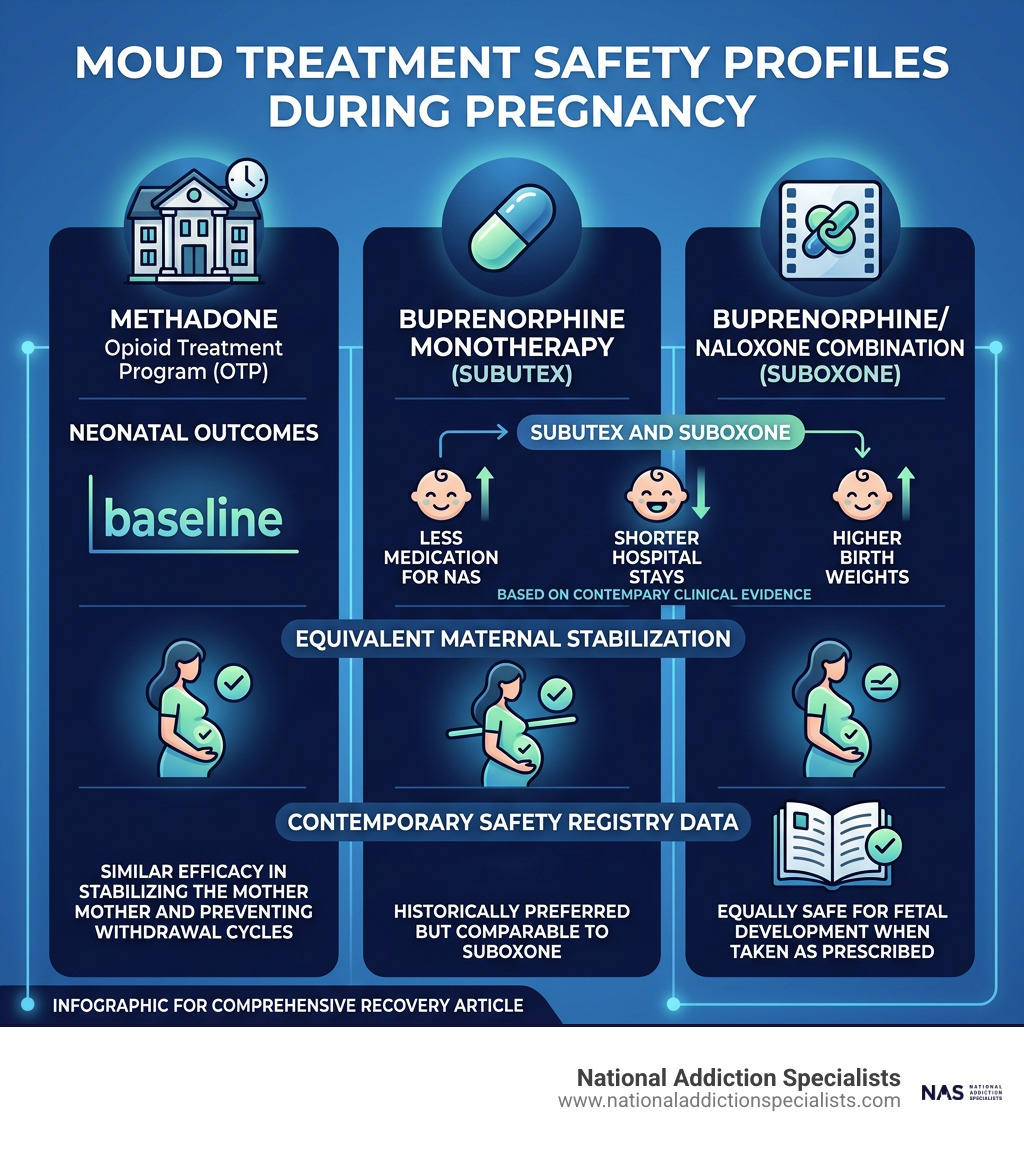
Historically, methadone was the standard treatment during pregnancy. However, extensive clinical trials (including the landmark Maternal Opioid Treatment: Human Experimental Research study) have established that buprenorphine yields equivalent maternal stabilization with significantly better neonatal outcomes. Infants born to mothers treated with buprenorphine require less medication for Neonatal Abstinence Syndrome (NAS) / Neonatal Opioid Withdrawal Syndrome (NOWS), experience shorter hospital stays, and show higher average birth weights.
While buprenorphine monotherapy (Subutex) was historically favored during pregnancy to prevent fetal naloxone exposure, large contemporary registry studies show that combination buprenorphine/naloxone (Suboxone) is equally safe for fetal development when taken sublingually as prescribed.
Transitioning Protocols: How to Switch Between MOUD Medications Safely
Switching between medications requires clinical oversight to avoid acute adverse events:
- Switching from Suboxone/Subutex to Methadone: Because methadone is a full agonist, transitioning is straightforward. A patient can take their final buprenorphine dose and start low-dose methadone (typically 20 mg to 30 mg) within 24 hours, gradually titrating upward under clinic supervision.
- Switching from Methadone to Suboxone/Subutex: This is a more complex transition. Because methadone has a long half-life and accumulates in body tissue, introducing buprenorphine too quickly can trigger severe precipitated withdrawal (Whelan & Remski, 2012). The traditional approach requires tapering methadone down to 30 mg daily or lower, waiting 36 to 72 hours until the patient enters moderate withdrawal (COWS score > 12), and then initiating low buprenorphine doses. Alternatively, low-dose micro-induction (the Bernese method) allows a smooth transition directly from higher methadone doses without requiring an extended washout period.
Frequently Asked Questions About Suboxone, Subutex, and Methadone
Can Suboxone and methadone be taken together during recovery?
No, Suboxone and methadone should not be taken together in standard recovery regimens. Buprenorphine’s high binding affinity will strip methadone molecules from mu-opioid receptors, triggering immediate and severe precipitated withdrawal. The only exception is under specialized micro-dosing induction protocols managed by an addiction medicine physician.
Which medication causes worse withdrawal symptoms when stopping?
Both medications cause physical dependence and require a gradual medical taper to avoid discontinuation syndrome. Methadone withdrawal generally lasts 2 to 3 weeks with intense physical symptoms due to its full agonism. Buprenorphine withdrawal tends to have a slower onset and milder peak intensity, though its low-grade symptoms can persist for several weeks due to its long terminal half-life. Neither medication should be stopped abruptly.
How long does a patient need to remain on maintenance medication?
There is no universal expiration date for MOUD. Research clearly shows that remaining on maintenance medication long-term (12 months or longer) drastically reduces the risk of relapse and fatal overdose compared to short-term detox programs (NBK195158). Treatment duration should always be determined through shared decision-making between the patient and their physician based on personal stability, social support, and recovery goals.
Conclusion
Choosing between Suboxone, Subutex, and methadone is a deeply personal decision that depends on your medical history, tolerance levels, and lifestyle needs. Methadone offers structured clinic oversight and full-agonist receptor coverage, making it a valuable option for individuals with high opioid tolerance or those who thrive with daily routine check-ins. Buprenorphine-based therapies like Suboxone provide a wider safety margin against overdose, freedom from daily clinic visits, and the convenience of home-based pharmacy fills.
At National Addiction Specialists, we specialize in providing compassionate, confidential, telemedicine-based addiction care tailored to your life across Tennessee and Virginia. By accepting Medicare, Medicaid, and major commercial insurance, we make evidence-based outpatient recovery accessible from the comfort and privacy of your home.
Medical References
Whelan PJ, Remski K. “Buprenorphine vs methadone treatment: A review of evidence in both developed and developing worlds..” Journal of neurosciences in rural practice, 2012. PMCID PMC3271614. “SUMMARY OF EVIDENCE.” Canadian Agency for Drugs and Technologies in Health, 2013. NBK195158.
This article was medically reviewed by: Chad Elkin, MD, DFASAM is a board-certified addiction medicine physician, founder, and Chief Medical Officer of National Addiction Specialists, dedicated to treating substance use disorders. A Distinguished Fellow of the American Society of Addiction Medicine (ASAM), Dr Elkin currently serves as President of the Tennessee Society of Addiction Medicine (TNSAM) and has held various leadership roles within the organization. He has contributed to numerous local, state, and national task forces, helping develop professional guidelines, policies, and laws that align with best practices in addiction medicine. Committed to advancing evidence-based policy, Dr Elkin is Chairman of the Tennessee Association of Alcohol, Drug, & Other Addiction Services (TAADAS) Addiction Medicine Council, which collaborates with the TN Department of Mental Health & Substance Abuse Services (TDMHSAS). Dr Elkin chairs ASAM’s Health Technology Subcommittee and is an active member of its Practice Management and Regulatory Affairs Committee, State Advocacy and Legislative Affairs Committee, and other committees. He also serves on the planning committee for the Vanderbilt Mid-South Addiction Conference. His work focuses on reducing addiction-related harm, combating stigma, and ensuring access to effective treatment. Passionate about the field of addiction medicine, he remains dedicated to shaping policy and enhancing patient care.
Suboxone® and Subutex® are a registered trademark of Indivior UK Limited. Any mention and reference of Suboxone® and Subutex® in this website is for informational purposes only and is not an endorsement or sponsorship by Indivior UK Limited.